The Rosette Nebula – the Milky Way's star "factory" (2 photos)
About 5,200 light-years from Earth lies the majestic Rosette Nebula (NGC 2237), one of the most impressive stellar "factories" in our galaxy. Here, in a vast cloud of gas and dust 130 light-years in diameter, true stellar giants are born. 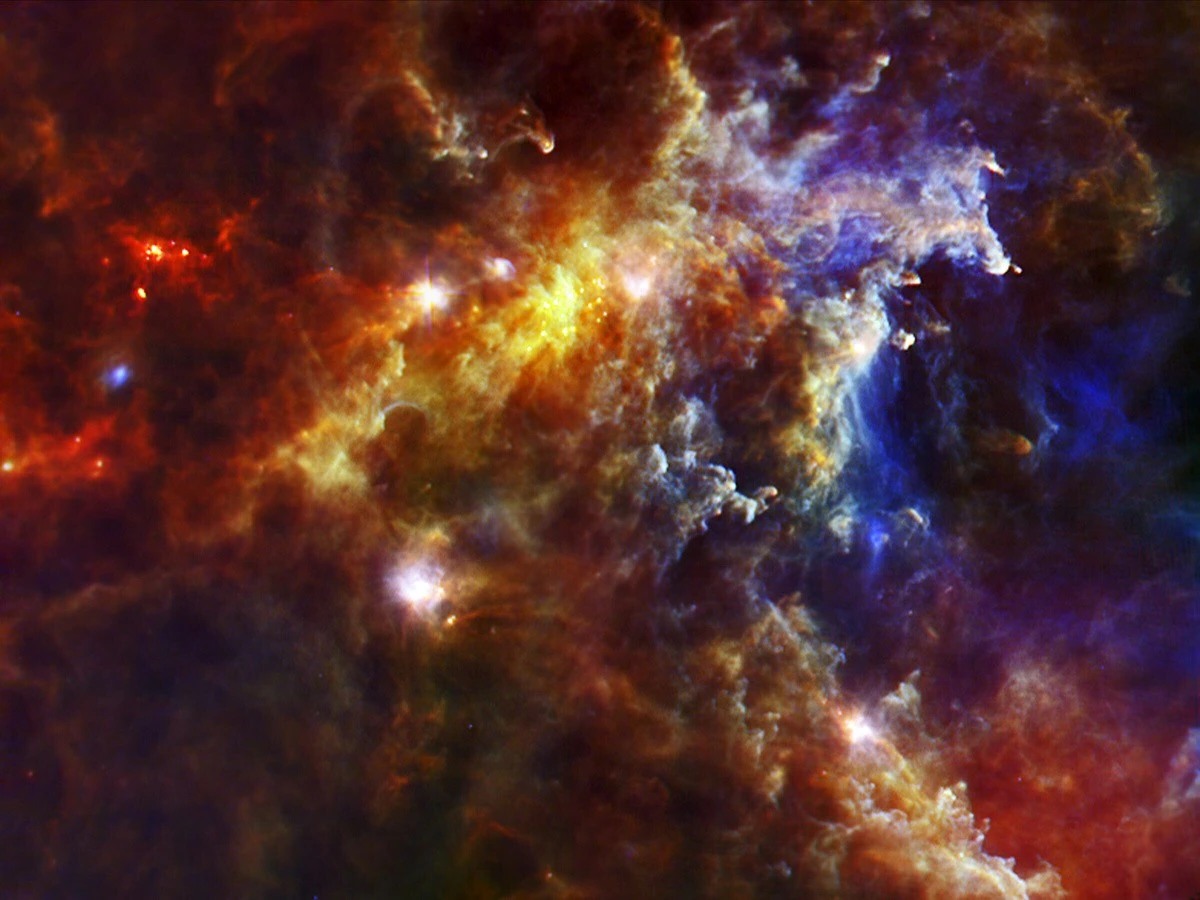
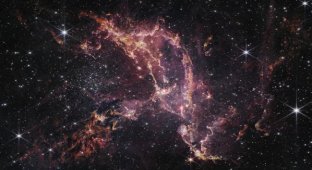
This image was taken on April 12, 2010, by the European Space Agency's (ESA) Herschel Space Observatory and depicts one of the most active star-forming regions in the Rosette Nebula.
The brightest regions in the image are distinctive "cocoons" of gas and dust where massive protostars are developing. Each of these embryos will evolve into a star at least ten times more massive than our Sun. Small, glowing spots are visible at the top of the image (marked in the image below) – these are lower-mass stellar embryos in the early stages of development. 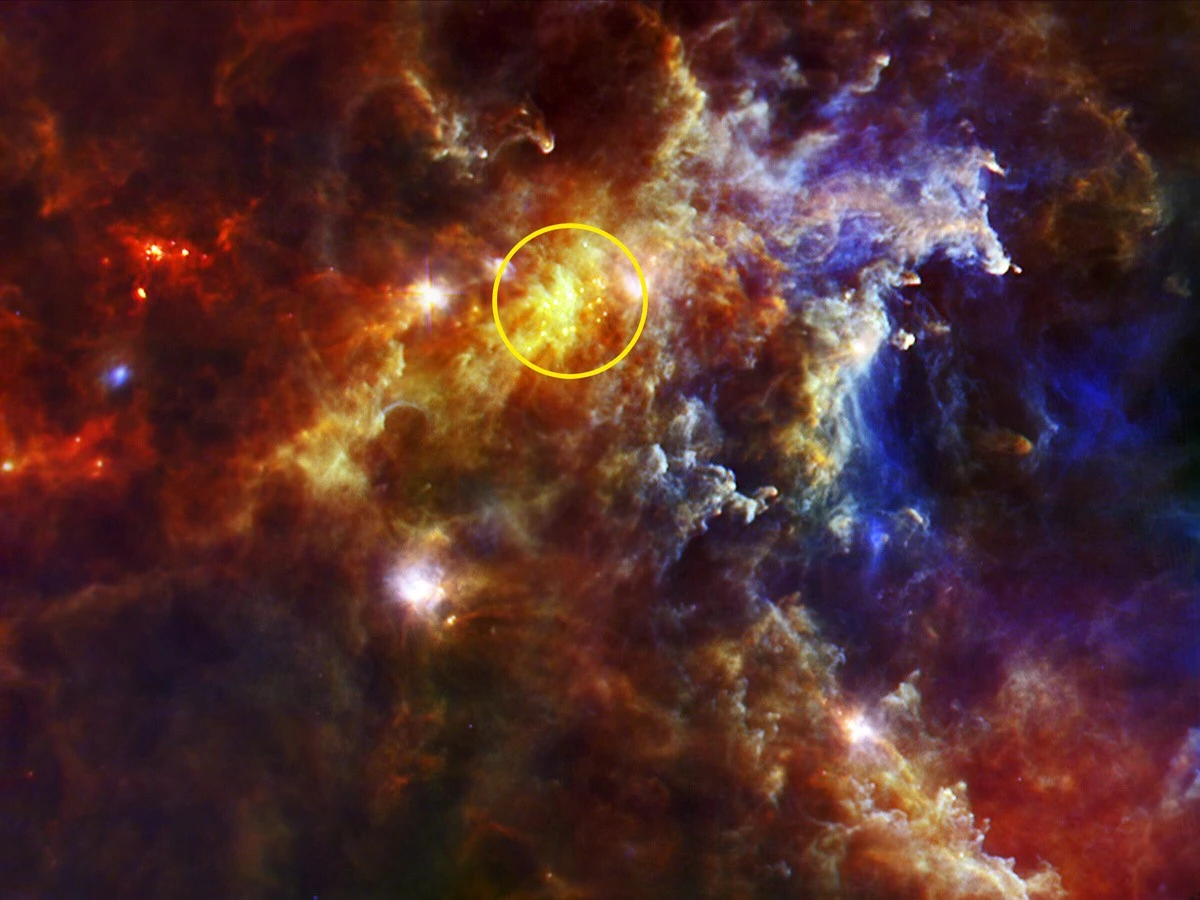
A Short but Vibrant Life
The fate of these cosmic giants is predetermined by their mass. Unlike Sun-like stars, which live for billions of years, these titans will live "only" a few million years. The explanation is simple: the more massive a star, the faster it uses up its thermonuclear fuel. When it runs out, each of these stars will meet its end in a spectacular supernova explosion.
However, the death of these stars will mark the beginning of a new cycle of star formation. Supernova explosions enrich the surrounding space with heavy elements and create shock waves that compress nearby clouds of gas and dust, triggering the formation of the next generation of stars. Thus, in an endless dance of creation and destruction, the Universe sustains the eternal cycle of stellar life.