The most beautiful space photos of 2025 from Reuters and James Webb (15 photos)
Reuters has presented the world with a selection of the most stunning space photographs of the past year. Bring this beauty to your feed. 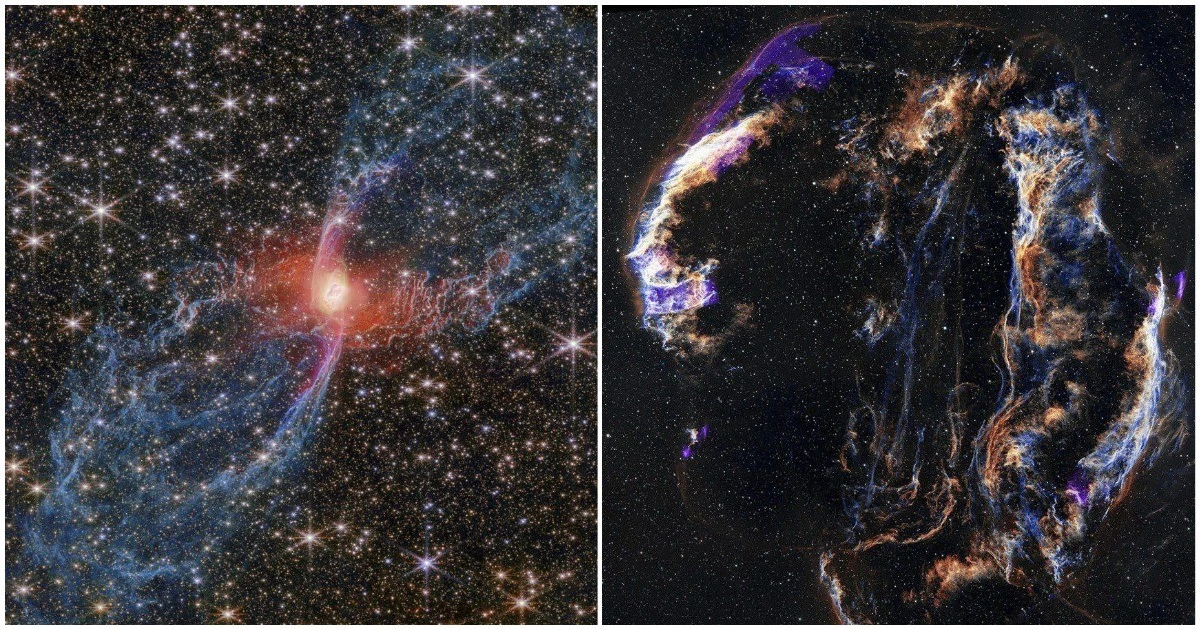
These images, taken by telescopes from NASA, the European Space Agency, and the James Webb Observatory, capture the imagination: nebulae, galaxies, protoplanetary disks, and supernova remnants look like science fiction paintings. While we on Earth struggle with traffic jams and taxes, space reminds us that we are a tiny speck of dust in an endless show of light and dust.
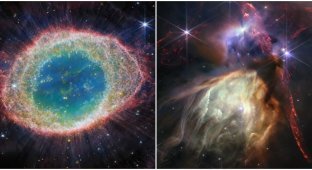
Herbig-Haro 49/50
This cloud of gas and dust from the ejecta of a forming star has been nicknamed a "cosmic tornado." This JWST image reveals complex jets and structures, with a distant galaxy visible in the background. 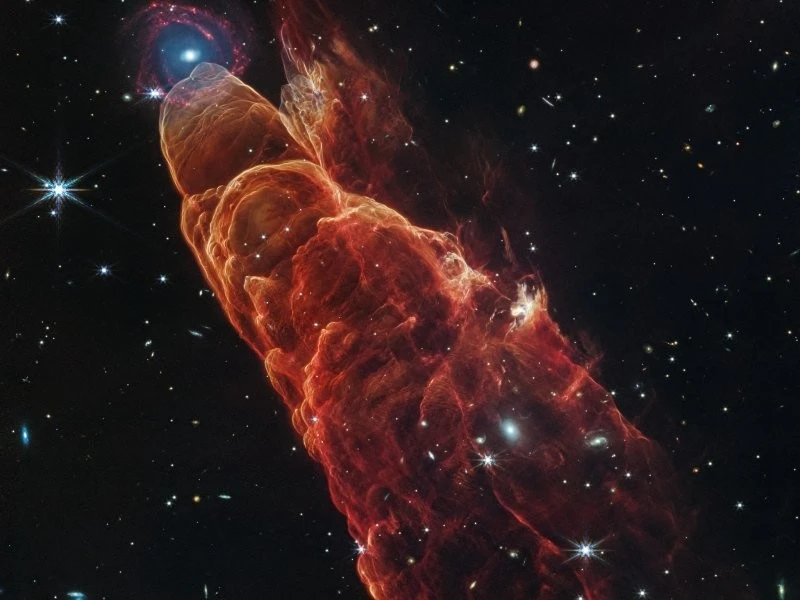
The Veil Nebula
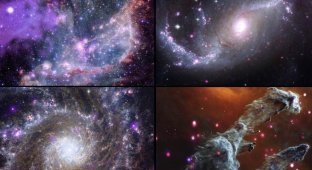
This image, taken with the Chandra X-ray Telescope, the world's most powerful X-ray telescope, shows the Cygnus Loop, also known as the Veil Nebula, a supernova remnant formed by the explosive death of a massive star. 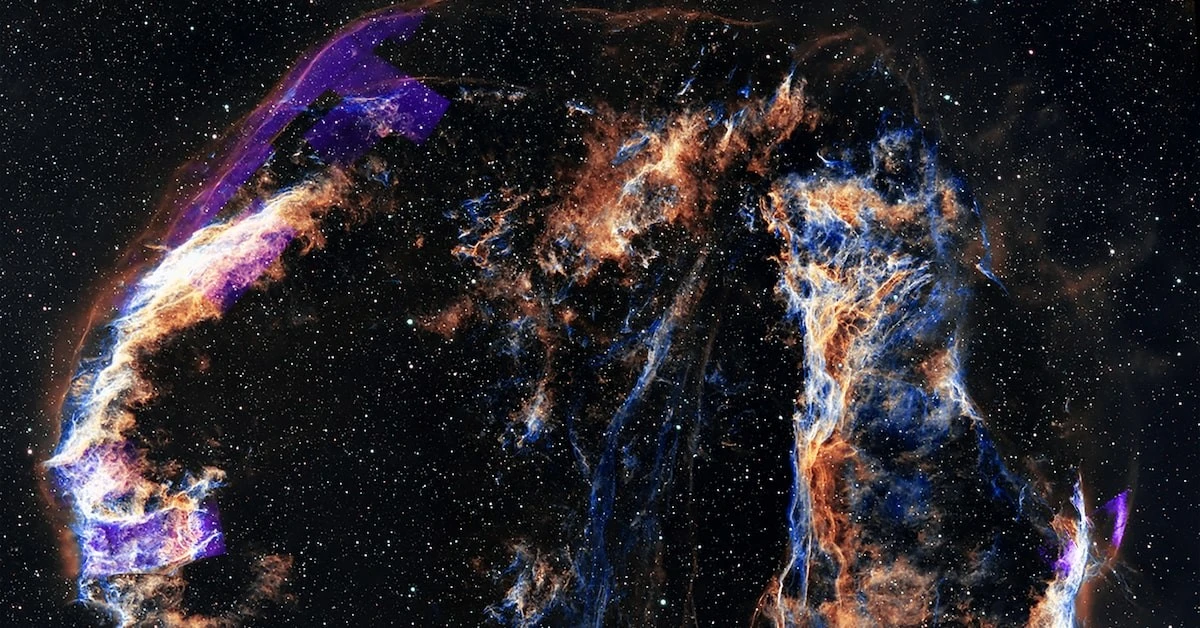
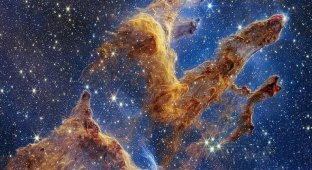
The Eagle Nebula
This newly processed image provides new insight into a massive 9.5-light-year-tall column of cold gas and dust that is part of the large Eagle Nebula, also known as Messier 16. The Eagle Nebula is one of many nebulae in the Milky Way known for their bizarre dust clouds. 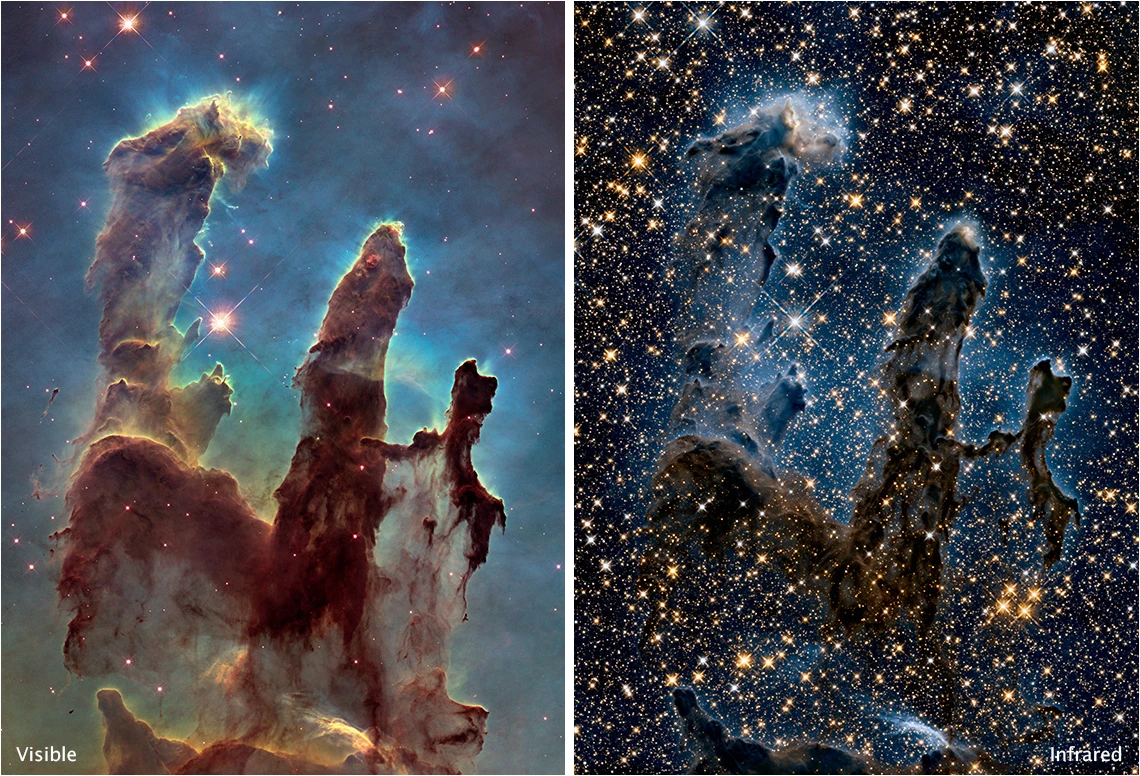
Star Birth in the Lobster Nebula
The James Webb Space Telescope captured this brilliant scene of a star's birth, which hosts Pism 24, a young star cluster at the core of the nearby Lobster Nebula, approximately 5,500 light-years from Earth in the constellation Scorpius. Pism 24, a bright stellar nursery and one of the nearest birthplaces of massive stars, offers a rare opportunity to study large and massive stars. 
Jupiter's South Pole
Planet-sized cyclones from an altitude of 51,000 kilometers—the vortexes of the gas giant. 
Sagittarius B2 Region
Glowing dust heated by young stars near the galactic center. Sgr B2 is the most massive and active star-forming region in our galaxy, located just a few hundred light-years from our central supermassive black hole. 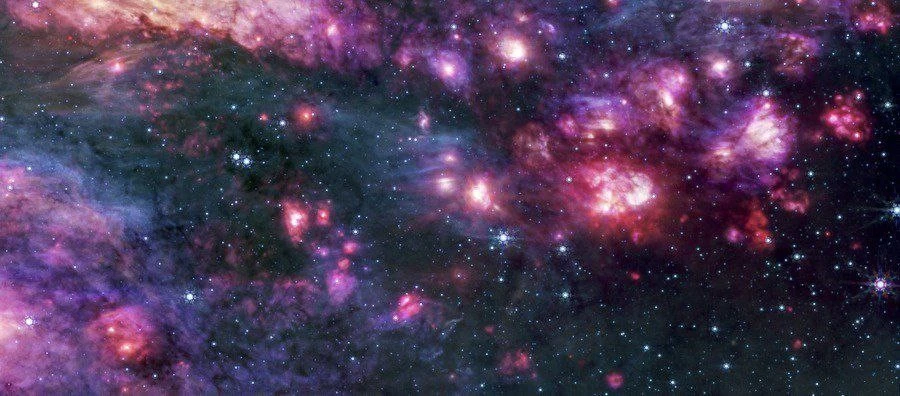
The Red Spider Nebula
The three-light-year-long rays resemble spider legs. Planetary nebulae like the Red Spider Nebula form when ordinary stars like the Sun reach the end of their lives. This phase of a star's life is as fleeting as it is beautiful, lasting only a few tens of thousands of years. 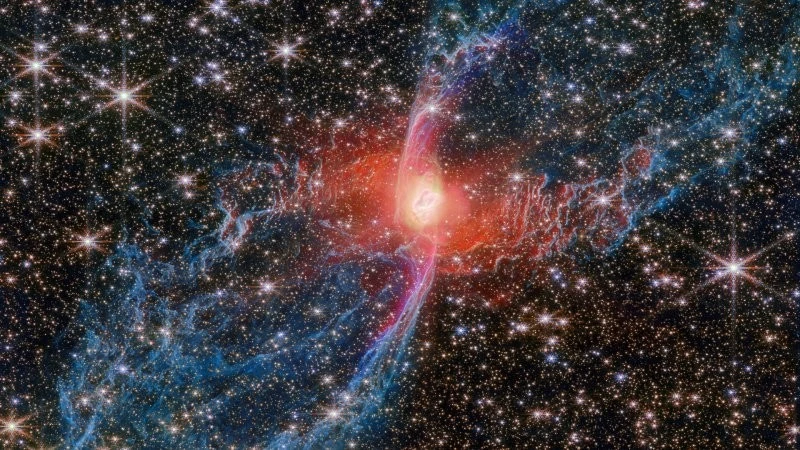
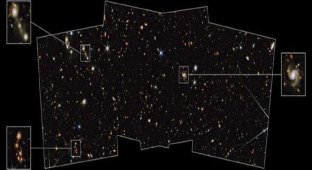
“Einstein Ring”
Gravitational lensing: light from one galaxy bends around another. Einstein rings occur when light from a distant galaxy is bent by the gravity of a nearby massive object, in this case, another galaxy. Light from the distant galaxy, which would otherwise travel in a straight line, follows the gravitationally curved spacetime, amplifying the light coming from behind the galaxy and acting as a kind of natural magnifying glass. 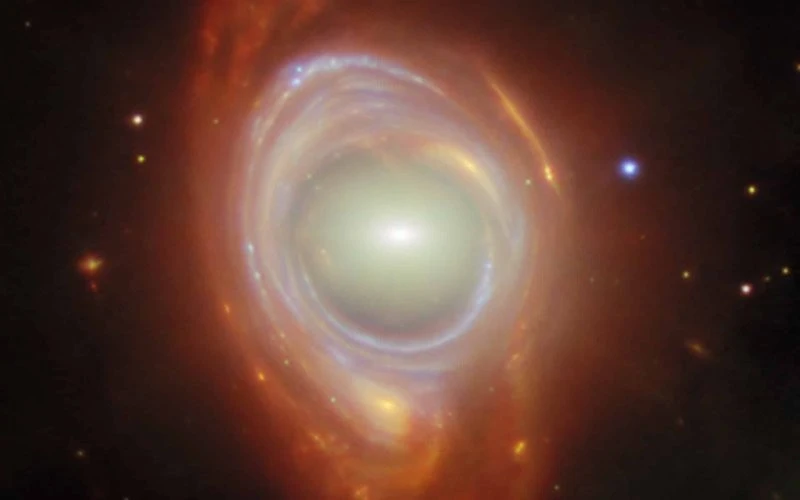
Large Magellanic Cloud
A satellite galaxy of the Milky Way with hot gas from young stars. 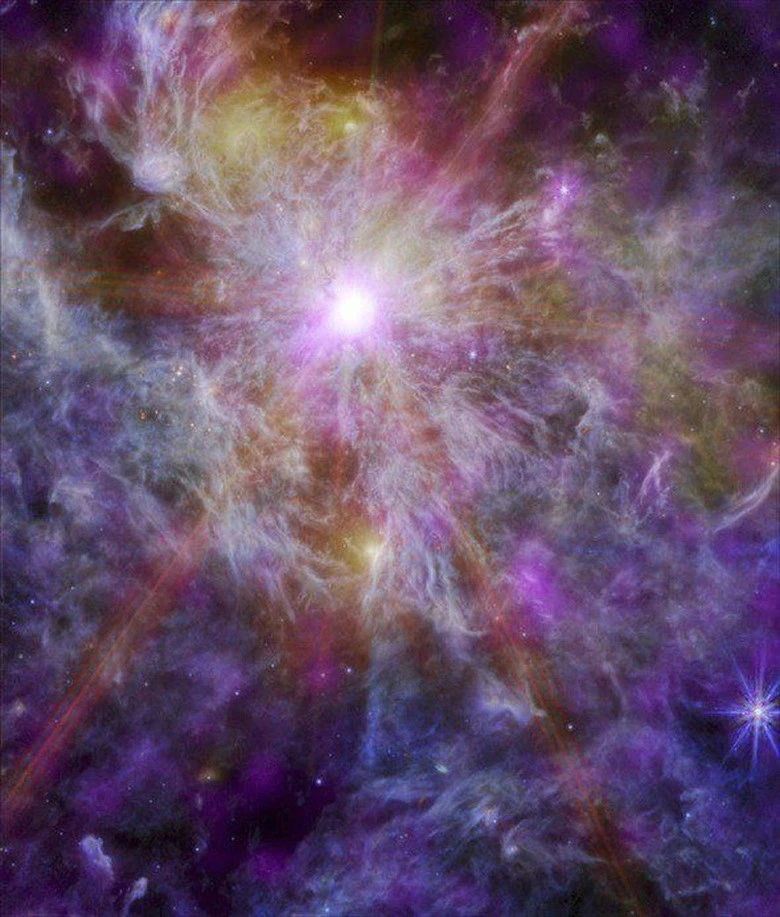
Cassiopeia A Supernova Remnant
This image, taken by the Chandra, Webb, Hubble, and Spitzer telescopes, shows the glowing supernova remnant Cassiopeia A. Cas A is the youngest known supernova remnant in our galaxy, located 10,000 light-years away in the constellation Cassiopeia. 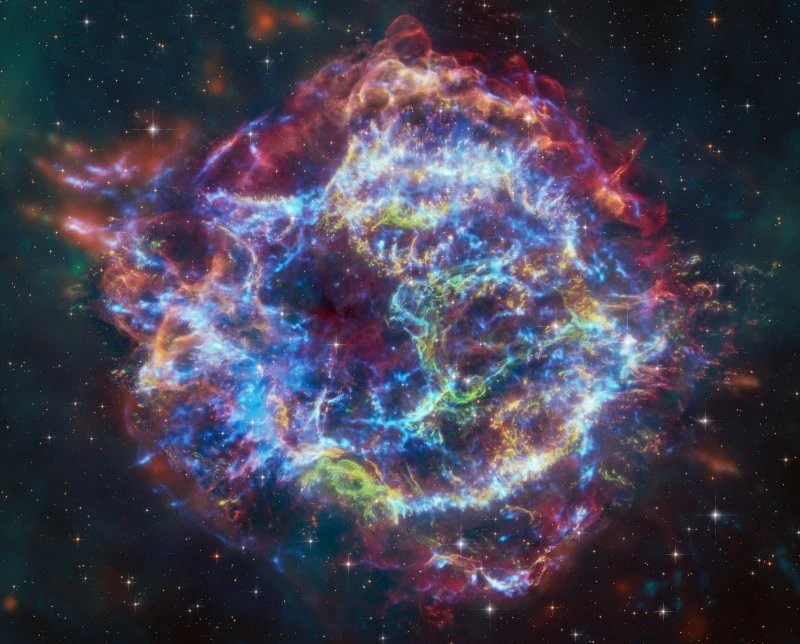
The James Webb Space Telescope captured a stunning image of the planetary nebula NGC 6072, revealing that it is not nearly as symmetrical as most similar objects.
It turns out that the reason is that the nebula's center contains not a single star, but a binary system—two stars orbiting each other. The primary star is aging and has begun to shed its outer layers of gas and dust. Its companion interacts with these ejecta, stretching and distorting them, causing the nebula to acquire an unusual asymmetric shape. 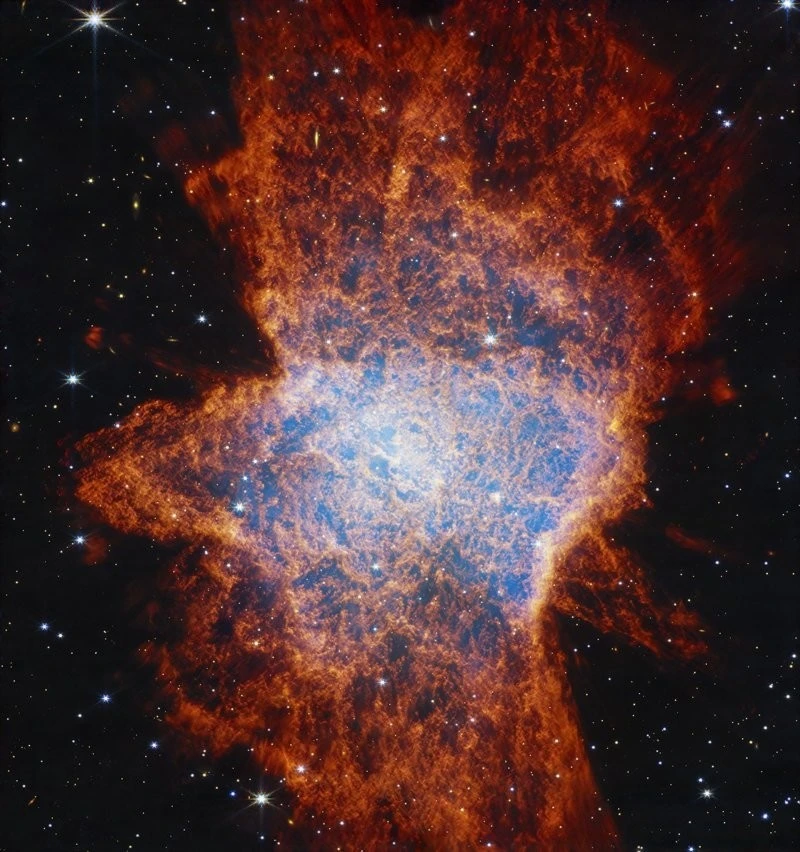
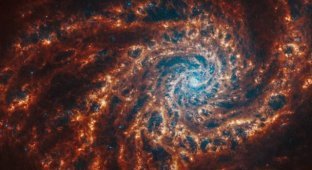
The Chandra X-ray telescope has captured the spiral galaxy NGC 1068, which is relatively close to us.
At its center lies a supermassive black hole, twice as massive as the one at the center of the Milky Way. A powerful wind, traveling at approximately 1.6 million kilometers per hour, blasts out from this hole. This wind heats the gas and causes the galaxy's center to glow brightly in X-rays. 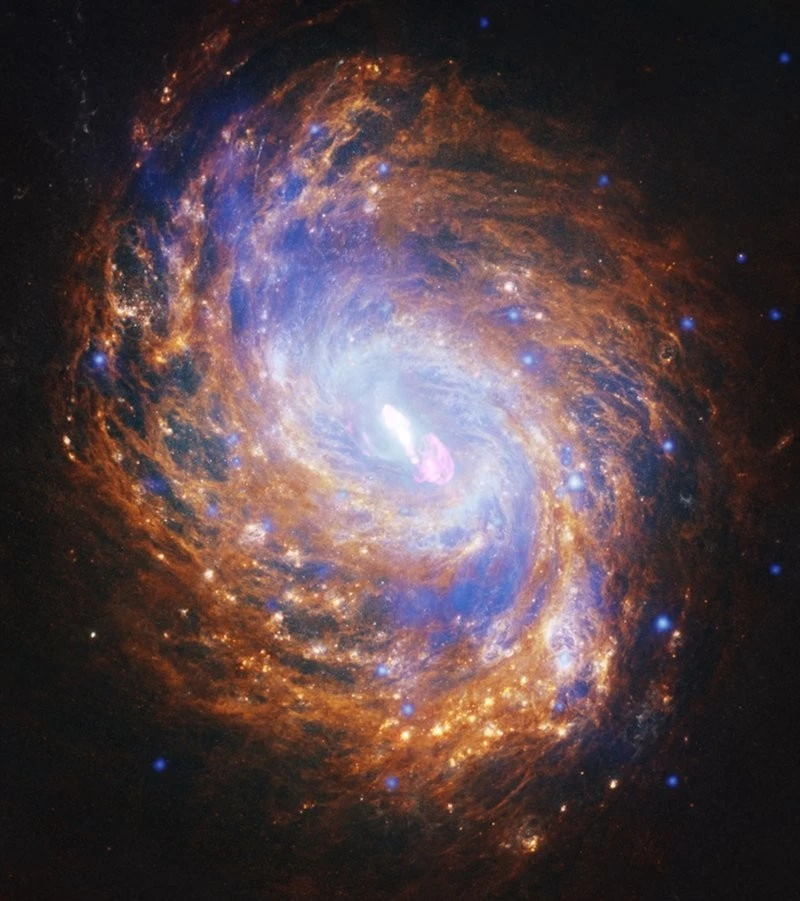
This image, taken by the Hubble Space Telescope, shows the spiral galaxy Messier 77 (M77), also known as the Squid Galaxy. It is located in the constellation Cetus, about 45 million light-years away. 
The Leo P dwarf galaxy is a small and isolated galaxy, unaffected by larger neighbors like the Milky Way or Andromeda. 
These images remind us that space is a place where beauty coexists with chaos. While we argue about earthly matters, stars are being born and galaxies are collapsing.