Billions of light-years of beauty: Star greenhouses for March 8 (5 photos)
We begin this morning with a beauty of cosmic proportions, which, incidentally, only enhances the charm of our lovely readers. While spring tulips are being gifted on Earth, astronomers are turning their telescopes to veritable "stellar greenhouses" in the depths of the universe. 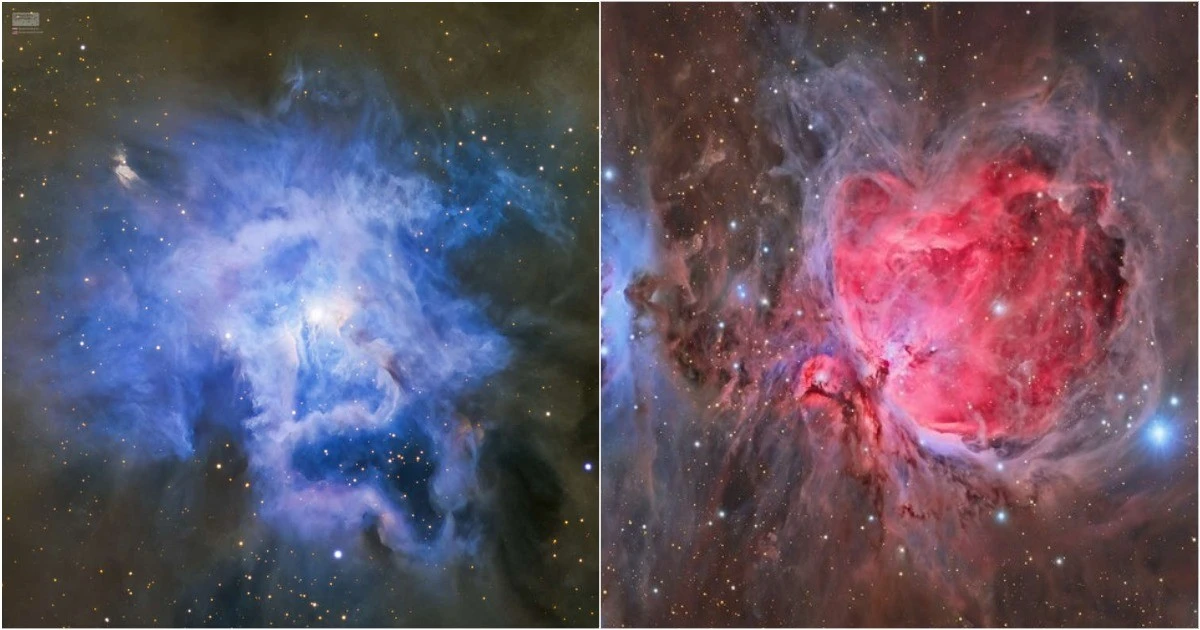
There, amidst the emptiness and cold, vast clouds of gas and dust glow, suspiciously similar to terrestrial flowers.
These celestial structures are not just visual images, but highly complex physics laboratories. What we perceive as delicate petals are actually zones of intense ionizing radiation and gravitational compression, where future worlds are born from interstellar gas.
Tulip Nebula ($Sh2-101$): An emission cloud in the constellation Cygnus. Its characteristic glow is caused by the excitation of hydrogen atoms by ultraviolet radiation from massive young stars. 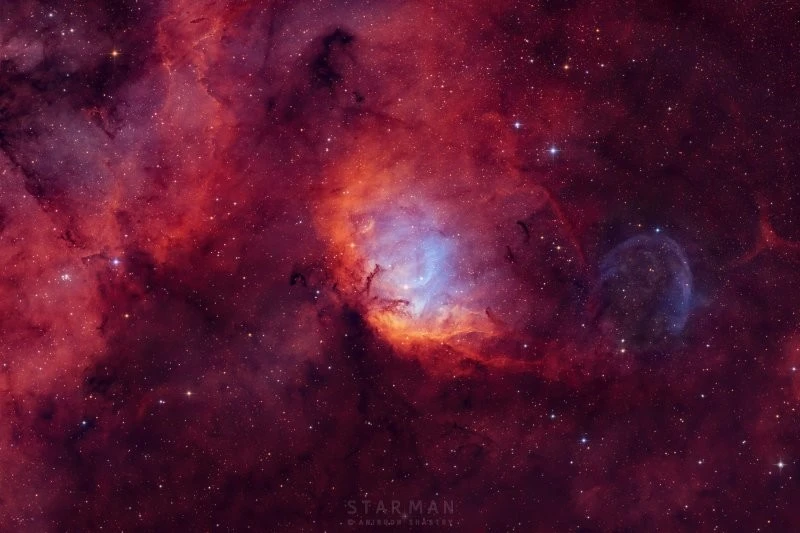
Rosette Nebula ($Caldwell 49$): A giant cosmic flower over 100 light-years in diameter. Its "bud" contains a star cluster, whose winds have blown out the central cavity, giving the nebula the shape of a blooming rose. 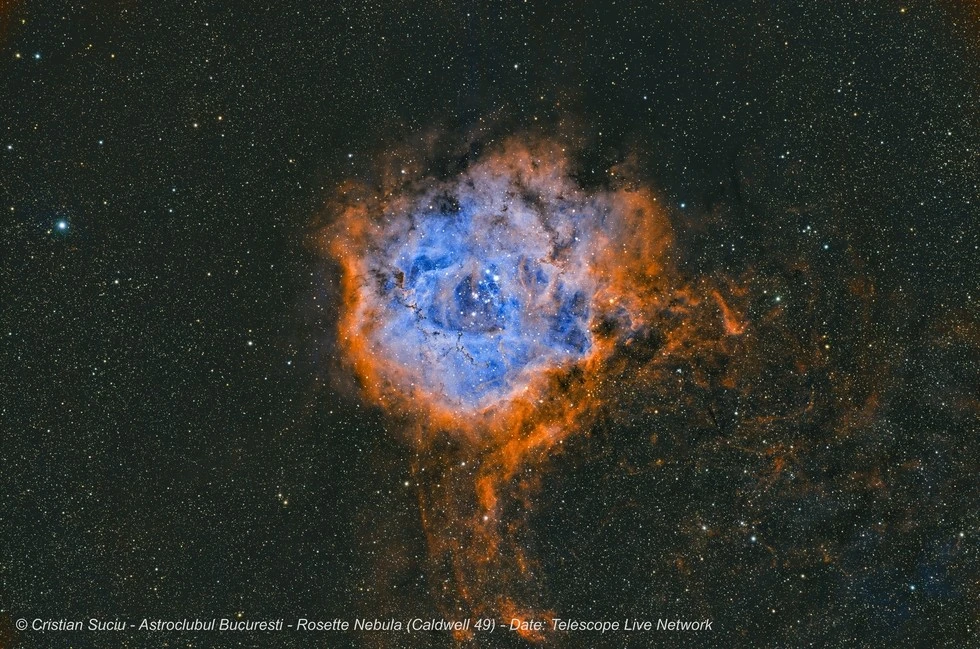
The Iris Nebula ($NGC 7023$): Unlike the previous nebulae, this is a reflection nebula. Its celestial blue hue is the result of starlight scattering by interstellar dust particles, similar to how light is scattered in Earth's atmosphere. 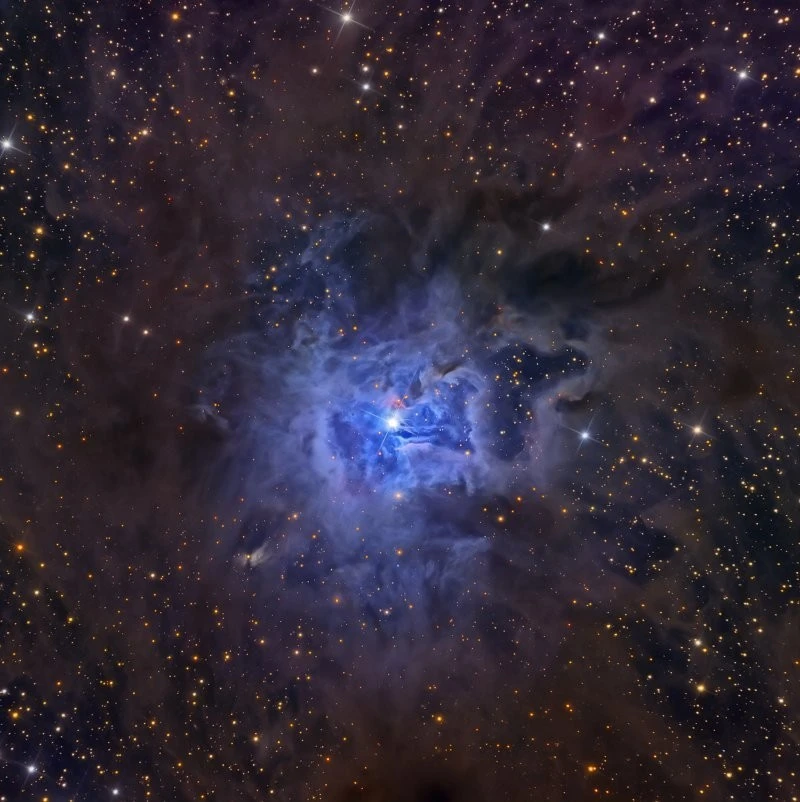
The "Heart" and "Soul" Tandem ($IC 1805$ and $IC 1848$): Two adjacent regions in the constellation Cassiopeia. Connected by shared gas flows and a common formation history, they form a large-scale complex where the pink glow of hydrogen marks the sites of the most active birth of new stars. 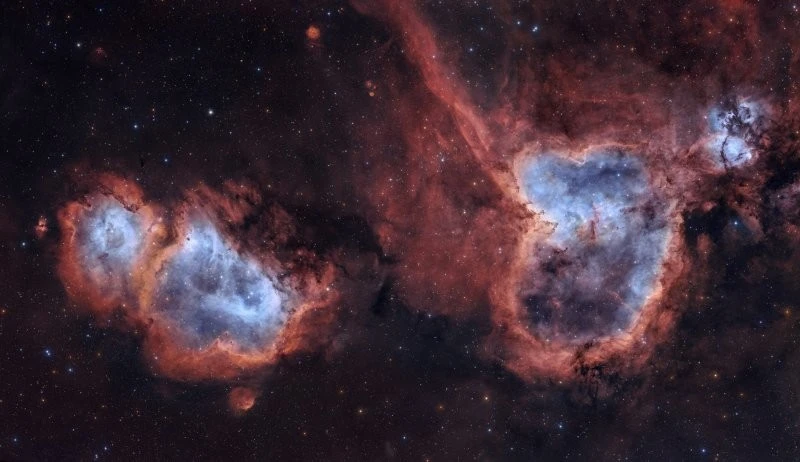
Like terrestrial flowers, these structures are short-lived on a cosmic scale: in a few million years, stellar winds will completely disperse the gas, leaving behind only shining clusters of stars. But today, they are the perfect symbol of creative energy and eternal renewal.