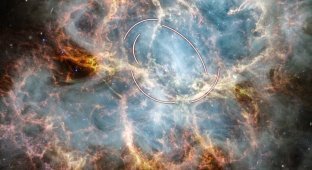
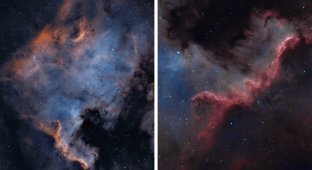
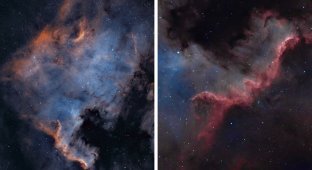
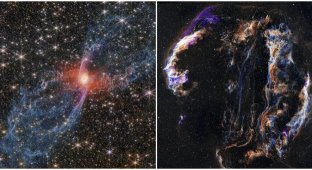
A Cosmic Masterpiece: Detailed Images of the Veil Nebula (9 photos)
The NASA/ESA Hubble Space Telescope, despite being 35 years old for such a complex piece of equipment, continues to delight scientists with invaluable data and connoisseurs of beauty with mesmerizing images. 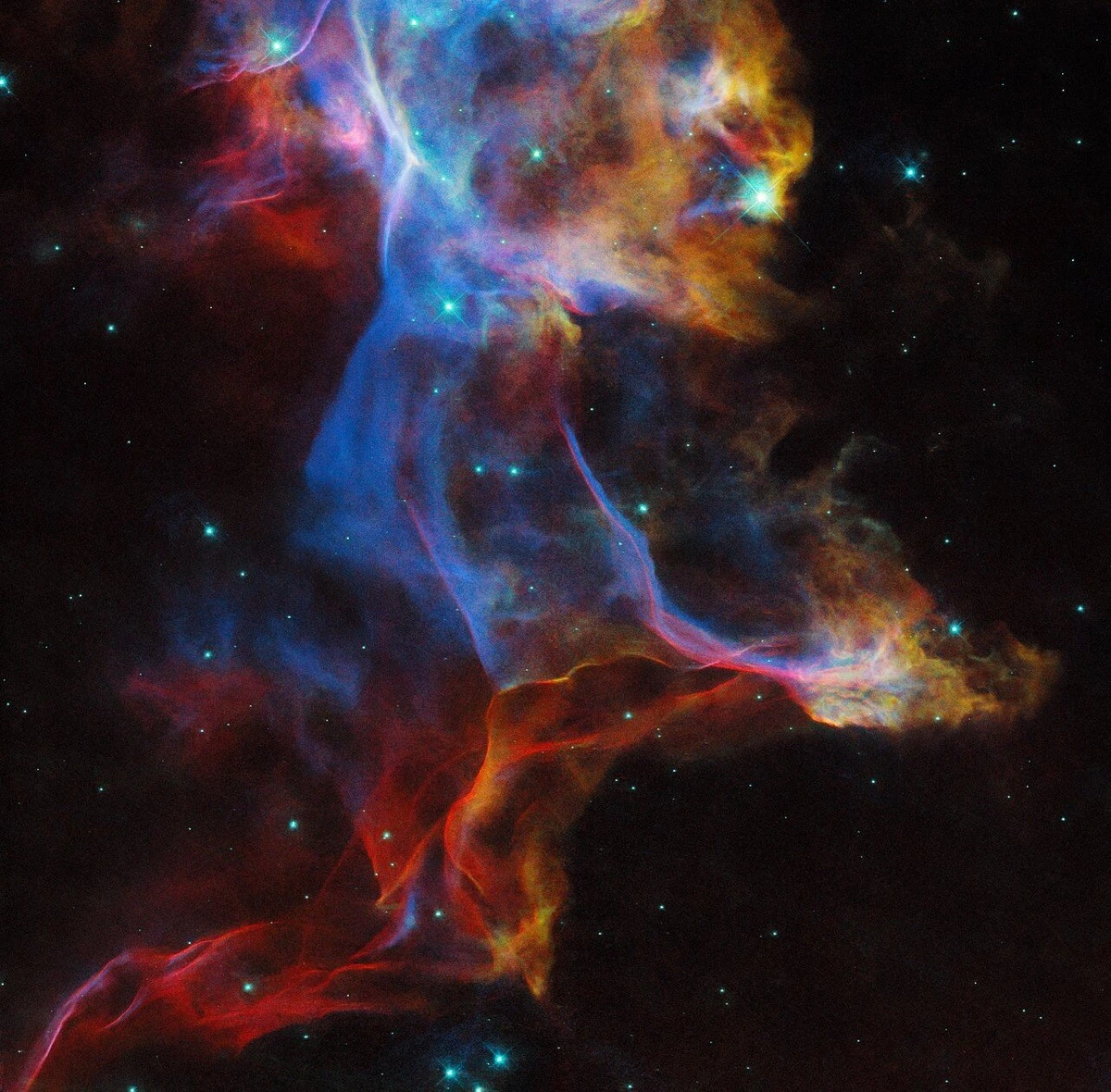
Today, I want to once again combine aesthetics with the study of the Universe, so I present to you detailed images of part of the Veil Nebula, along with extensive commentary that will broaden the field of knowledge for everyone.
A Cosmic Catastrophe That Created Beauty
The Veil Nebula is all that remains of a star 20 times more massive than our Sun. When such giants exhaust their nuclear fuel (hydrogen and helium, which fuse into heavier elements), their lives end in a massive supernova explosion. Stellar matter is blasted into space at speeds of thousands of kilometers per second. 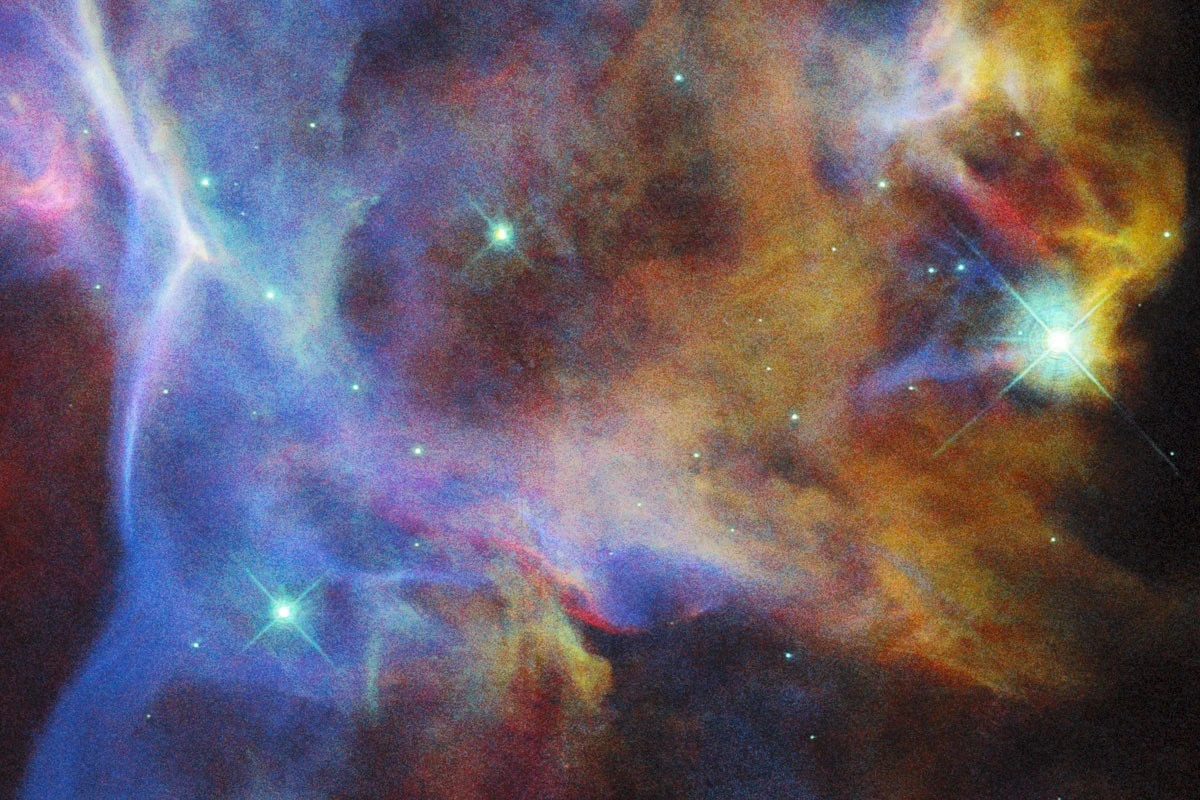
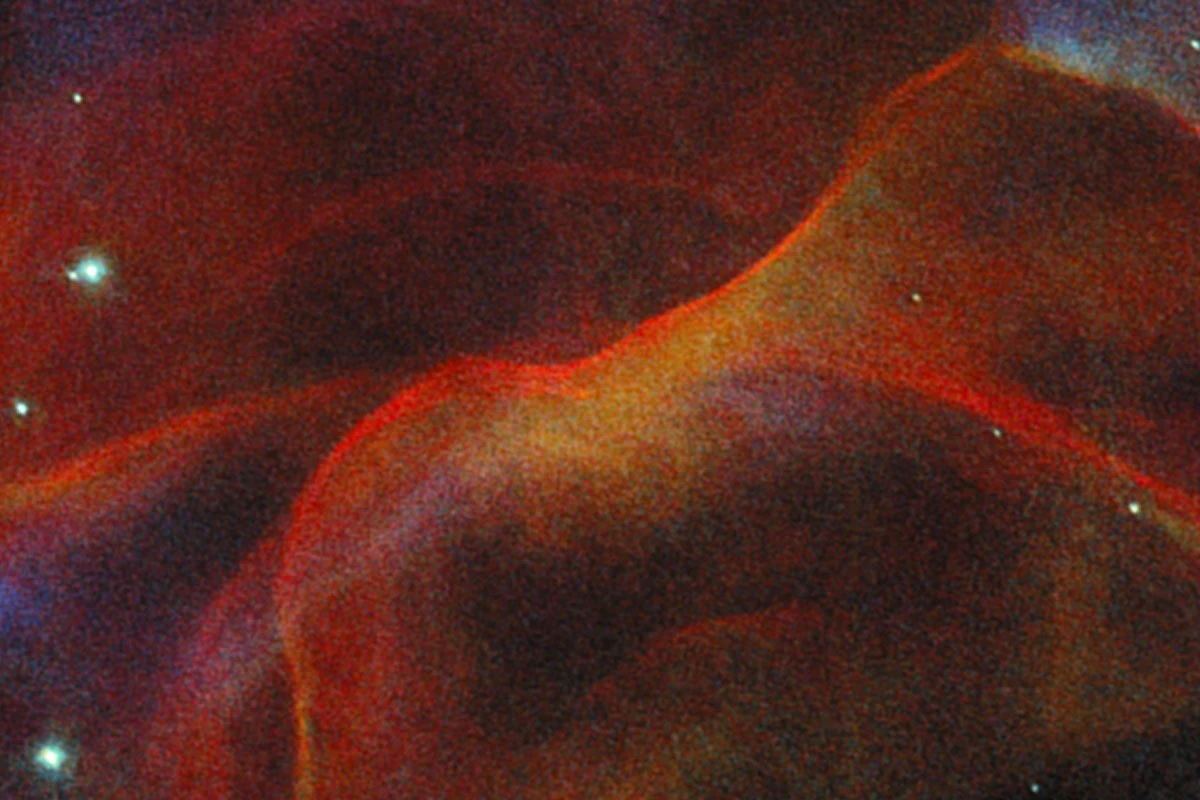
The green-blue stars are background objects located far beyond the nebula. 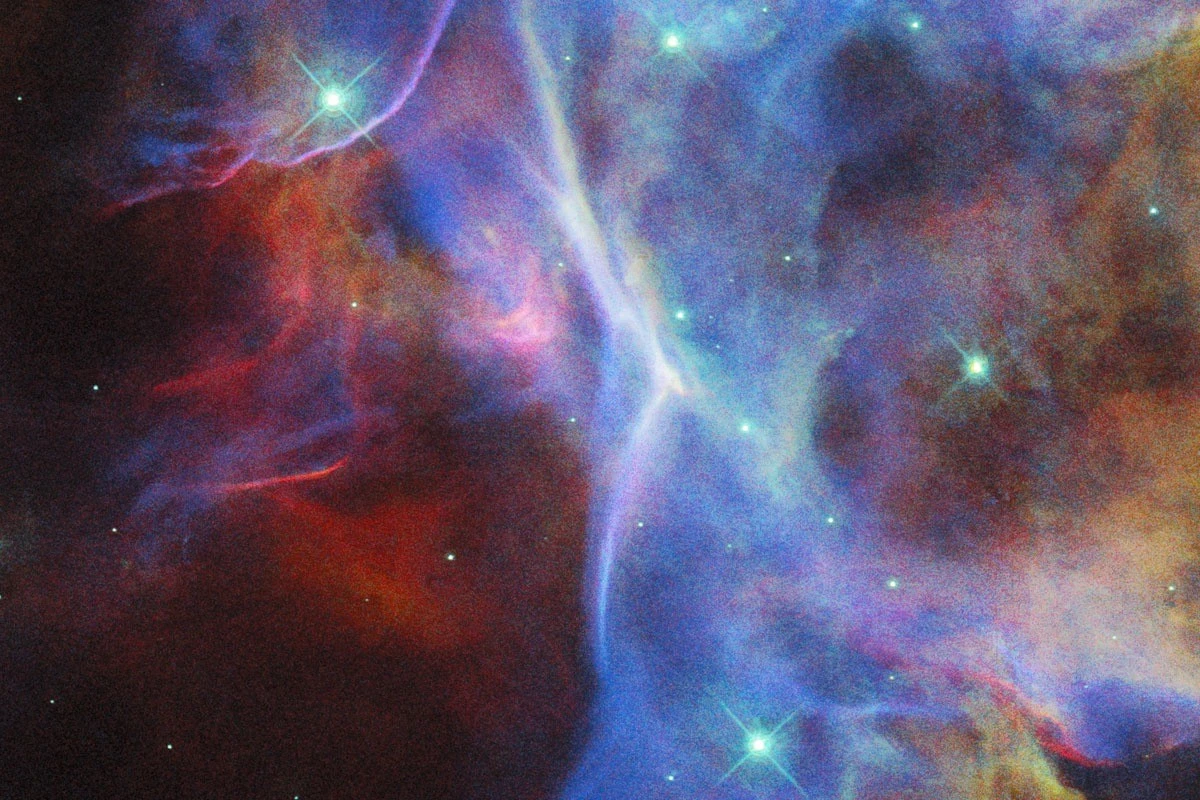
The Veil Nebula is located about 2,400 light-years from Earth in the constellation Cygnus. This object is so enormous (approximately 100 light-years across) that if it were visible to the naked eye, it would occupy an area of the sky the size of six full moons placed side by side.
Remarkably, the stellar explosion that created this Milky Way masterpiece occurred "only" about 10,000 years ago.
Cosmic Elements Palette
The nebula's vibrant colors are not a product of artistic imagination, but the actual glow of chemical elements under extreme conditions:
Red is the glow of hydrogen atoms, the most abundant element in the Universe;
Blue is the emission of oxygen;
Yellow-orange is the glow of sulfur, which creates specific transitional tones. 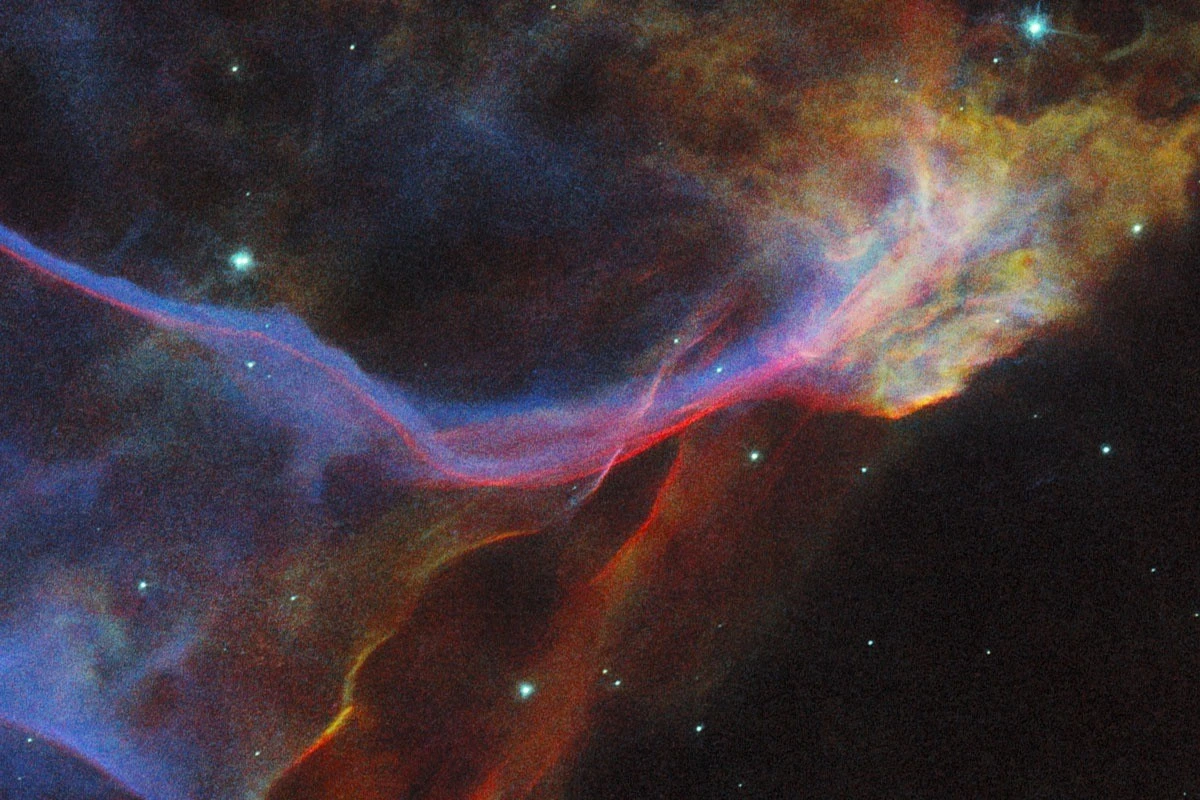
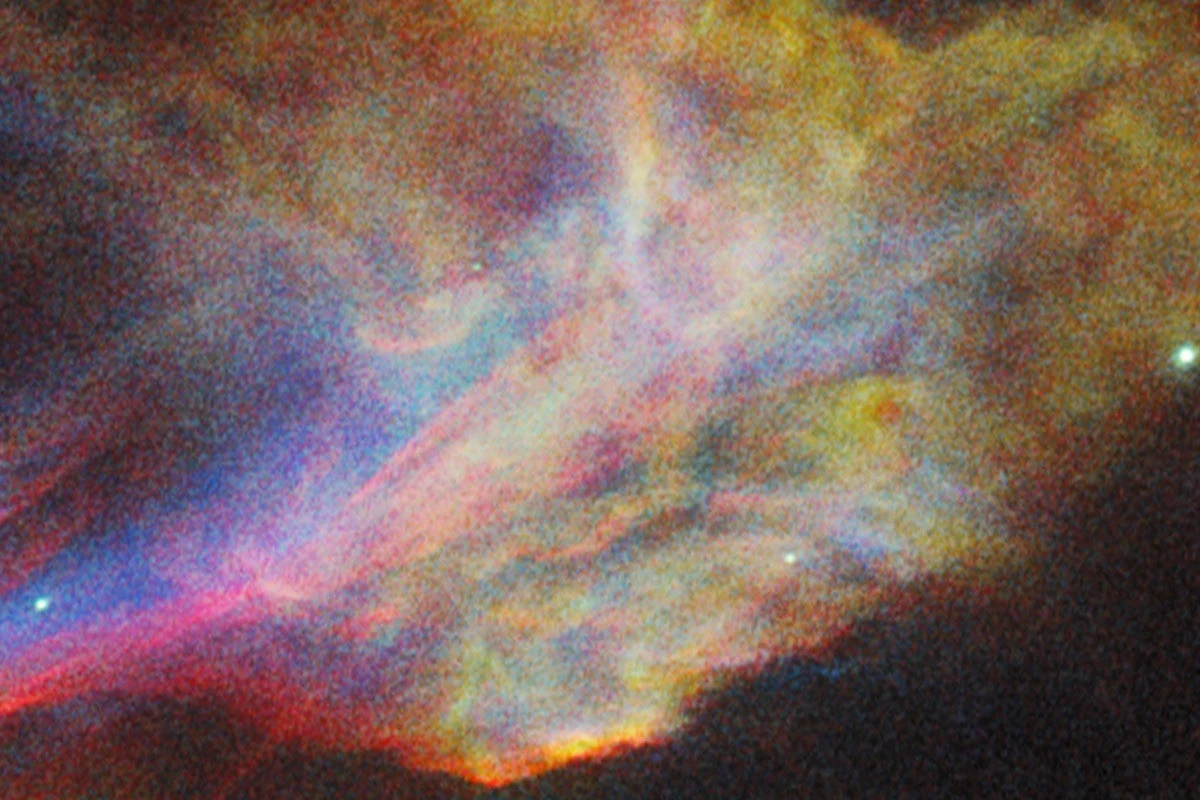
The nebula's "interior" is heated to millions of degrees Celsius, causing the atoms to emit light in various spectral lines.
The Living History of the Universe
Hubble has been regularly observing the Veil Nebula since 1994. Thanks to this, astronomers have access to data on the object's evolution over three decades. 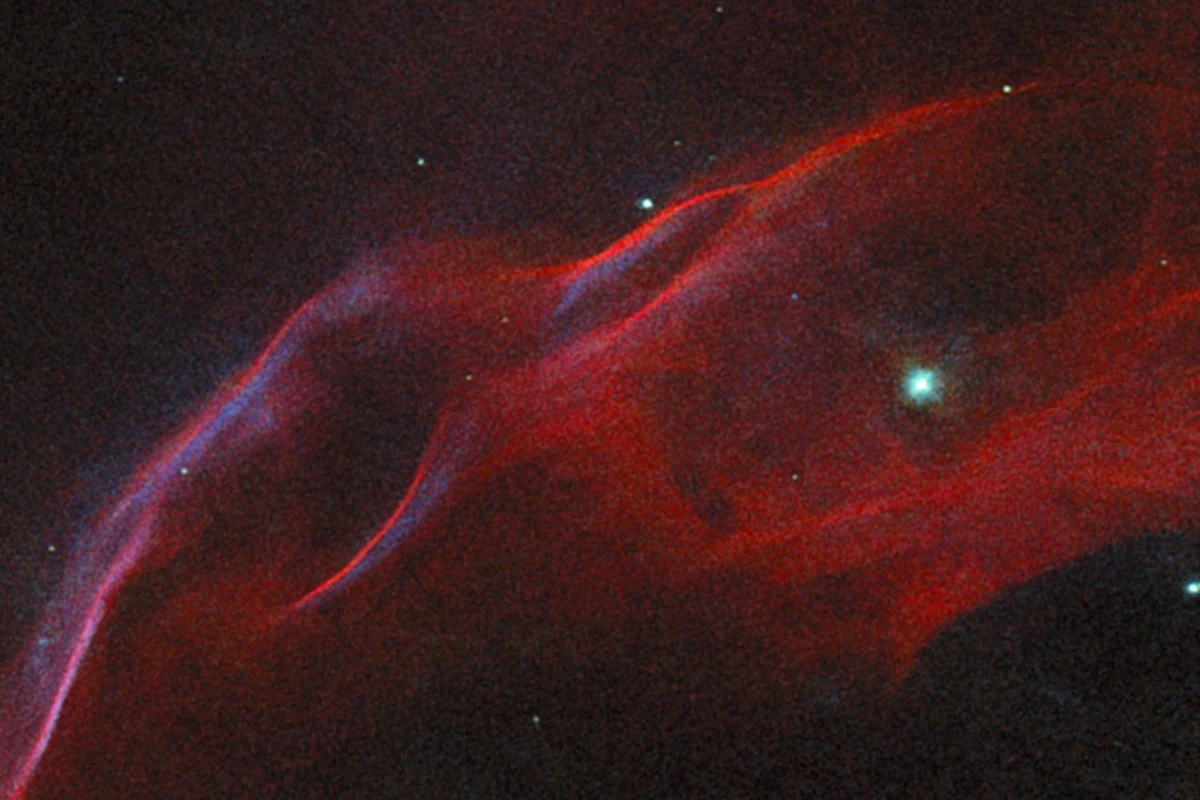
Hydrogen-Oxygen "Filaments" 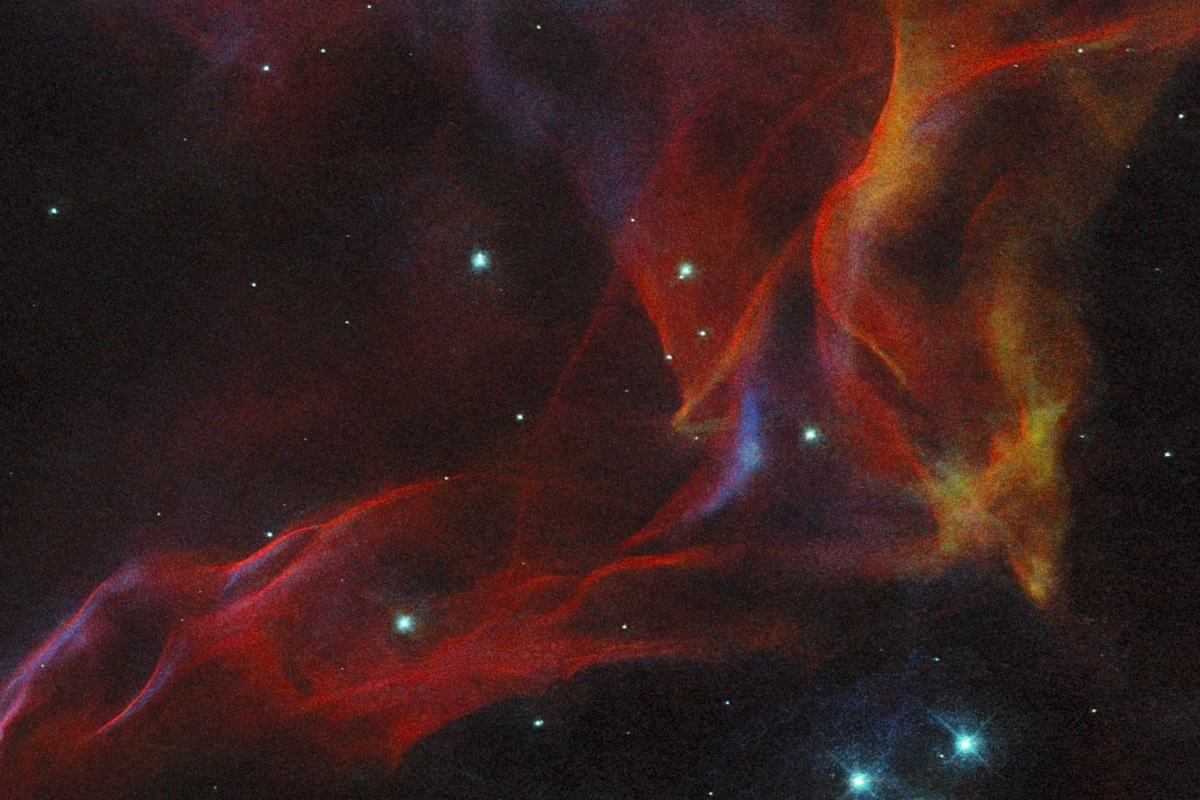
It is known that the shock wave from a supernova explosion continues to propagate through the interstellar medium, colliding with the surrounding gas, which is subsequently compressed and heated. This process, which continues for thousands of years, gives rise to complex filamentary structures that we observe as an intricate network of glowing filaments.
The Cycle of Matter in Nature
Stellar explosions play a key role in the evolution of the Galaxy. They not only enrich interstellar space with heavy elements synthesized in the depths of massive stars, but also stimulate star formation in the surrounding gas and dust clouds. 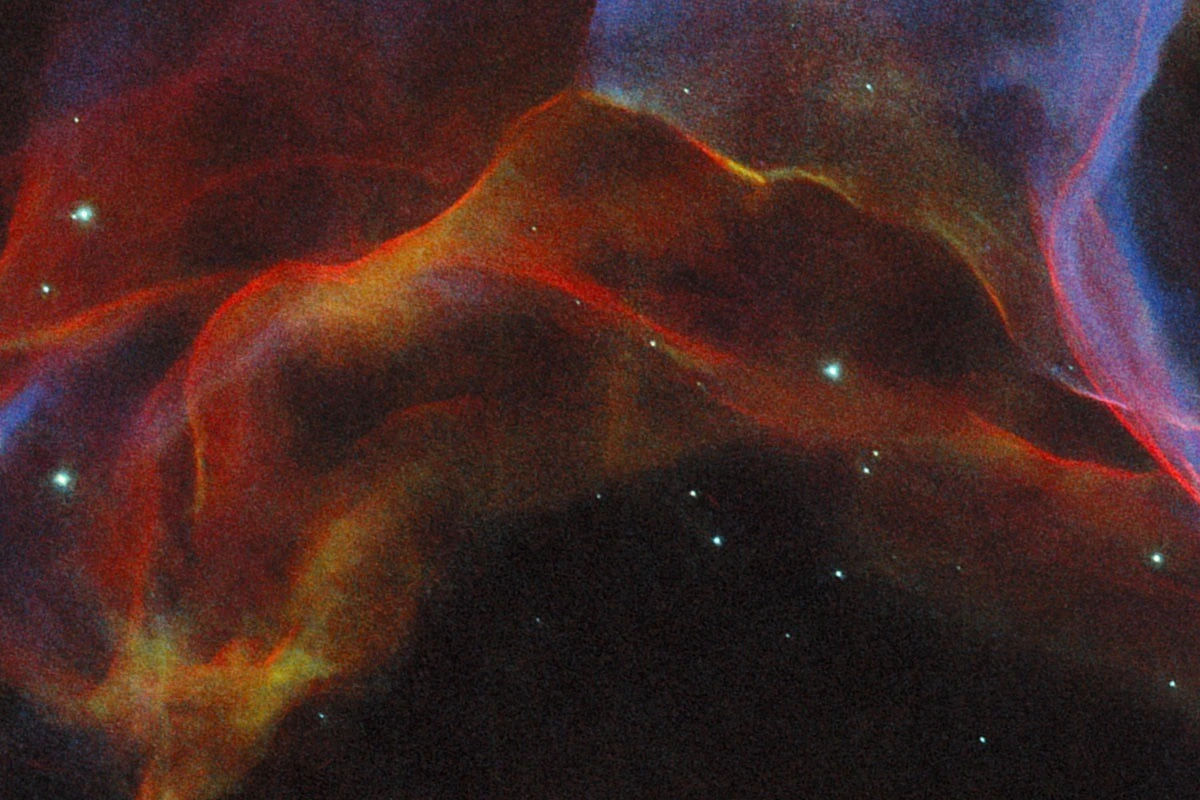
Gradually, the Veil Nebula will become the "building material" for future cosmic objects, becoming part of future stars and planets.
Read also:
Study: Supernovae Caused Two Mass Extinctions on Earth
The first direct evidence has been obtained that supernovae create black holes and neutron stars.
The James Webb Space Telescope is studying the supernova remnant SN 1987A.