The cheetah is the kindest wild cat in the world. Is it true that cheetahs never attack humans? 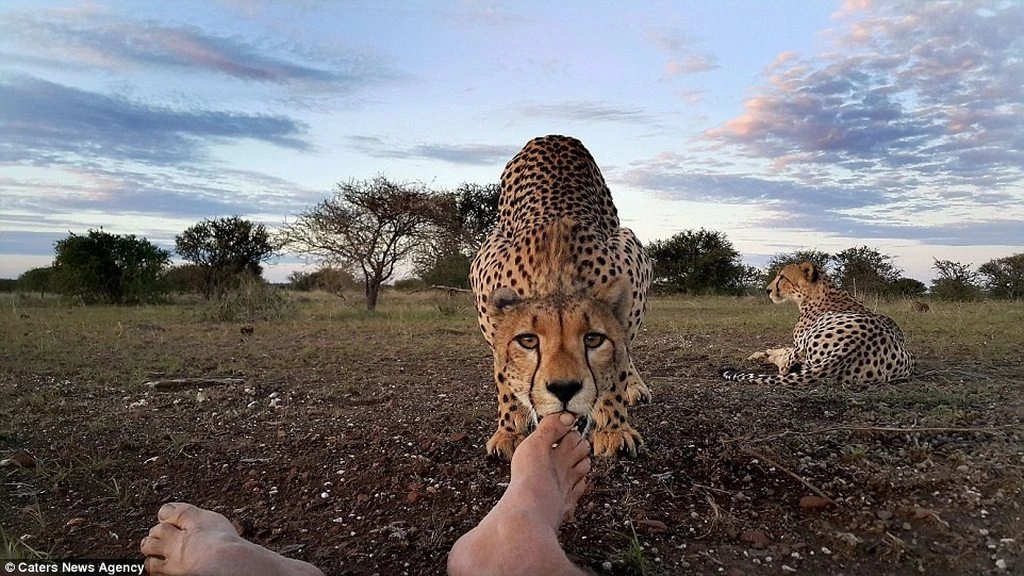
Well, maybe they don't attack, but at least they can try.
For comparison, a lion, the great and terrible king of the beasts, kills up to 250 people every year. And that's now, in the age of firearms! Tigers are a little less common, but still make you wonder – about 50 people die at their paws each year. And what about cheetahs? Brace yourself: in the entire history of wildlife research, there has never been a single officially documented case of a cheetah killing a person. 0 victims! 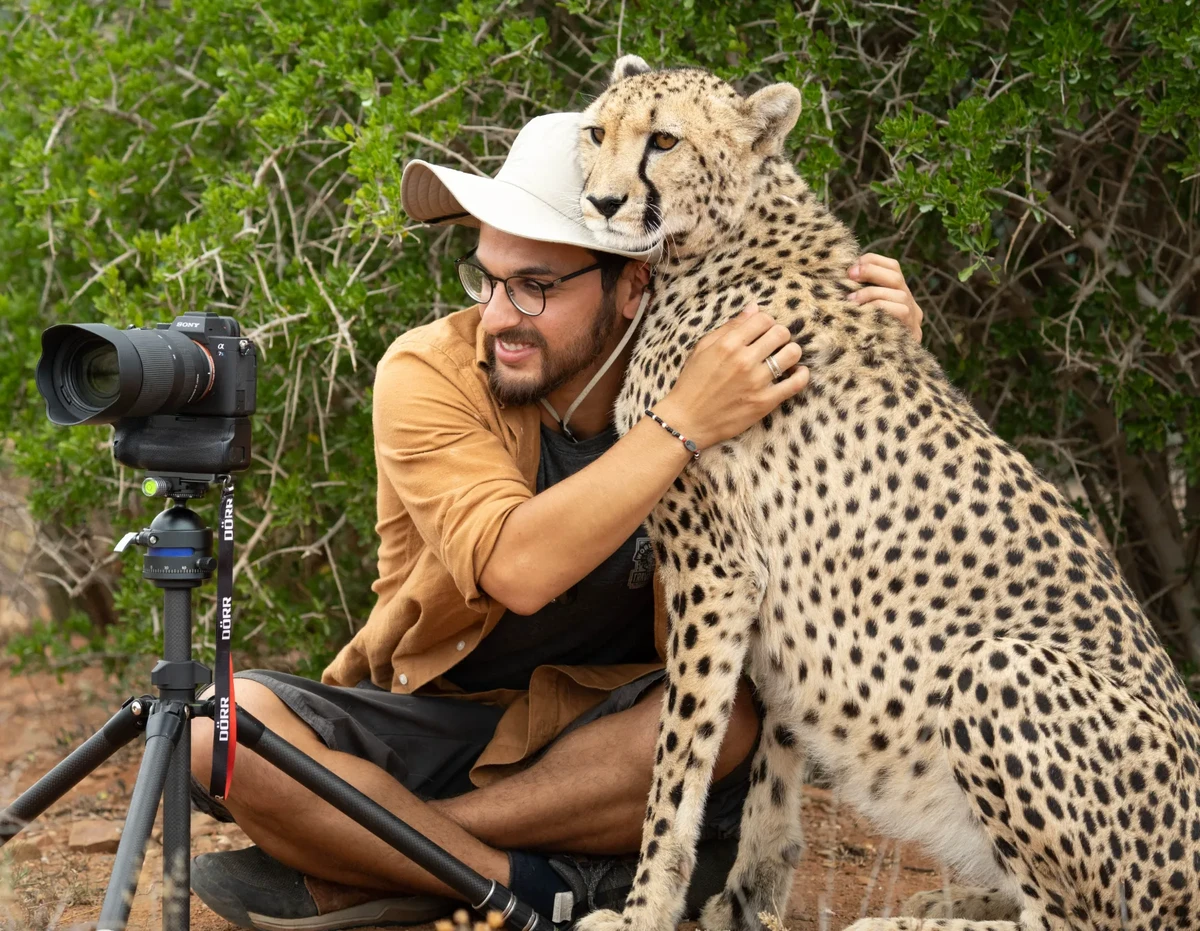
Who are you filming? You have the best in your hands!
There have been several attacks in captivity, but in those cases, the humans provoked the attack. For example, once a woman was bitten after she somehow climbed into the predators' enclosure at the zoo. The article could have ended there – no victims, no case – but it's not that simple. You're also interested in why these animals are so kind to us, aren't you? And what has this kindness meant for the cheetahs themselves? 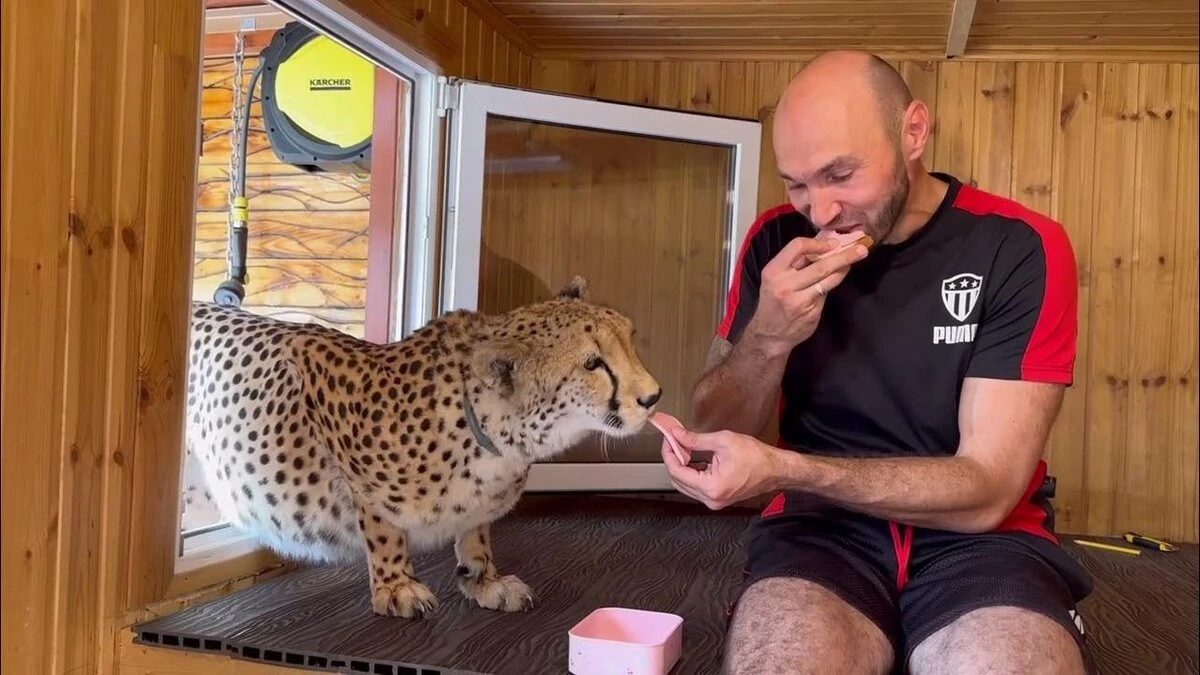
You're eating your sandwich wrong, Uncle Fyodor!
The most basic and simple reason for their kindness is that people are simply not on their menu. Cheetahs, unlike lions, tigers, and other large seals, who have spent millions of years honing their skills in close combat with heavy prey, have chosen a completely different direction – small ungulates. They're fun to chase across the savannah, and if necessary, they won't put up much of a fight. Unlike a buffalo or a zebra, for example. Or a large primate. 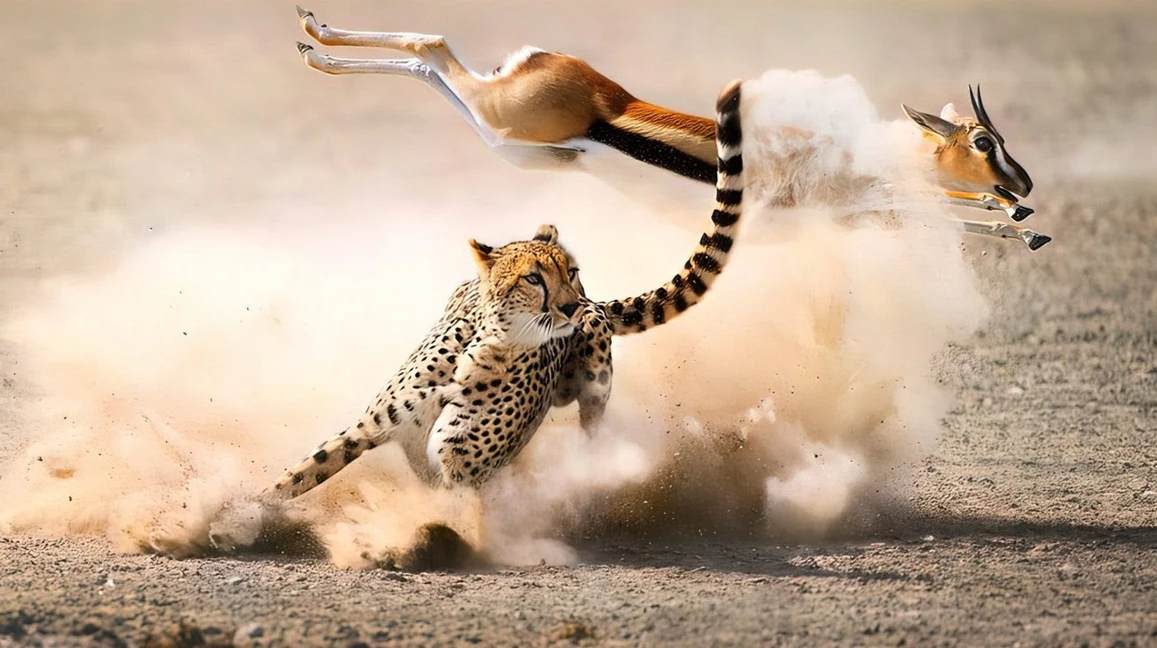
It's really fun to chase like that!
Cheetahs' hunting tactics are honed to the smallest detail: get as close as possible, give chase, trip, and strangle the fallen prey. Having evolved as sprinters, they have an ultra-lightweight anatomy, which now allows them to reach speeds of up to 104 kilometers per hour, but leaves them extremely vulnerable. Standing 94 centimeters tall at the withers, cheetahs weigh a maximum of 65 kilograms. By comparison, other whiskered animals of the same height weigh two or even three times more. These slender, ringing animals quickly become seriously injured in fights, meaning they risk starvation. 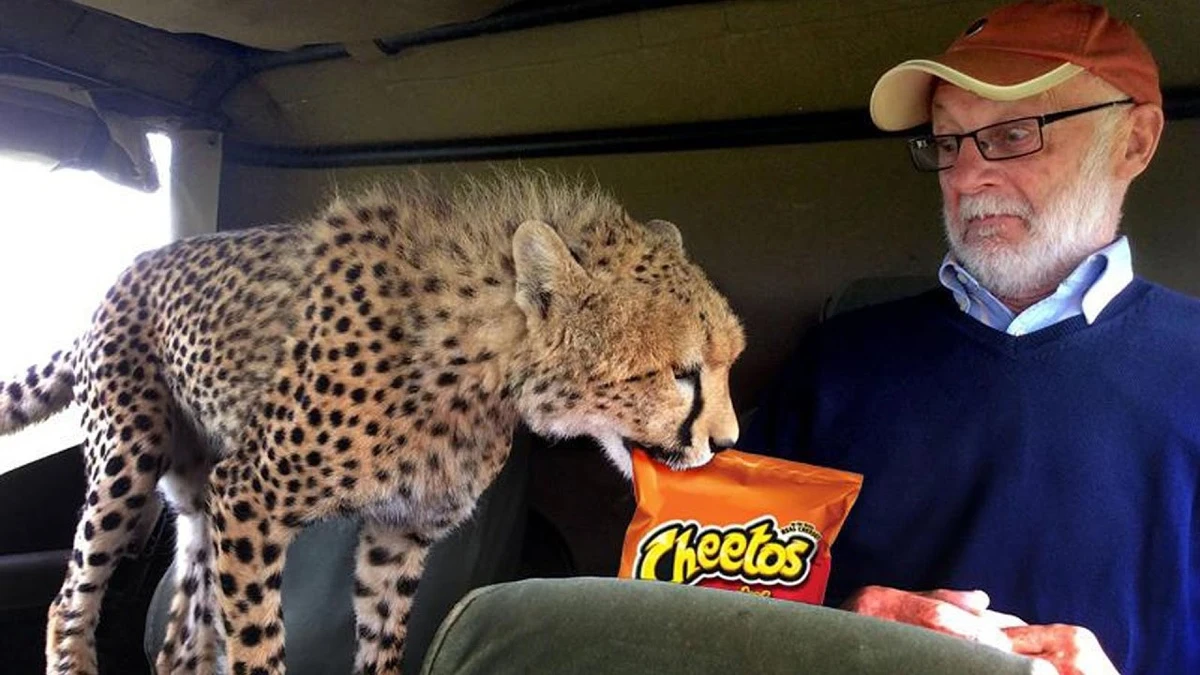
Is this considered cannibalism? 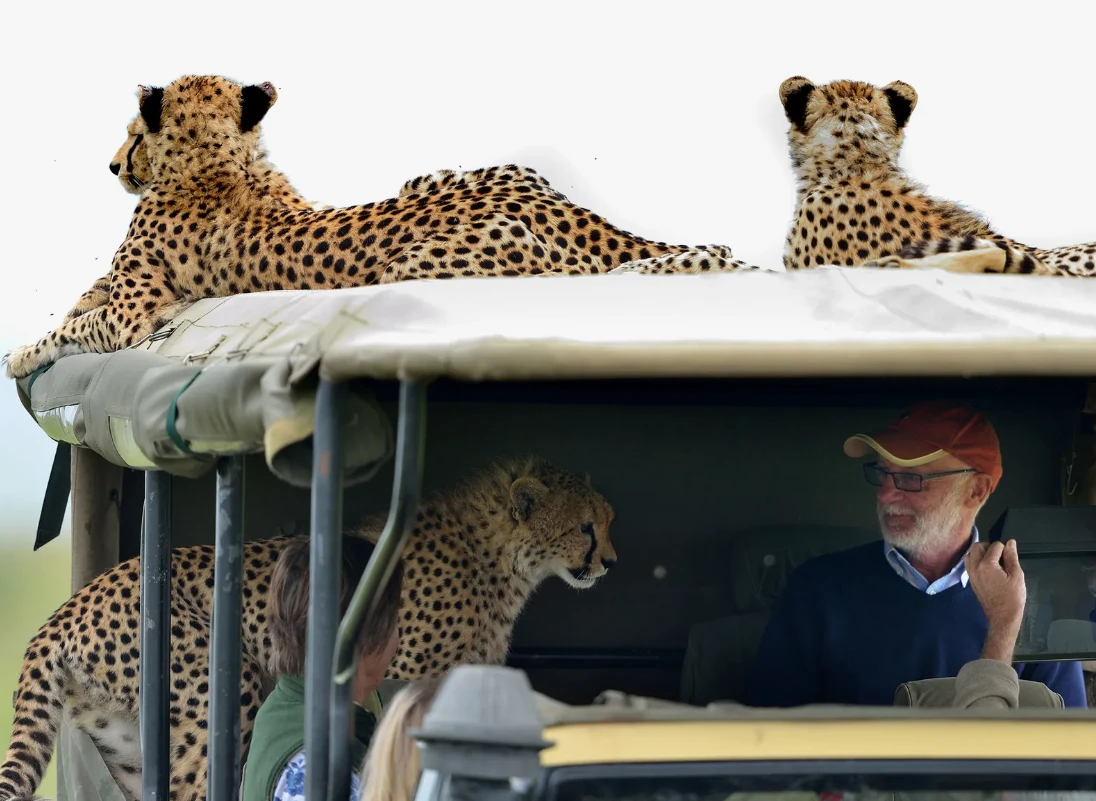
It looks like a pack of Cheetahs attracts all the cheetahs in the area...
And this is the second reason for the big cats' calm disposition. They are well aware of their fragility. Despite their superb hunting skills, cheetahs don't occupy the top of the food chain, but rather huddle somewhere in the middle. In the savannah, literally anyone can snatch their hard-earned food – lions, hyenas, leopards, even a pack of African wild dogs can chase off a poor runner. After a tough run, cautious cheetahs don't even complain: at the slightest threat, they simply drop everything and run. Life is more valuable. With humans, cats have a combo: we're too big, too noisy, and too inconvenient. We look bad as prey, and even worse as potential enemies. 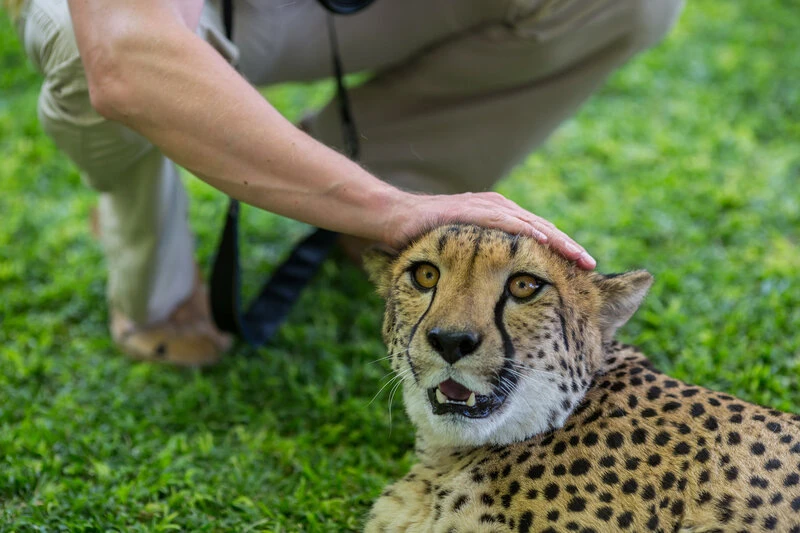
And let's be honest, you two don't look so great as friends either.
People have had their eye on cheetahs since the 3rd millennium BC – the big cats' friendly nature was already well-known. Until the early 20th century AD, almost 5,000 years in a row, these predators were captured en masse in the wild. This was all to make them "royal greyhounds." Not for food, but for sport. The captured whiskered creatures were trained to work alongside humans and tamed – a far cry from canine obedience, of course, but perfect for elaborate royal hunts. Cheetahs were brought to the site, set out to chase antelopes and other game, enjoyed by the hunters, the prey taken, and taken back to the palace. 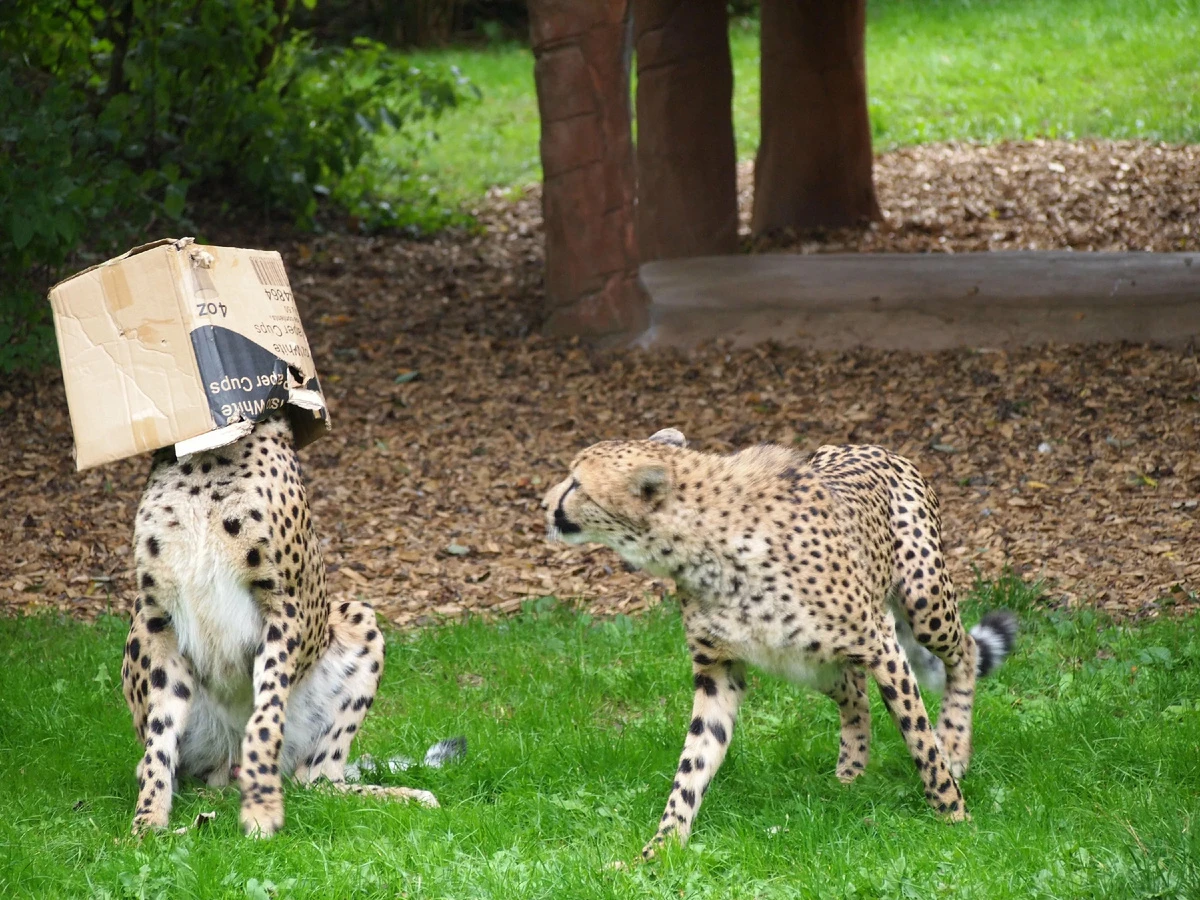
When you lied a little on your resume, but still got hired.
And you might say, rich people had a lot of hobbies: some like to hunt with golden eagles, others like to hunt truffles with pigs. But rulers' appetites were insatiable; no one ever limited themselves to just one or two cheetahs for show. The most famous Indian emperor, Akbar, kept up to 1,000 (!) animals at court at any one time. And over the course of his reign, more than 9,000 animals visited there! That's a lot: today, only 7,000 individuals inhabit the entire world. 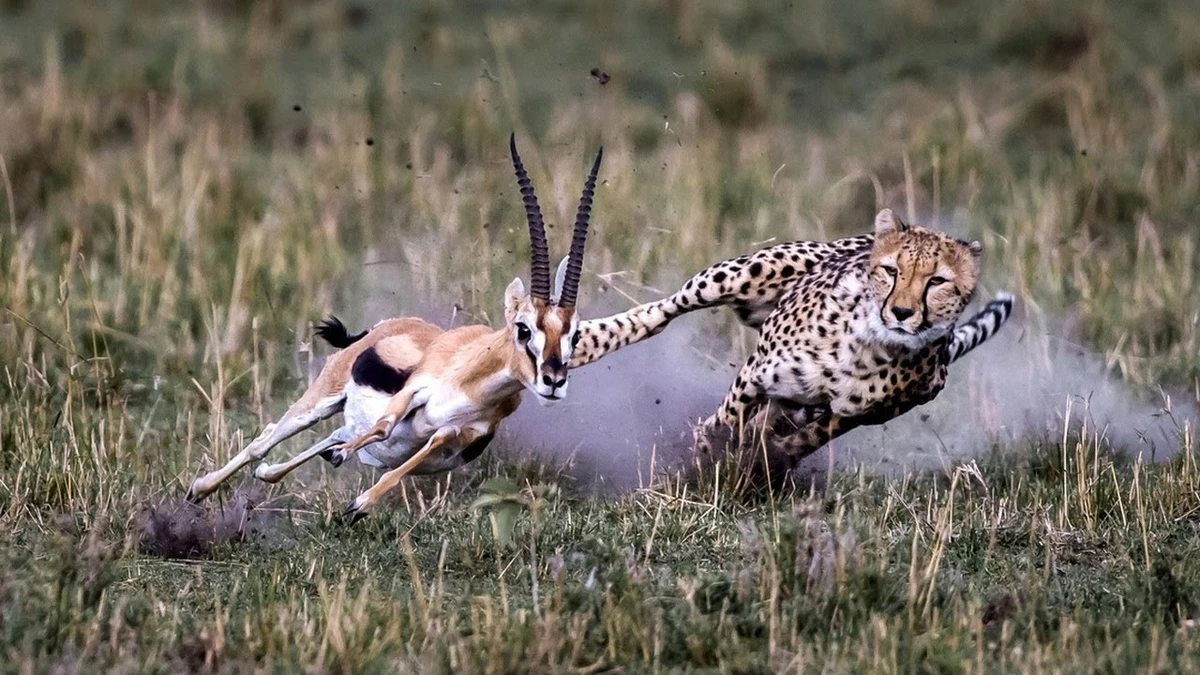
And all for a spectacle like this.
The problem is that the cheetahs refused to breed in captivity. Each time, new ones had to be captured in the wild, taking the cubs and young animals. Not all of them survived, so the number of captured animals is simply monstrous. This continues today, just done quietly. Yes, royal hunts no longer take place, but poachers still capture and sell the cubs as exotic pets, and one can only guess at the size of this black market trade. 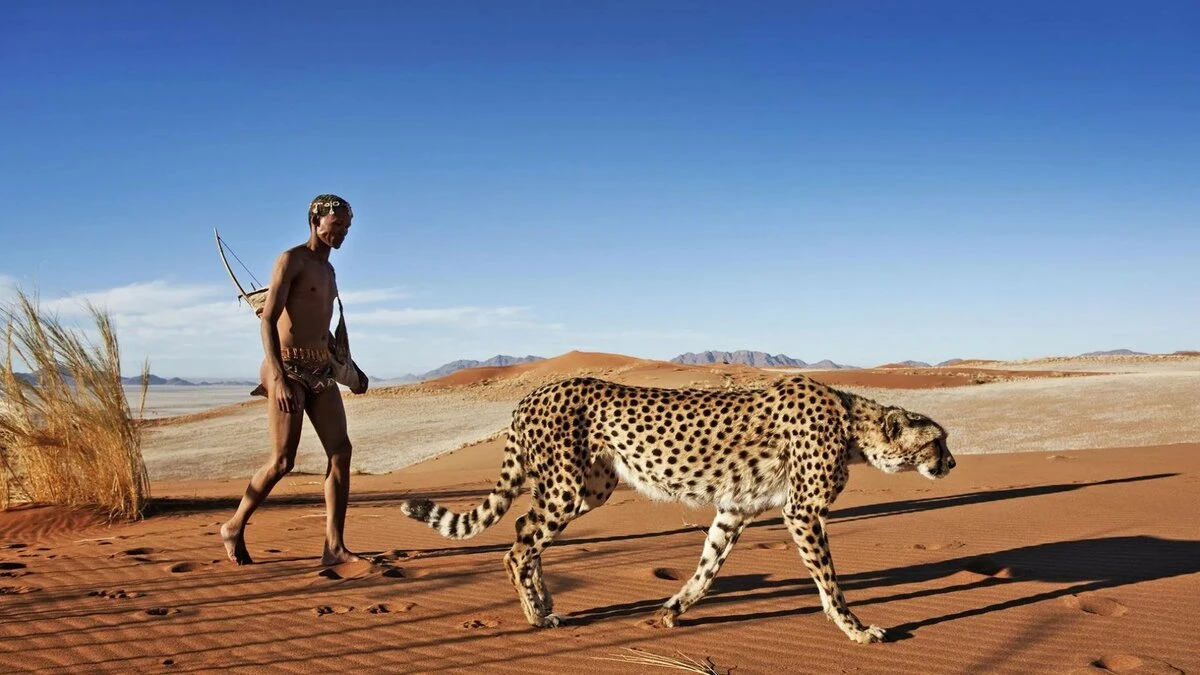
Hey, leather, maybe you should learn to hunt for your own food?
This mass poaching has become a significant factor in the species' extinction. Cheetahs once had a vast range, roaming across Africa and South Asia, but today, only pitiful dots remain of their former glory. Other reasons for their extinction are also linked to the cats' excessive "friendliness": conflicts with farmers when the animals came to feast on livestock, overhunting, and habitat destruction. Of course, building a village next to a pride of lions is scary, but cheetahs are nothing if not ugly – they'll budge. 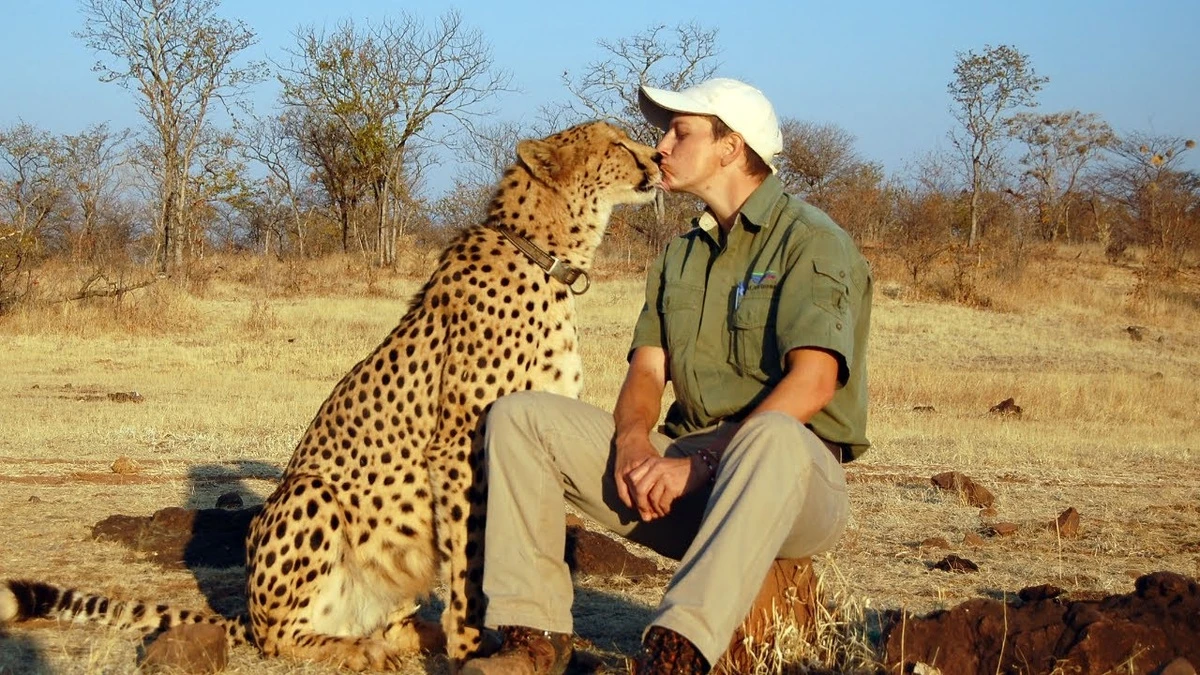
Fortunately, there are now many organizations that care about the welfare of cheetahs.
Add your comment
You might be interested in:













A car transporter with very rare Mercedes was spotted in

A young Ukrainian itishnik became the owner of the McLaren

In Ukraine there is a famous buyer for the most extreme

The neural network generated a photo of a spectacular
At first glance, a cheetah is a bloodthirsty predator, but
How a cheetah meows and purrs
The cheetah who loves this man
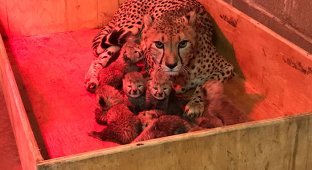
World's rarest female cheetah gives birth to 8 cubs

30 photos with the main cat weapon - claws (31 photos)

17 Photos That Will Stop You in Your Tracks (18 Photos)

Behind the Camera on 'Back to the Future' (45 Photos)

22 Examples of Pure Design Genius That Deserve a Huge

What Would Happen to a Human on Every Planet in the Solar

The Sexual Customs of the Vikings: Why an Older Partner Was

Stunning Views of the Martian Horizon from 400 Kilometers

15 Mind-Blowing Sex World Records You’ve Probably Never

20+ Fascinating Photos of Rare and Unusual Sightings (40

30 Fascinating Movie Details You Probably Never Noticed (31
