Chilean Astronomers Show How a Star Transforms into a Masterpiece (3 photos + 1 video)
Cosmic beauty in your feed. 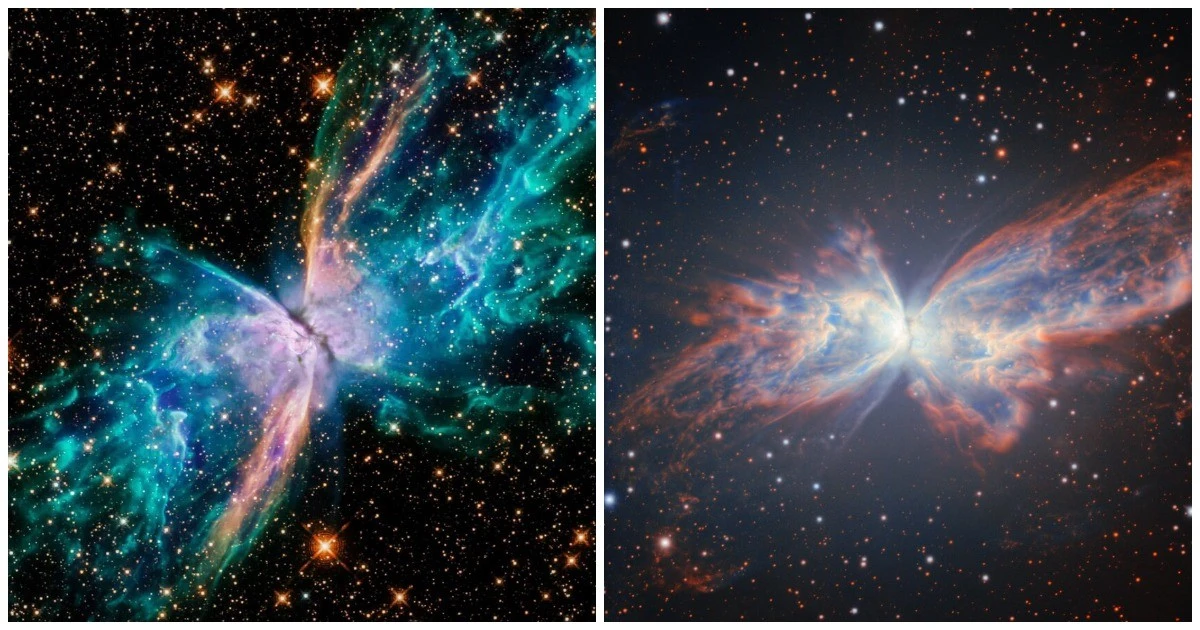
The other day, the US National Science Foundation's NOIRLab astronomy laboratory published an image that will take your breath away, even for those accustomed to cosmic beauty. A giant "butterfly" of hot gas hovers in the constellation Scorpius, 2,500 to 3,500 light-years from Earth.
Its "wings" stretch for light-years, and the delicate hues of turquoise, pink, and violet make us forget that we're looking at a dying star, not a living being. 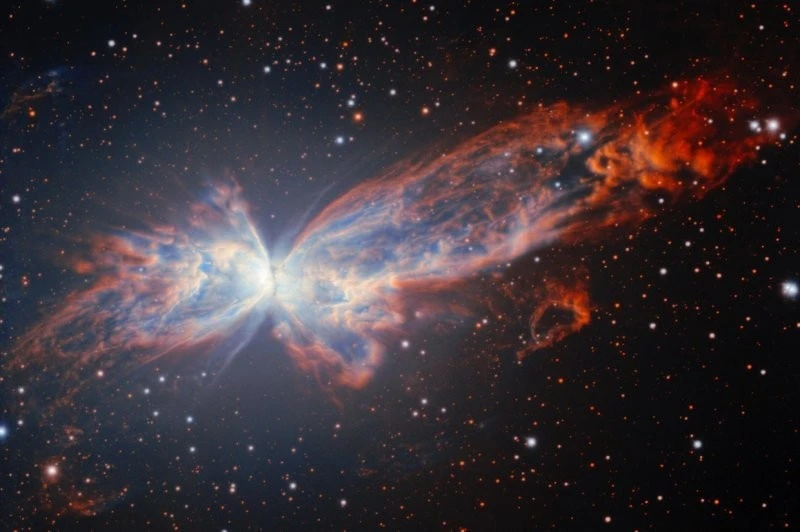
At the center of NGC 6302, long nicknamed the Butterfly Nebula, lies a white dwarf—a tiny but incredibly hot star left behind after its Sun-like progenitor ran out of fuel.
Several thousand years ago, it shed its outer layers like an old skin. These ejected gases, heated to tens of thousands of degrees, began to glow under the dwarf's ultraviolet radiation and transformed into the symmetrical "wings" we see today.
The new image was captured by Chilean astronomers using the Gemini South telescope as part of the observatory's 25th anniversary celebration. Chilean schoolchildren and students chose this particular nebula because it resembles a butterfly, which lives only one day but manages to become the most beautiful in the world.
Indeed: the life of this cosmic butterfly is also short by the standards of the Universe—only a few tens of thousands of years—and then it will dissipate into interstellar space, leaving behind only a white dwarf, which will cool for billions of years.
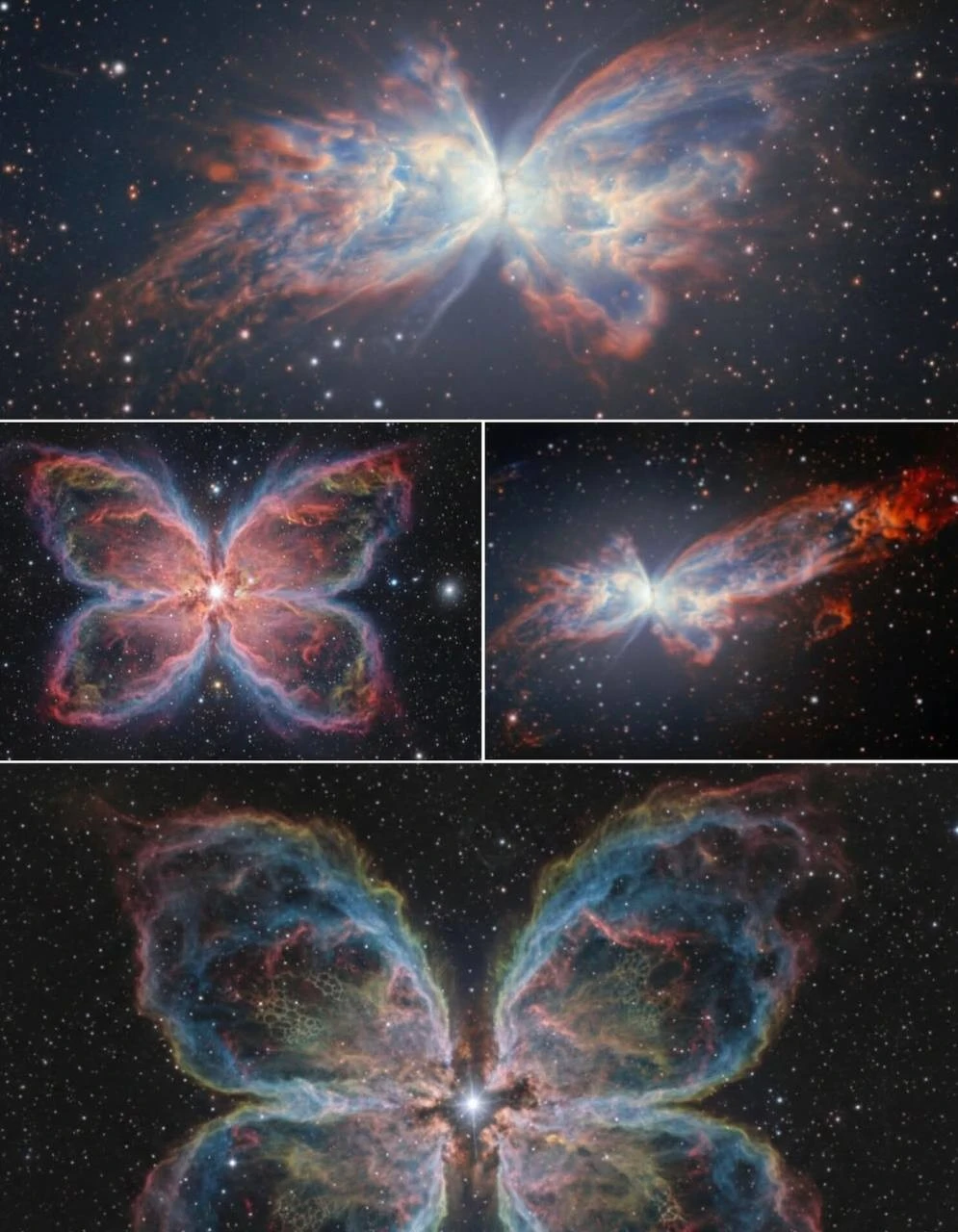
This image shows how gracefully nature repeats its forms at different scales: from tiny insects on Earth to gigantic structures in the depths of space. Where the life of one star ends, a new work of art begins, visible for thousands of light-years. And while we gaze upon this distant beauty, somewhere in Chile, the children who chose this nebula are already dreaming of becoming astronomers, so they can one day show us another such "butterfly" soaring into infinity.