Irukandji jellyfish: its sting causes madness (8 photos)
When European colonists arrived in Australia, the Aborigines knew nothing about jellyfish. They simply knew that sometimes people entering the water would experience increasing pain and then go mad. Those infected with an unknown affliction would shy away from every shadow, unable to lie still, and constantly whisper of imminent danger. Fortunately, the obsession passed along with the pain. Unfortunately, sometimes it took a person's life. 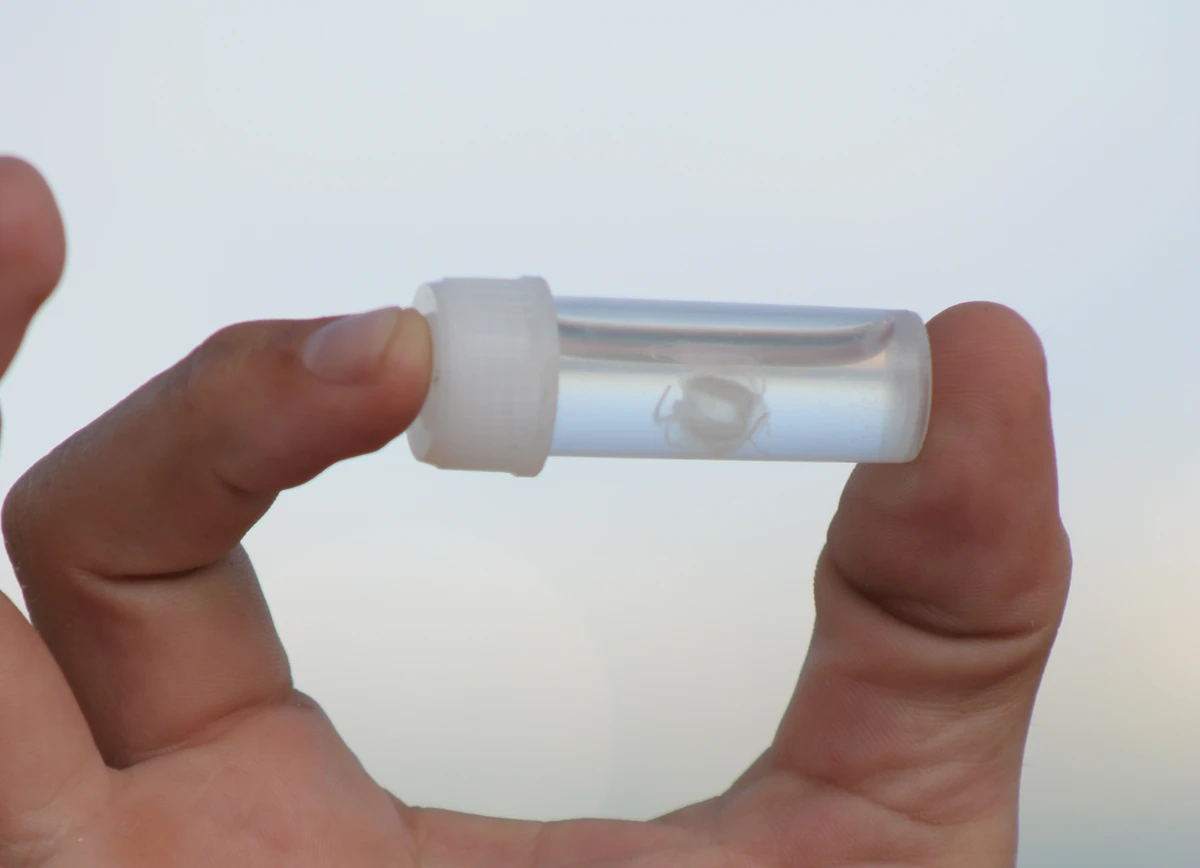
Death in a jar. Inexpensive.
For centuries, neither the colonists nor their descendants could understand why they were periodically so severely mangled in the coastal waters. It was only in 1964 that physician and toxicologist Jack Barnes caught a jellyfish just 2 centimeters in diameter and allowed himself to be stung by it in order to reliably determine the mechanism of action of the tiny venom. Thus, humanity learned of the Irukandji jellyfish, and Jack received an emergency trip to the hospital. Fortunately, this selfless man was saved, and his nine-year-old son was not left an orphan. 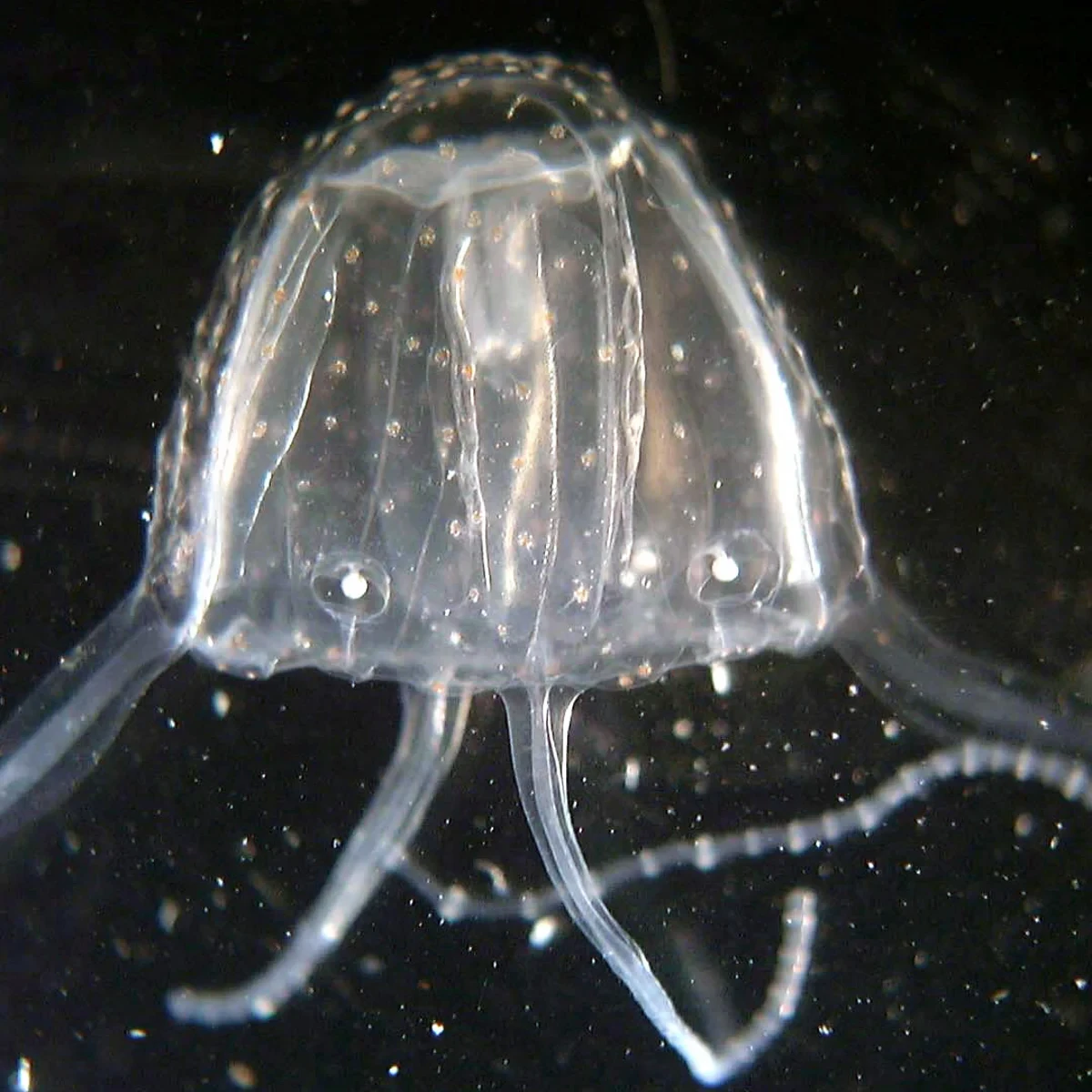
Irukandji jellyfish are toxic from birth, but their venom becomes more powerful the older the animal gets.
A little later, it turned out that the micro jellyfish is not only toxic and deadly, but also incredibly vile. Although small, its tentacles can extend up to a meter from its dome. This is very convenient when paralyzing plankton and small fish with its venom, but it's very annoying for people trying to find the source of their problems. Try spotting it at such a distance and underwater! 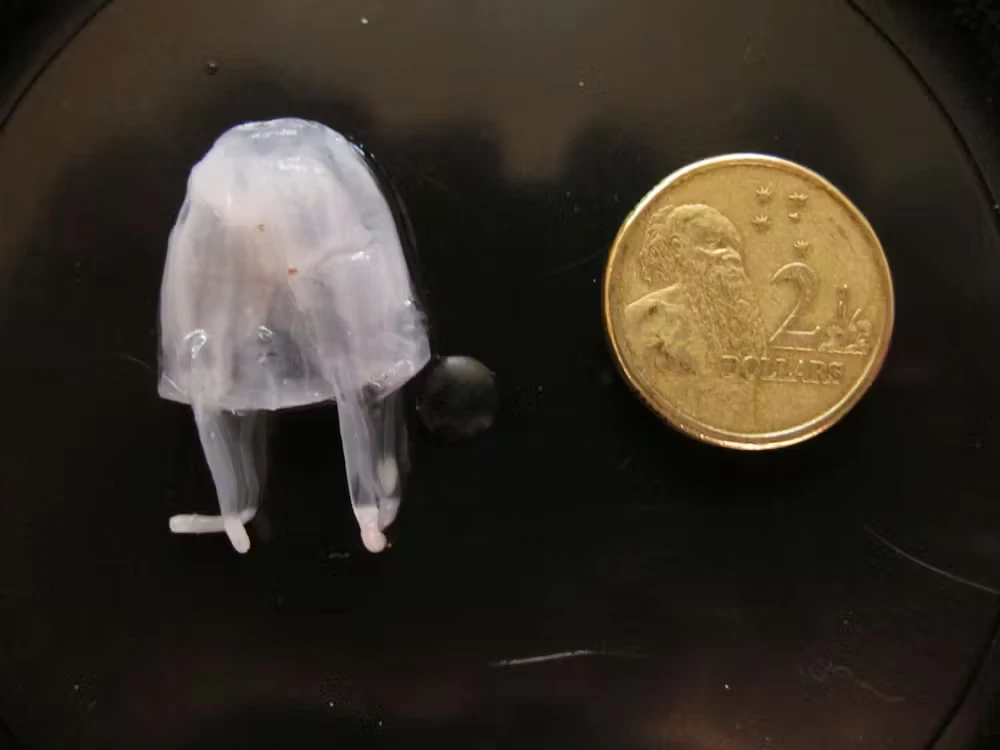
Are you buying or selling? 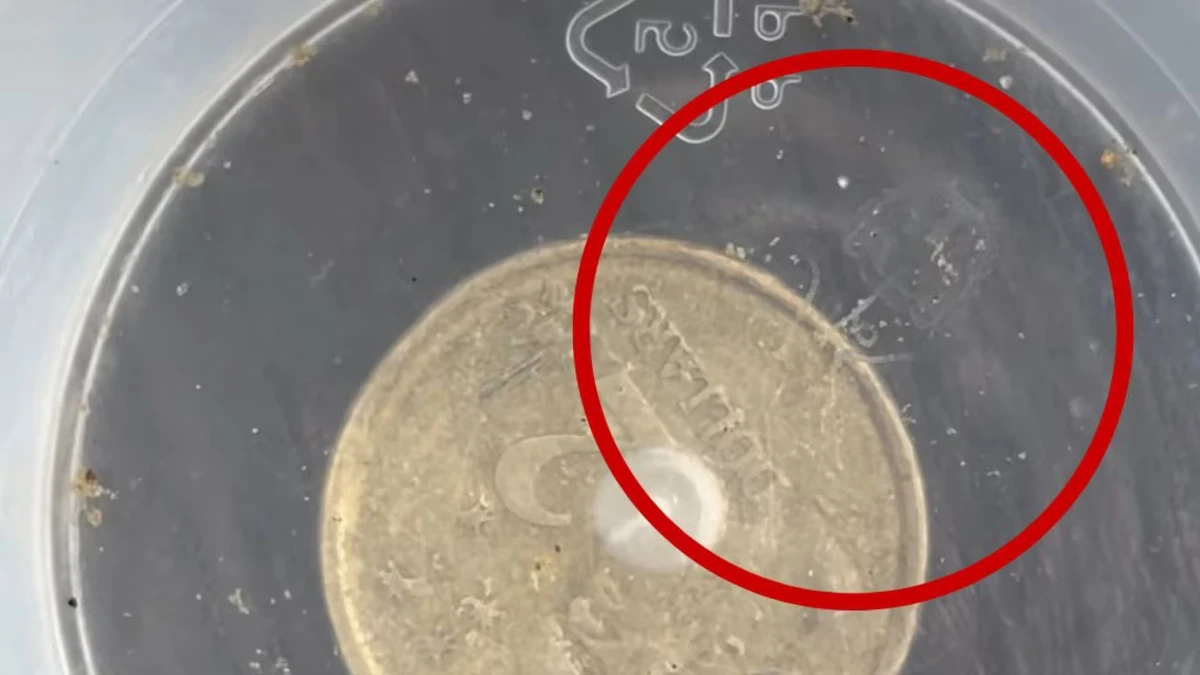
These virtually invisible, translucent threads are the incredibly dangerous tentacles of a venomous jellyfish. It's simply impossible to see them in advance.
Especially since immediately after the bite, a person experiences no discomfort whatsoever. Only after five minutes does a slight itching sensation begin—as if a mosquito had bitten them—which then gradually turns into a sensation like "an electric drill has been stuck in my lower back." This is how Irukandji syndrome begins. 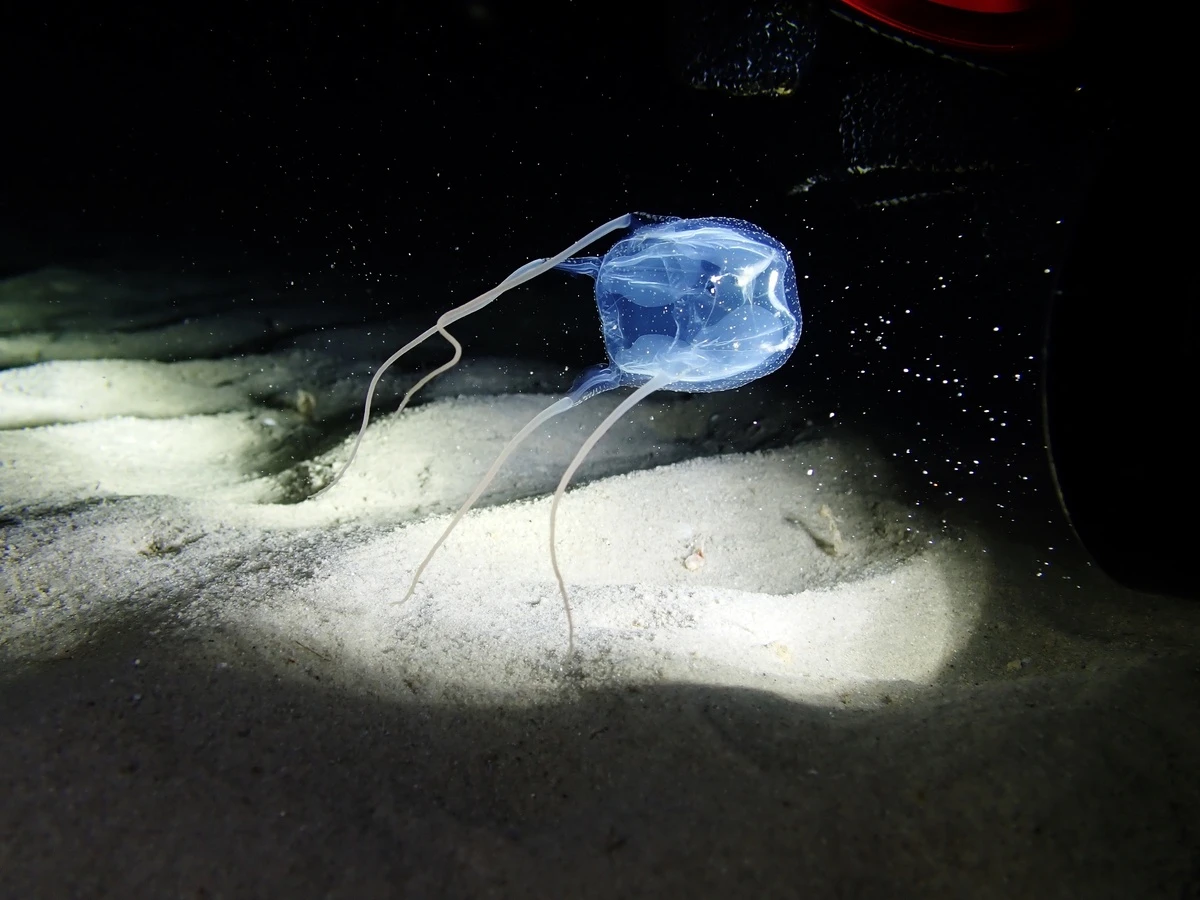
There are some extremely unpleasant photos of stings from these jellyfish, but we won't show them.
Pain at the sting site is followed by headaches, muscle cramps, tachycardia, and respiratory distress. The mixture of Irukandji toxins skillfully disrupts the body's nervous system and causes it to release a whole host of neurotransmitters and hormones, driving the brain crazy. 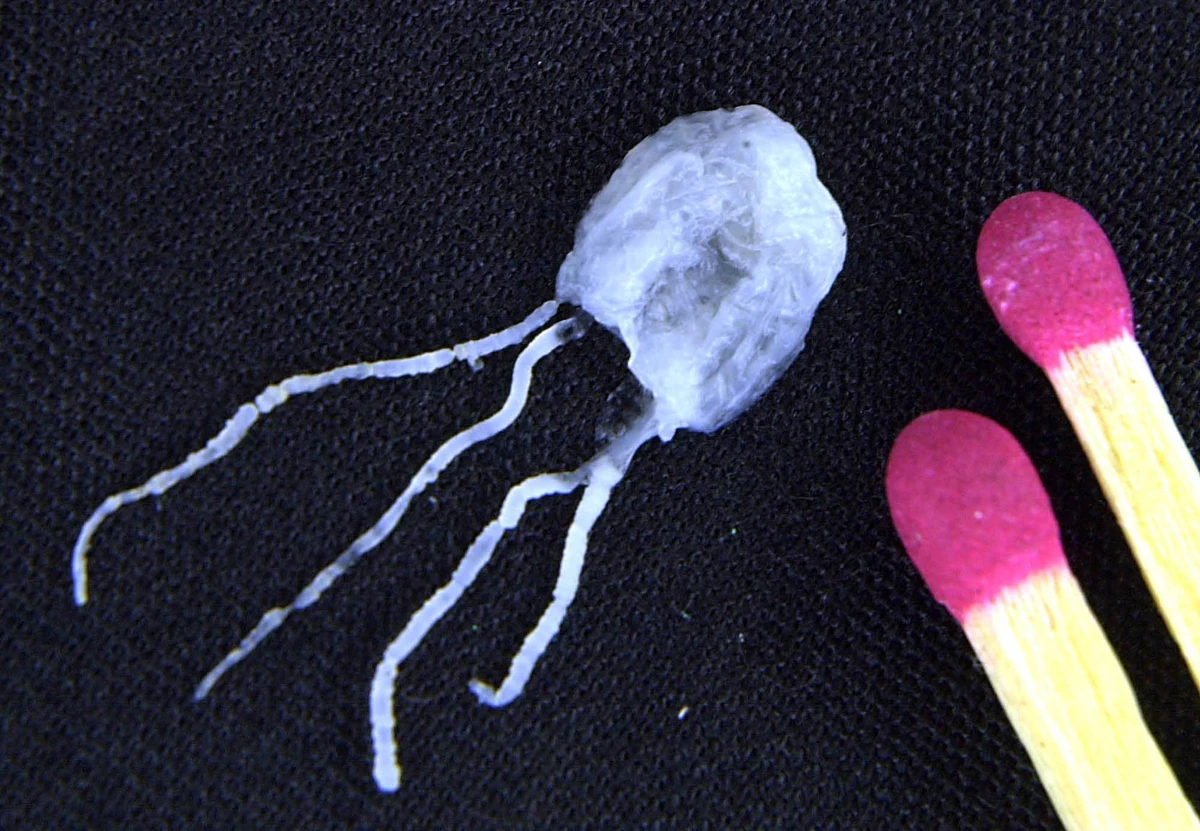
Such a small thing, but so many problems.
Therefore, following disruptions in the body's functioning, the mind's functioning is also disrupted. Nervous agitation gives way to anxiety; the person is unable to think clearly and cannot shake the feeling of being watched. Or, alternatively, the feeling that an inevitable catastrophe is looming. 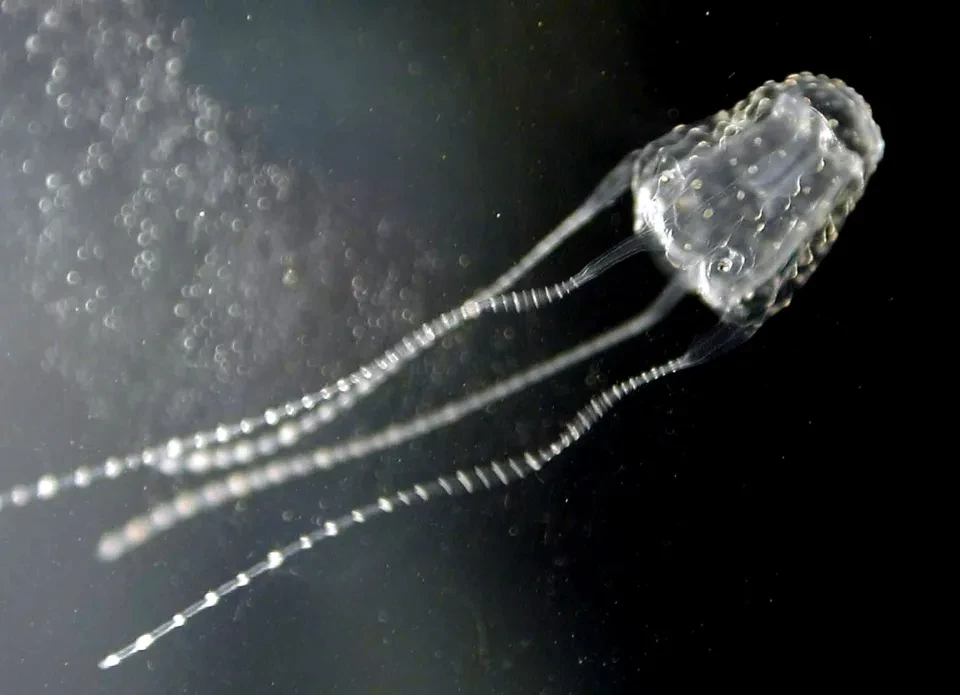
The beads on the tentacles and the dots on the dome are special cells called nematocysts. They launch microscopic harpoons containing powerful venom at their prey.
Fortunately, this entire set of absolutely disgusting symptoms, with proper treatment, begins to subside between 6 and 24 hours after the bite and almost never results in death. But this is largely due to Australian medicine: treatment and prevention of poisonings costs the government 3 billion Australian dollars annually. 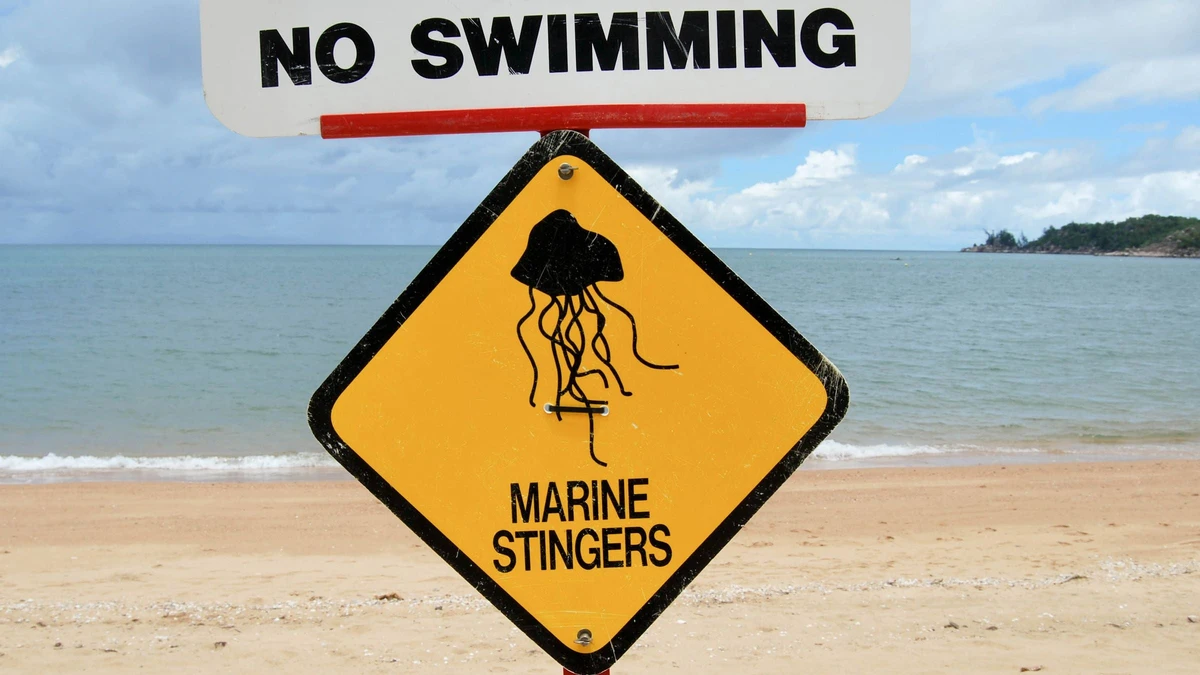
Along Australian beaches, you can find notices about dangerous jellies. Some are posted year-round, while others appear temporarily during peak seasons.