Damn corkscrews: a secret hidden for millions of years in the depths of Nebraska (9 photos + 1 video)
In the mid-19th century, farmers in Sioux County, Nebraska, began finding strange objects. Spiral-shaped formations of a hard, rock-like material protruded from the ground. 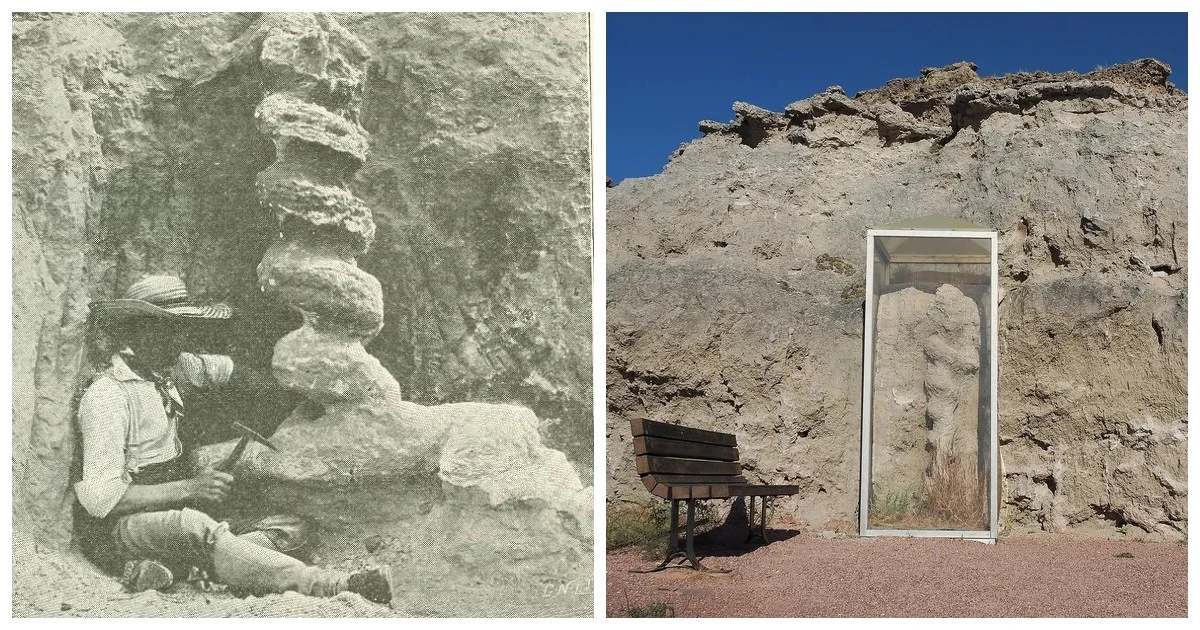
They were about as thick as a human arm, and some were taller than a man. No one understood what they were. This is how the popular name was born: devil's corkscrews. 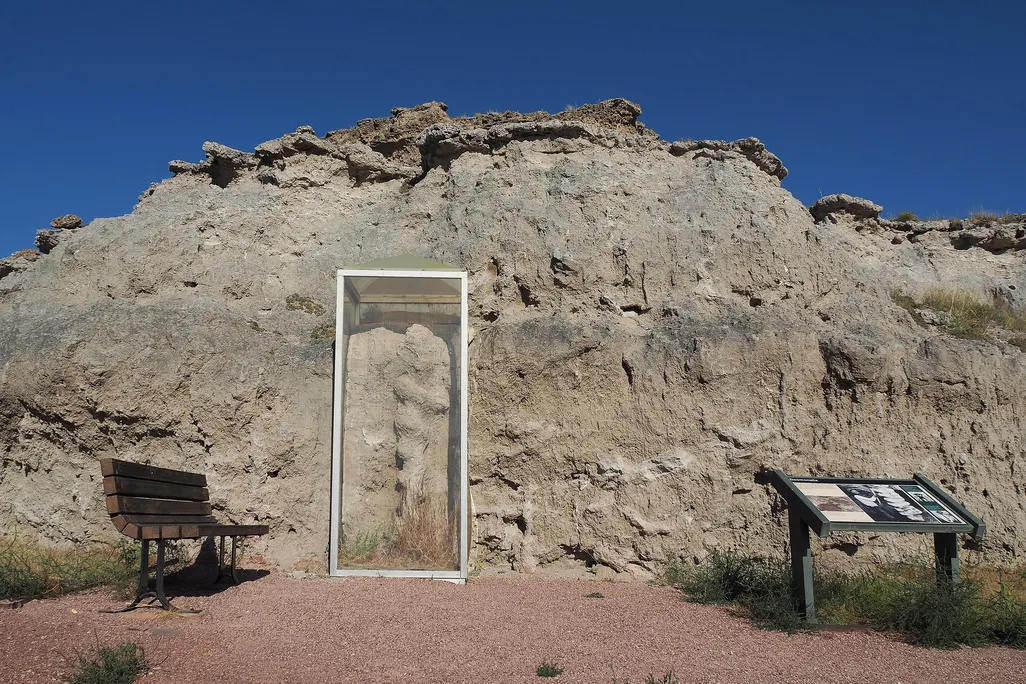
The mystery first came to the attention of scientists in 1891, when geologist Erwin Barbour was asked to study a three-meter-long specimen found by a local farmer on the banks of the Niobrara River. 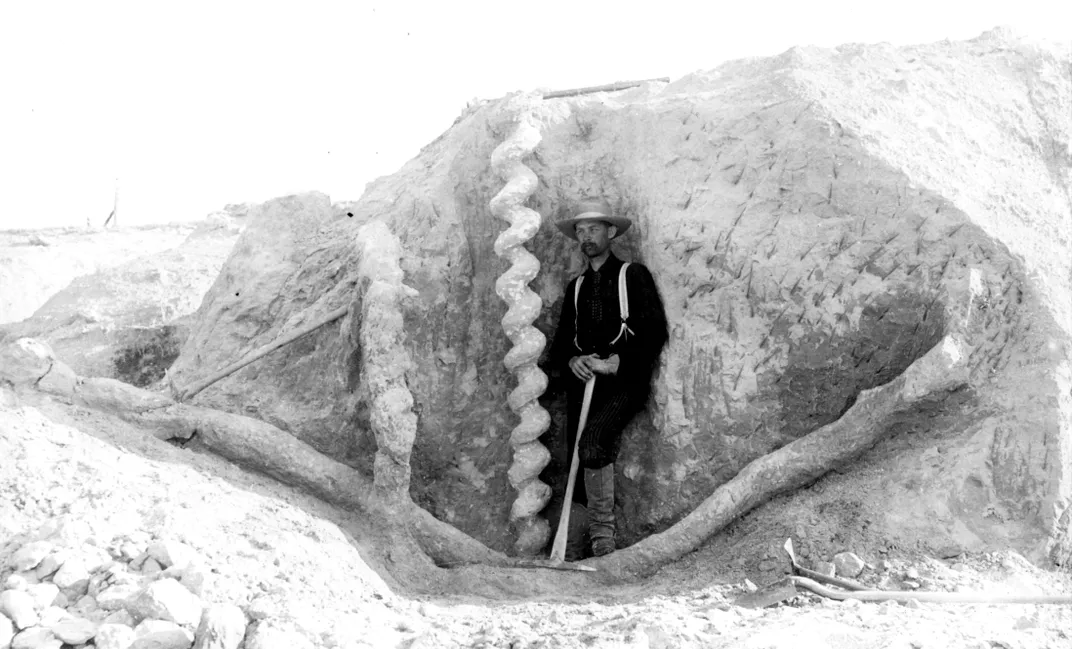
Devil's corkscrews are structures that resemble left- or right-handed spirals that can extend up to two meters into the ground.
Barbour discovered that the spirals were sand-filled tubes with outer walls made of a fibrous white material. He realized they were fossils, but he couldn't figure out what exactly they were. He named them Daemonelix, which means the same thing in Latin—"devil's corkscrew." 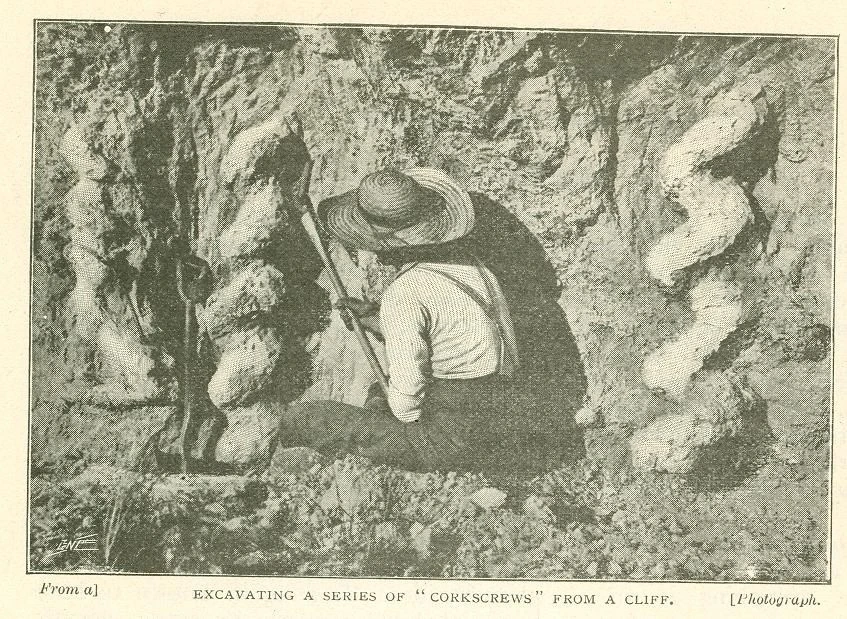
At first, Barbour thought these were the remains of giant freshwater sponges. The theory seemed sound until scientists noticed rodent bones within the spirals. Then it turned out that the rock around the corkscrews looked more like an arid plain than the bottom of an ancient lake. Barbour clarified: they were the fossilized remains of giant plants. But the rodent bones stubbornly refused to fit the plant theory. 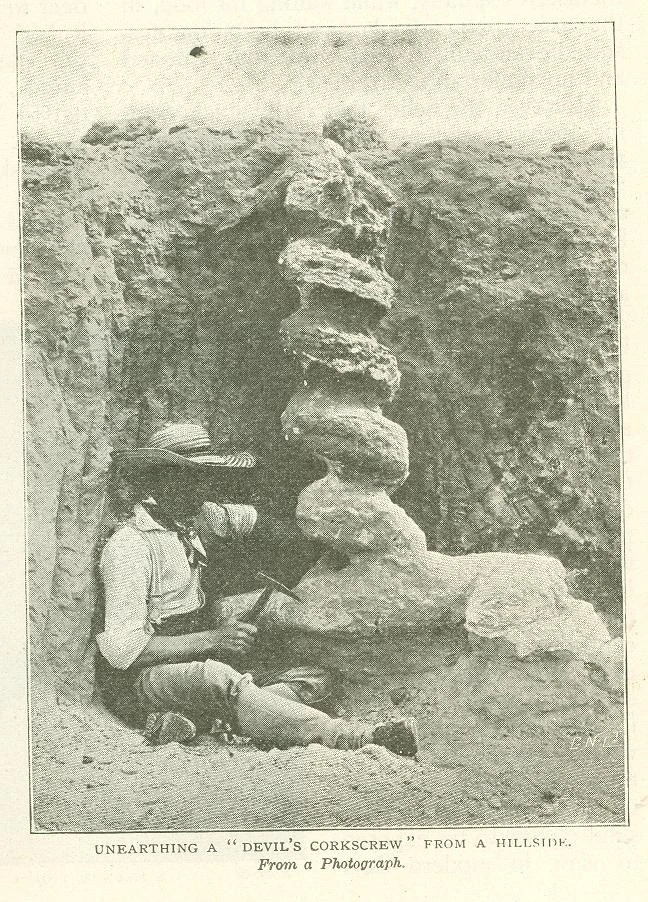
In 1893, two scientists, Edward Drinker Cope and Theodore Fuchs, independently declared that these were burrows. Ancient burrows that had filled with sand and fossilized. And the bones inside belonged to the very rodents that dug them and died there. Barbour didn't give up. He argued that the corkscrew shape was too perfect for some kind of animal to live in. 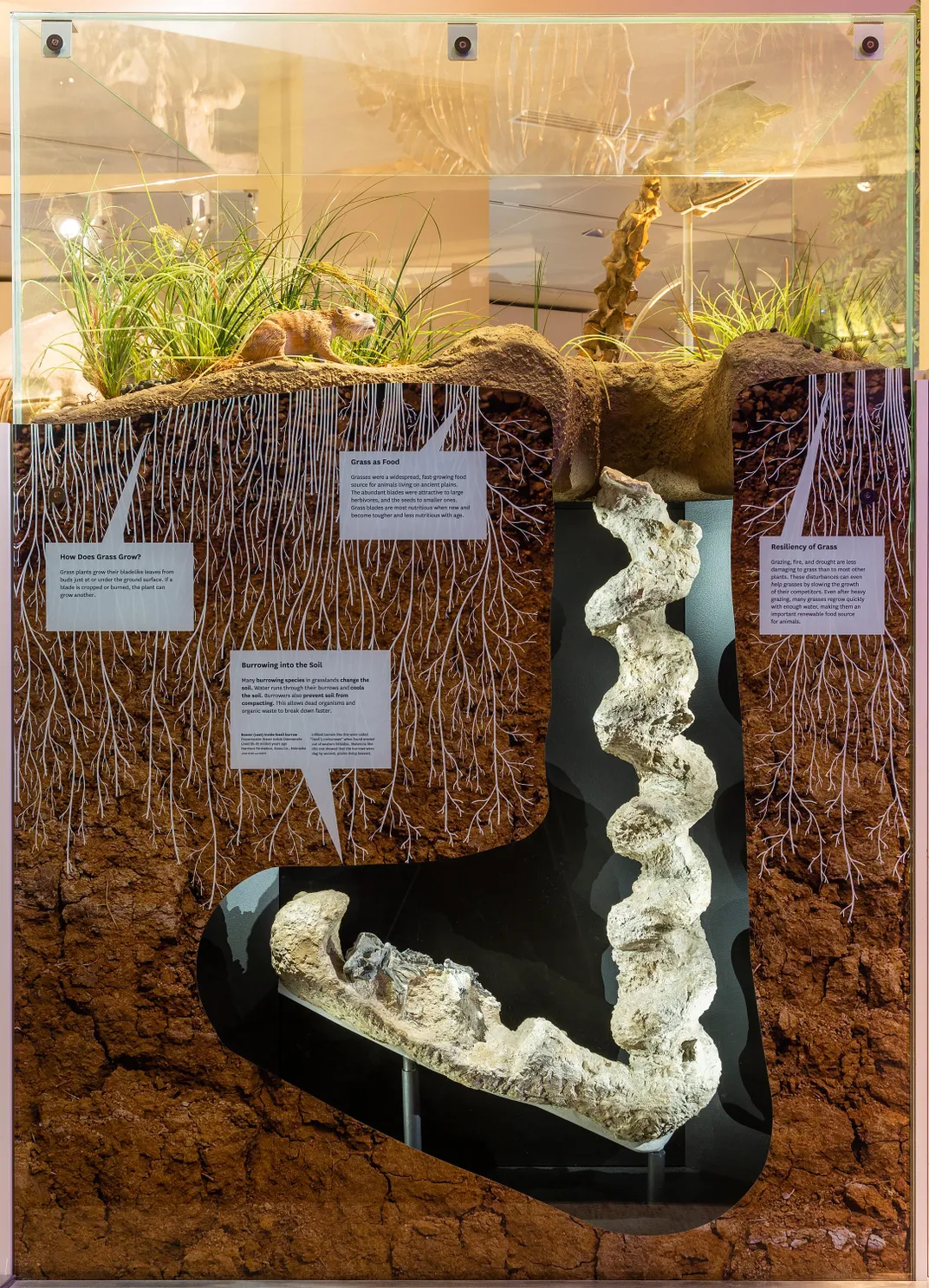
The National Museum of Natural History's Fossil Hall displays a Daimonelix burrow with the skeleton of its creator, the extinct beaver Palaeocastor.
The debate was settled by scratches on the interior walls. Claw marks. Someone had dug this earth when it was still damp and soft. In 1905, the culprits were discovered. They turned out to be ancient beavers, Palaeocastor, who lived here 22 million years ago. About the size of a marmot or smaller, these animals had short tails, small ears, and incredibly long front teeth, which grew quickly to avoid being worn down by constant digging. 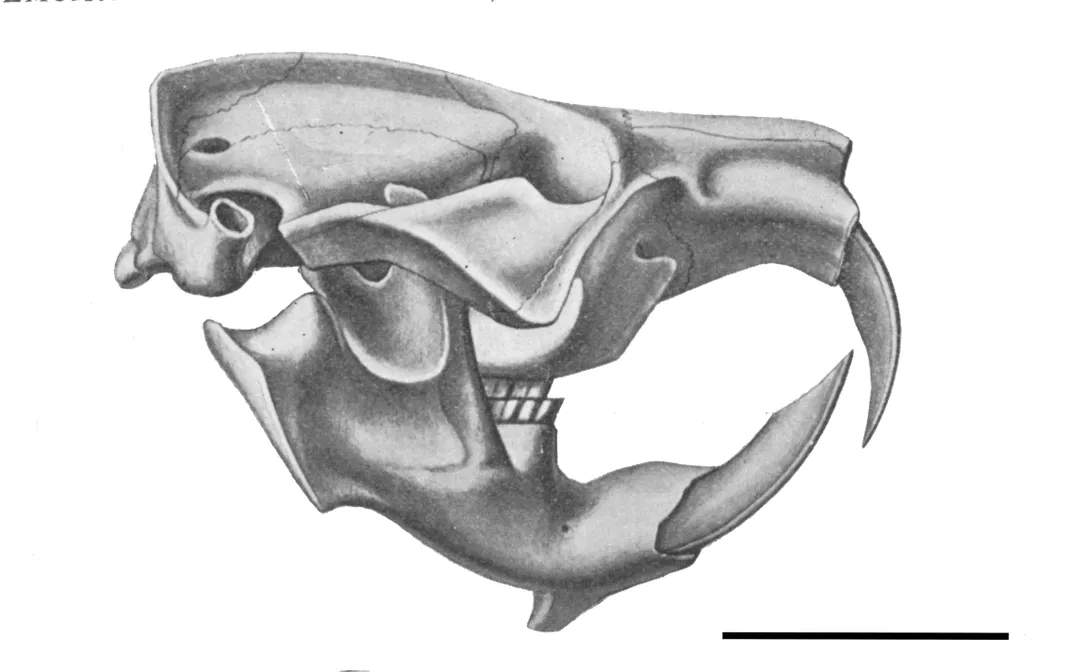
The incisors of the extinct beaver Palaeocastor perfectly match the grooves on the depressions of the "Devil's Corkscrews" rock formations.
Scientists speculate that the beaver attached its hind legs to the axis of the spiral and literally screwed itself into the ground. At a depth of about a meter, the burrow widened into side chambers for sleeping and raising young. Some of these chambers contained depressions (likely water containers or special toilets). Some chambers were also built at an angle to prevent the sleeping beavers from being flooded. 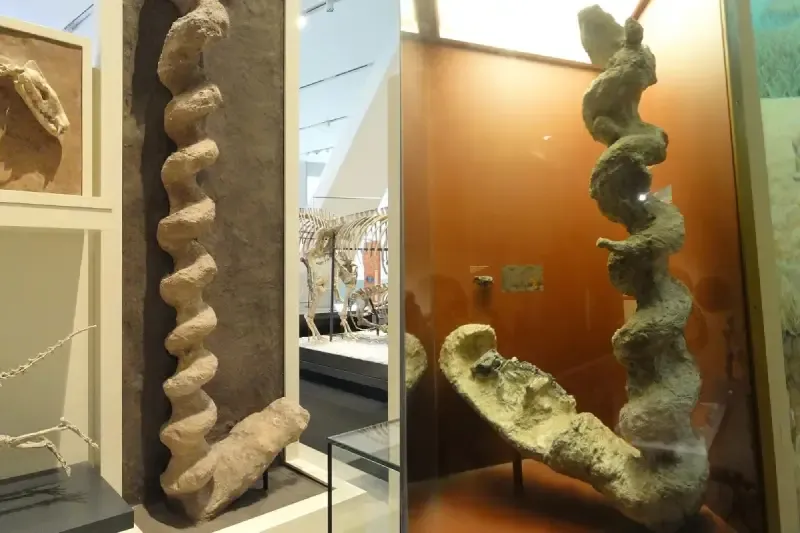
The spiral protected them from predators. You can fit a paw into a straight hole, but it's much more difficult to get a paw into a twisted one. Plus, dragging earth out through a gentle spiral is much easier than from a vertical shaft. 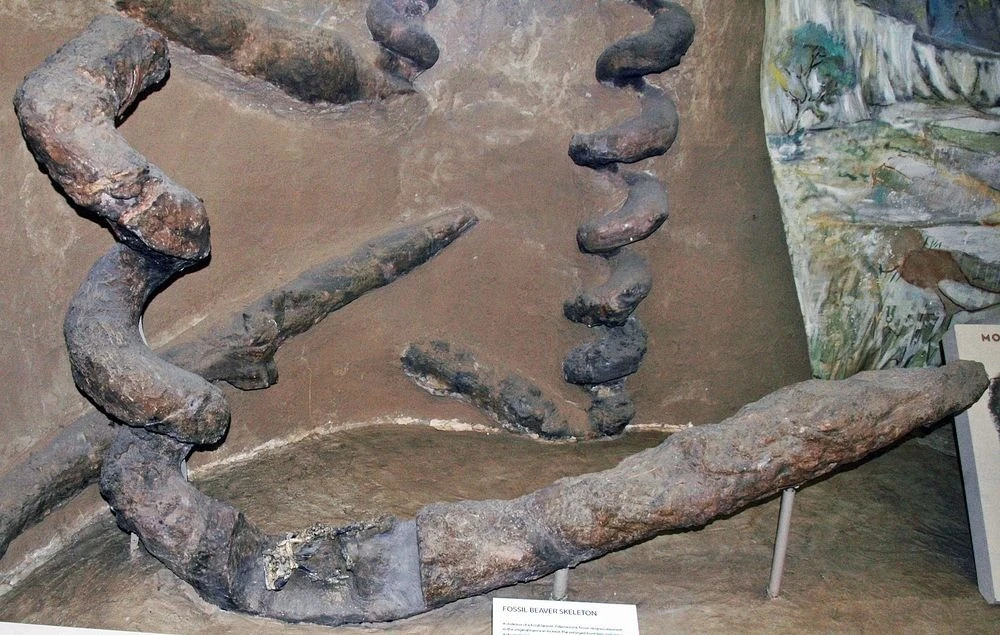
The paleocastors disappeared during the Oligocene, when the planet's climate became dry and hot, and forests gave way to endless plains. But their burrows still remain on the hillsides of Agate Fossil Beds National Park in northwestern Nebraska.