Waffle stone: an alien breakfast or a geological culinary masterpiece? (6 photos)
Imagine walking through a forest in West Virginia, and suddenly you find yourself stepping on not just a boulder, but a giant waffle. Perfect lines, perfect squares. The whole thing looks as if a giant ate breakfast and dropped a piece millions of years ago. 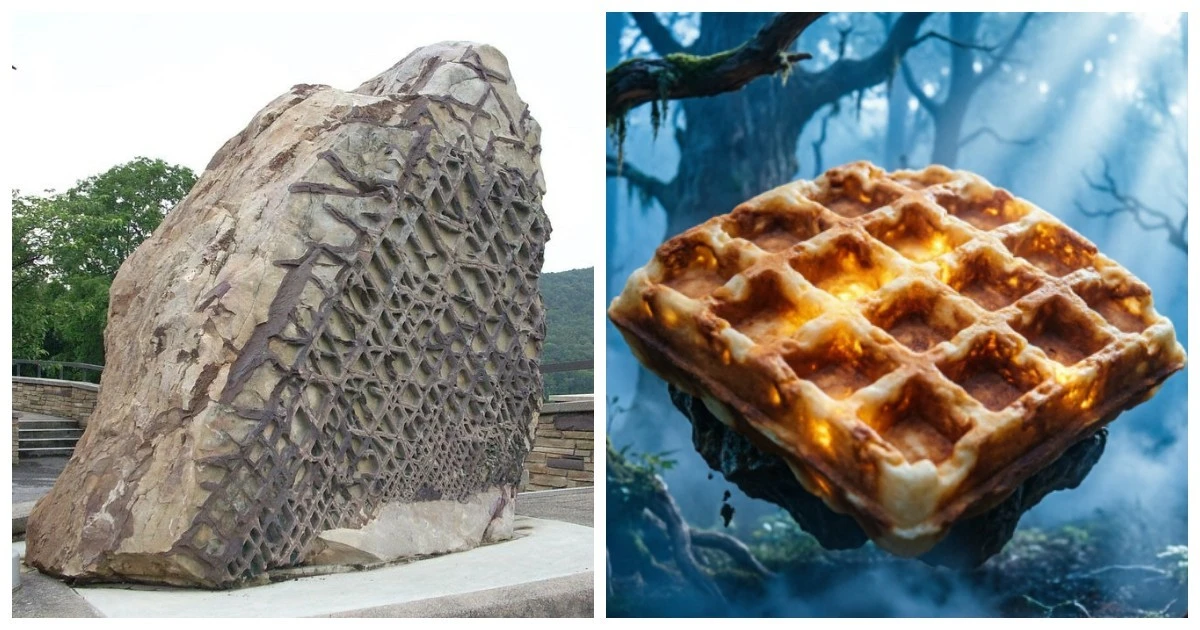
Locals have wondered for centuries: did Native Americans carve it? Did lizards trample it? Did aliens leave a message? But geologists have taken magnifying glasses and hammers and destroyed even the most delicious of legends. So, the Waffle Stone or Waffle Rock: an amazing exhibit that makes you want to drizzle it with honey or jam. 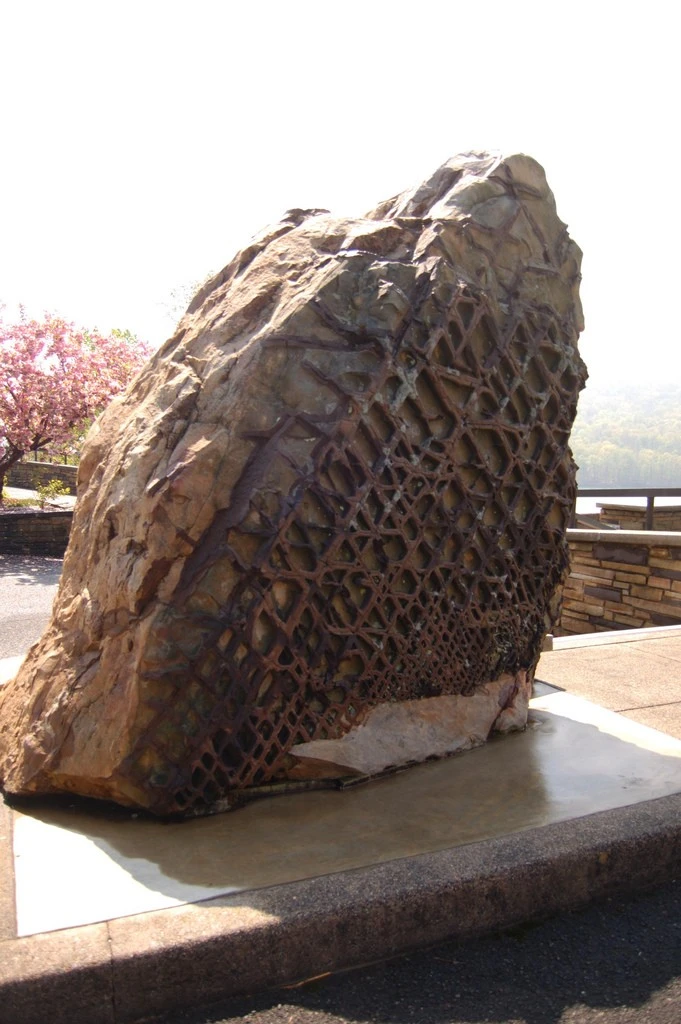
Right at the entrance to the Jennings Randolph Reservoir Visitor Center in Mineral County, West Virginia, lies a huge rock. And it looks quite appetizing. A perfect geometric pattern emerges on one side. Dark, raised bands intersect at various angles, forming deep cells filled with a light-colored material. This isn't a chef's joke or frozen dough. This is the Waffle Stone. 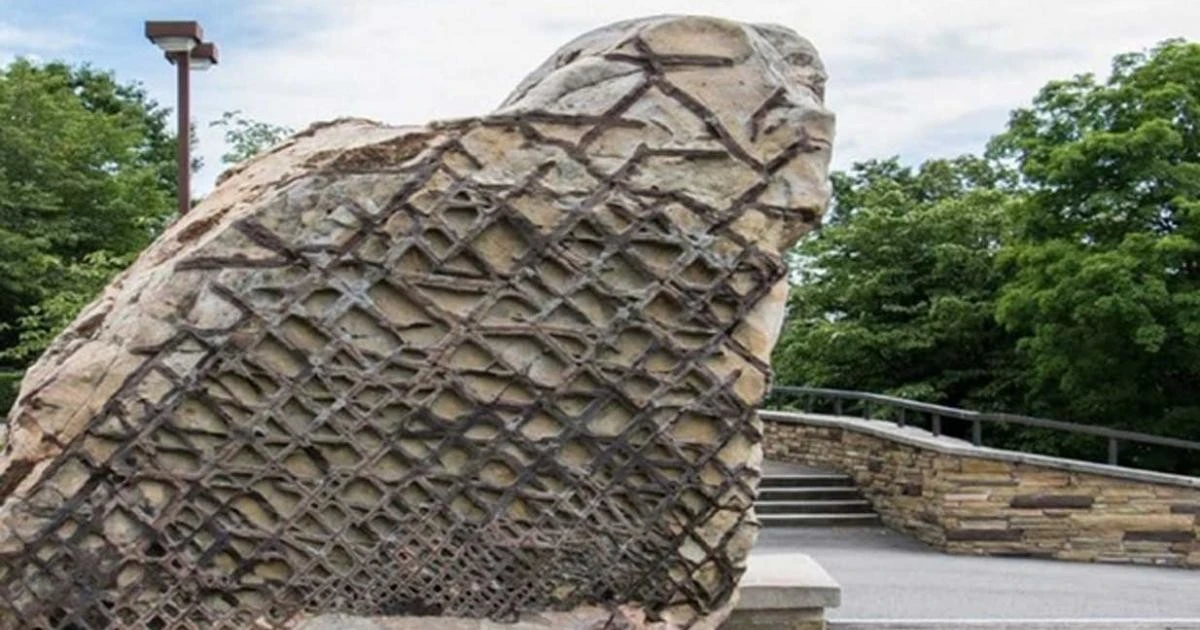
Over the years, the bizarre pattern has spawned dozens of theories, including the classics: aliens, giant reptiles, and ancient Native American civilizations. Nothing unusual, just stones with a perfect grid that can't help but stir the imagination. 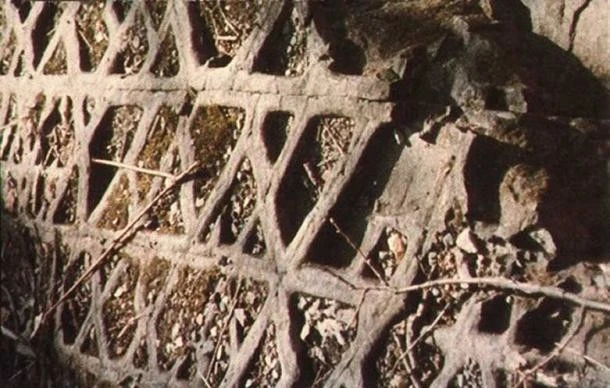
But the US Army Corps of Engineers offers a more prosaic, but no less astonishing, explanation. It all began 300–250 million years ago, when the sandstone layers were first deposited. Then, about 200 million years ago, the continents began to drift apart due to the shifting of tectonic plates.
The sandstone block folded in on itself like an accordion and became covered with cracks. Another hundred million years passed, and water began seeping into these cracks, leaching iron oxide from the surrounding rocks. This solution mixed with the sand grains in the cracks, creating a super-strong material that was impervious to weathering. And when the soft sandstone around it was worn away by time and wind, only this rigid waffle-like framework remained. 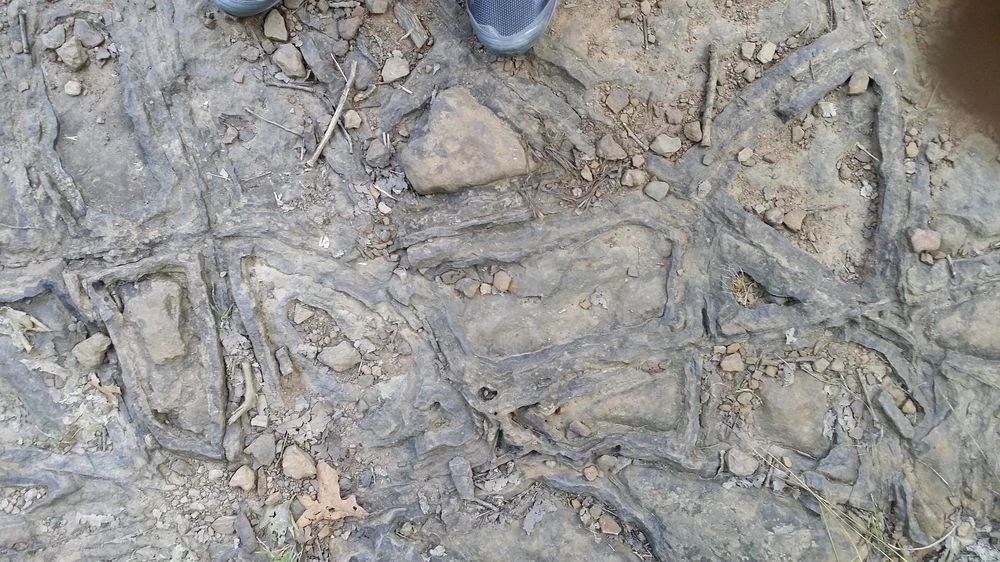
The boulder near the reservoir is just a small piece, broken off from the main rock somewhere higher up the slope. Another similar fragment can be seen in the Smithsonian Museum of Natural History in Washington.
Such formations are rare, but they are not unique. Similar rocks have been found in the Monongahela River (Pennsylvania) and on Tea Creek Mountain in West Virginia. Other, as yet undocumented, examples of this patterned geology are scattered around the world. 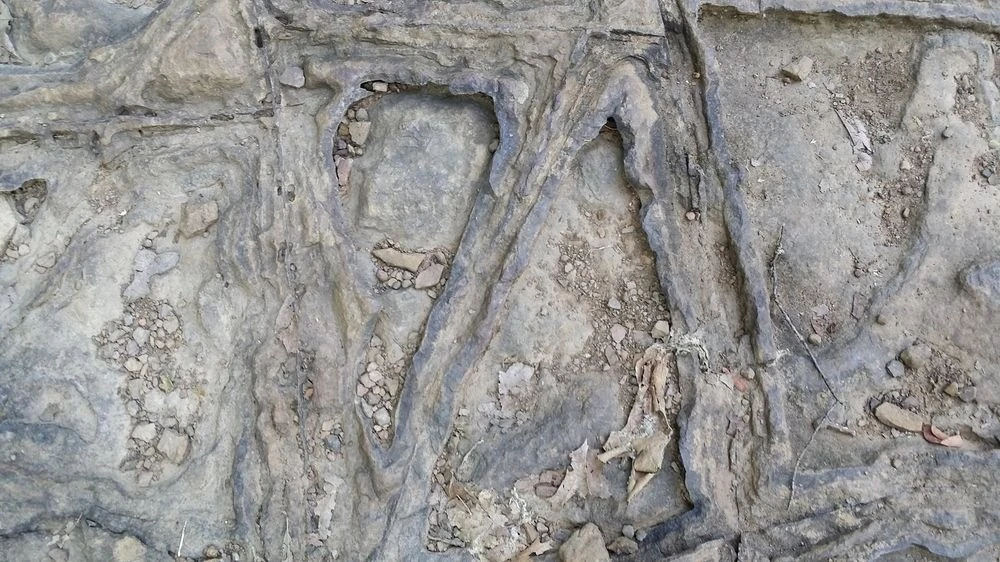
So the next time you see a waffle like this, know that you might be looking at a breakfast that nature has been preparing for a quarter of a billion years.