Extraordinary, commanding figures have always attracted women; for many ladies, it matters little whether their chosen man is a hero or a figure reviled by the entire world. The personal life of a certain Austrian artist—who abandoned his easel and paints in pursuit of global dominion—serves as a prime example of this phenomenon. 
For years, the world was led to believe that Adolf Hitler was sexually inadequate. Numerous "proofs" of the Führer's supposed dysfunction were cited—ranging from a groin injury sustained during World War I to the accounts of contemporaries. Yet, what is often left unsaid is that the information regarding this aspect of the 20th century's greatest villain's life is highly contradictory.
 Accounts of Hitler’s relationships with women, originating from political opponents, were invariably negative. Stories alleging homosexuality or impotence were favorite topics of discussion regarding the popular politician—even before his transformation into a monster. Conversely, the few friends from his childhood and youth unanimously maintain that, as a man, Adolf was completely normal.
While most of the leader's romances ended tragically, the fact that he was attracted to women is undeniable. Although the exact number of women in Hitler's life remains unknown, five of them undoubtedly played a significant role in the Führer's life. Charlotte Lobjoie
The daughter of a French butcher became Hitler's first known girlfriend. The young Lance Corporal Schicklgruber met 18-year-old Charlotte while stationed on the Western Front in 1916. The romance with the landlord's daughter lasted about a year, after which the soldier simply abandoned his lover, failing to return to her after a leave of absence.
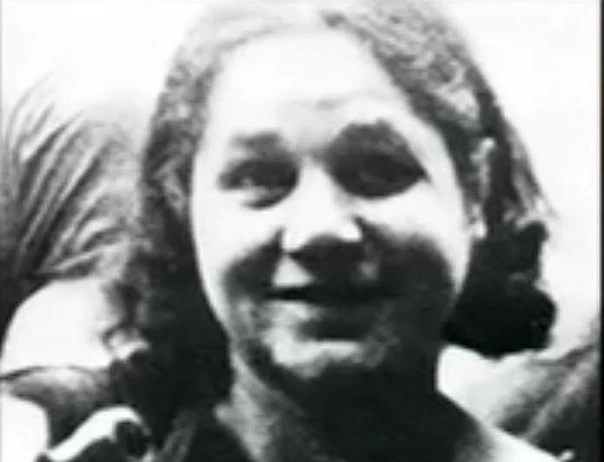
Charlotte in her later years
Interestingly, shortly after her suitor fled, the young Frenchwoman gave birth to a child. Her son, named Jean-Marie, was convinced he was the Führer's son; as a sign of this, he wore the famous "toothbrush" mustache throughout his life. Hitler never acknowledged the son, and genetic testing was impossible for various reasons.
Jean-Marie Loret. A striking resemblance, isn't it?
Maria Reiter
Adolf Hitler met the 16-year-old daughter of a tailor from the town of Berchtesgaden in 1926, by which time he was already a well-known politician in Bavaria. It is known that he approached the young woman himself while she was out for a walk and introduced himself. The girl's father was a staunch opponent of National Socialism and attended Social Democratic Party meetings, which added a particularly piquant element to the relationship. 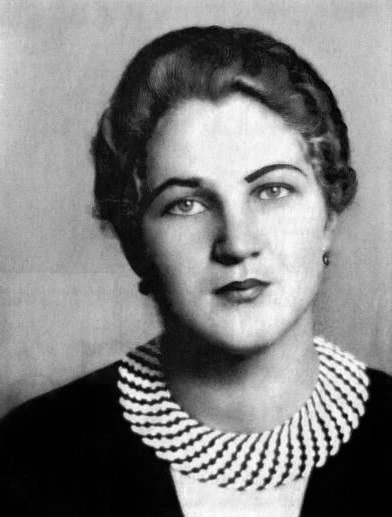
Hitler’s "Kitten": Maria Reiter
Adolf introduced himself as "Herr Wolf," while calling the young woman "Kitten" and "sweet child." Maria was most likely deeply in love with the 37-year-old politician; she forgave him for his cruelty toward his dog and for the repulsive comments he made about meat dishes in restaurants—remarks intended to emphasize his vegetarian convictions. It is generally believed that the Führer did not have an intimate physical relationship with the underage Reiter. They parted ways in 1928, as his political opponents sought to use the platonic relationship to discredit him in the eyes of the electorate.
The breakup with Hitler took a heavy toll on the young woman; Maria even attempted suicide. Between 1931 and 1933, after a failed marriage, Reiter became Adolf’s mistress, and their relationship continued until he grew bored with her. After the war, Maria became one of the Führer’s staunchest defenders against allegations regarding his sexual inadequacy.
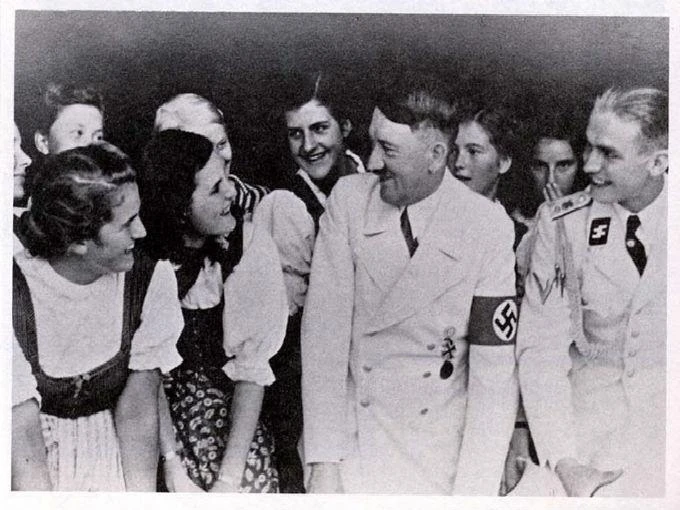
Geli Raubal
In 1929, Hitler’s widowed half-sister arrived in Berlin with her 21-year-old daughter. The young woman’s name was Geli Maria Raubal; she was beautiful, innocent, and possessed a childlike spontaneity. Stern Uncle Adolf wouldn't let the whirlwind of capital city life sweep the young woman away; Hitler monitored Geli’s every step with pathological zeal, rebuffing all her suitors and keeping track of her every movement. When Eva Braun entered the Führer's life, the pressure on his niece eased, but then the young woman herself began to show signs of jealousy.
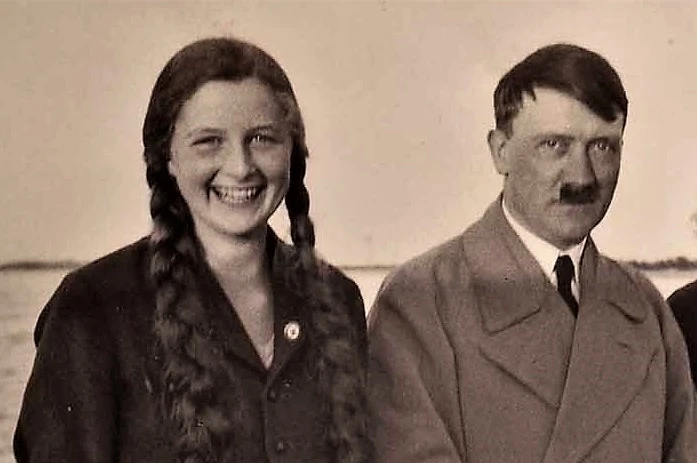
Geli Raubal with her beloved Uncle Adolf
On September 18, 1931, Geli Raubal’s body was found in her room. Her hand was clutching Hitler’s Walther pistol—the very weapon that had fired the fatal shot. While the politician’s relative’s death was officially ruled a suicide, many contemporaries believed she had been shot by her uncle in a fit of rage upon learning she was pregnant. In the final months of her life, Raubal had come to terms with the loss of her beloved and had begun responding to the advances of Emil Maurice, Hitler’s chauffeur. Geli’s death devastated the future dictator; he even contemplated suicide himself but—unfortunately for all of humanity—changed his mind.
Unity Mitford: "The Valkyrie"
Lady Unity Mitford, a British aristocrat, entered Hitler’s life in 1935. She passionately shared the views of the man she loved, believing that Great Britain should share world domination with Germany.
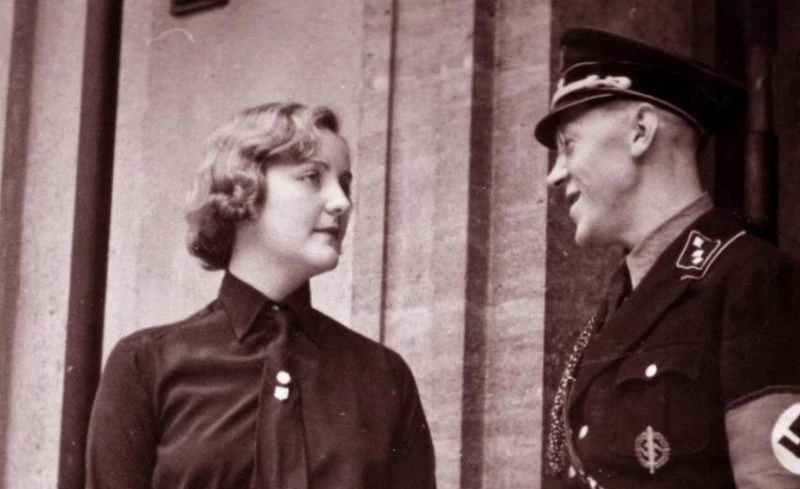
Mitford—"The Valkyrie"—with Hitler’s adjutant
Unity, whom the Führer called "The Valkyrie," was the only woman in his life whom he trusted implicitly and whose opinion he valued. On September 3, 1939, when hostilities broke out between Great Britain and Germany, Mitford attempted to shoot herself. She survived, but the bullet remained lodged in her head, eventually leading to her sudden death in 1948.
Eva Braun
Eva Braun was the only woman the Führer officially married—though he did so just hours before his death. Hitler met the 17-year-old daughter of an ordinary Munich schoolteacher in 1929, but their relationship began in 1931, following the tragic death of Geli Raubal. Life with the politician brought Eva little happiness; not only was Adolf in no rush to marry her, but he also slept in a separate room.
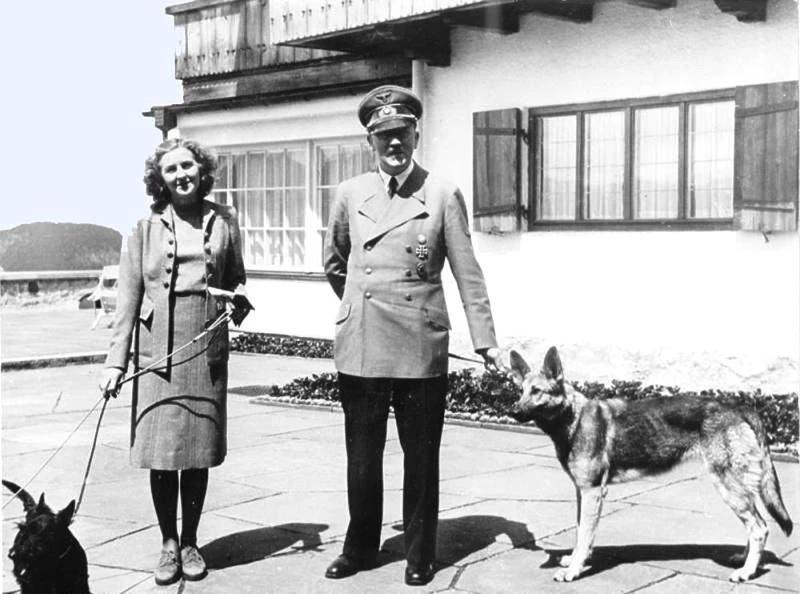
An idyllic scene: Adolf and Eva at a mountain resort.
The architect Albert Speer noted that the Führer treated Eva with his characteristic cynicism, valuing her only as a pleasant companion for walks. The relationship—painful for a woman in love—would briefly improve after one of the failed suicide attempts at which Braun was something of an expert. Yet, despite everything, Eva and Adolf married on April 29, 1945, only to die the following day.