Idiot with an anti-tank rifle: a Canadian-style robbery (3 photos)
Today we'll talk about how the Finnish Lahti anti-tank rifle, model 1939, was used in the October 26, 1965, robbery of an American bank by Joel Singer and a "group of colleagues." 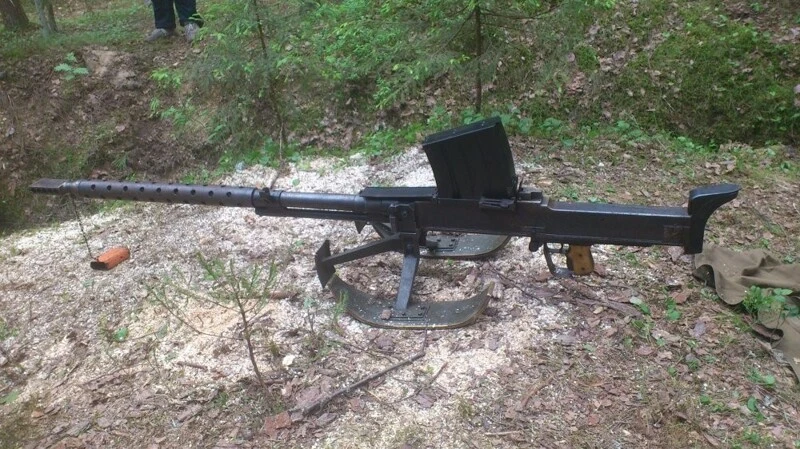
The Lahti anti-tank rifle.
How it all began
It all started out unusual: two Canadian citizens purchased two Finnish anti-tank rifles, model 1939, from the company "Interarms." 1939 and 200 20x138mm rounds for it (the 120-gram bullet of this cartridge accelerated to 900 m/s with an energy of 47,000 J (it is believed that the bullet could penetrate 30 mm of armor at 100 meters). The weapon was purchased in Alexandria, Virginia, and the happy buyers requested that it be shipped to Plattsburgh, a small town in New York State located on the western shore of Lake Champlain, which borders Canada.
The purchase was so unusual that managers of Interarms, a company created specifically to sell surplus weapons left over from World War II, felt it necessary to report the buyers to FBI agents.
Upon receiving the message, the FBI agents, after a half-hearted thought, assumed the anti-tank rifles would be sent to Canada, to the so-called Quebec Liberation Front, which fought for the independence of that part of Canada that had once been a French colony, and, apparently, that was the extent of their activity.
In any case, after both rifles and their ammunition were stolen from the Plattsburgh postal warehouse, there was no activity from either the FBI or their Canadian counterparts. The local sheriff, apparently, wasn't particularly concerned either. And he's understandable: really, what's there to worry about? So what if a 20mm anti-tank rifle, weighing nearly 50 kg and 2.2 m long, went missing—you can't lug that around down the street...
Let the iron saw do the work...
The rifle "surfaced" almost six months later and nearly 400 km from Plattsburgh in Syracuse, a city near Lake Ontario: sometime between Saturday, October 23rd, and Sunday, October 24th, 1965, a group of "entrepreneurs" broke the locks on the garage of a Brinks warehouse, a company specializing in delivering valuables in armored vehicles, drove their truck inside, and unloaded one of two anti-tank rifles.
The weapon was modified: first, a silencer made from a barrel lined with wet mattresses and stuffed with steel wool and rubber crumb was attached to the barrel, and second, a special mounting frame was welded to hold the gun. 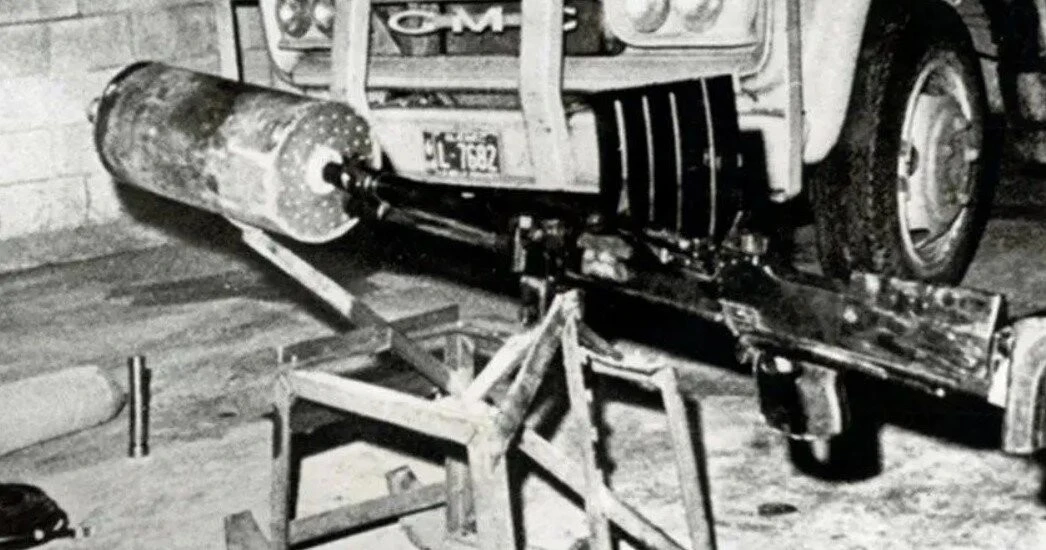
modified anti-tank rifle.
The weapon was placed close to the wall separating the garage from the storage area for these valuables, after which one of the robbers fired 31 shots into this very wall, punching an irregular hole 61 by 46 cm in diameter (according to another source, 33 shots were fired).
The vault wall, made of cement reinforced with steel rods and about 30 cm thick, succumbed to a Finnish rifle and Swiss ammunition. Metal saws did the rest...
The talented robbers got their hands on $430,000 in cash: after loading it into their truck, they calmly drove out of the garage and, as they say, disappeared in an unknown direction.
How it all ended
It all ended badly.
As usual, police launched a manhunt in all neighboring states, including Canada, and very soon, word came from Canada that a similar robbery had been committed earlier this year in Quebec – some individuals had attempted to break into the vault wall, but were unsuccessful.
After the model of the gun used to break through the wall was identified, the FBI perked up and pointed to one of the buyers of those very guns – Jack Frank, who worked as an auto mechanic on Long Island (still in New York) and also happened to be the uncle of the aforementioned Joel Singer.
From there, things were simpler: FBI agents visited the uncle, and after a short conversation, he not only handed over the 300 coins stolen from the vault, but also revealed where he and his nephew had sunk the guns, and also agreed to testify against him in court.
The gun was found, tested, and identified as the murder weapon.
Joel Singer was apprehended in Montreal, transported to Syracuse, and sentenced on January 31, 1967, to 5-10 years of hard labor for third-degree burglary and grand larceny.
His lawyer tried to portray Jack Frank as the main organizer and even called Joel Singer a "lovable idiot," but this failed to convince the jury.
Then complications arose again: firstly, Joel Singer didn't rat out anyone else and, therefore, became the only person convicted in this case; secondly, apart from 300 coins (presumably precious ones) given by his uncle, nothing else was found.
Incidentally, Joel Singer's lawyer was apparently not entirely wrong: after his client was diagnosed with post-traumatic stress disorder, presumably caused by the prison riots in 1972, he was released on the condition that he undergo treatment in a psychiatric hospital. However, in 1973, Joel Singer committed suicide at the age of 31. 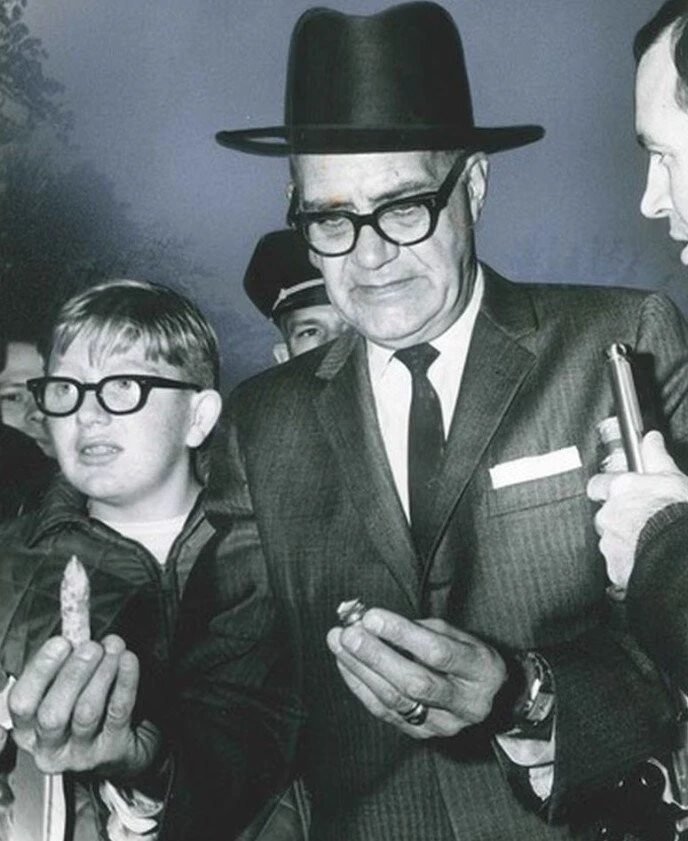
Chief of Security William Cole of Chicago holds two spent bullets from a Lahti anti-tank rifle.
Something tells me that Jack Frank really was the brains behind these "anti-tank" (or rather, anti-bank) ideas...
The second rifle, apparently, was never found. I assume it was used during a feasibility study.