Takahe: Three Times Thought Extinct, but Each Time the Bird Returned (8 photos)
To the average person, the takahē is just a cute little ball of feathers on thick legs. But to ornithologists, this bird is special. It emerged from legend, only to go extinct. Three times. And yet, it's here, ready to painfully scratch with its wings anyone who doubts its existence! 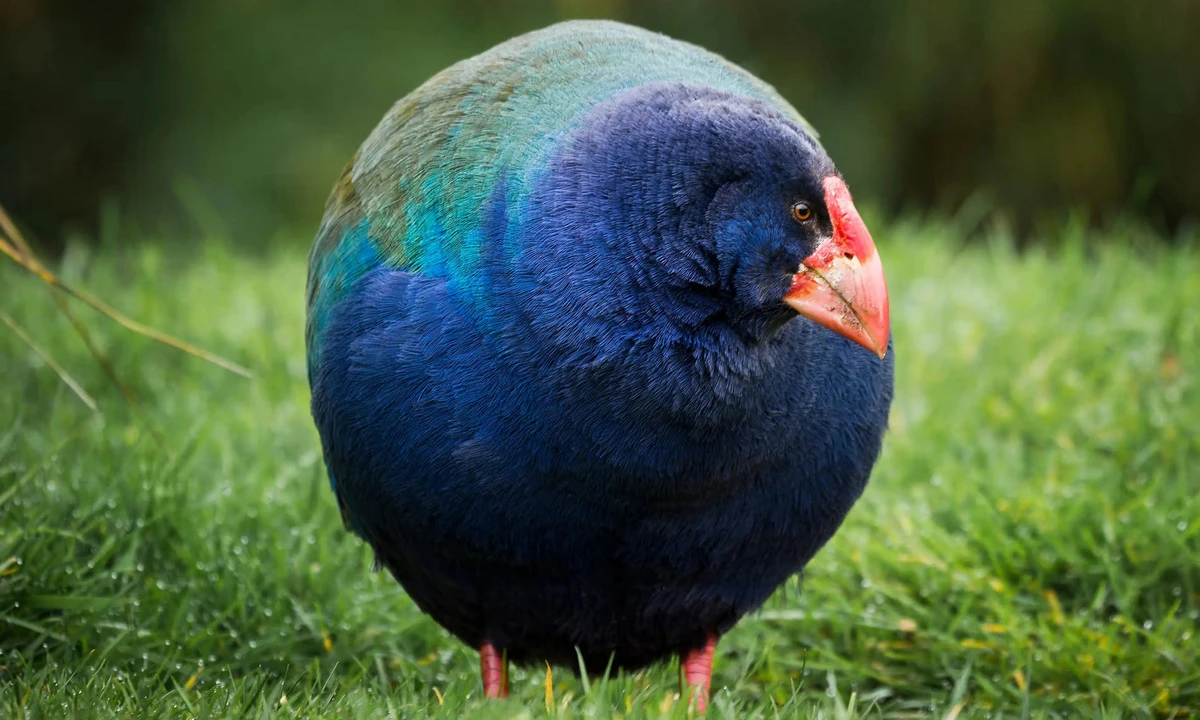
It has achieved the perfect shape—a sphere.
In the 17th century, when Europeans arrived in New Zealand, they heard Maori tales of a bright blue bird the size of a goose that inhabited the densest and most inaccessible regions of New Zealand's South Island. However, they dismissed these tales as myths, because no body, no cause. 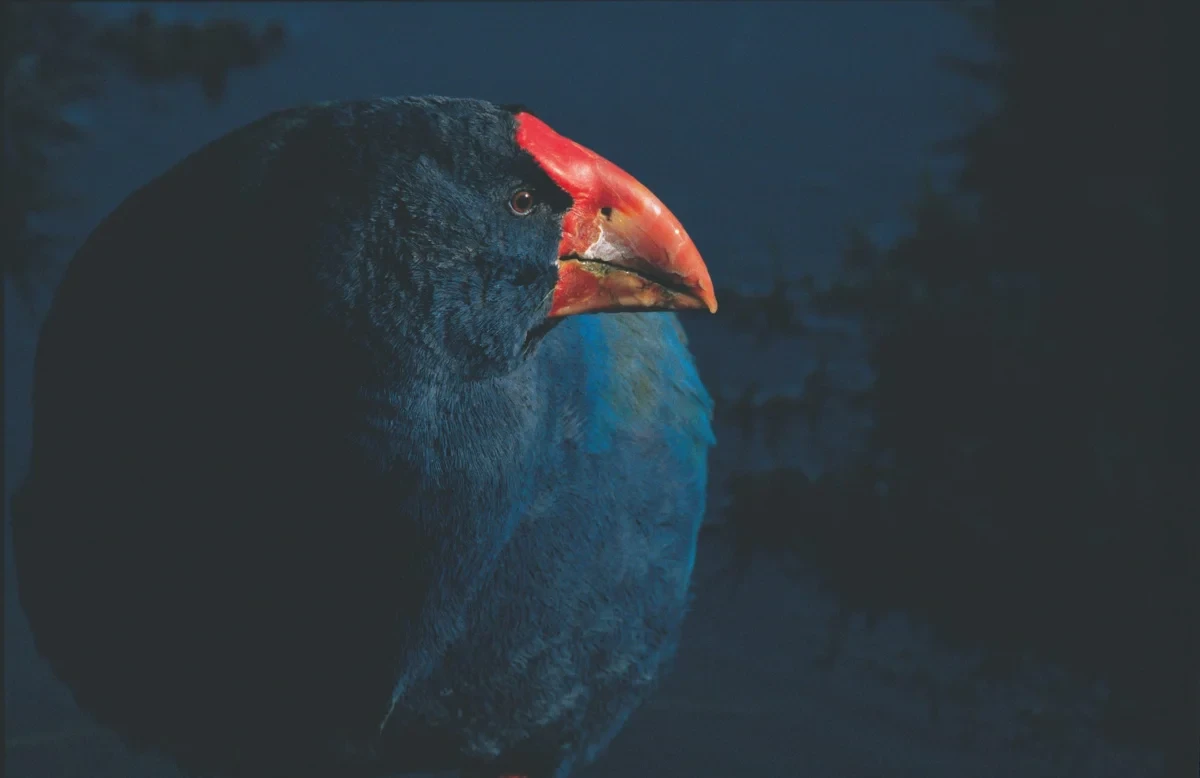
That's right, I'm a legend. Wait, what body are you talking about?
It wasn't until 1847 that scientists got their hands on a few old bones of the bird. And only then was it declared... extinct. But at least they confirmed the animal's existence—that's progress! 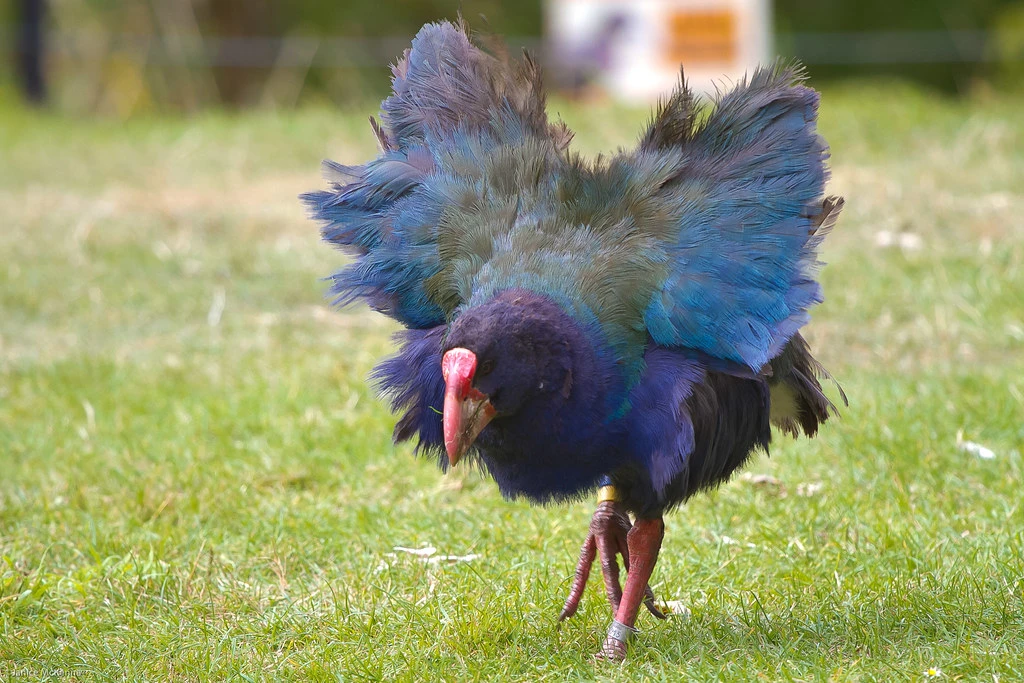
Ready to fight for recognition!
And 30 years later, a takahē was captured alive by researchers, and only then was it declared... extinct? After all, not a single expedition had been able to find the animal in the wild, so scientists decided they had one of the last specimens. 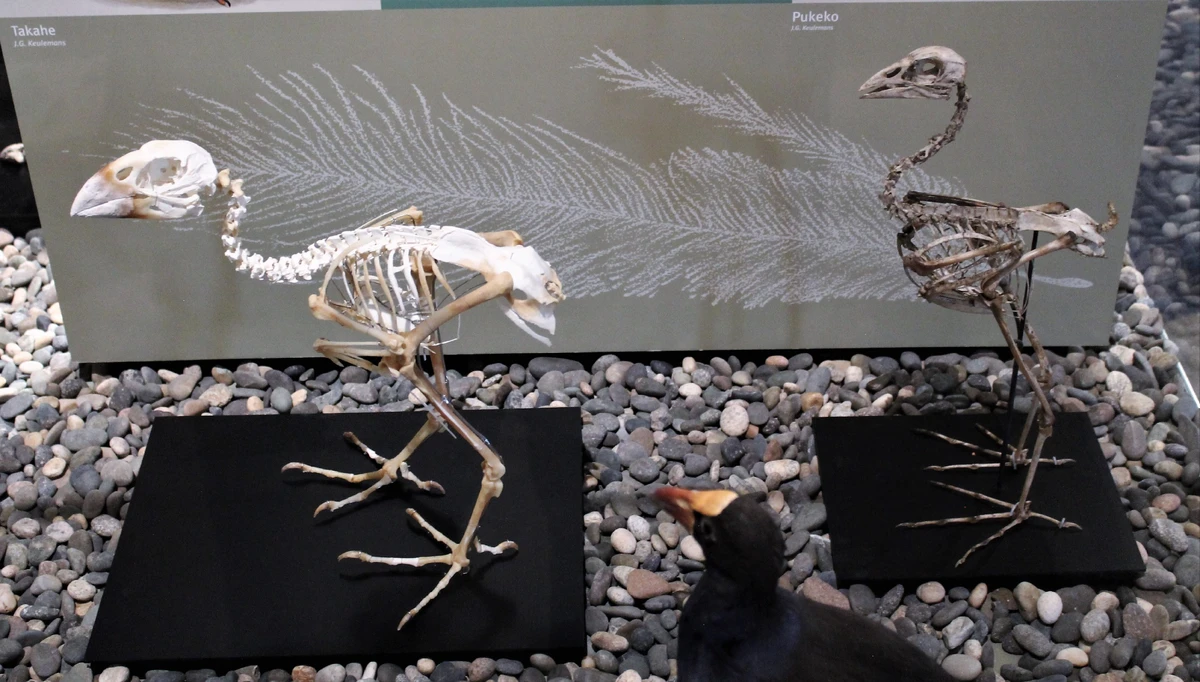
On the left is the skeleton of a takahē. And on the right are the remains of its closest relative, the pukeko. They were named, as you might have guessed, by local people.
The next encounter with a bluebird occurred 20 years later, in 1898. And then, finally, the bird was declared... extinct again?! Enough! Expeditions again went for a walk in the forest and returned the verdict—this time, the bird had definitely kicked the bucket. 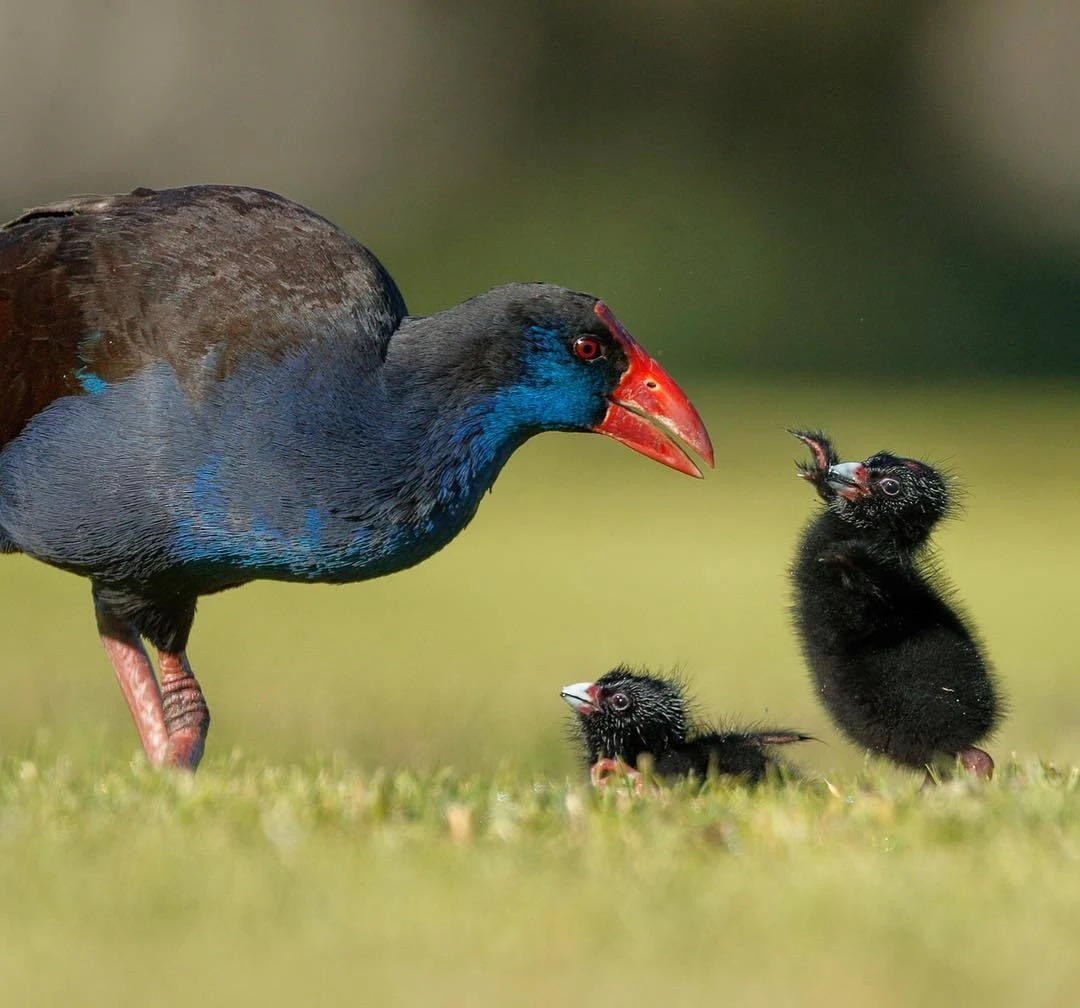
The spur (sharp claws on the wings) is much more visible on chicks.
It wasn't until 1948 that a group of researchers, led by a New Zealand doctor (not even an ornithologist!), set out to investigate reports of the unknown bird's tracks. They discovered not only two birds, but three fresh nests. This led to the conclusion that the takahē were not only not extinct, but were continuing to actively breed. The species was triumphantly brought back from the dead, and remains among the living to this day. 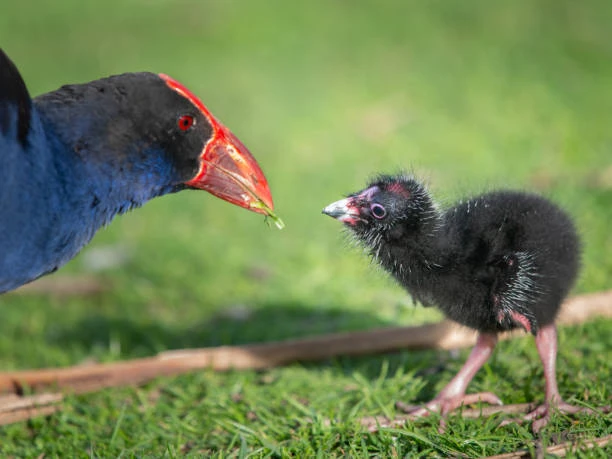
From the heart and kidneys—a flower for my son.
And all is well in this story, but one question remains unanswered: how did these bright blue birds, weighing 1.5 kilograms, manage to hide from Europeans for almost 300 years? It turns out the problem lies not only in the poorly studied region and the small range of the bird itself, but also in their habits. 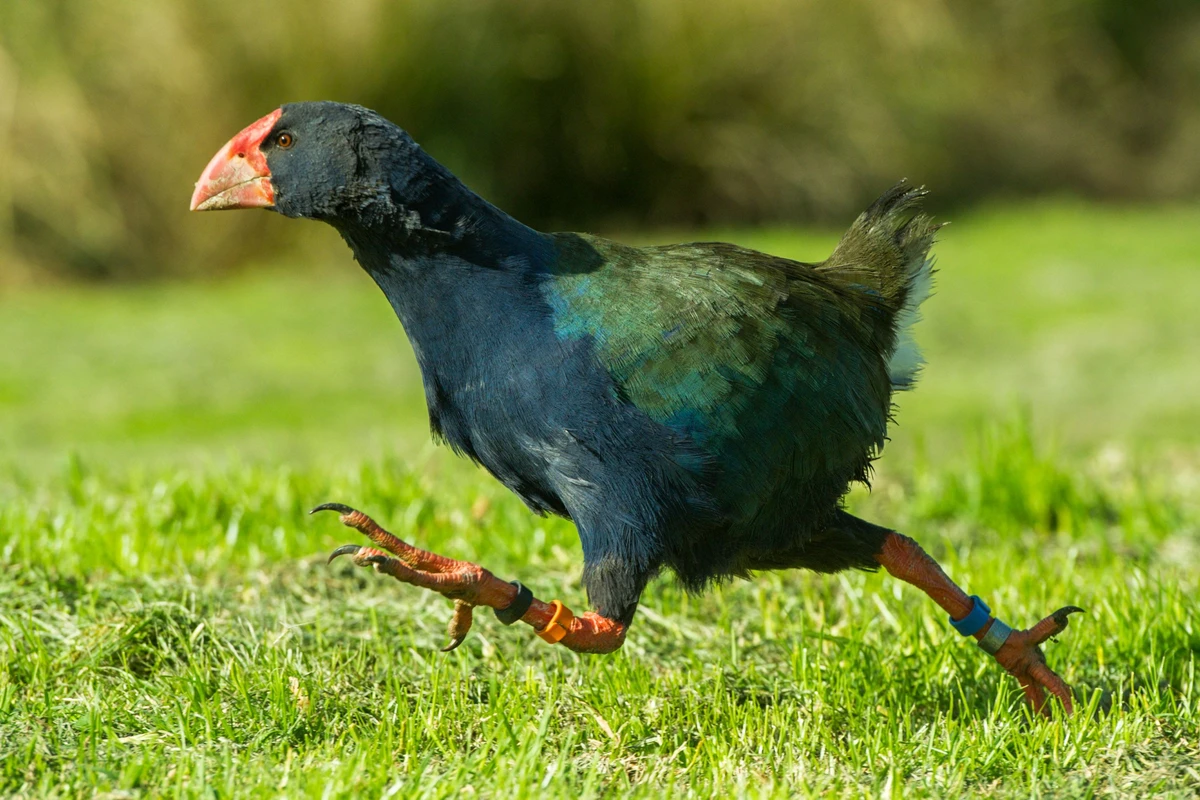
Despite having wings, the takahē has been flightless for approximately 4 million years. The bird's ancestors abandoned flight when they settled in New Zealand.
Takahē are territorial birds that live exclusively in pairs and do not allow other members of their species to approach them, resulting in a highly dispersed population: no more than 2-3 birds will be found within a couple of kilometers of you. These birds also know their territory very well, are fast runners, and if cornered, they will engage in combat, striking with small but sharp spurs and a huge beak. 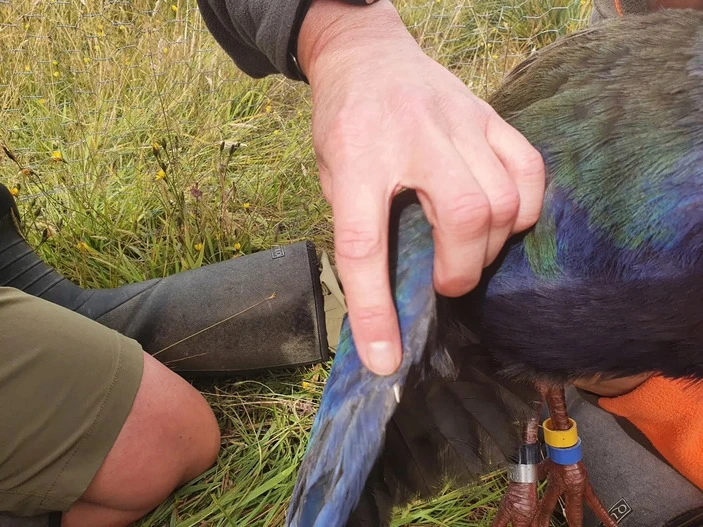
SHE HAS A KNIFE!
Tracking these weirdos is hard, catching them is even harder. And not getting punched in the face while doing it is downright impossible!