Two Types of Deep-Sea Robots Tested for Collaborative Underwater Missions (2 Photos)
One vehicle will perform broad mapping sweeps to chart the seafloor, while two smaller submersibles inspect selected targets up close. This November, a NOAA team is testing this tandem approach aboard the research vessel Okeanos Explorer. 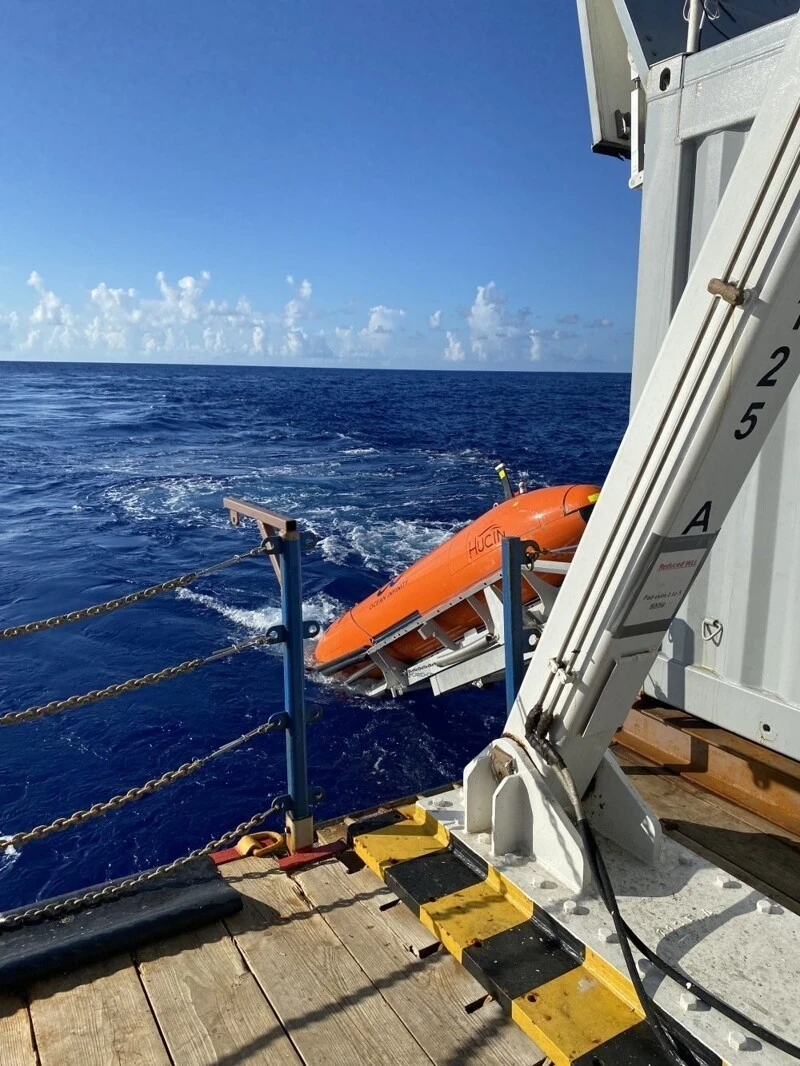
A HUGIN-class submersible is deployed from the vessel Deep Helder in 2022. Credit: NOAA Ocean Exploration.
For large-scale surveying, researchers chose the HUGIN 6000, which carries echo sounders and can operate underwater for up to two days. Two compact Orpheus vehicles were equipped with cameras and sediment samplers. Both models are rated for depths down to 6,000 meters, though the exact depth of any given dive depends on mission objectives.
The expedition is currently ongoing, with the team focused on refining coordinated deployment, recovery, and data collection. The images show early testing of the Orpheus and a previous deployment of a HUGIN-class vehicle. 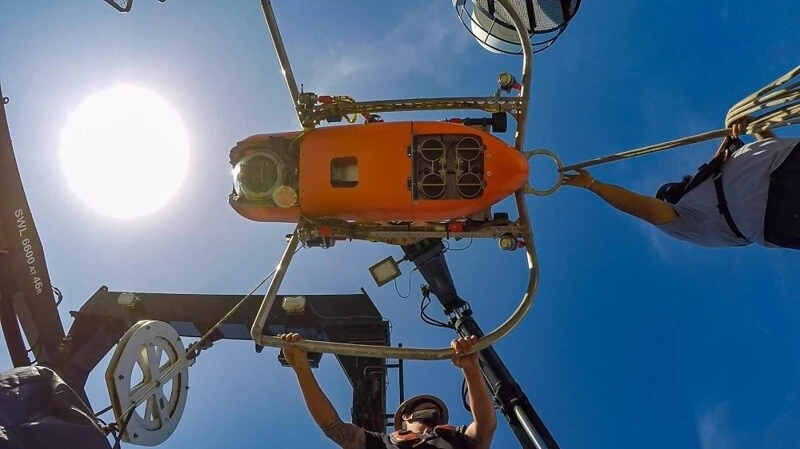
An early Orpheus submersible during a 2021 demonstration. Photo: Art Howard/ GFOE, NOAA Ocean Exploration.