22 Remarkable Artifacts with Stories More Gripping Than a TV Series (23 Photos)
An Egyptian pomegranate-shaped flask is over 3,000 years old, yet remains completely intact. A young Roman satyr wears an old man's mask to startle onlookers. In Greenland, women wore seal-fur thongs indoors—even around guests. And the Swedes carried off a Danish queen’s gown that had been lent to women in labor for good luck. We’ve gathered 22 fascinating artifacts from museums around the world, spanning from the Bronze Age to 1919. Behind each one lies a story you can't see in the picture alone. 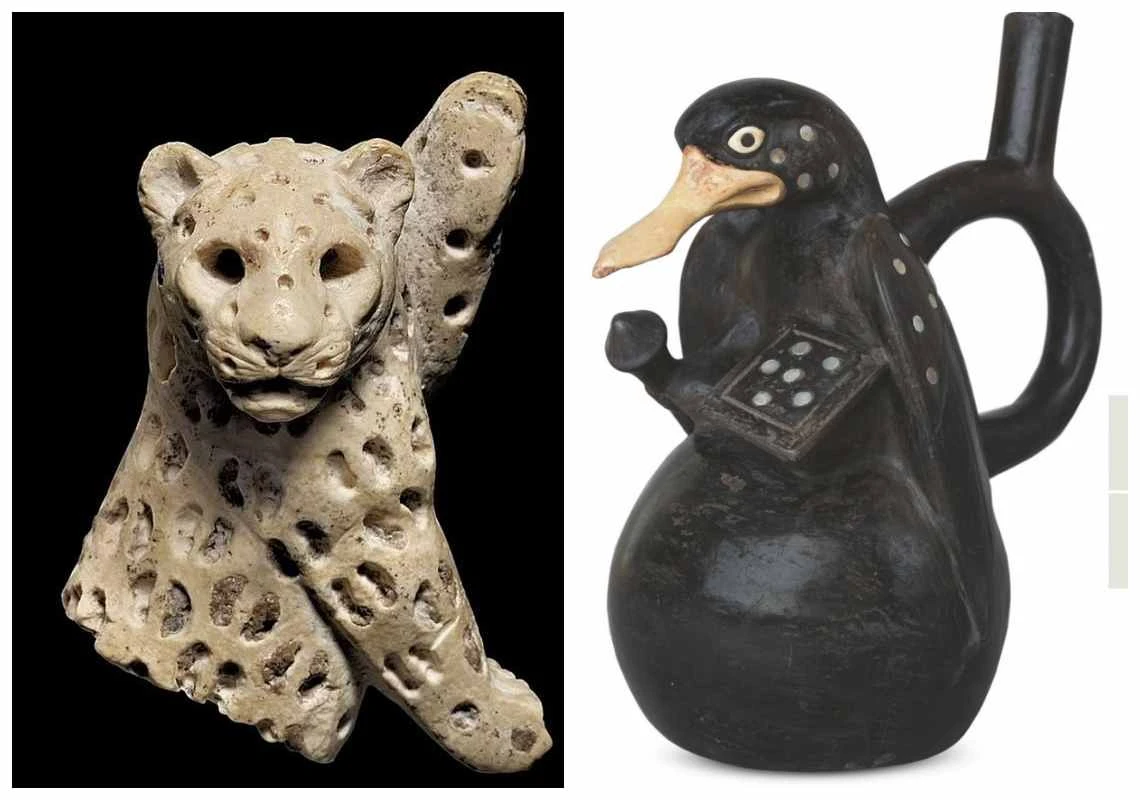
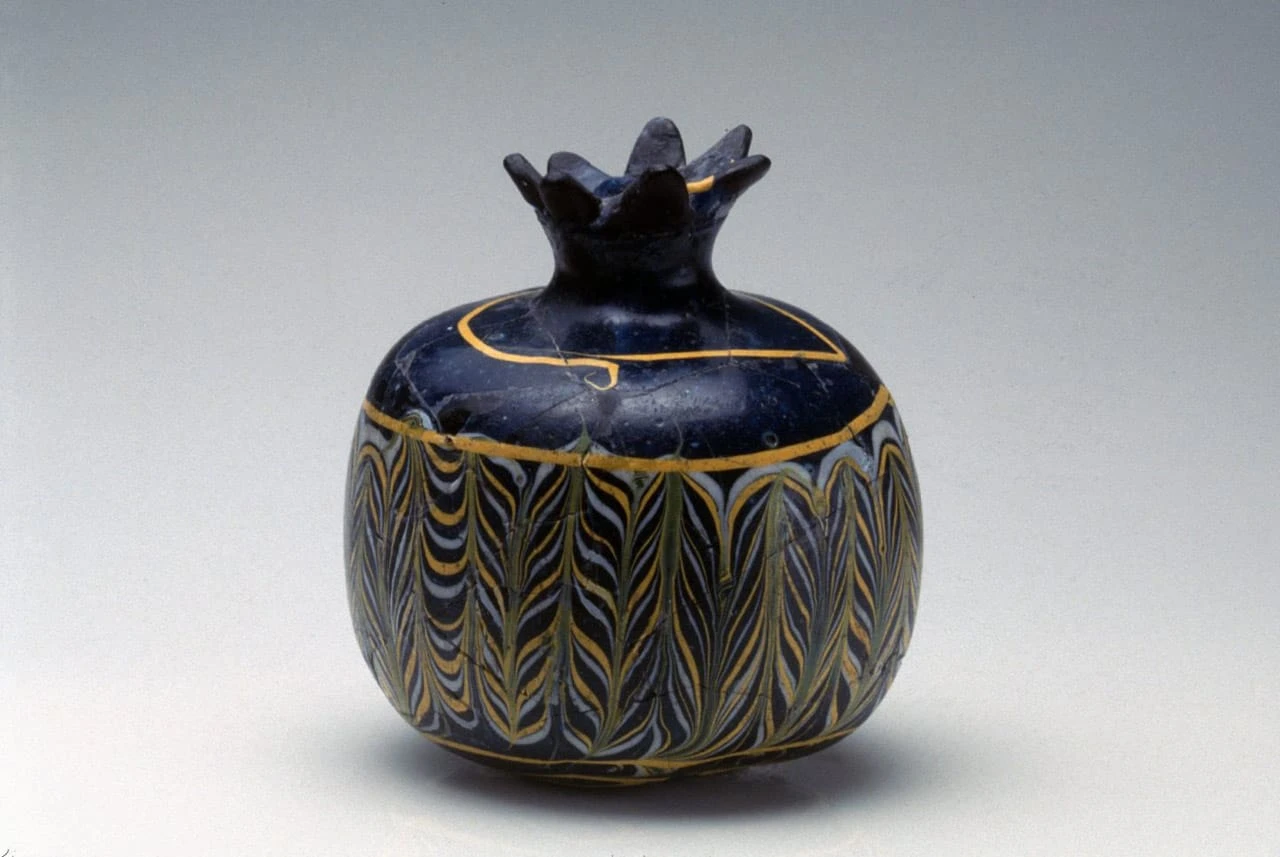
Glass pomegranate vessel. Egypt, New Kingdom, 12th century BCE.
Pomegranates were introduced to Egypt from Western Asia during the early New Kingdom, likely brought back from military campaigns by 18th-Dynasty pharaohs. The tree quickly took root in Egyptian gardens, making the fruit a popular motif for jewelry, amulets, and vessels. At the time, glass was valued as highly as precious stones. Pomegranate juice was served at meals, mixed into wine, and even used to dress wounds due to its astringent and anti-inflammatory properties. 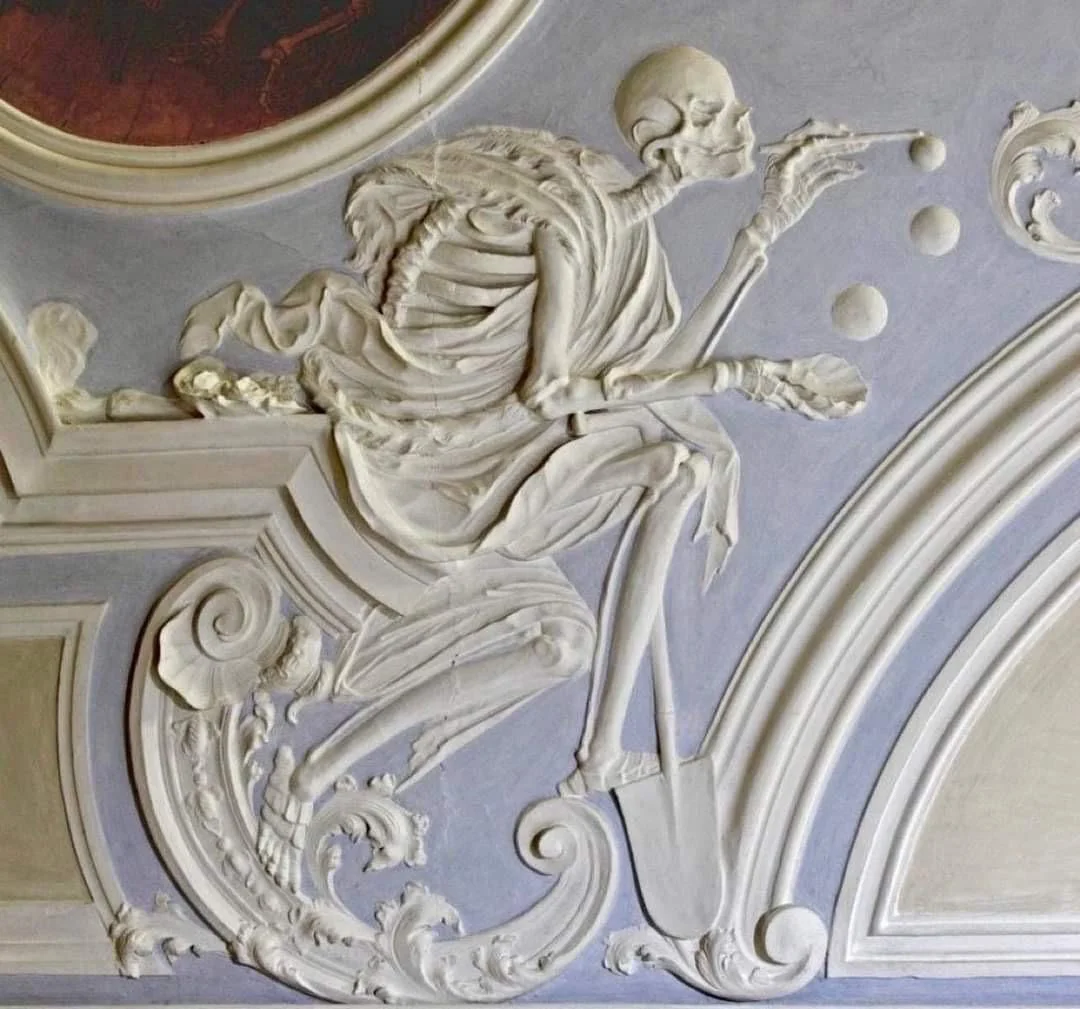
“Death Blowing Soap Bubbles.” Stucco relief by Johann Georg Leinberger, Michaelsberg Abbey, Bamberg, 1729–1731.
This relief decorates the sepulchre—a burial chapel for monks—at the Benedictine Abbey of St. Michael. Founded in 1015 by Eberhard, the first Bishop of Bamberg, the monastery acquired a full “Dance of Death” cycle under Abbot Anselm Geisendorfer. The soap bubble is an ancient symbol of life's brevity. The Latin adage
Homo bulla est
translates to “Man is a bubble”—just as beautiful, and just as fleeting. 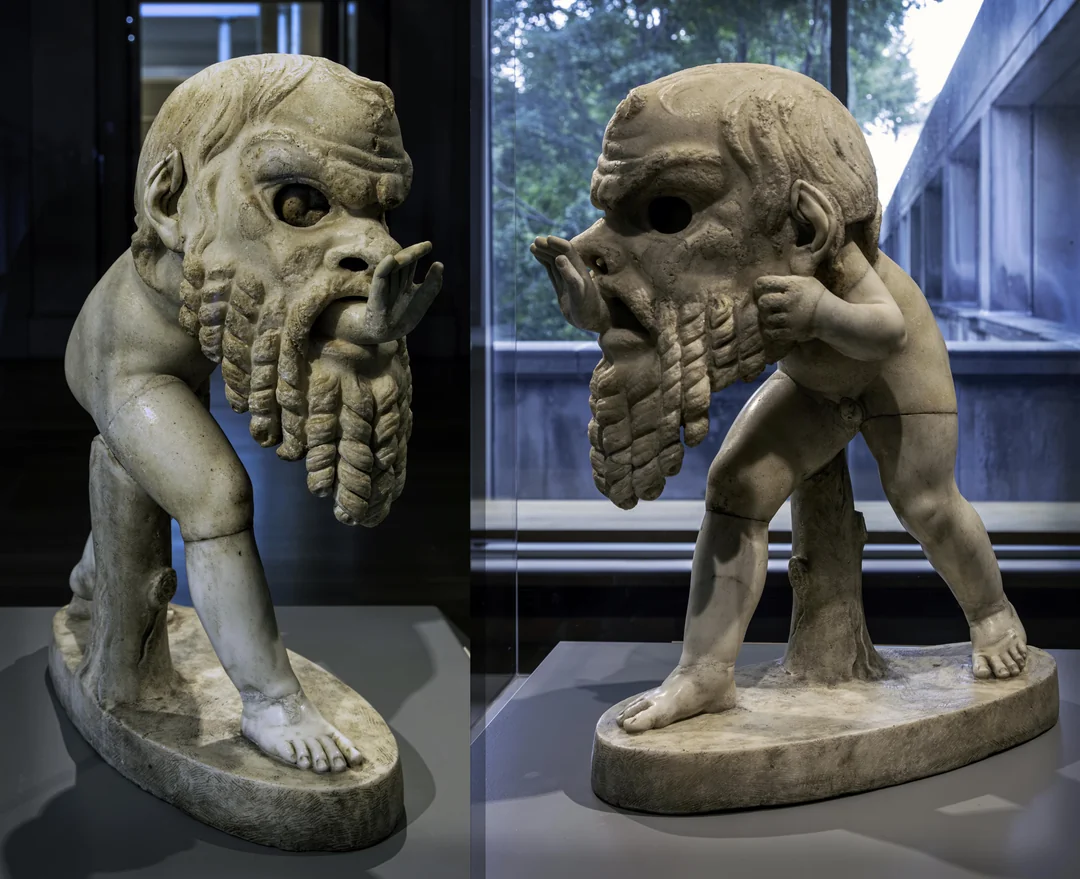
Roman statue of a young satyr wearing the theatrical mask of the old satyr Silenus. The Art Institute of Chicago.
The young satyr has jammed his fist into the mask’s mouth, clearly trying to scare someone. The tiny tail at his lower back gives away his mythical nature. Sculpted around the 1st century CE, the statue was unearthed near Rome’s Villa Ludovisi around 1620. In 1628, sculptor Alessandro Algardi restored its base, ears, and legs. It is the only known standalone statue depicting this scene; the motif was usually carved onto sarcophagi or engraved gems. Before going under the hammer at Sotheby's, it was estimated at three to five million dollars. 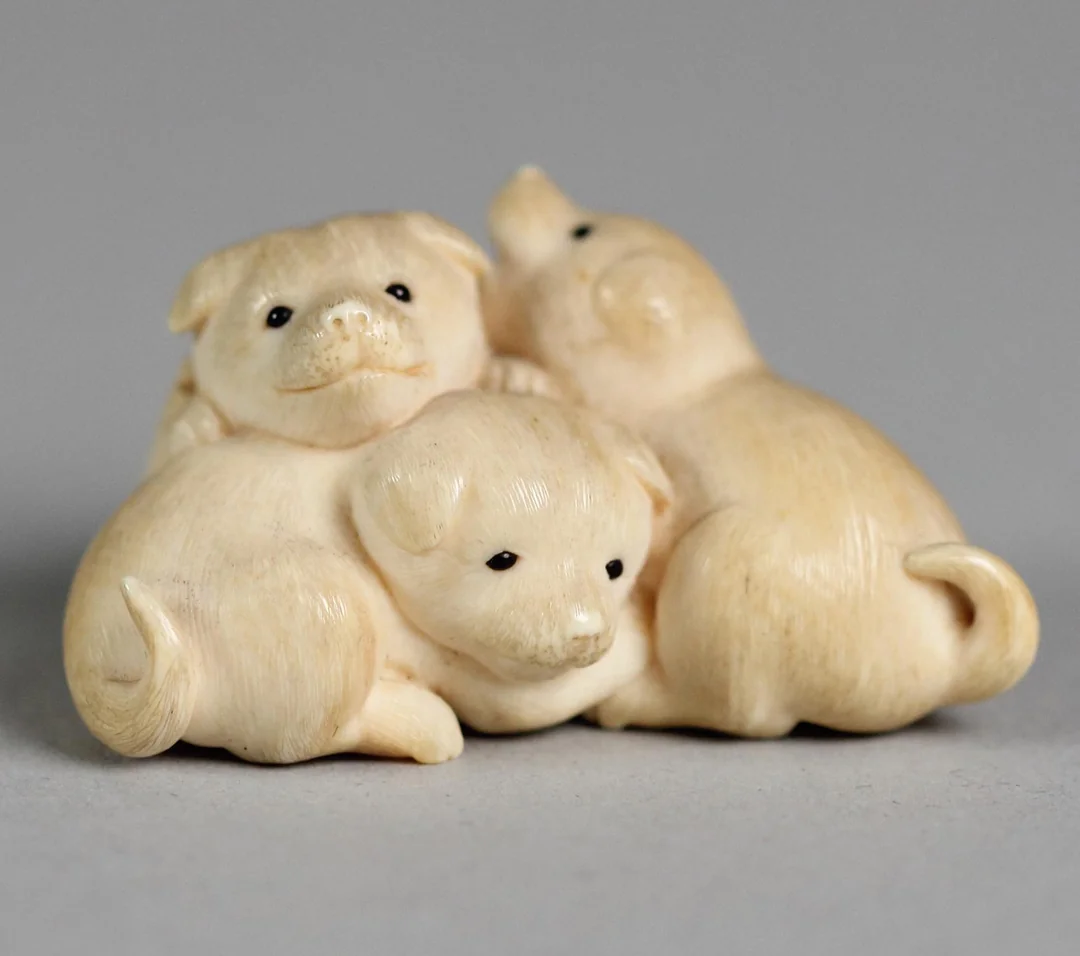
Ivory figurine of “Three Puppies.” Japan, 18th century.
Chubby puppies became a beloved motif in Japanese art thanks to painter Maruyama Ōkyo. His adorable dogs proved so popular that ivory and wood carvers quickly adopted the subject. In Japan, dogs symbolize safe childbirth and the protection of children. Expectant mothers visit shrines on the “Day of the Dog” to pray for smooth deliveries. To the Japanese, a plump, fluffy puppy represents good health and innocent childhood bliss. 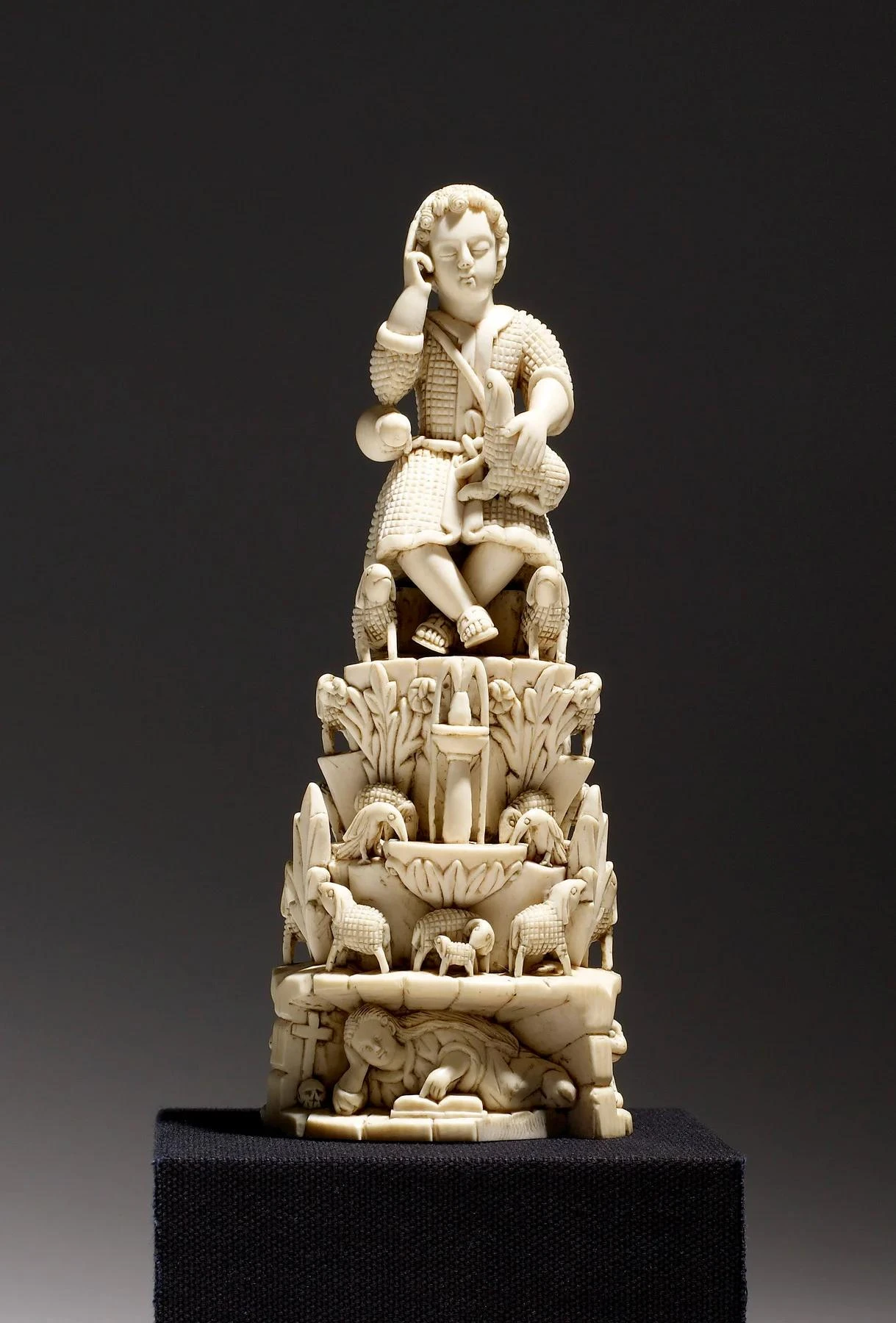
Infant Christ as the Good Shepherd. Ivory, Goa, India, 17th century.
After the Portuguese seized Goa in 1510, the city became a major hub for Jesuit missionaries. Local craftsmen carved statuettes for churches and export to Europe, mostly using ivory imported from Mozambique. This specific iconographic style originated in Goa and has no direct equivalent in European art. At the base, Mary Magdalene reads in a cave. Above her, the fountain of life flows as sheep gather around. At the top slumbers the infant Christ; many scholars note a striking resemblance between his posture and that of a sleeping Buddha. 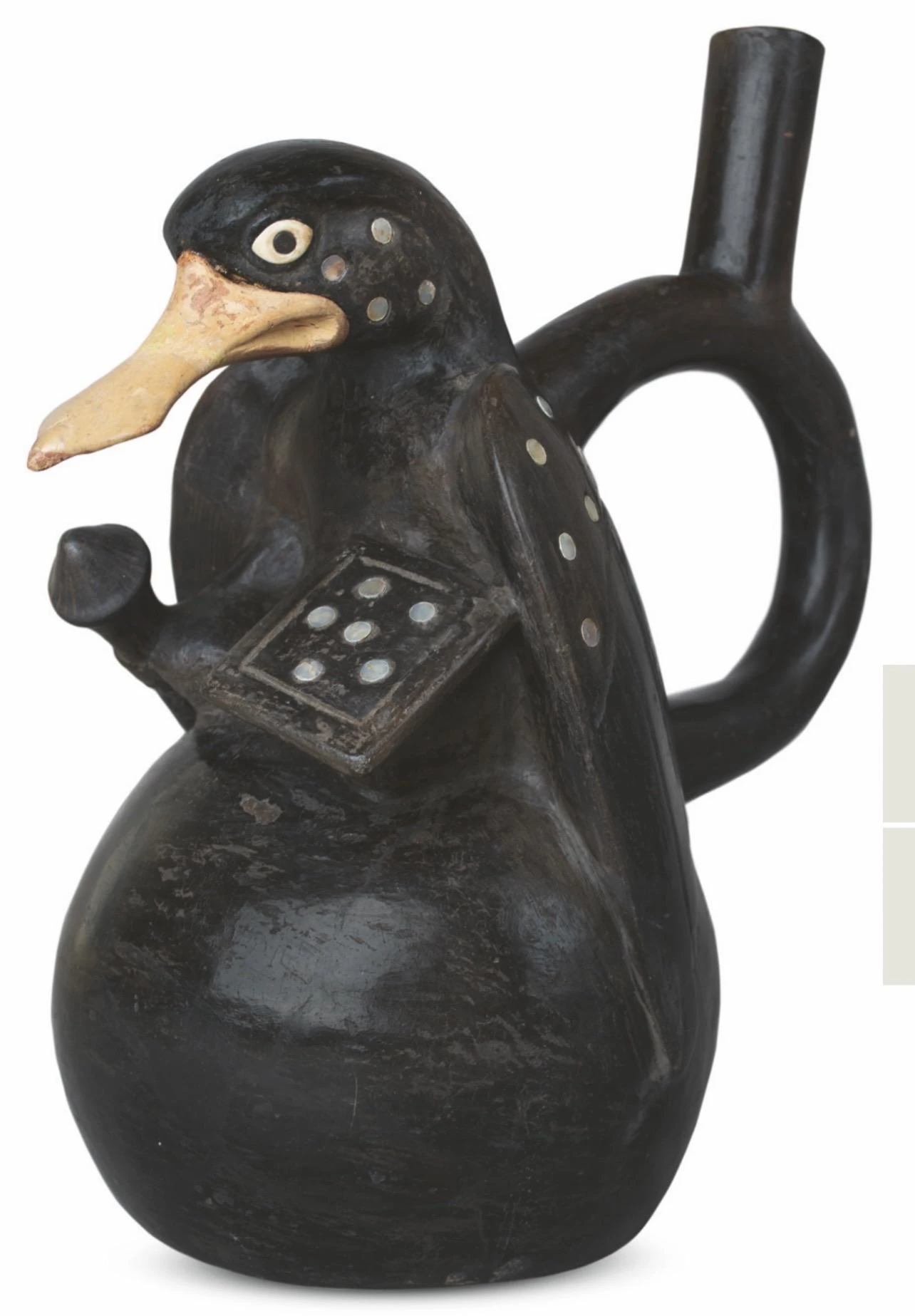
Moche culture vessel: “Duck Warrior” with shield and mace. Peru, 560–650 CE. Huacas de Moche Museum.
The Moche culture flourished along the northern coast of Peru from roughly the 1st to the 8th century CE. Their main sanctuaries, Huaca del Sol and Huaca de la Luna, still stand near modern-day Trujillo. Moche warriors were often depicted as birds, including ducks. Ritual combats took place using maces and shields, ending when one fighter lost his helmet. The vanquished opponent was stripped naked, led away on a rope, and sacrificed. 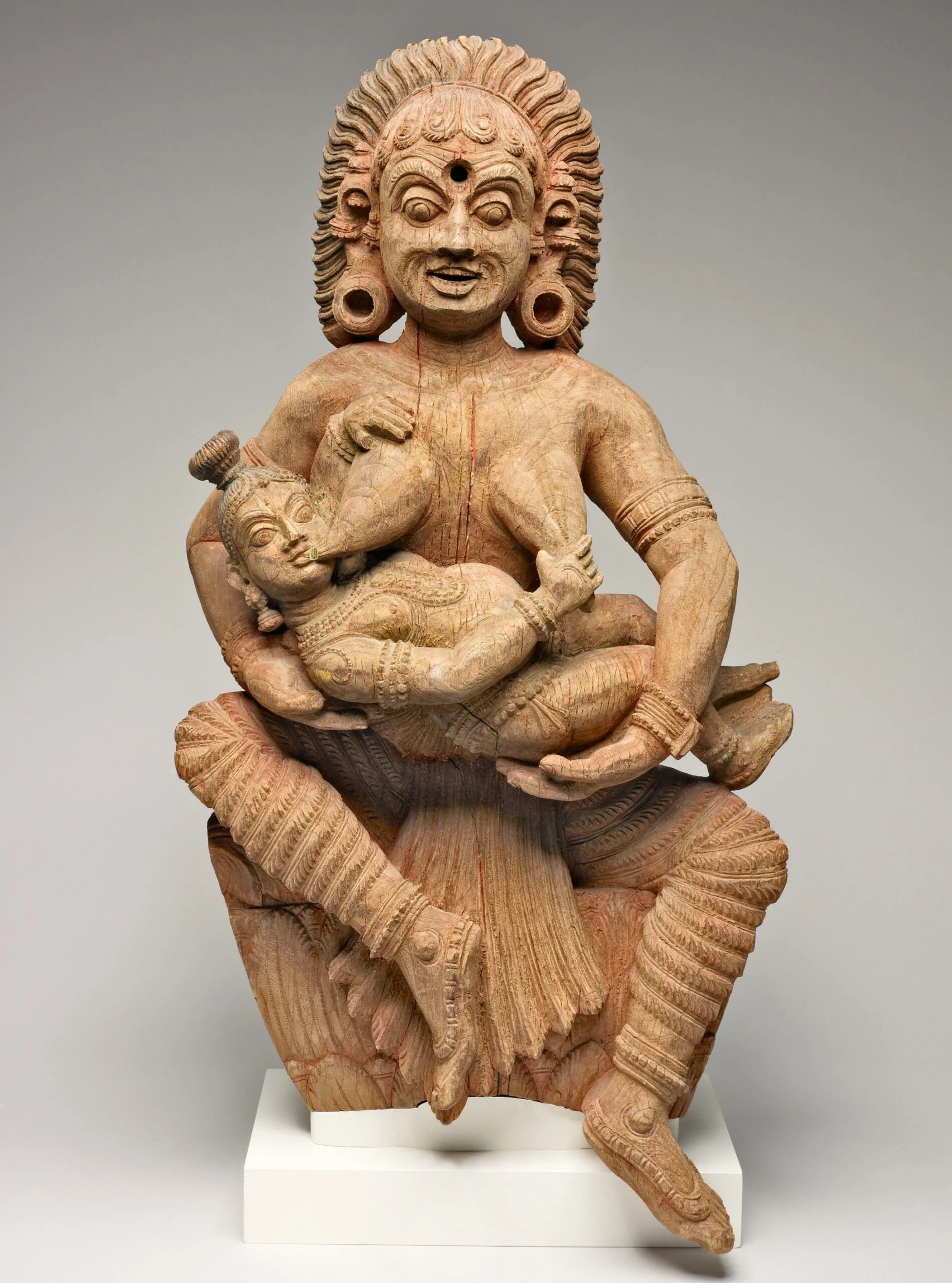
Infant Krishna Slaying the Demoness Putana. Kerala, India, 17th century.
This scene originates from the
Bhagavata Purana
. After a prophecy foretold that the evil king Kamsa would die at the hands of his nephew, he dispatched a demoness to kill the baby Krishna. Putana disguised herself as a beautiful nurse and smeared her breasts with poison. But when Krishna nursed, he sucked out both her milk and her life force. As she died, the demoness reverted to her monstrous form. According to legend, the divine touch purified Putana of all her sins. 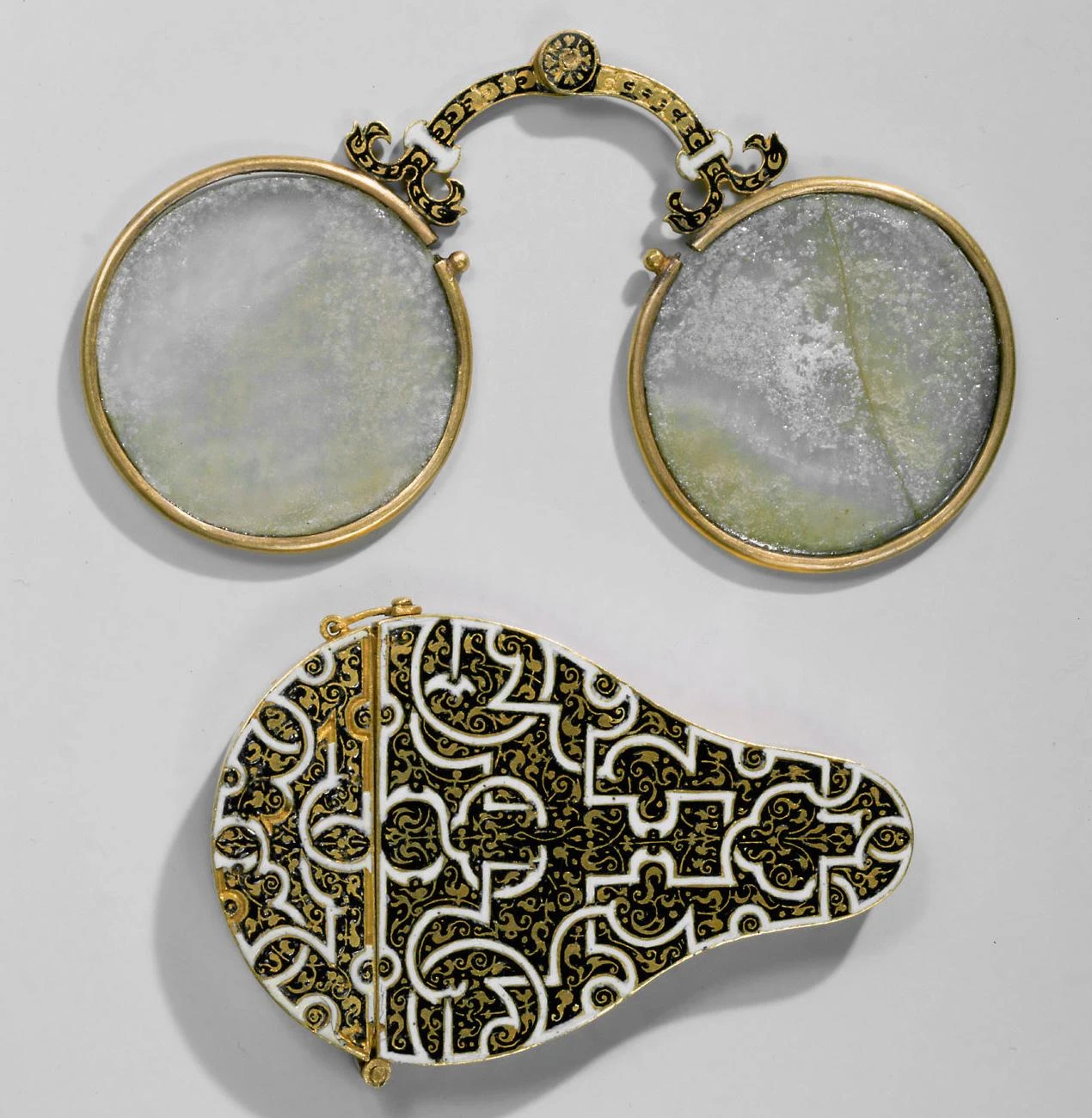
Eyeglasses with gold and enamel case. Paris, 16th century. Kunsthistorisches Museum, Vienna.
Eyeglasses were invented in Italy in the late 13th century. This pair, housed in the Kunstkammer of Vienna’s Kunsthistorisches Museum, was crafted in the third quarter of the 16th century, with its frame restored around 1600. Measuring just 8.4 centimeters long, it lacks temples that fit behind the ears—a design feature that wouldn't appear until the 18th century. Instead, these glasses had to be held up by hand or pinched onto the bridge of the nose. 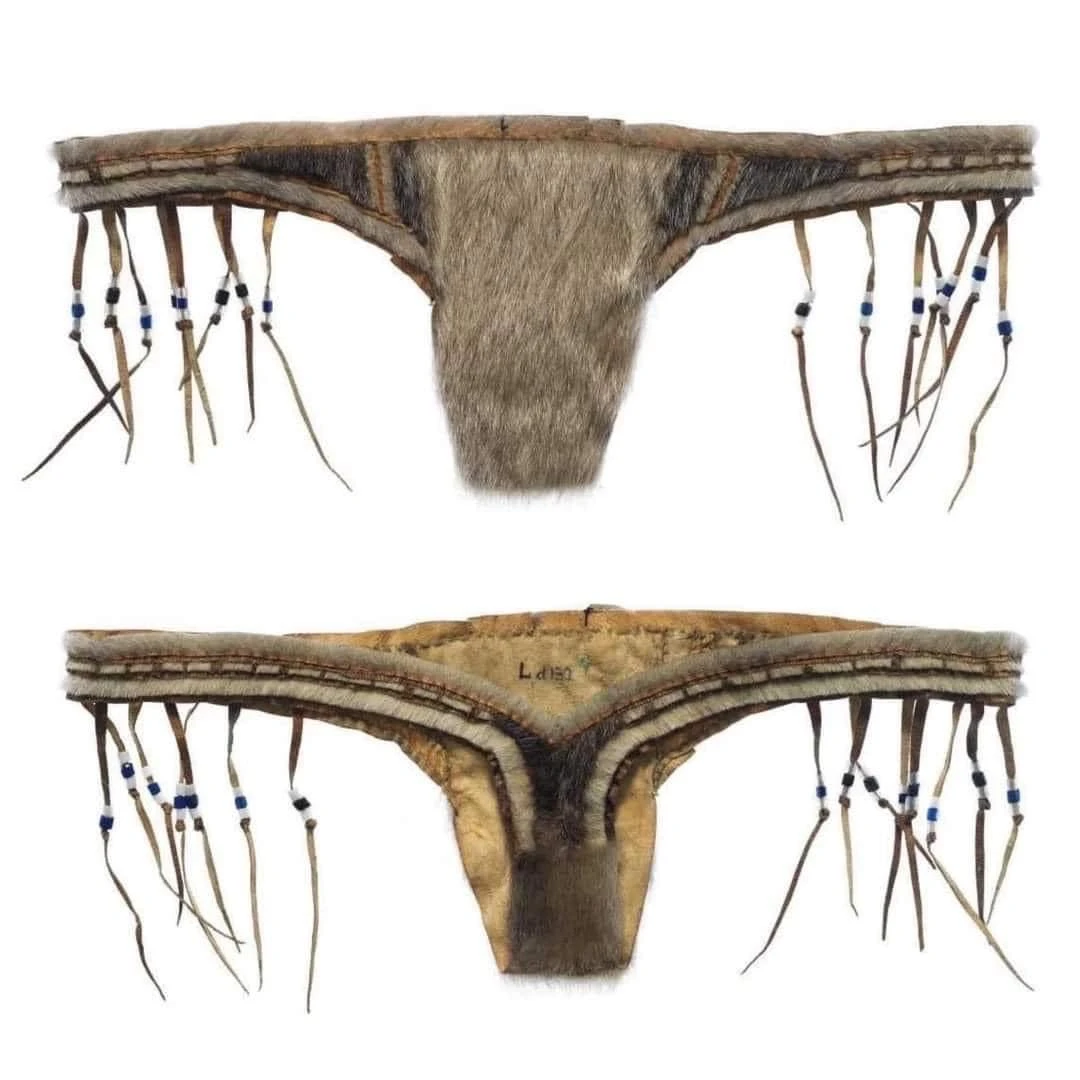
Women’s seal-fur underwear. Greenland, 19th century. National Museum of Denmark.
Among the Inuit of East Greenland, this garment was known as a
naatsit
. Strips of sealskin were stitched together using reindeer or whale sinew. Worn beneath fur trousers, the
naatsit
served as the only clothing worn indoors inside warm homes—even when guests visited. Seal fur was chosen deliberately for its durability and lighter insulation compared to caribou fur. Captain Carl Ryder brought this particular pair back from the settlement of Ammassalik in 1892. 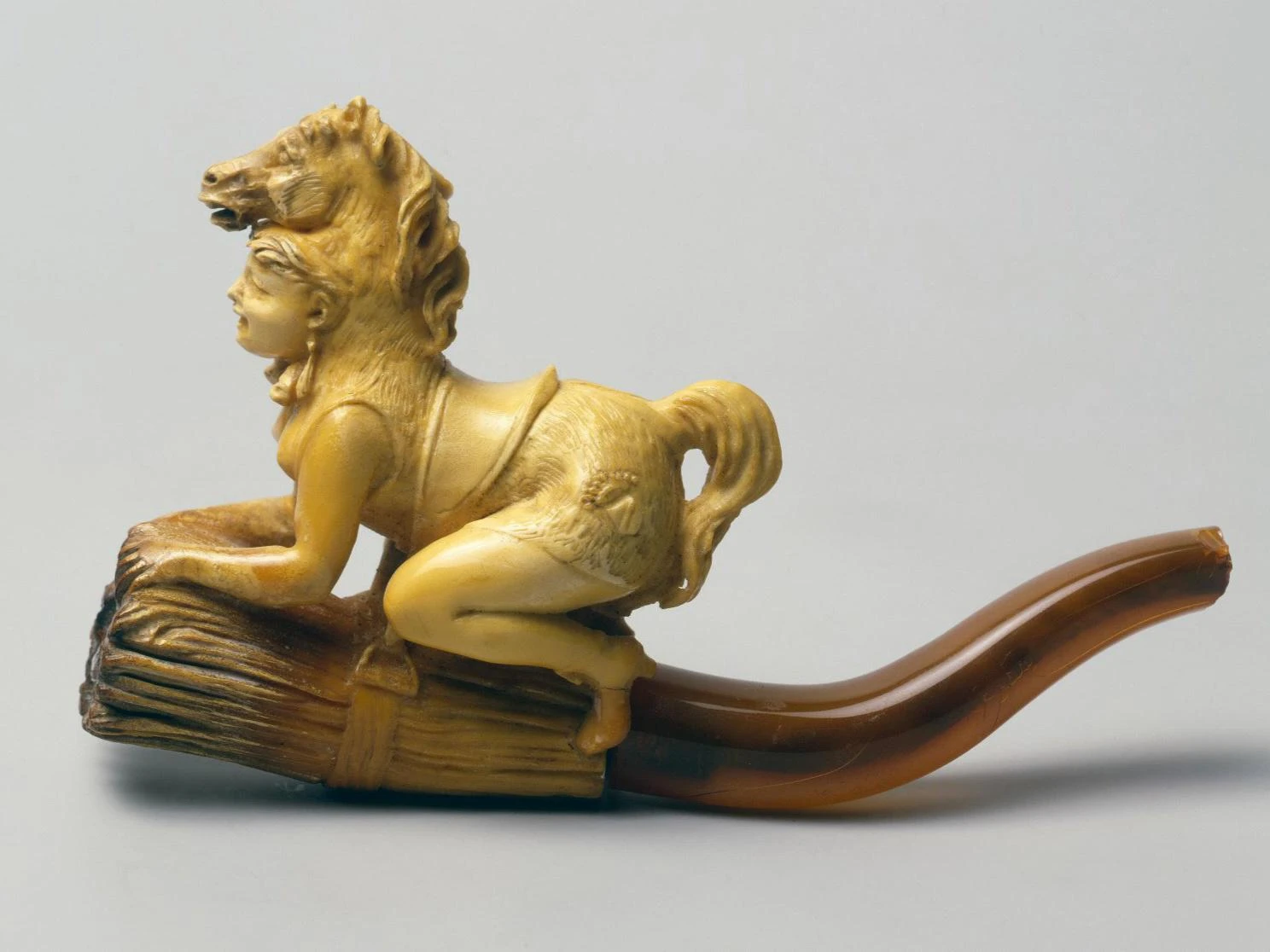
Meerschaum and amber smoking pipe. Western Europe, late 19th century. The State Hermitage Museum.
Meerschaum is the mineral sepiolite. Germans named it
Meerschaum
(“sea foam”) because this lightweight, white stone truly resembles frothy foam. The primary deposit is found near Eskişehir, Turkey. Soft when moist, the stone allows carvers to create remarkably delicate designs. As it absorbs moisture and tobacco tars over time, the pipe gradually darkens to a rich honey tone—a patina highly prized by collectors. 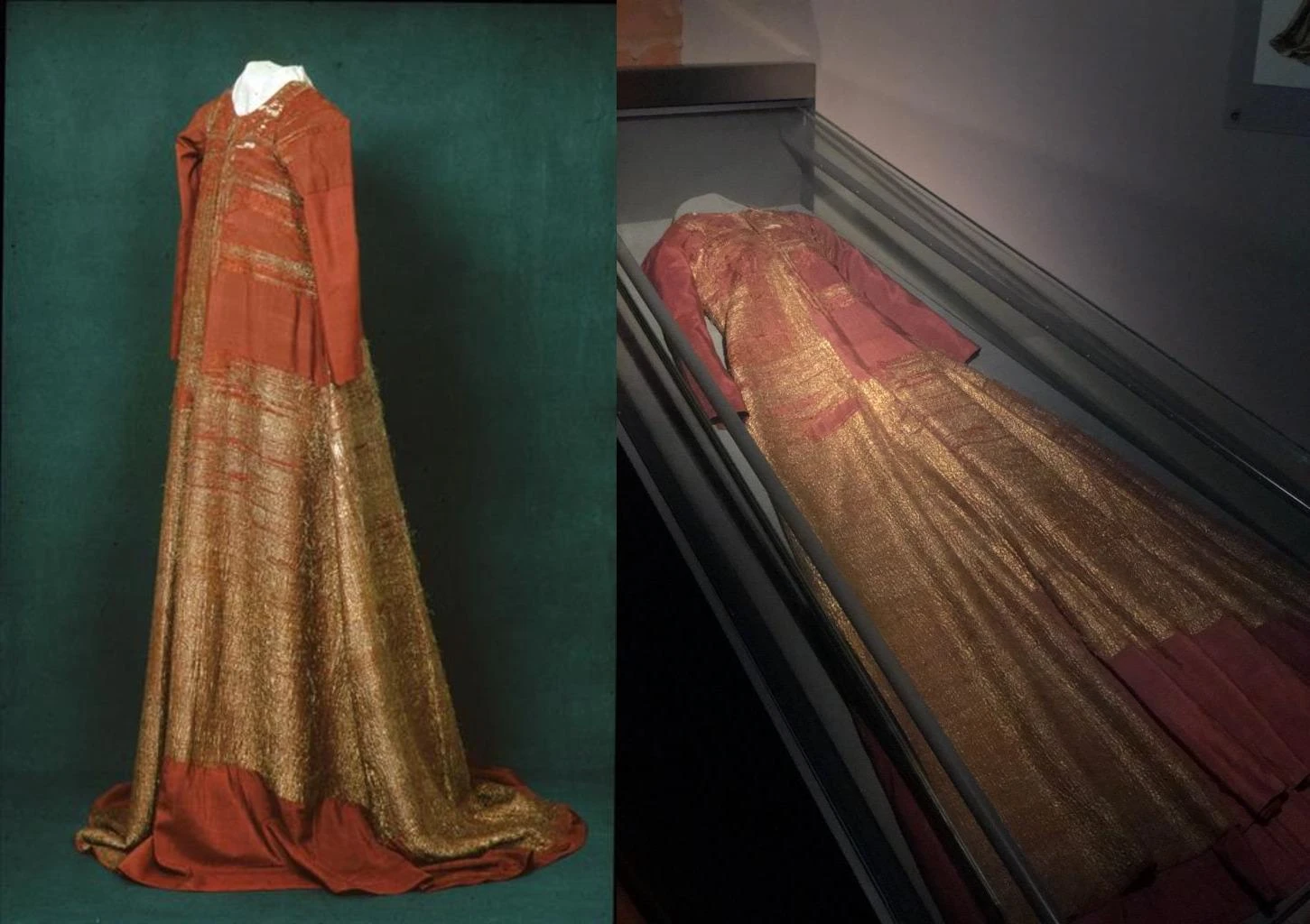
Golden gown attributed to Queen Margrete I of Denmark. Early 15th century. Uppsala Cathedral.
Margrete I ruled Denmark, Norway, and Sweden until her death in 1412. Until 1659, the dress was preserved as a relic at Roskilde Cathedral and believed to help women enduring difficult labor, often being lent to noblewomen in childbirth. During the Dano-Swedish War of 1658–1660, Swedish troops carried the gown off to Uppsala. Carbon dating places the fabric in the early decades of the 15th century, ruling it out as a wedding dress, since the queen married in 1363. Requiring nearly 11 meters of Italian gold brocade—a vast fortune at the time—it remains Europe’s only surviving medieval ceremonial dress. 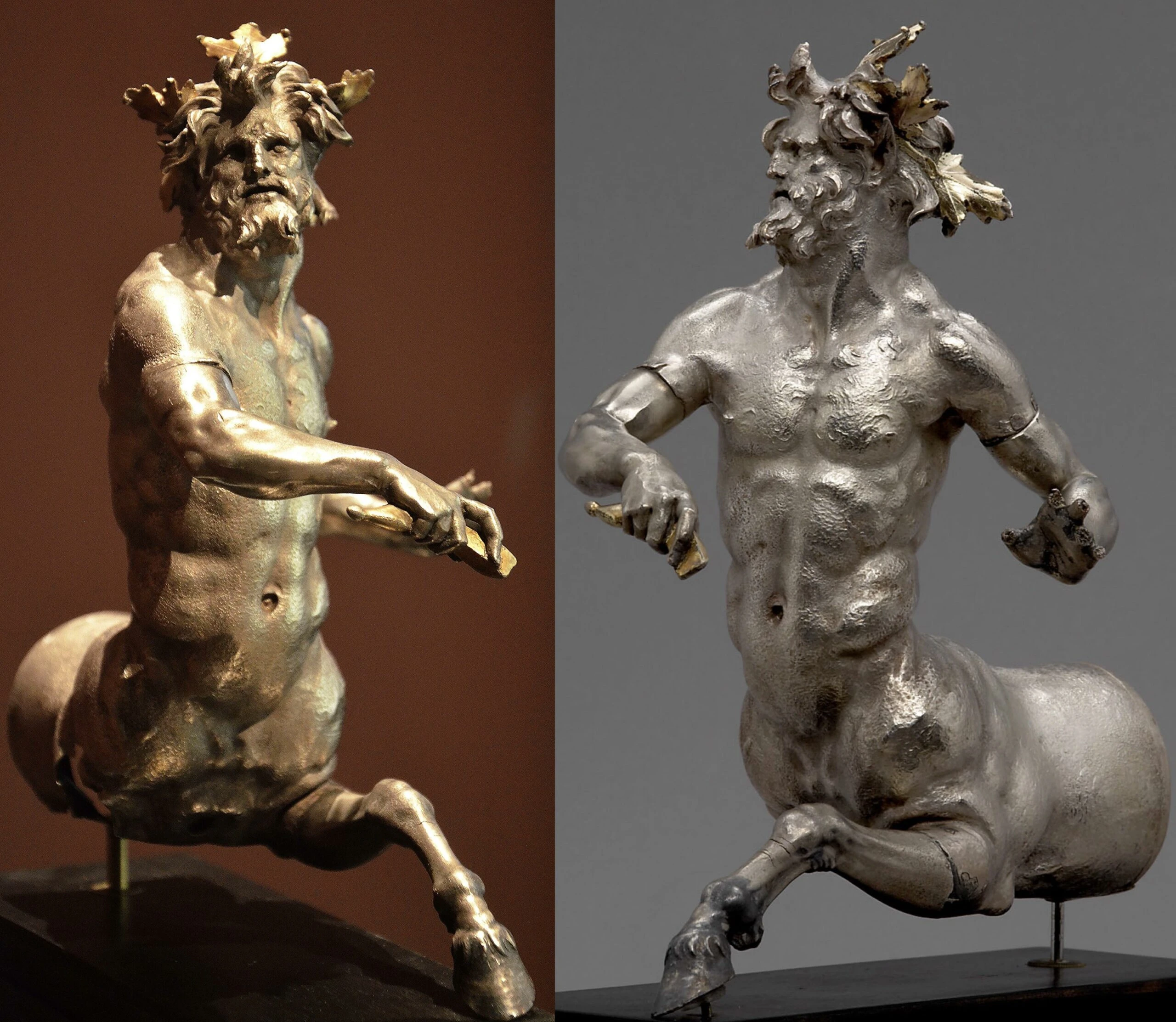
Protome of a centaur-shaped rhyton. Gilded silver, ca. 160 BCE. Found in Falerii Novi, Italy.
A rhyton is a horn-shaped drinking vessel. Wine was poured in through the top and trickled out through a small spout at the bottom. The Greeks adopted these vessels from the East, viewing them as exotic status symbols. Centaurs were part of the retinue of Dionysus, god of wine, making the motif especially fitting. The Romans founded Falerii Novi in 241 BCE after destroying the ancient city of Falerii. 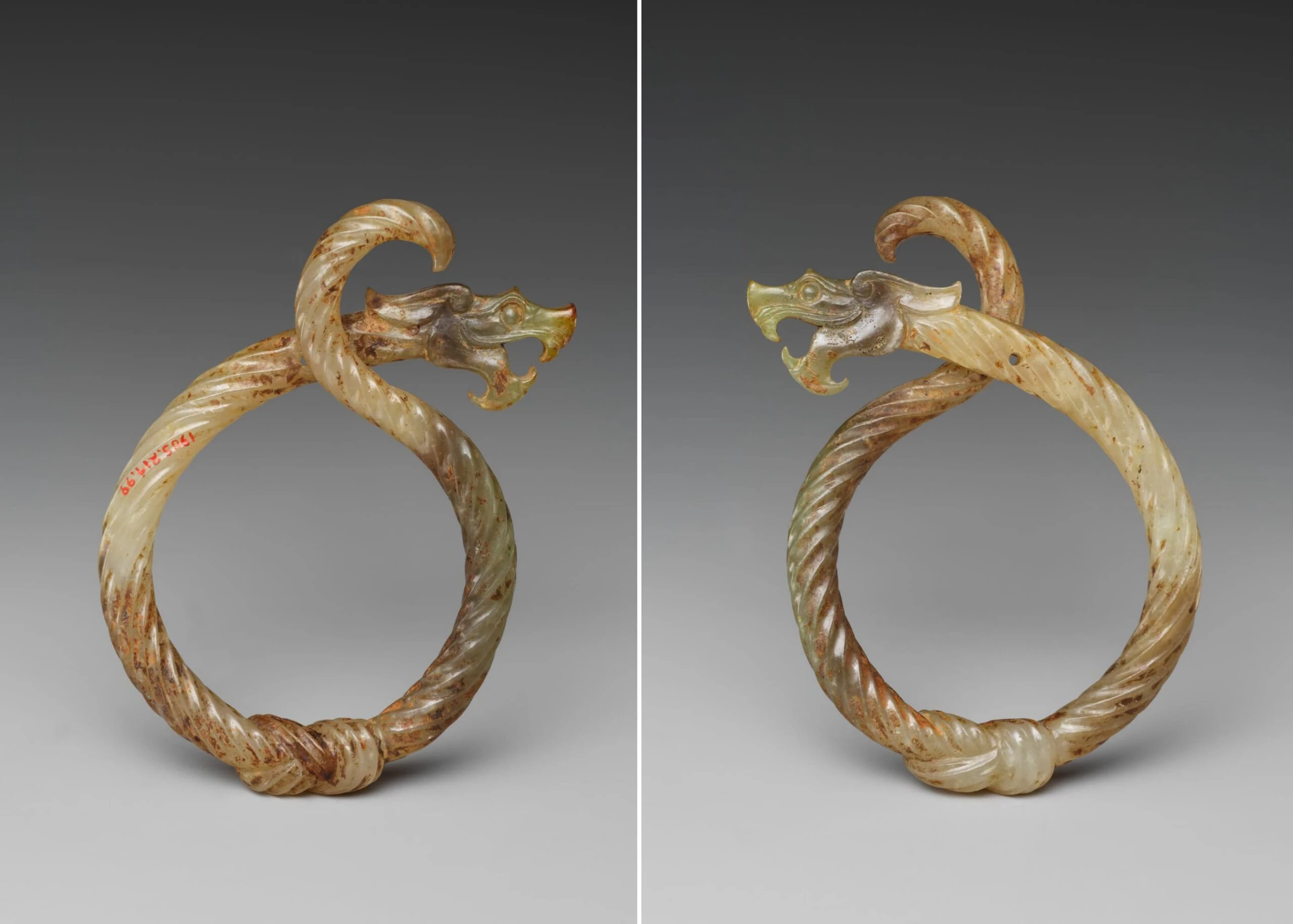
Jade pendant in the form of a knotted dragon. China, Eastern Zhou, 3rd century BCE.
Housed in the Metropolitan Museum of Art, this pendant stands just 7.9 centimeters high. The dragon’s body is carved with ridges that mimic a twisted rope. Jade is so hard that it cannot be carved directly; instead, it must be painstakingly ground down using abrasive sand. It is all the more astonishing how supple the stone appears in the hands of ancient artisans. The Eastern Zhou period spanned over five centuries, from 770 to 256 BCE. 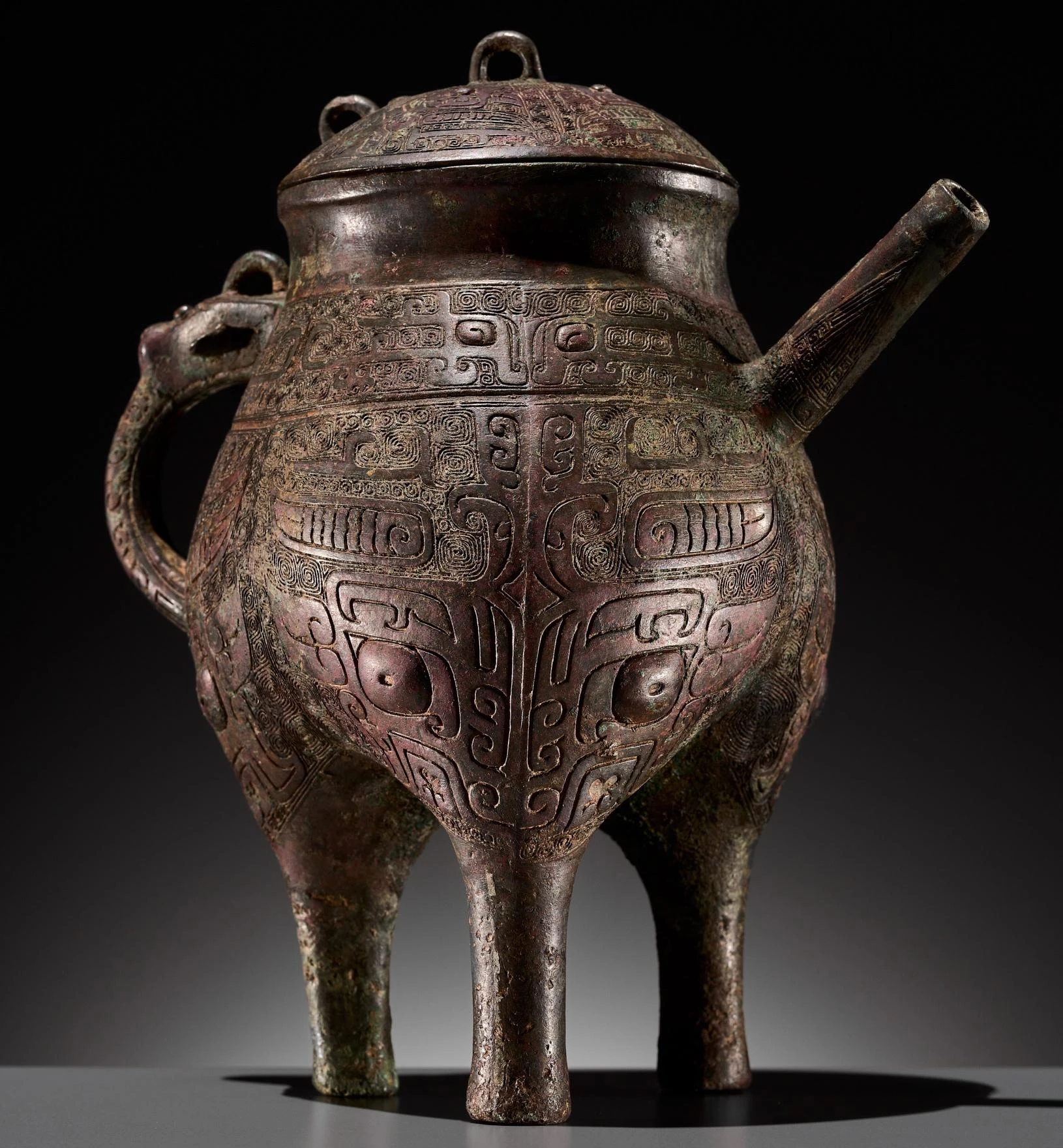
Bronze tripod wine vessel. China, 12th–11th century BCE.
At the transition between the Shang and Zhou dynasties, vessels like this were used in ancestral rituals to warm and pour wine. Three-legged wine vessels of this era are known as
jue
and
jia
. Chinese bronze casters used a piece-mold clay technique, allowing for sharp, crisp relief patterns. Ritual bronzes were interred in noble tombs along with weapons and chariots. 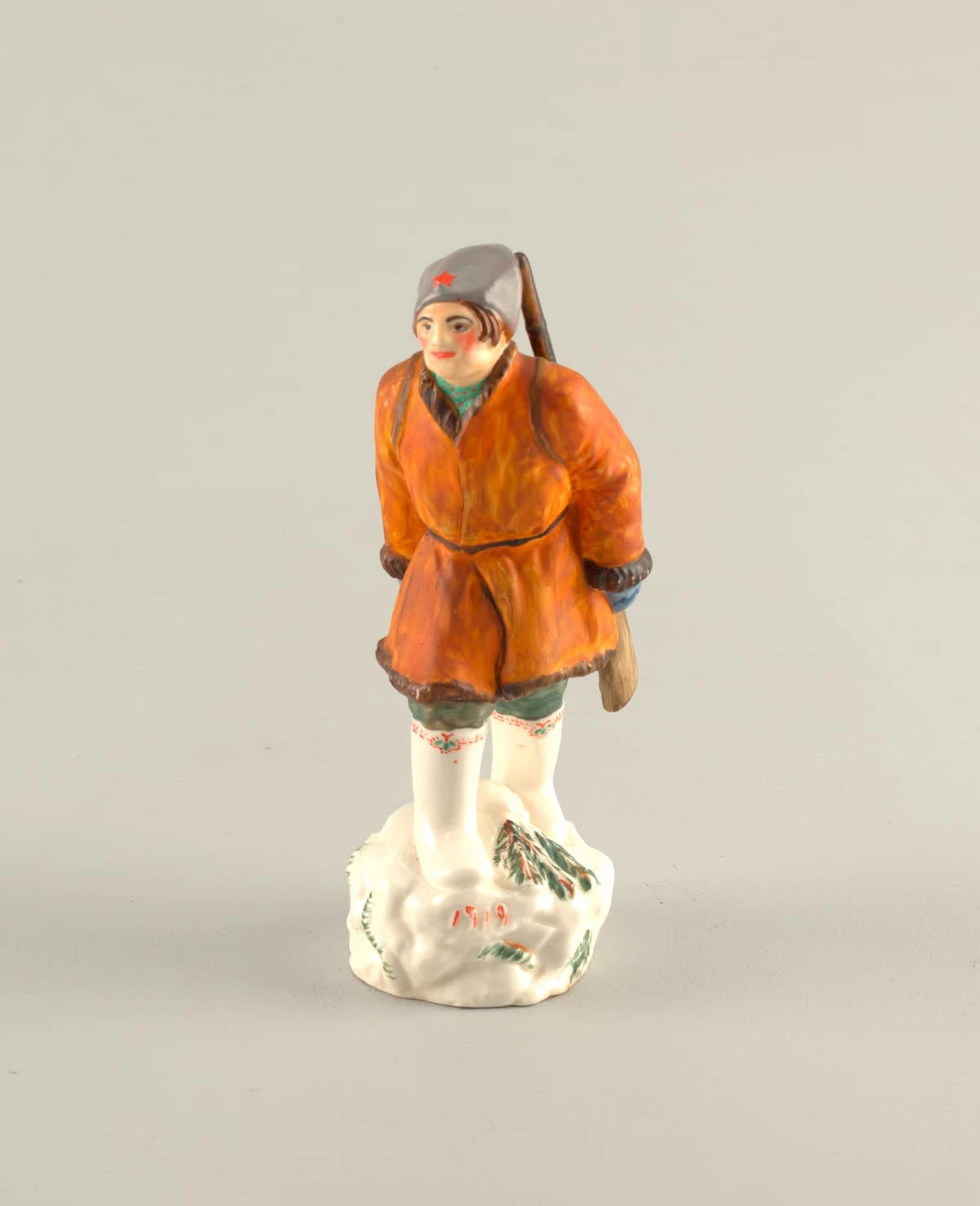
Porcelain figurine “Partisan on the March.” Sculpted by Natalya Danko, State Porcelain Factory, 1919.
Following the Russian Revolution, the Imperial Porcelain Factory was renamed the State Porcelain Factory. In 1919, sculptor Natalya Danko took charge of its modeling workshop, going on to create over 300 figurines and sculptural groups. Her “agitprop porcelain” blended 18th-century elegance with revolutionary themes. Almost all of her pieces were hand-painted by her younger sister, Elena. Standing 20.5 centimeters tall, one example is preserved in New York’s Cooper Hewitt Design Museum. Rare pieces by Danko command extraordinary prices at auction: in 2017, her satirical bureaucrat figure sold at Christie’s for £110,000. 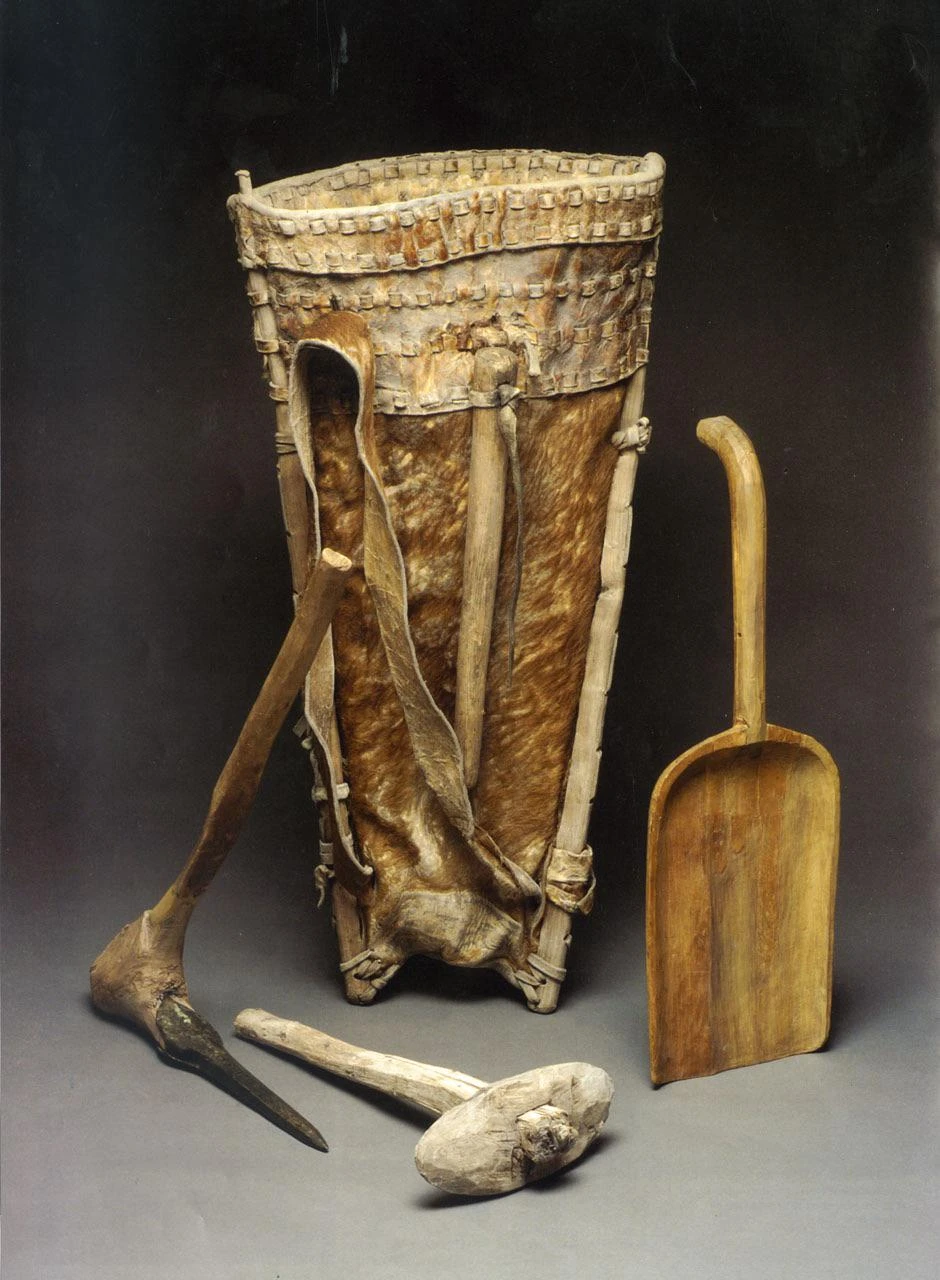
Bronze Age tools and a salt-carrying backpack from the Hallstatt salt mines. 13th century BCE.
Salt preserved materials that normally decay within centuries: wood, leather, and fabric. Stitched from rawhide cattle skins, each pack could hold up to 30 kilograms of salt. The carrying straps were tailored to individual miners. A clever design allowed miners to dump the heavy load with a single movement without removing the pack. Only five such backpacks have ever been found, including one discovered in 1985. The mines extended over 100 meters into the mountain. In 2003, archaeologists working in the same shafts discovered Europe’s oldest known wooden staircase. 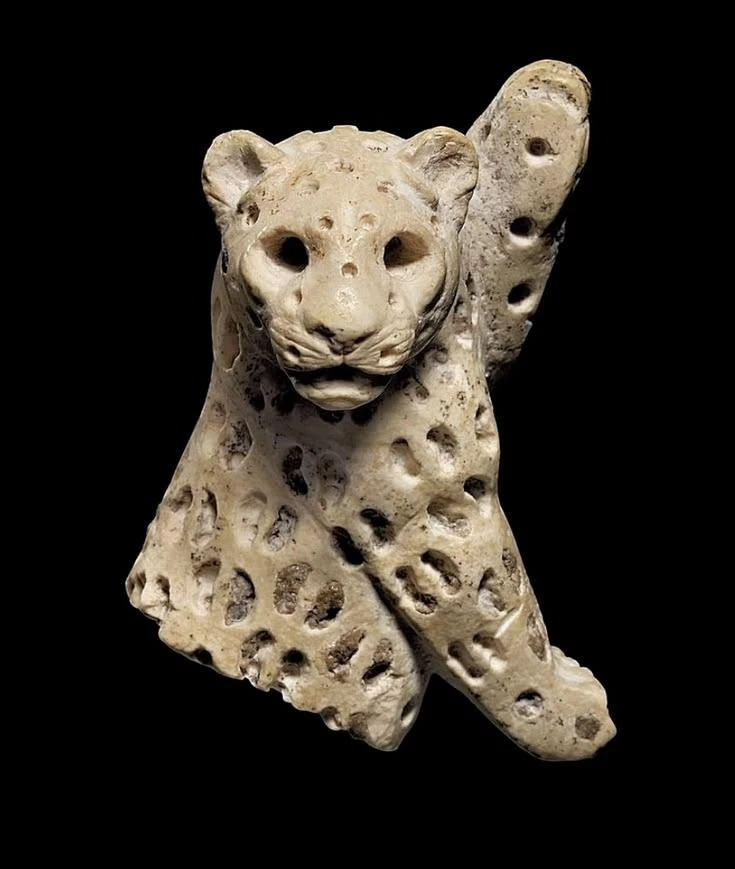
Inlaid limestone figurine of a leopard. Mesopotamia, Late Uruk–Jemdet Nasr period, ca. 3300–2900 BCE.
This figurine is roughly 5,000 years old, dating to the same era when the first cuneiform clay tablets appeared in Uruk. Mesopotamian artisans excelled at inlay work, setting mother-of-pearl, colored stones, and red paste into stone using bitumen—natural asphalt—as an adhesive. The leopard’s spots were likely originally filled with similar decorative inlays. 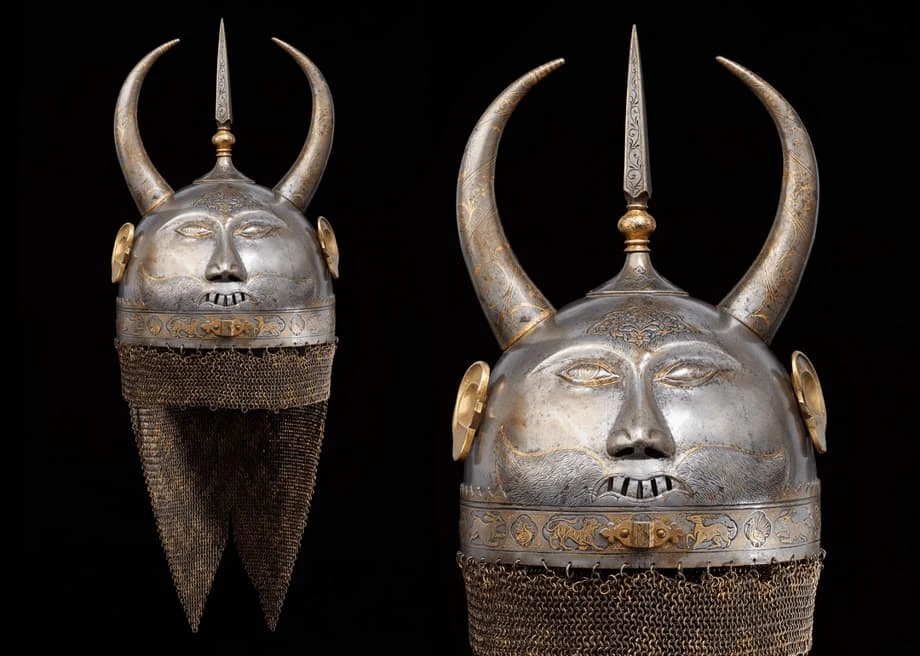
Helmet with a demon face. India or Persia, 19th century.
Collectors refer to helmets of this type as “devil masks.” In reality, the face depicts a
div
—a demonic monster from Persian mythology. In Ferdowsi's epic poem
Shahnameh
, the hero Rostam accomplishes Seven Labors, culminating in his victory over the White Div, king of demons. Rostam wore the monster's head as a helmet, much like Heracles donned the skin of the Nemean Lion. Wearing such a helmet was thought to bestow the hero's strength. By the 19th century, these helmets were crafted primarily for ceremonial parades, complete with horns, a top spike, plume holders, and a chainmail aventail. 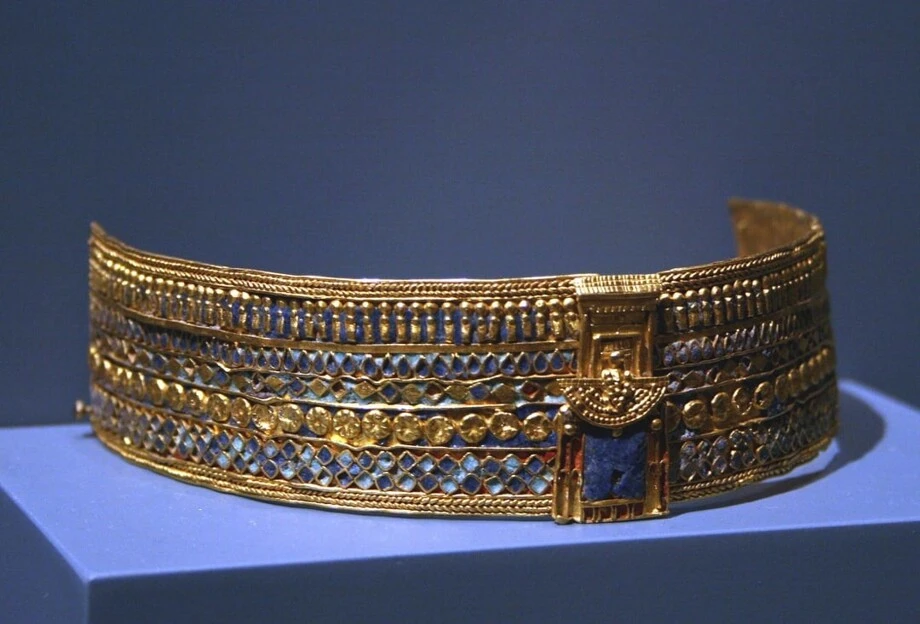
Bracelet from the tomb of Queen Amanishakheto. Ancient Nubia, 1st century BCE. Egyptian Museum of Berlin.
Amanishakheto ruled the Kingdom of Kush from its capital, Meroë, and was buried in a pyramid modeled after those of the Egyptian pharaohs. In 1834, Italian treasure hunter Giuseppe Ferlini dismantled the top of her pyramid in search of gold. Inside, he uncovered a hidden hoard of royal jewelry. Many experts initially doubted the treasure’s authenticity, but it was eventually acquired by museums in Berlin and Munich. The gold bracelets feature vibrant glass inlays and delicate depictions of deities. 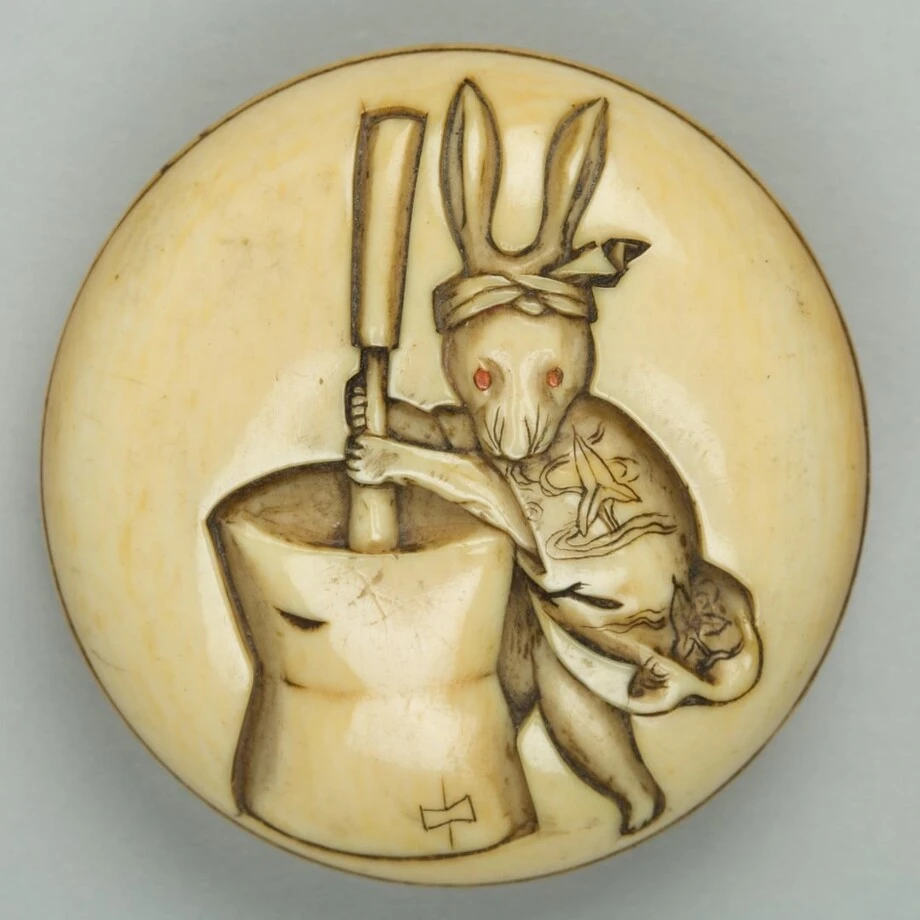
Netsuke depicting a rabbit with a pestle. Japan, 19th century.
Japanese folklore holds that a rabbit lives on the Moon, pounding rice dough in a mortar to make
mochi
(in Chinese mythology, the same creature brews the elixir of immortality). Netsuke served as functional toggles: since traditional kimono lacked pockets, small items like pouches or
inro
boxes were suspended from the sash by a cord, and the carved netsuke kept the cord from slipping. Over time, these practical toggles evolved into an intricate art form. 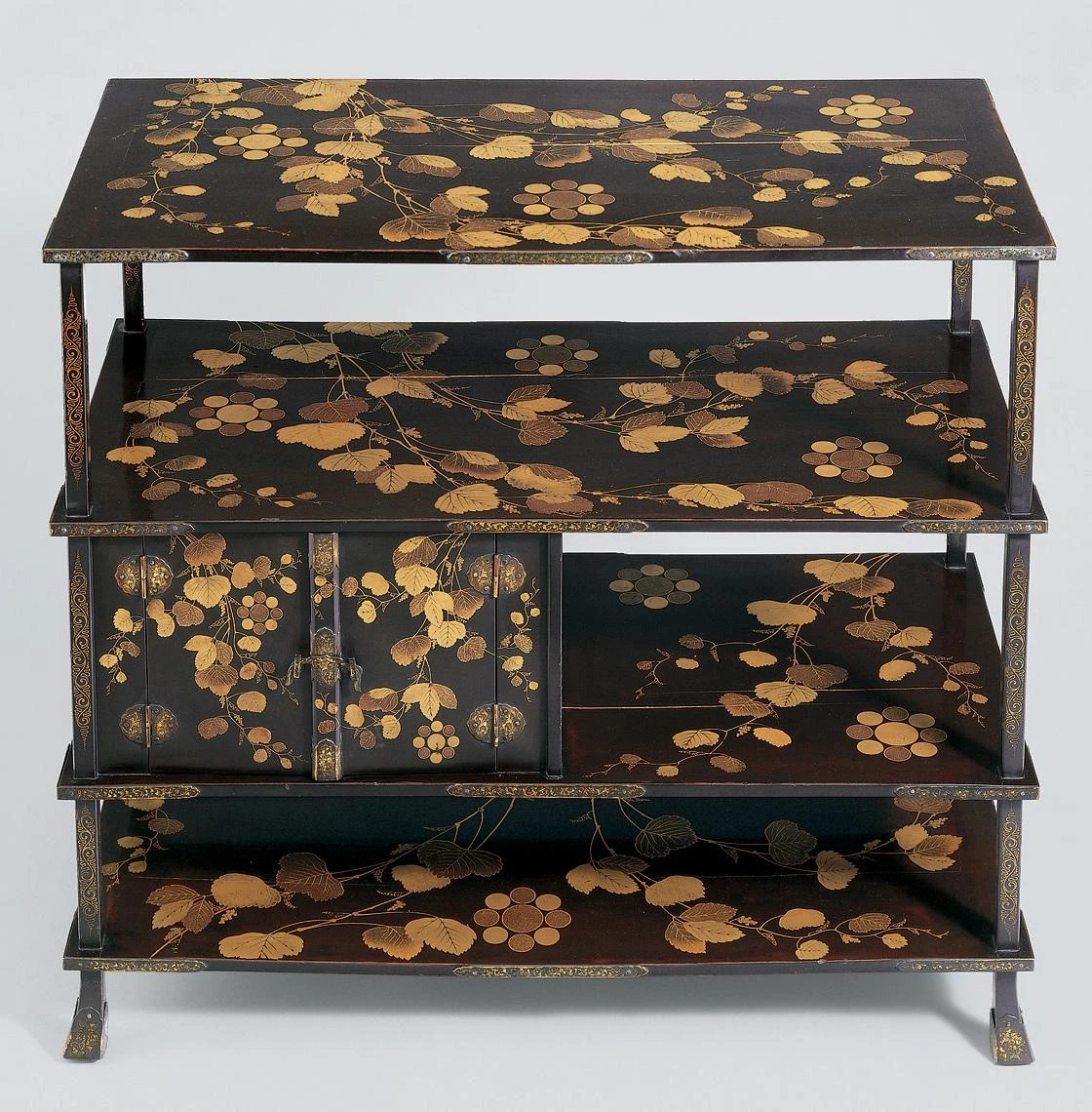
Lacquered shelf with a grapevine pattern. Japan, Edo period, 17th century.
Japanese
urushi
lacquer is harvested from the sap of the lacquer tree. Raw sap causes severe skin irritation, so artisans had to apply dozens of micro-thin layers, leaving each to cure slowly in a humid chamber. The decorative pattern was often executed using the
maki-e
technique, where design outlines are sprinkled with fine gold dust. In Japanese art, grapevines symbolized fertility and prosperity. The Edo period lasted from 1603 to 1868. 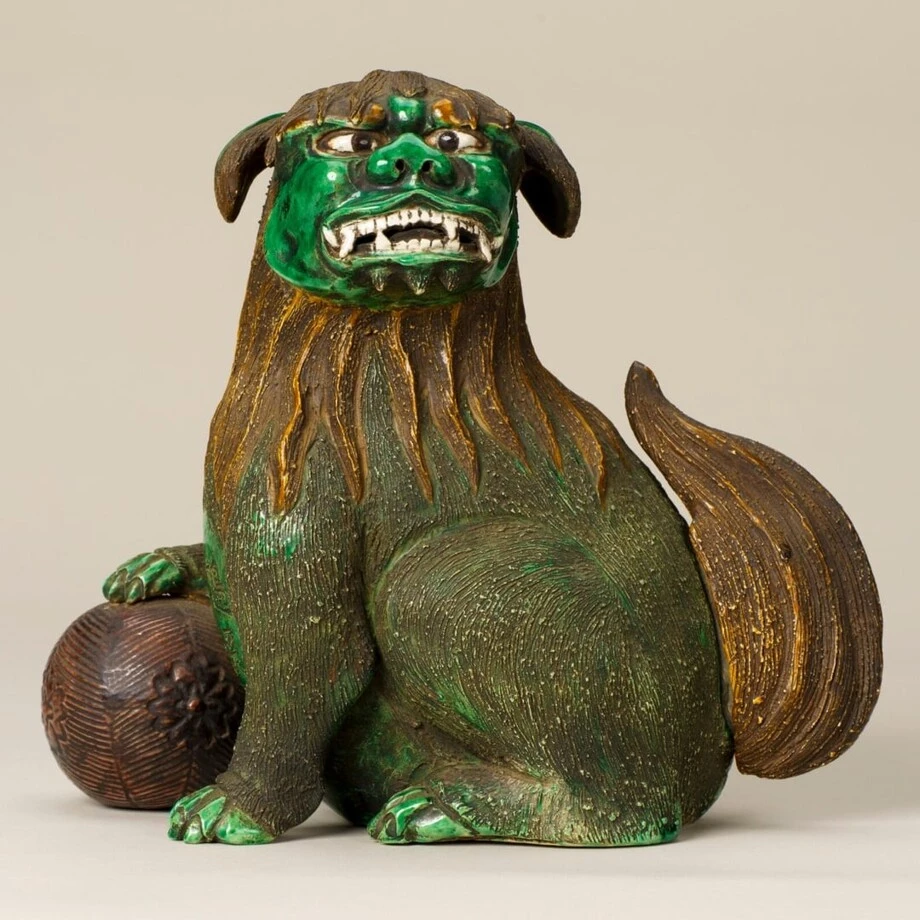
Ceramic guardian lion with a ball. Japan, Edo period, 18th century.
Guardian lions reached Japan from China alongside Buddhism. Known locally as
shishi
or
komainu
, they stand guard at temple entrances. Since local sculptors had never seen a living lion, their creations often resemble a blend of dog and dragon. The ball beneath the lion’s paw signifies power and dominance over the world. By Chinese tradition, a lion with a ball represents the male, while the female is depicted with a cub.
Which of these artifacts would you love to display in your home? Tell us in the comments!