Mysterious Mass Disappearances That Remain Unsolved (7 photos)
Every year, thousands of people vanish without a trace across the globe. Most are eventually found, dead or alive, but some cases remain unsolved for decades. A single disappearance can often be explained—an accident, a crime, or simply someone fleeing their past. But when multiple people vanish at once, leaving no trace, no note, and no bodies, it becomes a puzzle that haunts criminologists and mystery enthusiasts alike. 
Some stories blur the line between documented truth and urban legend—tales passed down through the generations, picking up chilling new details along the way. While some are backed by official records, others exist only in old newspaper clippings and folklore. Yet they all share one unsettling commonality: the people vanished, and no answers were ever found.
Here are two of the most famous mass disappearances in history. One is widely considered an urban legend, while the other is a documented real-life tragedy that became shrouded in myth.
The Inuit Village at Lake Anjikuni: Legend or Reality?
This story first surfaced in Canadian newspapers in 1930 and has since become one of North America's most infamous urban legends. Its historical accuracy remains fiercely debated. No official police reports of the incident exist, yet the story took such a firm hold on popular culture that many accept it as fact.
According to news reports of the era, Anjikuni is not only a lake in northern Canada, but was also home to a nearby fishing village. Supposedly, around two thousand Inuit lived there, known for warmly welcoming travelers. The area was a popular spot for trappers and fishermen due to its abundance of fur-bearing wildlife. 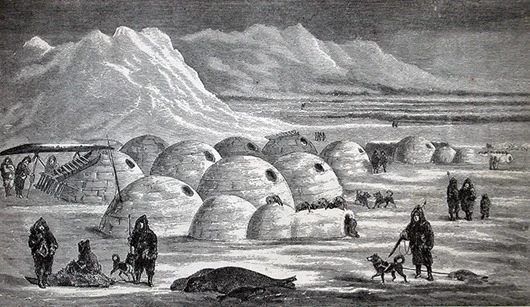
Lake Anjikuni is located in a remote region of northern Canada
Reaching Anjikuni was no easy task, but daring trappers still ventured there. Among them was Joe Labelle, a Canadian fur trapper who frequented the region. After a long hunt, he often stopped by the village to rest and recharge. 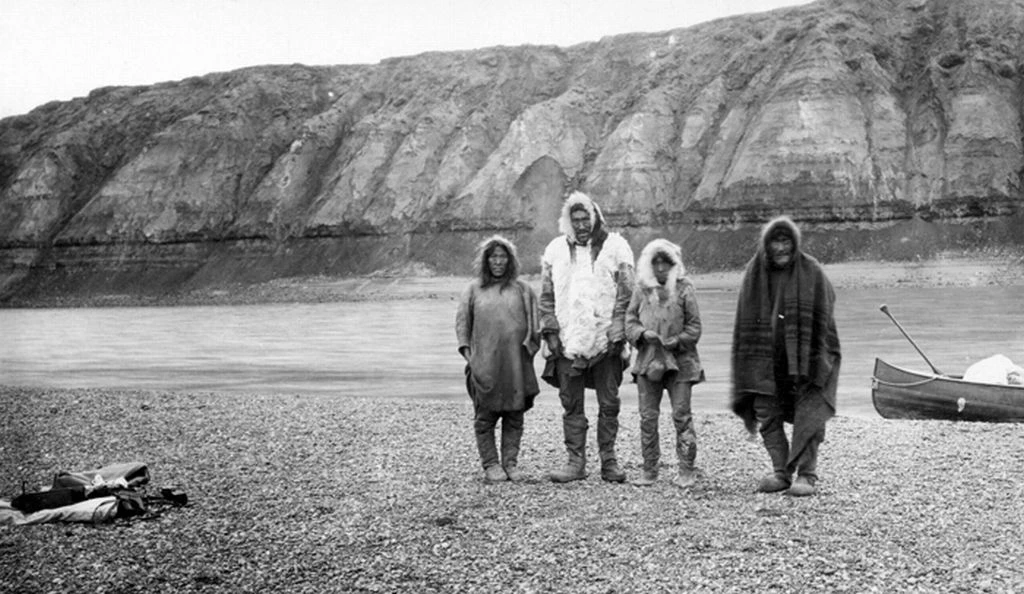
A traditional Inuit village in the early 20th century
However, on November 12, 1930, news reports claim he arrived to find his old acquaintances gone. It was a bitterly cold day, and a freezing Labelle was counting down the minutes until he reached shelter. When the igloos finally came into view, Joe noticed a disturbing silence hanging over the settlement. He approached the first dwelling and stepped inside. It was completely empty, yet looked as though its occupants had stepped out just moments earlier: a pot of stew was still simmering over a fire, and all personal belongings were left untouched.
Searching the entire village, Joe didn't find a single soul. Warm clothes, weapons, and food stores had all been left behind. Strangely, despite the calm weather, there wasn't a single footprint in the snow surrounding the settlement. Terrified, the trapper fled to the nearest telegraph office to alert the authorities. A search party arrived a few hours later. 
Abandoned Inuit settlements were not uncommon in northern Canada
According to the press, the Mounties uncovered gruesome details upon investigation. The local burial ground had been desecrated—graves were dug up, and the bodies were gone. Near the village, they found the frozen remains of sled dogs. To the Inuit, who relied heavily on their dogs and held deep reverence for the dead, slaughtering their own packs and disturbing graves would have been unthinkable.
The Truth Behind the Legend:
Modern historians and researchers remain highly skeptical of the tale. There are no official records confirming the disappearance of two thousand people. Furthermore, it is unlikely that such a large permanent settlement could have existed in such a remote area, as the local Inuit lived a nomadic lifestyle and rarely gathered in such massive numbers.
It is far more likely that something less dramatic occurred: a small band of Inuit simply relocated their camp in search of better hunting grounds, and sensationalist journalists blew the story out of proportion. Alternatively, the entire saga may have been fabricated for headlines. Regardless, the legend of Lake Anjikuni endures, passed down through generations.
The Flannan Isles Lighthouse: A Real Disappearance Shrouded in Myth
Unlike the Lake Anjikuni story, the disappearance of three lighthouse keepers on the Flannan Isles is a real, thoroughly documented event. The Flannan Isles are a small archipelago off the coast of Scotland. Perched on one of the islets is a 75-foot lighthouse built in 1899. Since the light was automated, the islands have remained uninhabited.
In the early 20th century, three keepers were required to man the lighthouse at all times, with a fourth stationed on shore. When the mystery unfolded, three men were on duty: Second Assistant James Ducat, First Assistant Thomas Marshall, and Occasional Keeper Donald MacArthur. Principal Keeper Joseph Moore was on shore leave. 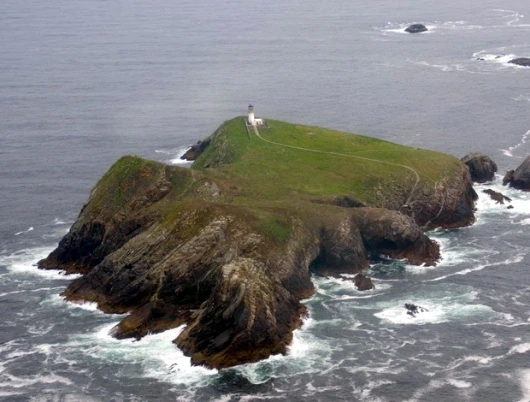
The Flannan Isles Lighthouse, built in 1899
On December 15, 1900, the steamer *Archtor* reported that the lighthouse light was dark. Unfortunately, authorities paid little heed to the report, and the relief trip scheduled for December 20 was delayed due to severe weather. It wasn't until December 26 that Joseph Moore and a relief crew finally managed to reach the island. No one was there to greet them.
The entrance gate and all doors were locked tight, the keepers' beds were unmade, and the clocks had stopped. The lighthouse lamps were immaculately cleaned and fully refueled. Two of the three oilskin coats were missing from their hooks, leaving only the third behind. The only out-of-place item in the living quarters was an overturned kitchen chair. And, of course, the complete absence of the men.
The Myth of the Dramatic Log Entries:
Popular retellings of the tragedy often quote eerie log entries describing weeping sailors and frantic prayers. These fabricated accounts usually read something like this:
December 12. Afternoon. Heavy northwest gale. Sea lashing furiously. Never seen such a storm.
December 12. Midnight. Storm still raging. Impossible to go outside. Ducat irritable. MacArthur crying.
December 13. Noon. Storm continued all night. Ducat and MacArthur crying and praying.
December 14. No way out. All praying.
December 15. Storm ended. Sea calm. God is over all.
However, these entries are pure fiction. The actual lighthouse log contained routine technical reports with no trace of drama. The final entry, dated December 15, noted nothing unusual. The dramatic stories of crying lighthouse keepers emerged years later in sensationalist newspaper articles and works of fiction. 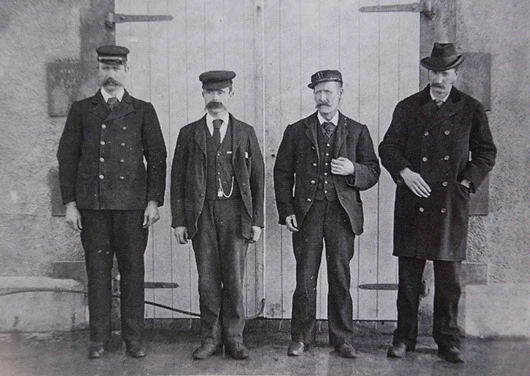
The lighthouse keepers were experienced mariners who knew their craft
The Official Investigation:
A thorough investigation by the Northern Lighthouse Board uncovered crucial clues. At the island's western landing, inspectors found twisted iron railings and shattered supply crates that had been securely lashed down high above the water line. One of the men's oilskins was missing.
The official conclusion was that the men fell victim to a freak wave. Most likely, Ducat and Marshall went down to secure equipment or assess storm damage. MacArthur, remaining inside, may have seen a rogue wave sweeping toward them, grabbed his coat, and rushed out to help—only to be swept away along with his colleagues. Though logical and consistent with the physical evidence, this explanation failed to satisfy mystery seekers.
Alternative Theories:
In the decades since, dozens of theories have emerged—ranging from murder-suicide to alien abduction. Some blamed a giant sea bird, while others suggested a secret submarine landing. Whispers of pirates, foreign spies, and ancient curses on the islands also gained traction.
Yet the truth is likely far simpler and more tragic: three seasoned mariners underestimated the raw power of the ocean and lost their lives doing their duty. Their bodies were swept out to sea, never to be recovered. 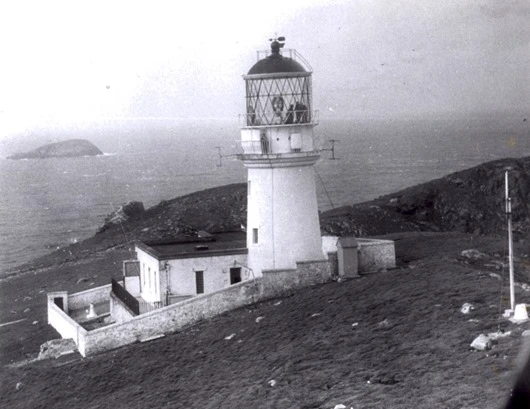
During severe storms, monster waves can reach immense heights and sweep anyone off the rocks
The Flannan Isles mystery inspired numerous artistic works, from poems to feature films. The most famous is Wilfrid Wilson Gibson's 1912 poem *Flannan Isle*, which popularized the myth of the weeping keepers and transformed a real-life tragedy into a legendary ghost story.
Both stories—the legend of Lake Anjikuni and the real-life disappearance on the Flannan Isles—demonstrate how quickly facts can curdle into myth. The human mind abhors a vacuum. When answers are missing, we tend to invent them, turning ordinary human tragedies into eerie mysteries. Sometimes the truth is mundane; other times, it is far more chilling.
What scares you more—the unexplained disappearance of people without a trace, or a completely rational explanation that still leaves the lost forever gone?