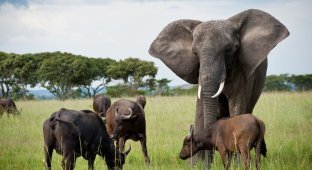
Elephant Herds Aren't Led by Alpha Males, But by Grandmothers: How an Elderly Matriarch Outshines the Mightiest Bulls (7 Photos)
There is no powerful alpha male leading an elephant herd. The dominant figure is an elderly female—the matriarch. She is often a grandmother in the truest sense, surrounded by her daughters, grandchildren, and younger relatives. 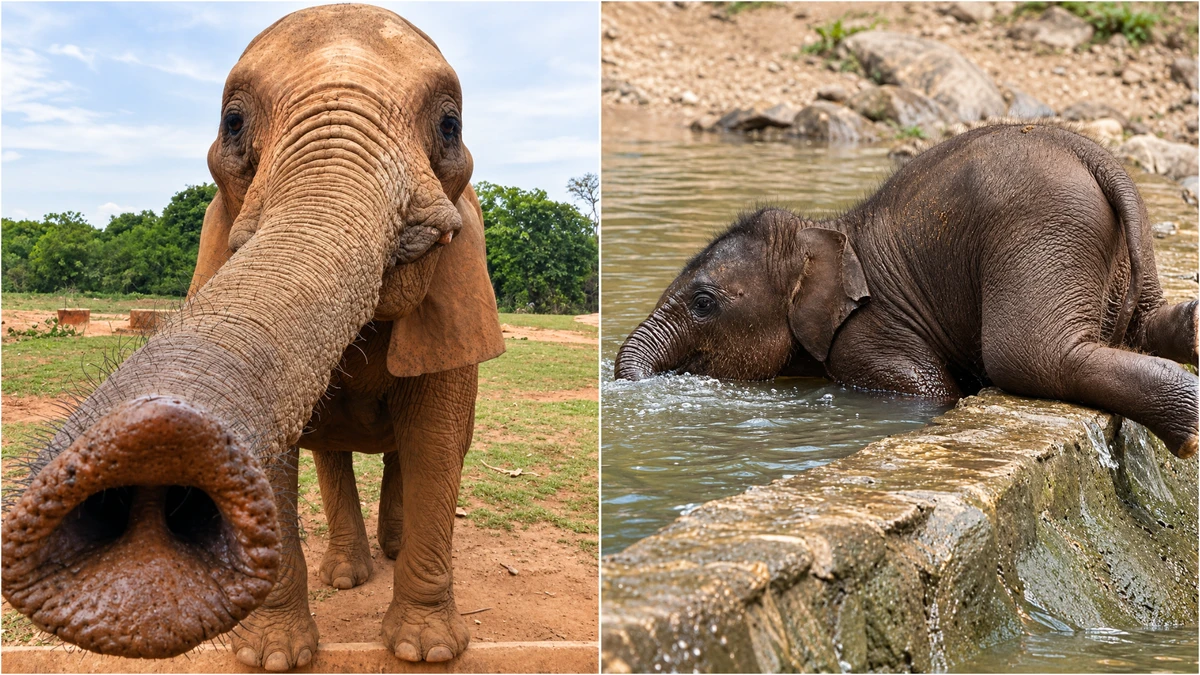
She doesn't bark orders. Yet when an unfamiliar figure approaches, water is nowhere to be found, or a nearby lion poses a potential threat, the family turns to her for guidance.
The old female's edge isn't physical size. It's built over decades of living—a lifetime of experience navigating every problem imaginable.
A Family Without a Father
An elephant family typically consists of several related females and their calves.
Daughters stay close to their mothers. Young males, around the age of 10 to 15, begin venturing away from the family, eventually transitioning into male society where they live alone or roam with other bulls. 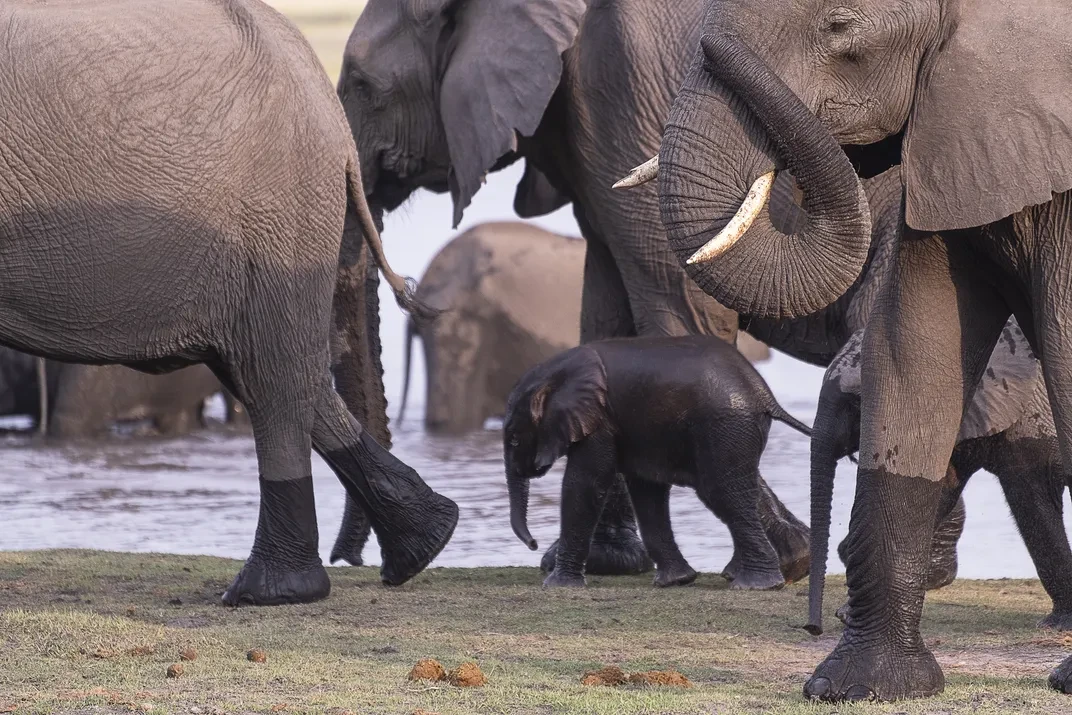
A calf in the center is virtually hidden within the herd. The adult females form a living wall around it.
That's why the word "herd" can be misleading. In reality, it is a close-knit extended family: a grandmother, her daughters, sisters, nieces, and young calves.
The oldest female typically steps into the role of matriarch.
She isn't a military general. Another female might suggest which direction to walk, but when things get tricky, the elder's wisdom takes precedence.
Just how valuable is that wisdom? Researchers tested it in a remarkably straightforward way: by playing recordings of unfamiliar elephant calls.
Grandmother Knows Who's Talking
Elephants communicate using low-frequency rumbles, some of which fall below the range of human hearing. They can easily recognize familiar individuals by voice.
Researchers working on a long-term project in Kenya's Amboseli National Park played audio recordings of other females to various elephant families. 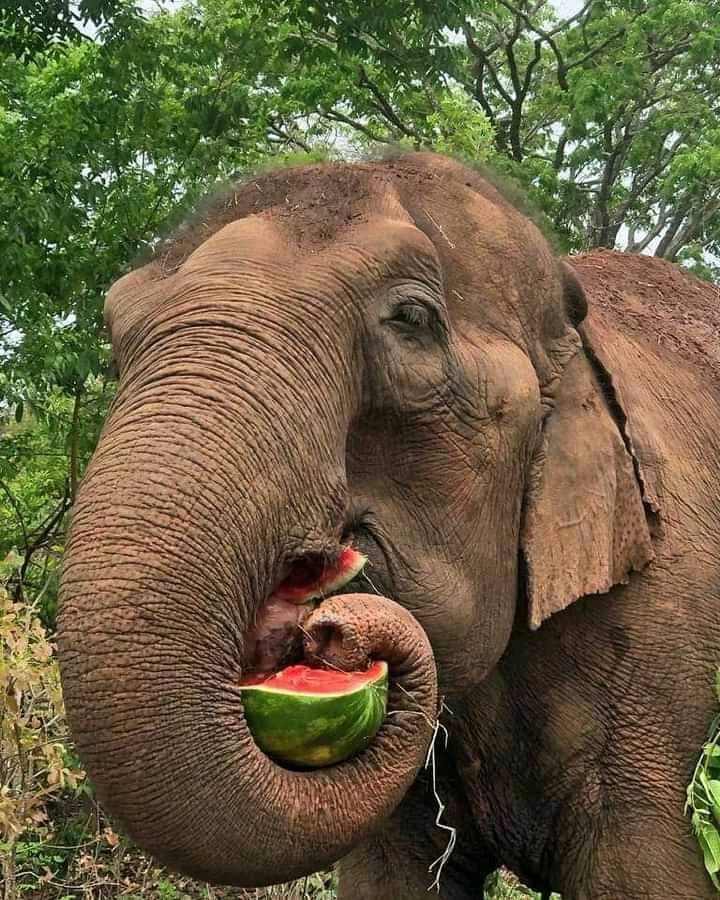
The response depended heavily on familiarity. Hearing a female they barely knew, the herd went on high alert, clustering tightly around their calves. Voices of well-known neighbors drew a far more relaxed response.
Crucially, families led by older matriarchs were far better at distinguishing friend from stranger. A study published in Science in 2001 revealed that the age of the matriarch directly correlated with the quality of social decisions made by the group. These herds also enjoyed higher reproductive success per female.
It amounts to a mental phonebook—except instead of numbers, it holds the unique voices of dozens of neighboring elephants.
Next, researchers played something far more alarming than an unfamiliar voice.
What's Growling in the Bush?
A lion is rarely a match for a full-grown elephant, but to a young calf, a pride poses a lethal threat.
In a 2011 experiment, Amboseli families were exposed to recordings of one lion versus three, as well as roars from both males and females.
The elephants easily tracked enemy numbers: three lions triggered a far stronger defensive reaction than a single predator.
The predator's gender yielded an even more intriguing result. Male lions are larger than lionesses and pose a significantly greater danger. Families led by younger matriarchs often underestimated the threat of a male's roar. But the older the matriarch, the more accurately the group assessed the threat—and the faster they formed a defensive wall around their young.
That kind of judgment isn't learned overnight. Yet the true test for an elephant herd doesn't come from a roar in the bushes. Sometimes, it comes with a drought.
A Drought Not Everyone Survived
In 1993, Tarangire National Park in Tanzania suffered a devastating drought. 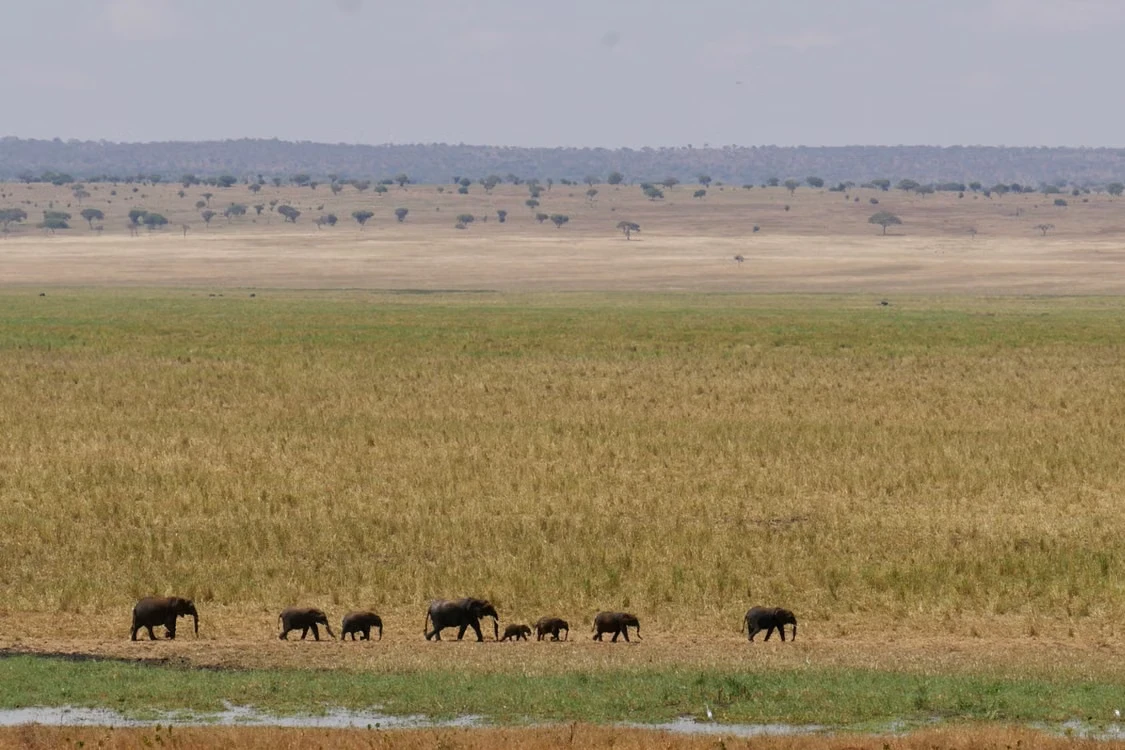
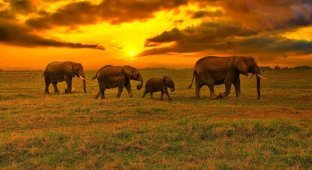
A herd in search of water
Over nine months, roughly 20% of monitored calves under eight years old perished. In normal years, annual mortality for that age group was around 2%.
Yet the impact varied dramatically from family to family.
Two clans left the park in search of food and water, suffering far fewer losses among their young. A third clan stayed put—and suffered catastrophic losses.
This revealed an intriguing pattern. 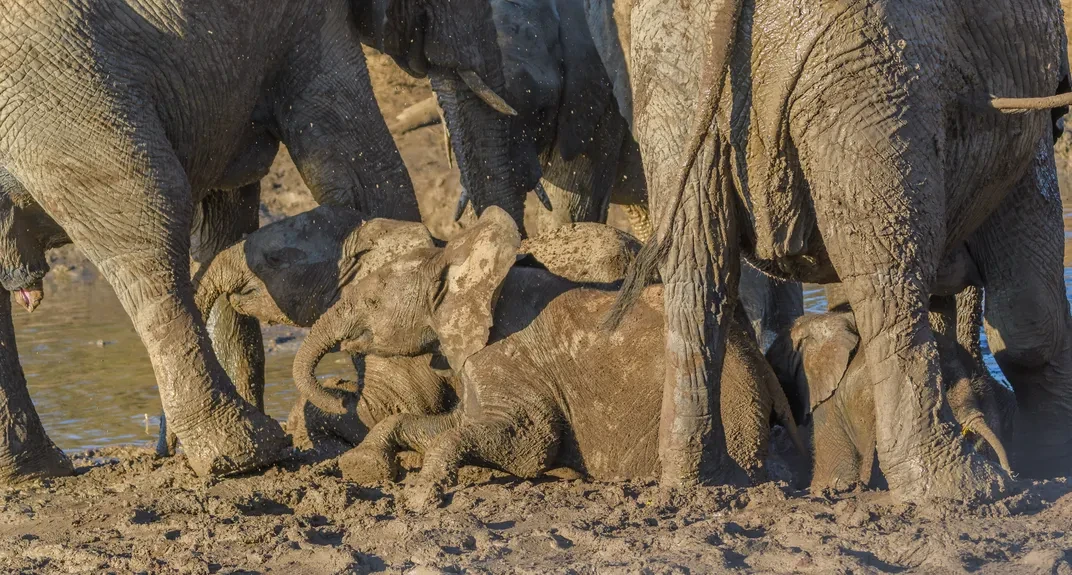
The safest place in the savanna is right underneath mom.
The previous drought of comparable severity had struck the region between 1958 and 1961—more than 30 years prior. The two clans that migrated still included elderly females old enough to have survived that earlier crisis as calves. The clan that remained had no such survivors.
It would be tempting to write that the grandmother simply remembered an ancient route to water and led her family to safety. However, the study doesn't prove that definitively, and the authors explicitly consider alternative explanations. 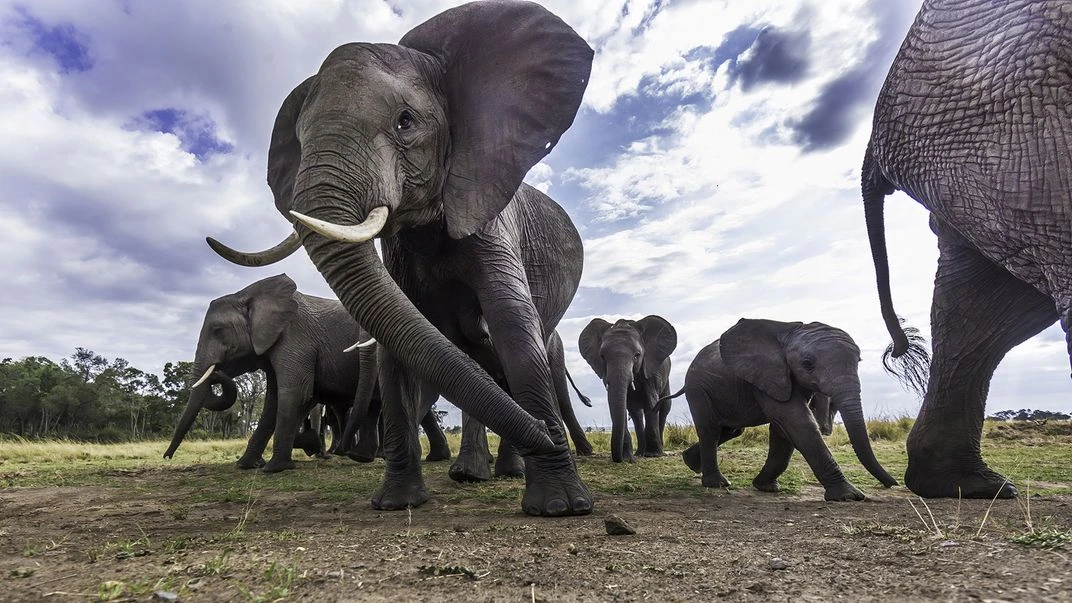
An elephant defensive circle in action: young calves are shielded in the center
Still, the broader conclusion is compelling: for a long-lived animal, memory of rare disasters is a vital survival resource.
When a drought occurs once every few decades, there are no guidebooks. There is only someone who remembers the last one.
Passing Down the Knowledge
Elephants don't need formal schooling to learn.
An elephant's childhood is long by nature. Young calves spend years alongside their mothers, aunts, and older sisters, observing migration routes and learning how the group responds to rival herds and predators. 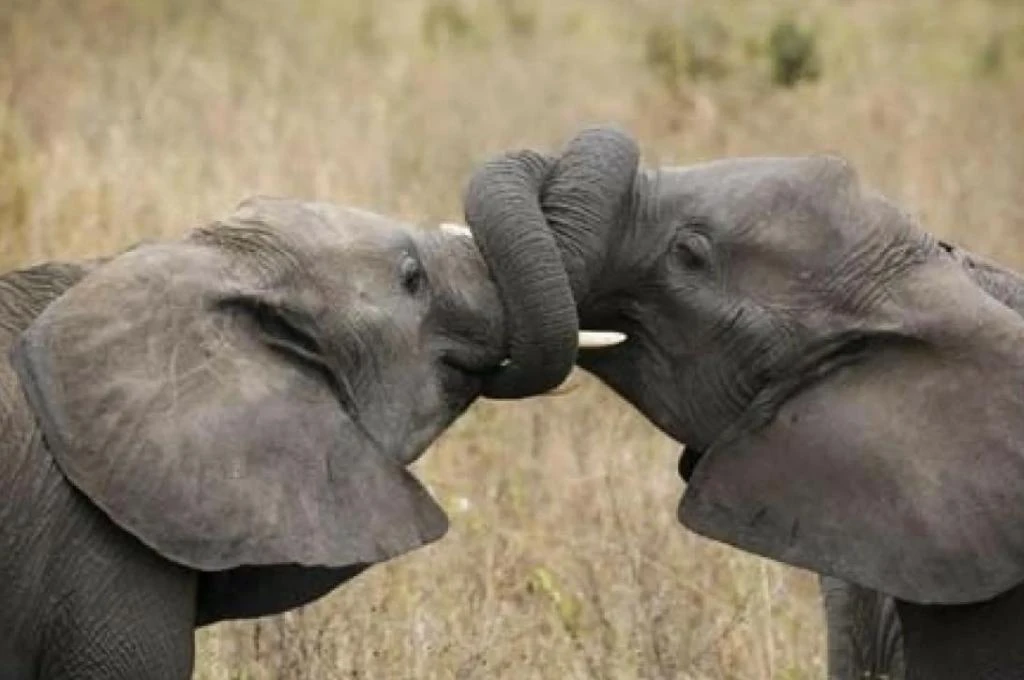
An elephant greeting: vocalizations, scent, and a trunk extended instead of a handshake
Even before having offspring of their own, young females help care for other calves. Known as allomothering, this behavior involves protecting, guiding, and assisting infants through dangerous situations.
That is why the loss of an elderly matriarch is far more than a statistic in a population count. When a matriarch dies, an irreplaceable library of knowledge can vanish forever.