Can Eating a Fly Agaric Mushroom Actually Kill You? (5 photos)
From a young age, we've been taught that the fly agaric (Amanita muscaria) is a deadly poisonous mushroom—one best admired strictly from a distance. Luckily, nature gave it such a striking appearance that it's almost impossible to mistake: its vibrant red cap dotted with white specks clearly signals "do not eat." But just how dangerous is the fly agaric, and what actually happens if you eat one? Mycologist Mikhail Vishnevsky breaks down the consequences of such a risky culinary experiment. 
As it turns out, the fly agaric's lethal reputation is wildly exaggerated. To cause fatal damage to your body, you would need to consume at least 12 to 14 kilograms (roughly 26–30 lbs) of these mushrooms. Documented cases of fatal poisoning are surprisingly rare. The first recorded instance occurred over a century ago in the United States, when a young girl who got lost in the woods died after gorging on them. 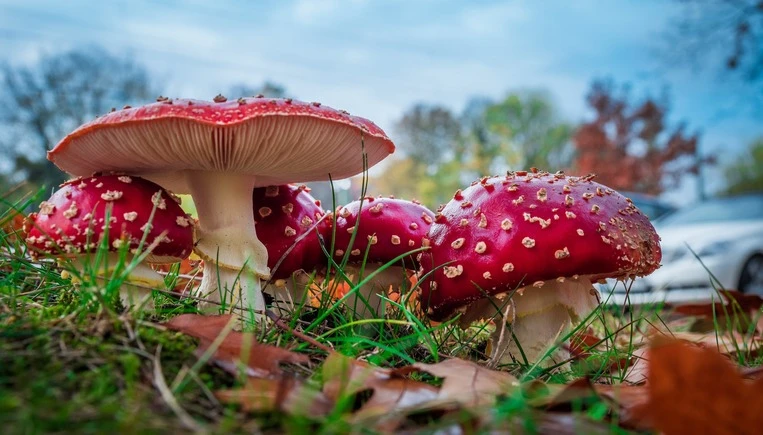
A few modern fatal cases have been reported in Europe, but these were largely due to severe individual reactions rather than sheer toxicity. After all, a person can die from almost anything—a wasp sting, ingesting a pound of salt, or eating spoiled seafood. Statistically, death from consuming a fly agaric occurs in roughly 1 out of 10,000 cases—a remarkably low figure.
In reality, the fly agaric is only mildly toxic. In the 19th century, scientists extracted the dangerous alkaloid muscarine from it for medical use, but its concentration in the fungus is a minuscule 0.3% at most. The only toxin in the mushroom capable of producing noticeable effects in humans is ibotenic acid. This compound acts on GABA receptors in the brain, causing fever and, occasionally, muscle spasms. 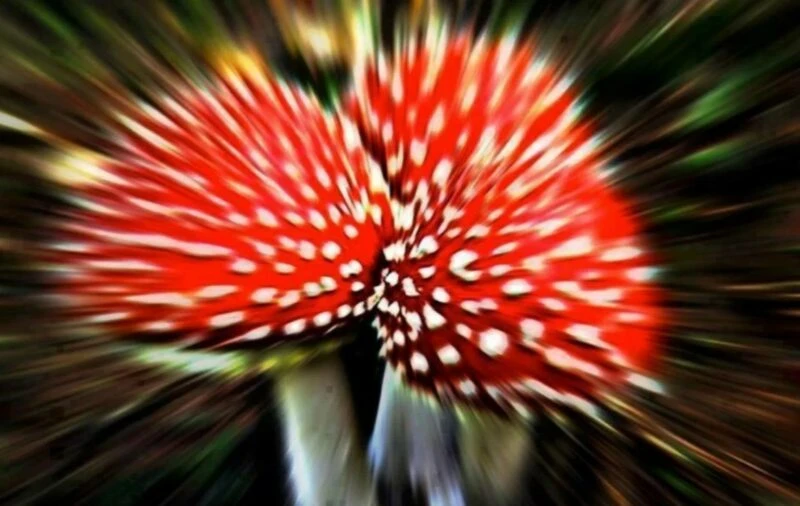
However, proper cooking converts ibotenic acid into muscimol, a compound harmless to vital organs—though it can induce hallucinations. Experienced mushroom foragers cook and eat fly agaric without any ill effects by properly heat-treating it: boiling the mushrooms twice for 10 minutes each time, discarding the water after every boil. After that, they can safely be sautéed or stewed.
Mycologist Mikhail Vishnevsky notes that the flavor of the fly agaric is hard to describe—unusual and far more distinct than that of a chanterelle. Still, unless you're seeking exotic culinary thrills, you're better off sticking to standard edible mushrooms that don't require extensive prep work. Vishnevsky emphasizes that the fly agaric is, first and foremost, a functional mushroom. 
Its protein, carbohydrate, and mineral profile is similar to other fungi, but unlike honey mushrooms or russulas, it is treated not merely as food, but as a natural antidepressant, psychedelic, and entheogen. Notably, the red mushroom possesses potent antibiotic properties; historically, it was used to treat tuberculosis, ulcers, fungal infections, bedsores, frostbite, and burns.
Fly agaric is also an effective natural antiparasitic—a fact known beyond scientific circles. Moose, among the forest mammals most heavily afflicted by parasites, purge worms primarily during mushroom season. These animals never pass up an opportunity to munch on a fly agaric. Many of us learned about this behavior back in school, though few teachers explained why moose were so fond of this "inedible" toadstool. 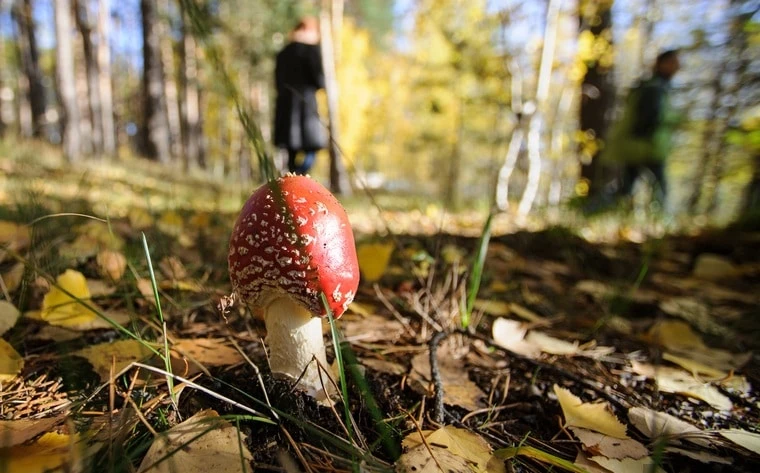
Have you ever wondered why this mushroom earned its traditional name, "fly agaric" (literally "fly-killer"), and whether that moniker is actually justified?