30 Buildings That Look Like Supervillain Lairs (31 Photos)
Some buildings trigger a sense of unease at first sight—even if all they house inside is a routine office or hotel. Sharp silhouettes, dark angles, and facades completely devoid of warmth: this kind of architecture doesn't invite you in; it warns you to stay away. Reddit users in the r/evilbuildings community have compiled a whole gallery of these intimidating structures, featuring some true masterpieces of dark majesty. 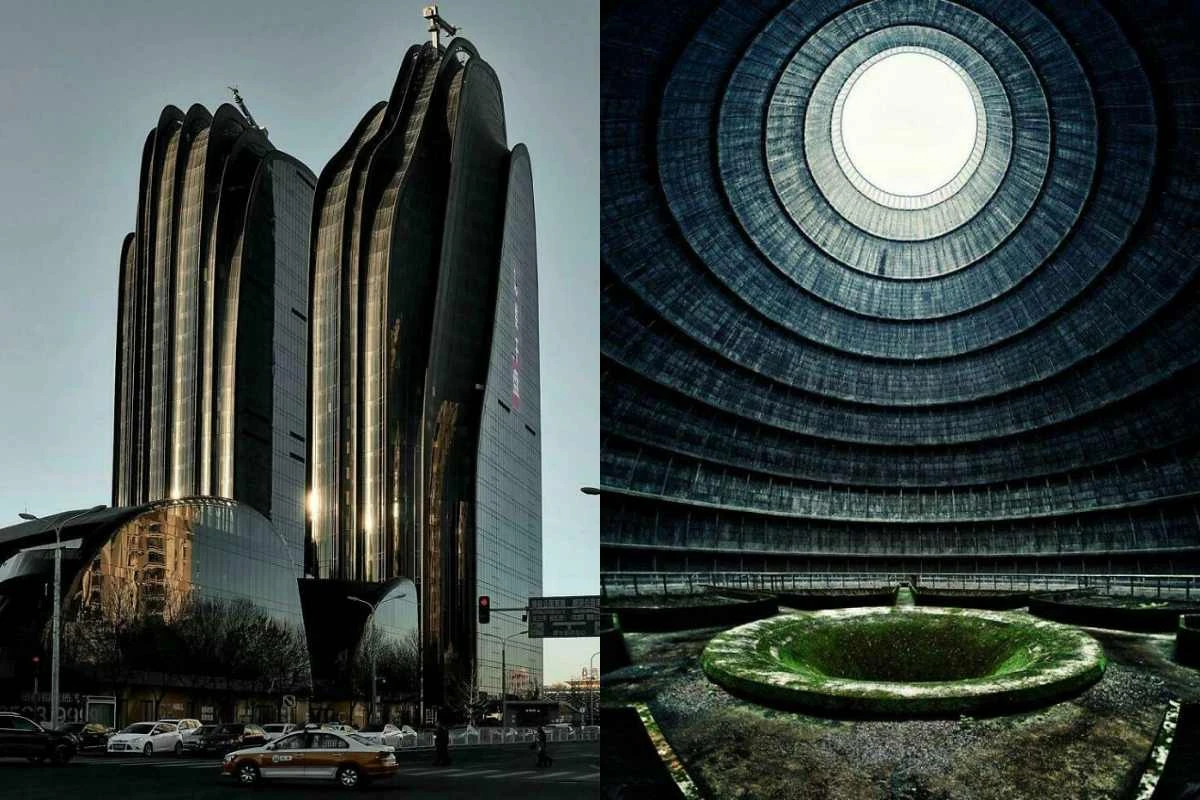
The Central Post Office in Skopje, the capital of North Macedonia, looks like a giant spaceship that crashed into the city center. Even New York's Empire State Building transforms into a dystopian fortress on a foggy evening. So it's no surprise that buildings designed from the outset to convey scale and authority feel even more menacing. 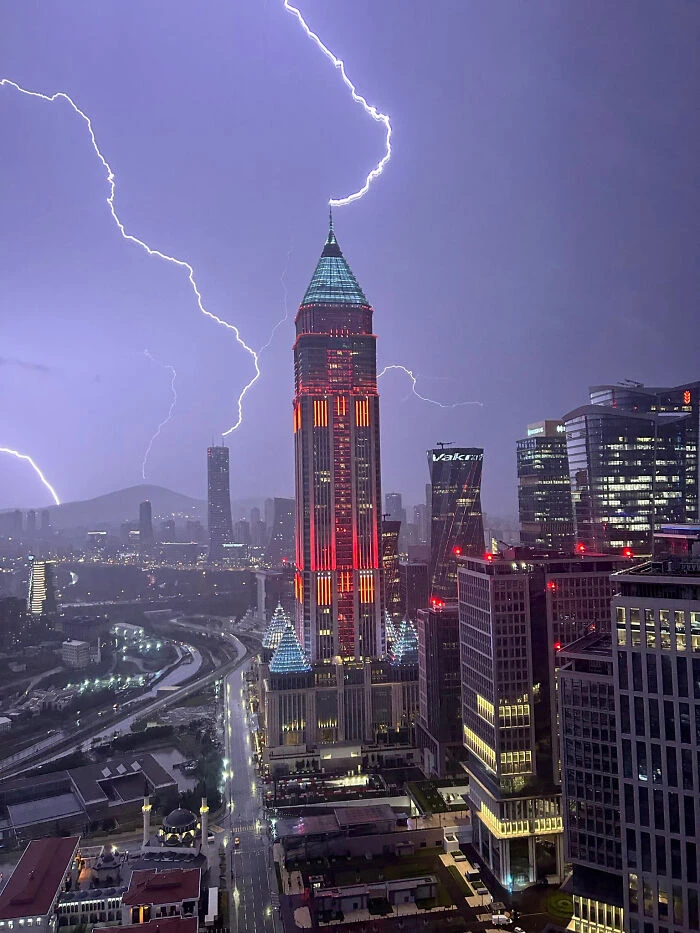
Istanbul Financial Center, Turkey. Height: 360 meters.
A flagship architectural project of Turkish President Recep Tayyip Erdoğan, this skyscraper opened in 2023 and immediately became a symbol of Turkey's global ambitions. Its stark silhouette and pointed peak make it look equal parts corporate colossus and ominous fortress. 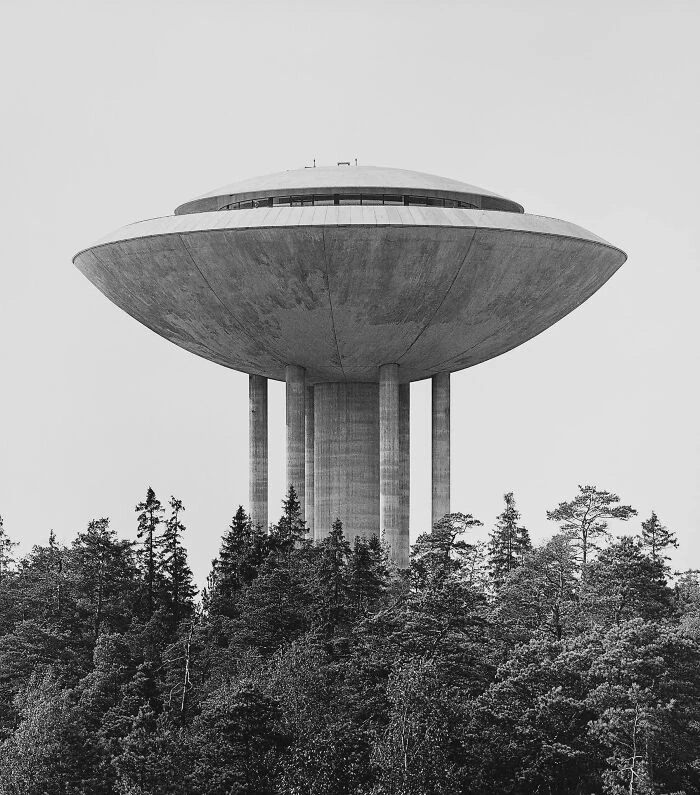
Haukilahti Water Tower, Espoo, Finland, 1968.
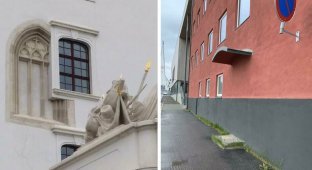
Concrete "legs" splayed wide at the base and a dark, heavy reservoir on top give the structure the look of a giant spider lurking over the city. Finnish engineers built it to store water, but ended up creating something straight out of a sci-fi thriller. 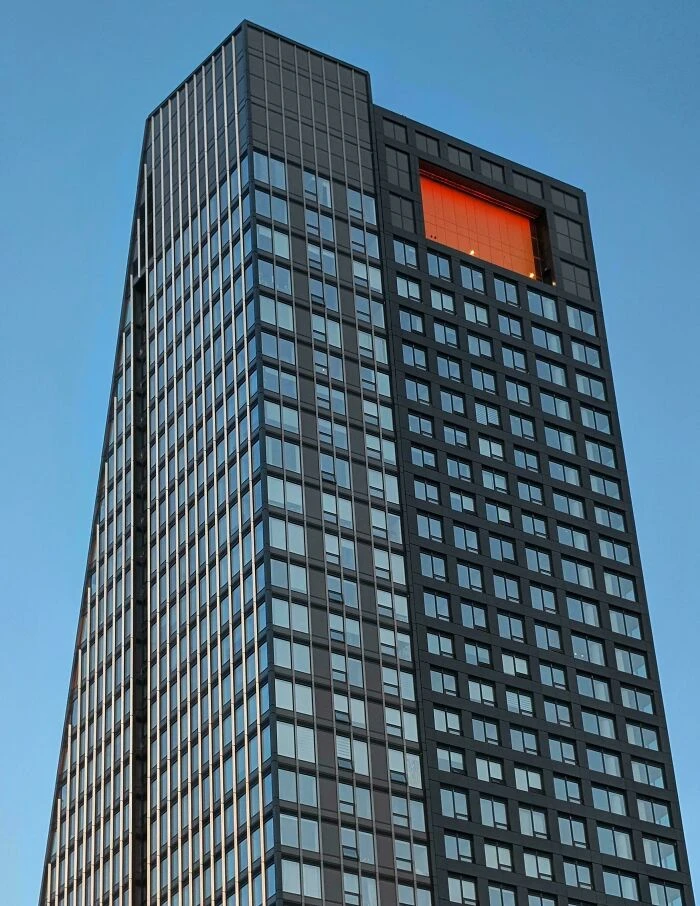
"You can always tell when a supervillain owns the penthouse"—caption by the photographer on Reddit.
The upper floors loom over the street as if preparing to swallow everything below. Intimidating architecture is a genre some masters craft deliberately. 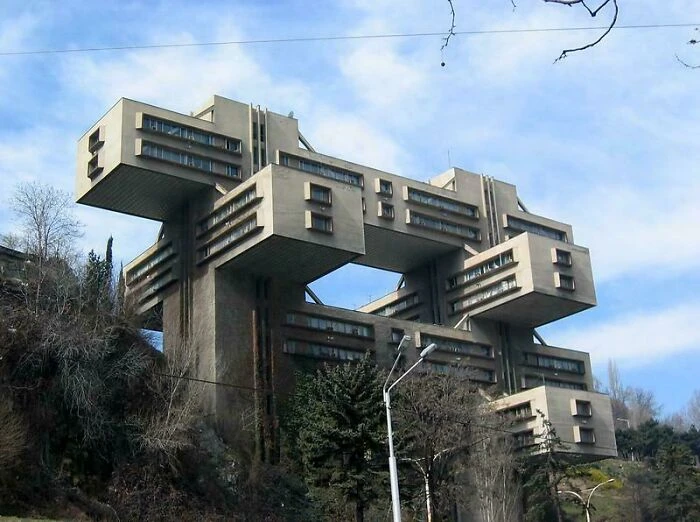
Former Ministry of Highway Construction of the Georgian SSR in Tbilisi. Architect George Chakhava, 1975.
A monument of Soviet Modernism, its interlocking blocks span directly over a mountain ravine. Though the building stands empty today, it continues to impress with its sheer scale. 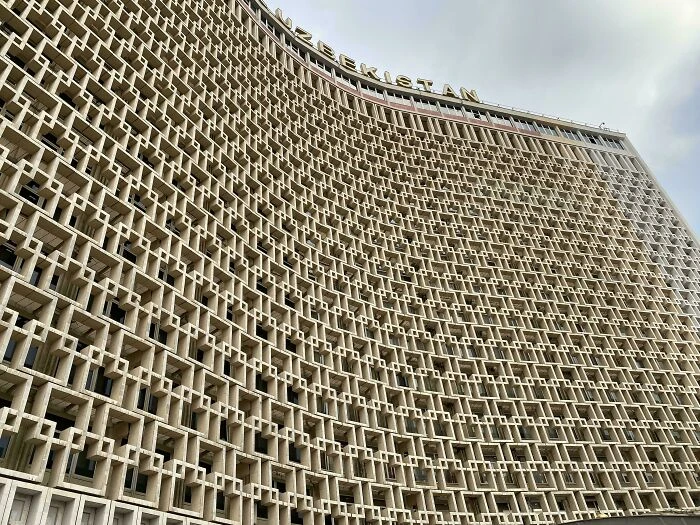
Hotel Uzbekistan, Tashkent, 1974.
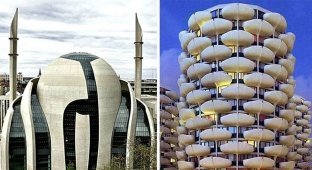
The monumental facade, adorned with iconic honeycomb motifs, is a classic example of late-Soviet Brutalism. It quickly became an iconic symbol of the Soviet East. Though fully renovated today, it hasn't lost an ounce of its imposing power. 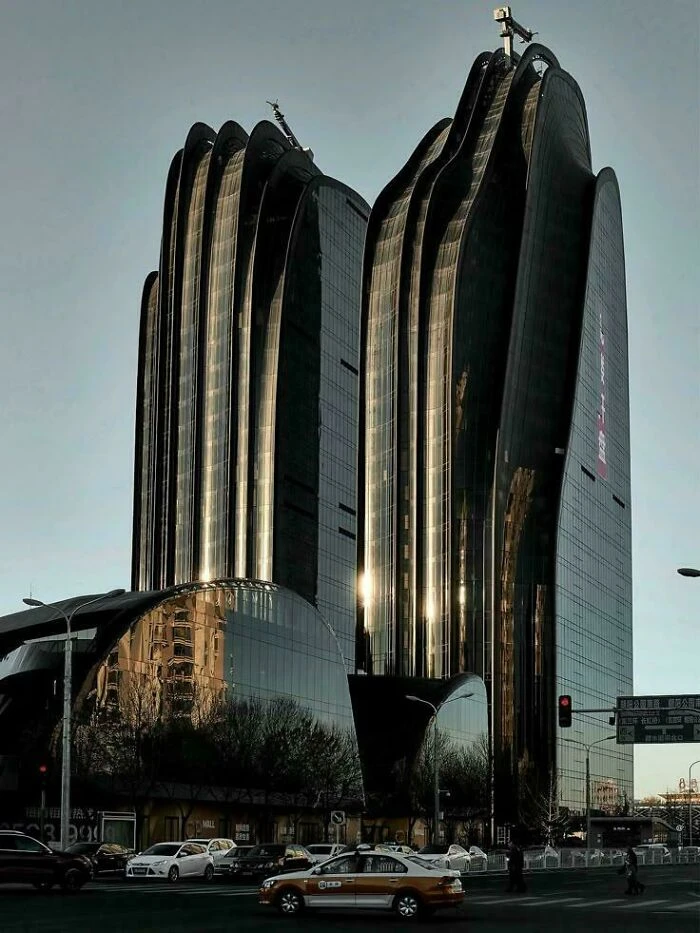
Chaoyang Park Plaza, Beijing. MAD Architects, 2017.
These 120-meter towers draw inspiration from traditional Chinese landscape paintings, with smooth curves mimicking mountain ridges. But on a hazy day, their silhouettes look less like poetic nods to classic art and more like the lair of a dark lord. 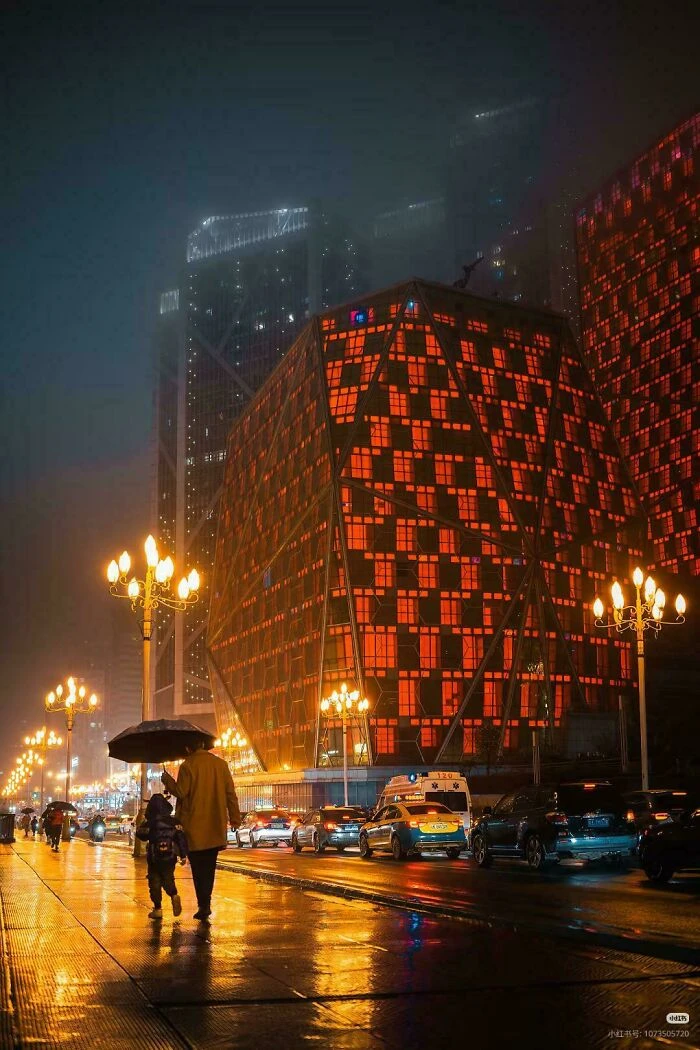
Residential complex in Liuzhou, Guangxi Province, China.
Liuzhou is known for its experimental urban planning, featuring "forest cities" and buildings covered in greenery. But this structure is a different story entirely: pure power architecture, towering into the sky with looming overhangs. 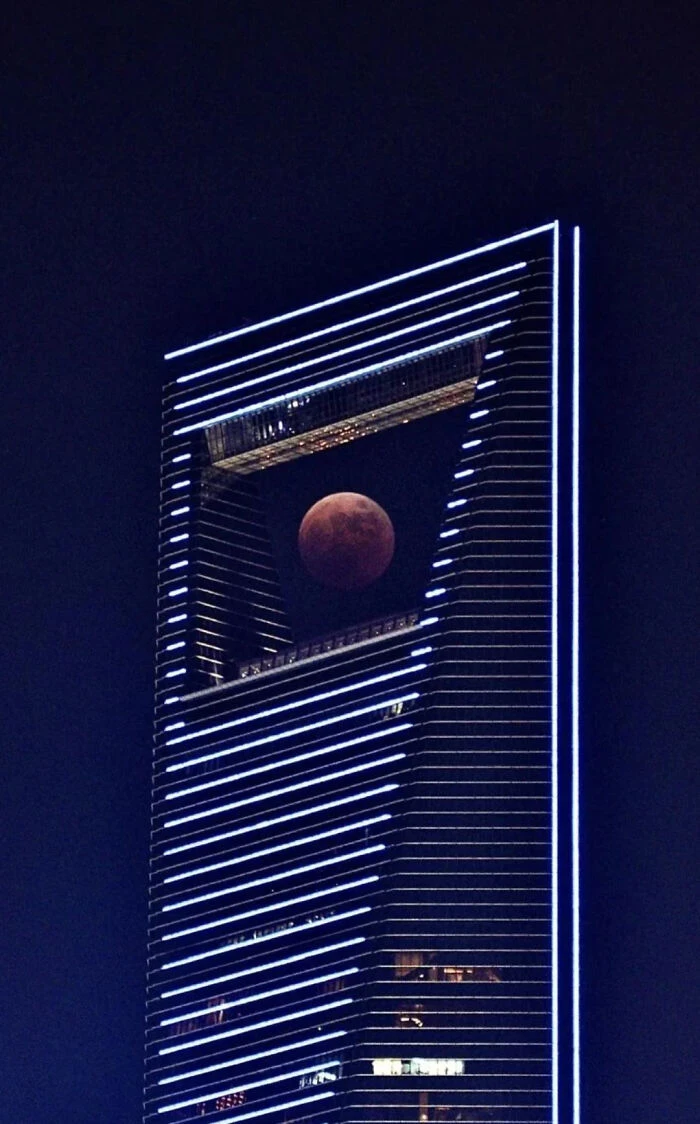
"Sauron's Headquarters"—how Reddit users dubbed this Shanghai skyscraper.
The glowing red ring atop the tower inevitably sparked Lord of the Rings comparisons. Officially, it's a modern skyscraper in a bustling financial district. Unofficially, it's the ultimate vantage point for global domination. 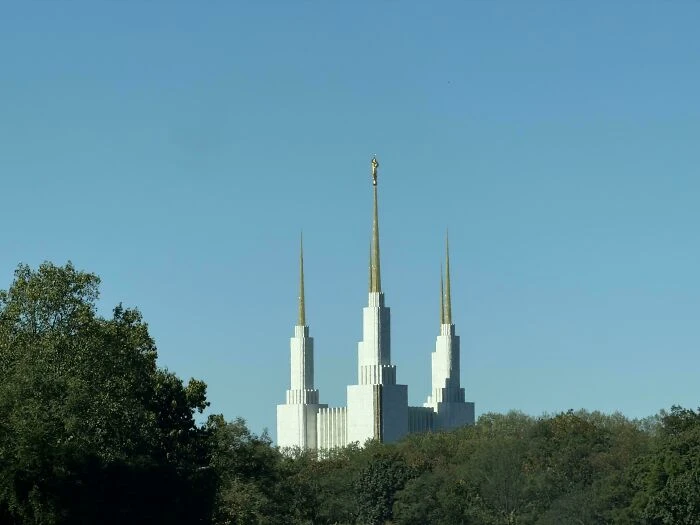
Washington D.C. Temple of The Church of Jesus Christ of Latter-day Saints, 1974.
Its stark white spires pierce the sky with such intensity that the building resembles a Brothers Grimm fairytale fortress rather than a house of worship. LDS temples are distinctive to begin with—and two more appear later in this list. 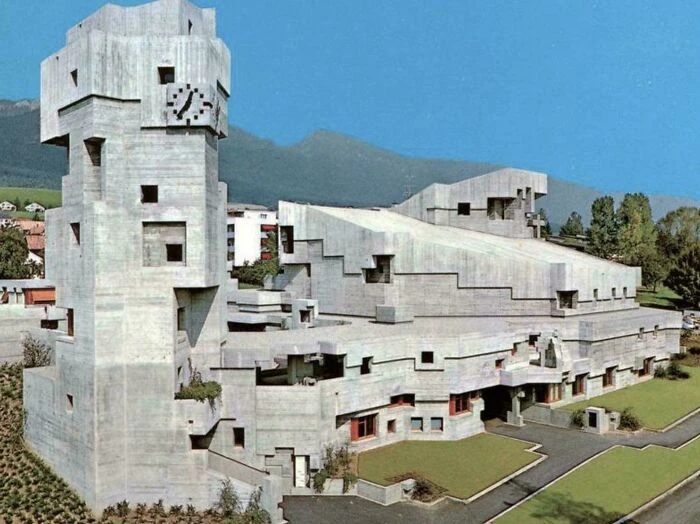
Church in Bettlach, Switzerland, 1960s.
No stained glass, no turrets. Just massive slabs of gray concrete imposing themselves on churchgoers before they even step inside. The architects seemed determined to remind everyone that fear of God is no mere metaphor. 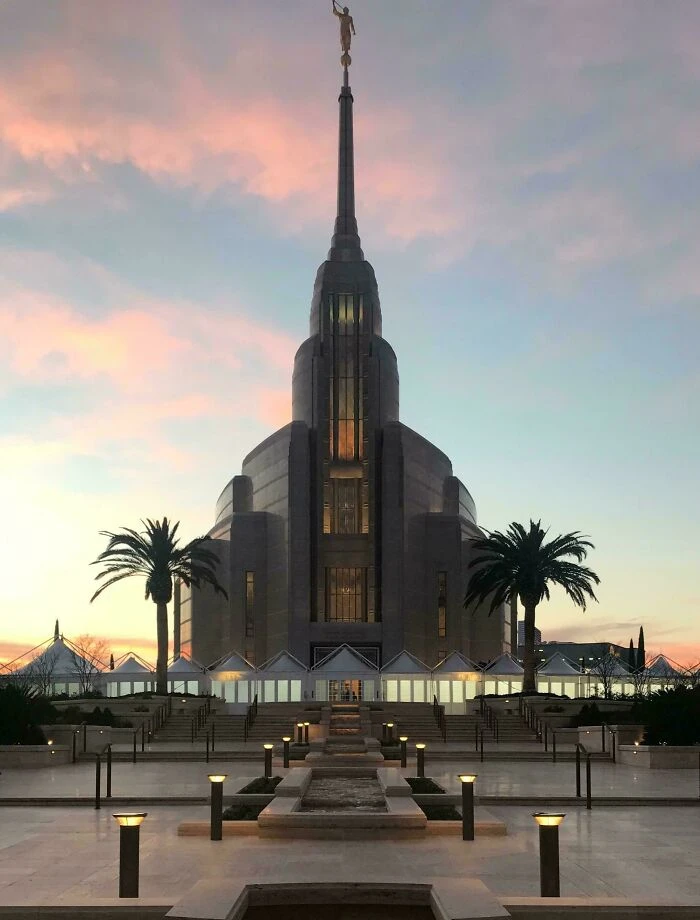
Rome Italy Temple of The Church of Jesus Christ of Latter-day Saints, 2019.
Six white spires rising over the Eternal City sparked immediate debate. Set against Italian stone pines and the ochre walls of ancient Rome, the complex looks like a visitor from another dimension. 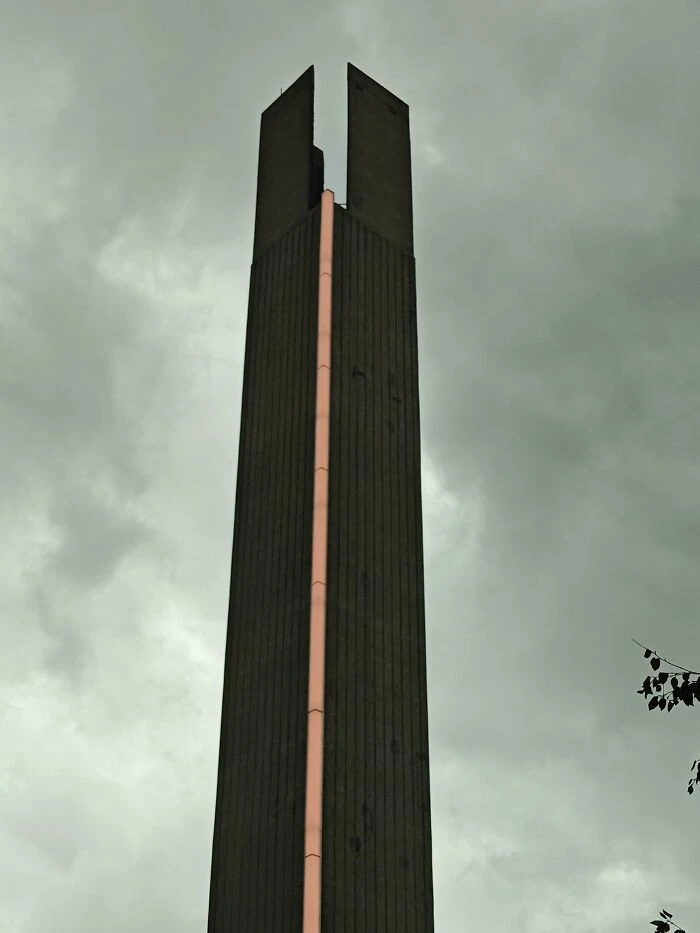
Unnamed tower at Dublin City University, Ireland.
A textbook product of 1970s architectural optimism that today reads more like a warning. A dark rectangular block looms over the campus. Students reportedly hate it; the architects were reportedly convinced of their own genius. 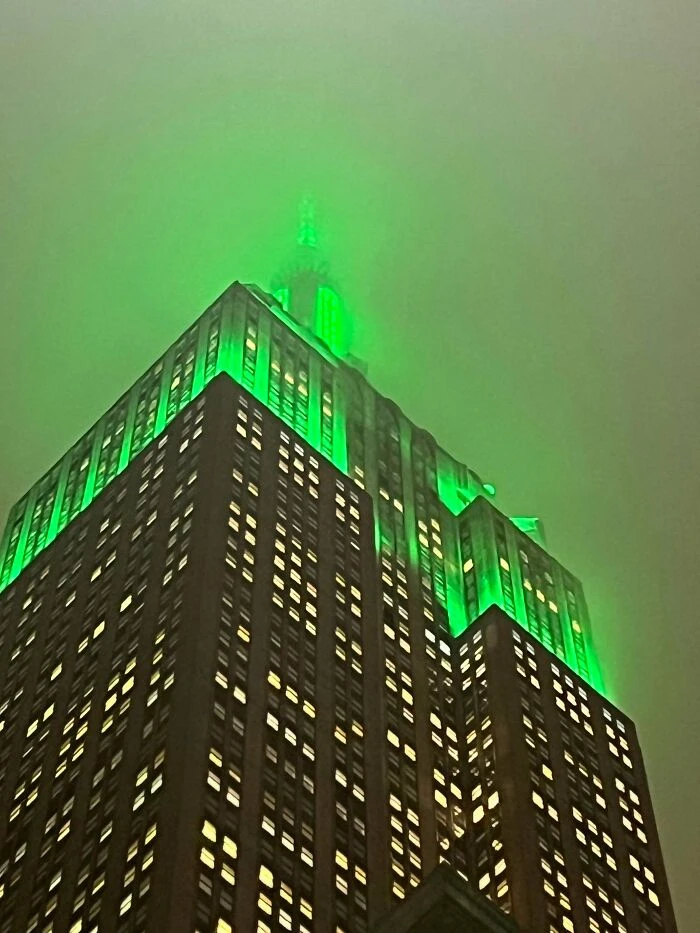
New York City on a foggy evening.
The glass tower reflects the light in a way that makes it feel alive and hostile. The photographer captioned it simply: "Felt threatened in New York tonight." NYC knows how to feel imposing even without trying. 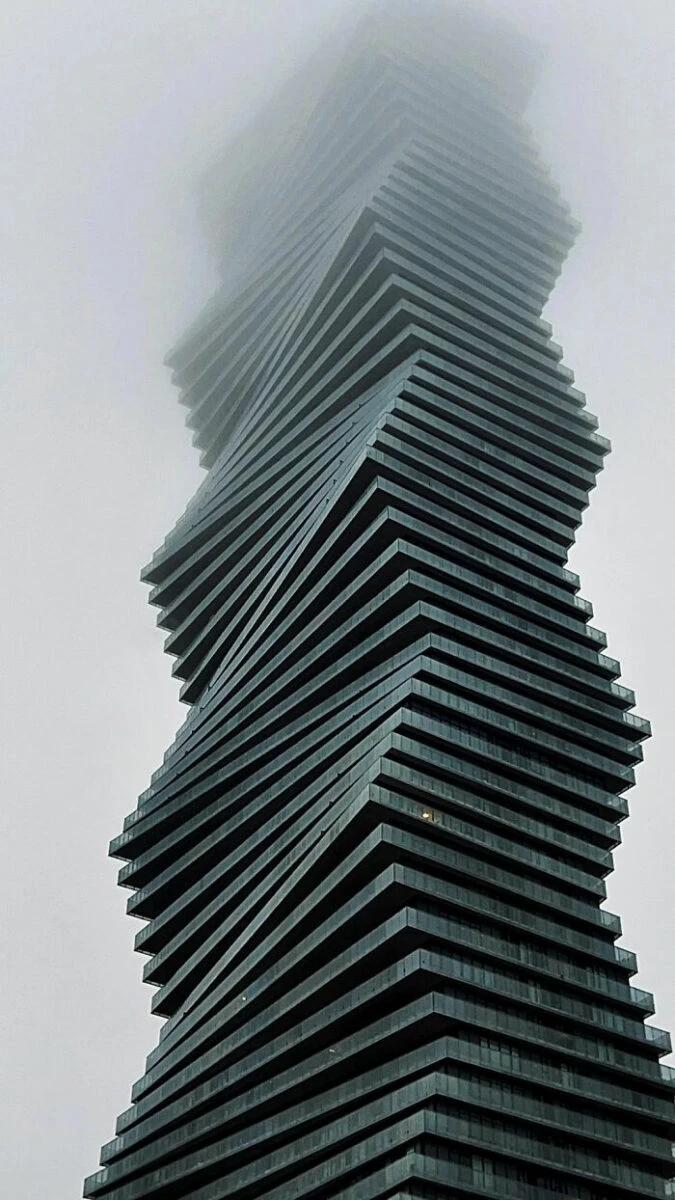
M1 Tower, Mississauga, Ontario, Canada.
A residential skyscraper with angular protrusions and a dark facade. At night, when some windows glow while others stay dark, it looks like a skyscraper-sized punch card—or a code reader transmitting a secret message to the chosen few. 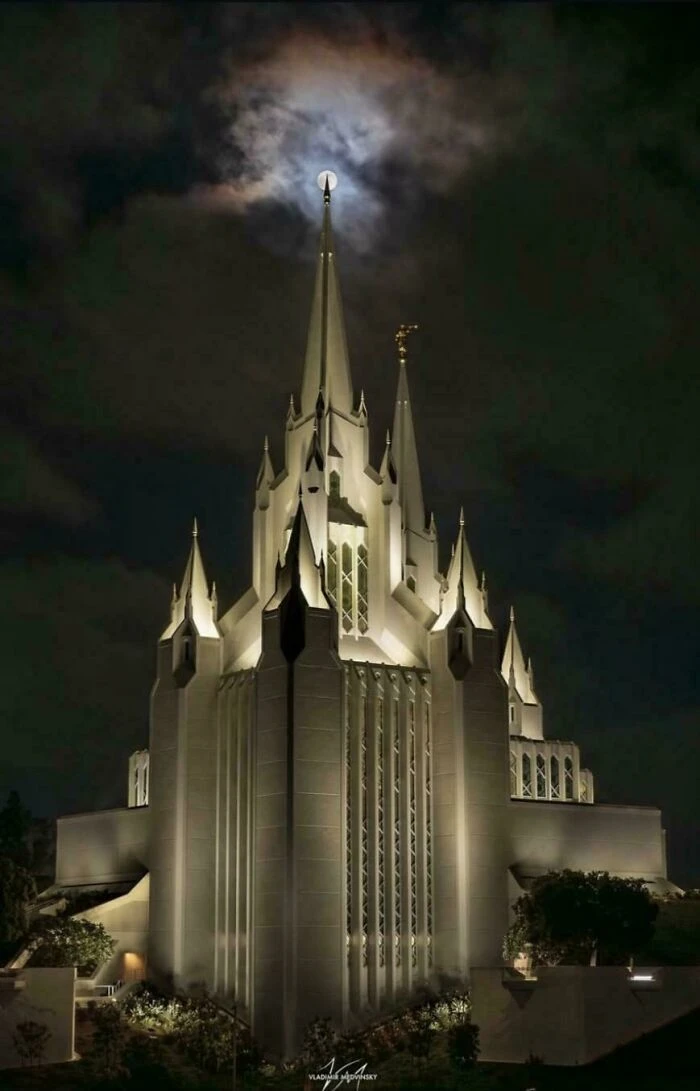
San Diego California Temple of The Church of Jesus Christ of Latter-day Saints, La Jolla.
Its white spires against a dark night sky look like a set for Dracula staged at Disneyland. The contrast of pristine white and sharp peaks creates an unsettled, eerie vibe. 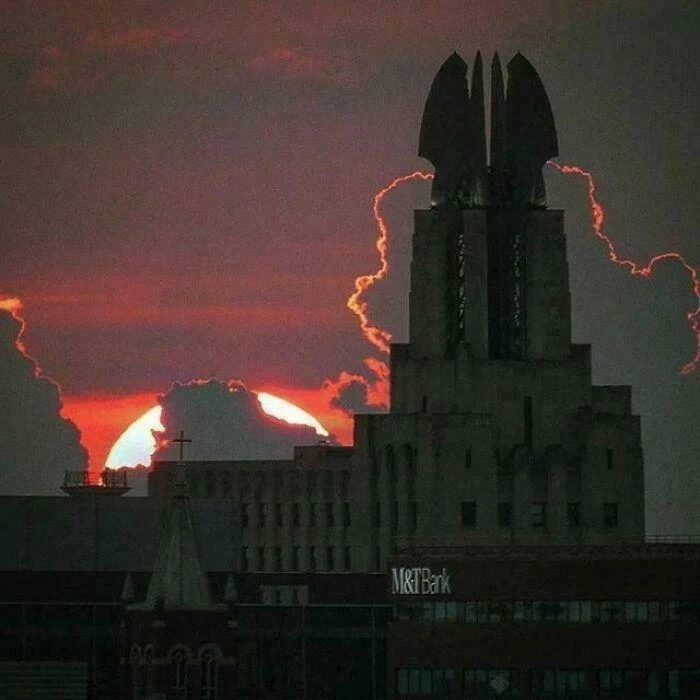
Times Square Building, Rochester, New York, 1930.
Not to be confused with Manhattan's famous square. This Art Deco office tower—dark, with narrow vertical windows and a massive crown—looks as though it was conceived right alongside Batman comics. Which, historically speaking, is nearly accurate. 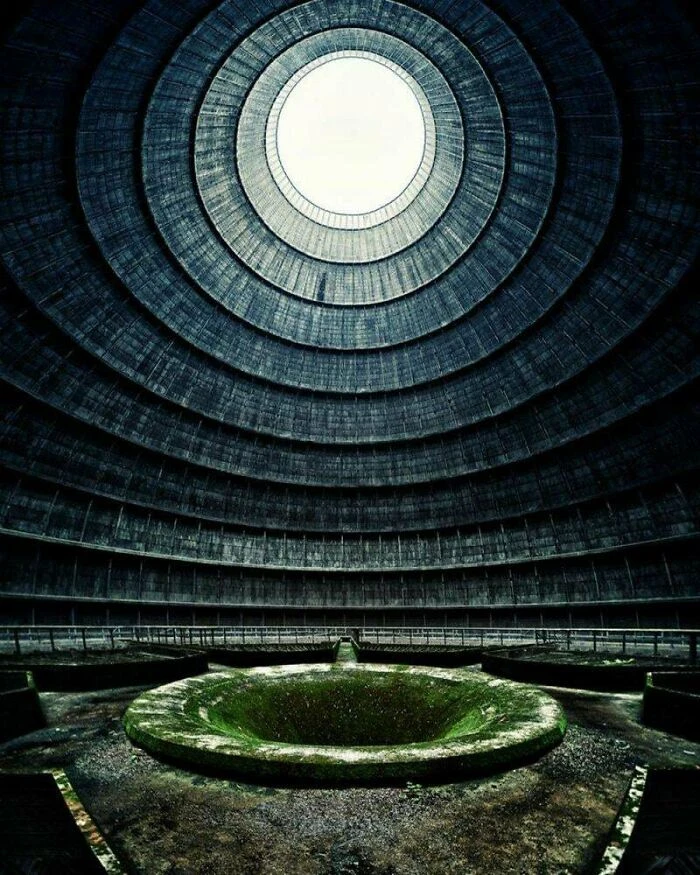
Abandoned cooling tower of a former power plant, Belgium.
A colossal cylinder with jagged edges stands in the middle of a wasteland. It once cooled water for a power plant; now it's the ultimate set for a movie's climax where the villain finally reveals their master plan. 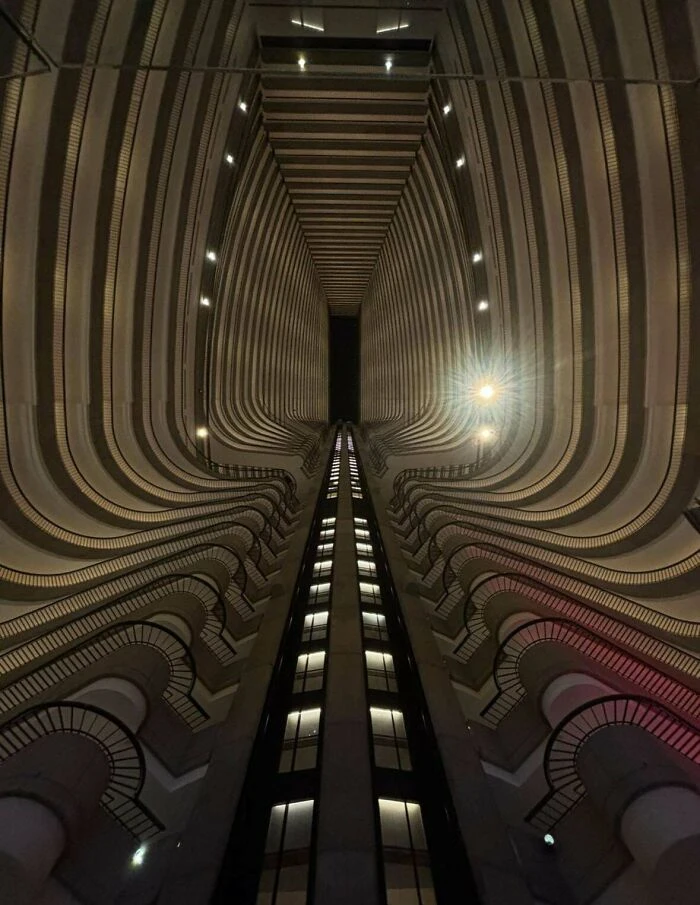
Marriott Marquis Hotel, Atlanta. 47-story atrium.
On the outside, it's a standard glass tower. Inside lies a soaring multi-tiered atrium where glass elevators glide alongside an open shaft. Looking up gives you vertigo; looking down is even worse. 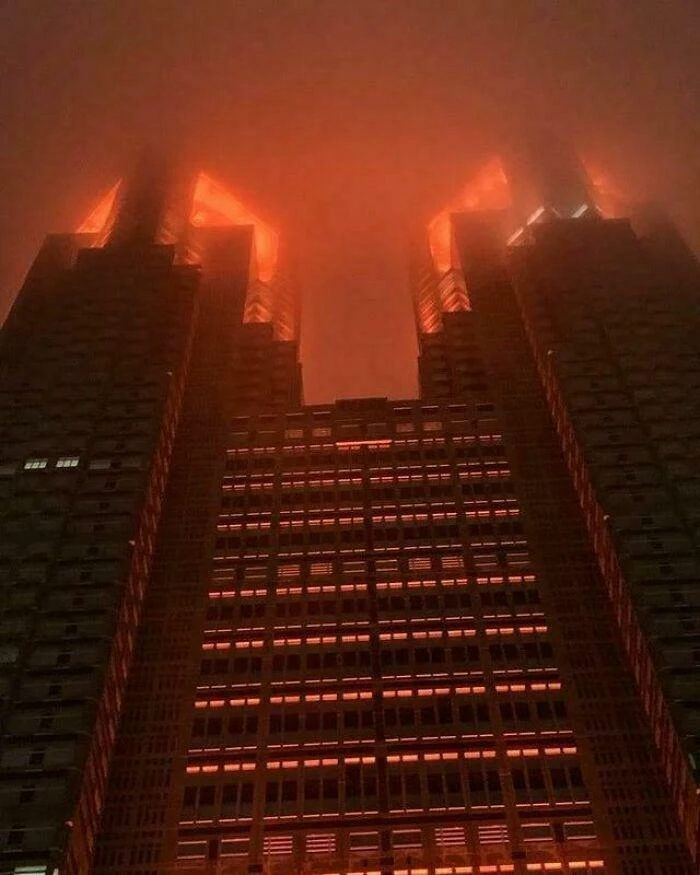
Tokyo Metropolitan Government Building, Shinjuku. Architect Kenzo Tange, 1991.
Two split-top towers form a silhouette often compared to a Gothic cathedral or a computer circuit board. It serves as the seat of government for the world's largest megacity, home to roughly 14 million residents. 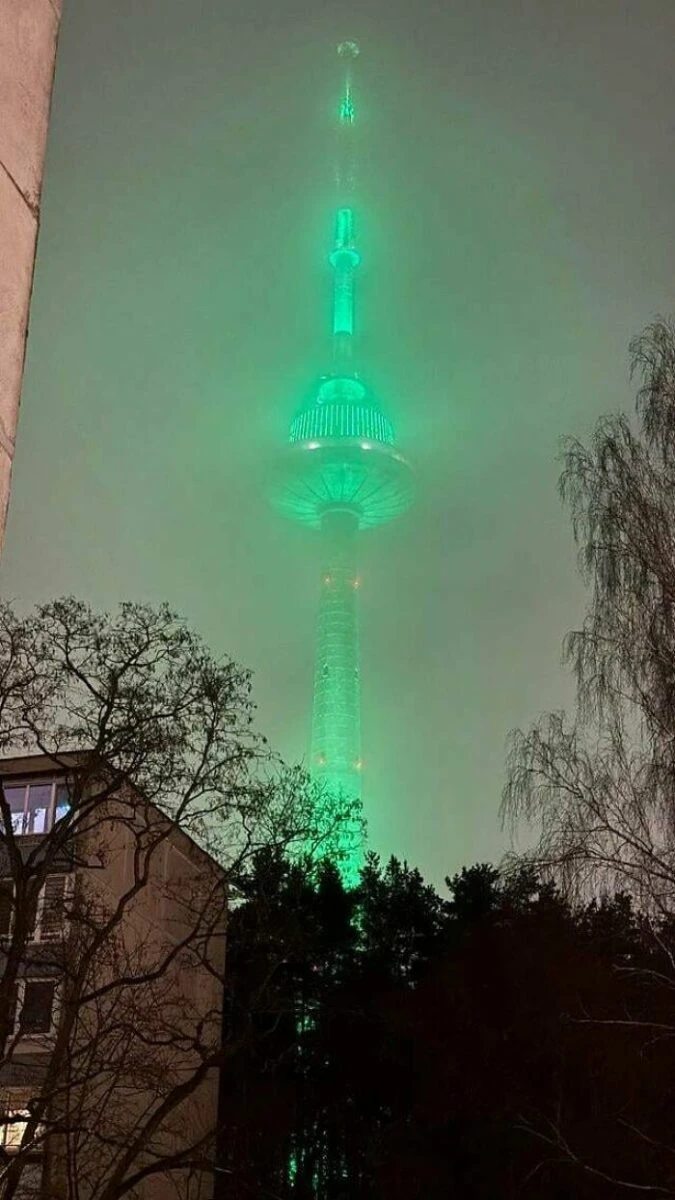
Vilnius TV Tower, Lithuania. Height: 326 meters, 1980.
The tallest structure in the Baltic states. A slender needle topped with a revolving restaurant disk—the quintessential Soviet TV tower—it looks, in the right light, like a device beaming signals to orbit. 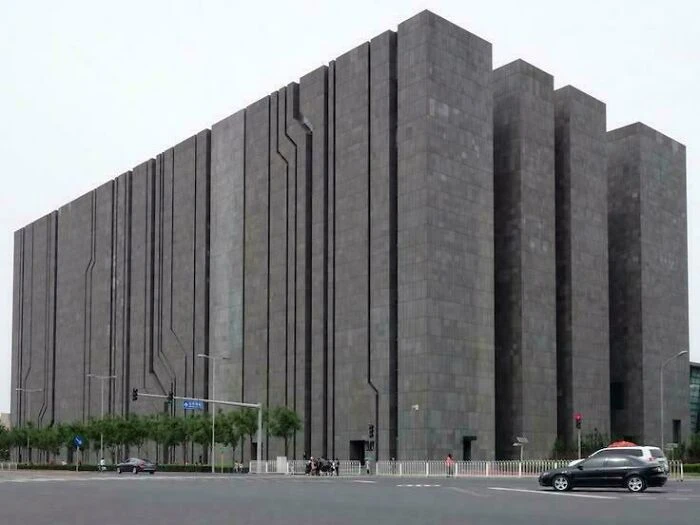
Digital Beijing Building, Beijing. Built for the 2008 Olympic Games, Studio Pei-Zhu.
Twin slabs stand side-by-side like giant monoliths, resembling a building-sized supercomputer more than an office space. The architects state the facade mimics a punch card. Any resemblance to a dystopian surveillance apparatus is purely coincidental. 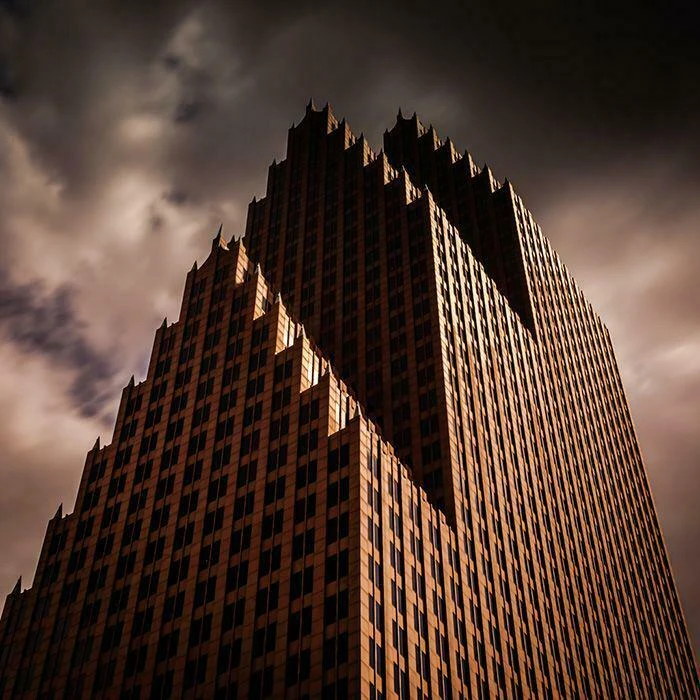
TC Energy Center, Houston, Texas. Formerly Bank of America Center, architect Philip Johnson, 1983.
Johnson crowned the skyscraper with neo-Gothic gables, giving it the appearance of a giant rook on a chessboard. It looks especially dramatic at night, when the lighting turns the roofline into a glowing crown. 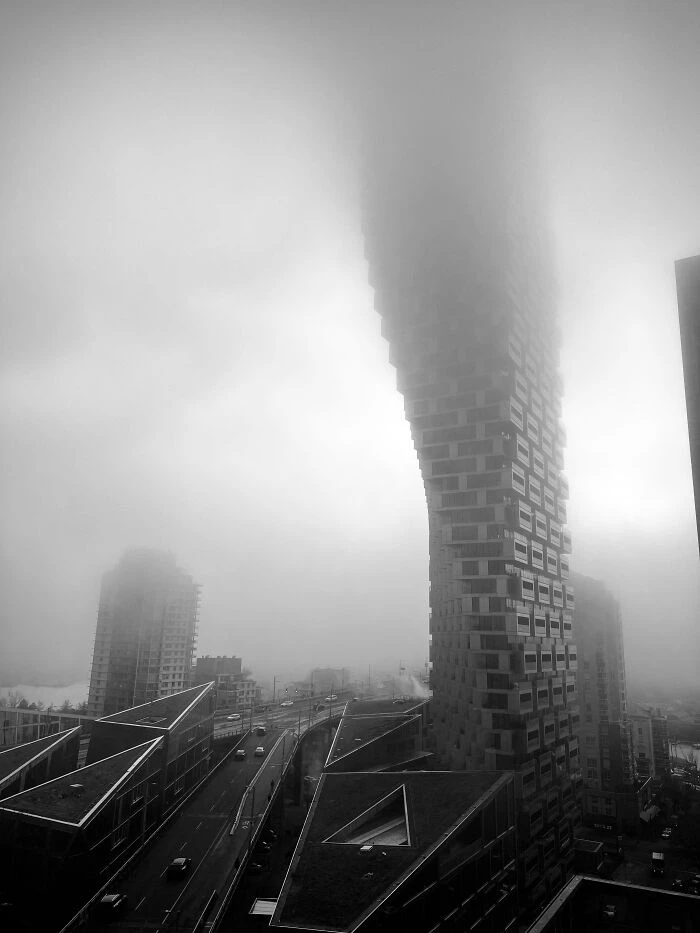
Vancouver House, Vancouver, 2021.
Pinched between roads and a bridge at its narrow base, the tower twists and expands as it rises. On a foggy day, this looming volume feels genuinely menacing—exactly as the photographer described it. 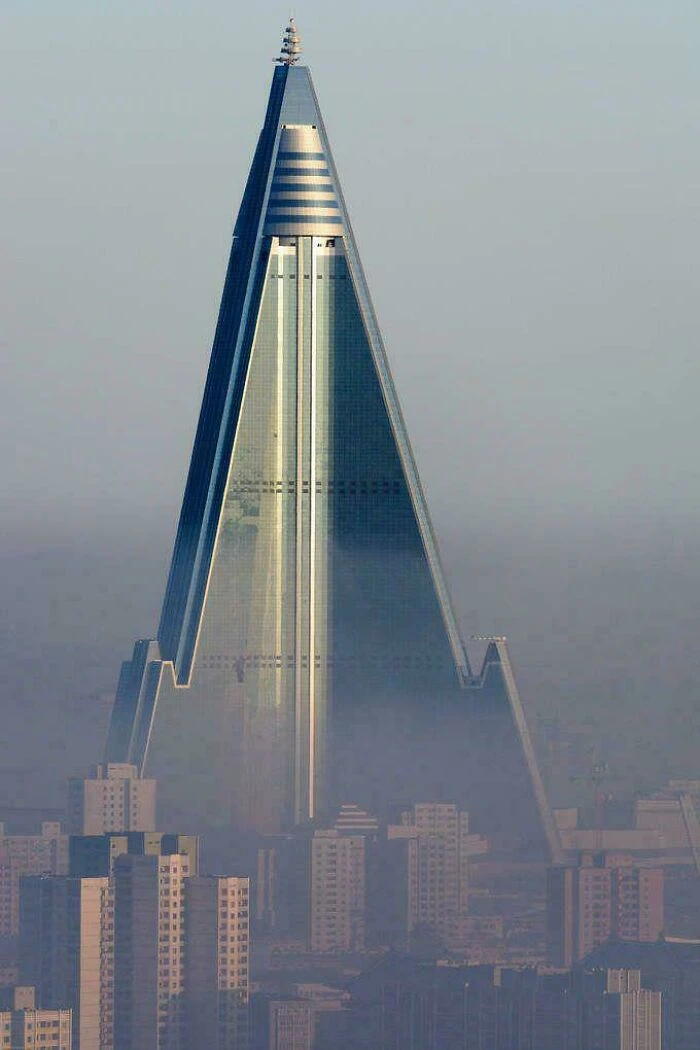
Ryugyong Hotel, Pyongyang, North Korea. Construction began in 1987 and remains unfinished.
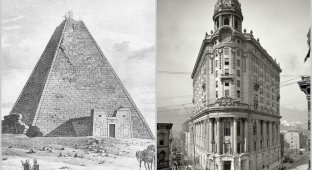
A 330-meter pyramidal skyscraper. Construction ground to a halt for 16 years following the country's economic collapse, resumed in 2008, and still remains incomplete. It stands as one of the world's largest uninhabited structures: a hollow pyramid towering over a closed city. 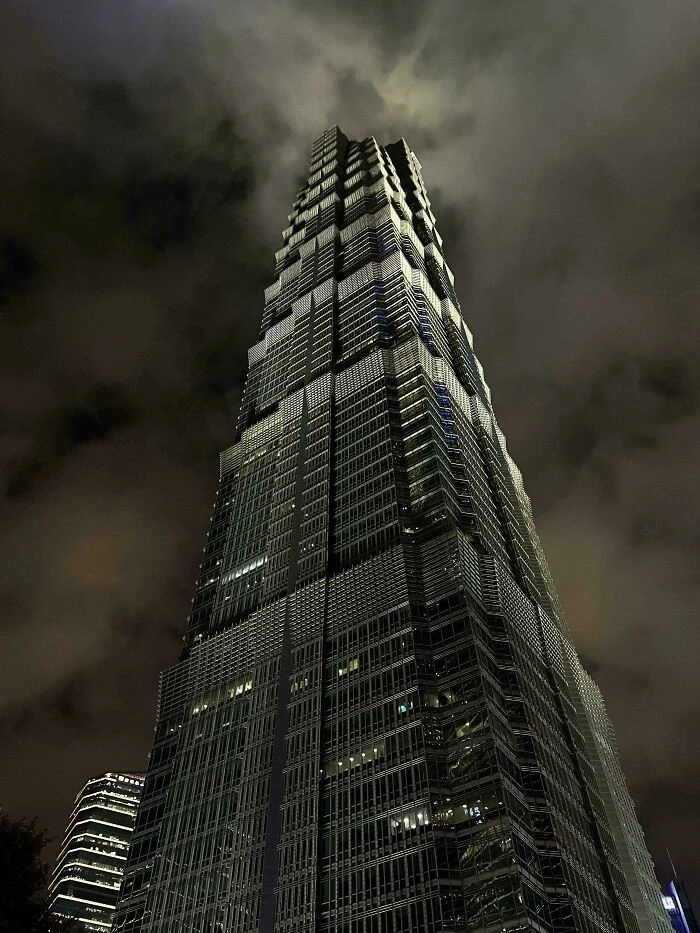
Shanghai's financial district at twilight.
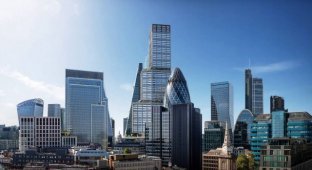
A dense forest of skyscrapers, each imposing enough to earn a spot on this list. Together, they create a skyline that is hard to call cozy—yet impossible not to find breathtaking. 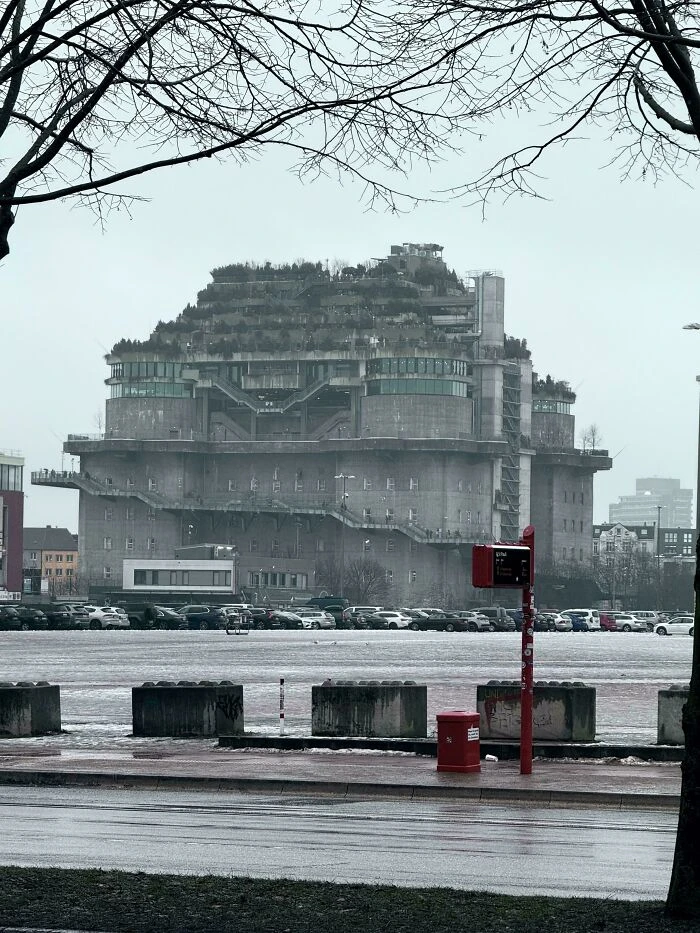
Hamburg Flak Tower IV (Flakturm IV), 1942–1944. Walls up to 3.5 meters thick.
One of several reinforced concrete fortresses built by Nazi Germany as anti-aircraft blockhouses. Post-war demolition proved impossible due to the sheer thickness of the walls and proximity to neighboring buildings. Today, it features a public roof garden and walkway. 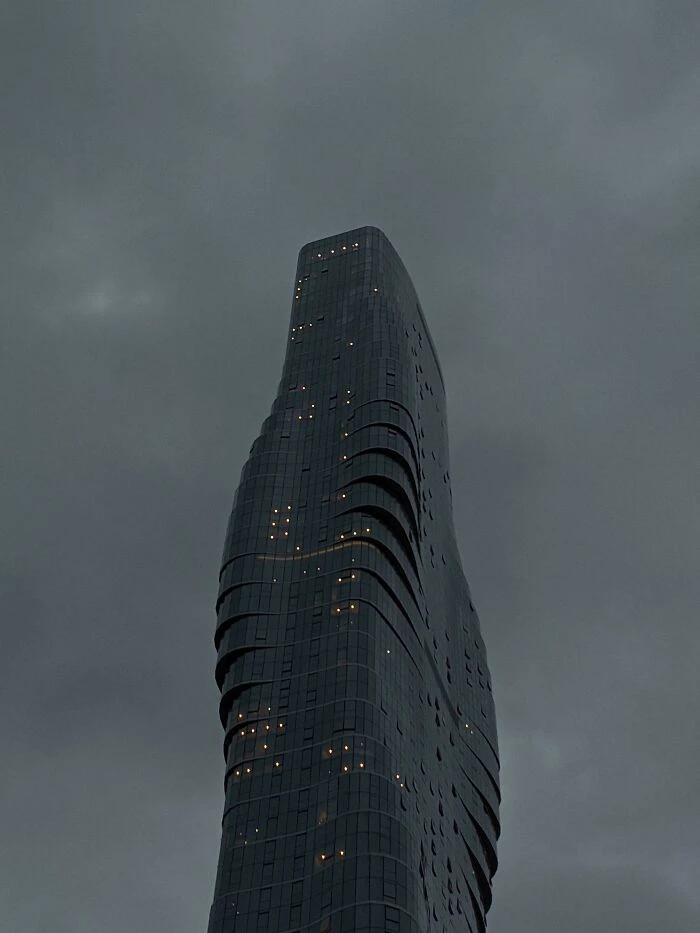
Premier Tower, Melbourne, Australia. Elenberg Fraser, 2022.
The facade is deliberately distorted: undulating bulges and concave cutouts create an illusion of constant motion. The effect works: the building looks as if it's being squeezed by an unseen giant hand. 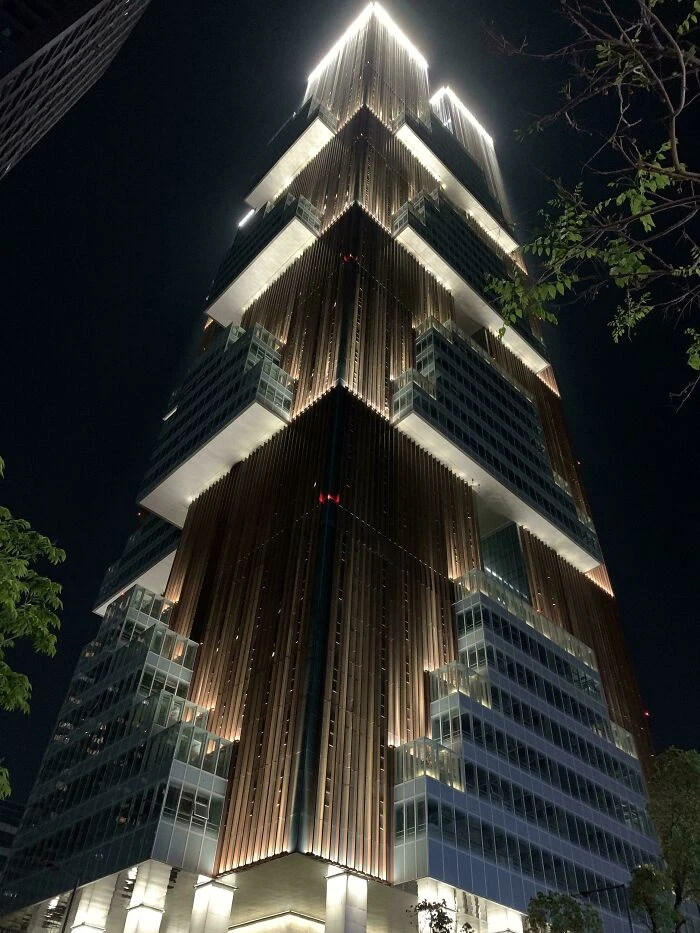
Vanke Yuncheng, Shenzhen, China.
Black cladding and stark geometric forms against the bright Southern Chinese sky create an uninviting contrast. It feels less like a residential building and more like a hardline architectural statement. 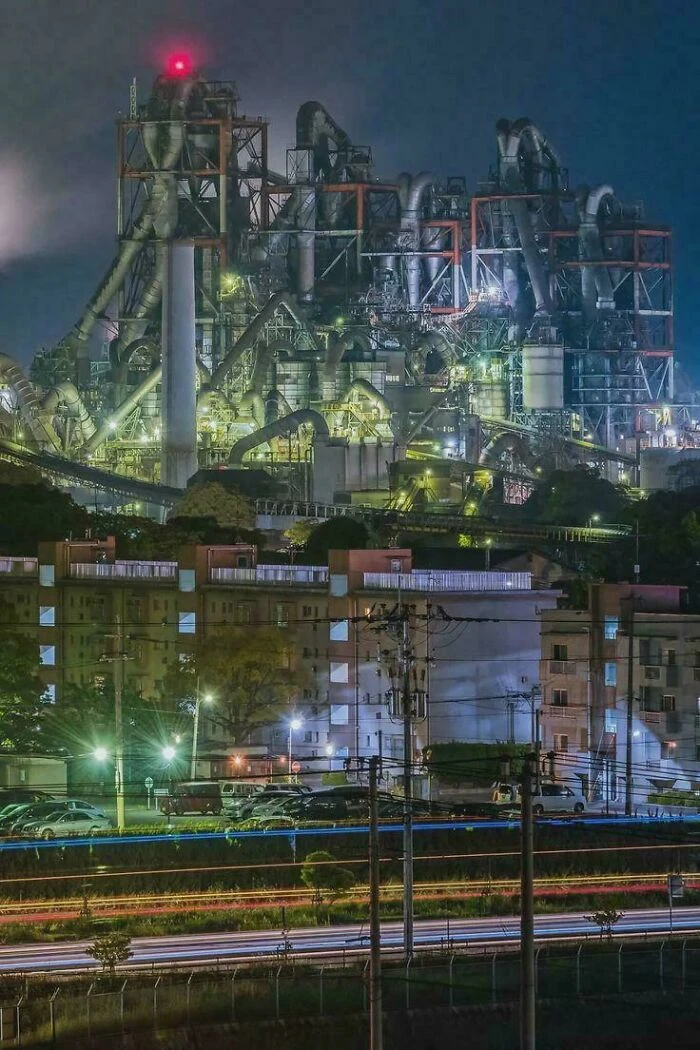
Mitsubishi UBE Cement Plant, Ube, Yamaguchi Prefecture, Japan.
An industrial facility rather than an architectural design. Yet that is precisely why its colossal forms feel so uncompromising: no one cared how it looked, only about tons of cement. The result is an accidental masterpiece of industrial gothic. 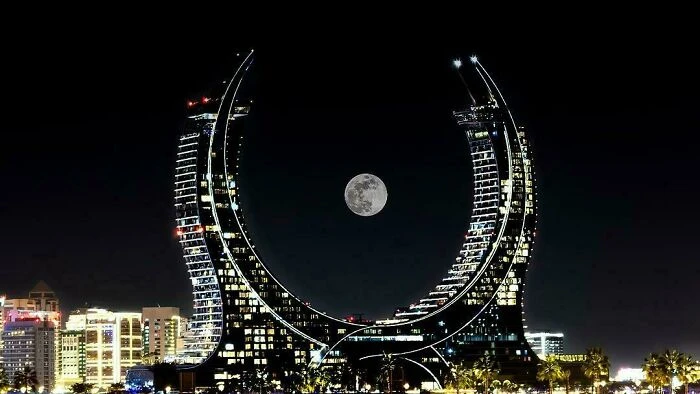
Katara Towers (Katara Crescent), Lusail, Qatar.
Lusail is a city built from the desert floor for the 2022 World Cup. The crescent-shaped tower resembles a giant talon carved into the Persian Gulf sky. Though in the context of the district, it fits right in with its neighbors.
All of these buildings share one thing in common: their creators were clearly not afraid to make a statement. Whether aiming for monumental grandeur, provocative style, or simply solving an engineering puzzle without realizing how eerie the result would turn out, architecture never lies. It always reveals who commissioned it and why. Which of these buildings strikes you as the most villainous—and why?
Some buildings look as though they were designed specifically to intimidate—long before you ever get close enough to read the sign.
22 Photos of Unusual Buildings That Break All the Rules
Leaning Buildings: Architectural Experiments from Around the World
Modern Sacred Architecture
Ghosts of the Soviet Past: Abandoned Monuments of the USSR
The World's Most Unusual Homes