Rare and Captivating Photos from the Frontlines of WWII (21 Photos)
Color brings authentic vitality to these photographs, offering a glimpse into history as it truly unfolded. At the end of this article, you'll find a link to a special collection of colorized photos from World War II—don't miss this unique journey into history. Enjoy the gallery! 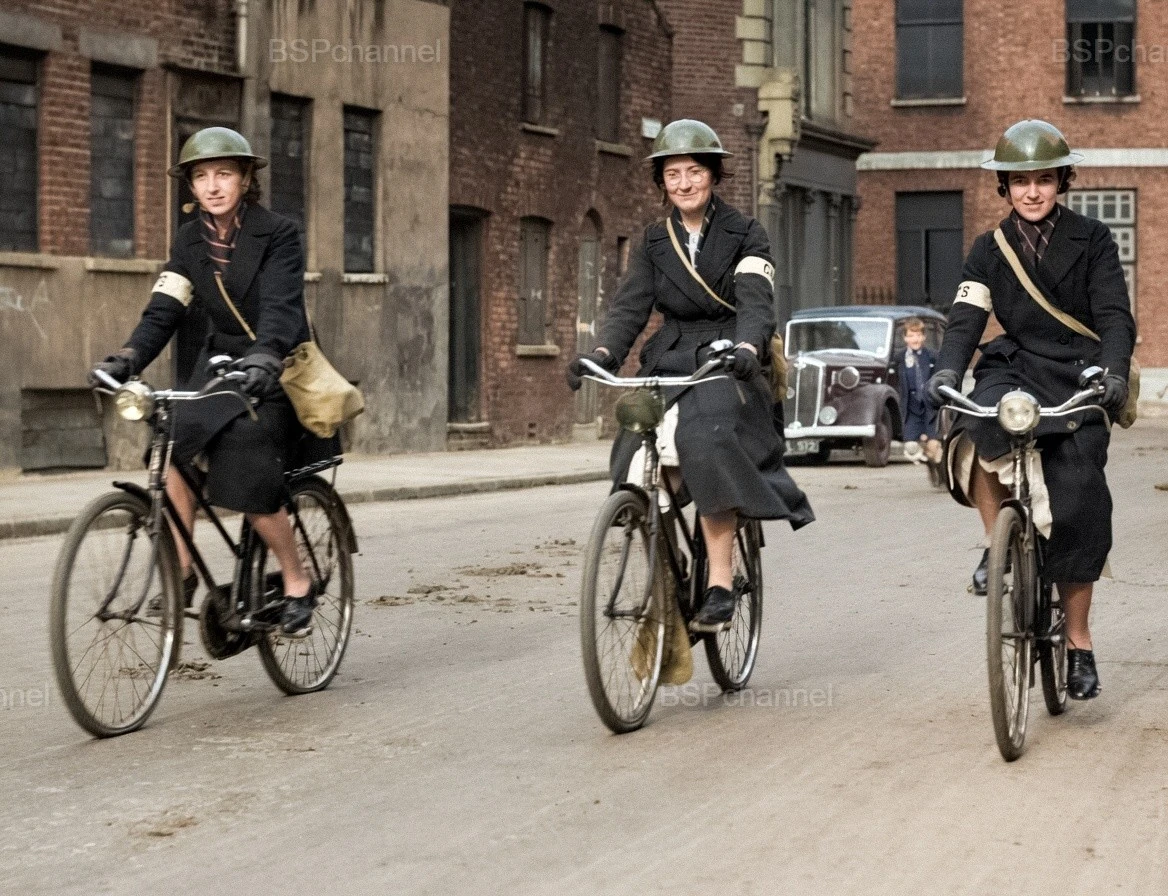
Morrison shelter. England, 1941–1943. 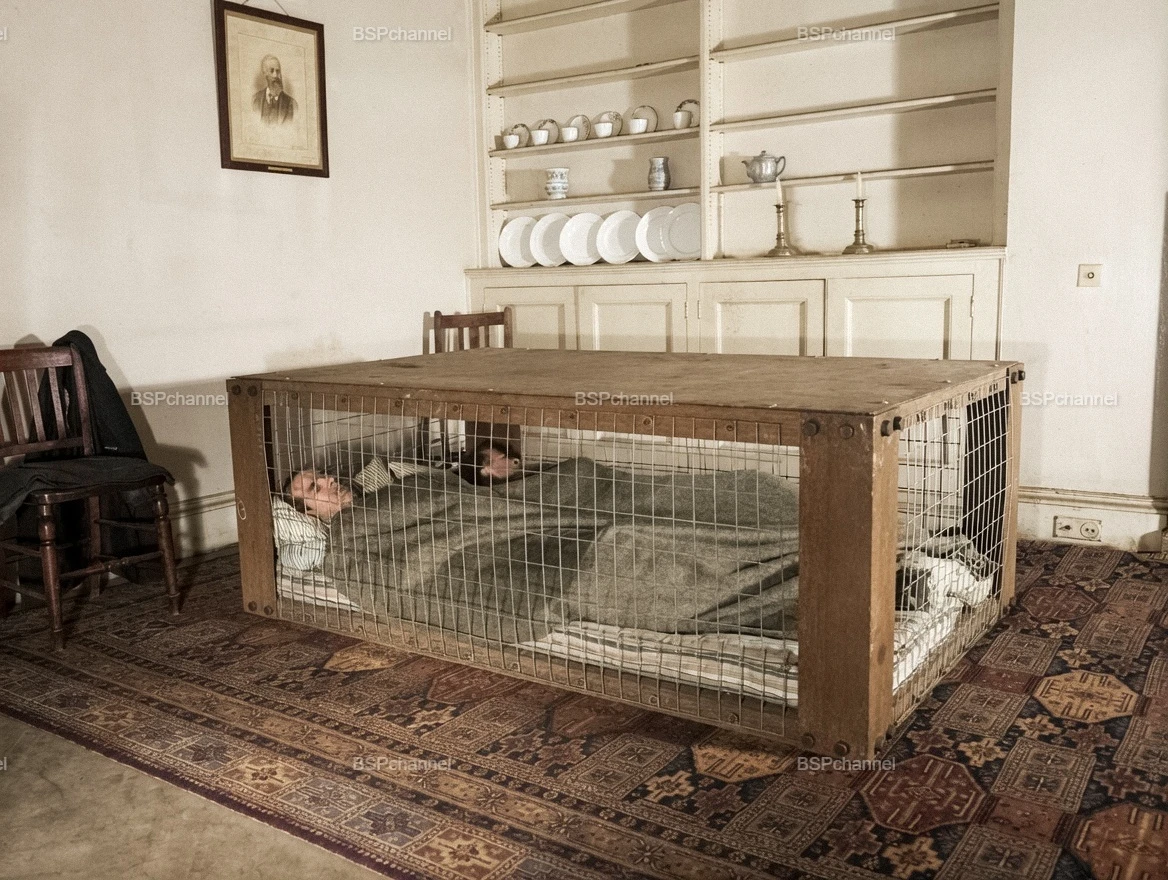
The Morrison shelter was an indoor air raid shelter developed in the United Kingdom in early 1941 during the Second World War. Designed as a heavy steel cage topped with a solid plate, it functioned as a table while providing a safe space underneath to sleep and stay protected from falling debris during German bombing raids. Created by Cambridge University professor John Baker, it was named after Herbert Morrison, the Home Secretary at the time. Baker’s concept was to craft a protective capsule out of "soft" steel that could deform under shock, absorbing the kinetic energy from hundreds of pounds of falling brick and masonry. Measuring roughly 6.5 feet long, 4 feet wide, and 2.5 feet high, it could comfortably accommodate two adults and a child. The top was covered by a solid 3 mm steel plate that doubled as a dining table during peacetime. The sides were enclosed with welded steel mesh panels, one of which was removable for access. A mattress laid over a wire mesh base provided bedding. The shelter was primarily intended for British households without basements, who were unable to use standard outdoor Anderson shelters. It was provided free of charge to families earning less than £400 a year, while others could purchase it for a modest fee. By the end of 1941, around 500,000 shelters had been distributed, with an additional 100,000 produced in 1943 to protect citizens against German V-1 flying bombs. The design proved extraordinarily effective against structural collapses. According to official studies from the era, out of 136 people inside Morrison shelters during raids that completely destroyed 44 homes, 120 escaped unscathed or with only minor scratches. Those who perished were in homes that suffered direct hits—a scenario the shelter was never designed to withstand. Thanks to its simplicity and reliability, the Morrison shelter saved thousands of lives across London and other industrial British cities throughout the Blitz.
The surrendered German submarine U-858 (Type IXC/40) under way near Cape May, escorted by a US Navy blimp and the destroyer escort USS Pope (DE-134, background), 1945. 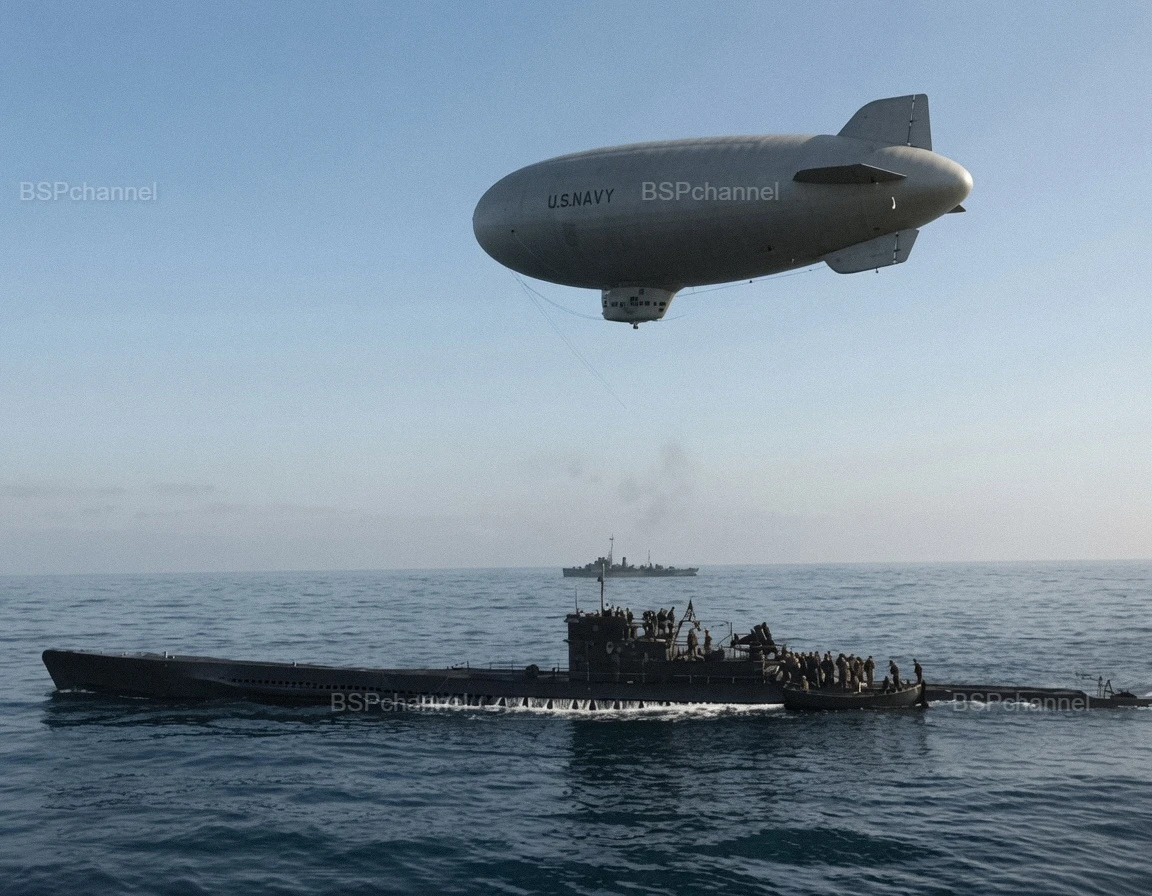
This U-boat carved its place in history as the first German warship to surrender to US forces following Germany’s unconditional surrender. The order to surrender reached the submarine while in the Atlantic on May 8. Captain Thilo Jaepnsen complied with Allied orders: U-858 surfaced, flew a black flag, and transmitted its position. On May 10, it was intercepted by American destroyers. By the time this photograph was taken off the Delaware coast near Cape May, an American prize crew was aboard, and the US Navy ensign flew above the conning tower. Following formal surrender procedures at Fort Miles, Delaware, the crew was sent to a prisoner-of-war camp. The submarine itself was used for testing and public displays before being sunk in 1947 during US Navy gunnery practice.
The surrendered German submarine U-776 (Type VIIC) moored on the River Thames in central London, near the Palace of Westminster. 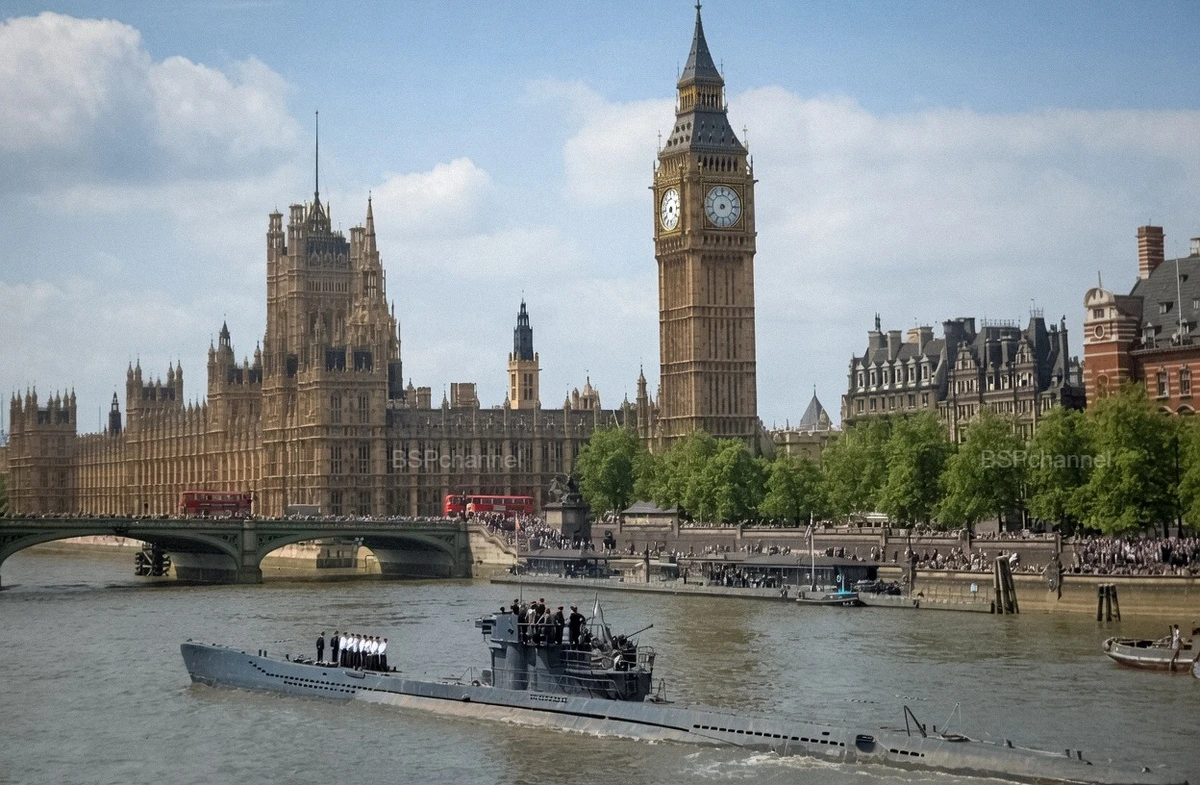
Another surrendered U-boat, this time in the heart of London. Under the command of Kapitänleutnant Lothar Knuppel, U-776 surrendered to British forces off the coast of Norway on May 16, 1945, before being escorted to Port Ellen in Scotland. Later, it was brought to London—not for immediate scrapping, but as a public spectacle. Opening on May 22, the submarine allowed Londoners aboard for a small admission fee, with proceeds going to King George's Fund for Sailors. Over two weeks, thousands flocked to see the captured Kriegsmarine vessel. During its stay, a curious incident occurred: low tide on the Thames left U-776 partially grounded and listing sharply, complicating tours but adding extra drama for onlookers. After its London exhibition, the U-boat underwent technical trials before being scuttled off the coast of Ireland in December 1945 as part of Operation Deadlight—the Allied campaign to destroy captured German naval units.
Midwives from Guy’s Hospital in London, wearing steel Brodie helmets, ride bicycles on their rounds on October 20, 1939. 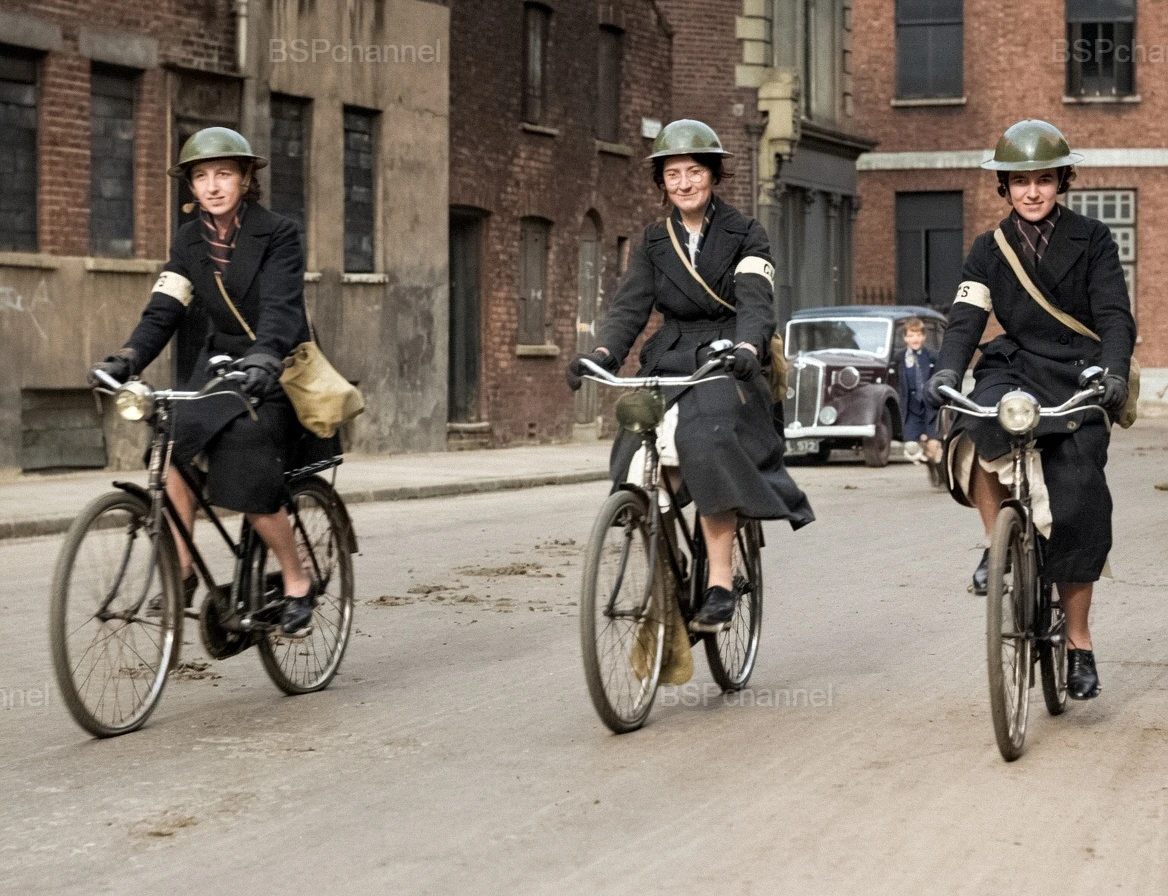
Photo: Harry Todd
Bicycles were the primary mode of transportation for district nurses navigating the densely populated and impoverished neighborhoods of the East End and Southwark surrounding the hospital. With wartime fuel rationing and public transit disruptions, their reliance on bicycles only grew.
A knocked-out M4 Sherman tank sits abandoned on a dirt road near Borgo Sabotino following heavy combat during the Italian Campaign, May 1944. 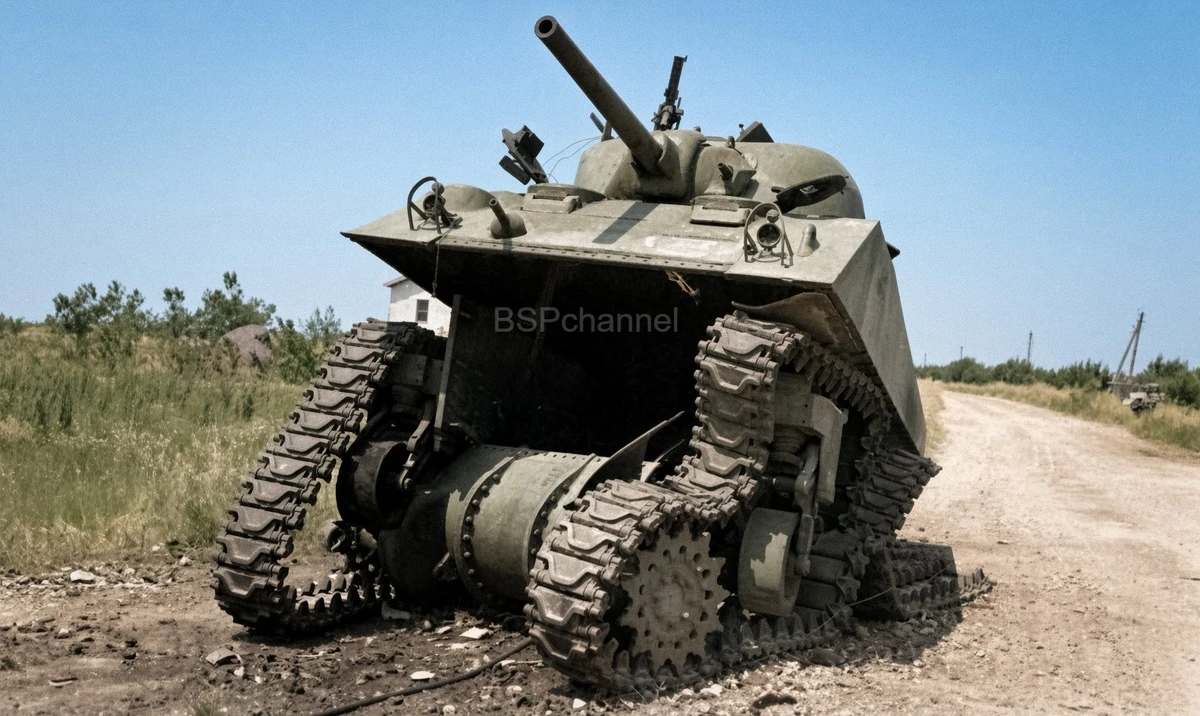
Crash landing of a Grumman F6F-3 Hellcat (No. 30) from squadron VF-2 on the flight deck of USS Enterprise (CV-6), November 10, 1943. 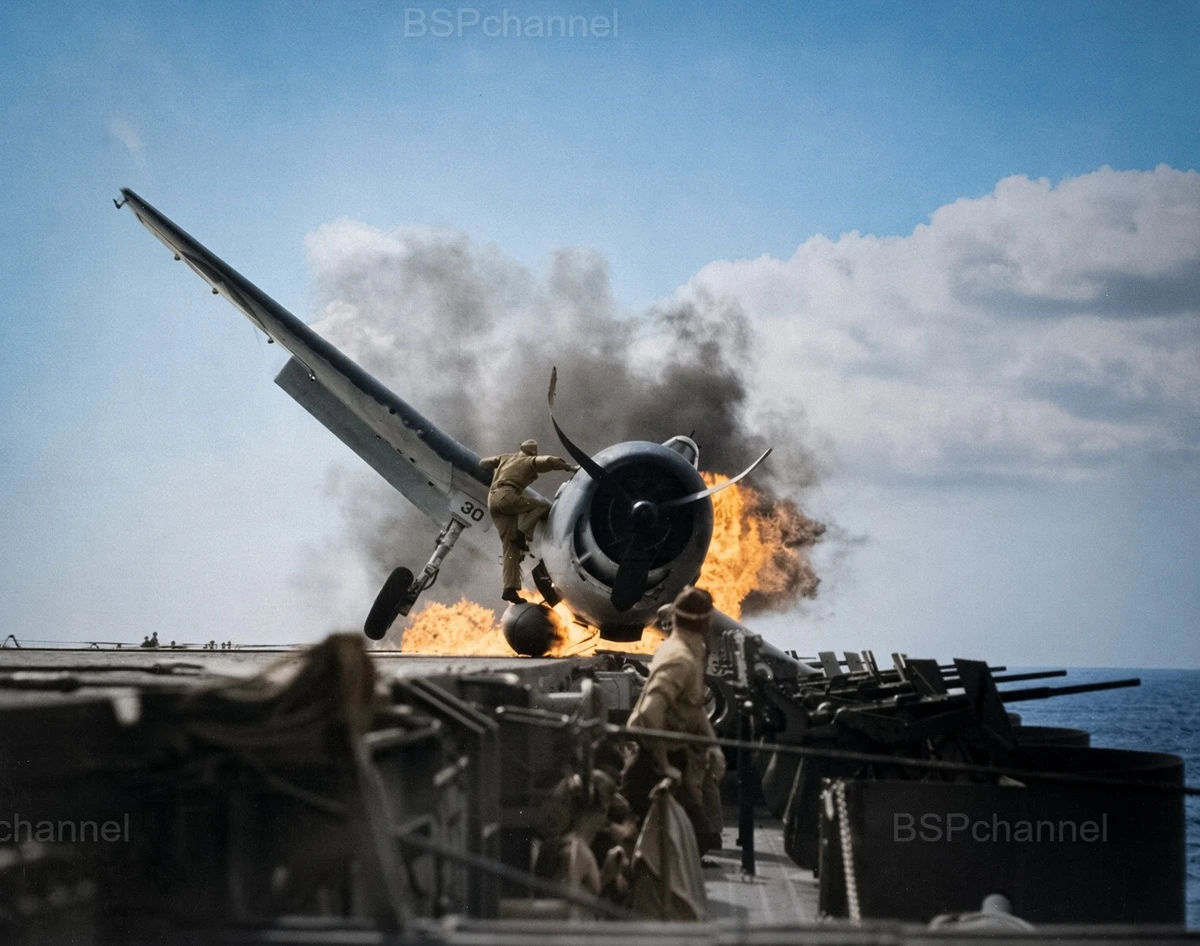
During a routine training flight, the Grumman F6F-3 Hellcat (side number 30, serial BuNo 25974) of squadron VF-2 came in to land. Its tailhook failed to catch the arresting cables, sending the fighter crashing through the crash barrier. Spinning out of control at high speed, it slammed into the port gallery—directly over the 20 mm Oerlikon anti-aircraft gun mounts. The impact ruptured the belly tank, igniting aviation fuel and instantly engulfing the aircraft in thick smoke and flames. In the photograph, a man can be seen scaling the fuselage without hesitation, plunging right into the inferno. This was Lieutenant Walter L. Chewning Jr., a catapult officer, who rushed to the cockpit to pull the pilot from the fiery trap. The pilot, Ensign Byron M. Johnson, was safely rescued thanks to Chewning’s heroic reflexes and the quick action of the deck fire crew, escaping without serious injuries or burns.
US Marine Corps LVT-3 Bushmaster tracked amphibious vehicles conduct training exercises off the coast of Southern California, April 1944. 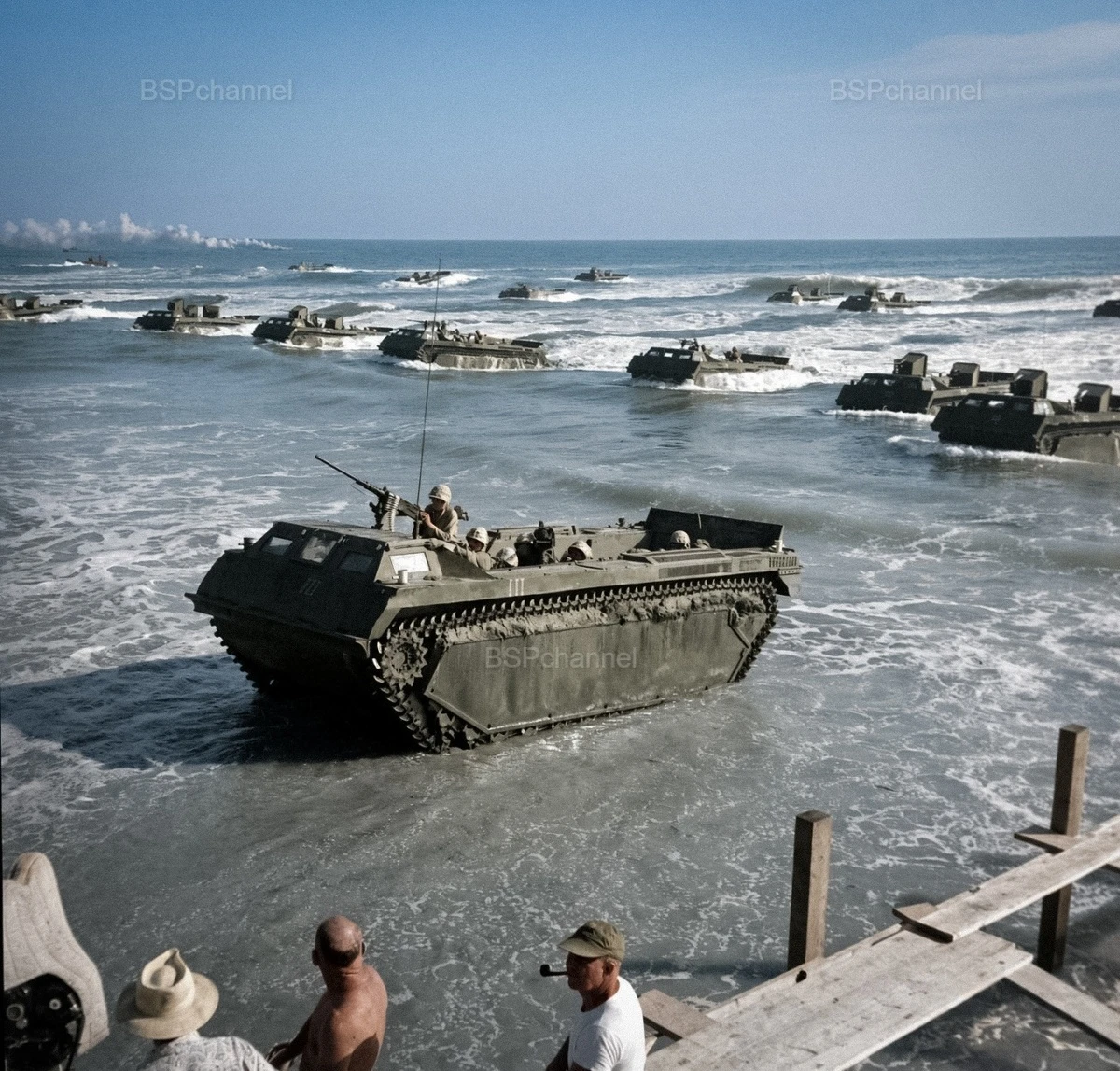
An American Martin B-26 Marauder bomber on a mission over enemy territory. This photo was captured on February 24, 1944, during a raid on the Luftwaffe airfield in Leeuwarden, Netherlands. 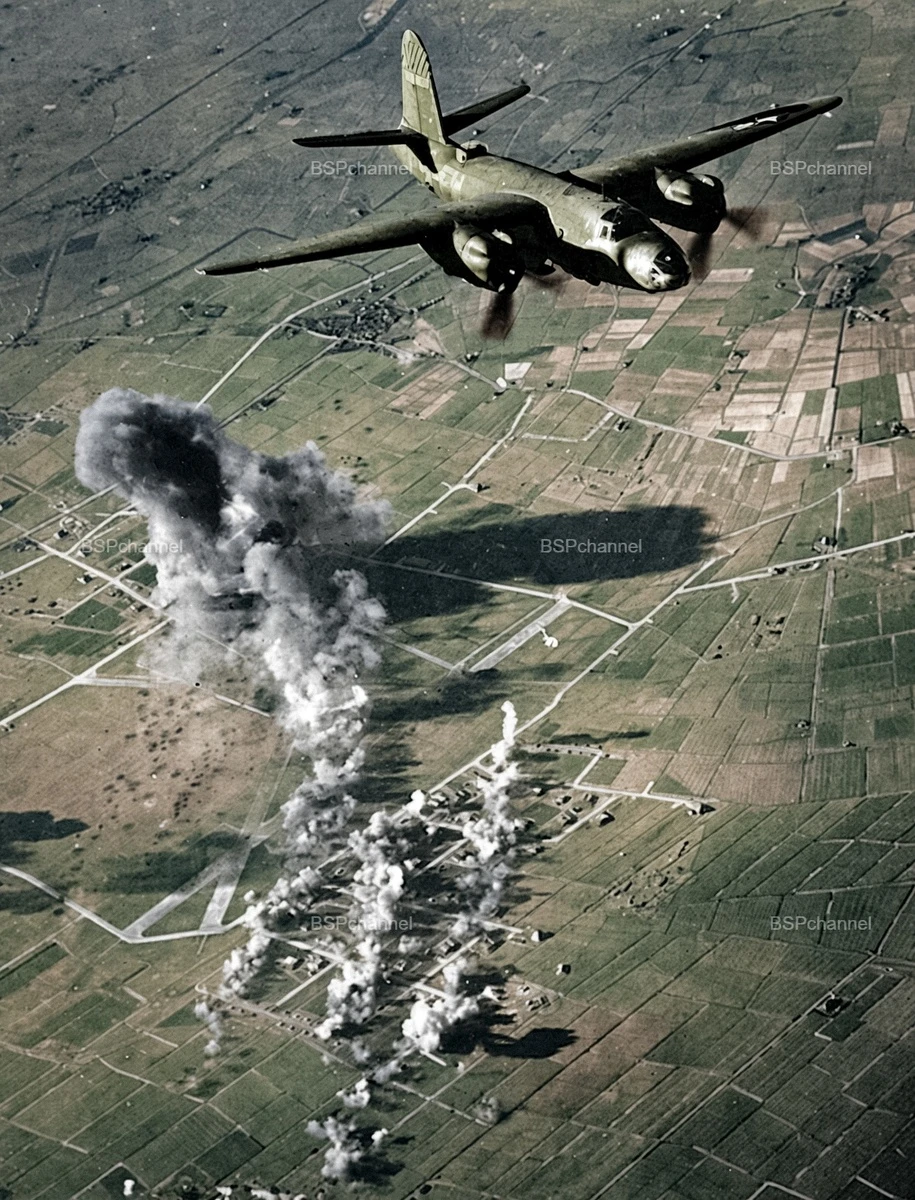
The raid was part of Operation Argument (famously known as "Big Week")—a massive Allied air offensive aimed at crippling the German aviation industry and breaking the enemy's air superiority.
Auxiliary Territorial Service (ATS) spotters wearing sunglasses scan the skies for enemy aircraft at a London anti-aircraft battery, positioned behind a rangefinder, September 1940. 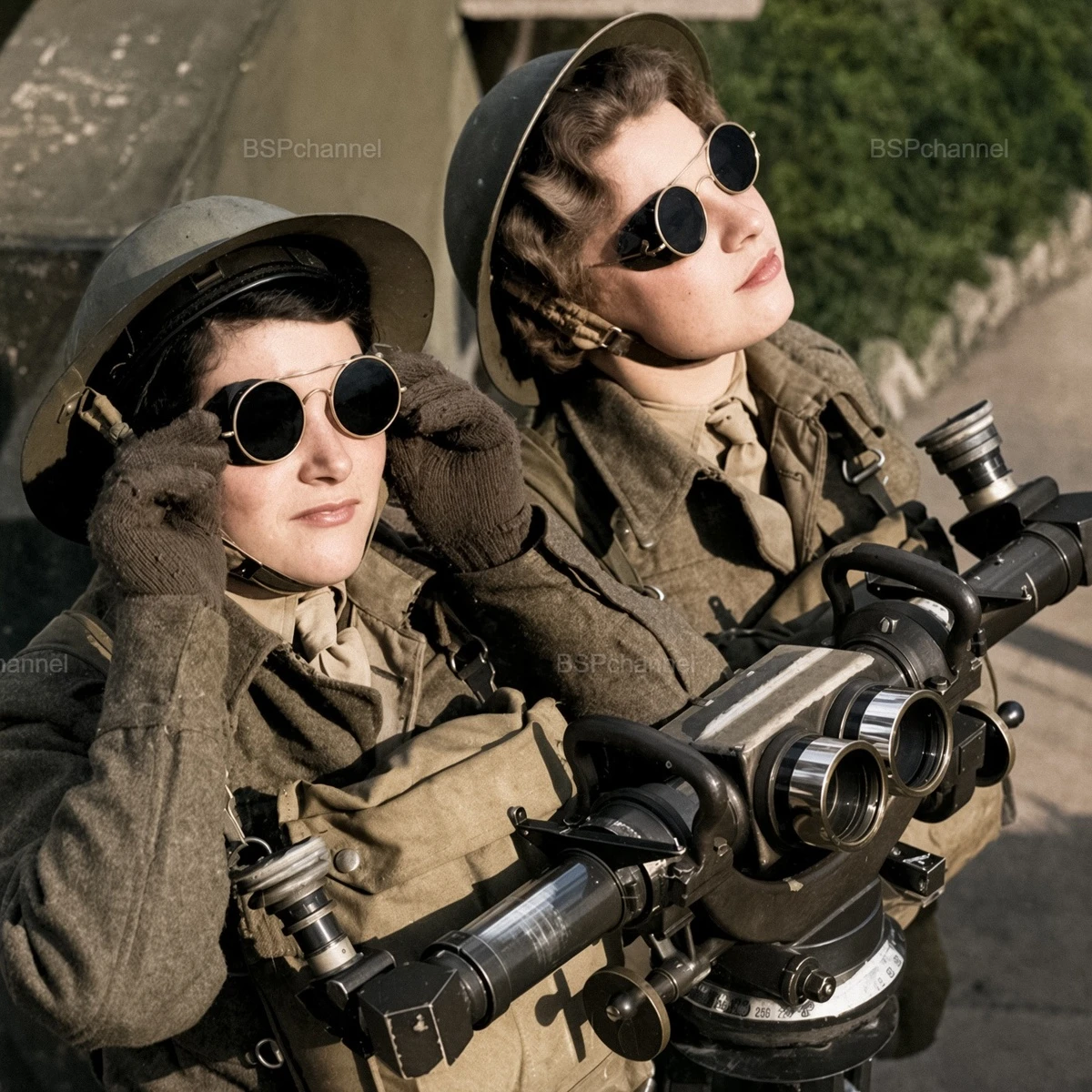
ATS women were formally barred from pulling the triggers on anti-aircraft guns due to a royal decree prohibiting women from operating lethal weaponry. Nevertheless, they made up to 80% of anti-aircraft crew personnel, serving in vital tracking, targeting, and operational roles.
Associated Press war correspondent Charley McMurtry pictured on Guadalcanal during World War II, 1945. 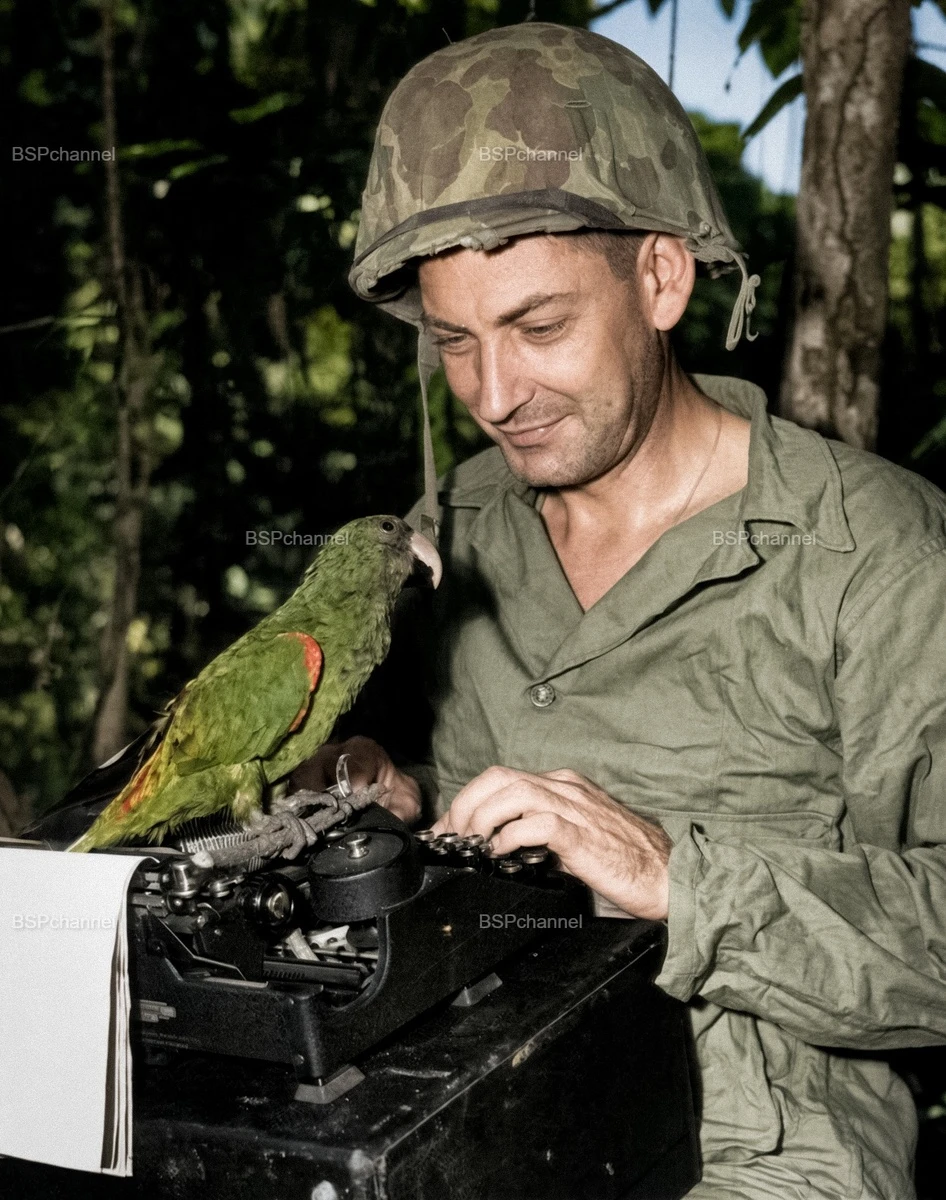
Perched on his typewriter keyboard is his feathered companion—a parrot named Flags. McMurtry had rescued the bird in the Treasury Islands during his transit from Bougainville to Guadalcanal.
US Coast Guard personnel disembark from LCVP landing craft to reinforce Allied forces on the beaches of Normandy, 1944. 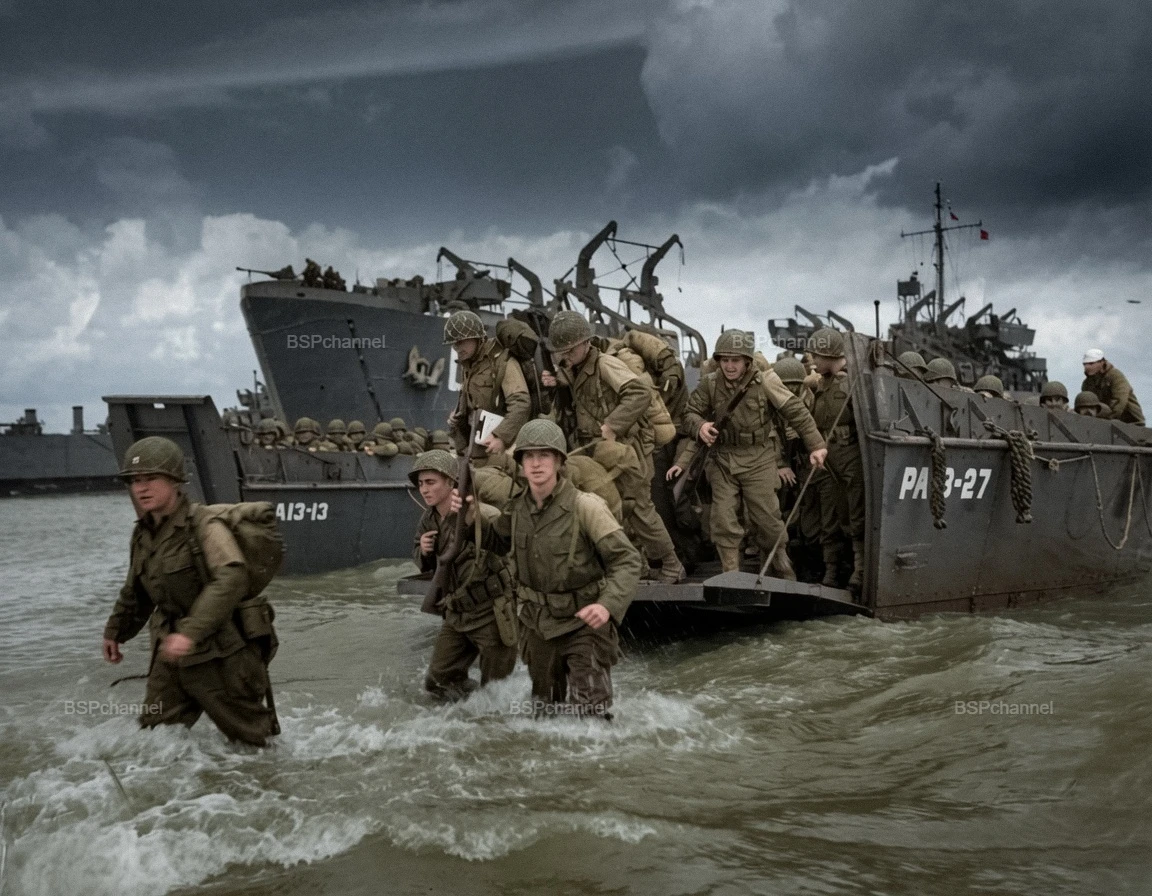
While the main D-Day landings took place on June 6, this photograph capturing reinforcement waves was taken shortly after, around June 18–23, 1944. Although the beachhead had expanded, fresh troops, supplies, and heavy armor were urgently needed to push deeper into France.
The capsized and sinking US Navy oiler USS Mississinewa after being struck by a Kaiten human torpedo at Ulithi Atoll, November 1944. 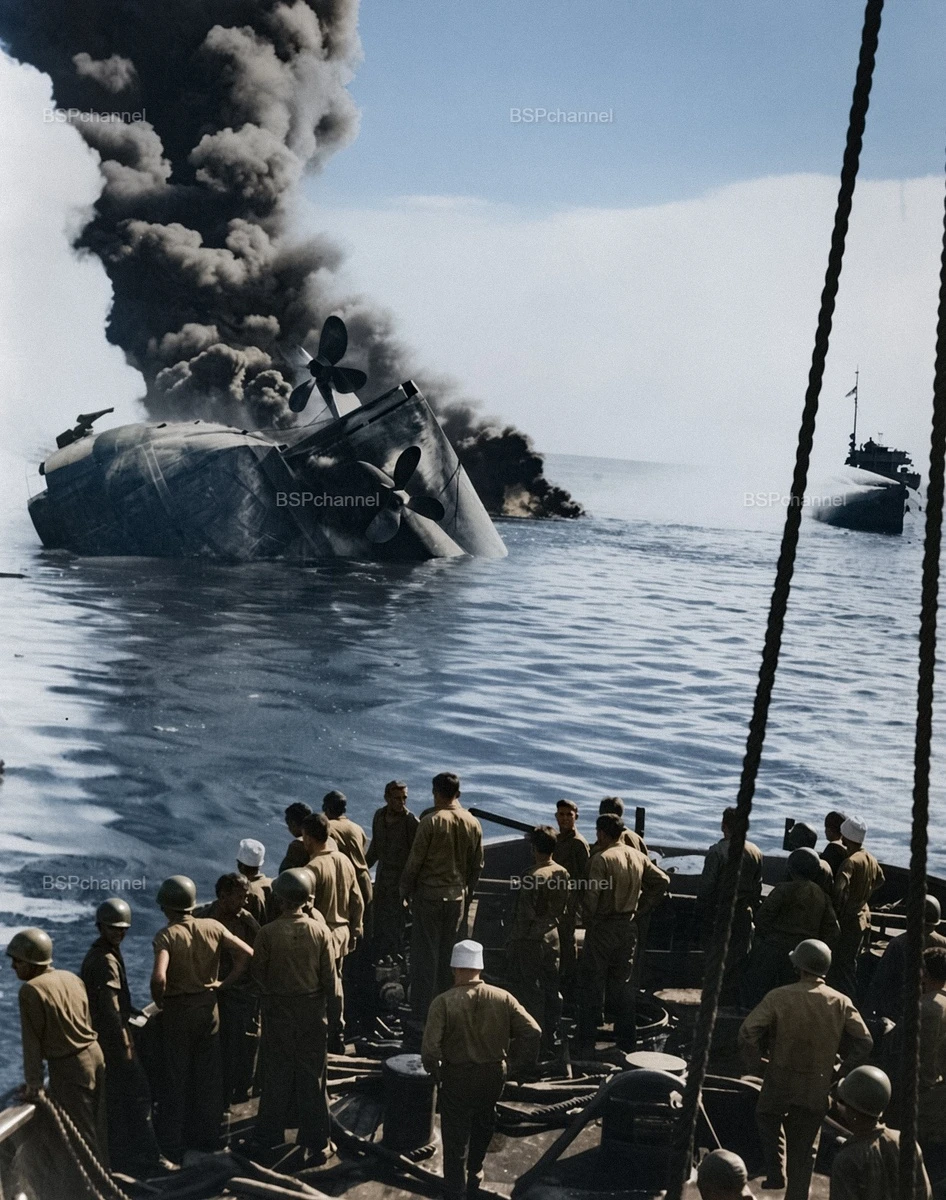
Japanese forces launched Operation Kikusui to strike the US naval staging base at Ulithi Atoll using submarine-launched Kaiten human torpedoes. At 5:47 AM, a Kaiten launched from the Japanese submarine I-36 struck the starboard bow of USS Mississinewa near its forward tanks. The torpedo carried a massive warhead (around 1.5 tons), detonating the ship’s cargo of aviation gasoline and heavy fuel oil. The bow was instantly engulfed in flames that shot nearly 100 feet into the air, quickly spreading across the main deck. Listing heavily to starboard, the oiler capsized and sank a few hours later—the exact moment captured in this photograph. Thanks to prompt rescue efforts by neighboring vessels that pulled sailors from the burning water and deck, most of the crew survived. However, 63 American sailors lost their lives in the explosion and fire.
A female fighter of the Home Army (Armia Krajowa) on a city street during the Warsaw Uprising. She is armed with a Błyskawica ("Lightning") submachine gun, designed by the Polish underground based on the British STEN with several modified features. 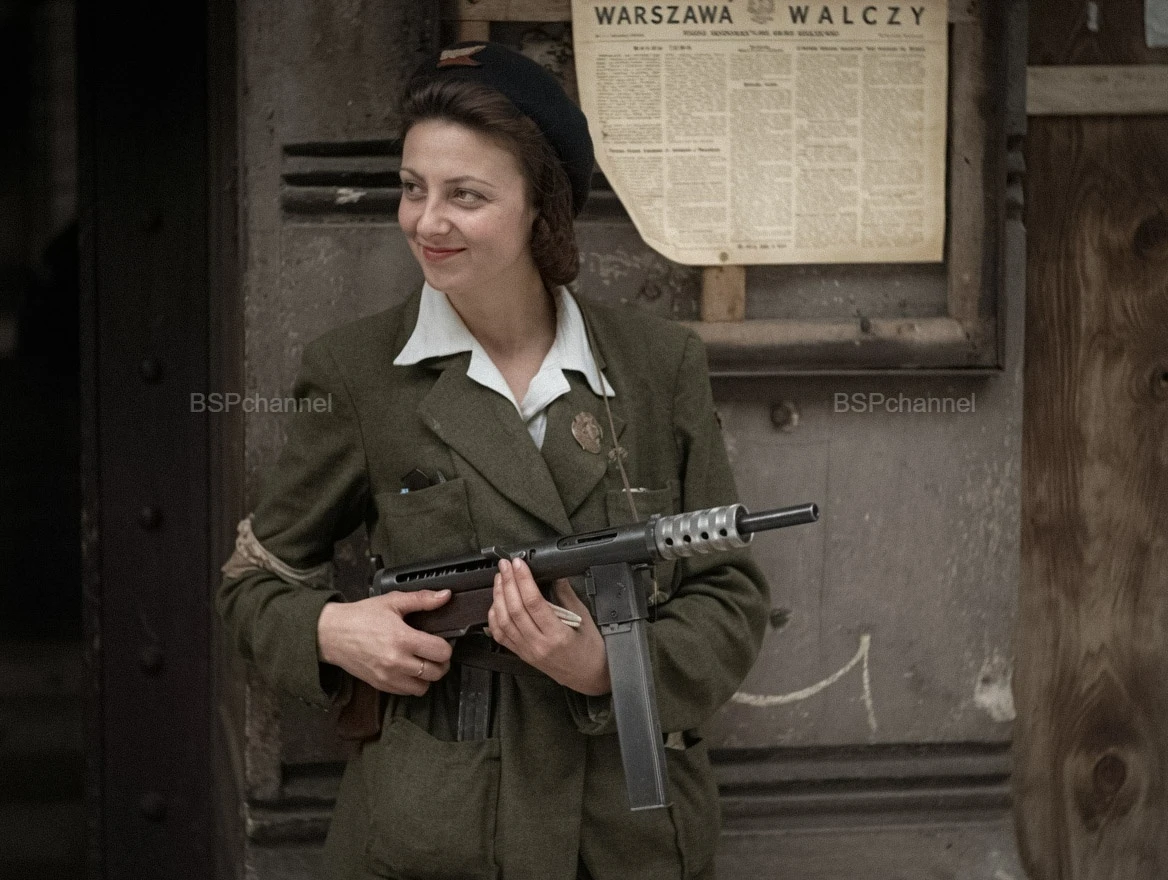
Posted on the wall behind her is an issue of
Warszawa Walczy
("Warsaw Fights"), a newspaper published by the insurgents starting September 6, 1944.
A woman waves goodbye to soldiers departing for the front lines. England, November 9, 1939. 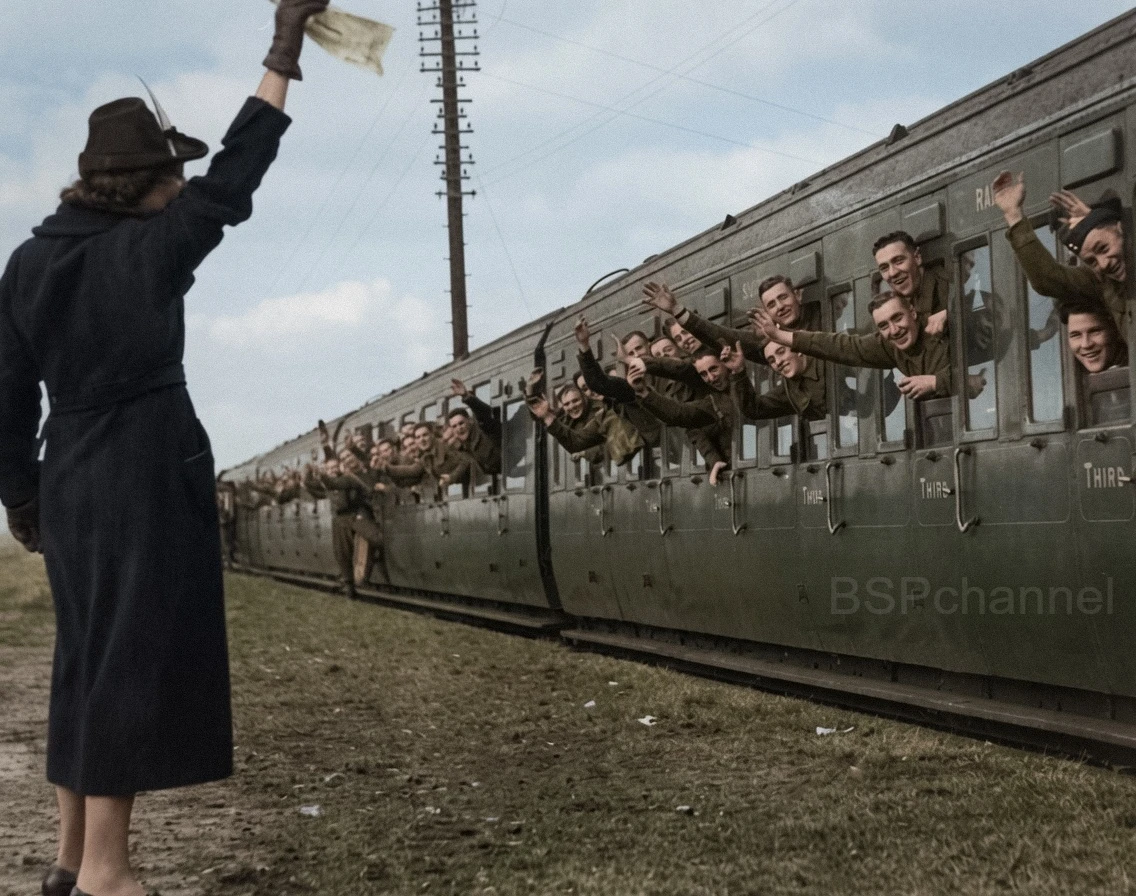
Poochie the dog, sporting a Master Sergeant insignia and a Colt M1911 pistol, sits on an aircraft wing at a flight school airbase in Lubbock, Texas, 1942. 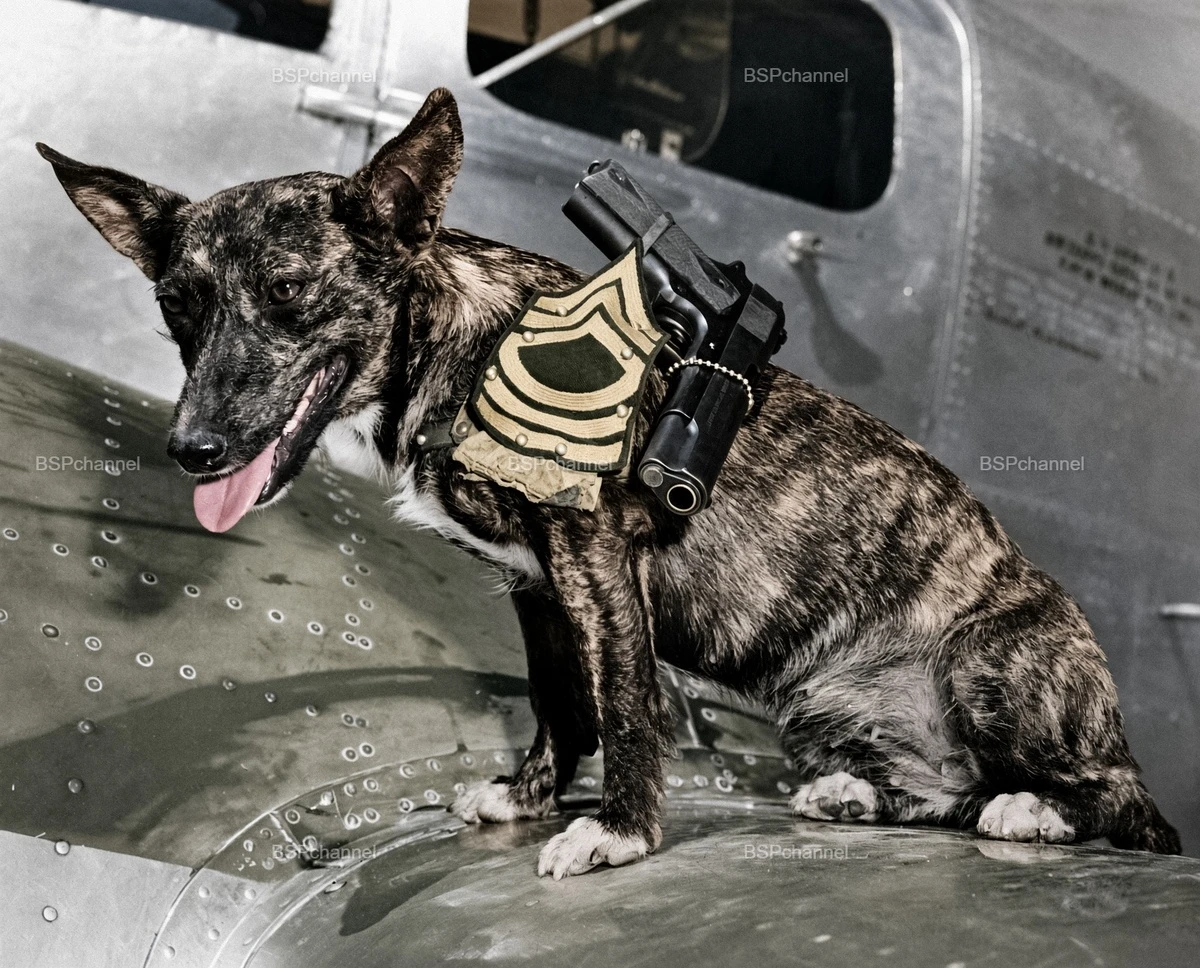
Playful photo shoots featuring unit mascots—dogs, cats, and even goats or bear cubs—were wildly popular across the Allied armed forces. Troops and pilots often tailored mini military uniforms for their pets, bestowed mock ranks, and officially listed them on unit rosters. These furry companions provided crucial emotional relief amid the harsh stresses of wartime service.
Women accused of collaborating with the Germans sit in the back of a truck in Cherbourg, their heads shaved as a public humiliation. France, July 14, 1944. 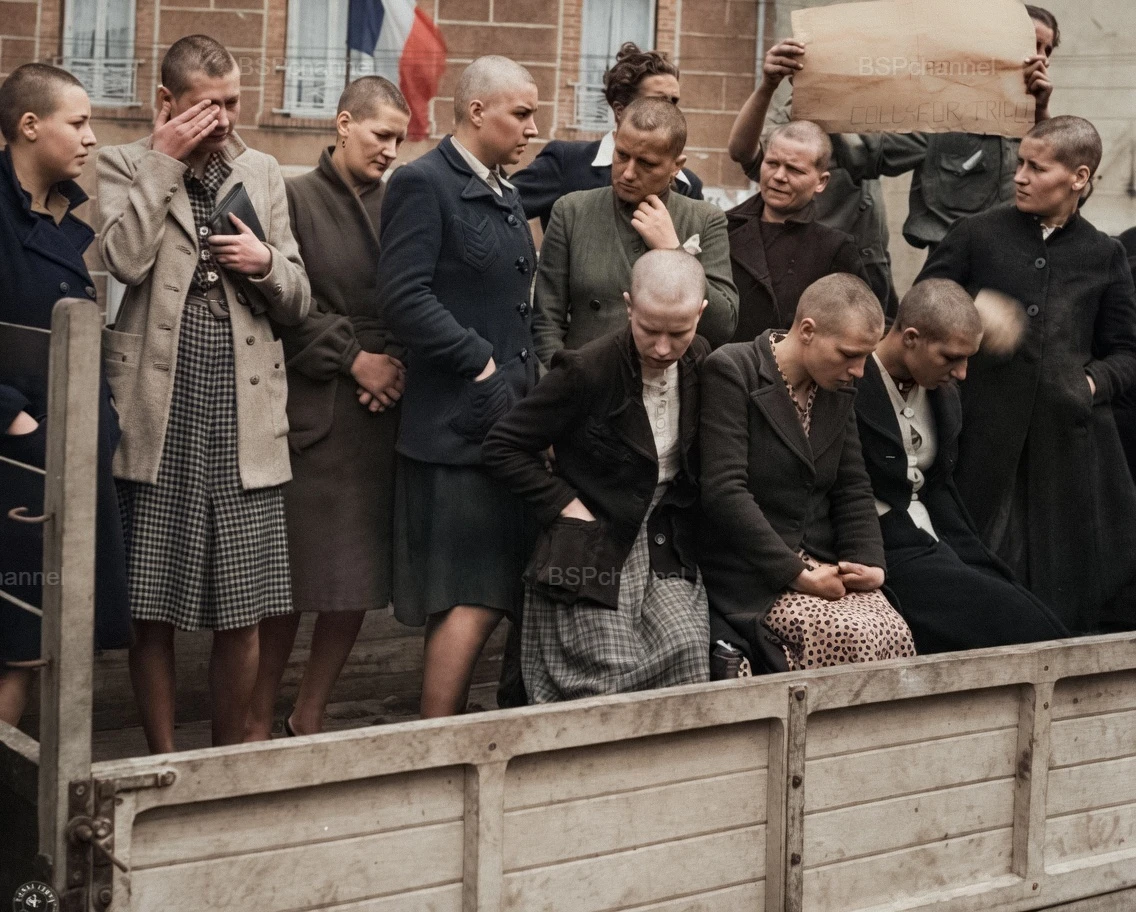
A Japanese-American family outside their home after returning from an internment camp. Broken windows and anti-Japanese graffiti reading "No Japs Wanted" mar their property. Seattle, USA, 1945. 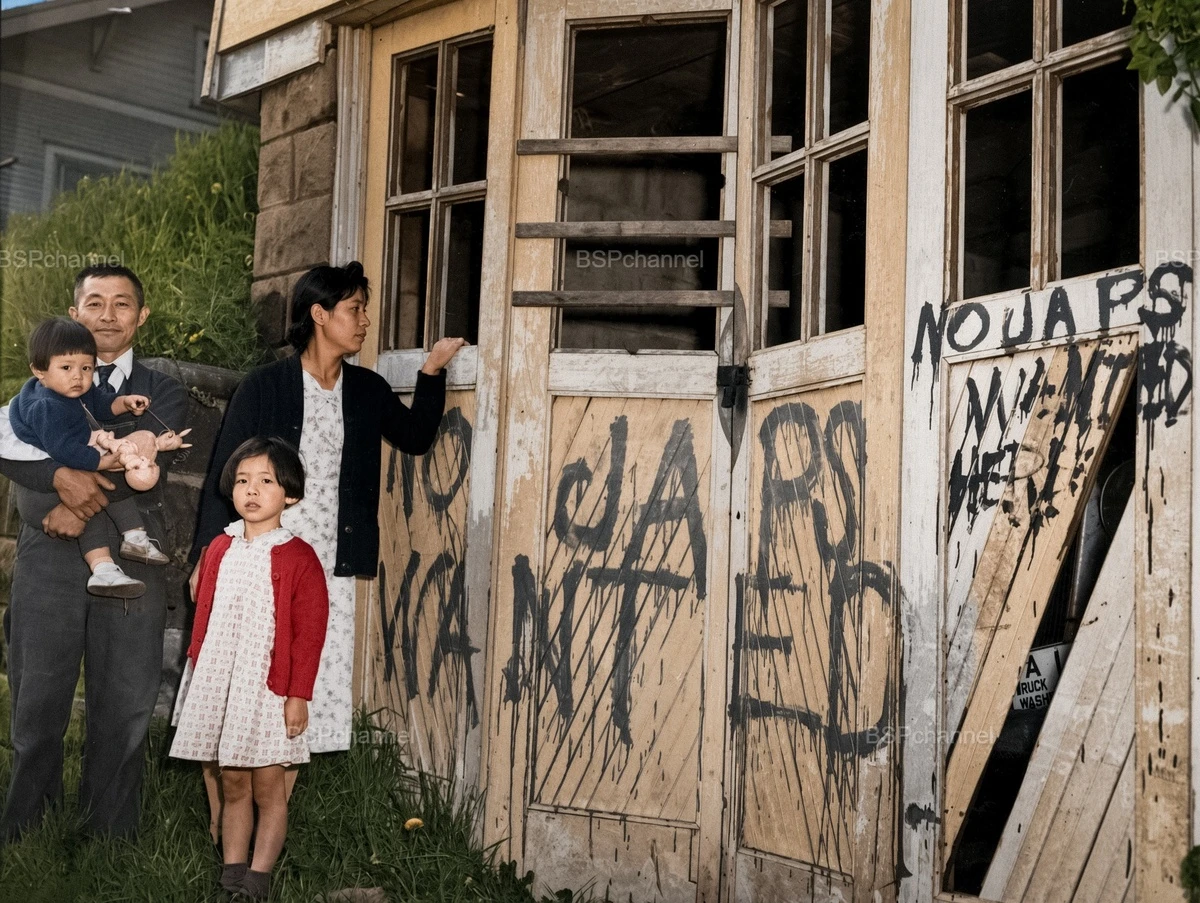
Following the attack on Pearl Harbor in 1942, President Franklin D. Roosevelt signed Executive Order 9066, forcibly relocating roughly 120,000 people of Japanese descent—two-thirds of whom were native-born American citizens—from the Pacific Coast into remote internment camps (officially designated "War Relocation Centers"). Families were given only days to pack, forcing most to sell their homes, farms, businesses, and vehicles for pennies on the dollar. Those who boarded up their homes hoping to return often found them ransacked. When the camps began closing in early 1945, returning Japanese Americans were met with hostility and intense anti-Japanese sentiment from former neighbors.
Preparations for the Trinity Test, the world's first detonation of a nuclear weapon, conducted on July 16, 1945, in New Mexico. 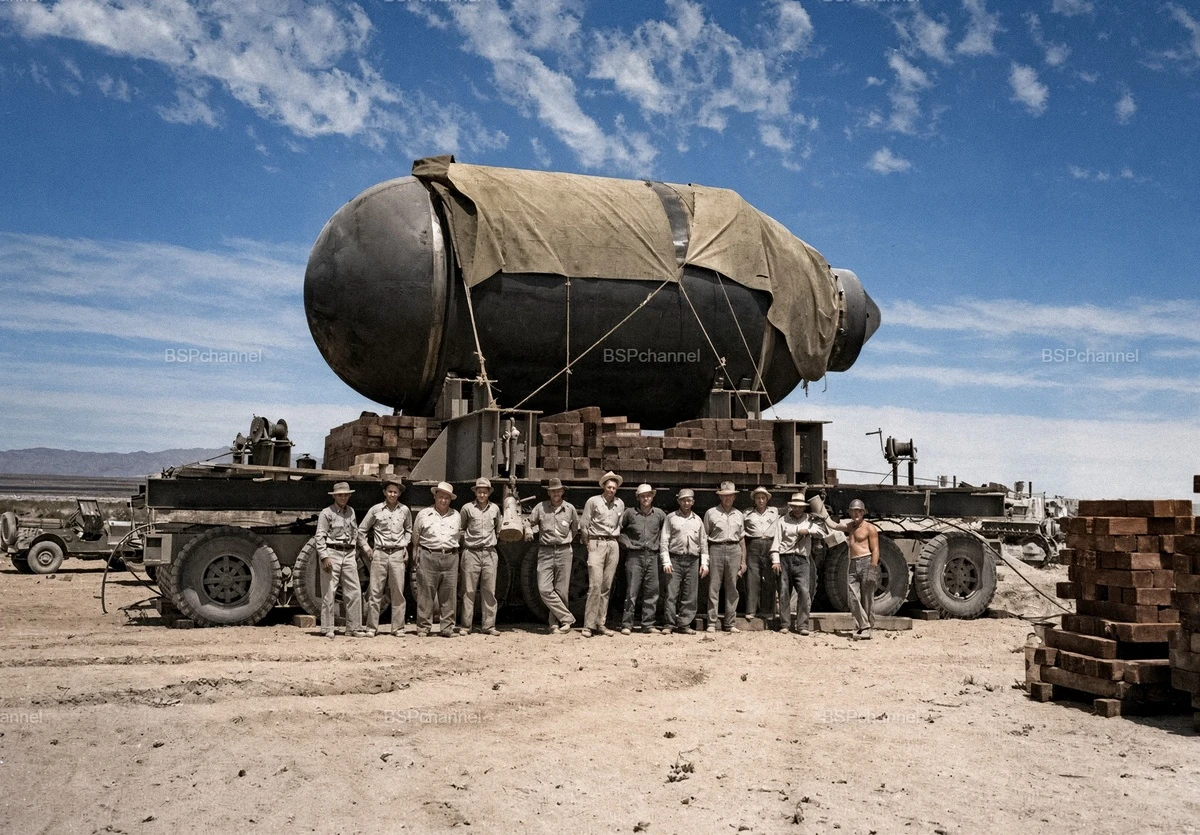
A statue overlooks the ruins of Dresden following Allied bombing raids, Germany, 1945. 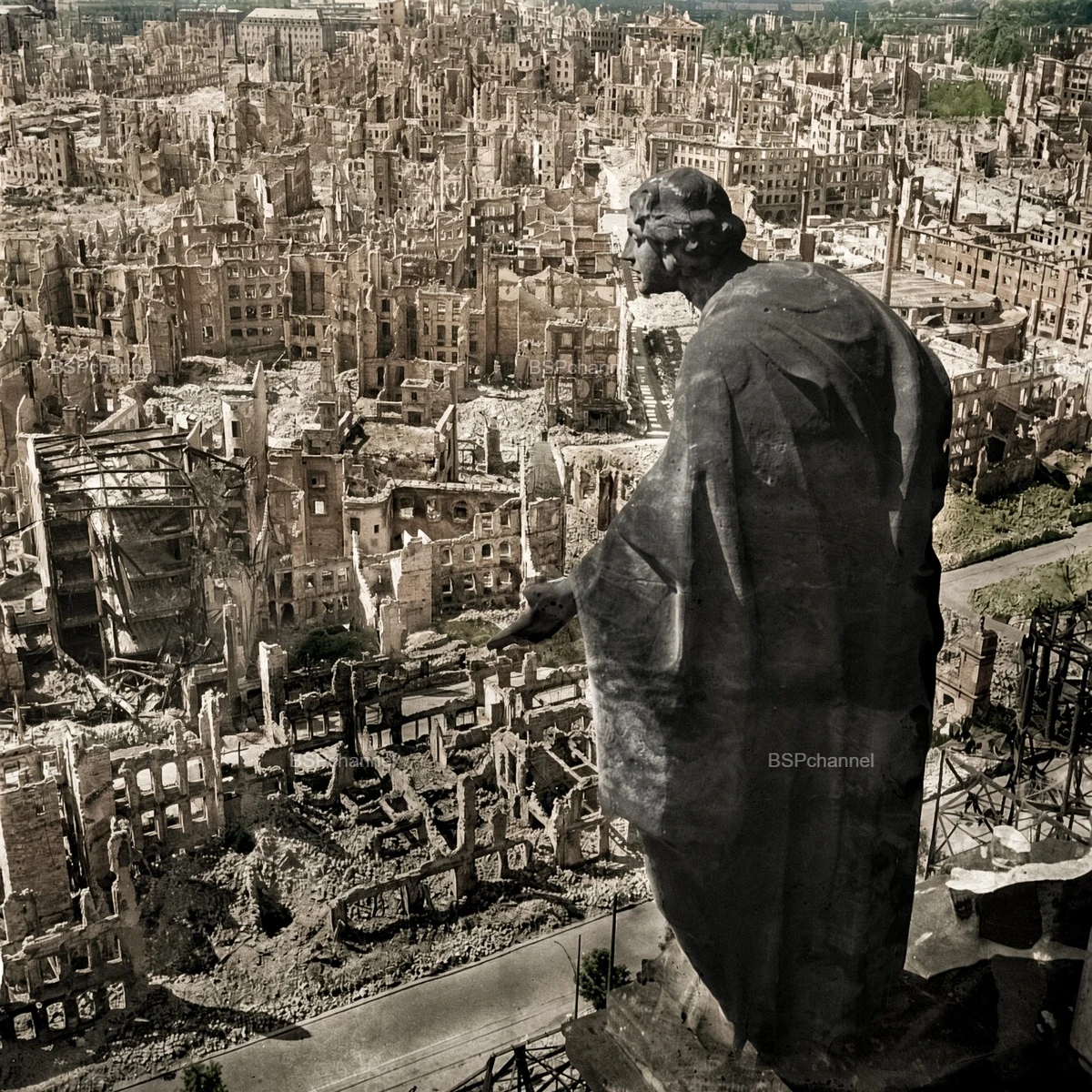
This is one of the allegorical sculptures adorning the tower of Dresden's New Town Hall. Sculpted by August Guhr, the figure represents
Güte
("Kindness" or "Goodness"), depicting a woman in flowing robes extending a hand in a gesture of blessing and mercy. The perspective is striking: the photographer climbed the damaged 300-foot town hall tower to capture a powerful contrast—the intact stone figure of Kindness in the foreground overlooking an endless sea of rubble stretching to the horizon. This was all that remained of the "Florence on the Elbe" after devastating Anglo-American air raids between February 13 and 15, 1945, which virtually erased the city and claimed between 22,700 and 40,000 lives.
Children play on a knocked-out German Panther tank (Pz.Kpfw. V) converted into a stationary pillbox on a street in post-war Berlin, 1945. 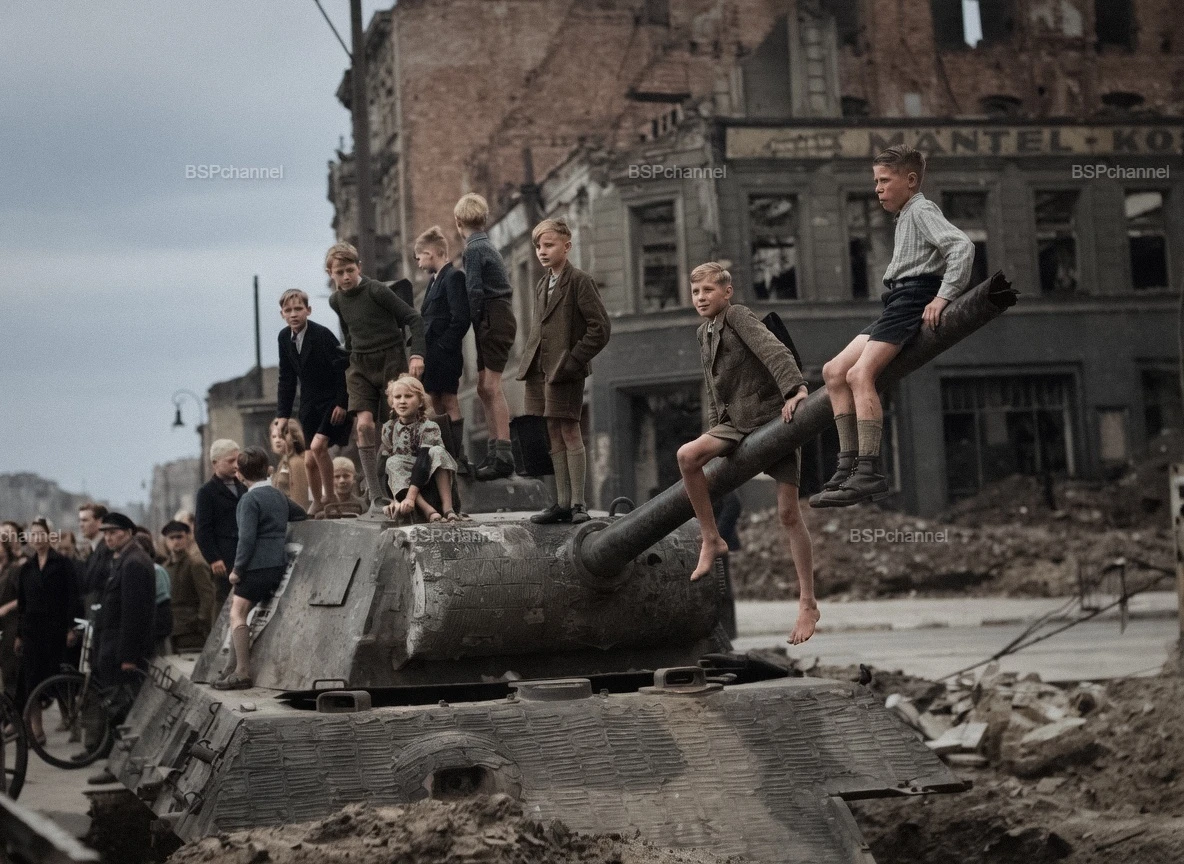
Photo: Fred Ramage