The Universe 25 Experiment: How Paradise Turned into Hell (14 photos)
In a famous social experiment, a population of mice was granted absolute paradise: unlimited food and water, total freedom from predators and disease, and ample space to breed. Yet, against all odds, the entire colony collapsed into extinction. What went wrong—and what cautionary lessons does this hold for humanity? 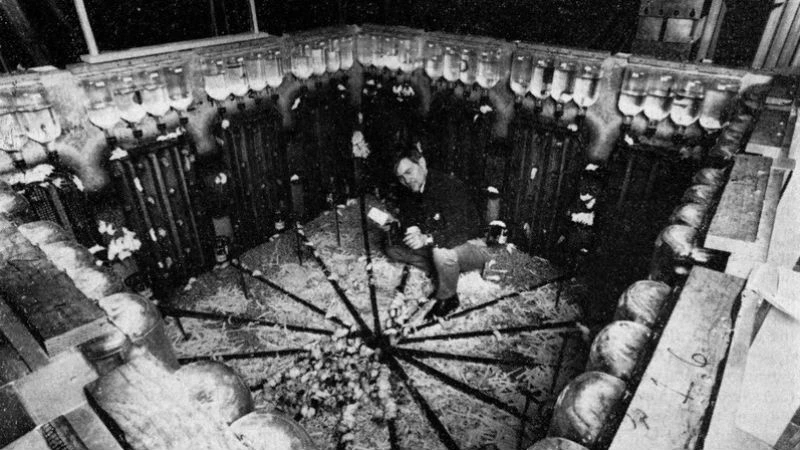
During the 1960s and 1970s, American ethologist John B. Calhoun conducted a series of groundbreaking experiments. Though he exclusively used rodents as subjects, his ultimate aim was far more ambitious: predicting the future of human society. 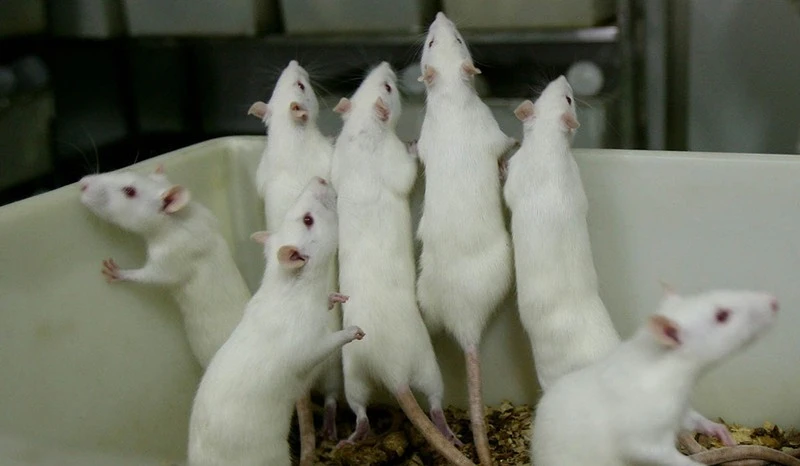
Through extensive observations of rodent colonies, Calhoun coined the term "behavioral sink" to describe the shift toward destructive and aberrant behaviors triggered by severe overcrowding.
His research struck a chord during the 1960s. As Western nations experienced a post-war baby boom, public anxiety grew over how overpopulation might shatter social institutions and unravel individual lives. 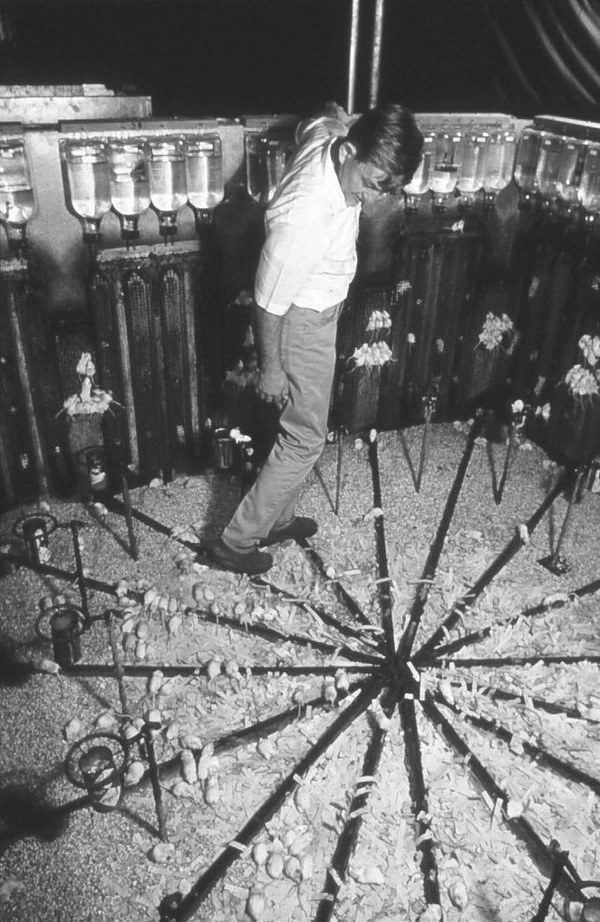
In 1972, in collaboration with the National Institute of Mental Health (NIMH), Calhoun launched his most infamous study—one that would haunt the cultural imagination for a generation.
The study, titled Universe 25, aimed to analyze how population density alters behavioral patterns. Inside his laboratory, Calhoun engineered a literal rodent utopia.
He built a custom enclosure measuring two by two meters, with walls 1.5 meters high to prevent escape. Inside, the environment was meticulously controlled: a pleasant 20 °C (68 °F), limitless food and water, and endless nesting space for females. 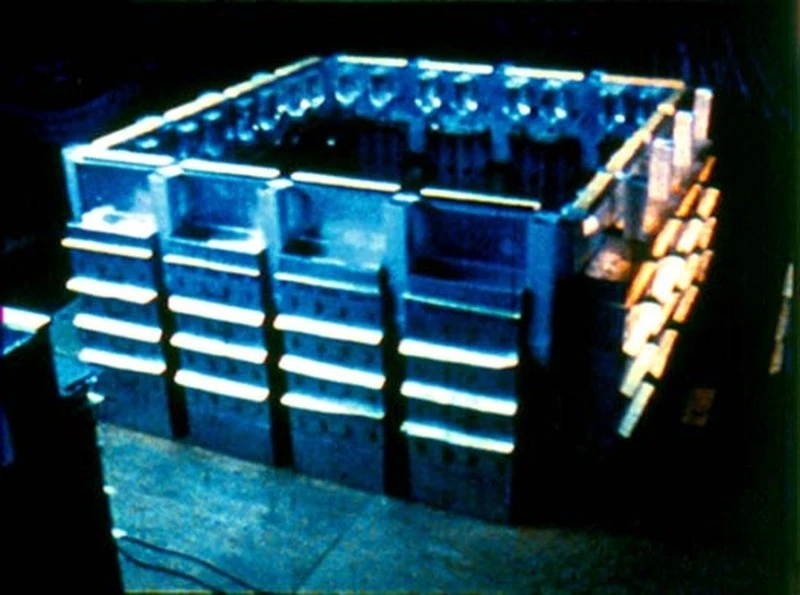
The enclosure was cleaned weekly and kept in pristine condition. Rigorous biosecurity prevented any risk of disease or predation, and veterinarians continuously monitored the mice's health.
The feeding and watering stations were designed to easily accommodate up to 9,500 mice at a single feeding and 6,144 at water dispensers without crowding.
Physical space was abundant; housing shortages would only kick in once the population exceeded 3,840. Yet the population never reached that threshold, peaking at just 2,200 mice. 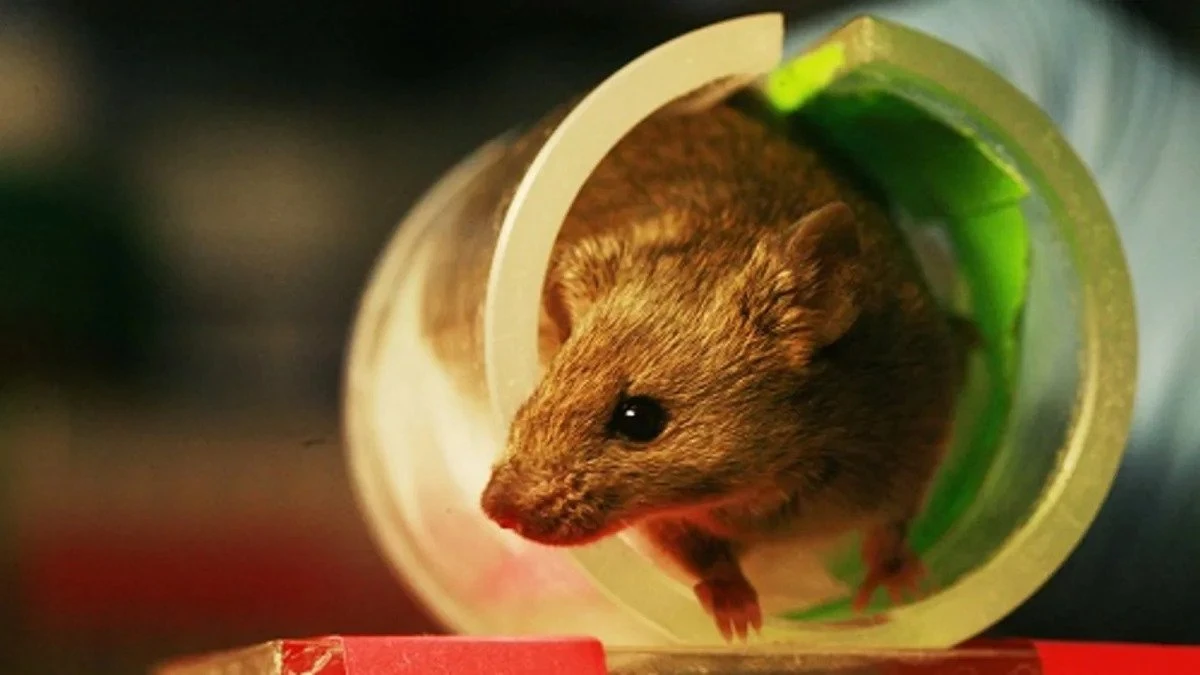
The experiment began when four pairs of healthy mice were introduced into the pen. It didn't take long for them to adjust to their new fairy-tale existence and begin multiplying rapidly.
Calhoun designated this initial adjustment period as Phase A. The birth of the first litter marked Phase B—an era of exponential growth where the population doubled every 55 days under near-perfect conditions.
By Day 315, population growth slowed dramatically, taking 145 days to double. This marked Phase C. By now, around 600 mice inhabited the enclosure, establishing a distinct social hierarchy. For the first time, spatial friction began to take its toll. 
A class of social outcasts emerged, driven out to the center of the enclosure where they frequently fell victim to random violence. Recognizable by their bitten tails, torn fur, and bloody wounds, these outcasts consisted mostly of young males unable to secure a place in the existing social structure.
This lack of social roles occurred because, in paradise, older mice survived far longer than normal, refusing to relinquish their positions to younger generations. As a result, hostility increasingly targeted the young. 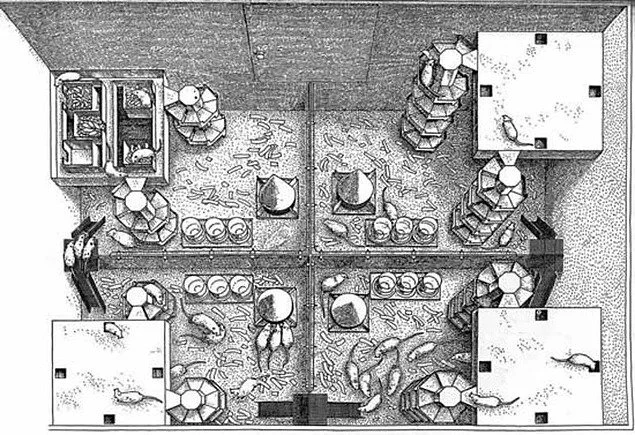
Cast out from society, these males broke down psychologically. They grew listless, abandoned their roles as protectors of pregnant females, and withdrew from social life—punctuated only by unpredictable outbursts of violence against fellow outcasts or passersby.
Pregnant females grew increasingly anxious. With males refusing to defend territory, females had to fend off random attacks themselves, becoming hyper-aggressive in defense of their nests.
Paradoxically, this aggression spilled over onto their own offspring. Mothers frequently abandoned or killed their litters, retreating to the upper nests to live as hostile recluses while refusing to mate. Birth rates plummeted, and infant mortality soared. 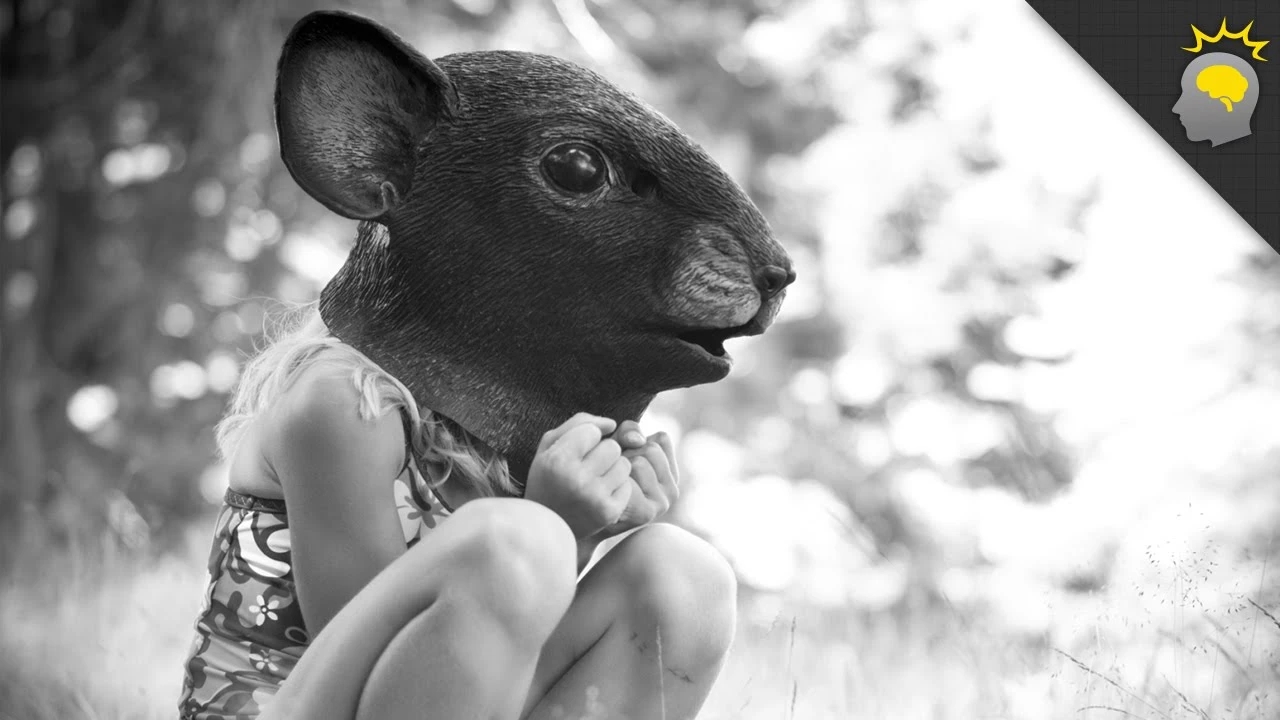
The final era of the rodent utopia soon began: Phase D, or the "Death Phase," as Calhoun dubbed it. Its defining hallmark was the emergence of a new group of males dubbed "the Beautiful Ones." These mice displayed completely unnatural behavior: they refused to fight for mates or territory, showed zero interest in reproduction, and led entirely passive lives.
The Beautiful Ones did nothing but eat, drink, sleep, and groom their fur, shunning all conflict and social responsibility. They earned their nickname because, unlike the battle-scarred rest of the population, their coats remained pristine. Their lives became exercises in pure narcissism. 
Calhoun was struck by their complete lack of libido. Among the final generations born in the pen, the Beautiful Ones and solitary, non-breeding females came to make up the vast majority.
During this final phase, the average age of the mice reached 776 days—more than 200 days past their reproductive limit. Infant mortality reached 100%, and pregnancies dropped to zero. 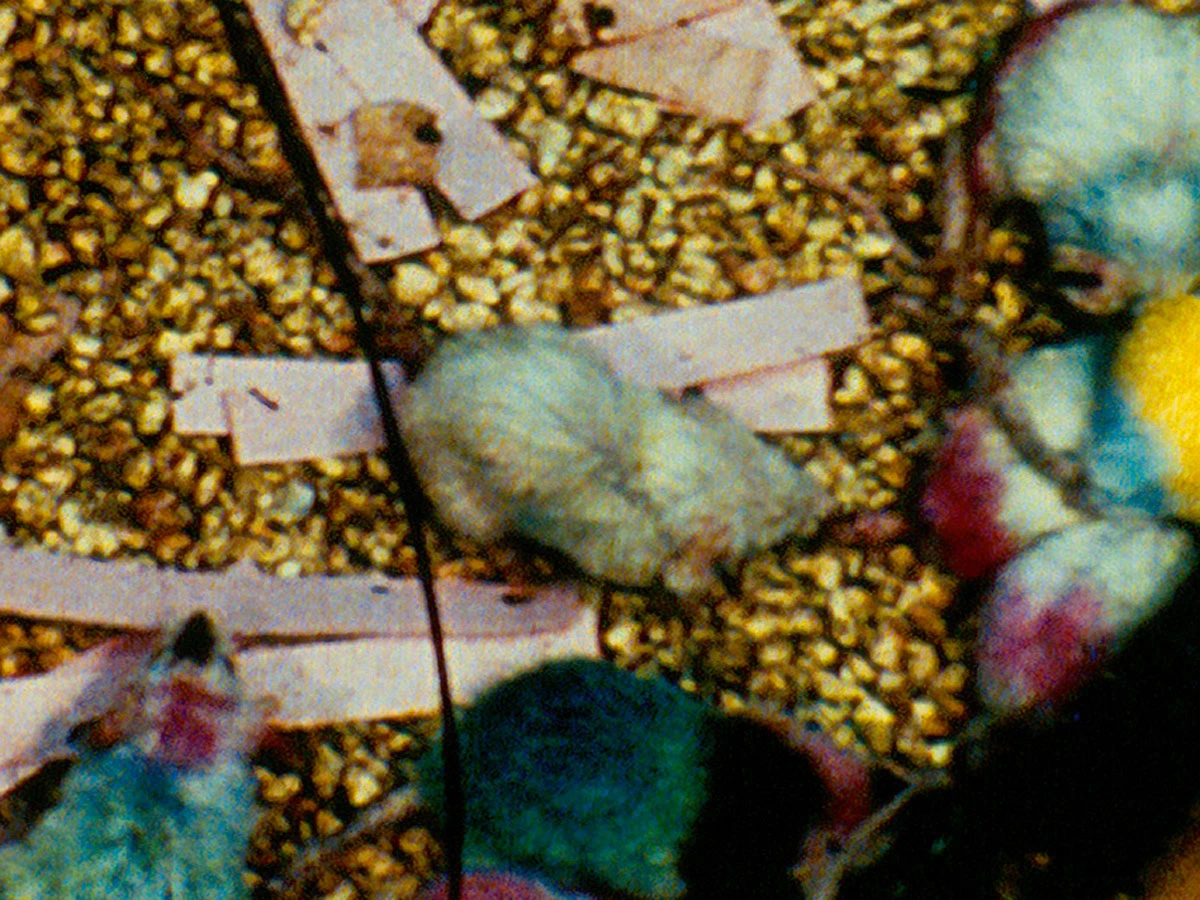
Despite an abundance of resources, the dying population exhibited hyper-sexual aberrant behaviors, unexplained violence, and cannibalism. Females abandoned or slaughtered their young. The colony spiraled into total collapse, and on Day 1,780, the last inhabitant of Universe 25 died.
Foreseeing this outcome, Calhoun and his colleague Dr. H. Marden conducted a follow-up experiment during the collapse. They extracted several small groups of mice from Universe 25 and relocated them to identical paradise conditions, but with low population density and vast open space. 
There was no overcrowding and no social friction. In essence, the researchers offered the Beautiful Ones and solitary females the exact same fresh start that had allowed the original four pairs to thrive.
Yet to the scientists' surprise, the relocated mice failed to adapt. The Beautiful Ones and secluded females refused to mate, reproduce, or rebuild a social structure. No new pregnancies occurred, and the mice simply aged and died.
The same result was observed across every relocated group: despite living in absolute luxury, every single mouse died without reproducing. 
Based on these findings, Calhoun formulated his theory of the "two deaths." The "first death" is spiritual. When younger generations could no longer find a place within the social order of paradise, a deficit of meaningful social roles developed. Open conflict erupted between old and young, driving up unmotivated violence.
In Calhoun's view, rising population density and incessant physical contact eventually produced individuals capable of only the most primitive routines. 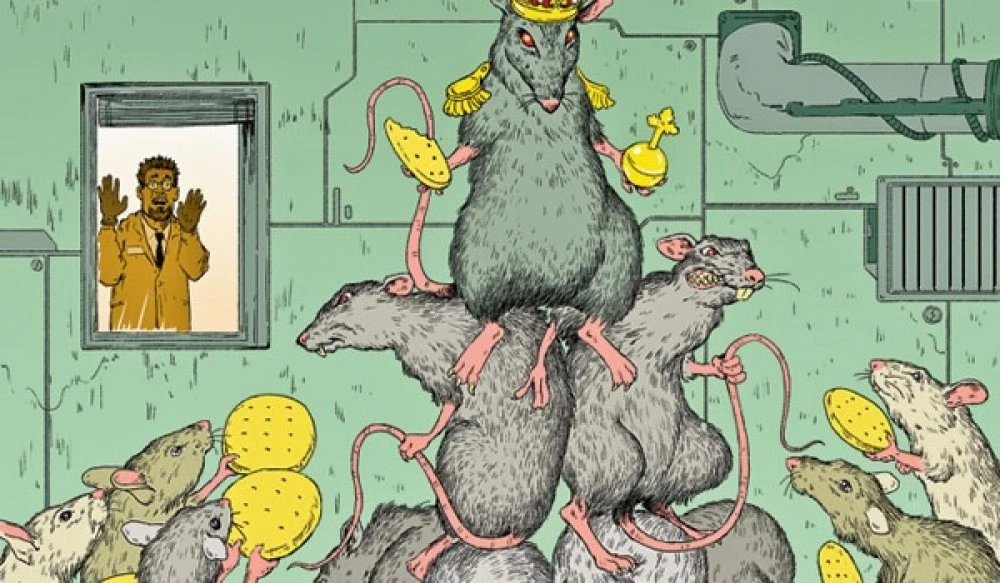
In a world of total safety and endless abundance, most mice degenerated into eating, sleeping, and grooming. For a rodent, complex behavior consists of courtship, mating, raising young, defending territory, and navigating social hierarchies. Psychologically broken, the mice abandoned all of it.
Calhoun termed this abandonment of complex behavioral patterns the "first death"—the death of the spirit. Once the first death takes hold, physical death (the "second death") is merely a matter of time. When enough individuals suffer spiritual death, the collapse of the entire colony becomes inevitable, even in paradise. 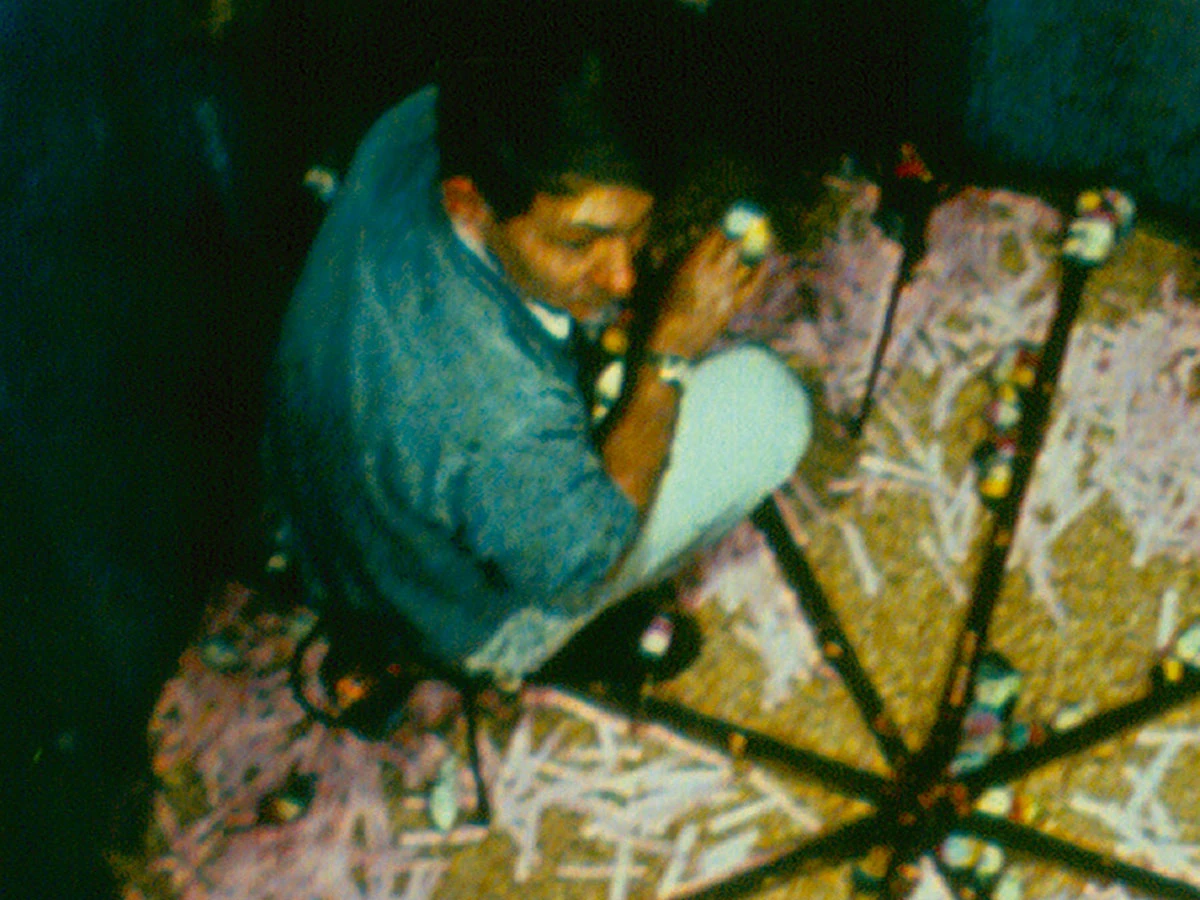
When asked why the "Beautiful Ones" emerged, Calhoun drew a direct parallel to human nature, arguing that coping with challenge, friction, and stress is fundamental to meaningful life.
Mice that surrendered to comfort and chose an existence devoid of struggle became withdrawn narcissists, capable only of eating and sleeping. By retreating from effort and friction, they lost the capacity for complex behavior altogether.
Calhoun drew disturbing parallels to modern society, describing individuals who go through the motions of basic physical survival while spiritually dead—devoid of creativity, drive, and the resilience needed to face adversity. Shrinking from challenge and fleeing the tension of real life represents the "first death," which inevitably paves the way for the second: the death of the physical self.
https://youtu.be/0Z760XNy4VM
One question remains: why was the study named Universe 25? It was Calhoun's twenty-fifth attempt to construct a rodent paradise. Every single one of the previous twenty-four had ended the exact same way...