Permafrost and Thin Air: How and Why Chinese Engineers Built the World's Highest Railway (9 Photos)
Most railways play it safe. They wind through river valleys, skirt around mountain ranges, and generally stay clear of places where even breathing is a struggle. But one railway seems to disregard those rules entirely. 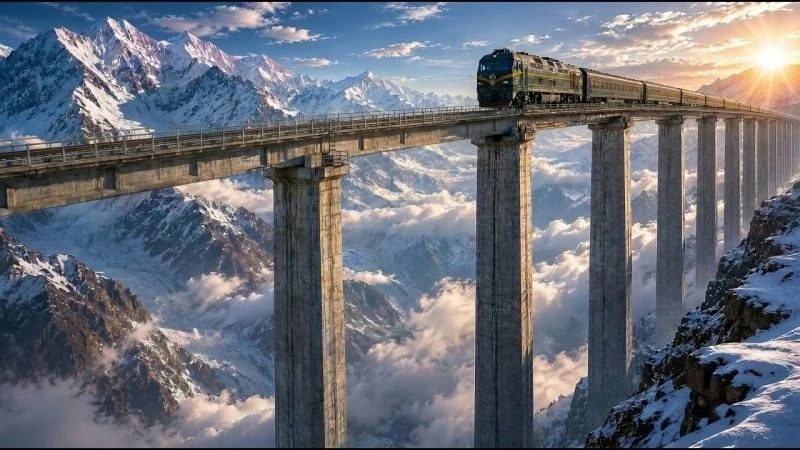
The Qinghai–Tibet Railway carries everyday passengers straight onto the Tibetan Plateau, reaching a dizzying peak altitude of 5,072 meters above sea level. Crossing the Tanggula Mountains at the pass of the same name, it holds the undisputed title of the highest railway on Earth by a wide margin. 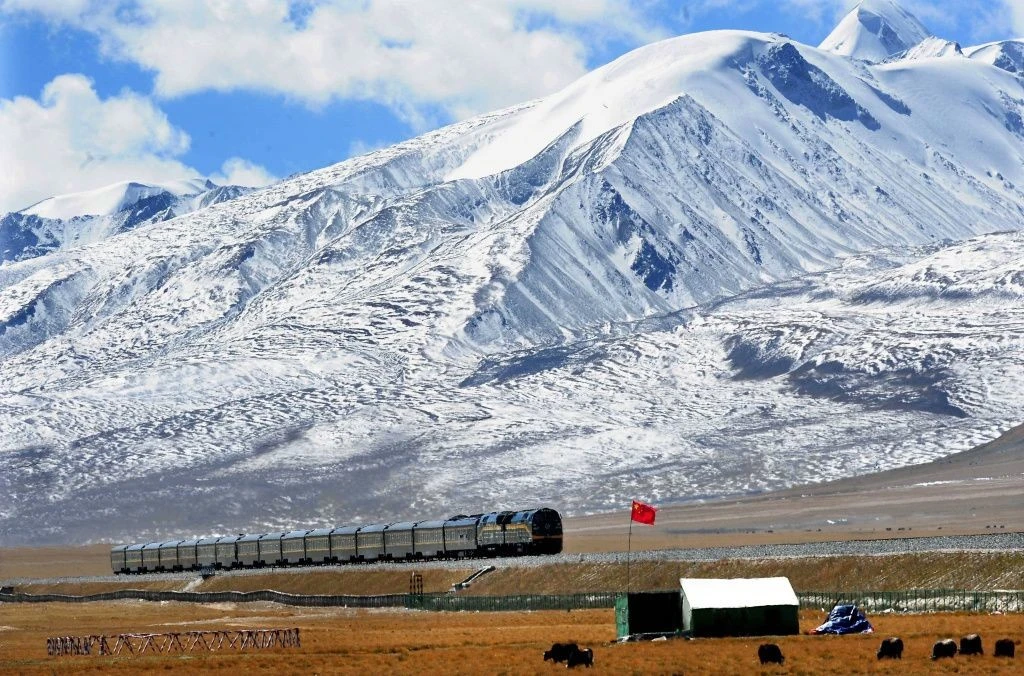
To put that figure into perspective, the tracks here sit higher than the summit of Mont Blanc—the highest peak in the Alps—as well as any mountain top in the Rockies or anywhere in the contiguous United States. Travelers spend vast sums and immense effort climbing to elevations that this train simply cruises right through.
So how did this line achieve its world record—and what did it take to build and operate a railroad literally on the "Roof of the World"? 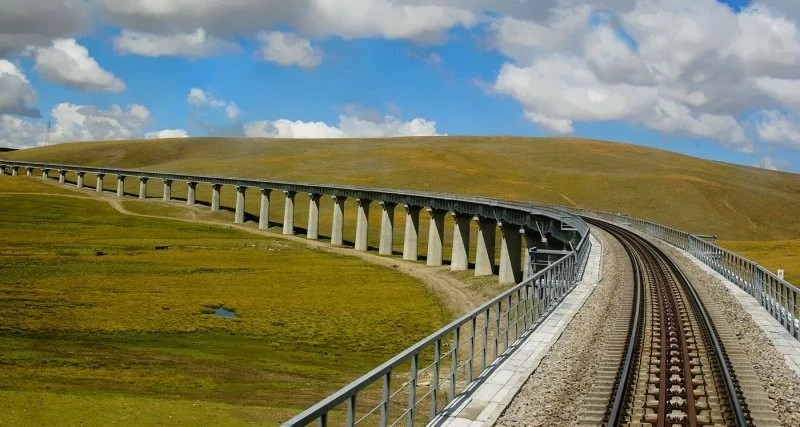
The Qinghai–Tibet Railway, also known as the Qingzang Railway, spans 1,956 kilometers from Xining, the capital of China's Qinghai province, southwest to Lhasa, the capital of the Tibet Autonomous Region. 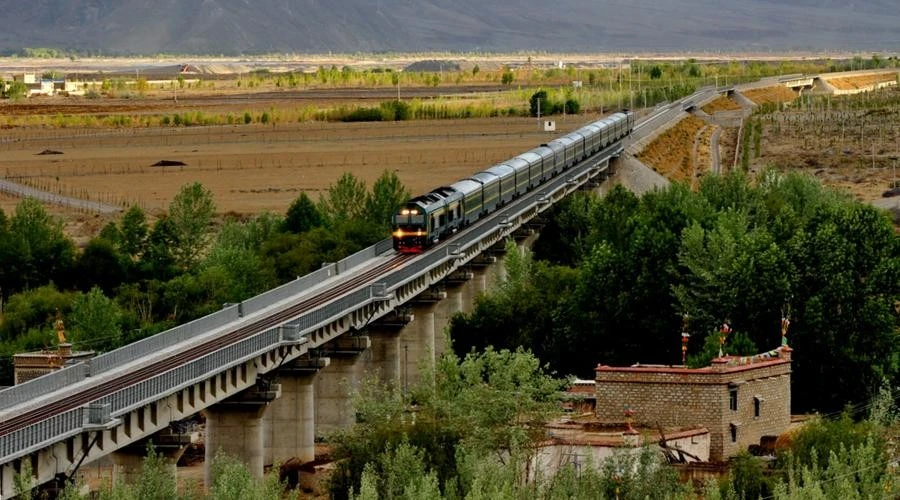
The railway's highest point sits at the Tanggula Pass—5,072 meters above sea level—making it the highest stretch of train track anywhere on the planet. Nearby stands Tanggula Station at 5,068 meters, officially recognized as the world's highest railway station.
It is an unstaffed station located in a spot so remote and oxygen-starved that passing trains barely even slow down. Nor is this a brief ascent: roughly 960 kilometers of the route—nearly half the entire line—run at altitudes exceeding 4,000 meters. 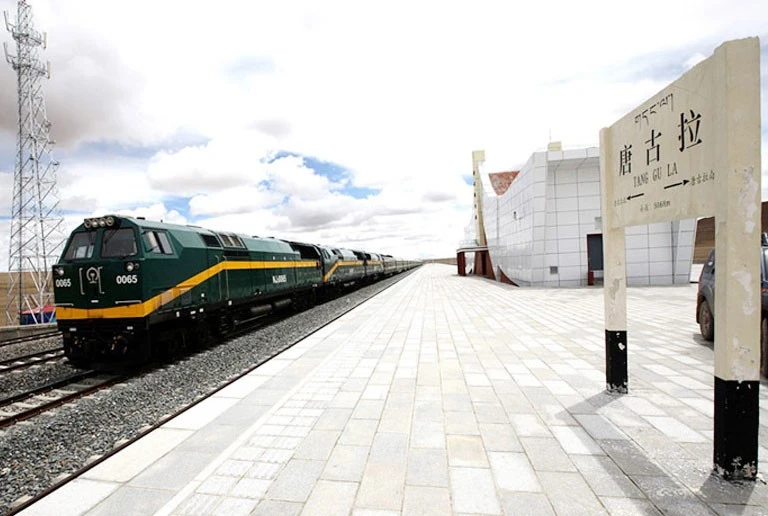
The most formidable section, connecting Golmud to Lhasa, was constructed between 2001 and 2006. In July 2006, the entire line was officially opened to traffic.
Laying tracks at such extreme altitudes meant tackling engineering nightmares that most builders would have preferred to walk away from.
About 550 kilometers of the track pass over permafrost—the longest continuous stretch of railway built over frozen ground anywhere in the world. Any thawing of the soil threatened to deform the embankment and warp pristine rails into a twisted mess.
Engineers had to pioneer creative workarounds. Large portions of the line were raised on elevated viaducts, while special ground-cooling pipes were driven beneath the embankment to keep the permafrost permanently frozen. 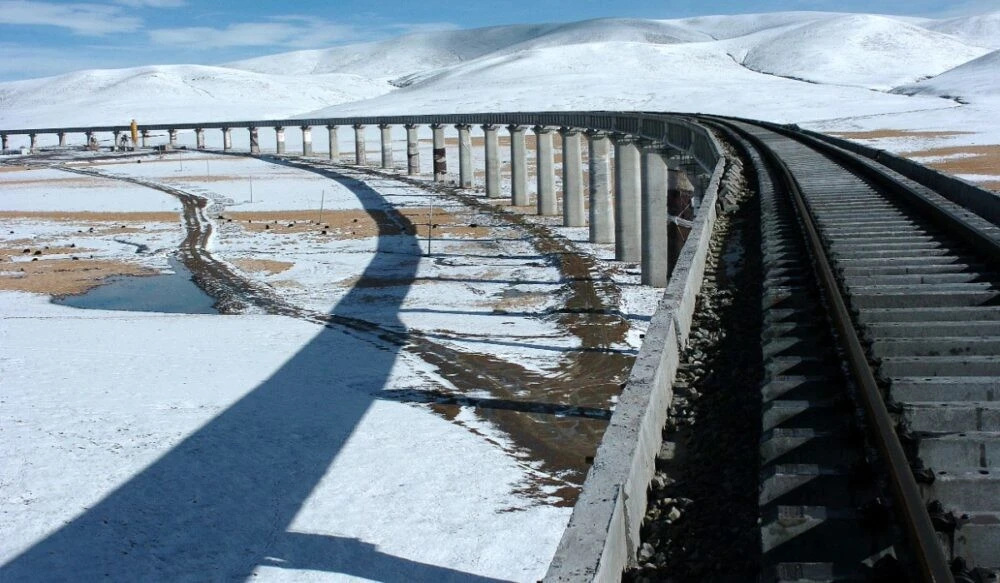
At an elevation of 4,905 meters, crews blasted through the Fenghuoshan Tunnel—the world's highest railway tunnel. 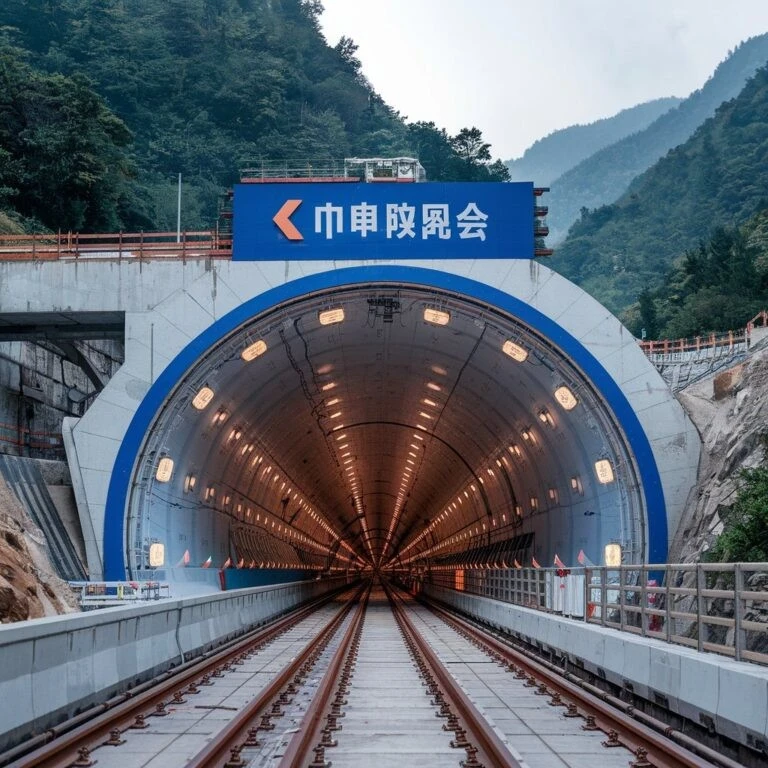
Another monumental feat was the Qingshui River Bridge, which stretches for 11.7 kilometers across the uninhabited Hoh Xil basin. Part of the bridge was specifically engineered as an elevated corridor so migrating herds of Tibetan antelope can pass safely underneath.
Around 100,000 workers helped construct the line, relying on bottled oxygen at high-altitude work camps. In an astonishing achievement, not a single construction worker died from altitude sickness throughout the entire build.
A trip along this route offers a vivid demonstration of just how thin the air gets at high elevations.
At these altitudes, the atmosphere contains only about half the oxygen available at sea level. For unacclimated travelers, that is more than enough to trigger dizziness, pounding headaches, and severe mountain sickness.
To cope, the train cars are custom-built for extreme conditions. The carriages are fully sealed and pressurized, with supplemental oxygen continuously pumped into the air. Every passenger seat also features a personal oxygen outlet—much like an airplane.
The windows feature special UV-blocking coatings to shield passengers from the intense high-altitude sunlight. Medical staff are on board in case anyone falls ill, and travelers are strongly advised to acclimate beforehand.
The full journey from Xining to Lhasa takes roughly 21 hours. Along the way, passengers are treated to views of turquoise lakes, sweeping glaciers, and grazing herds of wild yaks and Tibetan antelopes across a landscape that, for long stretches, appears entirely devoid of human life. 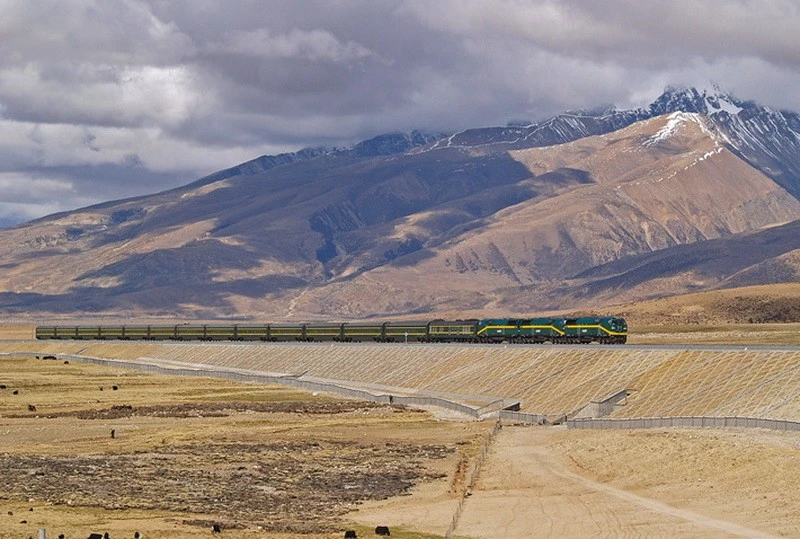
For most of railway history, South America claimed the title of highest tracks. The lines winding through the Andes of Peru and Bolivia held top spots for decades and were impressive feats in their own right.
Then, in 2006, the Qinghai–Tibet Railway arrived and surpassed them by nearly 250 meters—a significant margin when every meter of altitude brings thinner air.
Today, the gap between this line and other high-altitude railways is almost dramatic when looking at the numbers.
Europe's pride, the Jungfrau Railway in the Swiss Alps, falls remarkably short by comparison: its summit lies over 1,600 meters lower than the Tanggula Pass—a difference equivalent to the height of an entire mountain. 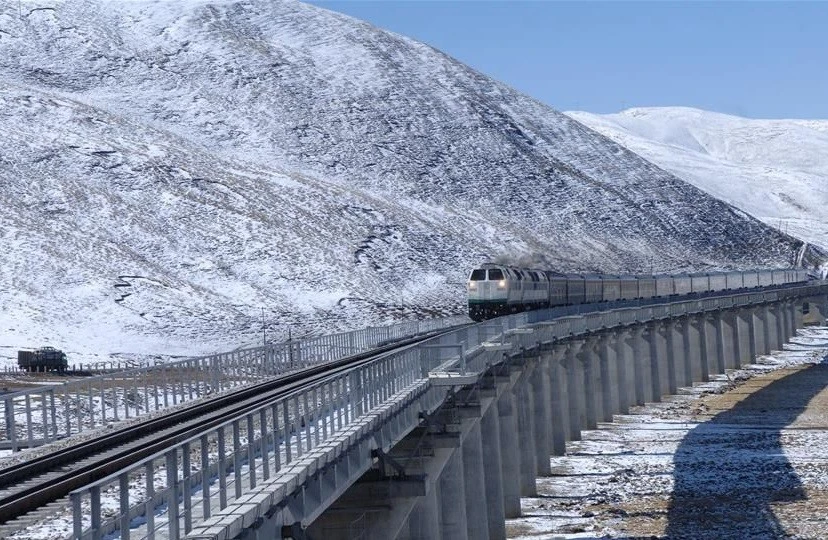
Why spend so much time and money running trains literally through the clouds? In a word: connectivity. Before the railway, traveling overland from mainland China to Tibet was an arduous, multi-day journey, leaving the region among the most isolated on the continent.
The new line cut travel time to under 24 hours and connected Lhasa directly to China's vast national rail network for the first time. The result was a dramatic surge in trade and tourism, making passenger travel far more accessible.
The Qinghai–Tibet Railway is rightfully celebrated as a monumental engineering achievement. Yet its significance goes far beyond technology alone. It carries immense political and cultural weight, binding this remote frontier region ever closer to the rest of the country.
Today, modern trains cross Earth's highest and harshest plateau as a routine daily service—and no other railway on the planet comes close to reaching its heights.