At 24, This German Raised $45 Billion Betting on Doomsday—Then Lost $35 Billion Right at His Own Wedding (10 photos)
At 15, Leopold Aschenbrenner left Berlin for New York—alone, across the ocean, without his parents. At 19, he graduated at the top of his class at Columbia University. At 22, he lost his job at OpenAI. At 23, he penned a manifesto that took Silicon Valley by storm. At 24, he turned $225 million into $45 billion. And then, over six whirlwind days, he lost $35 billion of it—right in the middle of his own wedding. Here is how a German wunderkind became Wall Street’s premier AI prophet, and what happens when the market grows tired of waiting for the apocalypse. 
Berlin, Columbia, Doomsday
Aschenbrenner was born to two Berlin doctors around 2001 or 2002. Whizzing through school ahead of his peers, he was enrolled at Columbia University in New York by the time he was 15. 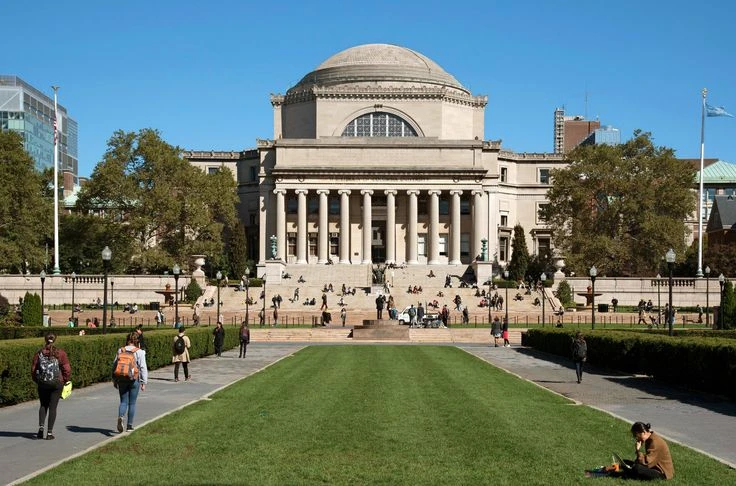
Columbia University in New York City is one of the oldest institutions of higher learning in the U.S., founded in 1754.
At Columbia, he threw himself into effective altruism—a philosophical movement focused on finding the most impactful ways to help humanity—while authoring academic papers on existential risks to civilization. At 19, he graduated at the top of his class. In an official announcement, an economics professor noted:
"Leopold's academic achievements surpass those of any student in the department over the last 20 years." 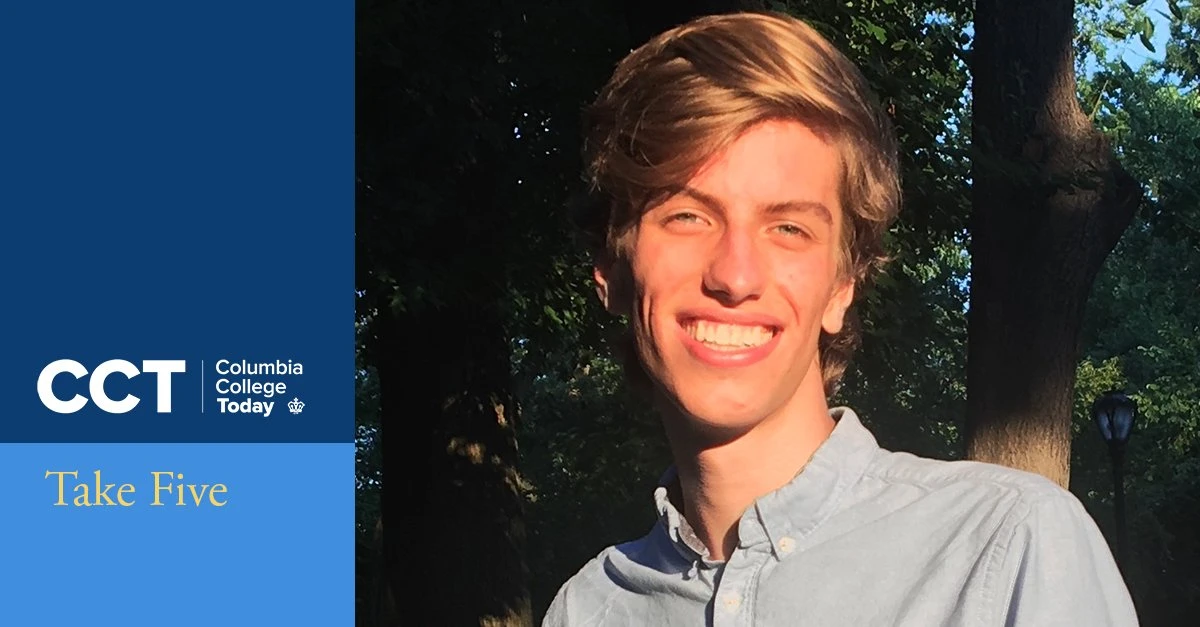
Aschenbrenner, class of 2021. At 19, the top student at Columbia University.
FTX, OpenAI, and Fired Over a "Leak"
After Columbia, Aschenbrenner worked at Oxford before landing at the FTX Future Fund, the philanthropic arm of Sam Bankman-Fried’s crypto exchange. But in November 2022, FTX collapsed in one of the biggest fraud scandals in crypto history. Aschenbrenner had already managed to jump ship before the implosion. 
OpenAI is the creator of ChatGPT. Aschenbrenner was fired from the company in April 2024.
In 2023, he joined OpenAI’s Superalignment team, which focused on controlling and securing future superintelligence. Internally, he drafted a memo to the board warning about Chinese espionage and security vulnerabilities. In April 2024, he was ousted—officially for leaking confidential information, a charge Aschenbrenner denies. Scott Aaronson, a computer scientist and former OpenAI colleague, wrote that Aschenbrenner was "trying to do the right thing" and that the company had "overreacted."
165 Pages That Changed Everything
Unemployed in the summer of 2024, Aschenbrenner published a 165-page manifesto titled
Situational Awareness: The Decade Ahead
. Initially released as a PDF, it was later posted as a series of essays online. 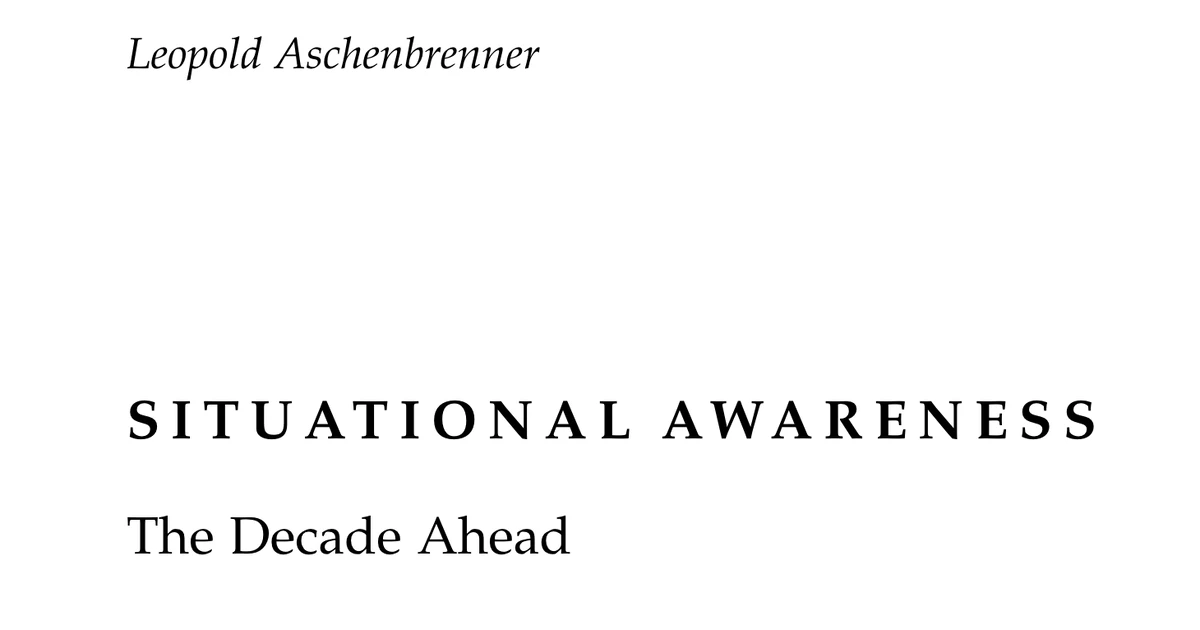
The cover of the manifesto
Situational Awareness: The Decade Ahead
, published by Aschenbrenner in June 2024.
His core argument: AI is advancing far faster than most people realize. By 2027, AI systems will outperform humans at most cognitive tasks. The U.S. government must treat this as a modern Manhattan Project—an effort akin to building the atomic bomb—and throw full national security resources behind AI.
Virtually everyone in tech read it. Silicon Valley quickly seized on the document, with praise pouring in from top venture capitalists to Ivanka Trump. Critics naturally pushed back, arguing the young author was far too confident in his predictions, but the essay became the talk of the town regardless.
$225 Million to Get Started
In September 2024, Aschenbrenner launched a hedge fund named after his manifesto: Situational Awareness LP. He didn't have a single day of experience managing money. It didn't matter—investors flocked to him anyway.
The initial capital totaled roughly $225 million. Backers included Patrick and John Collison, founders of payment giant Stripe; Nat Friedman, former CEO of GitHub; and AI investor Daniel Gross. Later, trading titan Jane Street joined in. Aschenbrenner poured almost all of his own life savings into the fund as well. 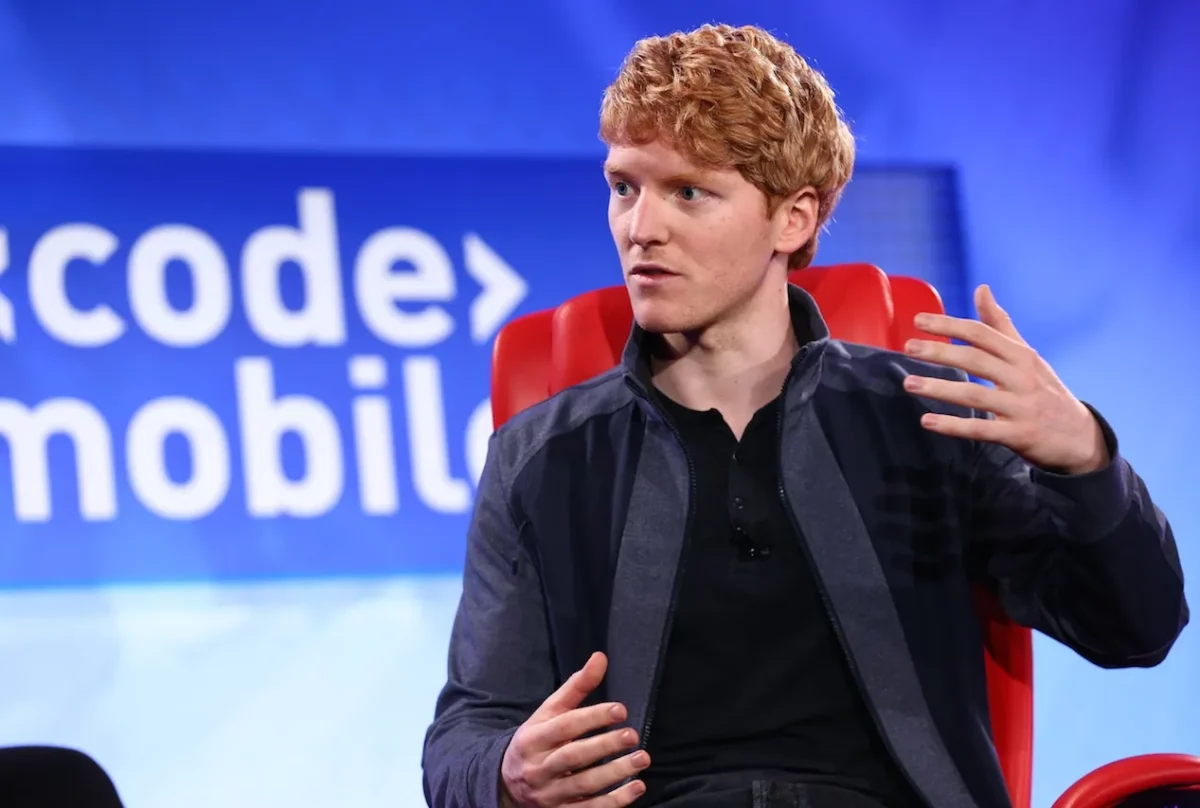
Patrick Collison co-founded Stripe alongside his brother John, building a payment processing company valued at over $90 billion.
The strategy flowed directly from the manifesto: buy the "picks and shovels" powering the AI explosion—memory chips, data centers, power utilities—while shorting legacy software companies that AI threatened to make obsolete. Key positions included SanDisk, Micron, Nebius Group, CoreWeave, and Bloom Energy.
From $225 Million to $45 Billion
The trade paid off massively. In 2025, the fund returned roughly 47% net of fees. Then momentum went into overdrive. By late June 2026, it was up 439% in just six months—and over 1,000% since inception. Assets under management exploded from $225 million to $45 billion. 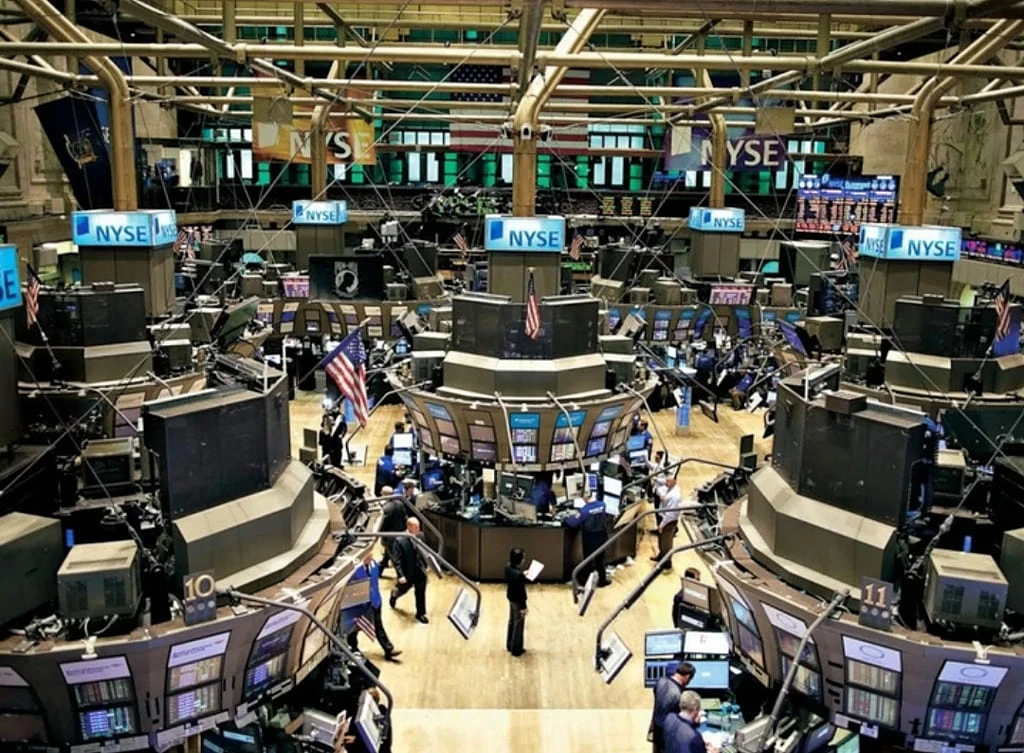
In just 18 months, Situational Awareness grew into one of the largest hedge fund launches in Wall Street history.
A team of just twelve people managed a pool of capital that takes other firms decades to build. Aschenbrenner’s quarterly investor letters became must-read market events: Wall Street pored over his holdings to see where the AI market was heading next.
Yet there was a catch—one discussed in hushed tones during the boom. The fund was running leverage as high as 400%: four borrowed dollars for every dollar of equity, backed by prime brokers like Bank of America, Goldman Sachs, and JPMorgan. Leverage supercharged the gains, but it threatened to do the exact same to losses.
Six Days in July
In July 2026, AI stocks plummeted. SanDisk crashed 47%, Micron dropped 29%, Bloom Energy plunged 32%, Nebius fell 31%, and CoreWeave tumbled 35%. To make matters worse, his short positions on software companies moved against him, too. Both ends of the portfolio were bleeding heavily at the same time.
On July 24, Aschenbrenner wrote to investors calling it the single best entry point since early the previous year, encouraging them to commit fresh capital starting August 1. Just six days later, prime brokers issued margin calls demanding immediate collateral. The alternative was liquidation. 
Ken Griffin's Citadel, one of the world's largest hedge funds, stepped in as the buyer of the distressed portfolio.
On July 30, 2026, the fund's entire public equity portfolio—roughly $16 billion—was sold off in a single block trade before the market opened. The buyer was Ken Griffin’s Citadel, taking the block at a nearly 10% discount. In a matter of days, the fund surrendered about $35 billion in value. Assets under management dwindled to around $10 billion, anchored mostly by a $5 billion stake in Claude creator Anthropic.
Even after the crash, the fund remained up 80% for the year. But that was cold comfort after seeing $35 billion evaporate in under a week.
An Apology Letter—and a Wedding
Aschenbrenner wrote to his investors: "We let you down this month. We came closer to a permanent loss of capital than is acceptable to us." He took full responsibility and vowed to eliminate leverage from the fund's public portfolio.
The drama unfolded right as Aschenbrenner was preparing for his wedding—a multi-day affair in Carmel-by-the-Sea along the California coast, complete with conference-style panel sessions for a guest list composed of America's AI elite. His bride, Avital Balwit, serves as chief of staff to Anthropic CEO Dario Amodei. According to one attendee, a wedding toast even included a tongue-in-cheek nod to Ken Griffin and Citadel. 
Leopold Aschenbrenner with his bride.
Just weeks later, the fund poured $400 million into Source Foundry, a startup building tooling for AI chip manufacturing. The signal was loud and clear: he wasn't backing down from his thesis.
The Takeaway
Aschenbrenner is no fraud. He put his own skin in the game and took the hit right alongside his investors. But his story offers a snapshot of our era.
In 1998, Long-Term Capital Management lost around $4.6 billion. It was run by Nobel laureates in economics, yet leverage proved its undoing. In 2000, the dot-com bubble burst. The internet did end up changing the world, but tech stocks crashed long before the thesis fully played out. 
The bet on AI infrastructure proved directionally right—but structurally fragile.
In the days following the forced liquidation, the stocks rebounded swiftly. CoreWeave surged 41% off its lows, while SanDisk bounced back 27%. The exact bottom occurred on the very day of the fire sale. Citadel bought low and quietly unloaded over 80% of the positions over the following weeks. The difference between Aschenbrenner and Griffin wasn't the quality of their research—it was who ran out of credit first.
Prophecy itself became capital; all it took was a compelling case that one could foresee the future. The money arrived long before the future did—and 400% leverage simply lacks patience.
What do you think: is Aschenbrenner's story the downfall of a prophet, or the market asserting reality over hype?