Animal Paws and Claws: 50 Photos That Will Surprise Even Those Who Have Seen It All (50 Photos)
You could stare at a kitten’s adorable little paws forever. But what happens when you step beyond ordinary house pets and explore what evolution can do when firing on all cylinders? A great horned owl’s talons crush prey with the power of a mechanical vise. An African jacana’s toes spread so wide the bird can stroll across water lily pads without ever sinking. The bizarre aye-aye fishes out grubs hidden beneath tree bark using a single, freakishly elongated finger. We’ve rounded up 50 photos—ranging from heartwarming to genuinely spine-chilling. Take a look and decide for yourself which creature boasts the strongest grip, the scariest claws, or the sweetest toe beans. 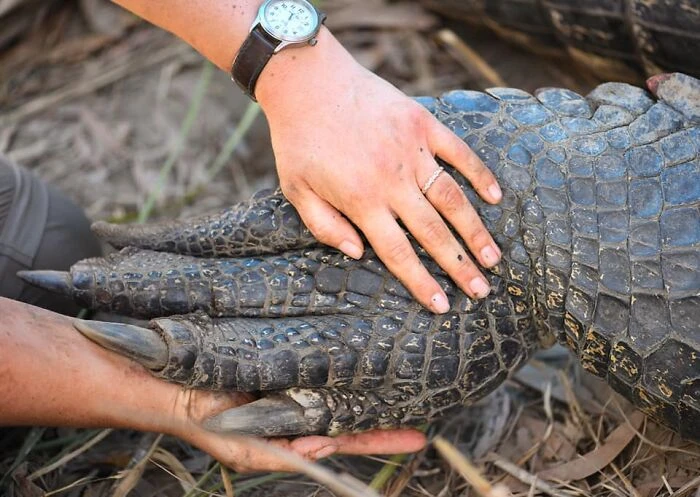
Paws, flippers, talons, webbing—every animal has its own tailor-made limb, perfected over millions of years of evolution. Some are engineered to cling to vertical glass, others to crush prey like a steel clamp, and still others to sprint across blistering sands or glide beneath polar ice. 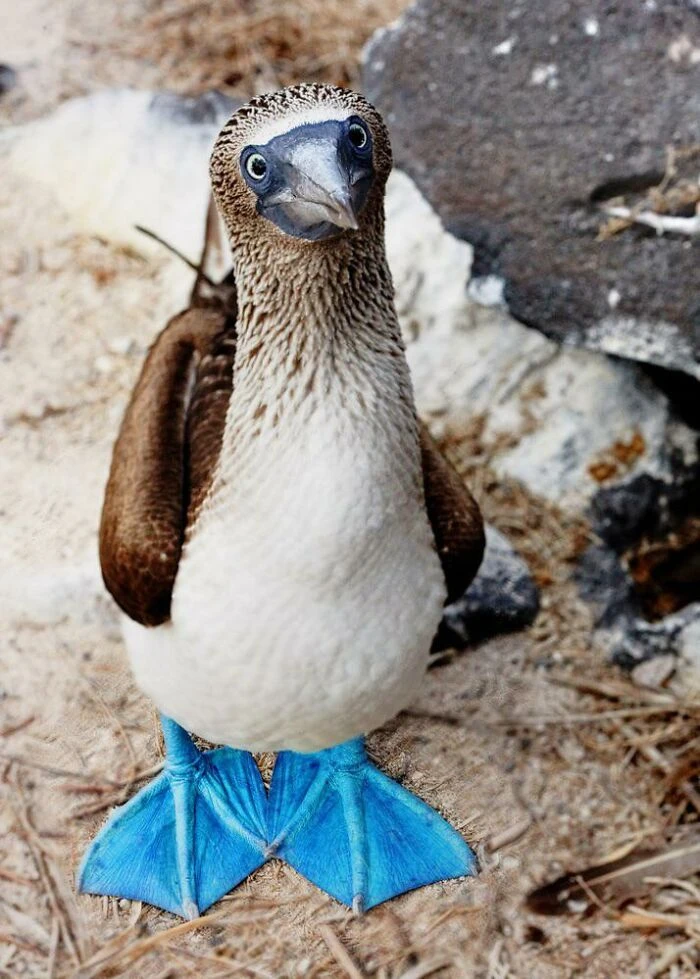
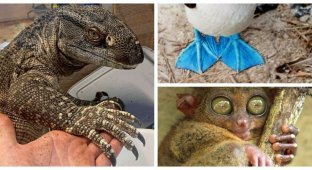
The blue-footed booby: the bird with the most vibrant feet on the planet. That brilliant blue is a badge of peak health and a prime courtship asset.
Let’s start with feet you simply can’t overlook. The blue-footed booby’s feet are an electric turquoise so vivid they almost look painted on. It’s no accident: the richness of the shade comes straight from their diet and general physical condition. The brighter the blue, the faster a male catches a prospective mate's eye. These striking feet also double as an incubator: parents drape them over their eggs to keep the clutch warm with body heat. 
This dog’s paw pad looks like a miniature silhouette of the dog itself
Unlike their wild ancestors, domestic dogs have kept surprisingly tender paw pads—even after years of pounding pavement and snow. The outer skin is tough and lightly textured, yet wonderfully cushioned and warm beneath. That’s what makes holding a dog’s paw in your hand such a comforting, uniquely grounding sensation. 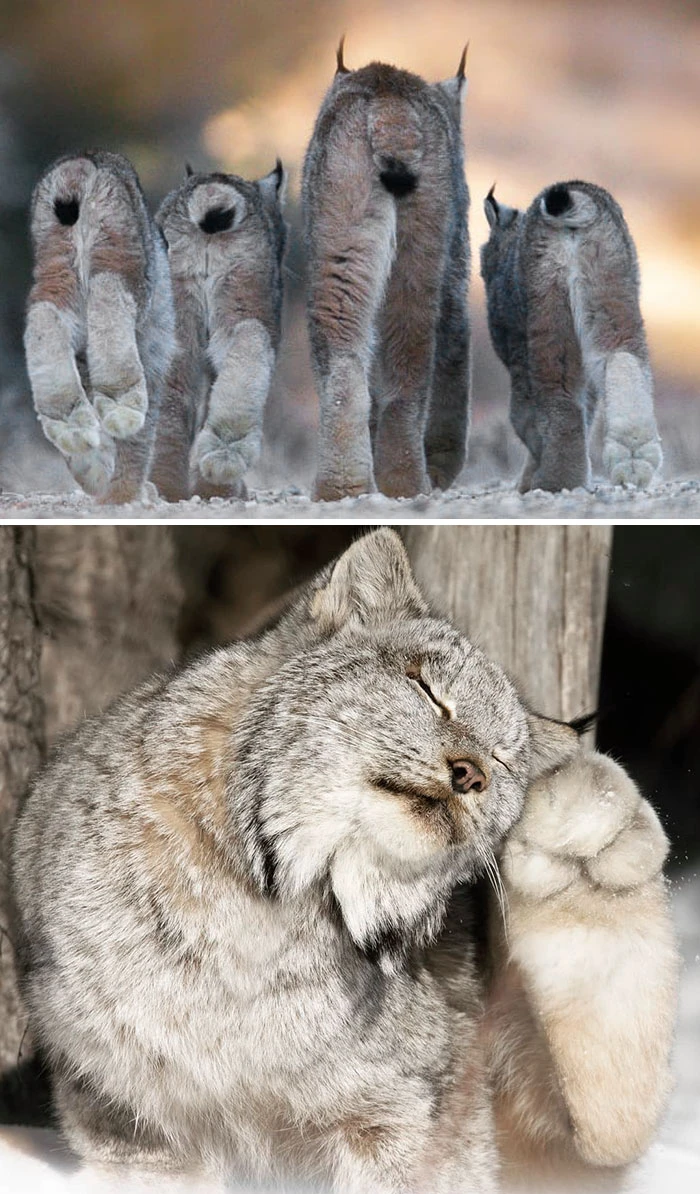
Four lynxes on the move while one stops to scratch behind its ear—a massive paw built for serious scratching duties.
A lynx’s paws are nature’s ultimate snowshoes. Broad and thickly furred between the toes, they keep this predator from sinking into powdery drifts. A Canada lynx’s paws rival those of a cougar in size, even though the cat weighs four to six times less. Its primary winter quarry is the snowshoe hare, and the lynx can pursue it effortlessly over deep snowpack where foxes and coyotes bog down belly-deep. 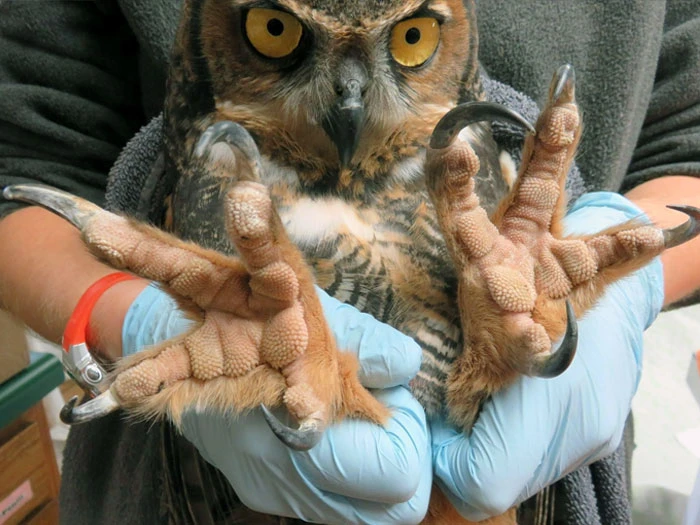
Great horned owl talons: this nocturnal raptor clutches prey with the unrelenting force of a vise.
Wildlife handlers working with large owls don heavy leather gauntlets for good reason. The talons of a great horned owl—one of North America’s most formidable raptors—clamp down with an astonishing pressure of 200 to 500 pounds per square inch. These birds have no trouble carrying off skunks, rabbits, or even small domestic cats, armed with talons sharper than those of many eagles. 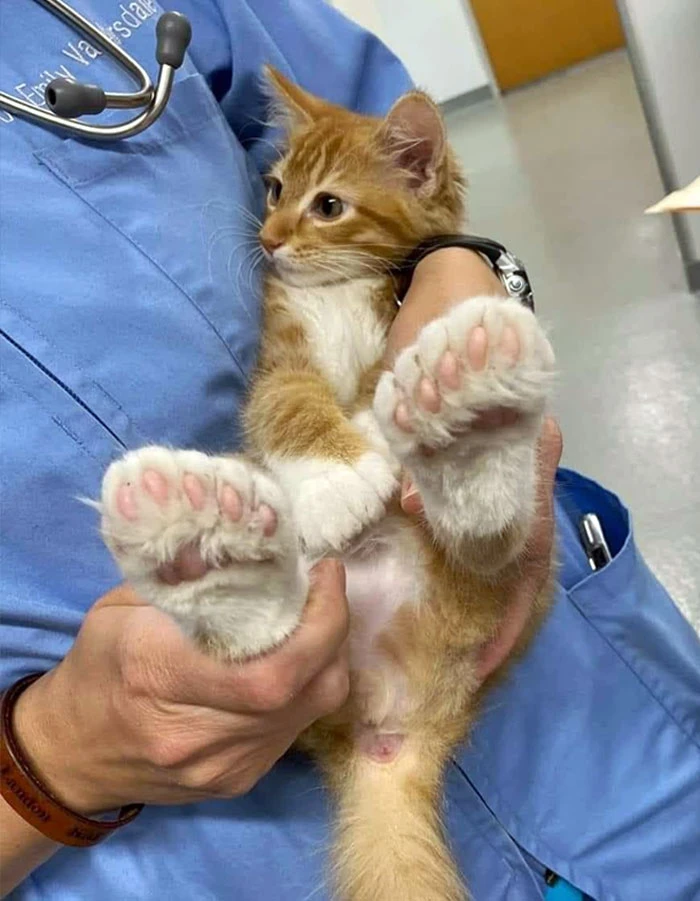
A ginger kitten with polydactyly—a harmless genetic variation that produces extra toes.
Polydactyly is a genetic trait that blesses an animal with bonus digits. Most domestic cats have 18 toes: five on each front paw and four on the back. Polydactyl cats, however, can boast up to 28. Far from a handicap, the extra digits give them a wider footprint, superior grip, and exceptional balance on slick surfaces. Ernest Hemingway was famously captivated by polydactyl felines, and around 60 of their descendants still roam his Key West estate today, protected as a beloved Florida landmark. 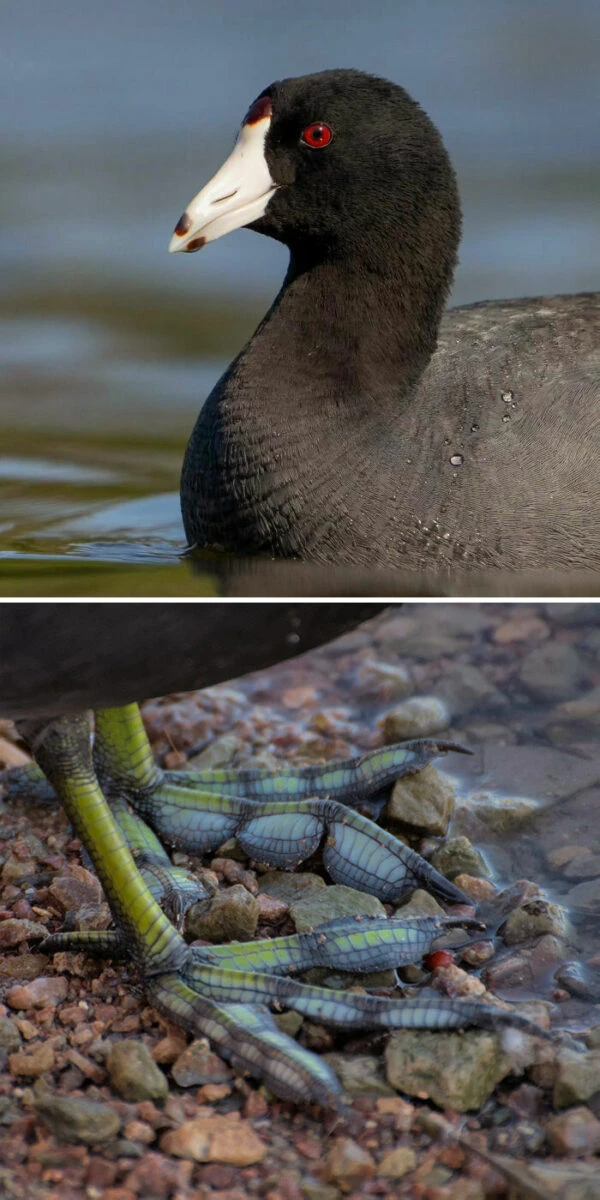
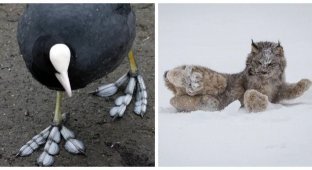
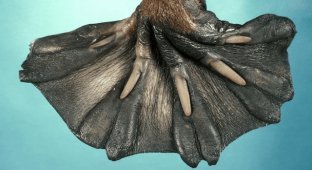
The American coot—a bird sporting feet that look downright alien, with broad, fleshy lobes along every toe.
Unlike ducks, American coots don't have webbed feet. Instead, each toe is bordered by wide, flexible lobes that flare open on the swimming stroke and fold flat as the foot moves forward on land. It’s far more versatile than traditional webbing, allowing the coot to swim, dive, and strut across muddy shorelines with equal poise. The greenish-grey feet look almost like boots straight out of a sci-fi film. 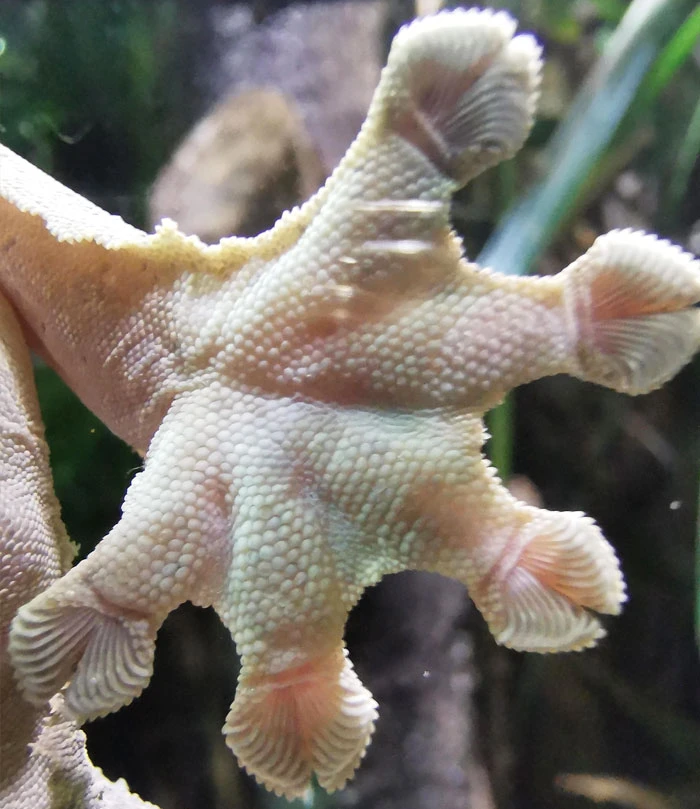
The underside of a gecko’s foot: millions of microscopic bristles that let it scurry across ceilings.
These microscopic structures are called setae, and each one branches out into hundreds of even tinier nanoscale tips. Adhesion occurs at the molecular level through van der Waals forces. Geckos leave zero residue, use no sticky secretions, and can detach instantly simply by shifting the angle of their toes. Scientists are still striving to replicate this brilliant mechanism in synthetic adhesives. 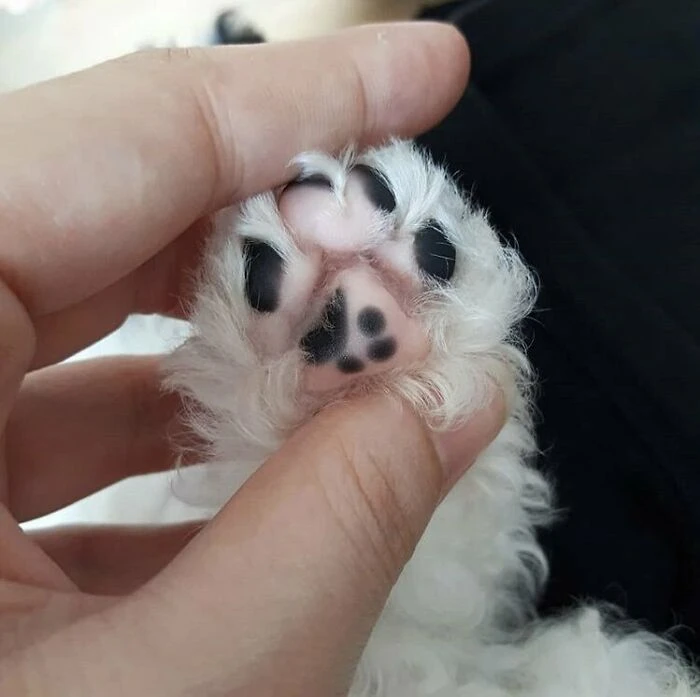
A tiny paw-shaped mark right on the paw pad itself. Nature definitely has a sense of humor. 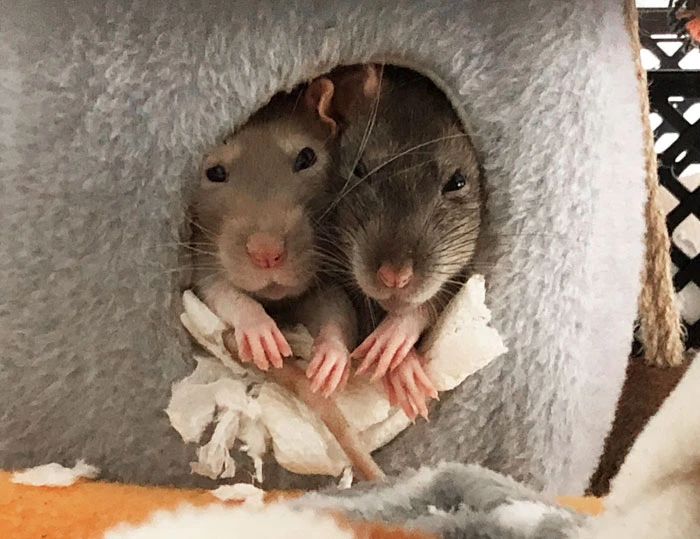
Rat paws: pink, nearly translucent, and strikingly similar to miniature human hands.
Rats are among the most dexterous rodents on Earth. Their forepaws can manipulate tiny food items, work open latches, and solve complex puzzles in laboratory experiments. Anatomically, their digits are remarkably close to human fingers—just on a tiny scale and without an opposable thumb. 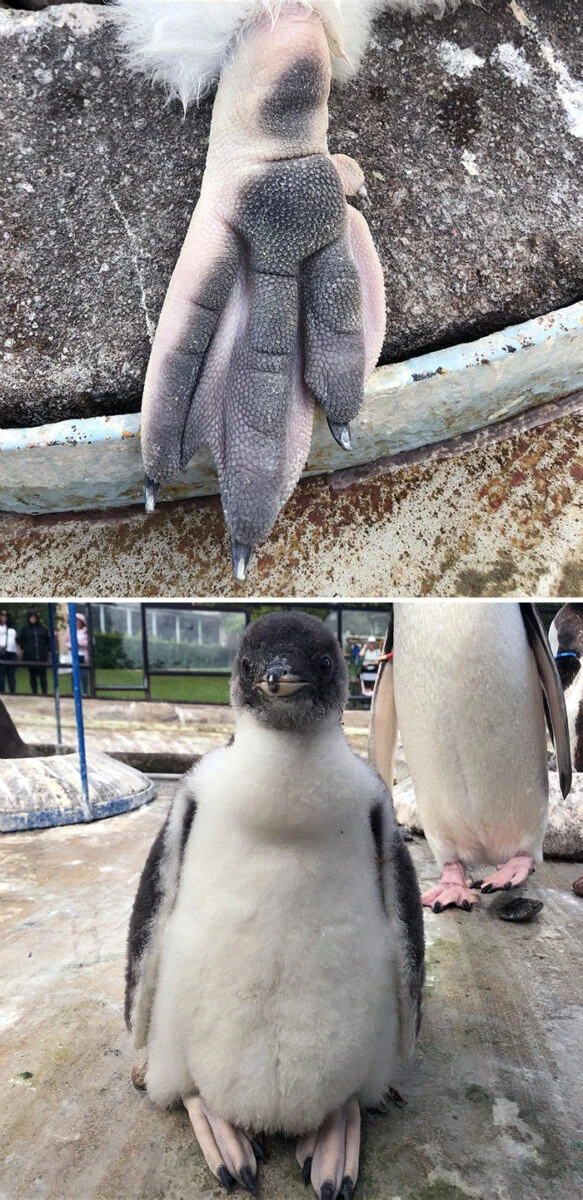
A penguin’s webbed foot: an impeccable rudder in the water, but the source of that signature waddle on land. 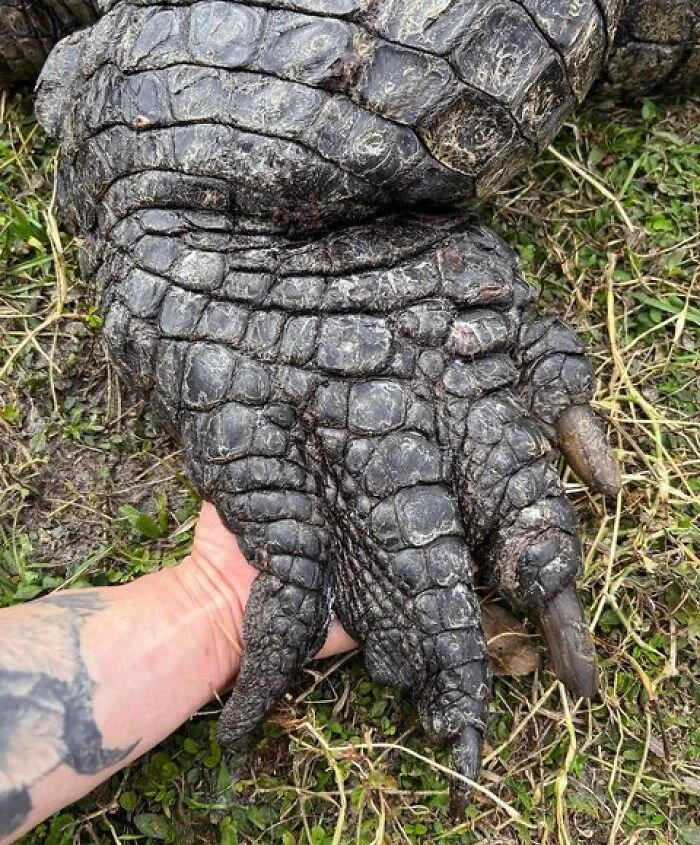
A Nile crocodile’s scaly foot resting in a human hand—a handshake with living history.
The Nile crocodile emerged as a distinct species around eight million years ago, but its ancestral lineage survived the cataclysm that wiped out the dinosaurs. The armored foot in this photo is a genuine prehistoric artifact. Five clawed digits on the forelimbs, four on the hind, partial webbing, and rugged scales—this blueprint has remained practically unchanged for tens of millions of years. 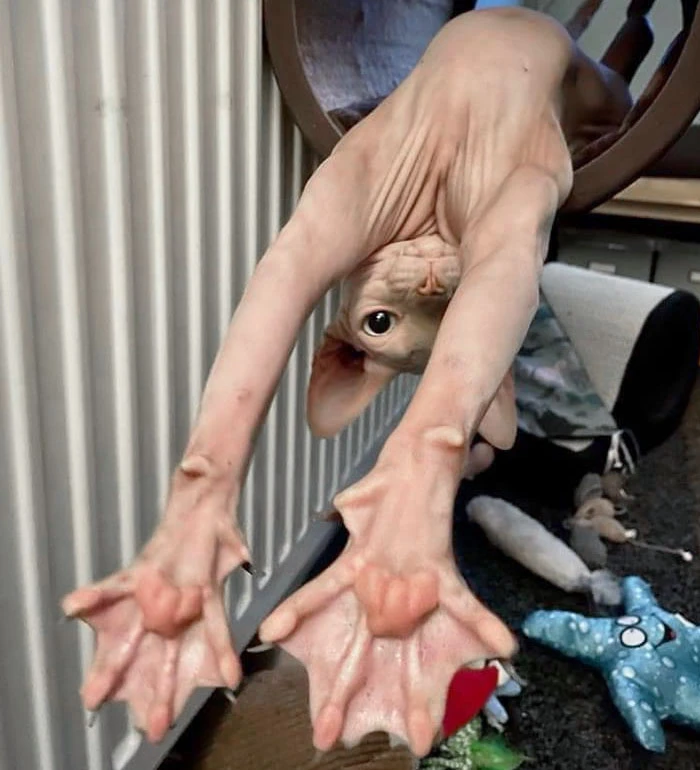
A hairless Sphynx shows off its toes in all their glory—without fur, every fold and pad is front and center. 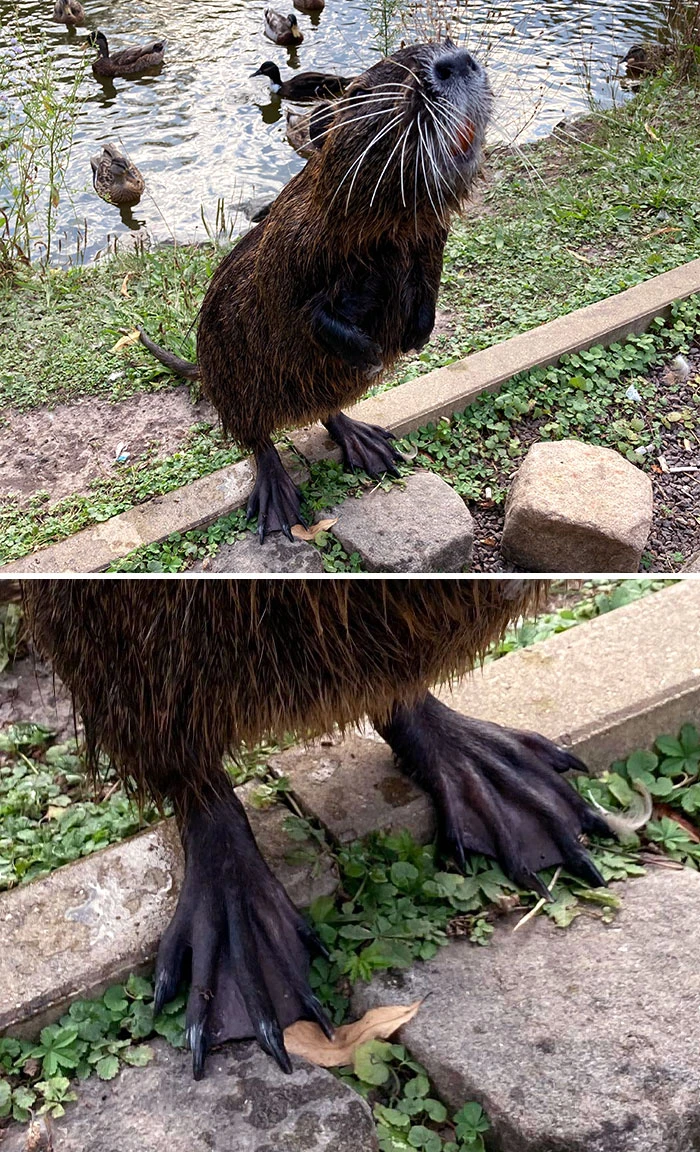
A nutria standing on its hind legs: broad webbing between the toes makes it a phenomenal swimmer.
The nutria, or coypu, is a semiaquatic rodent native to South America that was introduced across Europe and Asia during the 20th century for the fur trade. Following escapes from farms, they rapidly established wild populations worldwide. Their hind feet are broadly webbed like a beaver’s, and they can stay submerged for up to five minutes. While rather clumsy on dry land, they cut through the water with unexpected grace. 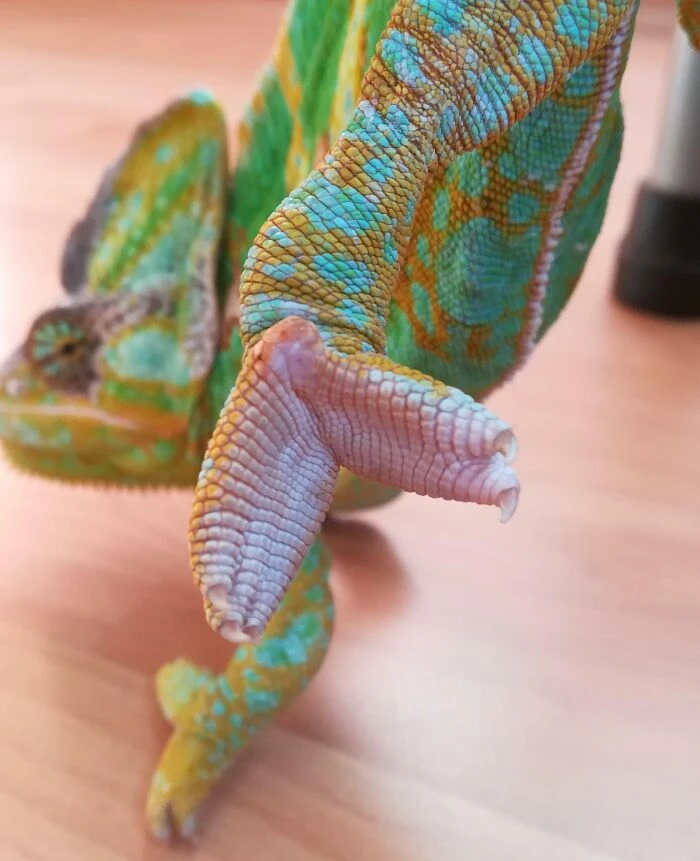
A chameleon’s foot works like a pair of tongs: toes are divided into two opposing groups to pinch branches securely.
Chameleon feet are a triumph of biological engineering. Their five digits are split into two opposing bundles—two on one side and three on the other (reversing between front and hind limbs). This pincer-like grip locks onto branches of virtually any thickness. Combined with a prehensile tail, it ensures a chameleon almost never loses its footing. 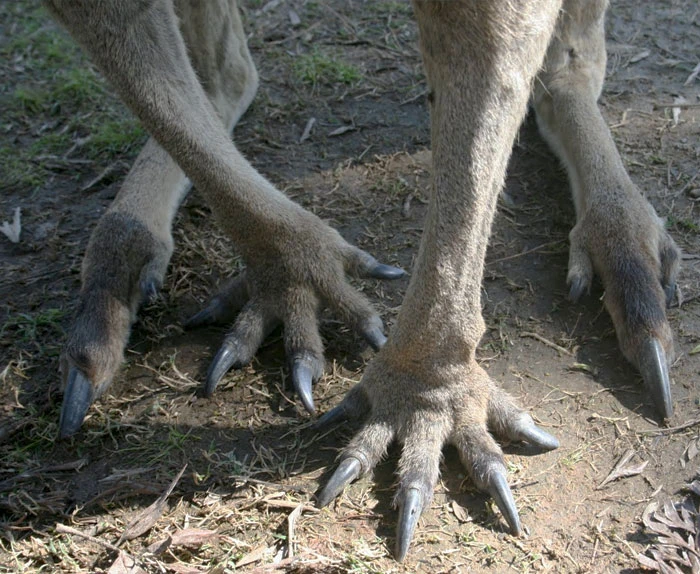
Kangaroo hind feet: equipped with dagger-like claws and asymmetrical toes, packing up to 750 pounds of kicking force.
A kangaroo’s foot has an extraordinary anatomy: the second and third toes are fused together, forming a built-in grooming comb for their coat. The fourth toe is massive and powerful, delivering devastating blows in combat. A defensive kick from these muscular legs can disembowel an attacker—a deterrent well respected by predators. 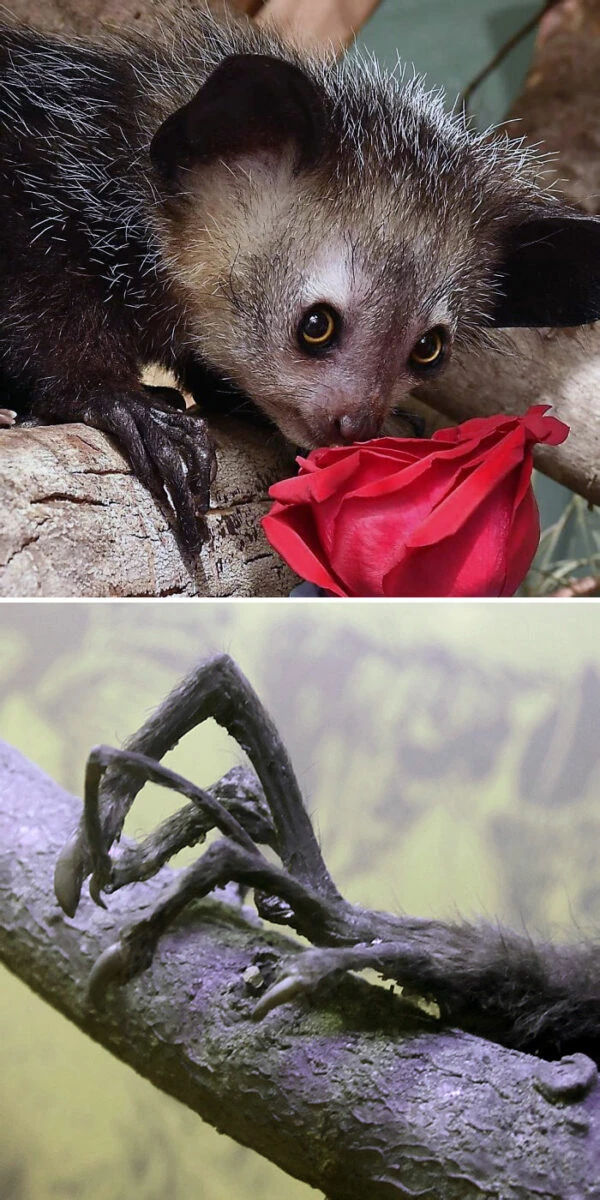
Madagascar’s elusive aye-aye: its spindly middle finger is up to three times longer than the rest.
The aye-aye is easily one of the world's most peculiar primates. Endemic to Madagascar, this nocturnal lemur feeds on insect larvae tucked deep inside deadwood. To find them, it uses an unmatched biological tool: an elongated, skeletal middle finger that taps rapidly along tree trunks. Listening for hollow chambers with its oversized ears, it chisels through the bark and fishes out grubs. Malagasy folklore often viewed the aye-aye as an omen of bad luck, a superstition that fueled persecution and landed this unique creature on the endangered species list. 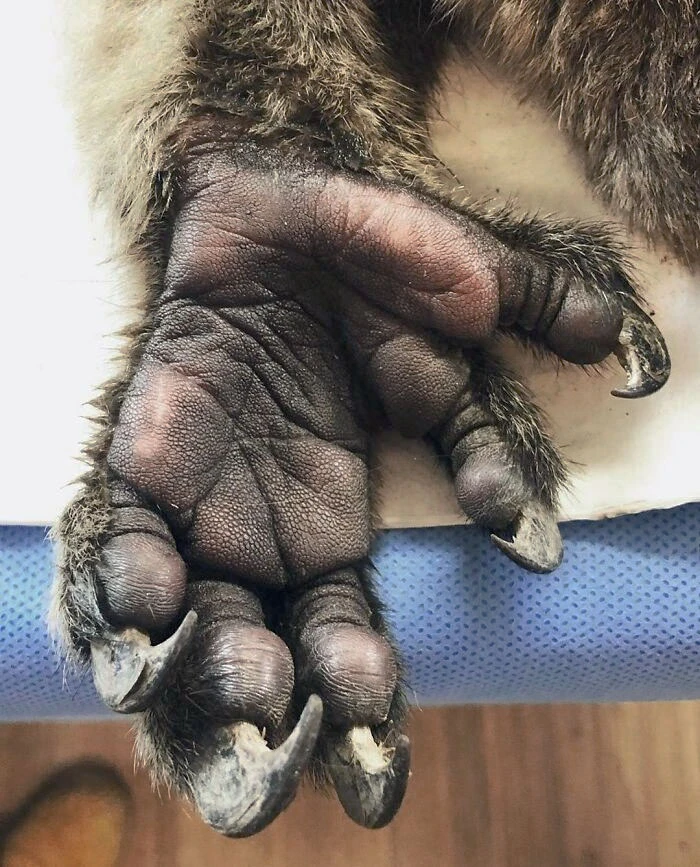
A koala paw with two opposable digits—nature’s tailor-made climbing gear for eucalyptus trees.
On each front paw, a koala has two opposable thumbs facing the other three fingers, creating a dual-thumb clamp. This arrangement gives koalas an unbreakable grip, allowing them to hug vertical eucalyptus trunks for hours on end without fatigue. Remarkably, koala fingerprints are so virtually indistinguishable from human prints that they have occasionally baffled crime-scene investigators. 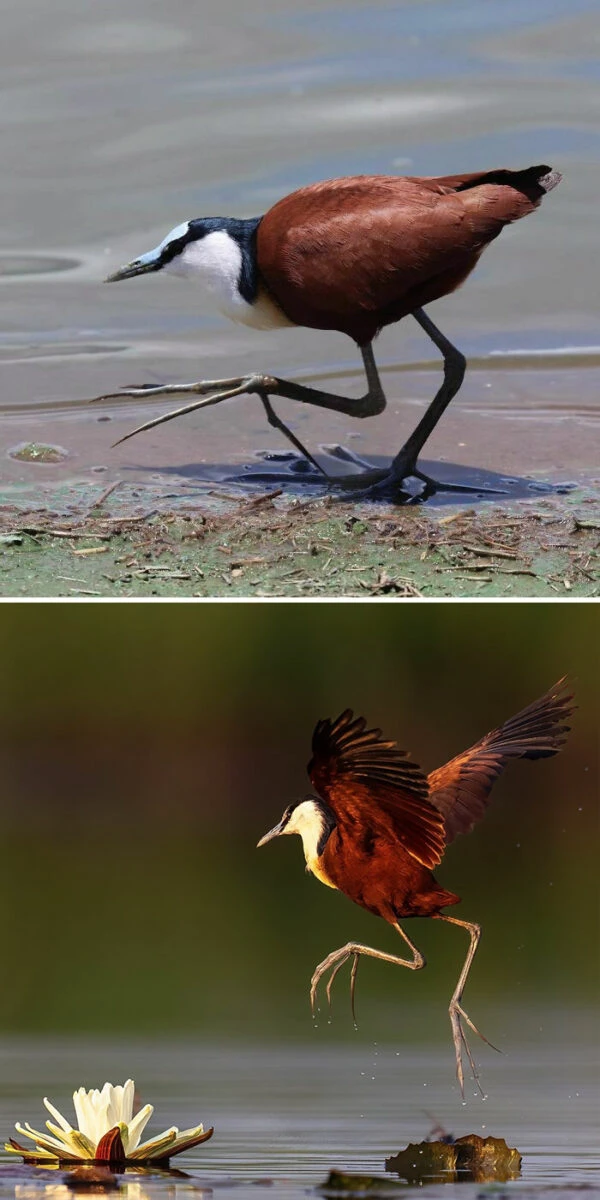
The African jacana: possessing the longest toes relative to body size of any bird on Earth.
The jacana walks on water lilies—literally. Its extraordinarily long, slender toes distribute its weight across floating vegetation so effectively that the bird never breaks through the surface. The span of its feet rivals its wingspan, earning it evocative nicknames like the "Jesus bird" and "lily-trotter." 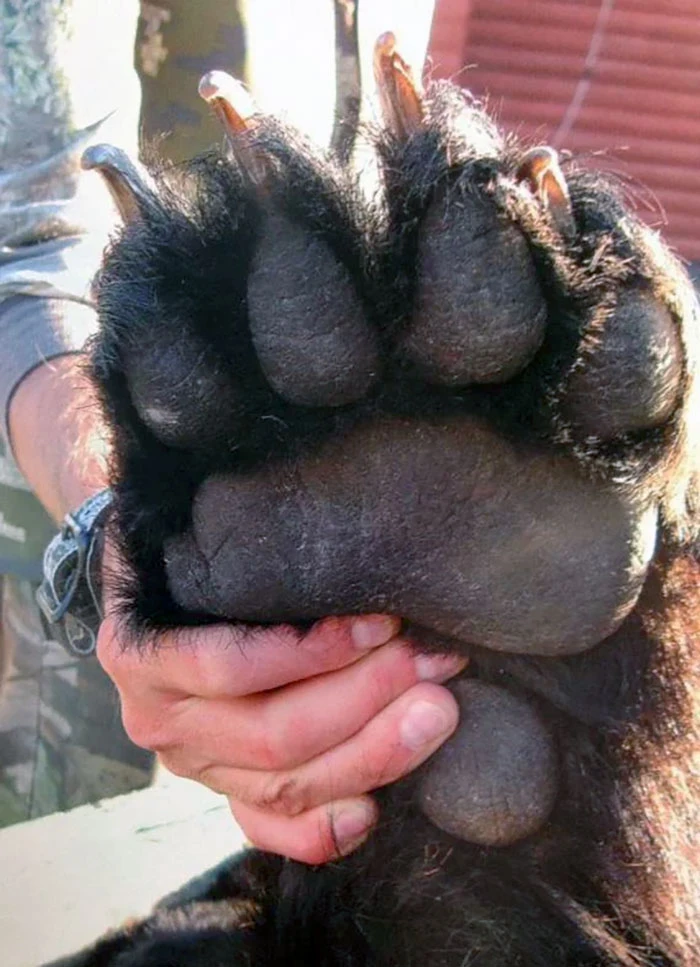
A bear paw beside a human hand—the sheer scale speaks for itself. 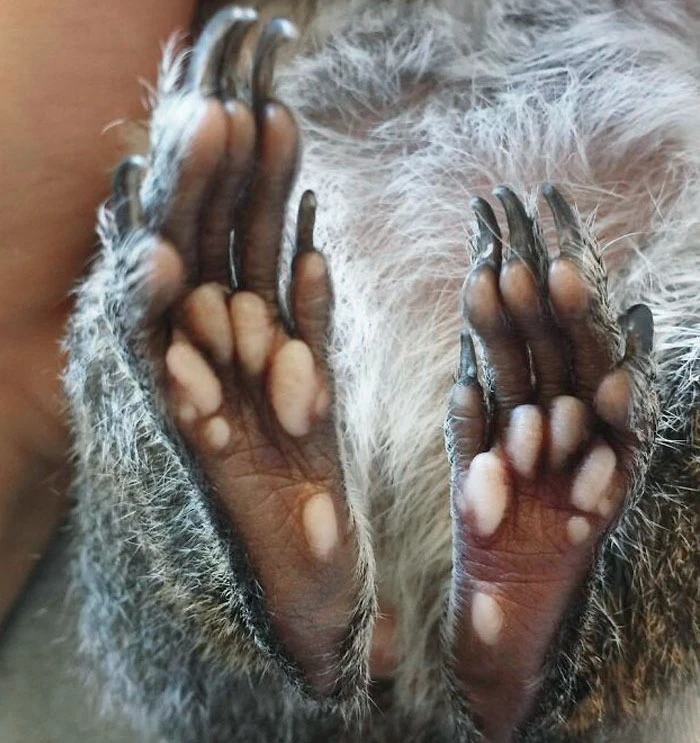
Squirrel paws: needle-sharp curved claws allow them to sprint down tree trunks completely upside down. 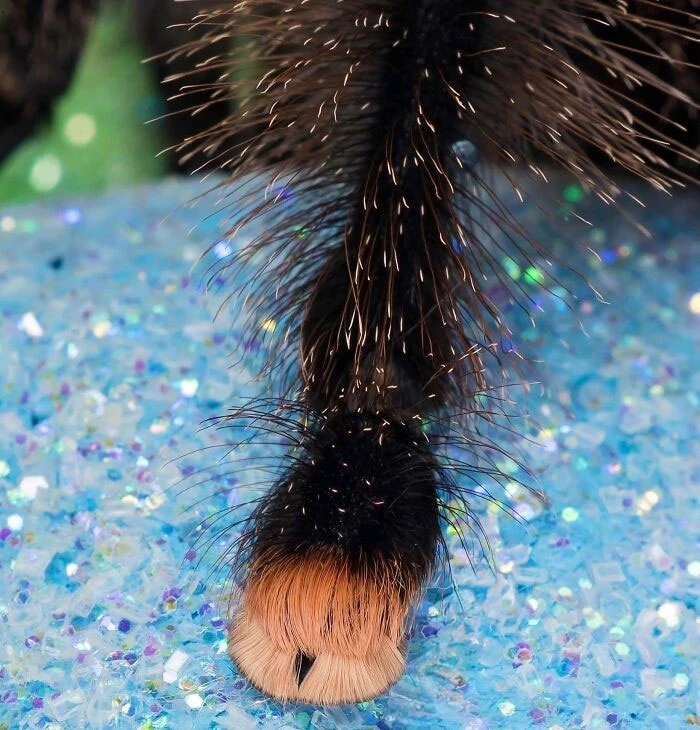
The foot of an Avicularia tarantula: furry, equipped with claws, and fitted with adhesive pads. Spiders can walk on glass, too.
Tarantulas of the genus Avicularia are arboreal spiders native to South America. Alongside tiny dual claws, the tips of their feet feature specialized scopula pads that work much like gecko feet, utilizing molecular adhesion. This allows the spider to scale vertical glass and even amble across ceilings. Those dense hairs aren't decorative; they act as sensitive organs that register subtle vibrations and air currents. 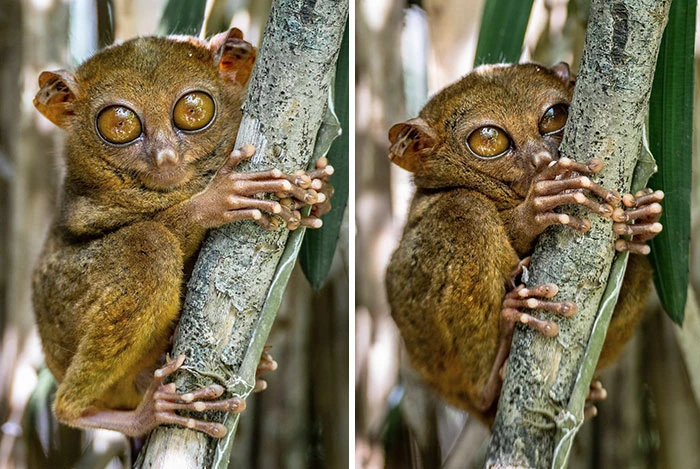
The Philippine tarsier—one of the smallest primates in the world. Its elongated fingers terminate in disc-like suction pads.
Weighing just 80 to 160 grams, the tarsier sports extraordinarily long, dexterous fingers tipped with rounded pads. It can leap up to 40 times its body length and stick the landing onto a vertical branch—its specialized fingers absorb the shock and lock onto the bark in a fraction of a second. 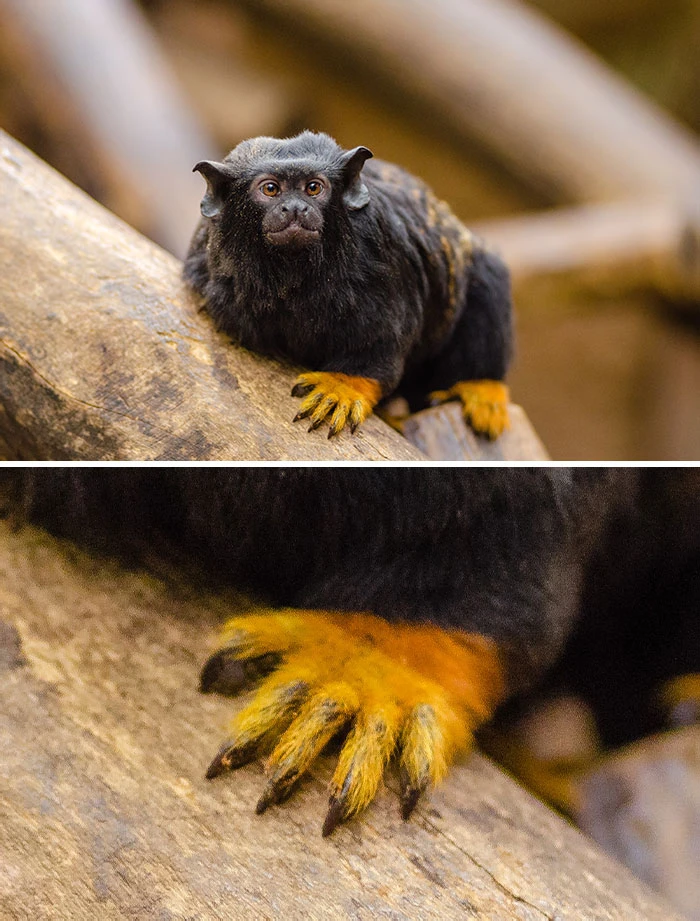
A tiny monkey with blazing orange hands: the red-handed tamarin stands out with vivid golden fur on its paws.
The red-handed tamarin (Saguinus midas) inhabits the northeastern Amazon basin across Brazil, Guyana, and Suriname. Its coal-black coat contrasts sharply with bright golden-orange hands and feet. These tamarins are fearless acrobats, capable of leaping nearly 60 feet (18 meters) from the high canopy to the ground without sustaining a scratch. Unlike most primates, they have sharp claws instead of flat nails on all digits except their big toes. 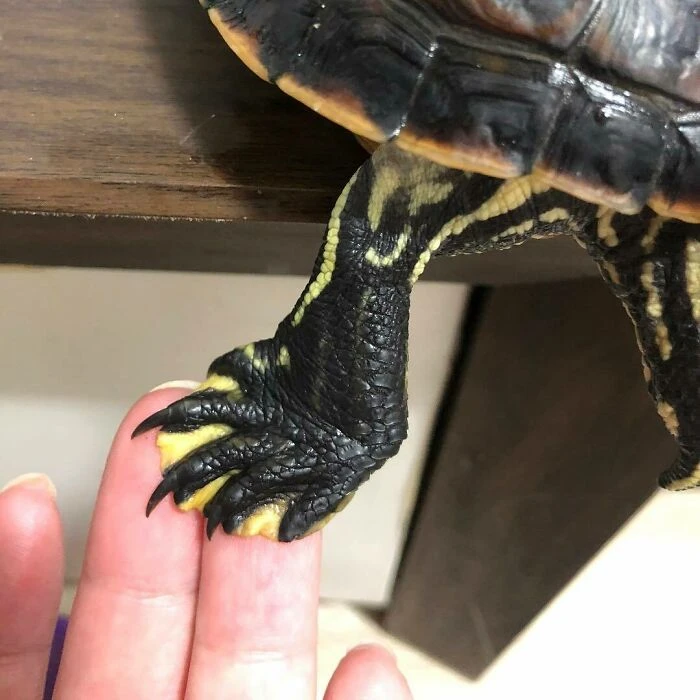
A turtle foot next to human fingers—those claws are considerably sharper than they look. 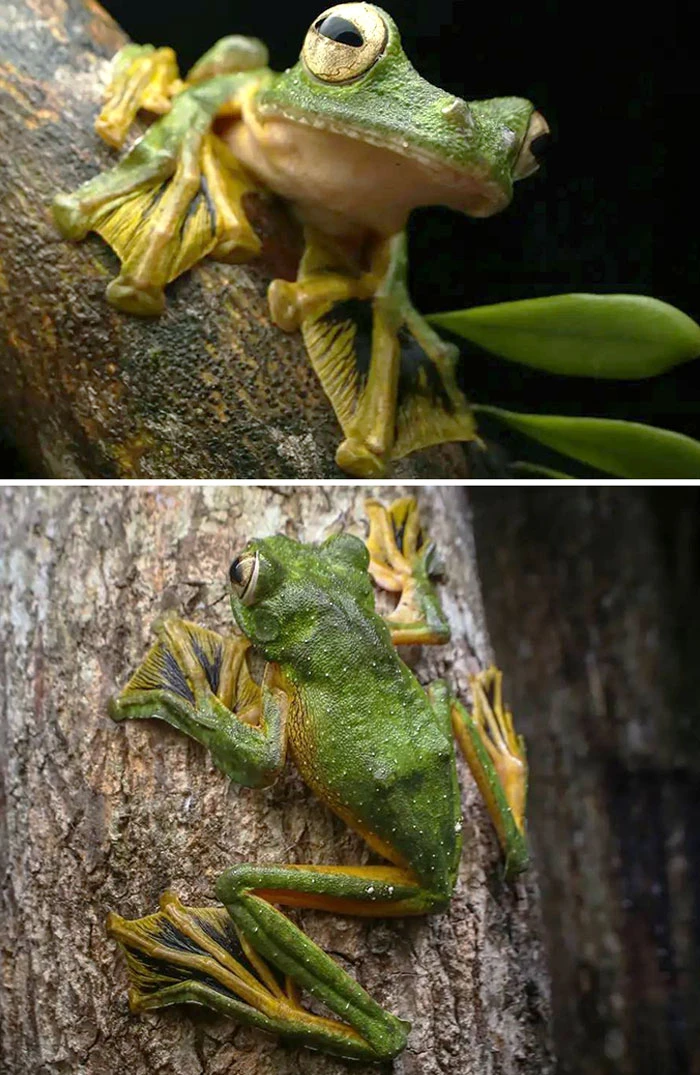
Wallace’s flying frog glides from tree to tree, using its oversized webbed feet as natural parachutes.
Inhabiting the lush rainforests of Borneo and the Malay Peninsula, Wallace's flying frog doesn’t fly in the literal sense, but it is an accomplished glider. By splaying its massive, fully webbed hands and feet, it glides smoothly through the canopy from one tree to the base of another. This aerial trick helps it evade tree-dwelling predators and reach breeding pools without having to risk crossing the forest floor. 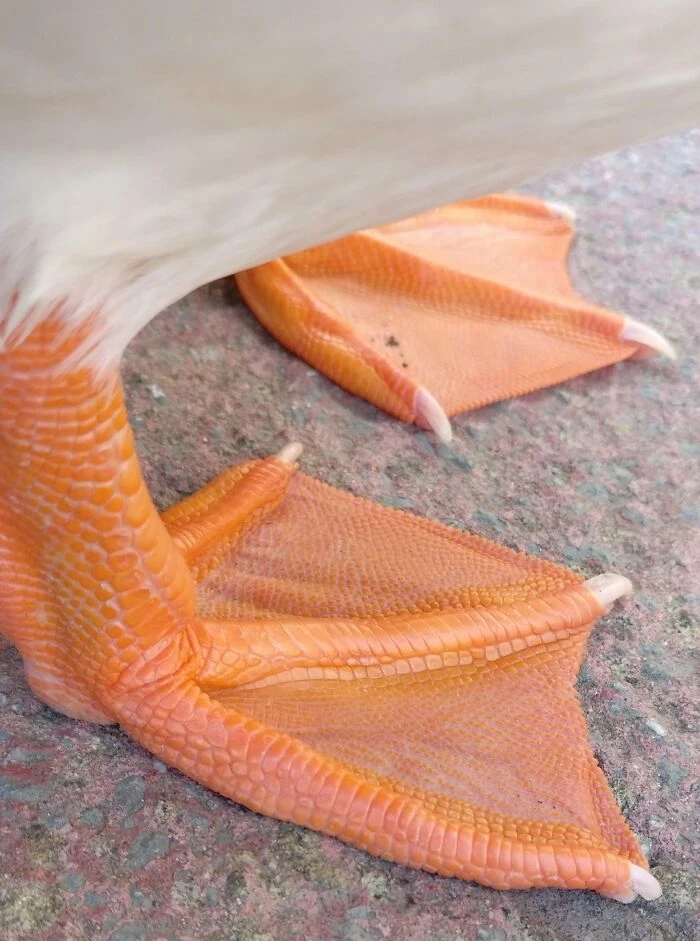
A duck’s vibrant orange webbed paddle—a classic design you take for granted until you examine it up close. 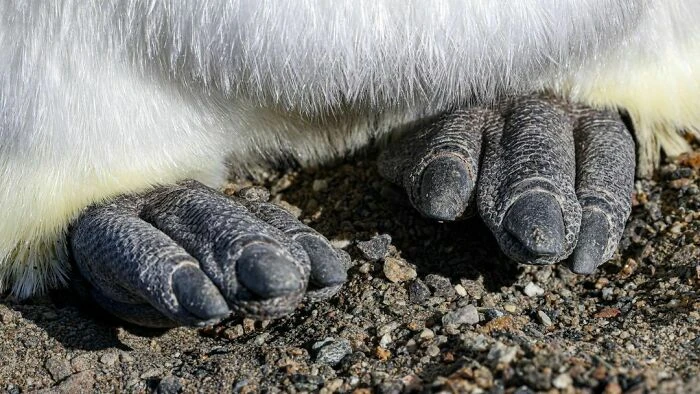
Emperor penguin feet: an awkward hindrance on land, but a precision rudder beneath the waves.
Penguin feet represent a masterclass in evolutionary compromise. On terra firma, their short legs and backward placement produce an endearing, clumsy waddle. When tobogganing on icy slopes, they act as small pushers and stabilizers. But plunge into the ocean, and these feet become high-precision rudders and airbrakes. While powerful flipper-wings provide propulsion, the webbed feet steer through sharp underwater turns with surgical precision. 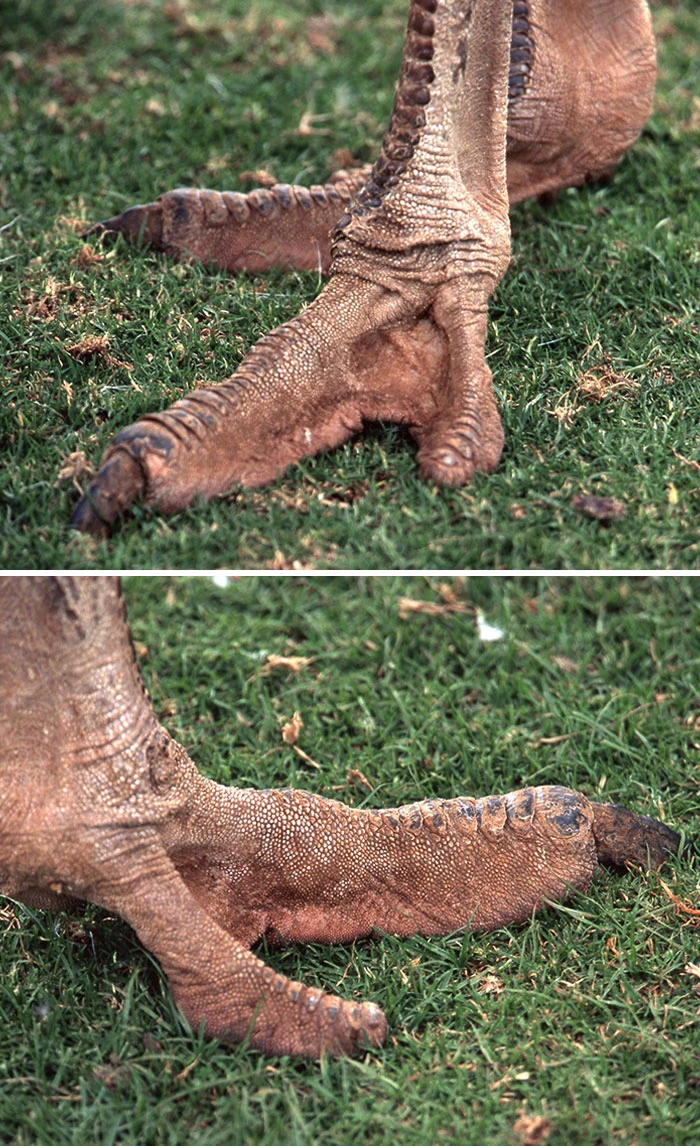
An ostrich foot has only two toes, but one bears a devastating, dagger-like claw.
Ostriches have the most streamlined running gear in the avian kingdom: just two toes per foot, consisting of a smaller outer toe and a massive inner digit armed with a heavy claw up to four inches long. They are the only two-toed birds alive. What they lack in toe count, they make up in sheer horsepower: top sprinting speeds reach 45 mph (70 km/h), and a single forward kick packs enough force to kill an adult lion. 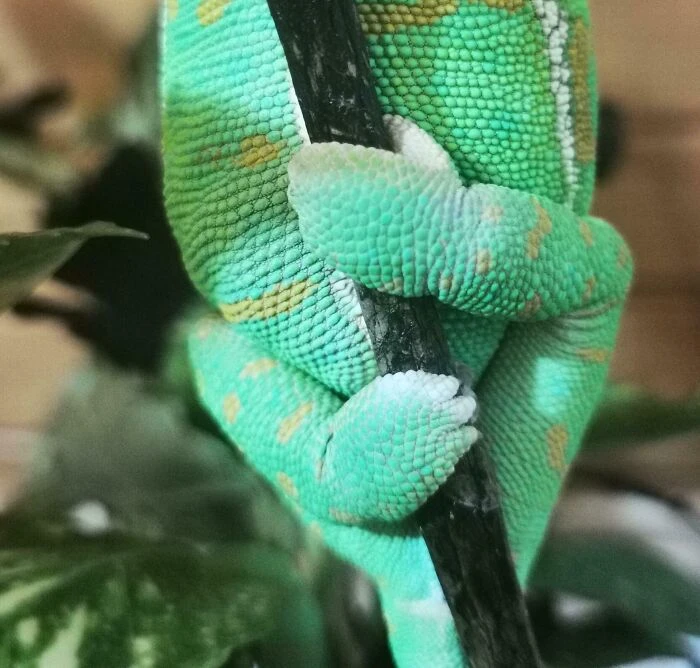
A chameleon perching on a twig: its split paws wrap around the bark in a flawless clamp. 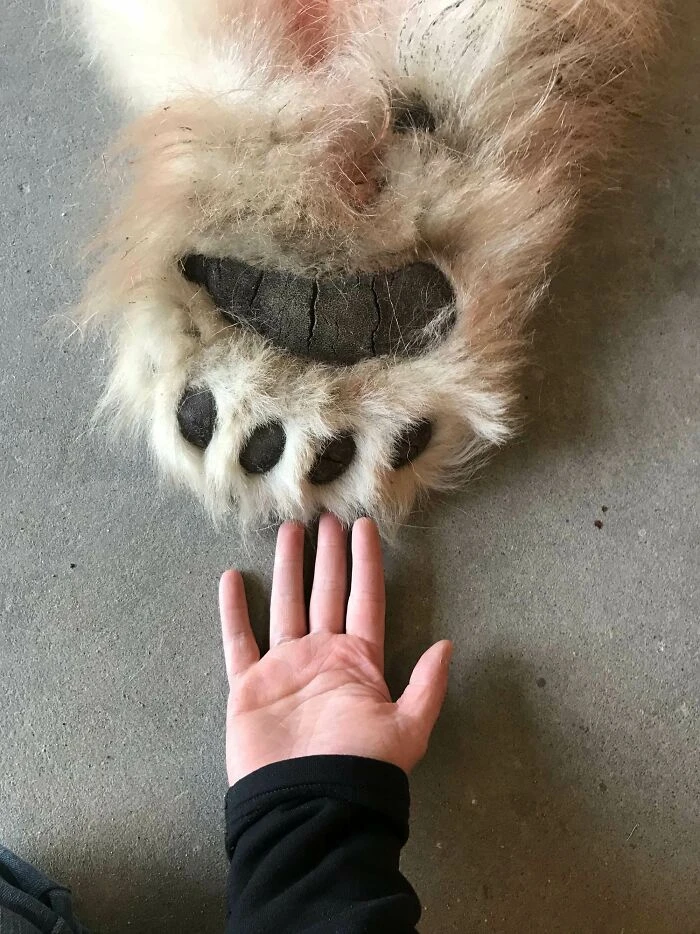
A polar bear paw beside a human hand—the difference in scale is jaw-dropping.
A polar bear’s paw can measure up to 12 inches (30 cm) across. The soles are carpeted in tiny soft papillae that create friction on slick sea ice, while partial webbing between the toes turns each paw into a massive paddle. These apex predators can swim dozens of miles through frigid open water without resting, holding their own in one of Earth's harshest environments. 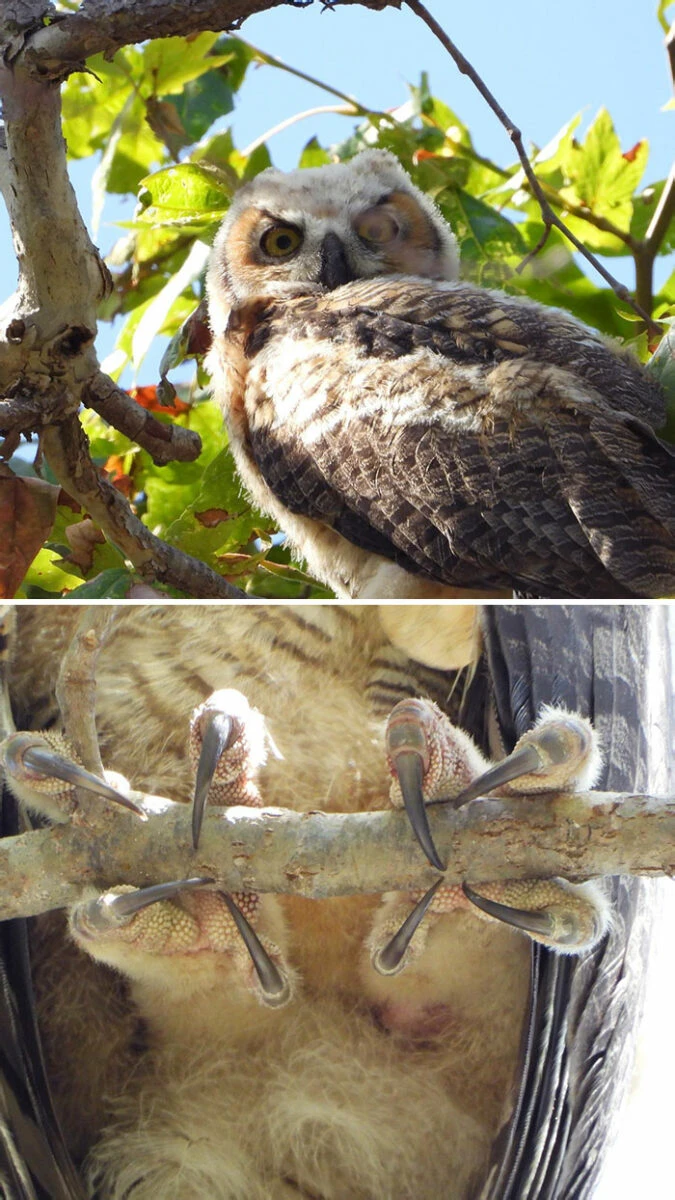
Owl talons: the primary weapon of a silent night hunter, and far sharper than they appear. 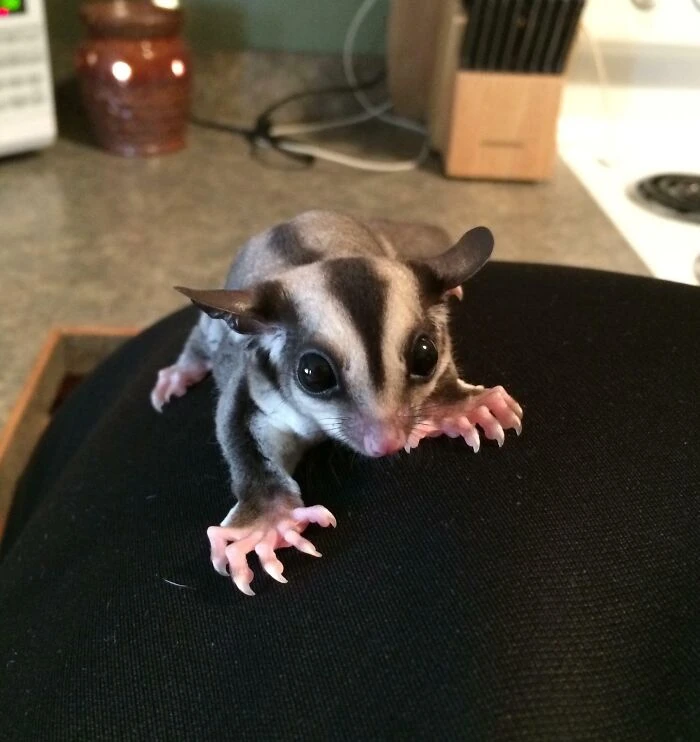
The sugar glider—a palm-sized marsupial. Its paws are smaller than a fingernail, but its grip is astonishingly secure. 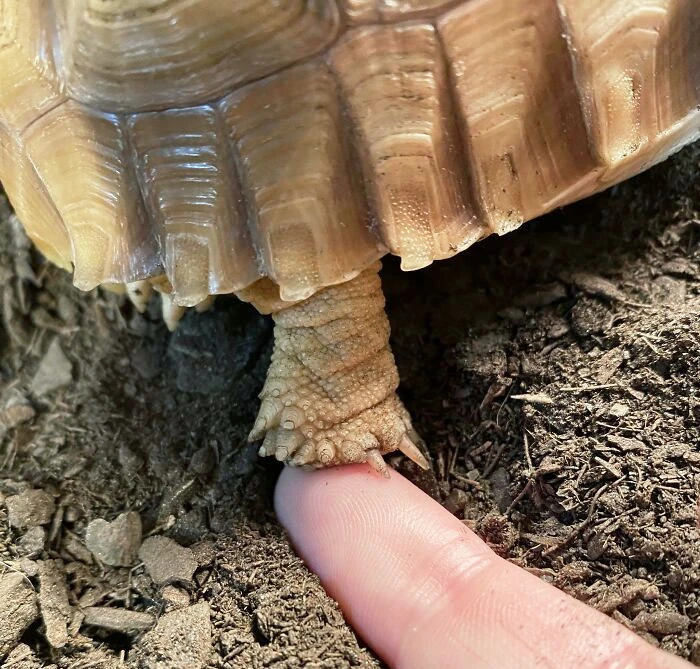
A baby turtle’s tiny flipper resting against a human finger—an adorable study in contrast.
A human hand alongside a crocodile claw—a comparison that gives whole new meaning to the word "talons." 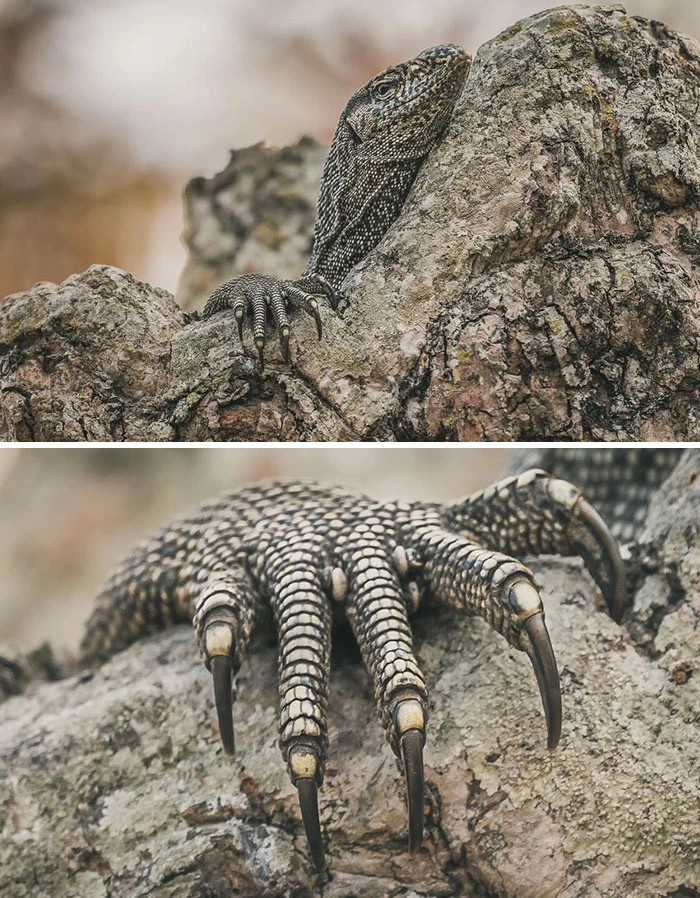
A stealthy hunter: a lizard freezes on a rock, needle-sharp claws ready to anchor at a moment’s notice. 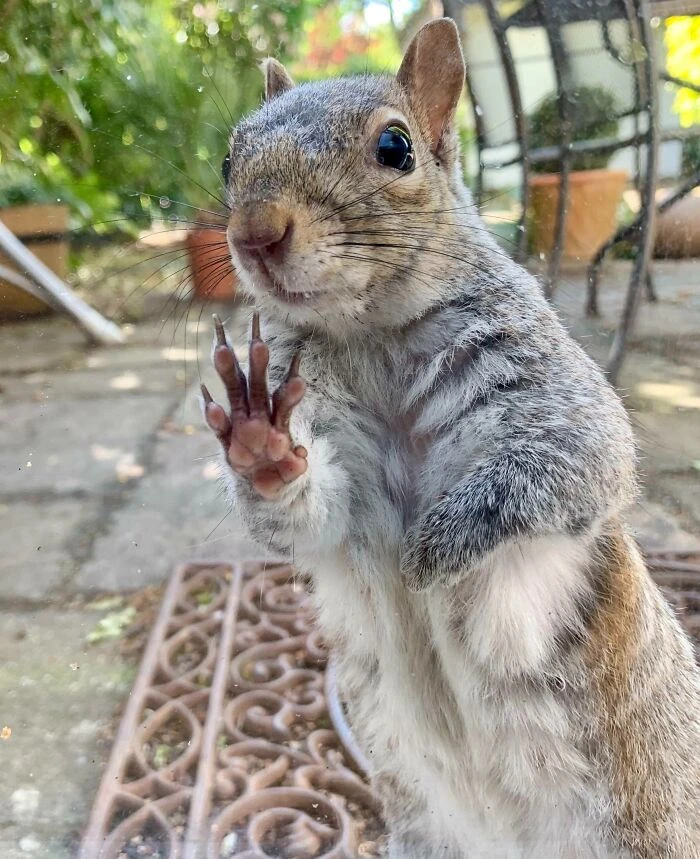
A squirrel presses against the window, revealing its tiny, pink, utterly endearing toe pads. 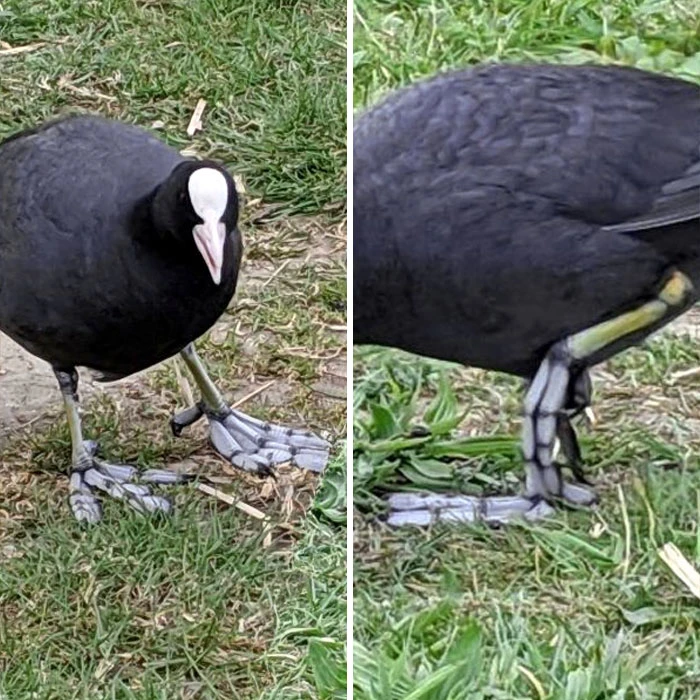
The American coot: skeletal-looking feet featuring scalloped, lobed webbing along each digit. 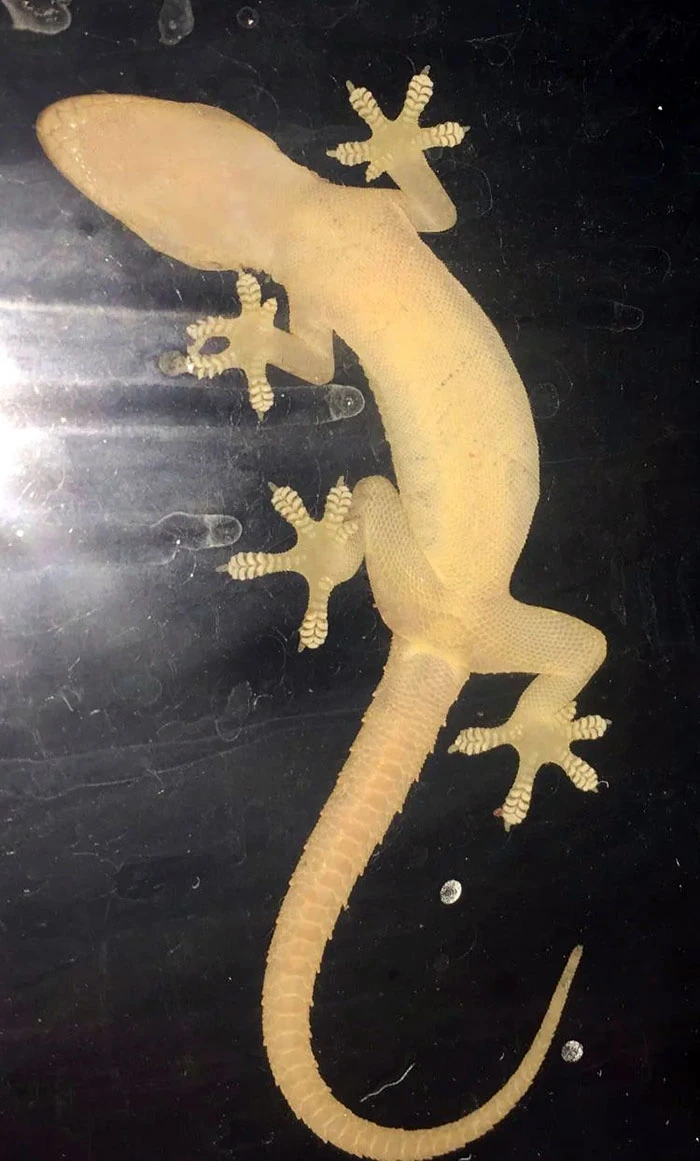
A gecko on glass: splaying its toes wide for maximum surface contact and adhesion. 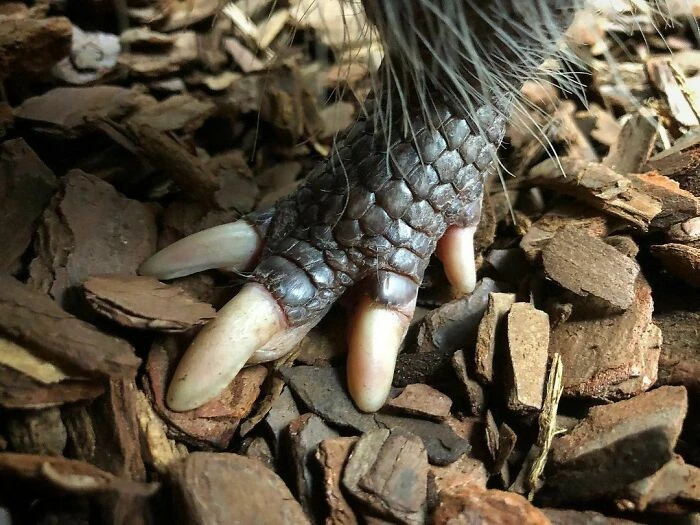
An armadillo’s paw armed with heavy digging claws: it can excavate a burrow faster than a human with a shovel.
Armadillos are nature’s champion excavators. Their forefeet sport robust, curved claws capable of burrowing into hard-packed dirt in seconds flat. In zoos, keepers often have to trim these claws; without daily heavy tunneling to wear them down, they can quickly overgrow. 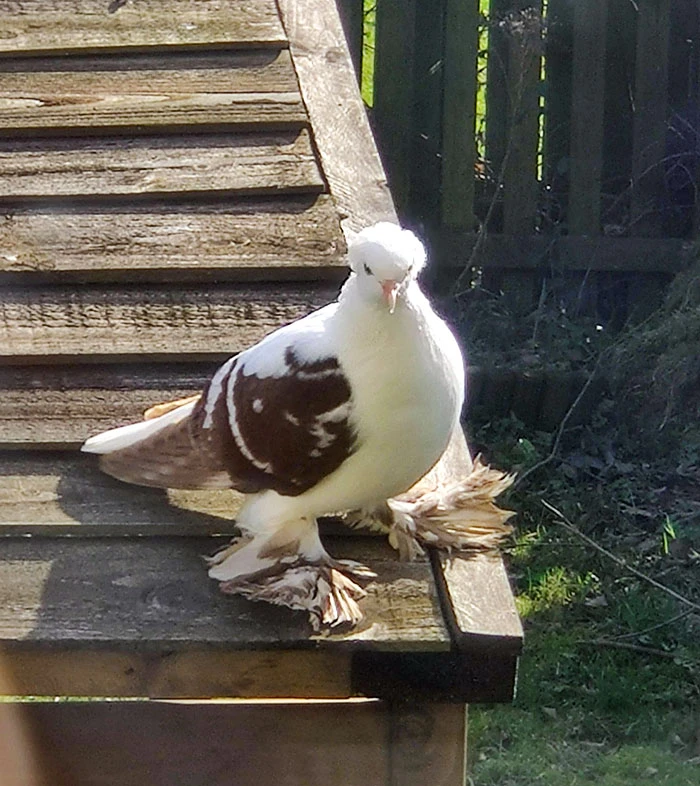
A fancy pigeon sporting feathered "muffs"—a breed specifically developed for this dramatic, booted look. 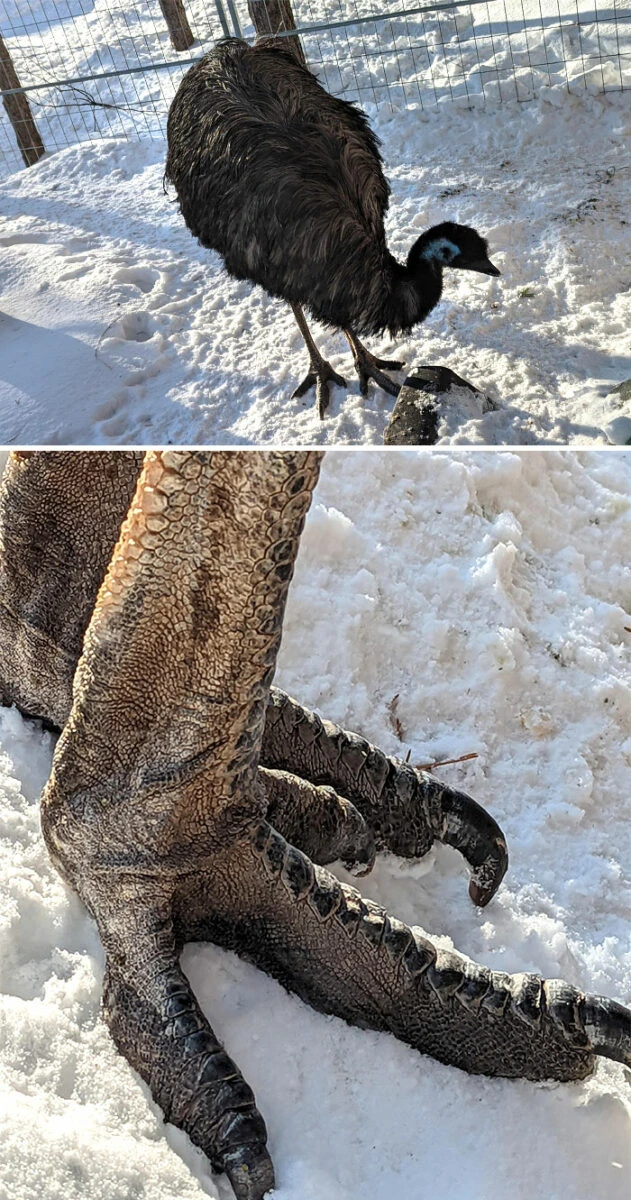
An emu foot up close: three scaly toes that radiate pure Jurassic energy.
The emu is the second-tallest bird on the planet after the ostrich. Its three thick, heavily scaled toes are a living showcase of avian evolution. Birds are modern theropod dinosaurs, and looking at an emu’s rugged foot is perhaps the closest you can get to seeing a velociraptor’s leg in living color. 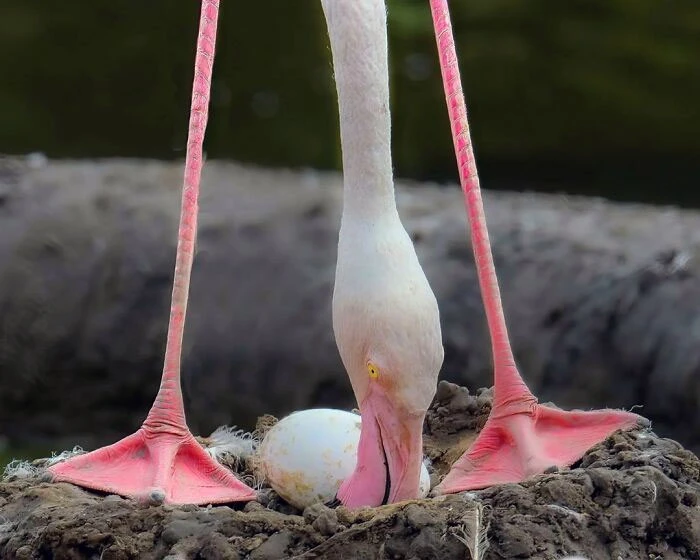
A flamingo at its nest: vibrant pink legs that echo its plumage in an even deeper, richer tone. 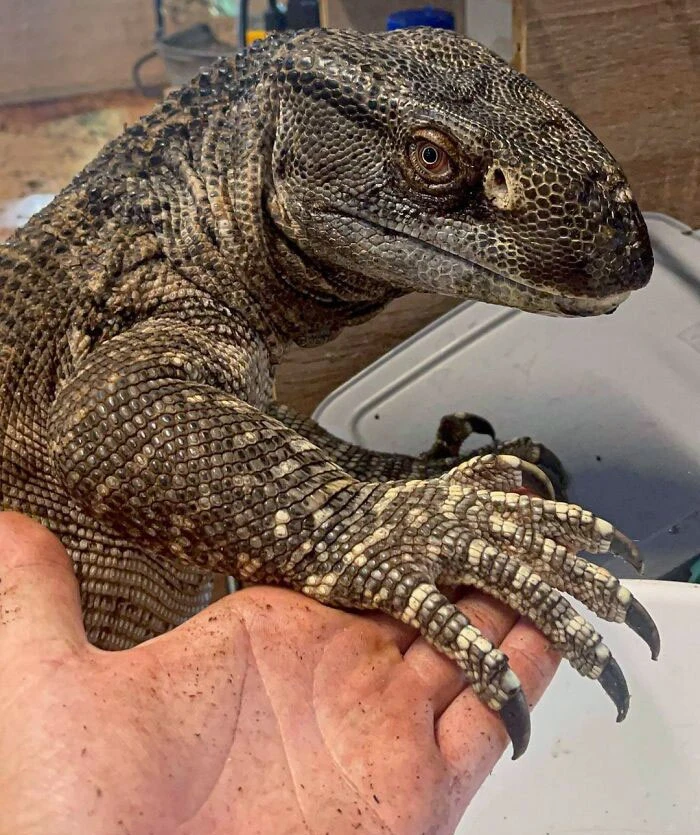
A black-throated monitor grips its keeper’s hand: dagger claws, an intense gaze, and a decidedly high-stakes handshake. 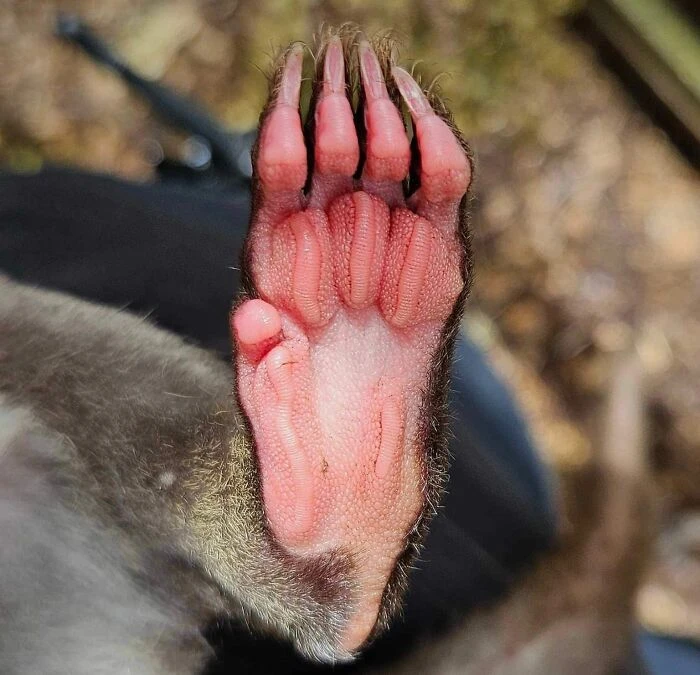
The foot of a tiger quoll: ridged pads designed for superior traction when scampering across wet tree trunks.
The quoll is a cat-sized carnivorous marsupial native to Australia. Its hind feet feature four functional toes alongside a reduced hallux, granting it remarkable climbing agility. Textured pads provide exceptional grip on slippery tree bark, while curved claws anchor its body on sheer vertical trunks. Sadly, quolls are endangered, their mainland numbers severely depleted by invasive foxes and feral cats. 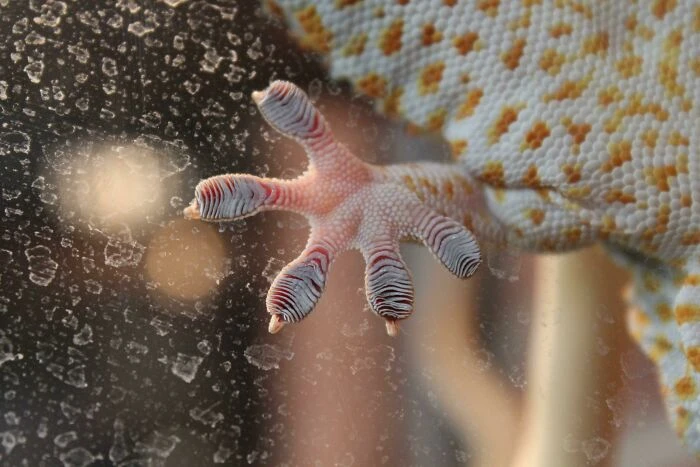
A gecko seen through glass from below: those striped lamellae are dense rows of microscopic setae. 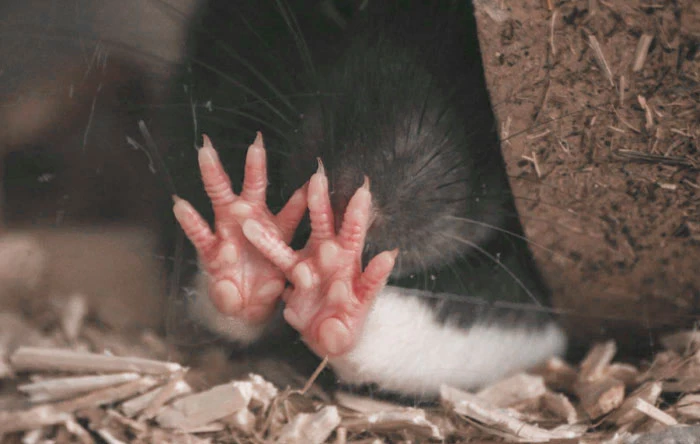
Rat paws: delicate, nearly translucent, and anatomically surprisingly close to miniature human hands. 
A bat’s clawed foot: designed to lock onto roosting surfaces while sleeping upside down.
Bats don't hang upside down out of stubbornness; it is their natural resting state. Their tendons are engineered so that body weight automatically pulls the claws shut. In fact, the more relaxed the bat is, the tighter the grip becomes. Releasing requires active muscular effort, which means a bat can pass away peacefully in its sleep and remain securely suspended from its roost. 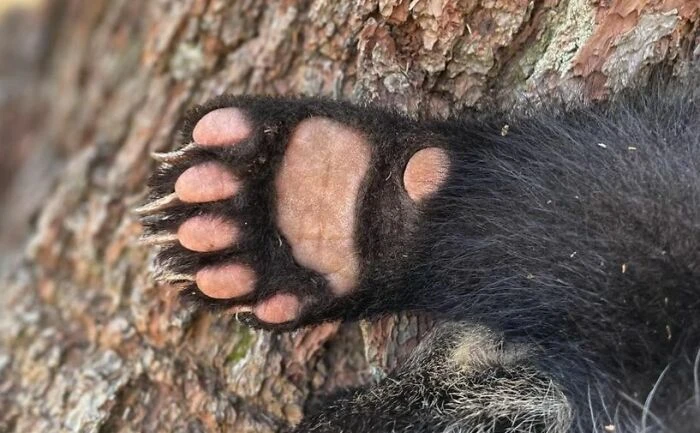
The paw of a young American black bear: pink pads and already formidable claws hint at the powerful predator it will become. 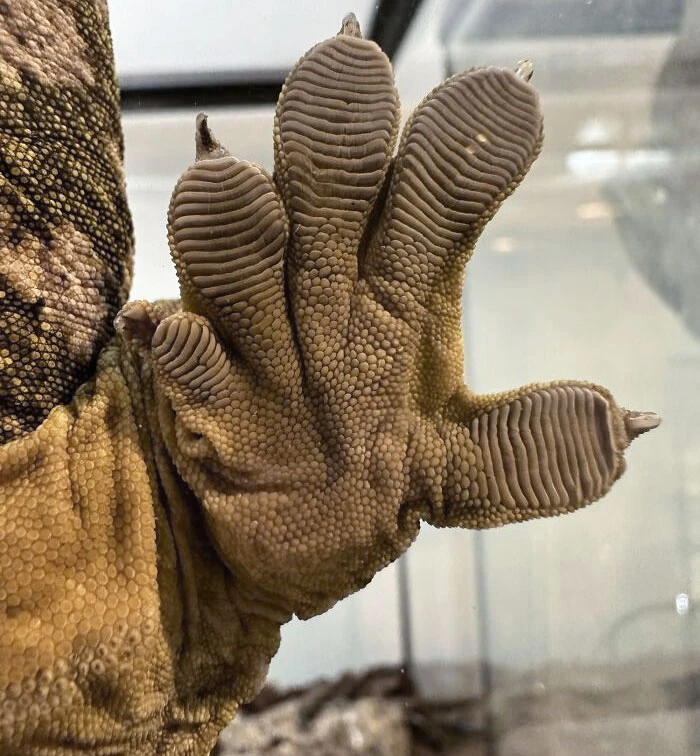
The foot of a giant gecko: larger species sport larger setae, generating proportionately immense adhesive force. 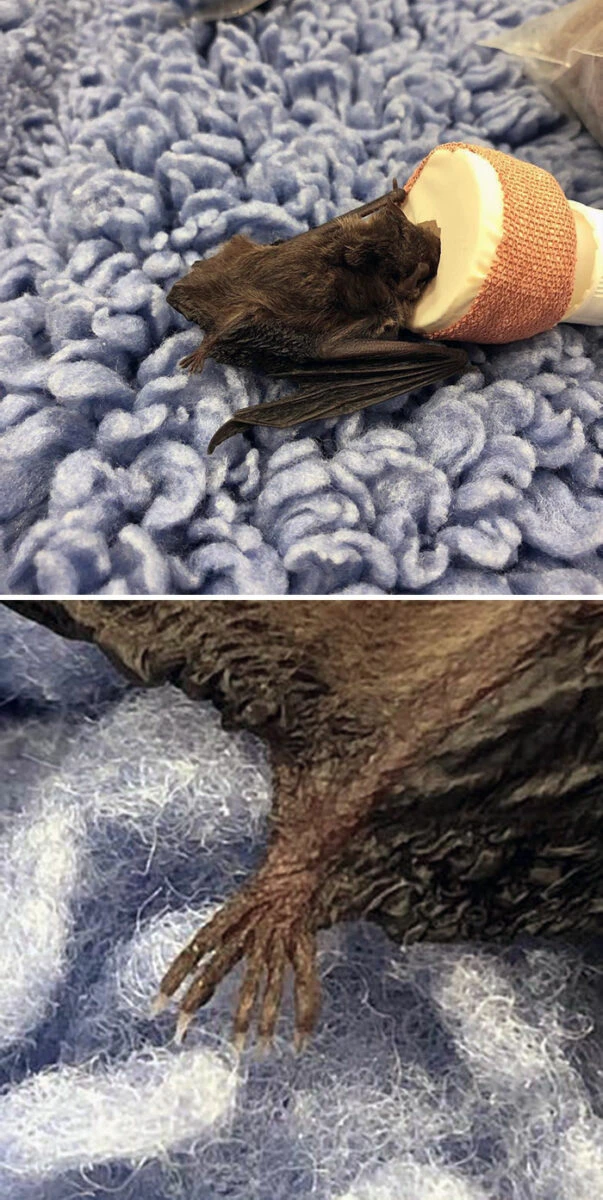
A microbat—one of the smallest bat varieties. The foot is smaller than a fingernail, yet its grip never slips.
Nature never wastes an opportunity: every foot, paw, and talon is an elegant solution to a specific environmental challenge. Gripping, paddling, springing, digging, snatching. Form always follows function—and that’s what makes animal limbs so endlessly fascinating. Behind every single one lie millions of years of evolutionary trial and error, honed into one brilliant design.
Which animal’s feet surprised you the most?