How the Dead Inês de Castro Became Queen of Portugal (6 photos)
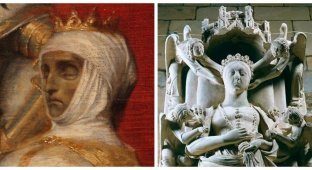
They say love conquers death. While usually meant metaphorically, the story of King Pedro I of Portugal and his beloved Inês de Castro brings the adage to life in the most literal way. The monarch's devotion was so profound that even her death couldn't stop their royal wedding. Dubbed Portugal's Romeo and Juliet, the couple's tragic romance has been steeped in myth for centuries. 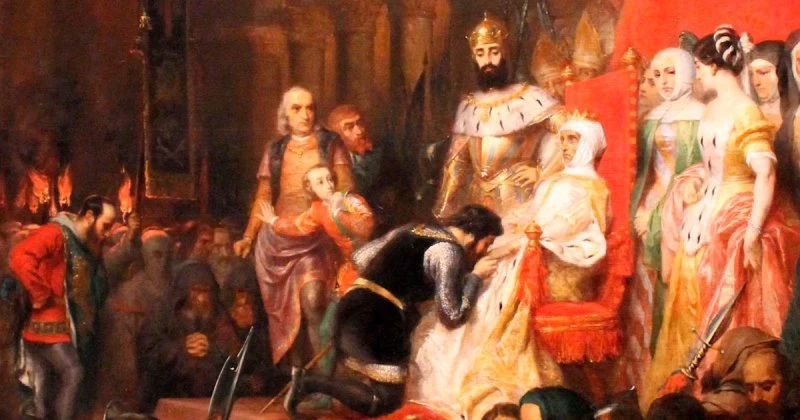
The Beginning: Pedro I's Marriage of Convenience
The drama unfolded in 14th-century Portugal. Prince Pedro, the heir to the throne, was forced by his father, King Afonso IV, into a political marriage. His bride-to-be was Princess Constance of Castile. The young prince harbored no warm feelings for his betrothed—it was purely a matter of statecraft aimed at strengthening ties with neighboring Castile. 
Inês de Castro
Constance arrived in Lisbon with a grand entourage. Among her noble ladies-in-waiting was Inês de Castro. The moment Pedro laid eyes on her, he fell madly in love. He secretly met with Inês to confess his feelings, only to discover she felt the exact same way.
A Forbidden Passion
Yet duty came first, and their secret affair couldn't stop the political wheels from turning. Seven years later, Pedro's wife, Constance, died in childbirth. After a brief period of token mourning, the prince openly devoted himself to his beautiful mistress. He brought Inês to court and declared his intention to marry her. But King Afonso IV adamantly refused to permit the union. 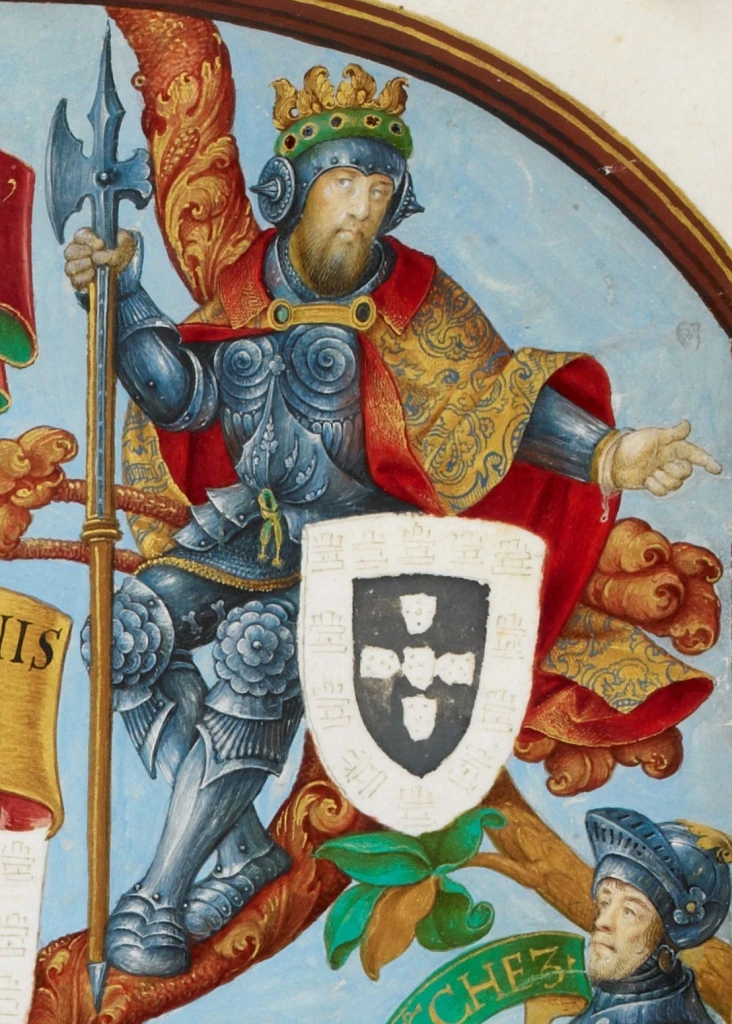
King Afonso IV of Portugal
Inês was noble enough that her non-royal lineage could have been overlooked, but the real issue lay elsewhere. She belonged to a powerful Castilian family whose members aggressively campaigned to bring Portugal back under Castilian rule. Her brothers were deeply entangled in the political intrigues of the Castilian court, and King Afonso feared that his politically naive son would fall under their dangerous influence.
The Murder of Inês de Castro: A Tragic Turn
The royal court tried everything to get rid of Inês—smear campaigns, persuasion, bribery, and even outright threats. Yet nothing could tear the lovers apart. Their bond only deepened, and Inês went on to bear Pedro four children. The king grew increasingly panicked that these illegitimate offspring would claim the Portuguese throne, sparking a devastating civil war.
In the end, Afonso's advisors convinced him that the only solution was assassination. To ensure Pedro couldn't intervene, he was dispatched on a military campaign while hitmen were sent to murder Inês. Legend has it that she begged the king for mercy on her knees, briefly swaying his heart, but the cold reality was far more gruesome—the hit went through. This tragic event inspired Karl Briullov's famous masterpiece,
The Death of Inês de Castro
. 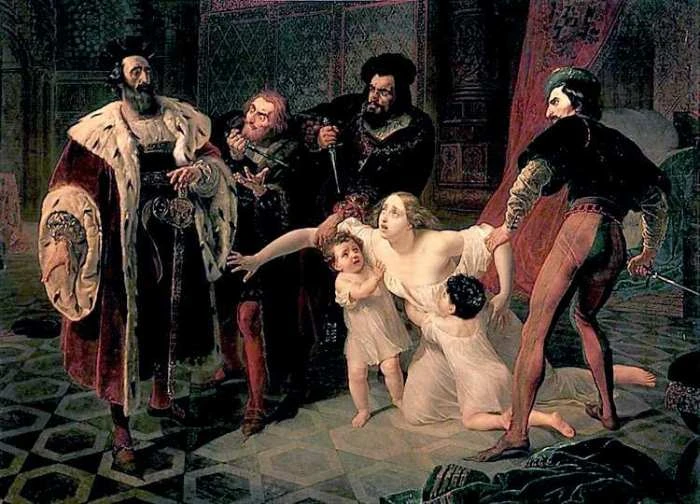
While the renowned painter's canvas takes artistic liberties, the exact details of her death remain shrouded in mystery. One account claims she was stabbed by three assassins, while another suggests she was executed under false charges of high treason. Regardless of the method, the grim reality remains: Inês de Castro was killed in 1355.
Devastated and enraged by his father's betrayal, Pedro swore vengeance. He launched an armed rebellion against the king, triggering the very civil war Afonso had desperately tried to avoid. The conflict raged until the old king's death in 1357, after which Pedro officially ascended the throne.
The Posthumous Queen
Legend has it that King Pedro's first act of reign was tracking down his lover's killers. In an act of brutal retribution, he had their hearts torn out. Then came his most chilling decree: he announced his marriage to... Inês de Castro. On June 25, 1361—six years after her murder—her body was exhumed and dressed in a lavish royal wedding gown. Propped upon the throne, the corpse was personally crowned queen by Pedro I. 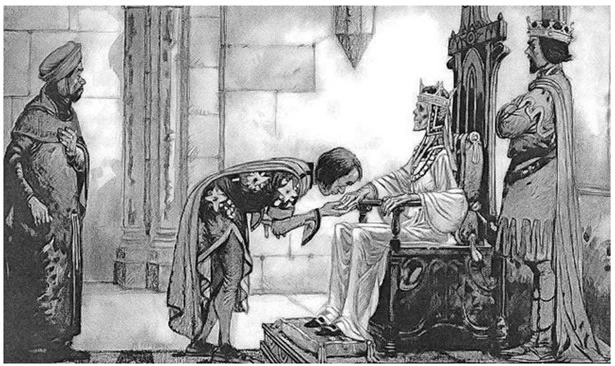
The king then forced his courtiers to kneel before the corpse and kiss her cold hand, swearing fealty to their dead sovereign. Following this macabre ritual, Inês was transported to the city of Alcobaça and entombed in the royal vault. Most historians believe the coronation was a theatrical gesture designed to ensure she received a proper royal burial.
Pedro's reign was short-lived. Upon his death in 1367, he was laid to rest beside Inês. Their marble tombs face each other so that, according to tradition, on Judgment Day, the lovers will rise and see each other first. The inscription on the king's sarcophagus reads:
"Até ao fim do mundo..."
—"Until the end of the world..." 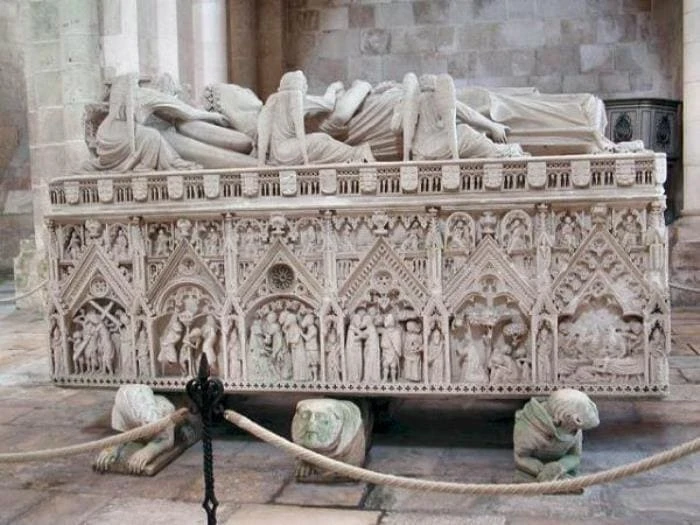
Royal sarcophagus in the Monastery of Santa Maria d'Alcobaça
Modern historians largely view this morbid tale with skepticism. No contemporary documents mention the posthumous coronation of Inês de Castro; accounts of the event only emerged decades later and vary wildly in detail. Yet for the Portuguese people, the story remains a cherished piece of national folklore.
Their tragic romance has inspired countless plays, poems, and films, including the 2009 French movie
The Dead Queen
. History records other obsessive royal mourners as well—Queen Joanna I of Castile ("Juana the Mad") famously refused to bury the body of her husband, Philip the Handsome, keeping his corpse beside her for eight months.
The story of Pedro I and Inês de Castro is a timeless tragedy that has become an enduring symbol of love beyond the grave. Whether the macabre coronation actually happened or is merely a romantic invention, the legend continues to fascinate the world. Do you believe Pedro really crowned his deceased love, or is it just a grand myth? Share your thoughts in the comments!