The Medieval "Dancing Plague": A Deadly Epidemic Scientists Still Can't Explain (7 photos)
Of all the plagues that ravaged Europe over the last millennium, the "Dancing Plague" remains by far the most baffling. For centuries, this bizarre affliction haunted the continent, vanishing only to re-emerge out of nowhere and claim more lives. Victims would begin dancing compulsively, unable to stop until they collapsed from sheer exhaustion or suffered fatal heart failure. 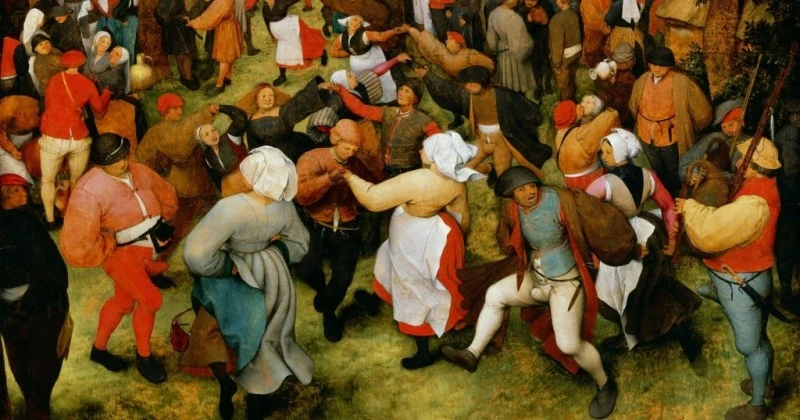
The first documented case of the "Dancing Plague"—or choreomania, as it is known today—occurred in 1020 in a German town. A group of peasants who had gathered from nearby villages for a Christmas fair danced uncontrollably for weeks. Desperately begging for help, they died one by one without relief. At the time, locals could only attribute this horrifying behavior to demonic possession. 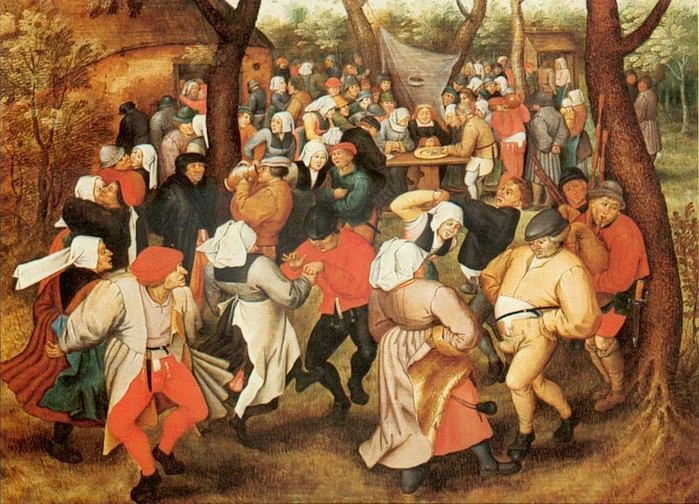
That ruined Christmas festival marked the start of an epidemic that swept through Europe in waves for centuries. Time and again, people would suddenly break into dance, sweeping thousands of others into the frenzy. At times, the manic dancing devolved into wild orgies, as an uncontrollable lust took hold of those who had managed to escape the deadly dance itself.
Dancing and Orgies
Each new outbreak would begin with a single person breaking into dance. Music was rarely necessary; victims were driven by an overwhelming urge to dance with frantic intensity. Before long, family members, friends, neighbors, bystanders, market guards, and anyone unfortunate enough to be nearby would be drawn into the madness.
The strange affliction spared no one—men and women, rich and poor, young and old were all susceptible. Respectable burghers, stern knights, and destitute vagrants all succumbed to the feverish impulse. Not even monastery walls offered protection, as the dancing mania seized even the most pious clergy. Outbreaks could sweep up anywhere from dozens to thousands of unfortunates at a time. 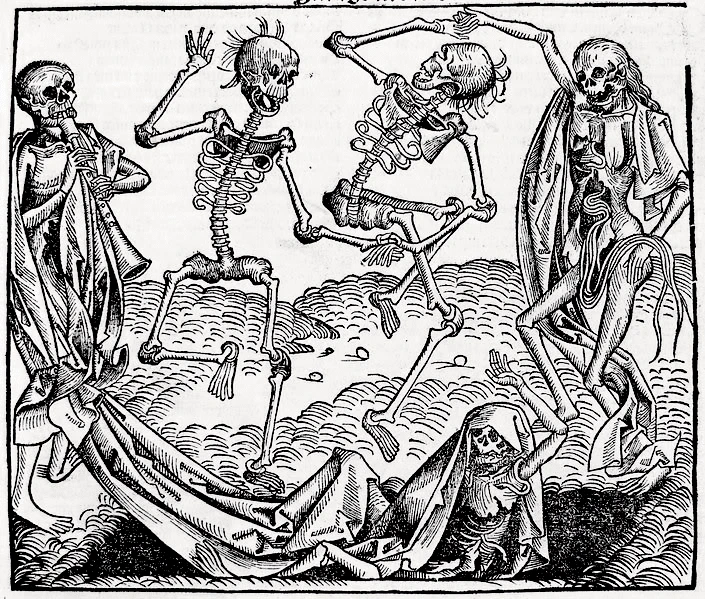
Victims caught in the grip of the illness did not merely dance with energy; they acted completely insane. Some laughed hysterically without stopping, others wept inconsolably, while others panicked, screaming incoherently for help.
The dancing was frequently accompanied by lewd behavior—shouting vile obscenities, making crude gestures, or stripping off clothing entirely. In some instances, sufferers would assault bystanders or fellow victims to engage in sexual acts, sparking a chain reaction among the crowd.
Unlike the bubonic plague, the dancing mania was not universally fatal. Survival depended largely on a person's physical fitness and underlying health. A single episode could last for over a week without breaks for food or sleep, a grueling ordeal that many could not endure. 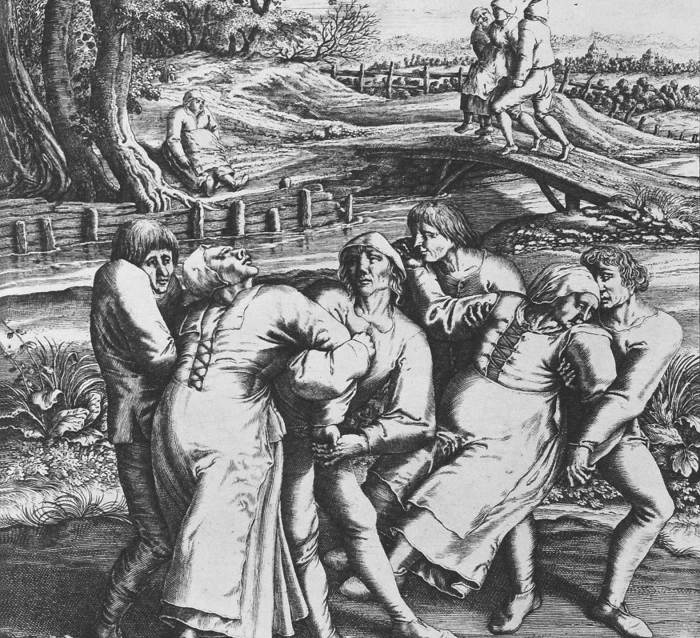
In an engraving by Hendrik Hondius, men attempt to help three women affected by the affliction
Contemporaries noted an unexpected demographic side effect in affected villages and towns: only the strongest survived, and the orgies that followed the dancing frenzies led to a sharp surge in birth rates.
As noted, choreomania victims did not need music—the rhythm seemed to play in their own heads. At one point, authorities attempted to combat the outbreak with music itself, hoping to break the manic rhythm with loud marches or gentle ballads. As a result, some affected areas bizarrely resembled modern rave parties.
What Was Behind It?
People tried various ways to stop the outbreaks. The Church was the first to intervene, viewing the "Dancing Plague" as the work of the Devil. Yet exorcisms, mass religious processions, and burning alleged witches proved useless. As with the black plague, the only effective measure was isolating those infected to prevent the delusion from spreading.
Having first appeared in the 11th century, the strange disorder peaked between the 13th and 16th centuries. Outbreaks erupted suddenly across various kingdoms and principalities every few years. Germany, the Netherlands, France, and Italy were the hardest hit. 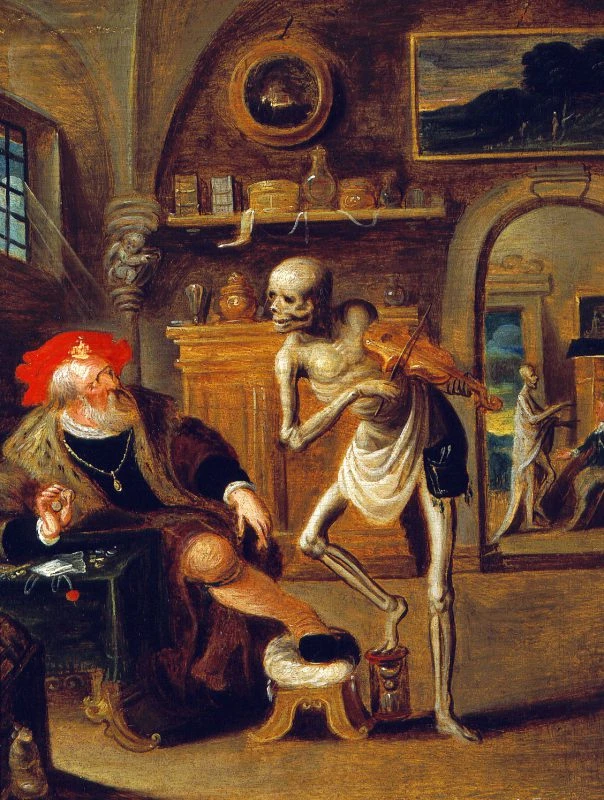
By the 16th century, cases of choreomania began to wane, and by the 17th century, the dancing plague vanished as abruptly as it had emerged. Over the past four hundred years, not a single case has been reported. Were it not for extensive historical documentation from multiple countries, one might dismiss the phenomenon as mere legend.
Today, scientists can only speculate about what triggered the illness. Most experts classify the dancing plague as a form of mass psychogenic illness (mass hysteria). Historians have noted that outbreaks often coincided with periods of famine, war, and natural disasters, suggesting the mania was a psychological defense mechanism triggered by extreme stress.
Proponents of this theory point to other forms of mass hysteria common in medieval Europe. A prime example was Flagellantism—the practice of self-flogging in religious ecstasy. Devotees grew so consumed by the practice that some whipped themselves to death or inflicted fatal stab wounds. 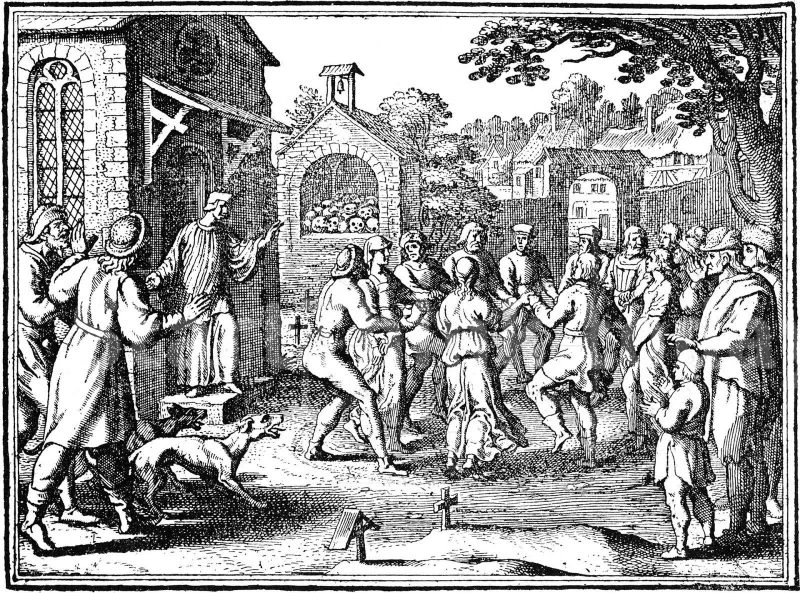
The psychological theory is further supported by the fact that isolating victims at the first sign of symptoms stopped the frenzy from spreading. Healthy individuals had to witness the behavior firsthand to be drawn into the delusion.
Another hypothesis suggests that these dancing manias were caused by neurological disorders such as chorea. Severe forms of chorea cause involuntary, jerky movements that resemble a chaotic dance. This is why chorea was historically called "St. Vitus' Dance," named after the saint believed to cure such afflictions.
However, chorea is not contagious, and the likelihood of dozens—let alone thousands—of people developing the condition simultaneously in one place is virtually zero. 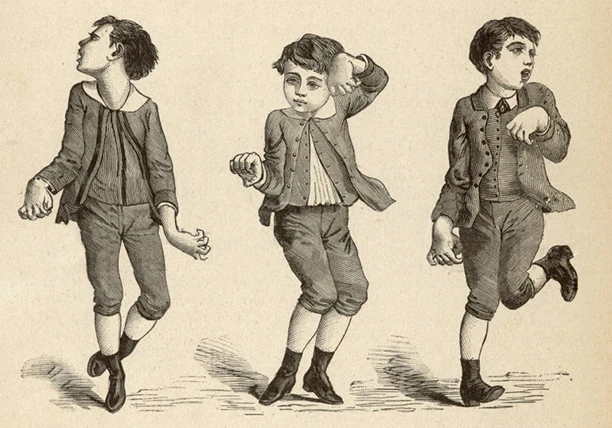
An ancient depiction of a person suffering from chorea
A third, often-debated theory points to secret religious rituals. The dancing may have been tied to forgotten cult practices rooted in pagan traditions. This is supported by how frequently the dancing escalated into sexual orgies echoing ancient bacchanalia. Yet it remains puzzling how such a cult could stay hidden in a medieval Europe whose religious history has been studied so thoroughly.
It is entirely possible that none of these theories fully explain the phenomenon, leaving the mystery of history's strangest epidemic unsolved. Understanding it remains relevant today, as humanity still occasionally experiences bizarre outbreaks of mass hysteria. A notable example is the 1962 laughter epidemic, which affected hundreds of schoolchildren in Tanganyika (now Tanzania) and neighboring Uganda.