Horses: Where Did They Originate, and Why Did They Leave? (8 Photos)
The story of the horse is a captivating saga of evolution and migration spanning tens of millions of years—a tale of how these animals lost their native homeland, only to reclaim it eons later. 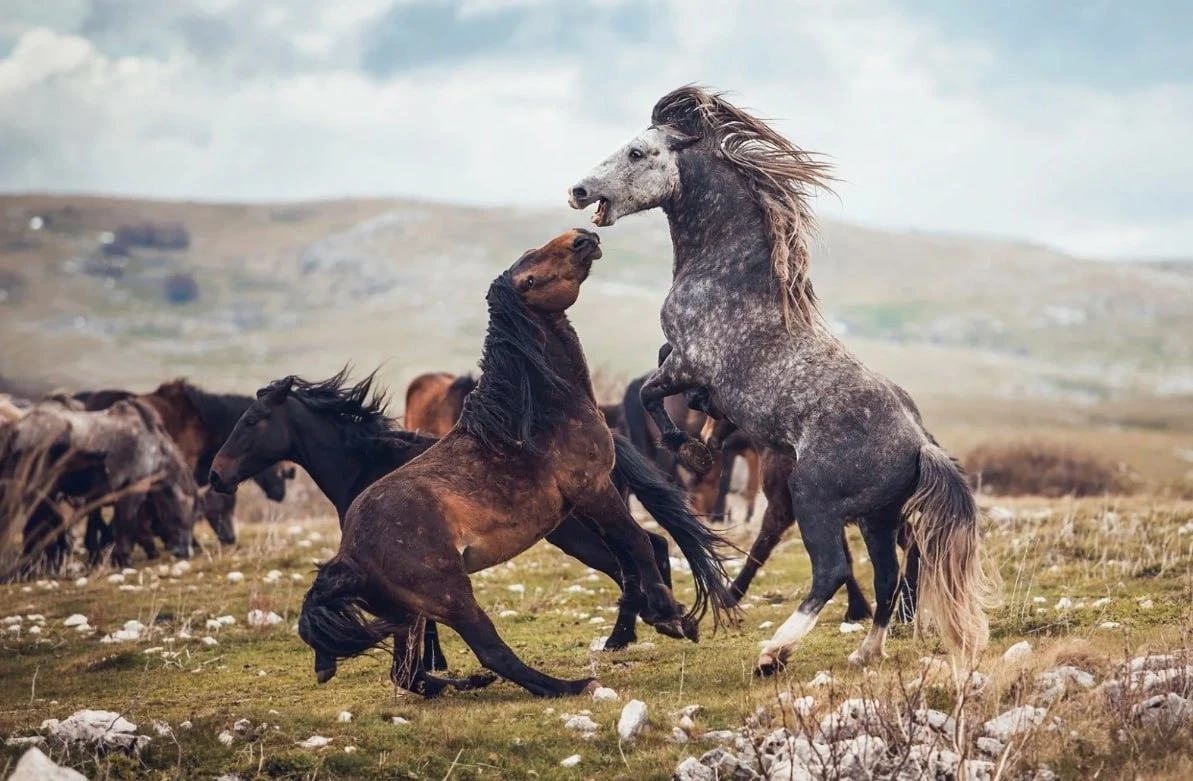
Forever free, wild, and young!
This story began around 55 million years ago in North America during the Eocene epoch. The horse's earliest known ancestor was
Eohippus
—the "dawn horse." Standing a modest 30 to 60 cm at the shoulder, with five toes on its front feet and three on its hind feet, this little creature lived comfortably in swampy forests. Dense trees offered cover from predators, while soft leaves and fallen fruit provided a ready food supply. 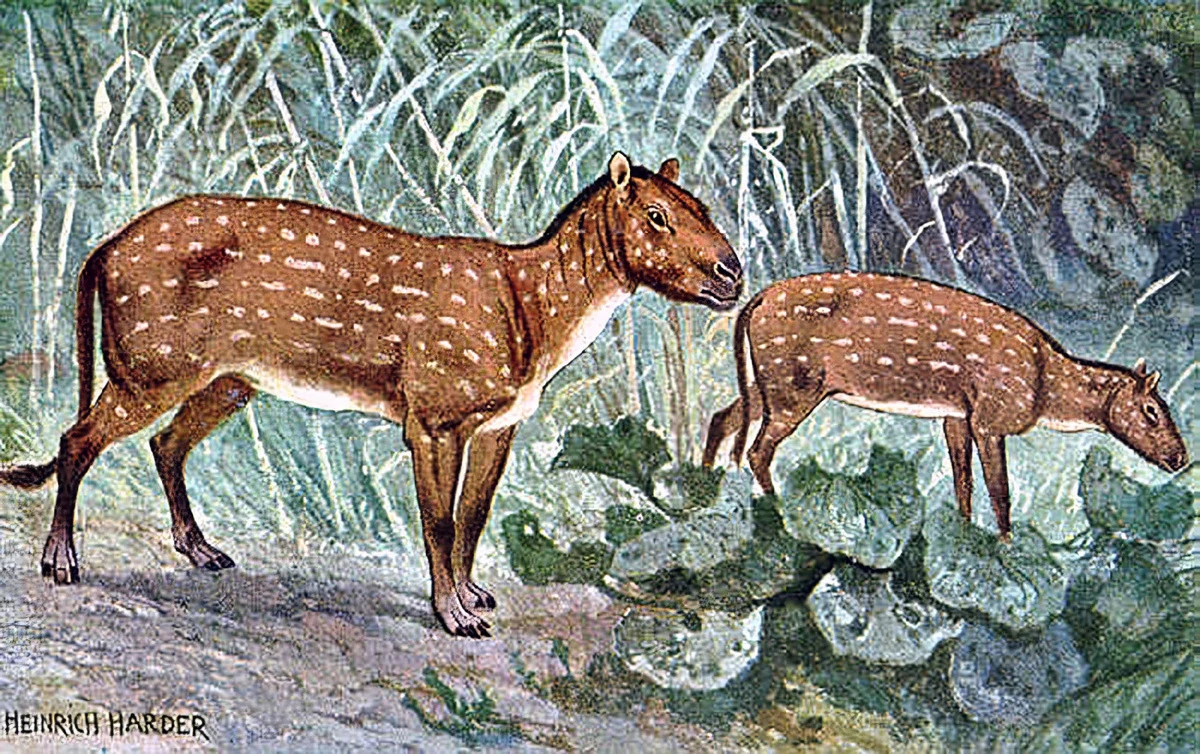
Eohippus. This is likely what the earliest known ancestor of the horse looked like—about the size of a small dog.
As the climate dried out and forests shrank,
Eohippus
was forced to swap its diet of tender leaves for tough grasses. Over time, these tiny proto-horses grew larger, developing stronger and broader teeth. But as open grasslands expanded, hiding behind trees was no longer an option. Their only defense against predators was raw speed. Generations of sprinting evolved longer legs, reduced their side toes to vestigial stumps, and reinforced the central toe into a sturdy single hoof. 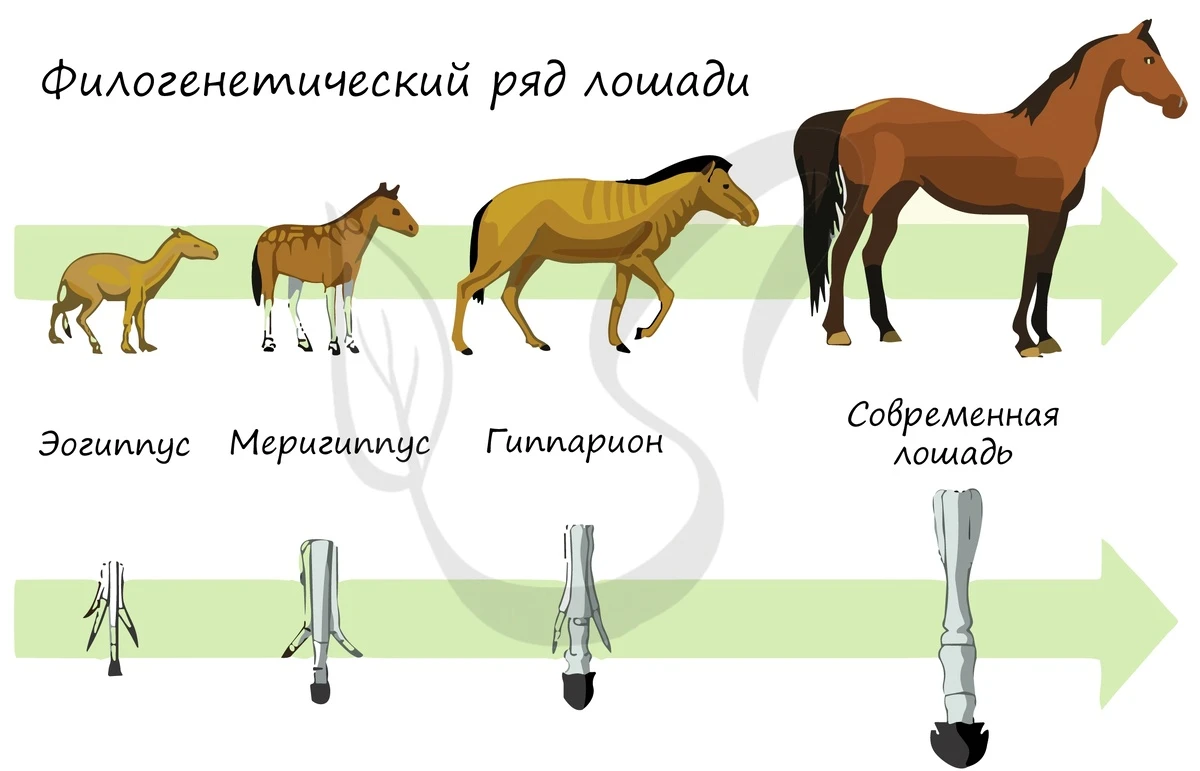
A simplified diagram showing horse evolution and the transition from toes to a single hoof. In reality, there were over a dozen intermediate species.
Yet one small nuisance remained—at least compared to changing diets and dodging predators: annoying insects. A thin, hairless tail (which originally helped with balance) was useless against flies. Evolution solved this by sprouting long, thick hair, transforming the tail into a fly-swatter. Adapted to a nomadic life in search of grazing land, a new species emerged around 2.5 to 3 million years ago: Stenon's horse (
Equus stenonis
). From its evolutionary cradle in the Americas, it set out for Eurasia via the Bering Land Bridge, which opened up as sea levels dropped during ice ages. 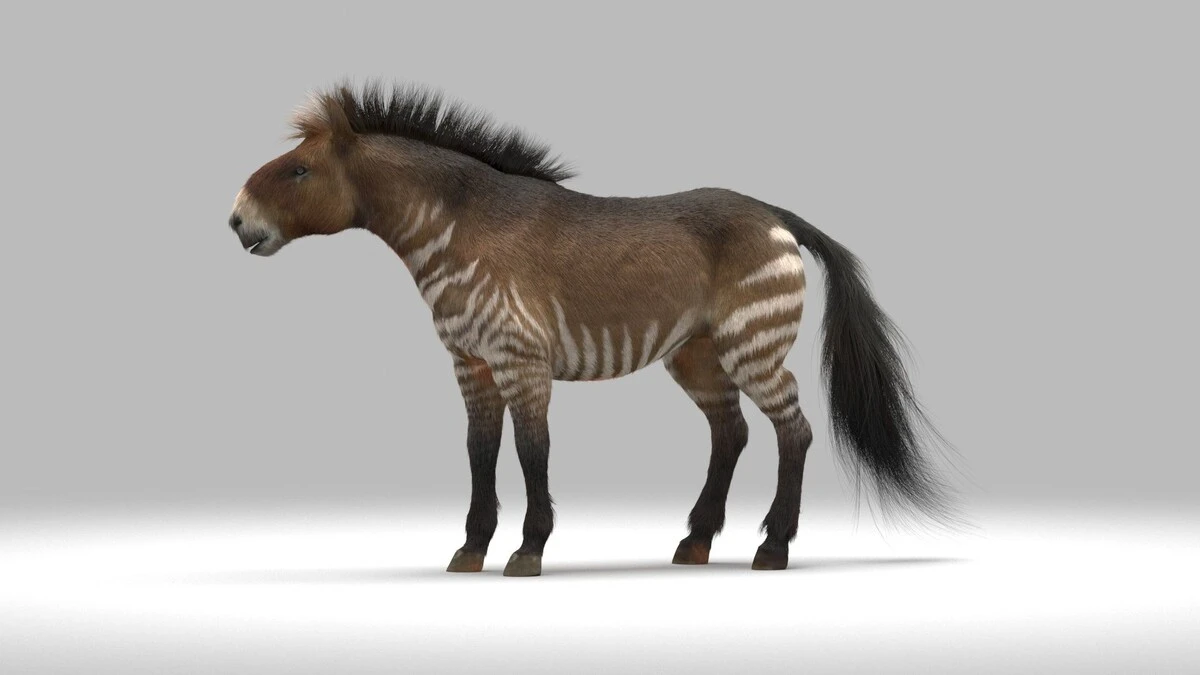
What Stenon's horse—known for its shaggier coat—might have looked like.
Research shows that at least five major migration waves occurred over hundreds of thousands of years. Horses moved back and forth across the land bridge, keeping populations across continents genetically linked for a long time. Traces of North American horse DNA have been found in specimens from Anatolia and the Iberian Peninsula, while North American fossils reveal ancestors that originated in the Urals. By the Late Pleistocene, several horse species inhabited their ancestral homeland, with
Equus scotti
(Scott's horse)—a sturdy animal standing 130 to 160 cm at the shoulder—closely resembling modern horses. 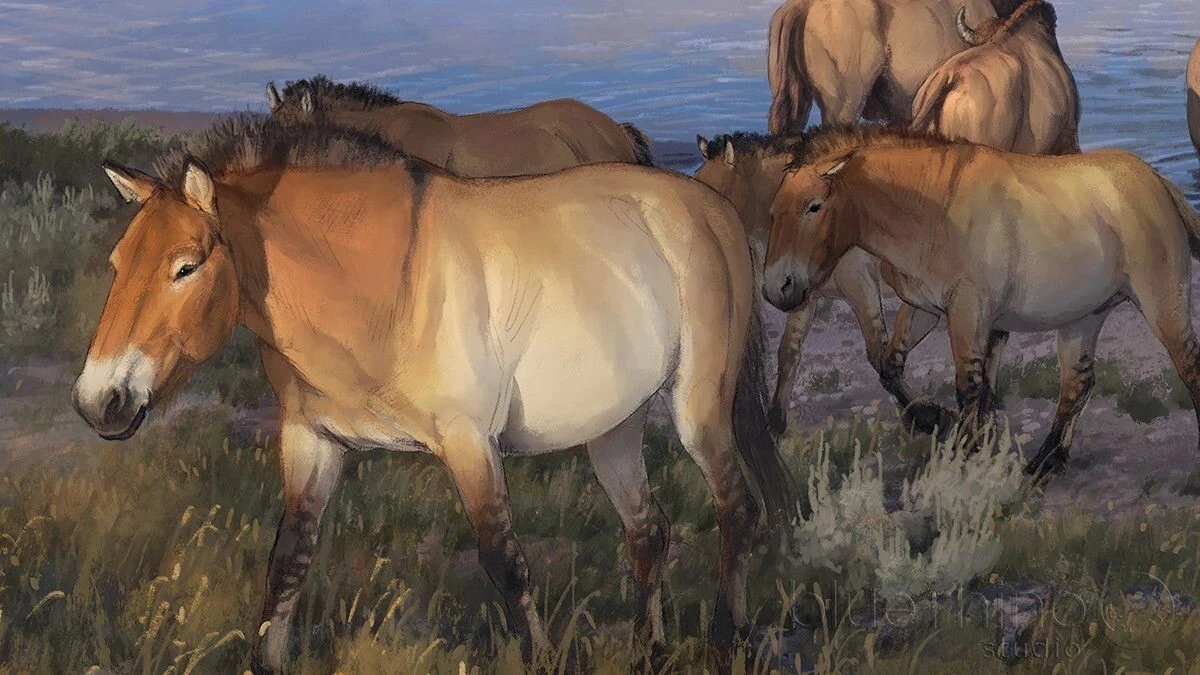
Scott's horse likely resembled today's wild Przewalski's horse.
Yet time was relentless, and between 10,000 and 12,000 years ago, horses went extinct in North America. For decades, human overhunting was blamed for their dramatic disappearance. Recently, however, climate change has been identified as the primary culprit. As the Ice Age ended and temperatures rose, melting glaciers caused sea levels to rise, flooding the Bering Land Bridge and severing the connection between American and Eurasian populations. In North America, the climate turned warmer and wetter, causing open grasslands to give way to marshes, scrubland, and dense forests. Larger, heavier horses were ill-equipped for this terrain. Movement became difficult, populations grew isolated, and unable to adapt to the changing environment, they vanished from their native land. 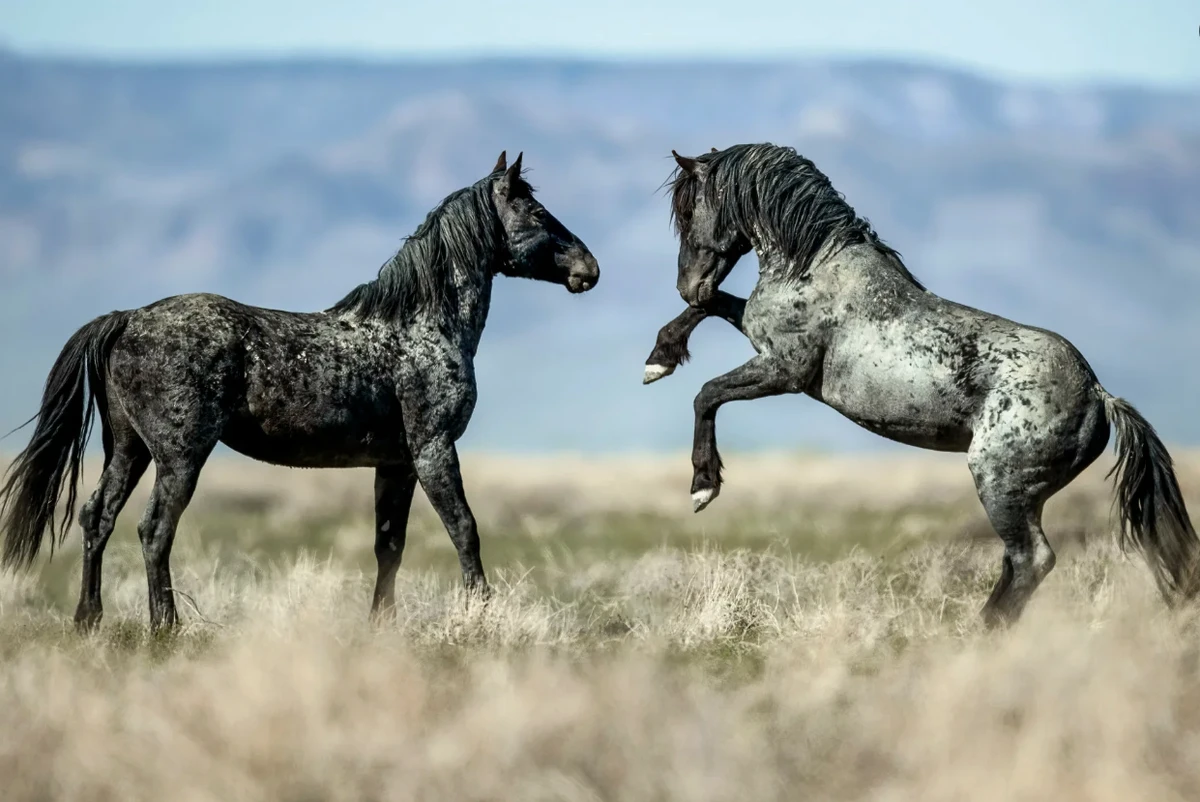
“Bro, let me drop a quick rap for you before we go extinct.”
Fortunately, Eurasian horses fared much better. Nearly all (with the exception of the rare Przewalski's horse) were domesticated by tribes in the Volga-Don and Pontic steppes around 2200–2000 BCE. Selective breeding reshaped them to serve human needs, producing everything from swift riding horses like the Thoroughbred to massive, slow-moving draft horses like the Shire. They became indispensable partners in labor, defense, and travel across the globe. 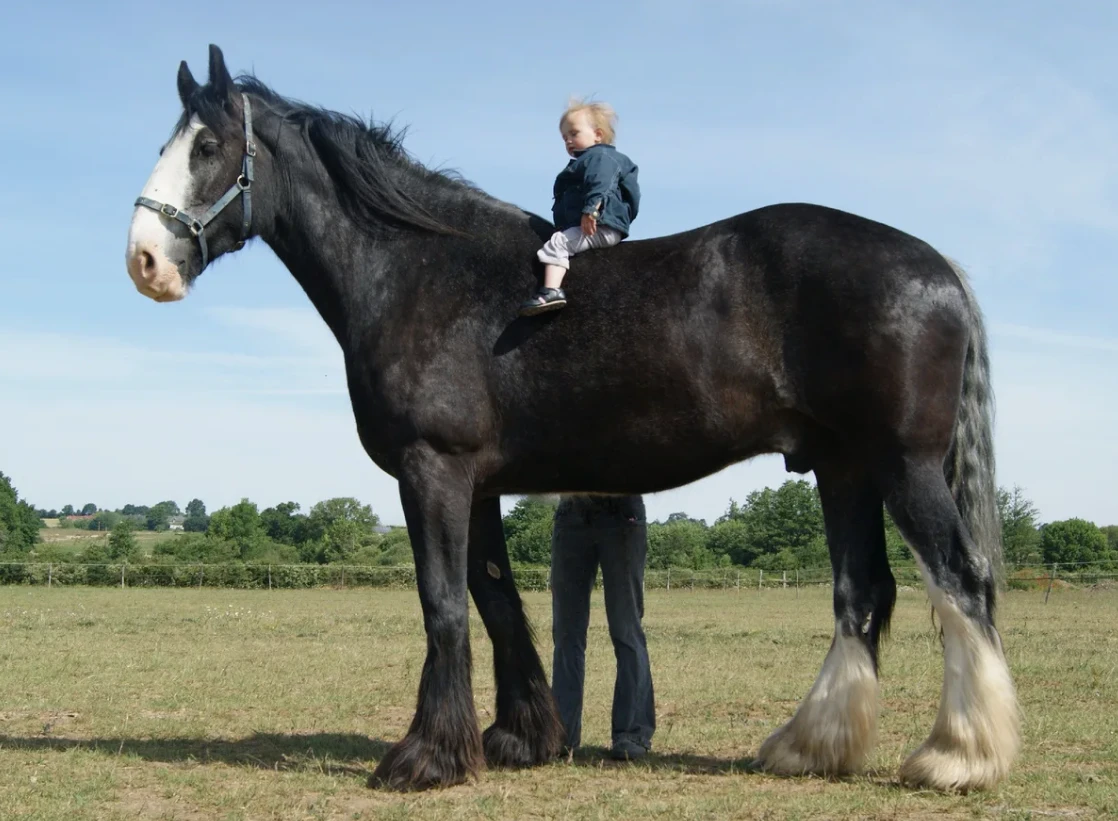
Shire horses are the largest horse breed alive today.
When Europeans colonized the Americas in the late 15th and 16th centuries, they brought horses back with them. Spanish colonizers relied heavily on Andalusians, Barb horses, and Ardennes draft horses with Arabian and Moorish ancestry. Some of these animals escaped into the vast, open wilderness. Only the fastest and hardiest survived in the wild prairies; though they shrank in size over generations, they gained incredible endurance and resilience. Thus, the Mustang—made famous by characters like Spirit—became the true spirit of the prairie, a wanderer that finally returned home. After thousands of years of adversity, transformation, and relentless wandering, these remarkable animals continue to stand as ultimate symbols of freedom. 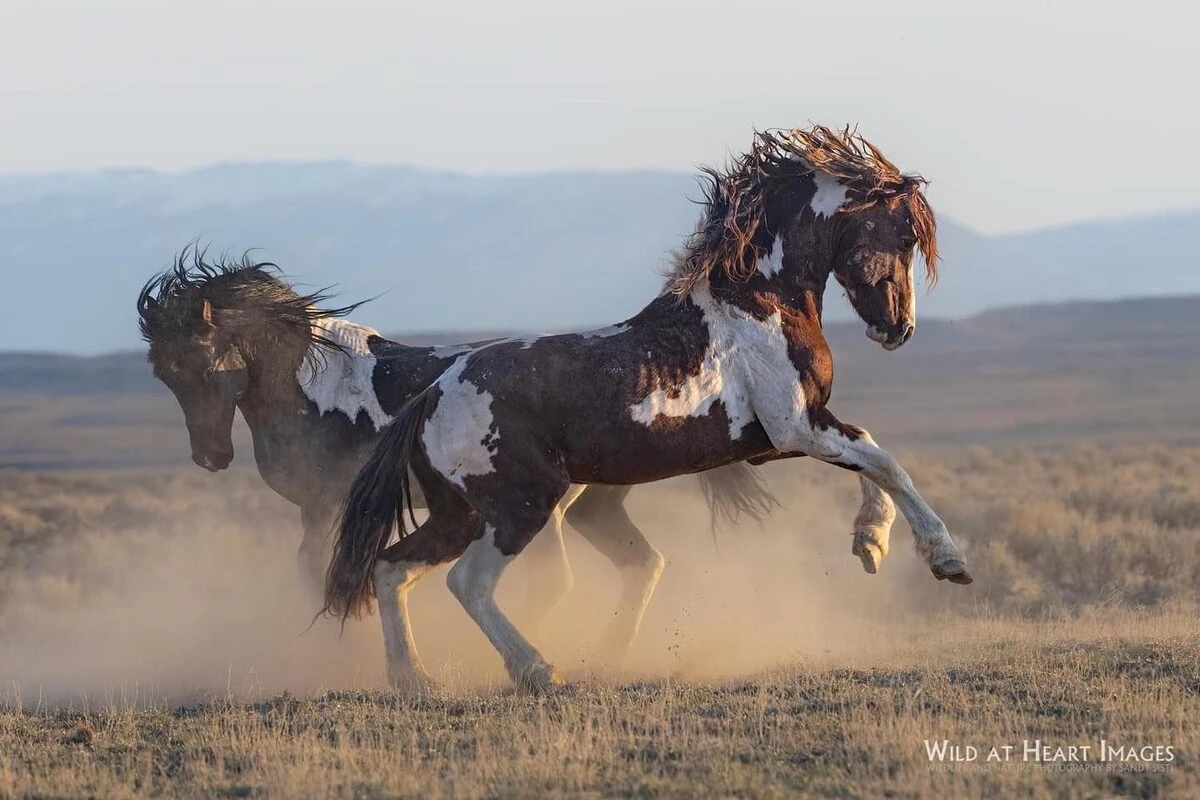
Today, wild Mustangs—descendants of escaped European horses—roam North America once again.