Carnyx – a psychological weapon of the ancient Celts (7 photos)
In ancient warfare, psychological warfare was often used alongside conventional weapons. Frightening-looking objects and musical instruments producing terrifying sounds were common in the armies of Europe, Asia, and the Americas. Such non-lethal weapons were especially effective when they combined a demonic design with stunning volume. Such was the carnyx, a military wind instrument of the ancient Celts. 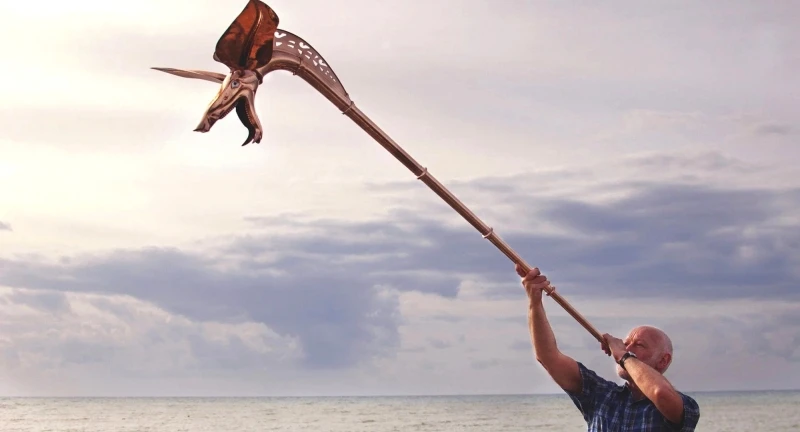
Despite the carnyx being considered a Celtic invention, it was widespread throughout Europe. It is known for certain that it was used by the Dacians, who lived in what is now Romania. Archaeologists also found images of similar trumpets on a Buddhist bas-relief in distant India. 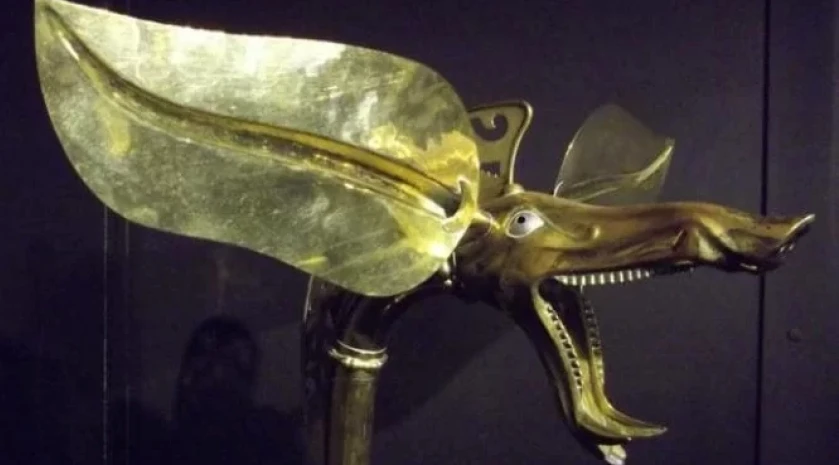
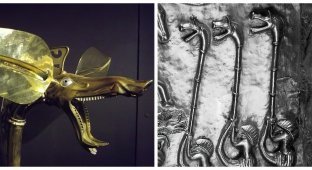
The carnyx consisted of a thin bronze tube over 3.5 meters long. At the bottom, the tube ended in a mouthpiece, and at the top was a bell-like structure, often shaped like a boar's head. Unfortunately, not a single ancient carnyx has survived completely, and archaeologists have only numerous fragments of the instrument. However, examining these fragments, scientists have hypothesized that the decorated upper part of the carnyx was equipped with a movable tongue, creating strong vibrations. 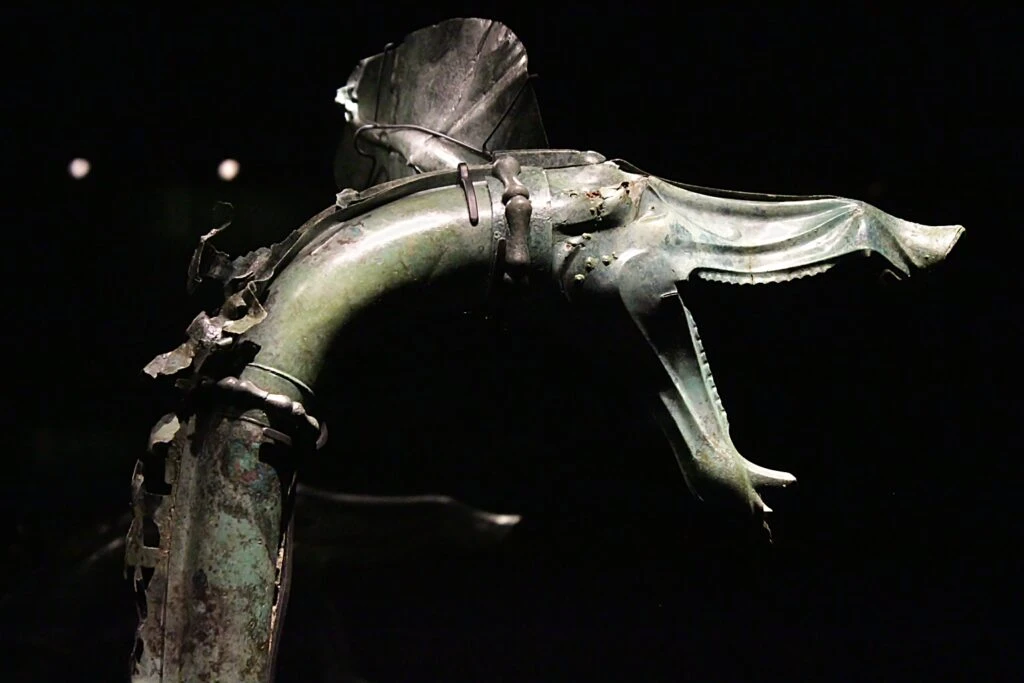
What the carnyx sounded like
The carnyx was played vertically, towering significantly above the warriors. The purpose of this wind instrument was to create maximum noise and chaos on the battlefield, which would unsettle the enemy, who was unaccustomed to such noise. 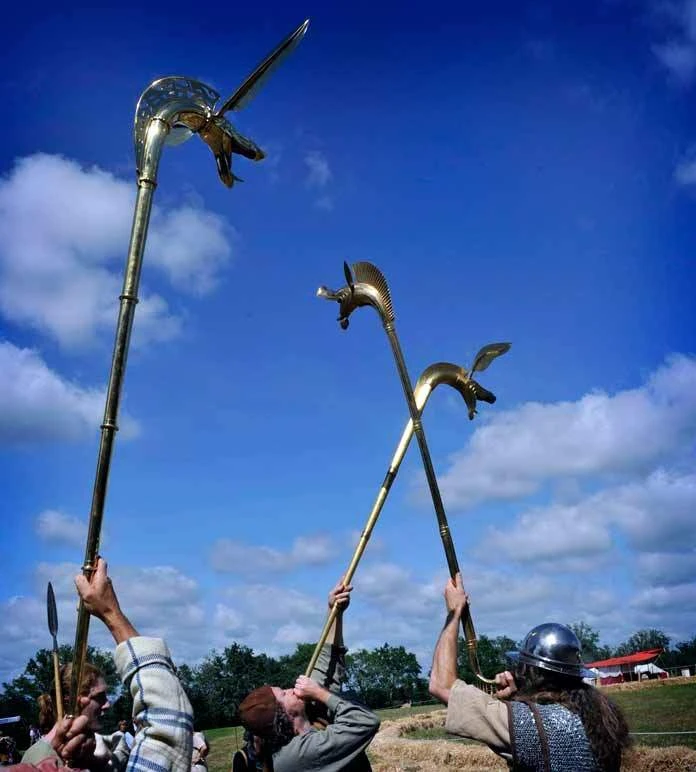
The sound of the carnyx actually had an effect on the enemy. The Greek historian Polybius, who lived in the 2nd century BC, wrote about this. He was astonished to see a large number of menacing-looking trumpets above the Celtic army. The trumpets roared, and the warriors' battle cries blended seamlessly into their sound. The echo amplified the sound, creating an unbearably disorienting cacophony. 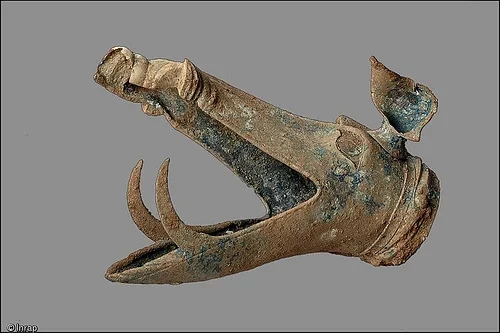
The Roman historian Diodorus Siculus also noted the sharp, piercing sound of the Celtic wind instruments. Anyone who encountered the roar of the carnyxes for the first time was overcome by a strong desire to leave the noisy place. They wanted to end this torture immediately. The Roman wrote that this sound was ideal for sowing confusion among the enemy ranks. 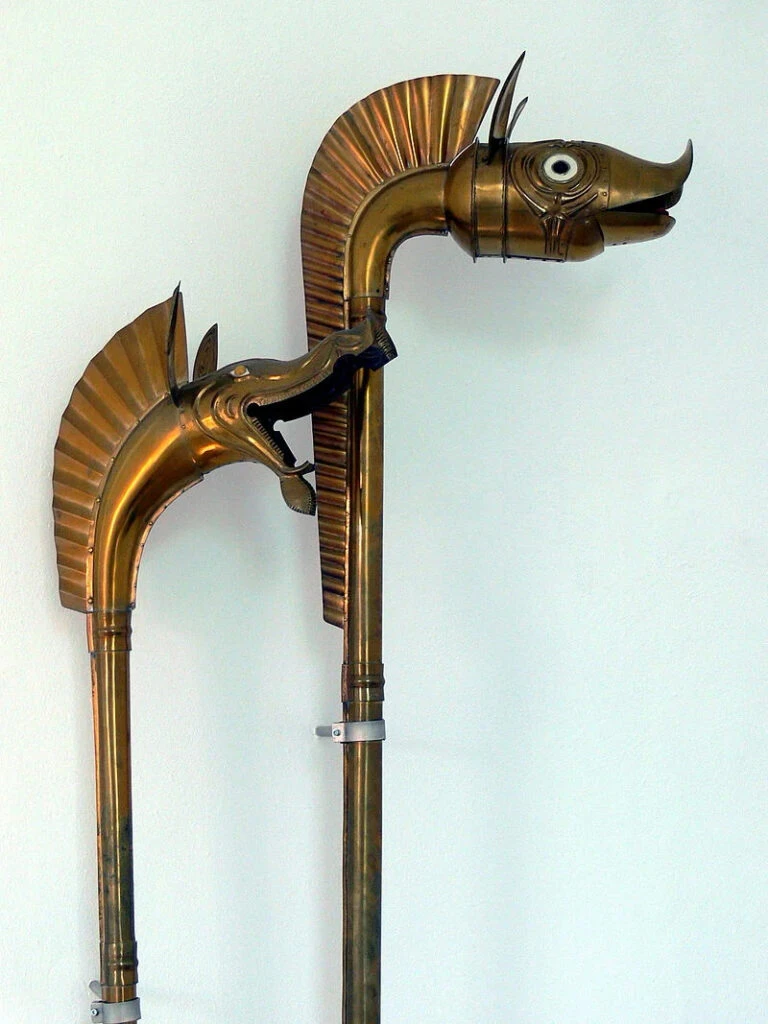
A Rare Artifact
No museum has a completely preserved Celtic carnyx. The most complete example is the Deskford Carnyx, found in Scotland in 1816. The instrument retains its pipe and a boar's head with several bells. However, a significant part of the artifact is still missing: the animal's mane and tongue. 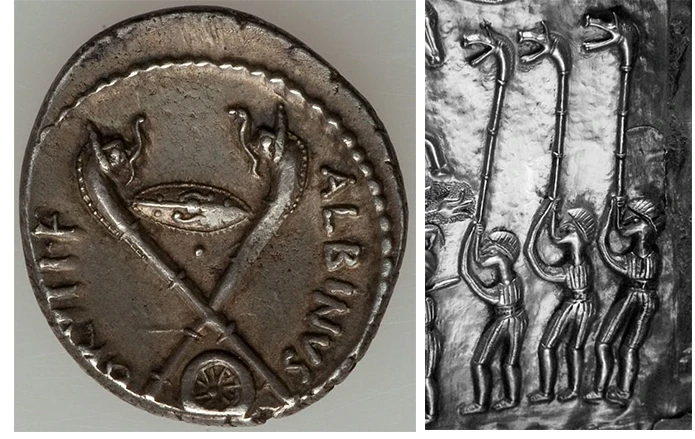
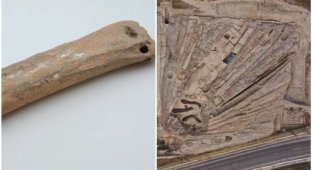
The last time a carnyx was discovered was in 2004. Seven pipe fragments were found in a cache of ritually destroyed weapons. Damaged helmets, swords, and animal remains were also found there. Depictions of the carnyx are much more common. The most famous are the crossed pipes on a Roman denarius dated to 48 BC and three men with tools on a cauldron from Gundestrup, Denmark.