The largest crystals on Earth (4 photos)
In April 2000, two miners from the Peñoles mining and metallurgy company, brothers Juan and Pedro Sánchez, were drilling a new tunnel approximately 300 meters beneath Mexico's Chihuahuan Desert. 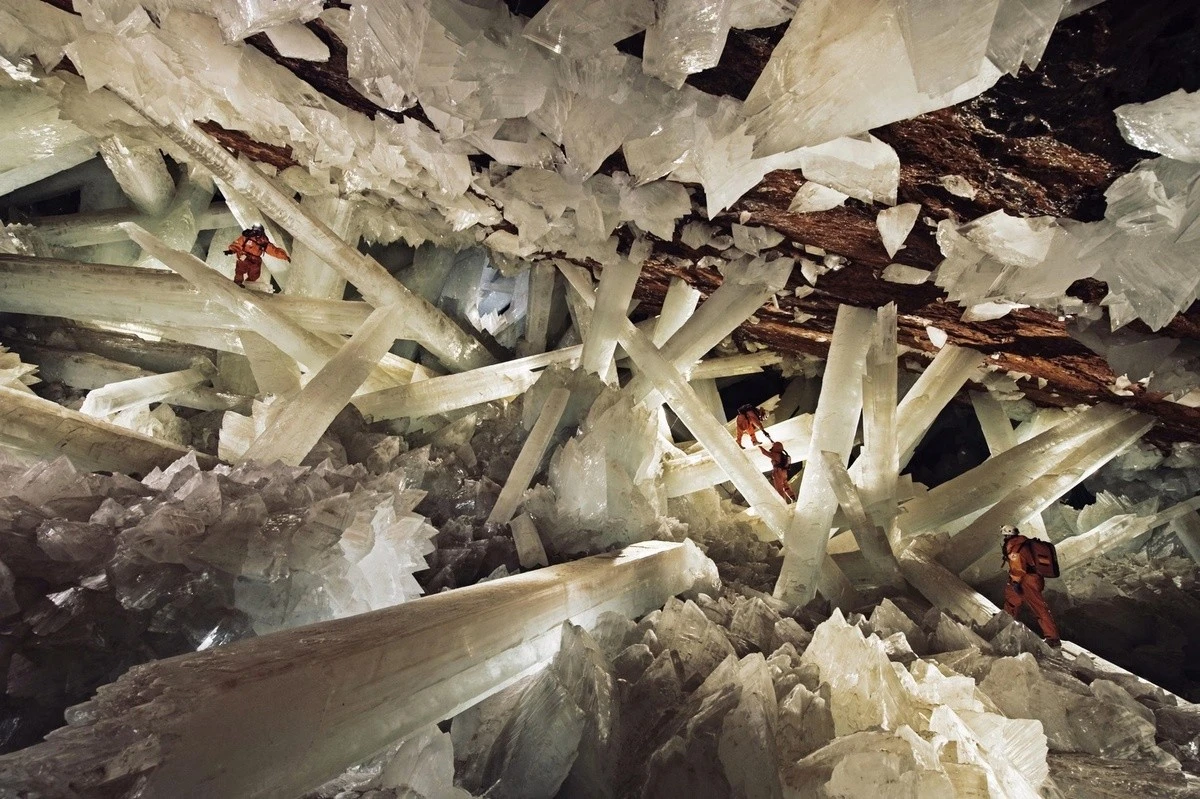
"Cave of Crystals"
Suddenly, the drill broke through a wall, revealing a spacious cavity. Inside, at a temperature of 58°C and nearly 100% humidity, giant crystals grew—a sight that astounded even seasoned miners.
These formations, discussed in this article, are recognized as the largest natural crystals ever discovered on Earth.
Parameters
The largest documented crystal is 11.4 meters long, approximately one meter in diameter, and weighs approximately 55 tons. All the crystals in this cave are composed of selenite, a translucent variety of gypsum with a characteristic milky hue. Their shape is perfect hexagonal prisms with sharp edges. 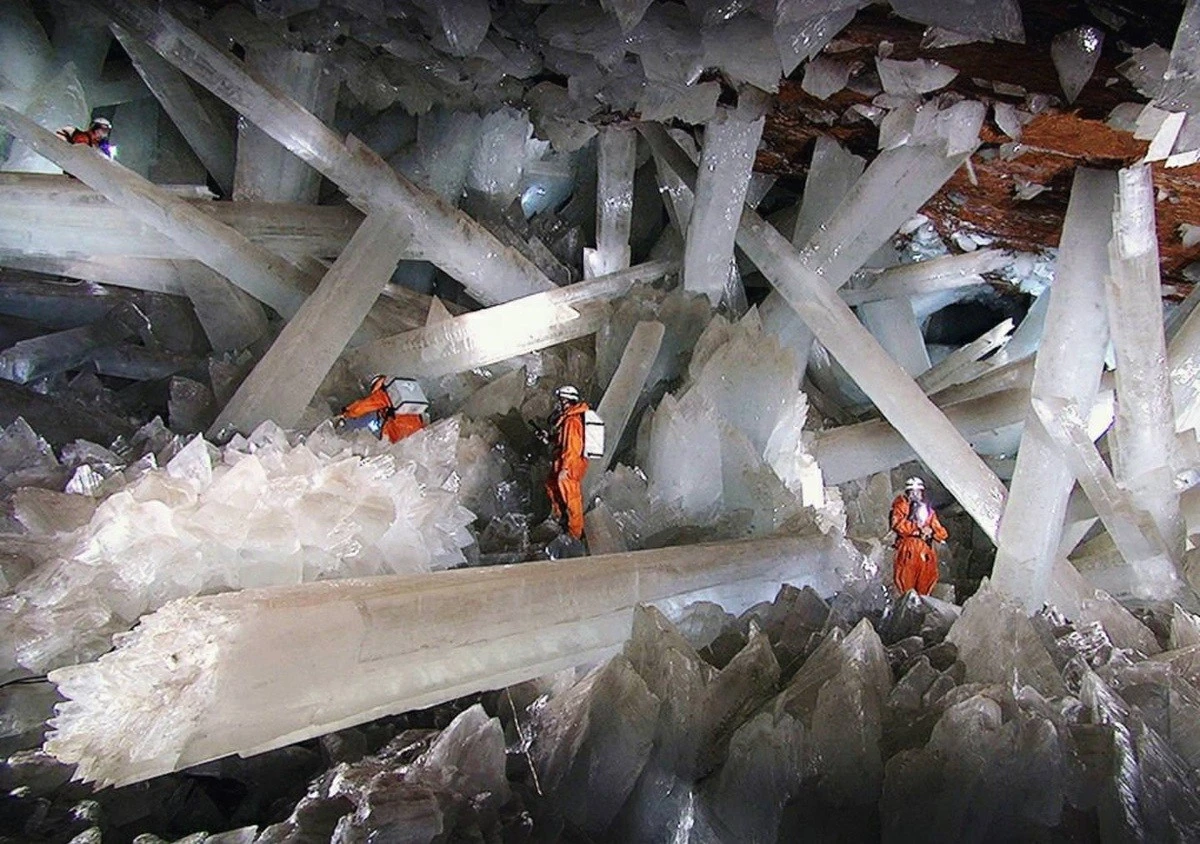
A cavity containing giant crystals, known as the "Cave of Crystals" (Spanish: Cueva de los Cristales), is located in the Naica mine in the Mexican state of Chihuahua. Previously, the record was held by the "Cave of Swords" (Spanish: Cueva de las Espadas) in the same state. It is located at a depth of approximately 120 meters and was discovered in 1910. The length of the specimens found there ranges from one to two meters.
Formation
Underneath the cave is a magma chamber—a cooling body of molten rock that heated subsurface waters saturated with anhydrite (anhydrous gypsum) to high temperatures. This water gradually filled underground cavities, and around 600,000 years ago, its temperature stabilized at 58°C.
This is a critical temperature: above this temperature, anhydrite dissolves, and below this temperature, selenite forms. The solution then began to slowly cool, triggering crystal growth at a rate of approximately 0.001 millimeters per year. Isotopic analysis has shown that the age of the finds in the "Cave of Crystals" ranges from half a million to a million years. 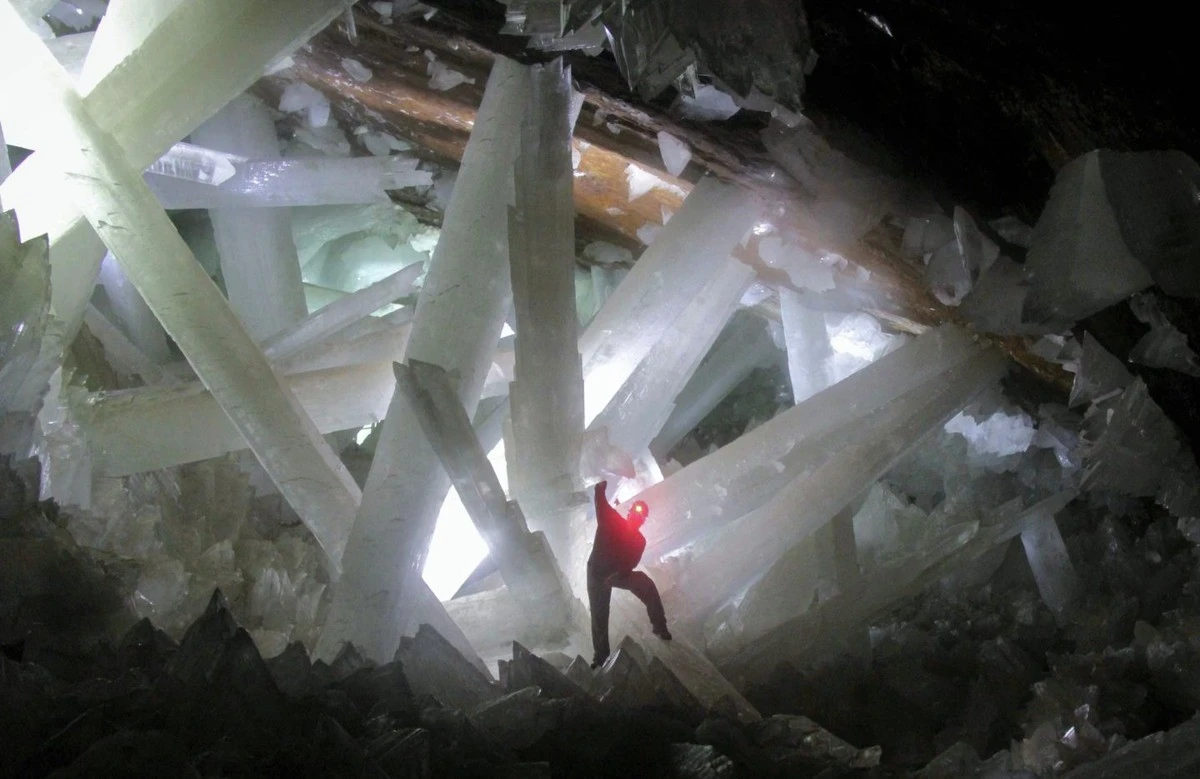
Remarkably, in 1985, the Peñoles company began pumping groundwater from the mine. The water level dropped, the caves dried out, and crystal growth stopped—but, as you'll learn later, only temporarily.
Hellish Conditions and Findings
The temperature in the cave is 58°C, but in some areas it reaches 60°C. Humidity is 90–100%. Under such a combination of factors, the human body loses the ability to cool itself through sweat evaporation. Without a protective suit, a person can stay inside for no more than ten minutes; then heat stroke, loss of consciousness, and eternal rest set in.
Researchers working in the "Crystal Cave" used suits with ice vests and independent cooling systems. But even then, stays were limited to 30–40 minutes.
From 2000 to 2017, several international scientific expeditions visited the cave. Chemical analysis revealed high purity of selenite and minimal impurity levels. The dating of the crystals was confirmed. 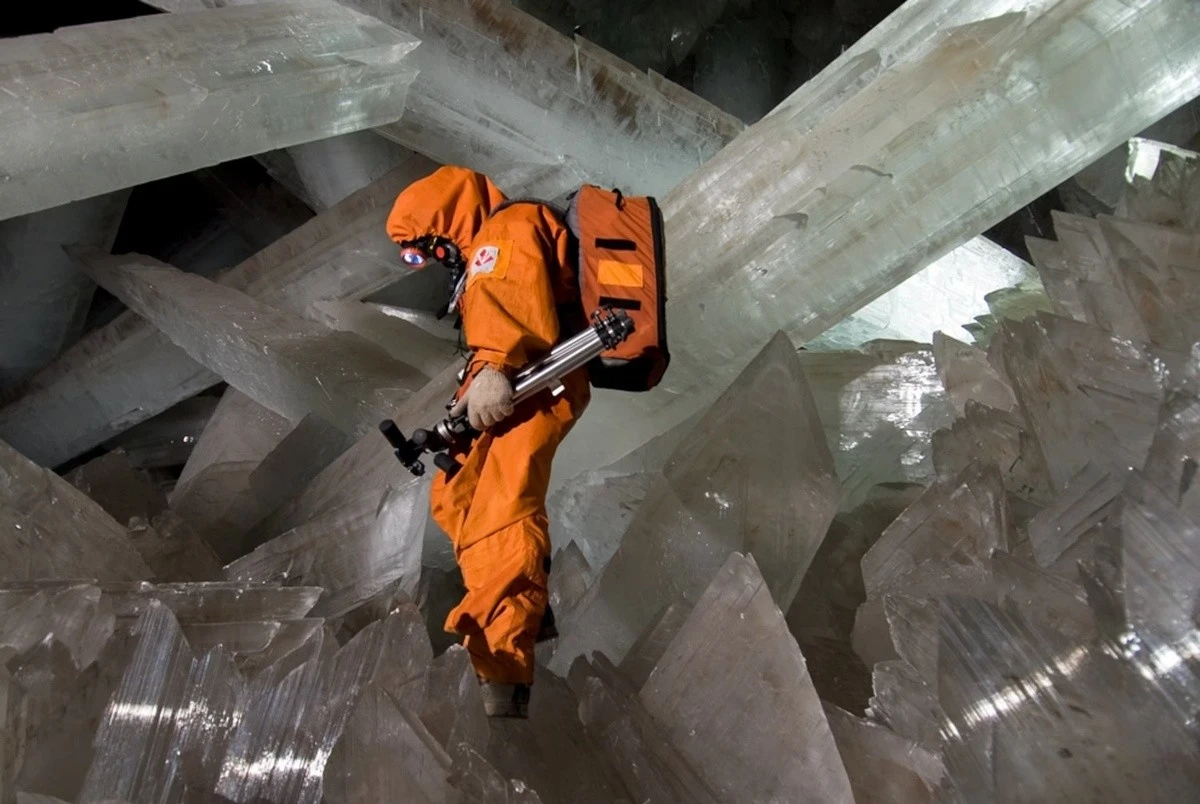
Living microorganisms, approximately 60,000 years old, were discovered in liquid inclusions within the crystals, trapped by the growing crystals from the primordial solution. They had been in a state of suspended animation, but when placed in laboratory conditions, they awakened and began to rapidly multiply. This discovery, important for astrobiology, expanded scientific understanding of the limits of life in extreme conditions.
Current Status
In 2015, the Peñoles company stopped pumping water from the mine because ore extraction had become unprofitable. This allowed subsurface water to return and fill the cavities. In 2017, the "Crystal Cave" was completely flooded, and its unique contents were once again submerged in the hot mineral solution. Thus, renewed crystal growth is theoretically possible.
Today, access to the cave is closed, and there are no plans to turn it into a tourist attraction. However, photographs, video footage, scientific data, and several small specimens for museums have been preserved.