The depths of our planet conceal countless treasures—minerals. Their indescribable diversity and beauty have always captivated human hearts. We invite you to admire a selection of these magnificent examples of frozen natural harmony. 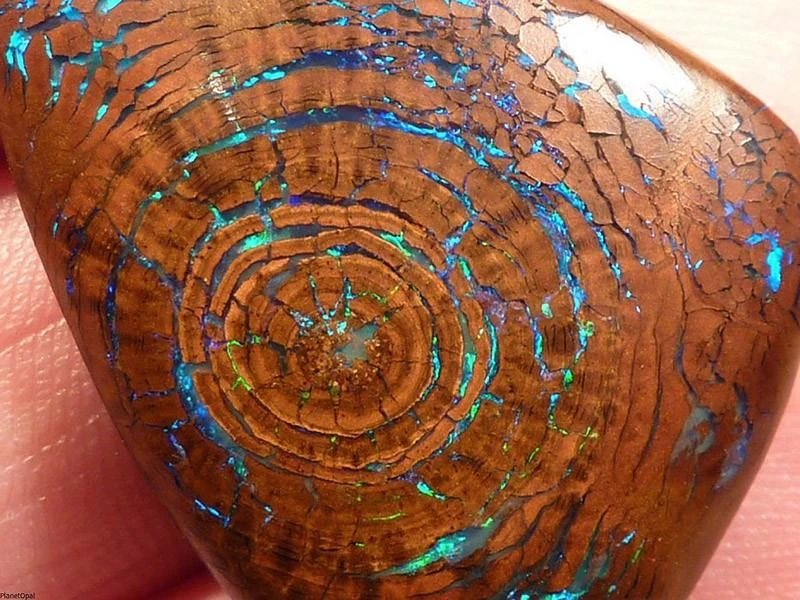
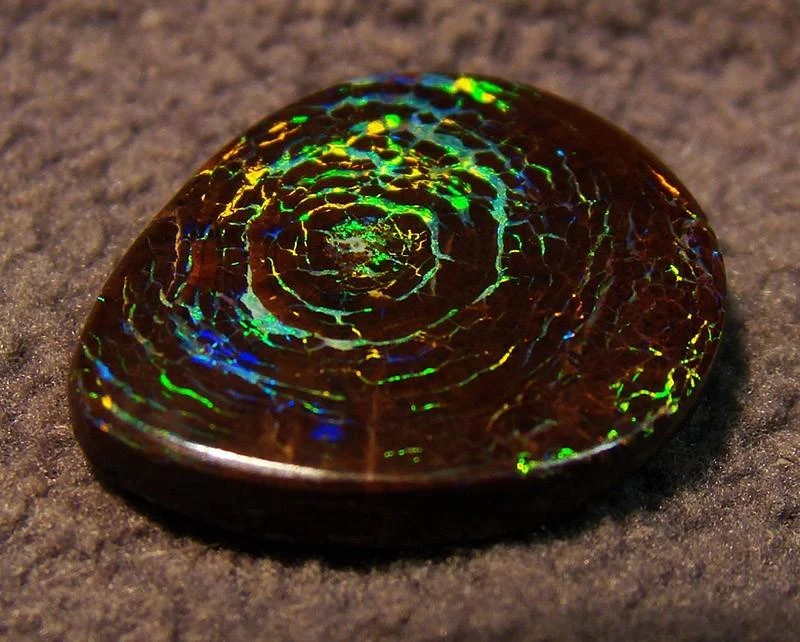
Petrified wood with opal veins
Under certain conditions, fragments of fallen wood do not rot, but mineralize, turning into truly intricate stones. This process requires hundreds of years and the absence of air, resulting in a unique mineral resembling shards of frozen wood, dotted with sparkling flecks of opal or chalcedony. 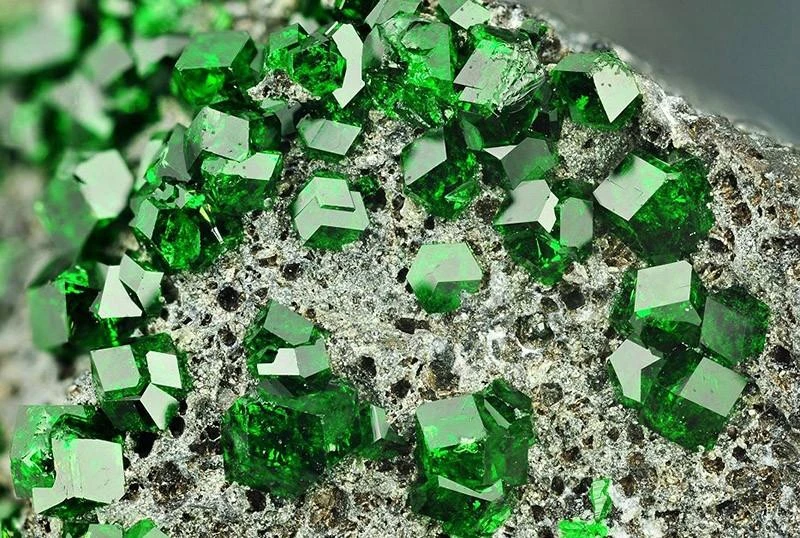
Uvarovite
Discovered in the 19th century in Siberia, this garnet-related stone is popularly known as the "Ural emerald." Chromium imparts the mineral's mesmerizing green color. It is extremely rare in nature, and the few finds are quite modest in size. Incidentally, this is the mineral Alexander Kuprin was referring to in his work "The Garnet Bracelet." 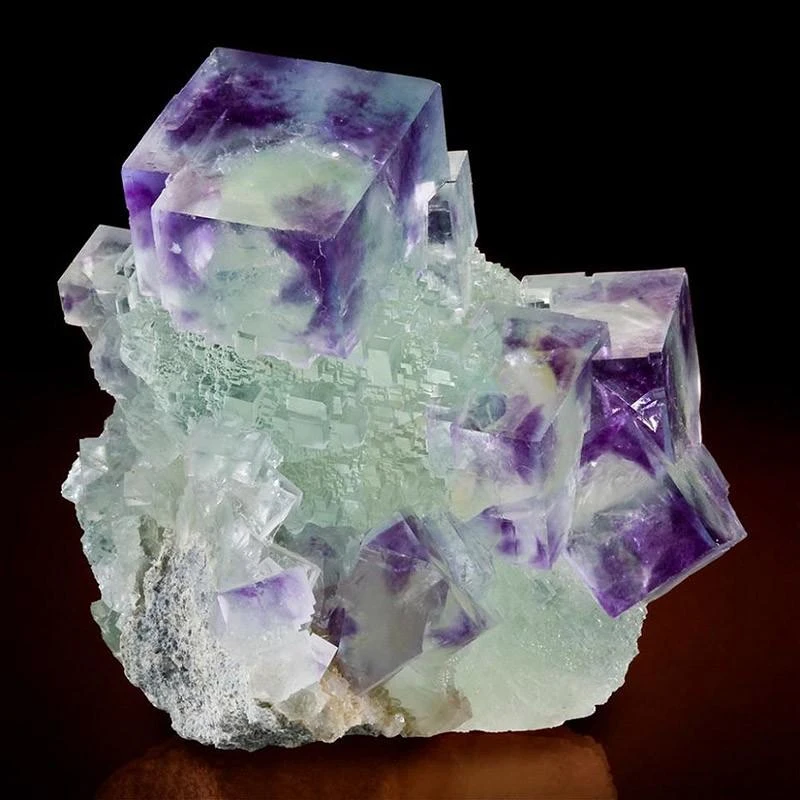
Fluorite
This mineral, long used for decorative purposes and delighting the eyes of high society with graceful translucent vases and figurines that glowed in the dark, has now found a more practical application in optics, becoming an excellent material for creating lenses. 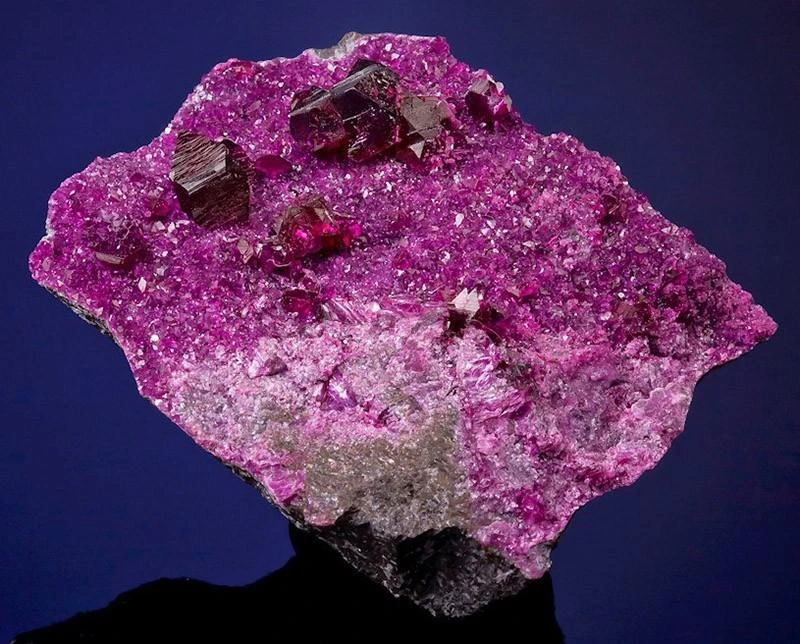
Kemmererite
A very fragile fuchsia-colored stone – kemmererite — is considered a collector's item. Crafting it into jewelry requires a master craftsman's meticulous attention to detail. For this reason, the price of a processed mineral is extremely high. 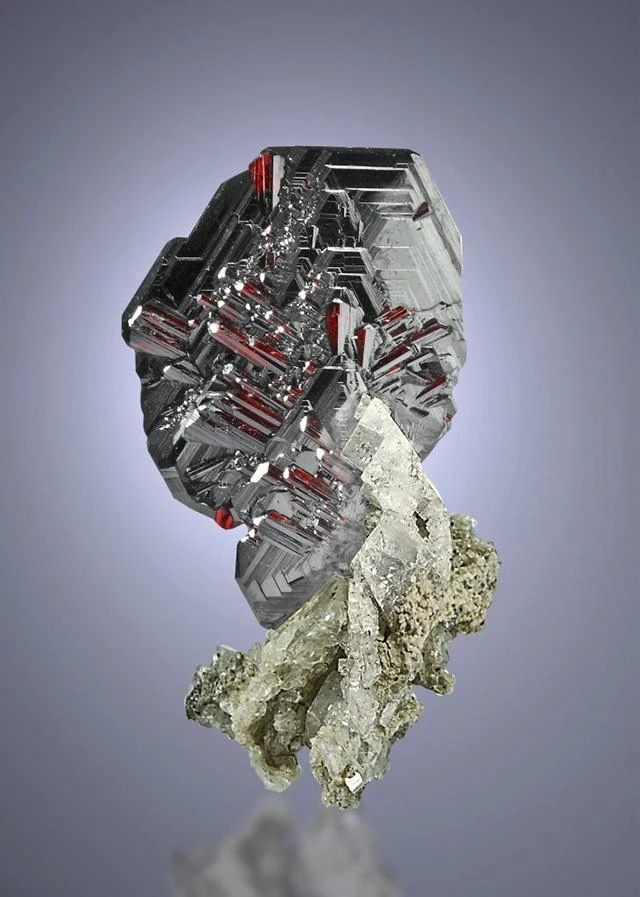
Hematite, Rutile, and Feldspar
The ability of the black mineral hematite to turn water blood-red when processed has led to many enduring superstitions surrounding this stone. But that's not the only reason it's popular—hematite is very common in nature and is used, in addition to its decorative properties, in many applied fields. 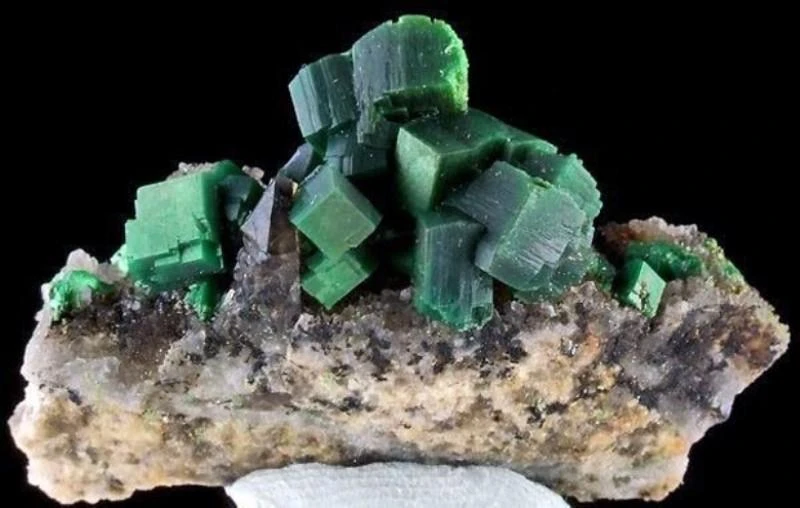
Torbernite
As mesmerizingly beautiful as this mineral is, it's also deadly. Torbernite crystal prisms contain uranium and can cause cancer in humans. Furthermore, when heated, these stones begin to slowly emit radon gas, which is extremely dangerous to health. 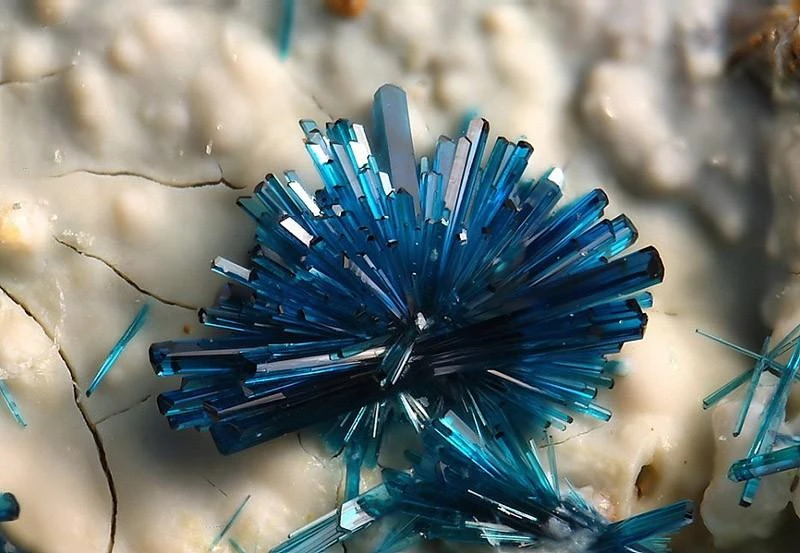
Clinoclase
The rare clinoclase crystal has a small secret: when heated, this exquisitely beautiful mineral emits a garlic-like aroma. 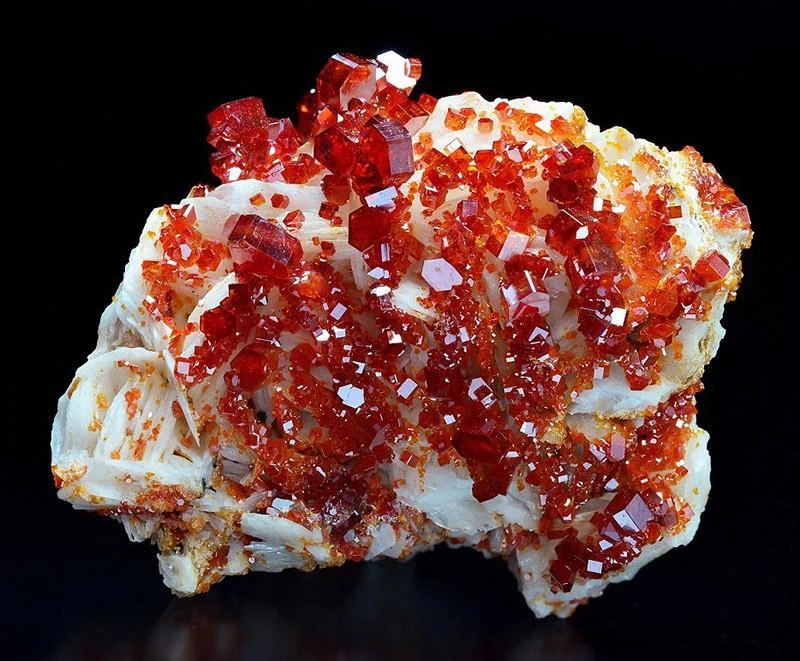
White barite strewn with vanadinite crystals
Vanadinite received its name in honor of the Norse goddess of beauty, Vanadis. This mineral is one of the heaviest on the planet due to its high lead content. Vanadinite crystals should be kept away from sunlight, as they tend to darken when exposed to it.
Geode 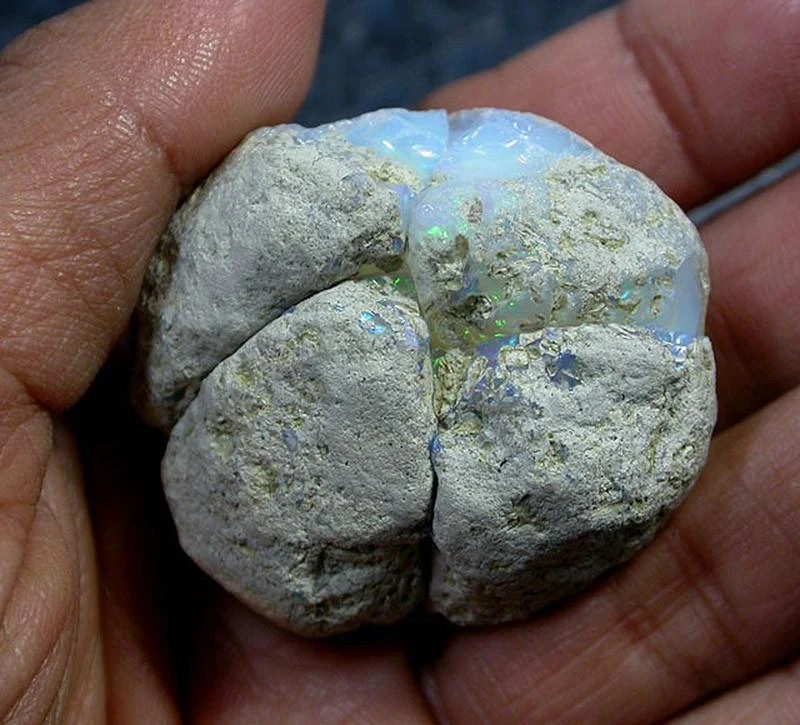
A fossil egg? No – a geode with an opal core. 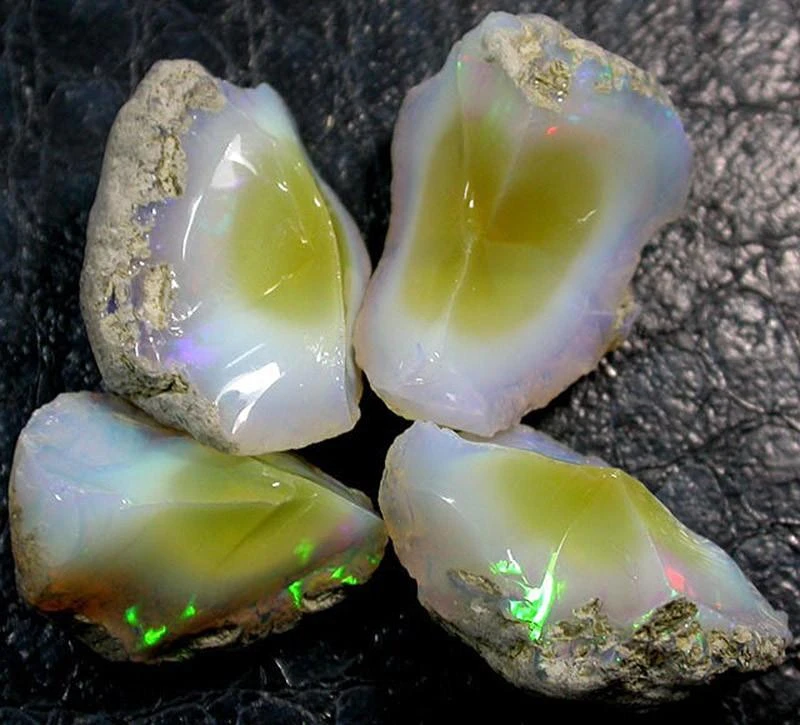
In areas rich in minerals, you can find geodes – geological formations that are cavities containing various minerals. When cut and chipped, geodes can look extremely unusual and attractive. 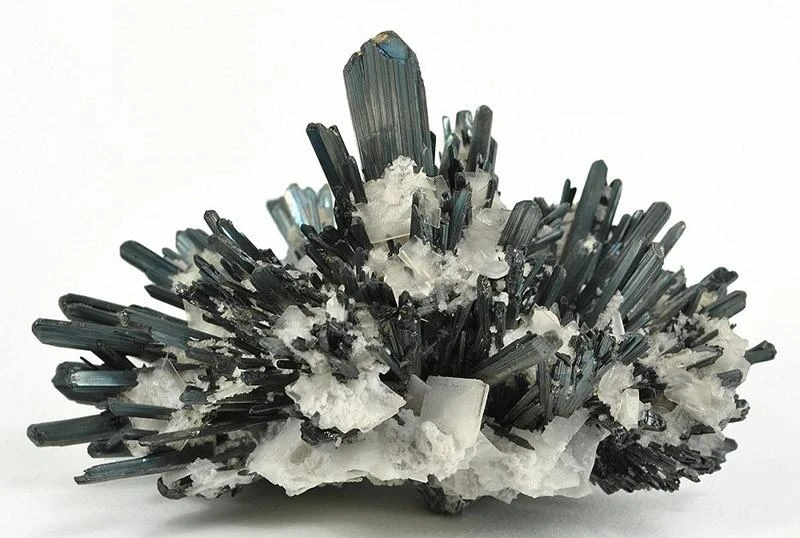
Silver-colored stibnite with barite
Stibnite is an antimony sulfide, but it appears to be composed of high-grade silver. Because of this resemblance, someone once decided to make high-end cutlery from this material. And that was a very bad idea... Antimony crystals cause severe poisoning; even after contact with skin, wash thoroughly with soap. 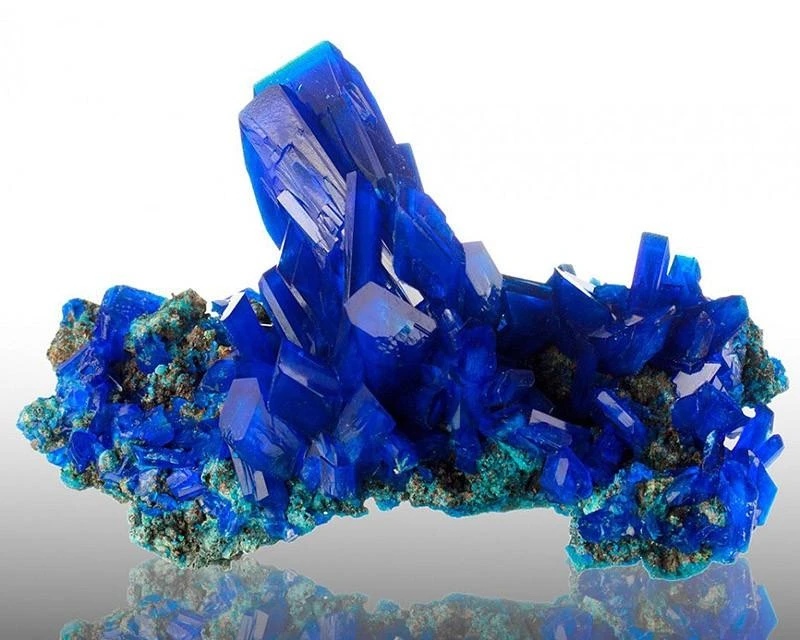
Chalcanthite
The enchanting beauty of these crystals conceals a deadly danger: when exposed to liquid, the copper contained in this mineral begins to rapidly dissolve, threatening any living thing in its path. Just one small blue stone can destroy an entire pond and all its flora and fauna, so it should be handled with extreme caution. 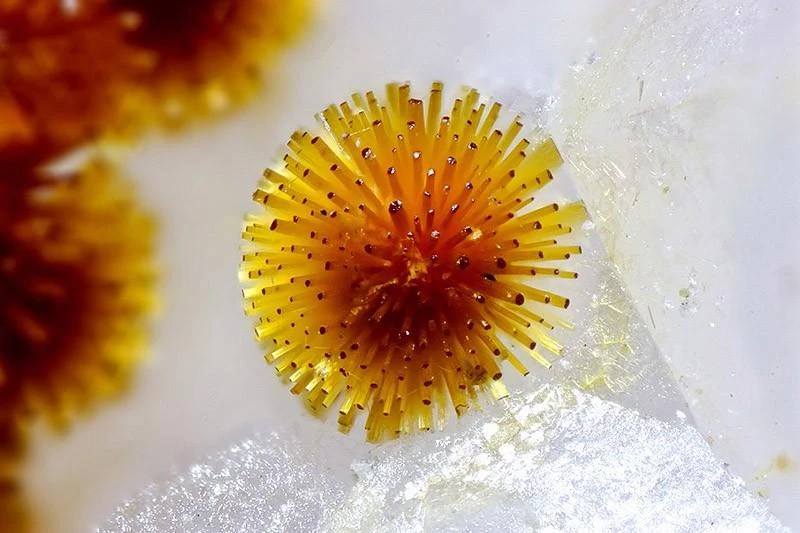
Cacoxenite
Acting as an inclusion, this rare mineral can give quartz and amethyst a unique color and higher value. As a member of the acicular crystal family, cacoxenite is incredibly fragile. 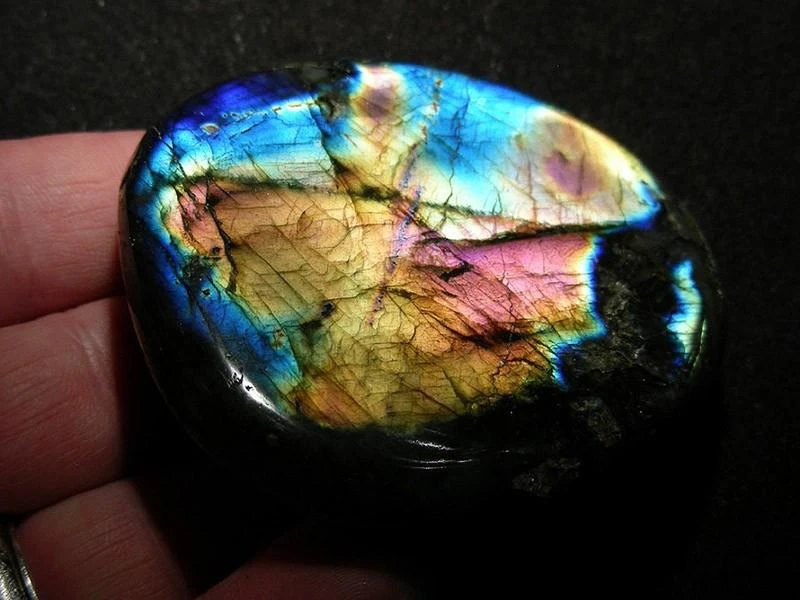
Labradorite
This mineral, mined in northern regions, seems to reflect the sky under which it was found: the iridescent colors against the star-studded darkness of the stone resemble the aurora borealis blazing on a long polar night. 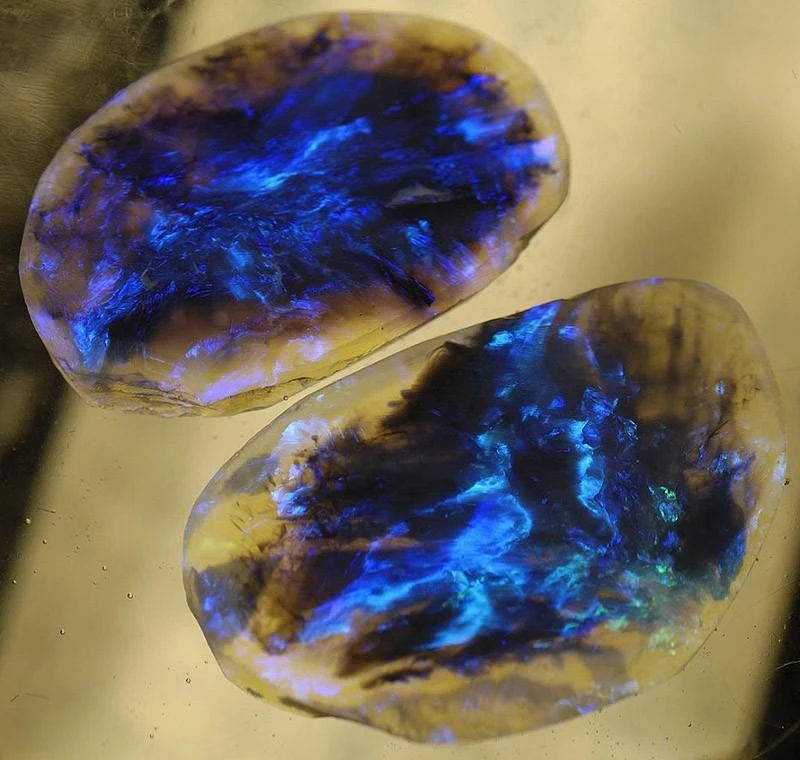
Black Opal
The most valuable variety of opal. Despite the word "black" in its name, this mineral is most valuable when it exhibits multicolored sparkle against a dark background. The more varied the shades of its sparkle, the higher the price. 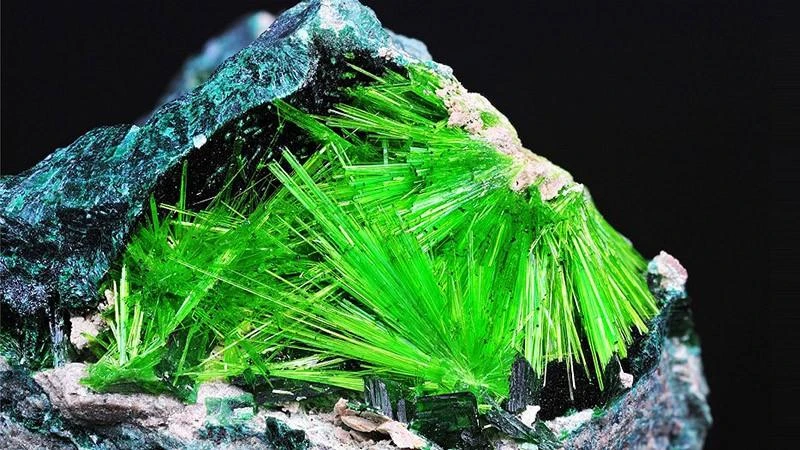
Cuprosklodowskite
The needle-shaped crystals of cuprosklodowskite attract admiration with the depth and variety of their green coloring, as well as their intriguing shape. However, this mineral is mined in uranium deposits and is highly radioactive, so it should be kept away not only from living things but also from other minerals. 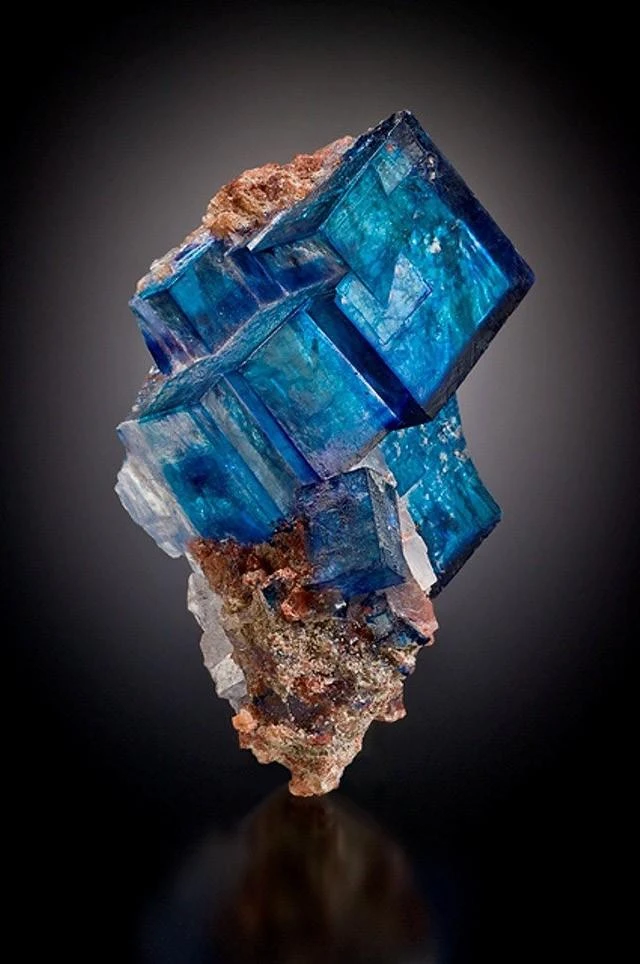
Blue Halite and Sylvite
Milk-white or whitish sylvite is often found in volcanoes, while blue halite (sodium chloride) is found in sedimentary rocks. 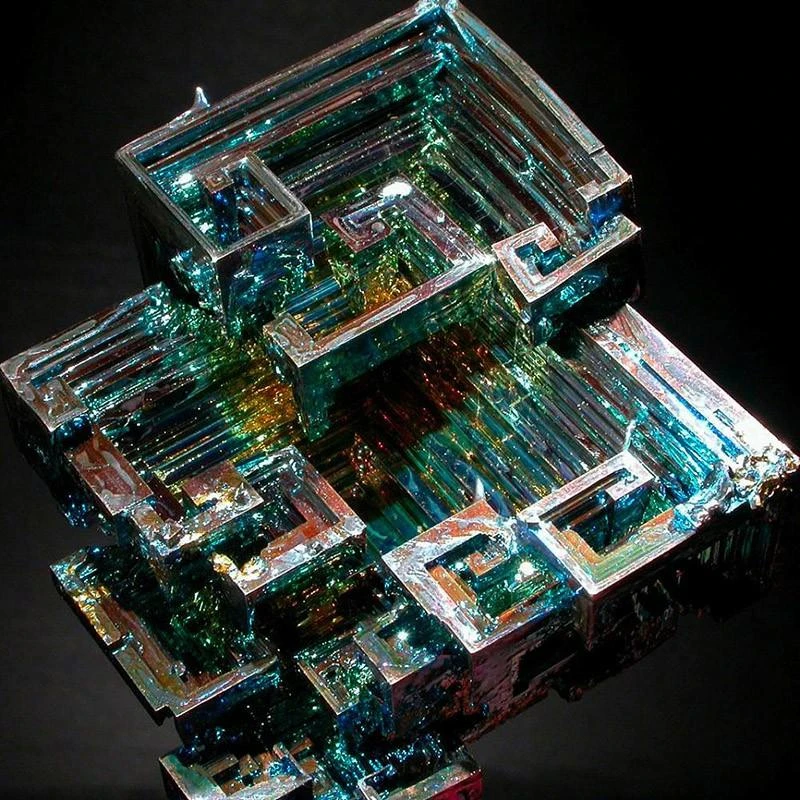
Bismuth
Artificially grown bismuth crystals have a distinctive iridescent sheen on their dark surface. This effect is caused by the oxide film covering it. Incidentally, bismuth oxide chloride is used in nail polishes as a shine enhancer. 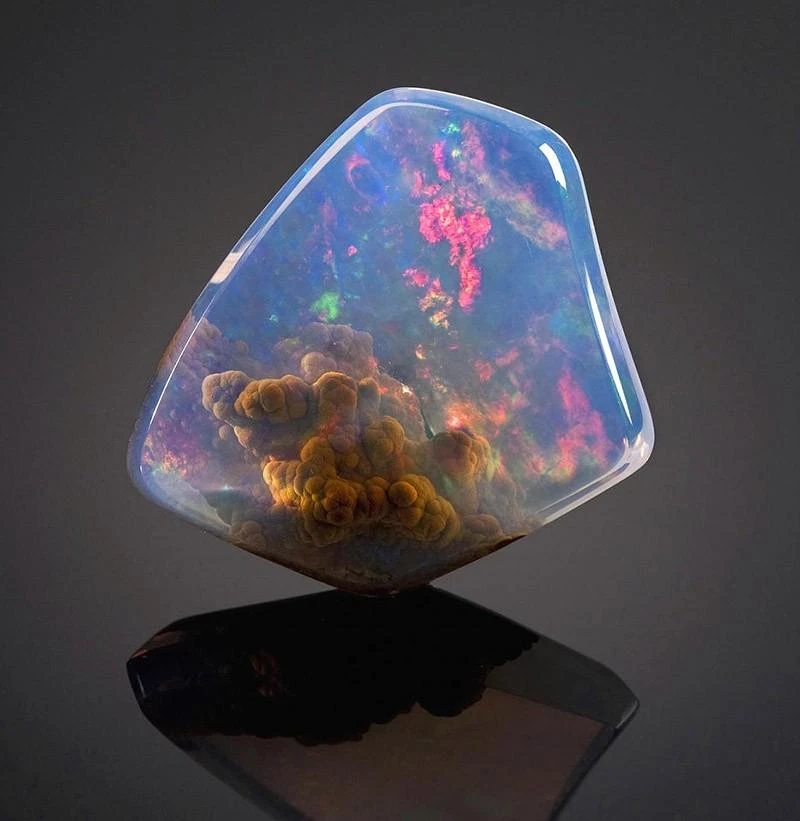
Opal
The precious gemstone opal is sensitive to humidity: prolonged exposure to excessively dry conditions can cause it to dull and even crack. For this reason, opals should be bathed occasionally in clean water and worn frequently if they are jewelry, so that the stones are saturated with moisture from the human body. 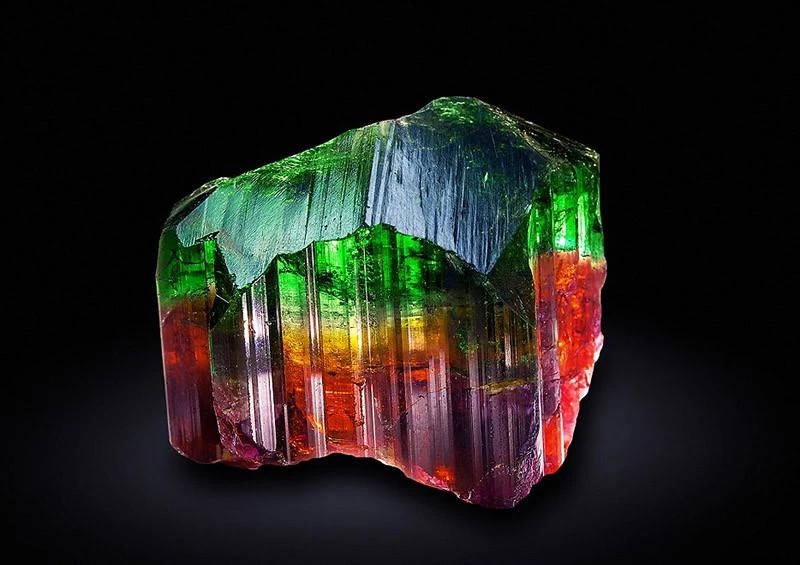
Tourmaline
Lush red and pink colors, smooth transitions of shades with the most unexpected ranges make tourmaline one of the most popular collectible minerals. According to historians, these stones were the crowning jewels of many royal families and distinguished individuals, from Catherine the Great to Tamerlane. 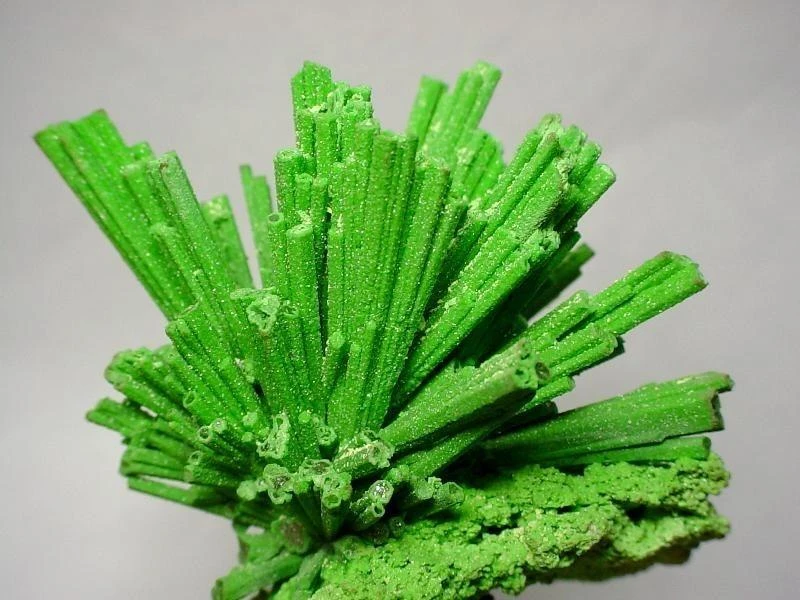
Baildonite
The rare baydonite crystal owes its color to its copper content, and its luster to its high lead content. 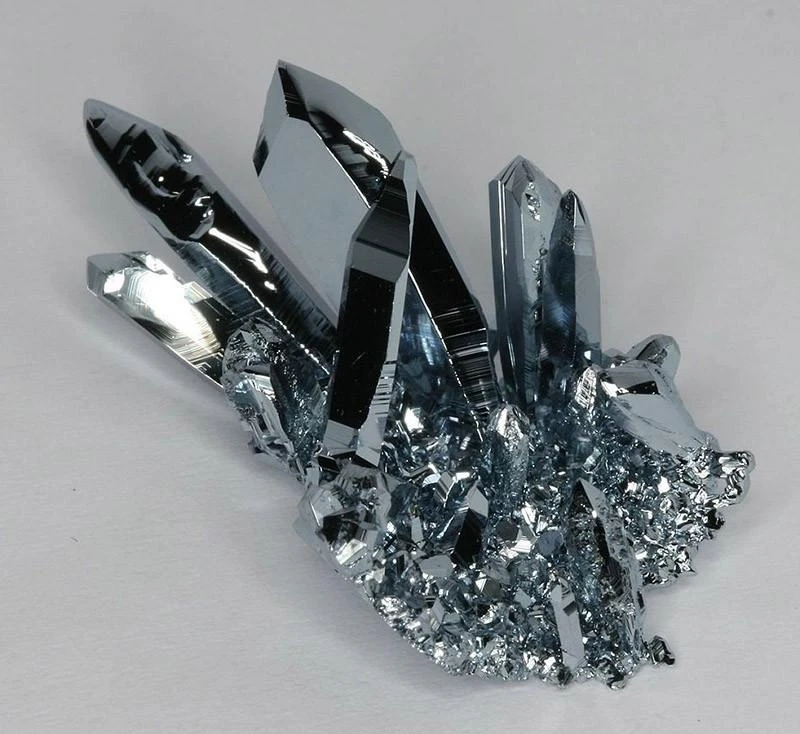
Osmium
Being the densest natural substance, osmium is extremely difficult to process. Its widespread use in medicine, manufacturing, and the defense industry makes it incredibly popular. Given the rarity of osmium in nature, the cost of one gram of its isotope is currently twenty thousand dollars. 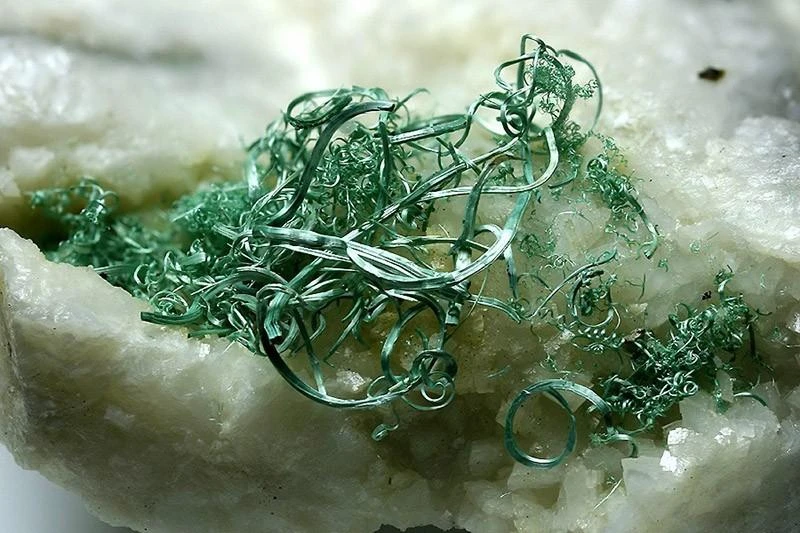
Malachite
The bizarre arrangement of copper layers in the voids of karst caves where malachite originates determines the future structure of its patterns. These can be represented by concentric circles, star-shaped placers, or chaotic banded patterns. Archaeologists estimate the age of malachite beads found in the ancient city of Jericho at 9,000 years. 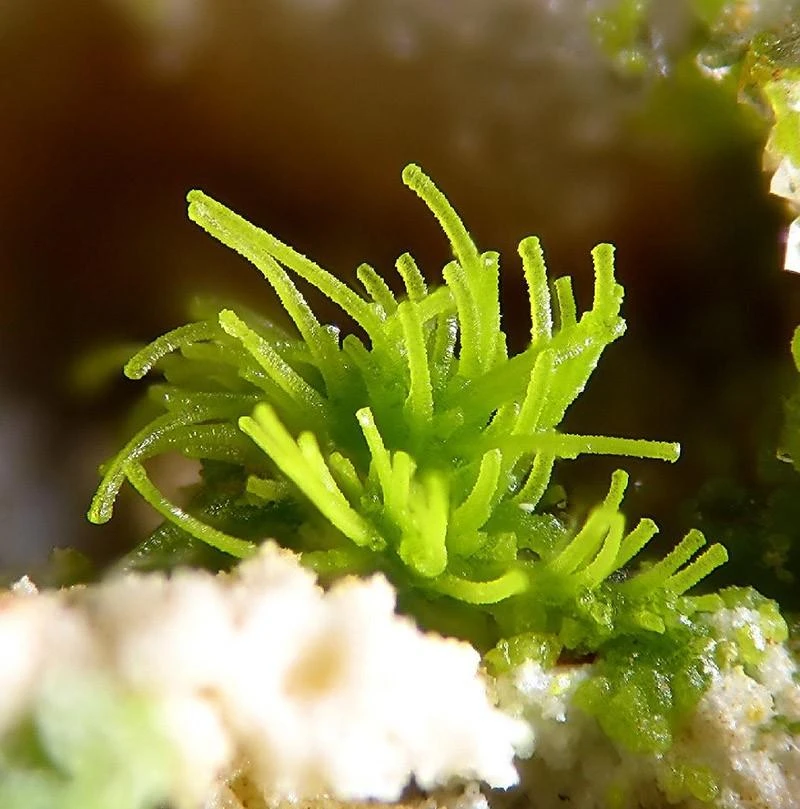
Emmonsite
The relatively rare mineral emmonsite, which occurs as small needle-shaped crystals with a glassy luster, is found in mines in North and South America. 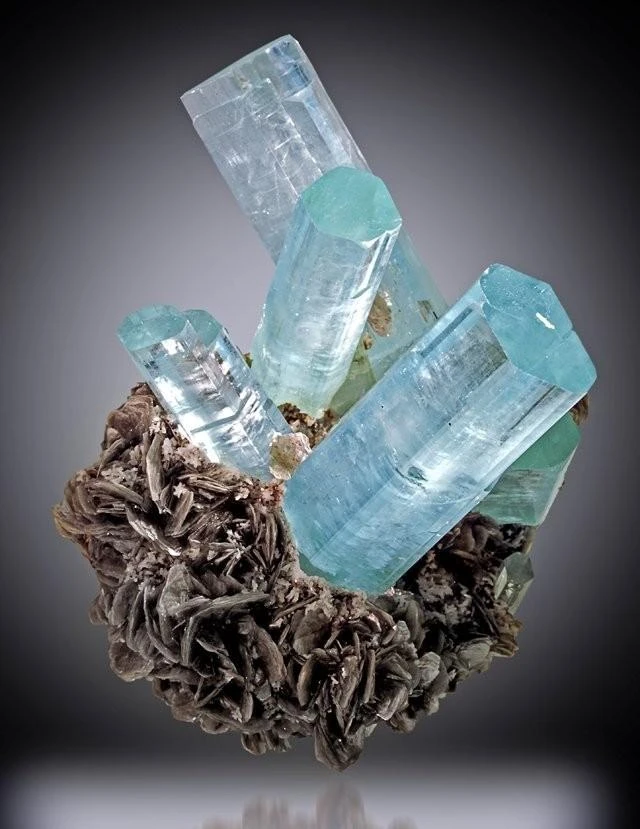
Aquamarine on potassium mica
The Roman philosopher Pliny the Elder gave this noble stone the name "aquamarine" for its facets resembling the purest sea waves. Bluer aquamarines are more valuable than greener ones. This mineral is very popular with designers and jewelry enthusiasts, and its exceptional durability makes it ideal for creating jewelry of any shape. 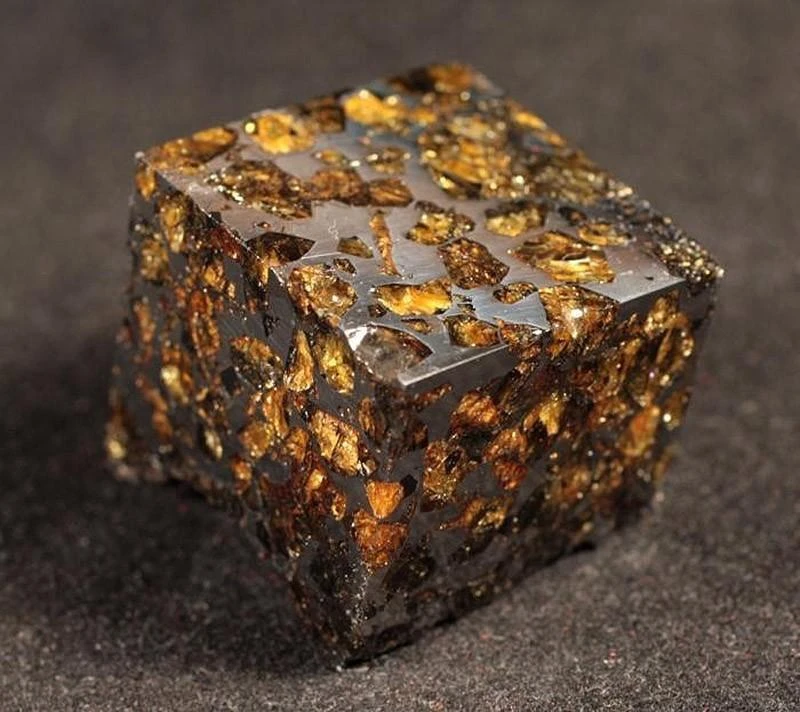
Pallasite Meteorite
In 1777, the German scientist Pallas delivered samples of a rare metal discovered in Krasnoyarsk at the site of a meteorite impact to the Kunstkamera Museum. The entire 687-kilogram block of extraterrestrial origin was soon transported to St. Petersburg. This material was named "Pallas iron," or pallasite. No similar substance mined on our planet has been found. Experts estimate that this meteorite is composed of an iron-nickel base with numerous inclusions of olivine crystals. 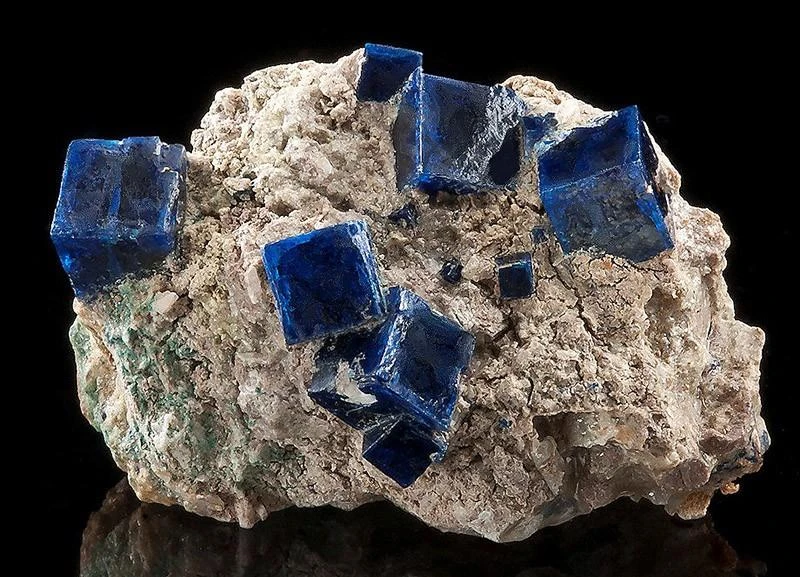
Boleite
Small blue cubic crystals called boleites are especially prized in South and North America. 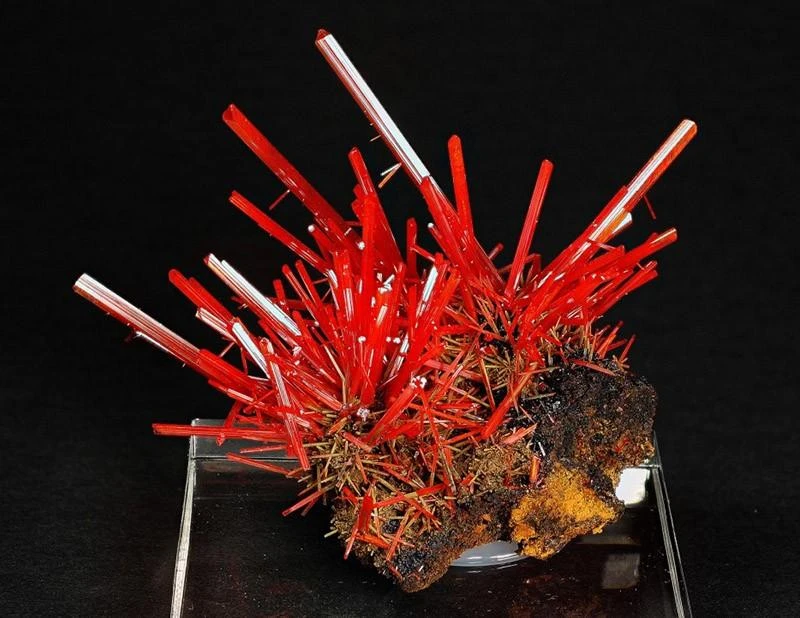
Crocoite
The name "crocoite" comes from the ancient Greek word for "saffron," as the crystal's surface resembles this spice, which is noticeable to the naked eye. The red lead ore that this mineral is made of is particularly valuable to collectors and connoisseurs.
Add your comment
You might be interested in:














Persistence in achieving a goal

A biker prevented a hit-and-run driver from escaping

Not everyone is having fun on the amusement ride

Absolute perfection

17 Photos That Will Stop You in Your Tracks (18 Photos)

The cutest lunch delivery ever

What Would Happen to a Human on Every Planet in the Solar

Toyota Celica ST165 on a rally track

Young women, Dancing and George Michael: nothing superfluous
