The Deaf-Blind Girl Who Taught Humanity to Believe in Miracles (8 photos)
In the 19th century, when people with disabilities were considered incapable of learning, one little girl from New Hampshire changed society's perception of human potential. Laura Bridgman became the first deaf-blind person in history to receive a full education and proved to the world that physical limitations cannot stifle the thirst for knowledge. 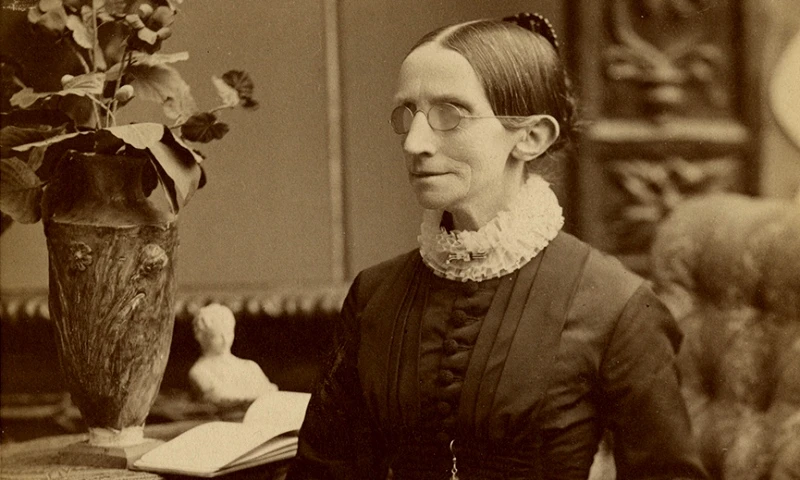
A Childhood Without Sounds and Light
Laura was born in 1829 in the small town of Hanover, New Hampshire. She was the third child of farmers Daniel and Harmony Bridgman, and until she was two, she grew up like a normal toddler: she could see, hear, and begin to talk. But in 1832, a scarlet fever epidemic broke out in their town. The disease claimed the lives of Laura's two older sisters and left Laura blind, deaf, and almost completely unable to taste or smell. Touch became her only means of communication with the world. 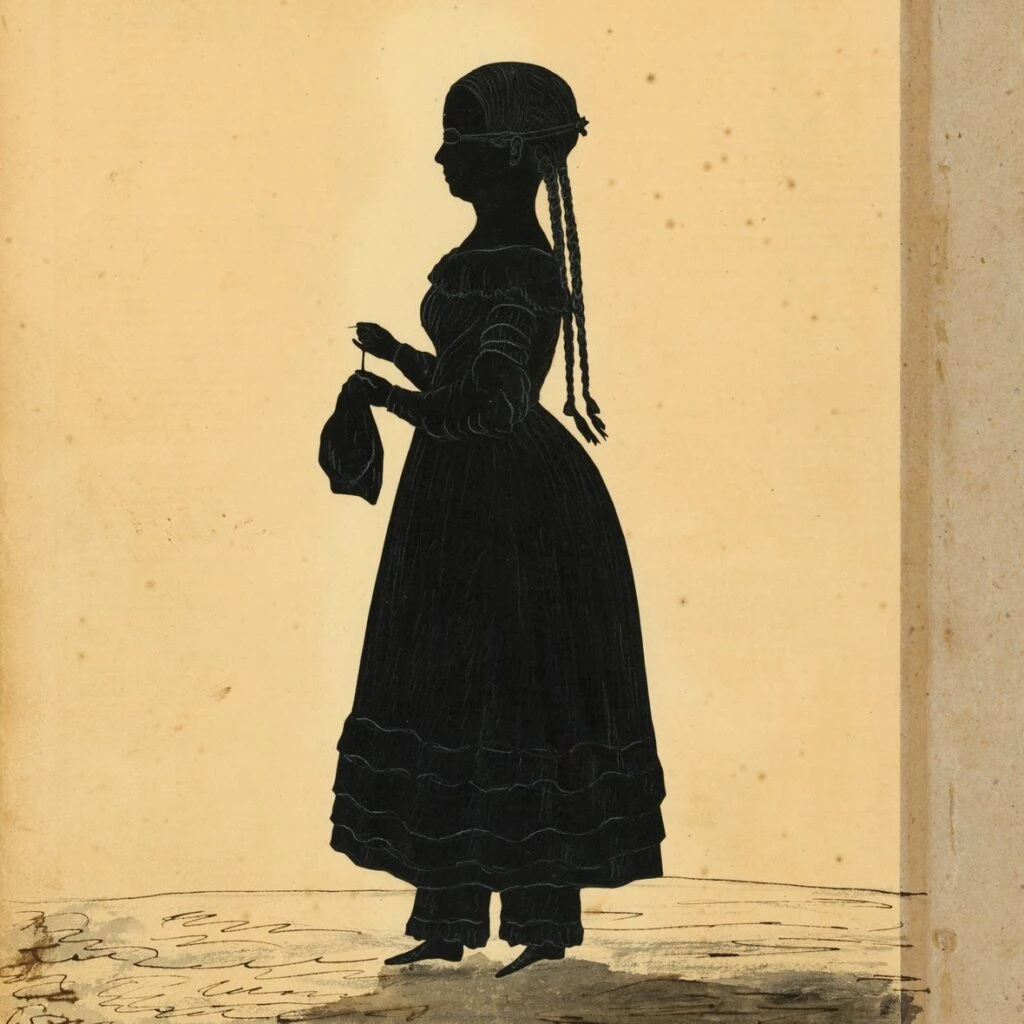
Laura Bridgman. 19th-century illustration.
For all that, Laura wasn't helpless. Her mother taught her to help around the house, sew, and even knit. To communicate with other family members, a system of touching and pushing was used. For example, if the girl was pulled by the hand, it meant she should go, and if she was pushed, it meant she should move aside. A pat on the head meant she was doing something correctly, and a pat on the back meant she was mistaken.
But as she grew older, the deaf-blind girl's life became increasingly unbearable. Deprived of many simple human joys, Laura withdrew into herself and cried frequently. Sometimes she also became uncontrollable, flew into a rage, and began to destroy everything around her. The realization that their daughter would live a miserable existence for the rest of her days depressingly devastated Laura's parents.
The First Step in Silence and Darkness
At that time, blind children were already being successfully taught, but no one was caring for the deaf-blind. Cases like Laura Bridgman's were considered hopeless, and no one took them on. But Dr. Samuel Howe, founder of the Boston School for the Blind, decided to give it a try. In 1837, he took eight-year-old Laura in and began teaching her.
The Perkins School for Blind Children was named after a benefactor. The foundation of this unusual educational institution was provided by... opium and slave trader Thomas Perkins. 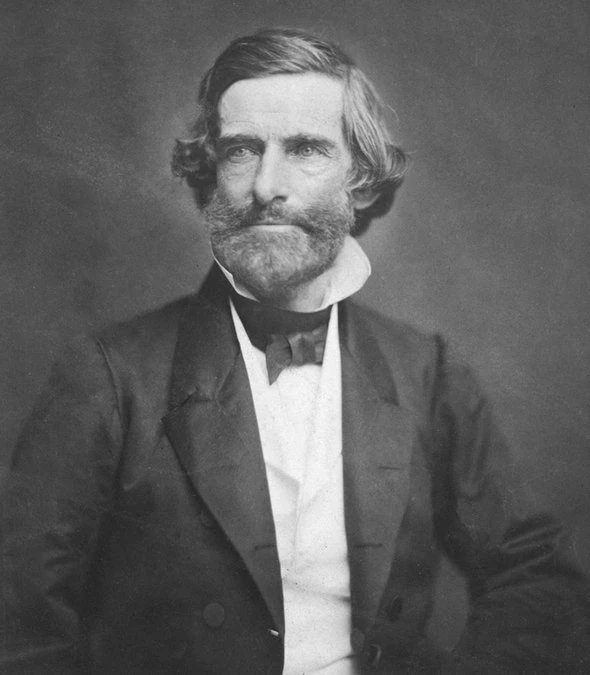
Dr. Samuel Howe
Methods for working with the deafblind did not exist at the time, so the doctor had to develop his own for Laura, from scratch. They started with the simplest. Laura learned to recognize objects by touch with attached tags containing inscriptions made of raised symbols. Then the tags were removed, and Laura had to find the desired object by touch. Then, she had to form words from individual letters. This method became the basis for tactile communication, which is still used by deafblind people around the world. 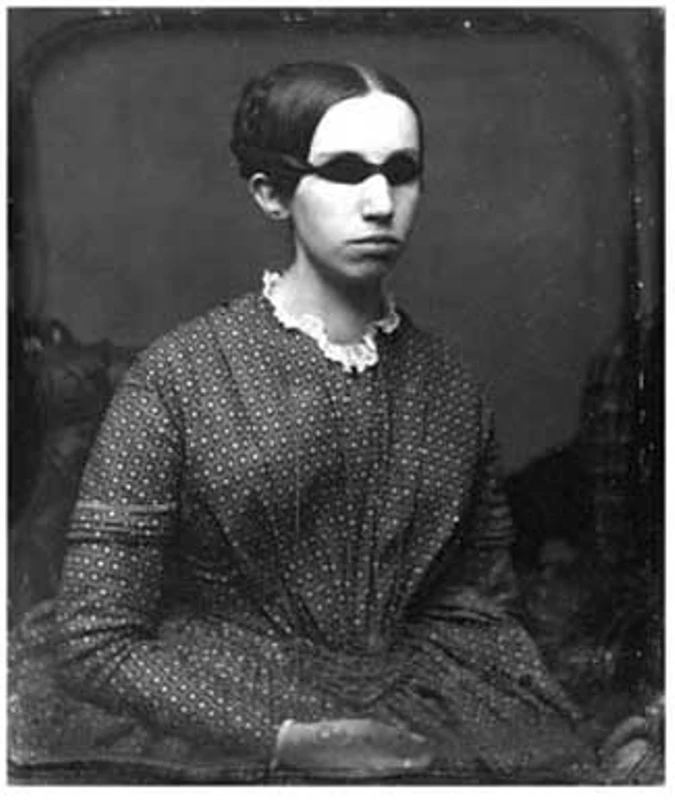
Laura Bridgman
The girl became blind very early, so many things were a revelation to her. For example, she learned that the objects around her had not only a shape and purpose, but also a name. This began her journey toward communication, abstract thinking, and meaningful learning. For the first time in many years, she could express her thoughts and feelings, ask questions, and receive answers. The world ceased to be a silent prison for her. After Laura learned to read, her education accelerated.
A Meaningful Life
During her studies, Laura needed an assistant to help her compose text in raised letters so she could understand what her teacher was saying. Nevertheless, Laura managed to master mathematics, astronomy, philosophy, history, and even biology. She learned to sew, knit, and perform various crafts. She was especially good at languages. Laura learned several foreign languages and could read books in French and Latin. She also mastered writing in regular letters, although she could not read them herself. 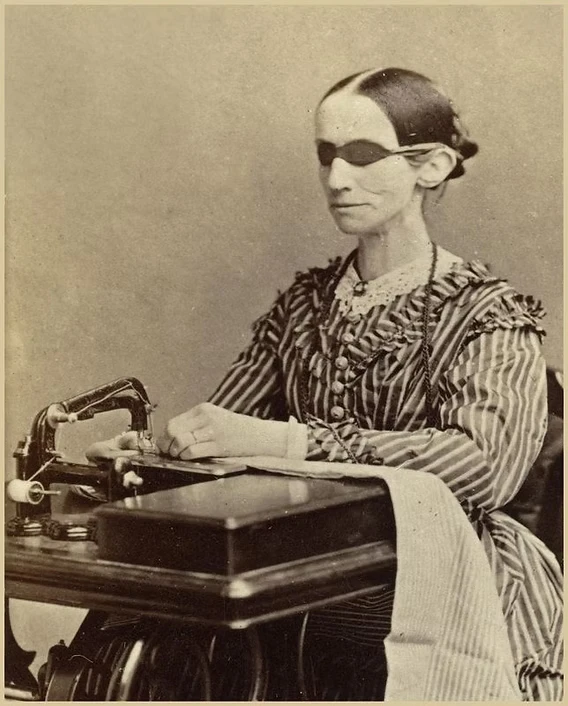
Laura Bridgman operates a sewing machine
Laura attended Perkins School until she was 20, after which she returned from Boston to New Hampshire in 1850. Her family saw a completely different person—calm, confident, and cheerful. Laura Bridgman wanted to help others like herself and began teaching. She composed entire monologues in sign language and loved to hold hands and hug people, including her students.
But after some time, Laura's health worsened, and she was forced to return to Perkins School under the care of Samuel Howe. Laura's doctor and patron, Dorothea Dix, raised enough money to equip Bridgman with housing at the school. She was assigned one of the student cottages, where Laura did almost all the housework herself. 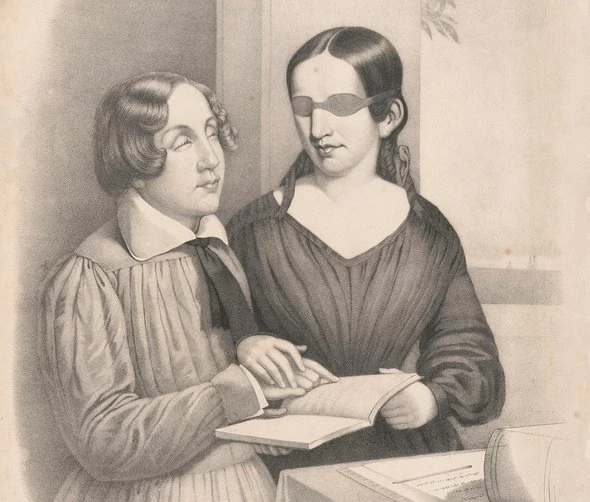
Laura Bridgman with a student
In her free time, Laura read extensively, studied religious literature, and reflected on the meaning of life. She became deeply religious and found her faith a source of strength and inspiration. Laura also wrote poetry. Her work "Holy Home" received acclaim, although she never sought literary fame.
Laura's goal was to live an active life: she sewed, knitted, made crafts, and even sold them to raise money for charity. She occasionally visited her family in New Hampshire. Laura died on May 24, 1889, leaving behind an incredible legacy.
Willpower and knowledge that changed the world
Laura Bridgman's story created a sensation not only in the United States but also in Europe. Newspapers and medical journals wrote about this remarkable girl. She was even mentioned in the English writer Charles Dickens's "American Notes." Laura was then twelve years old and already quite independent:
"I sat beside a blind, deaf, and mute girl, deprived of smell and almost deprived of taste—a very young being, endowed with all human qualities: hope, affection, a desire for goodness, but with only one of the five senses—touch. She sat before me as if walled up in a marble vault, where not the slightest sound or ray of light penetrated, and only her poor white hand, poking through a crack in the wall, reached out to kind people for help—to keep her immortal soul awake. And help came—long before I saw this girl. Now her face glows with intelligence and contentment."
This book made Laura famous, and the Perkins School was flooded with curious guests and journalists. 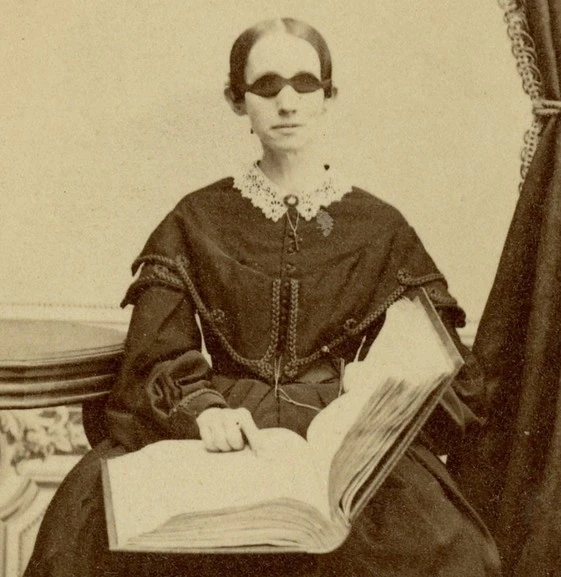
Laura's case proved that even deafblind people can be educated if they start early and put in the effort and patience. Based on Dr. Samuel Howe's work, new teaching methods, including more effective ones, began to be developed in various countries around the world.
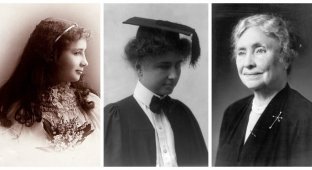
Many years passed, and the parents of another deafblind girl, Helen Keller, learned about Laura Bridgman. Educator Anne Sullivan used Samuel Howe's methods, and they succeeded! Helen Keller became known worldwide as a politician and writer. But Laura Bridgman, the first deafblind person to receive an education, was undeservedly forgotten. 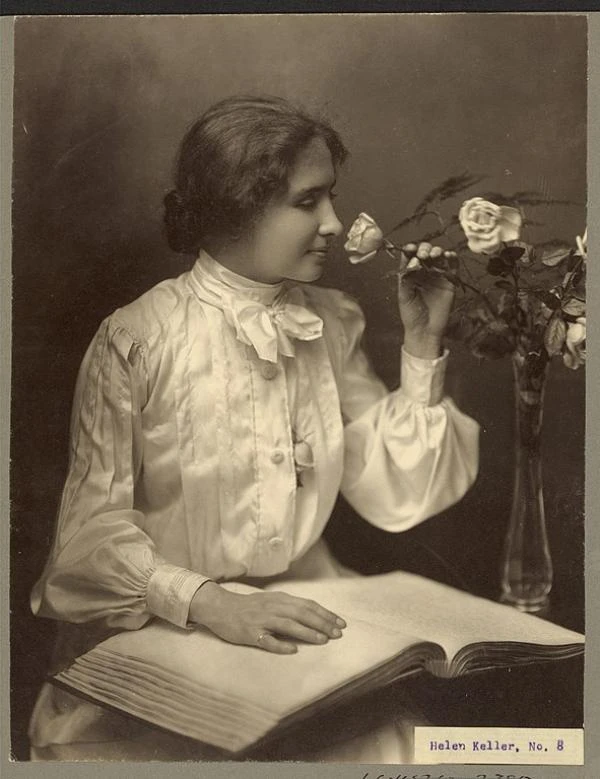
Helen Keller
Laura Bridgman's story is a reminder that the impossible becomes possible through perseverance, faith, and persistence. Do you think enough is being done today to support and educate people with severe disabilities?