Why Henry IV Was the Only King the People of France Truly Loved (11 photos)
Historically, French monarchs were rarely held in high regard by their people. They were plagued by reputations as spendthrifts, despots, libertines, and unstable rulers. Some even suffered from severe mental illness, like Charles IV, the "Glass King." King Henry IV stood out as a welcome exception in this motley crew. He went down in history as France's greatest monarch, revered to this day. 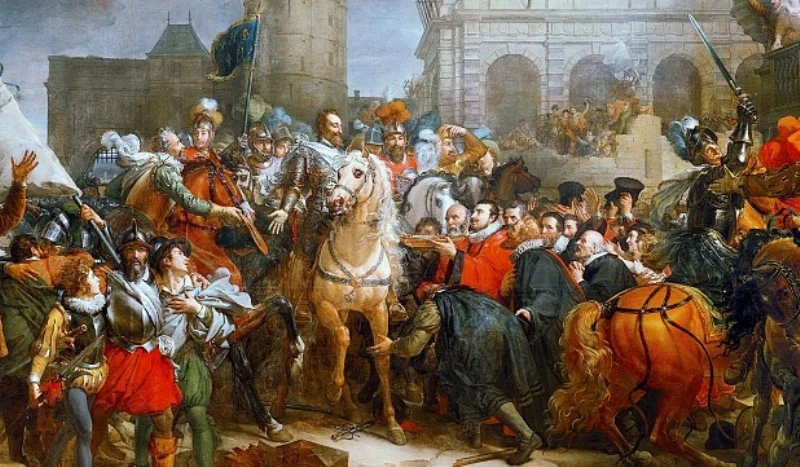
Henry IV of Bourbon left a fond and lasting memory in the hearts of the French. The king was a true product of his era. He loved women, wine, and a good fight, yet he never lost sight of his subjects' needs. He was also remarkably tolerant in matters of faith—a rare trait among rulers of that age.
The future king was born on December 13, 1553, at the Château de Pau in the tiny Kingdom of Navarre. Henry of Bourbon was the grandson of the King of Navarre and heir to a realm nestled in the Pyrenees between France and Spain. His overjoyed grandfather took the newborn in his arms, rubbed his lips with garlic, and administered a few drops of red wine to grant the infant strength. 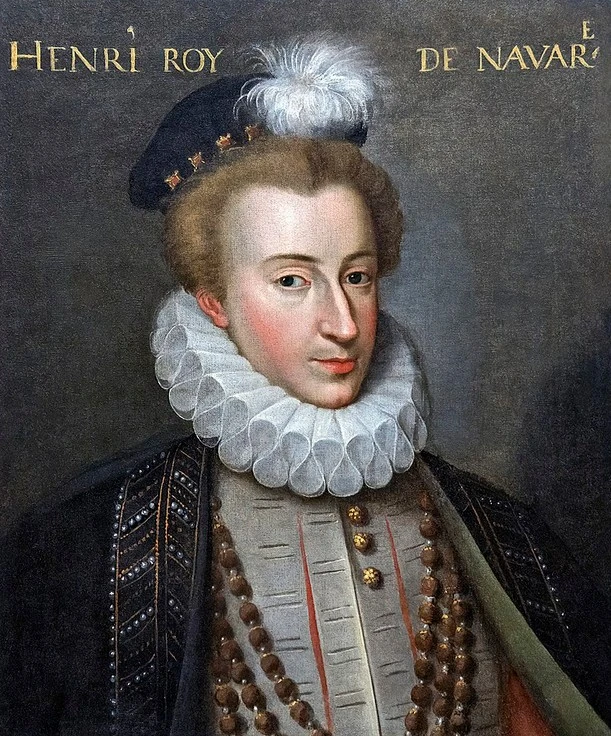
Henry of Navarre in his youth
Henry maintained a lifelong passion for wine and garlic, the latter considered humble peasant food. Yet his ancestors, the kings of Navarre, had never been known for refined courtly manners. Instead, they possessed a knack for connecting with everyday people. Alexandre Dumas described the future monarch thus:
"...the first man he met was good enough for a chat, and the first woman for a companion."
Still, Henry had little reason for arrogance. His likely fate was to rule a tiny mountain kingdom for life or serve as a military officer at the French court, much like his father, Antoine de Bourbon.
When Henry of Bourbon was born, his namesake Henry II occupied the French throne. The monarch had sons with his Florentine queen, Catherine de' Medici. Nothing suggested that a prince from a tiny mountain kingdom would one day rule a great power. 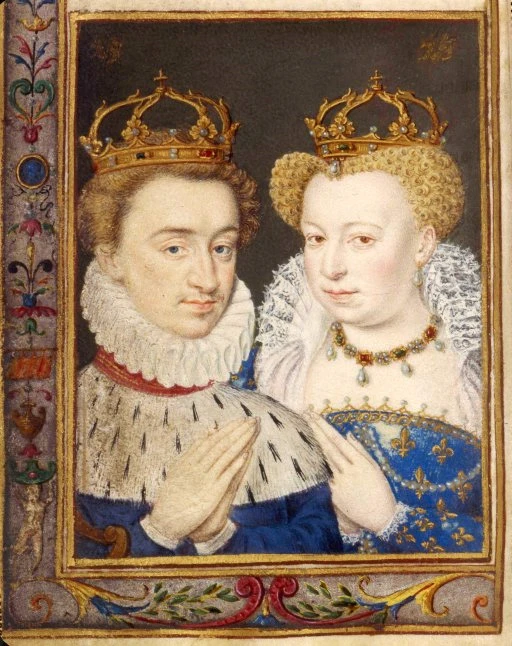
Henry of Navarre and his wife, Margaret of Valois
Once on the throne, the Navarrese prince enjoyed telling the story of meeting Nostradamus in his childhood, who had predicted his rise to royalty. The prophecy came true: Henry of Bourbon became king, founded a new French dynasty, and ultimately brought an end to bitter religious strife.
The King's Character
Henry was dark-complexioned, dark-haired, and short, standing about 5 feet 7 inches (170 cm) tall. In conversation, he was easygoing and charismatic—quick to laugh at others' jokes, charming, and adept at flattery. Having narrowly escaped death during the Saint Bartholomew's Day Massacre, he was kept at the French court as a virtual prisoner for four years. 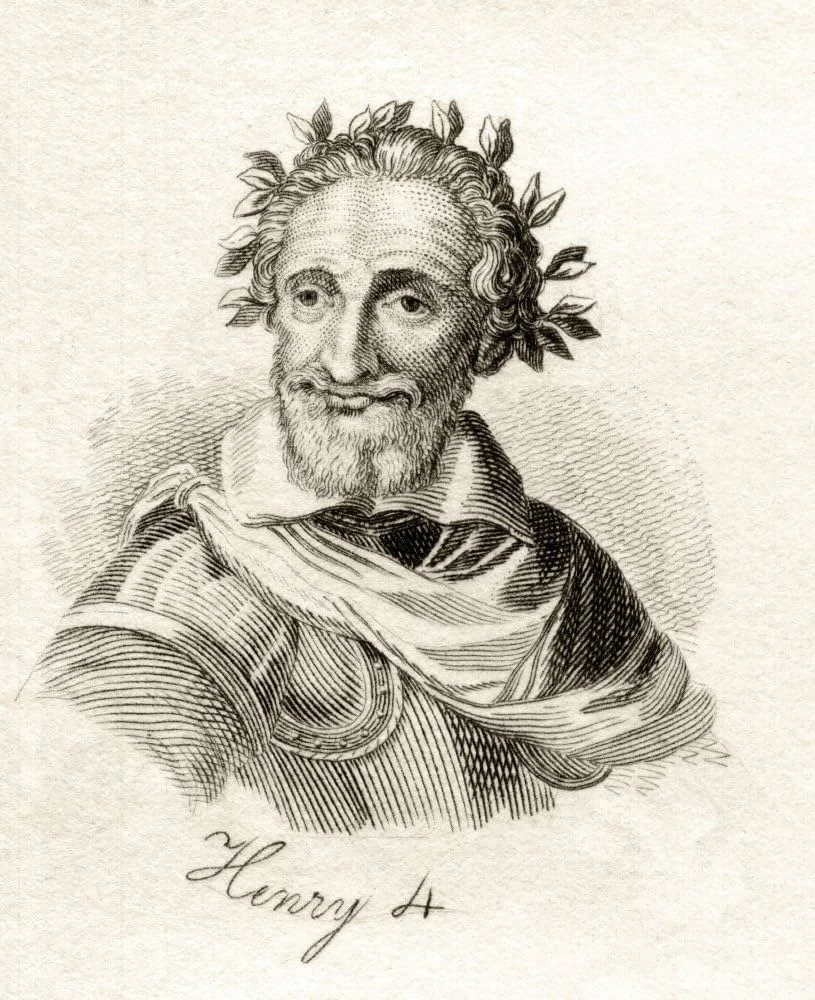
Courtiers mocked him, calling him "a petty king whose nose is bigger than his realm." Henry took no offense, shrewdly reasoning that a laughingstock was unlikely to be assassinated. And the atmosphere at the French court was treacherous indeed. As Henry wrote to a friend:
"The court is the strangest place on earth. We are nearly always ready to cut each other's throats. Under our cloaks, we carry daggers, chain mail, and often cuirasses."
Yet he maintained an unfailingly friendly demeanor. Even after ascending the throne, Henry retained his warm and generous nature. Many courtiers even felt their patron lacked royal majesty. But the Navarrese king only seemed simple-minded. A master of flattery himself, he never succumbed to it from others. He appointed officials based solely on merit and character. Consequently, his appointees remained fiercely loyal and exposed plots against the king long before they could mature.
A Ruler Unlike Any Other
The humiliations Henry suffered in his youth never embittered him. He never sought to demean others, not even his enemies. When he entered Paris in 1594, he allowed the Spanish garrison to march out of the city with flying colors. To the enemy commanders he remarked, "Give my regards to your master, but do not return." 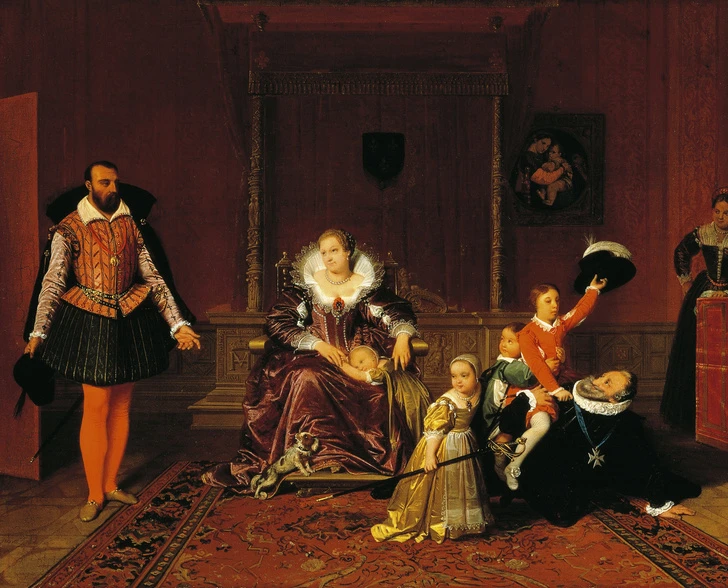
Henry IV playing with his children while receiving the Spanish ambassador
The king was kind, unpretentious, and generous. Yet one trait drove his inner circle to distraction: Henry IV was notoriously stingy. He lived frugally, eschewed expensive garments, and ate simple fare, showing no interest in gourmet cuisine.
In a letter to his favorite, Corisande, Henry enthusiastically reported that fish was astonishingly cheap in the town where he and his retinue were staying—a giant carp cost just three sous. At the time, the purchasing power of one sou was roughly equivalent to two modern euros. 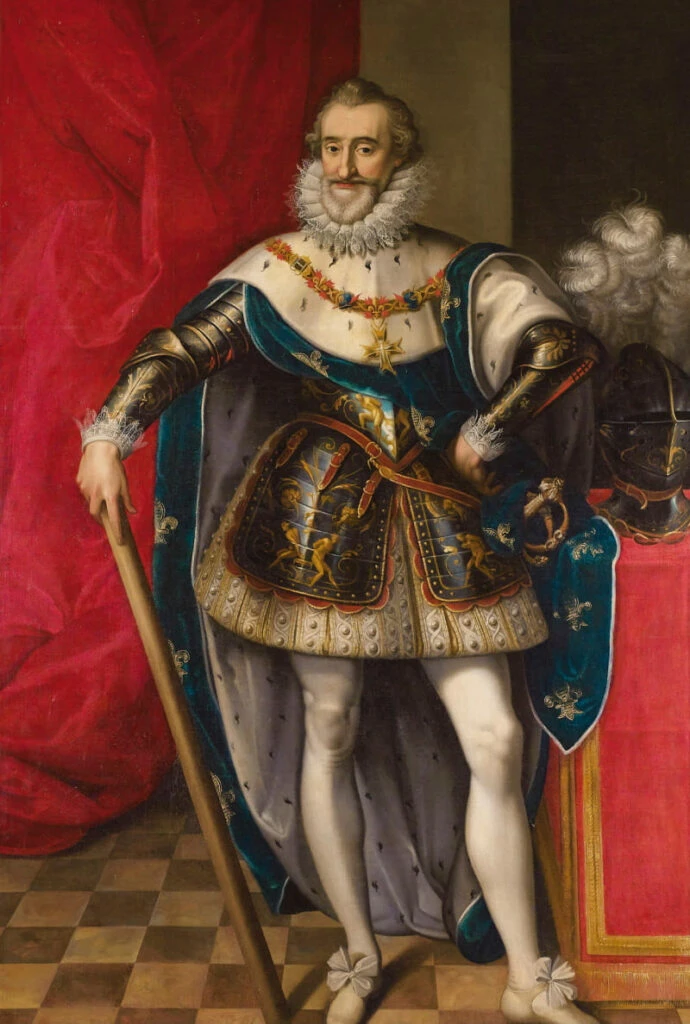
Yet Henry pinched pennies only on himself and his court. When it came to public affairs, he spent lavishly. Under his rule, roads were built, canals dug, and new crops introduced, including corn brought from the New World. The monarch genuinely cared for his subjects' welfare, and a famous quote is attributed to him:
"I want every peasant in my kingdom to have a chicken in his pot on Sundays."
He likely never uttered those exact words, but his actions gave the legend such weight that people believe it to this day. His devotion to the public good earned him the enduring love of his people.
Henry IV and Religion
Perhaps Henry IV's most remarkable quality was his religious tolerance. This stemmed, no doubt, from having been forced to change his faith six times during his life. Well-versed in both Catholic and Protestant doctrines since childhood, he concluded that personal integrity had nothing to do with one's creed. 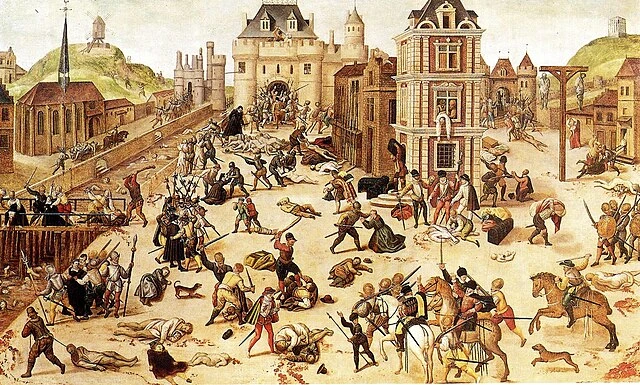
Saint Bartholomew's Day Massacre
The only religious indiscretion Henry ever committed occurred when he was seven years old. He rode a braying donkey into a hall where Catherine de' Medici was conferring with the papal nuncio. The young rider was accompanied by the ten-year-old King Charles IX of France, his younger brothers Henry of Anjou and Francis of Alençon, and the ten-year-old Henry of Guise—all dressed up as bishops and cardinals.
When converting from Protestantism to Catholicism to claim Paris, Henry famously declared: "Paris is well worth a mass." Yet attributing pure cynicism to the king does him an injustice. His reconversion followed lengthy consultations with clergy and days of deep reflection.
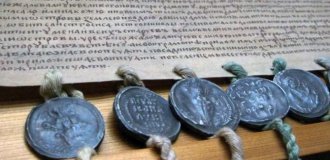
On April 13, 1598, Henry signed one of his most monumental decrees: the Edict of Nantes. The document granted Protestants full freedom of conscience and allowed them to hold public office. There were, however, certain restrictions: Huguenots could conduct services only in areas where they were heavily concentrated, while worship in Paris and major French cities remained prohibited. 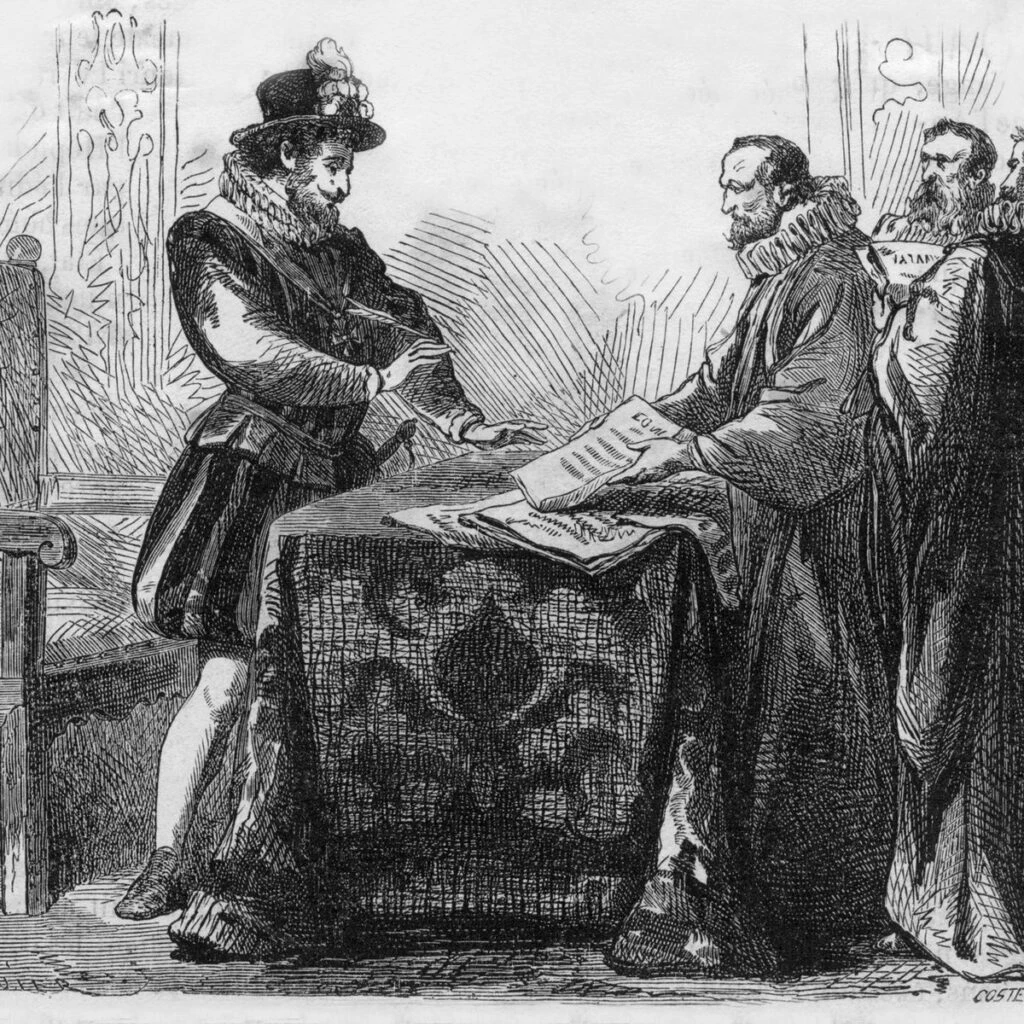
The Signing of the Edict of Nantes
It was a revolutionary act for its time. For the first time in memory, loyalty to the crown and state took precedence over religious doctrine. Henry IV set out to heal the rift in French society without resorting to violence. He encouraged his followers to embrace Catholicism, reassuring them that doing so compromised nothing. The monarch assembled brilliant theologians capable of persuading even the most steadfast Protestants.
Statesman and Warrior
Henry was a highly educated man. His mother, Jeanne d'Albret, sent him to a Catholic college in Paris when he was just six, while also assigning Protestant ministers she had chosen to tutor him. The king spoke fluent Latin, Greek, and Spanish. His French correspondence was elegant, though he never quite mastered proper spelling. 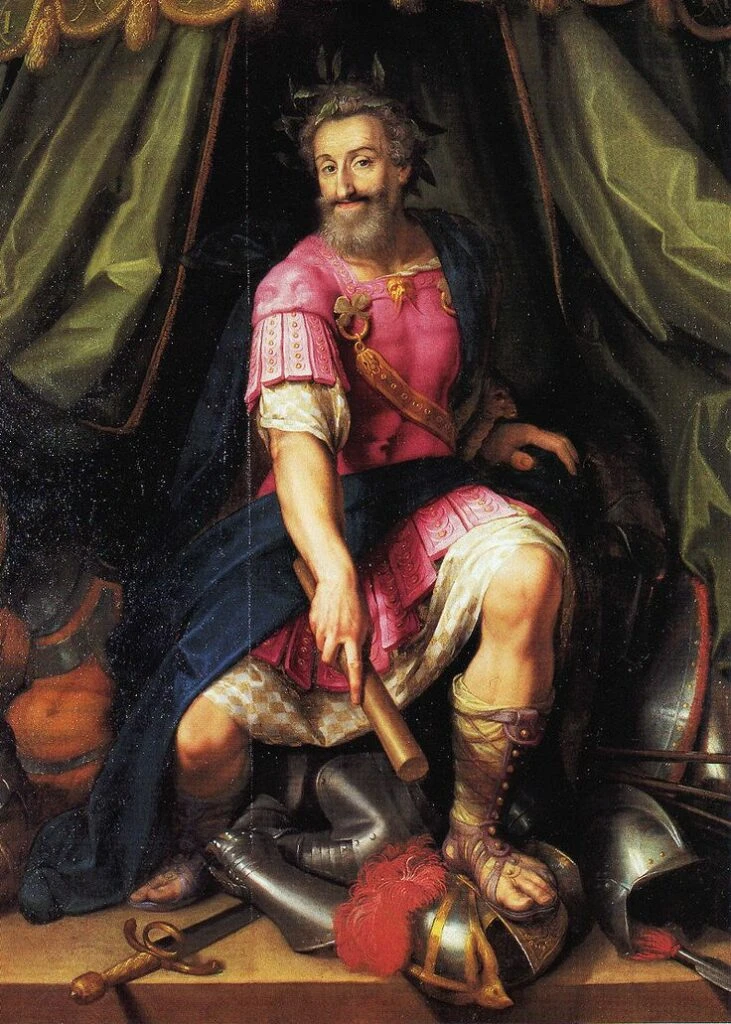
Upon taking the throne, Henry IV invited the Jesuits to France. As the most educated Catholic order with vast pedagogical experience, they laid the foundations of a French educational system, elements of which survive to this day.
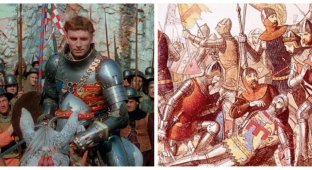
Renowned for his bravery, the king adopted the motto Aut vincere, aut mori!—"Conquer or die!" He fought in his first battle at fourteen, and by fifteen, he nominally led the Protestant army, though actual command rested with the seasoned Admiral Coligny.
During one battle, Henry's troops faltered and began to retreat. The king cried out: "If you will not fight, at least watch me die!" The fleeing soldiers rallied, regrouped, and turned the tide to victory. Always in the thick of combat, the monarch wore a helmet adorned with a large white plume, visible from afar. Yet whenever possible, Henry preferred diplomacy over bloodshed. 
Henry IV ascended the throne in 1589, ushering in an era of prosperity for France. He established trade with the Middle East and dispatched expeditions to Canada and Brazil. Critics remained, however, accusing the king of squandering vast sums on his mistresses—and indeed, the otherwise thrifty monarch spared no expense for his favorites.
Death of the "Good King"
In 1609, the threat of war with Catholic Spain loomed. Protestant nations offered the strongest alliances for France, but French Catholics suspected the king had abandoned his faith once more, planning to empower the Huguenots in revenge for the Saint Bartholomew's Day Massacre. Branded a heretic, Henry faced rising unrest across the country.
François Ravaillac, a schoolteacher from Angoulême, resolved to stop the apostate king. Initially intending to gain an audience and persuade Henry to abandon his Protestant alliance, Ravaillac turned to assassination when that failed. On May 14, 1610, he loitered near the Louvre gates and managed to learn the route of the royal carriage. 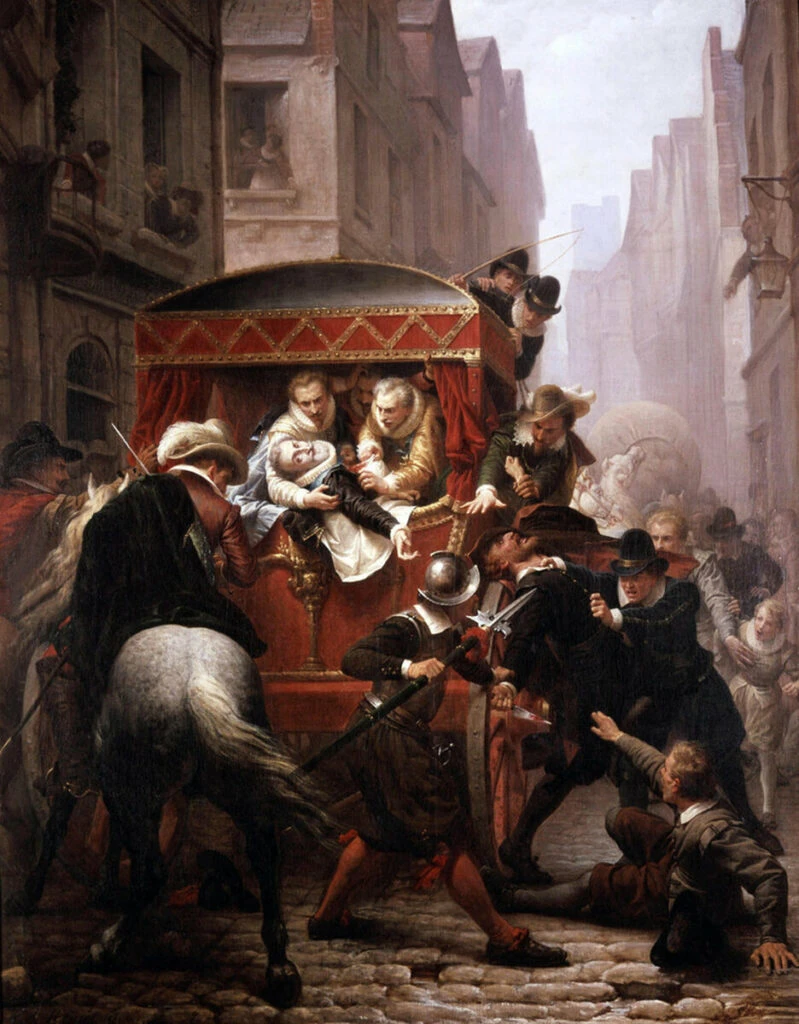
On the crowded Rue de la Ferronnerie, the carriage ground to a halt, and the assassin leapt onto its running board, stabbing the king twice in the chest. Henry never saw his attacker coming, absorbed in conversation with his companions, the Duke of Épernon and the Duke of Montbazon. The king managed only to cry out, "I am wounded," before succumbing instantly.
Seized at the scene, the assassin was subjected to brutal torture to extract the names of co-conspirators. Yet Ravaillac endured the ordeal without naming a single accomplice. Two weeks after the regicide, he was brought to the Place de Grève to be drawn and quartered, but an enraged mob intervened, tearing the condemned man to pieces. While the assassin's name became a curse, Henry IV of Bourbon was forever remembered by his people as the "Good King."