The story of Philip Ashton, who chose life on a desert island over piracy (6 photos)
Today, even children know that the Scottish sailor Alexander Selkirk was the prototype for the protagonist of Daniel Defoe's novel "Robinson Crusoe." But similar stories were common at the time. One of the most famous was the story of the young fisherman Philip Ashton. He himself recounted his misadventures in his book "A Memorial of Philip Ashton: A History of Strange Adventures and a Miraculous Rescue." Published a little later than Defoe's novel, it was considered one of many imitations. 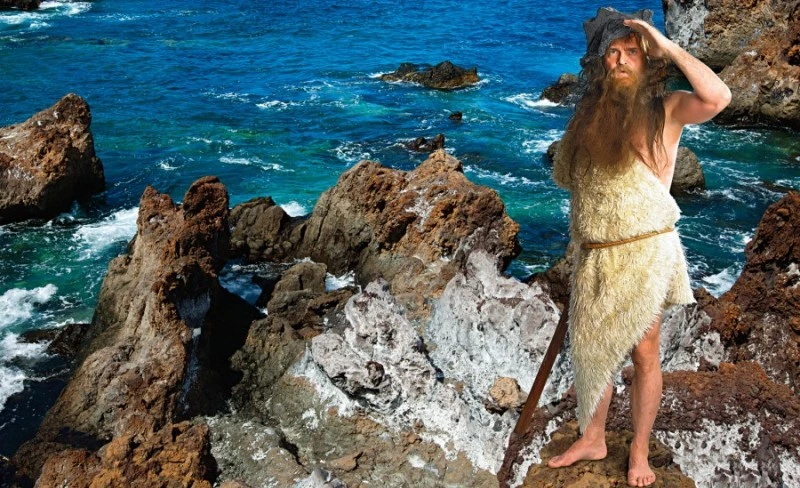
Captured by Pirates
Nova Scotia resident Philip Ashton was a simple 19-year-old fisherman. In June 1722, he set out fishing with four friends on the small schooner Milton. They had a lucky catch that day, and were returning home with a full hold of fish. But they were attacked by pirates led by the cruel outlaw Ned Low. 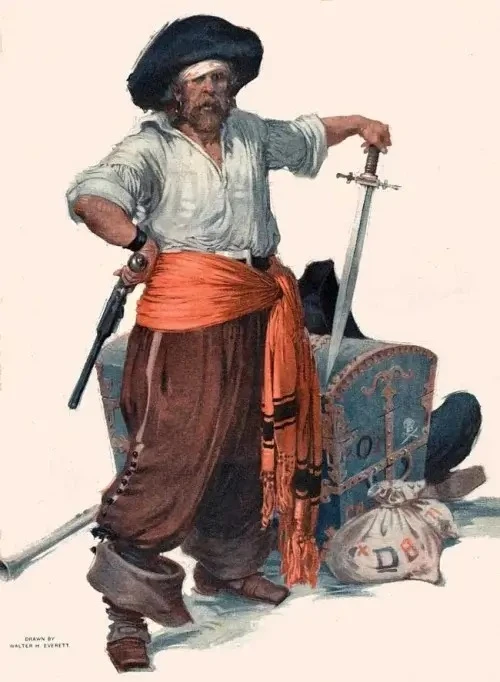
Pirate Ned (Edward) Low
The pirate decided to bolster his crew with young fishermen and gave them a choice: death or life under the Jolly Roger. Ashton was very reluctant to become a pirate, but he knew well how cruelly Ned Low dealt with prisoners. So he had to agree. But the young man decided to escape if the opportunity arose. Soon, fate gave him that chance.
One day, a pirate sailing ship dropped anchor near the small tropical island of Roatan in the Gulf of Honduras. The crew decided to stock up on drinking water and gather wood for repairs. Philip disembarked with several crew members. While the pirates were filling barrels in a stream, he said he would go into the forest to collect some coconuts. But as soon as the thicket closed behind him, Philip took off running. 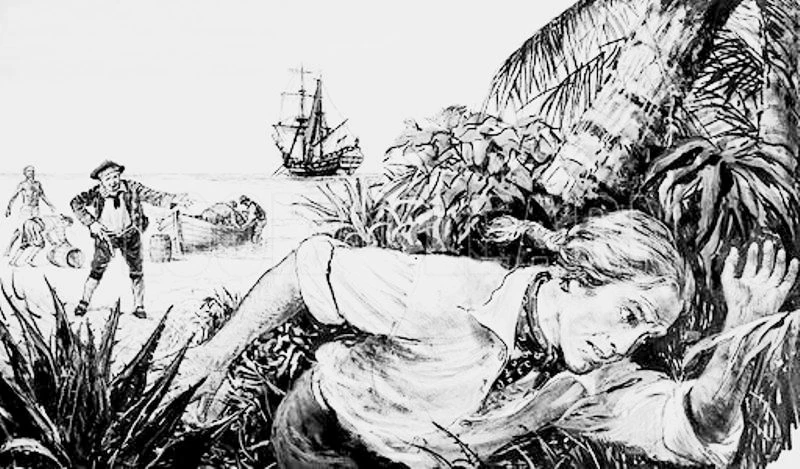
Life on the Island
The pirates searched for Ashton, but he hid in the thicket and remained quiet until the ship left the island's waters. The boy found himself in a much more difficult situation than Daniel Defoe's hero. He had nothing with him except a small knife. Fortunately, Roatan Island was rich in fresh water, and the jungle was full of fruit trees. Turtle eggs could be found on the beaches, and if you were lucky, you could even catch a turtle.
However, the island was hardly a paradise. The forest was infested with poisonous snakes and huge, aggressive lizards. Wild boars also roamed the thickets, and Philip had to take refuge in the trees. But the hermit's greatest problem was the insects. Hordes of bloodsucking midges swarmed over Philip's exposed body parts, causing him excruciating pain. Because of them, the sailor built a hut on the beach, hoping the sea breeze would disperse the tormentors. But it didn't help much.
A Fellow Sufferer
Nine months later, a boat carrying a man and his dog landed at the island. He told Ashton he had escaped Spanish captivity. His new companion had a rifle, a supply of gunpowder and bullets, carpentry tools, and some provisions. But Philip's enjoyment of their company lasted only a few days. Soon, the man was preparing to go hunting on a neighboring island. He invited Philip to join him, but he wisely declined, as the journey was long and the boat was barely afloat. 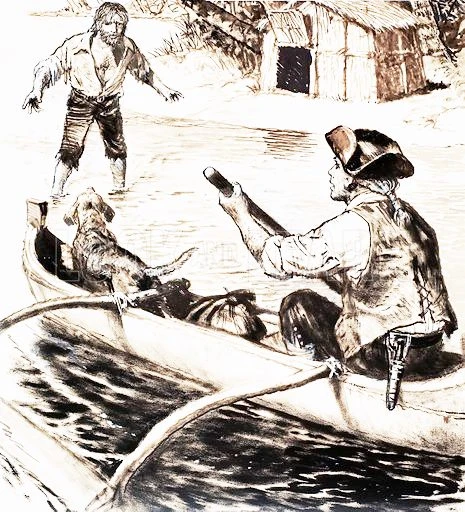
The companion set off, promising to return soon with the spoils. Philip never saw him again. Apparently, something happened to the frail vessel and the man drowned. Ashton was alone again. But now he had tools and a flint and steel with which he could start a fire. Life became a little more enjoyable—wild boars were afraid of fire, and Philip no longer had to worry about them.
Another three months passed. One morning, Philip saw a boat on the beach again. At first, he thought it was his companion returning. But it turned out to be a canoe made by the Indians. It contained nothing but an oar. Having secured a means of transportation, Ashton decided to explore the coastline. But on the other side of Roatan, he encountered Spaniards who began shooting at him. The young man barely escaped with his life and decided not to tempt fate by straying far from his beach.
Rescue from Roatan
After a year and a half on the island, Philip found company again. Two boats carrying people landed on the shore. They were Englishmen, surprised to find a man on the island. But they were even more astonished by how he had arranged his life. By this time, Ashton had built a spacious hut, even furnished with simple furniture. The sailors named the hermit's home "The Castle of Comfort." 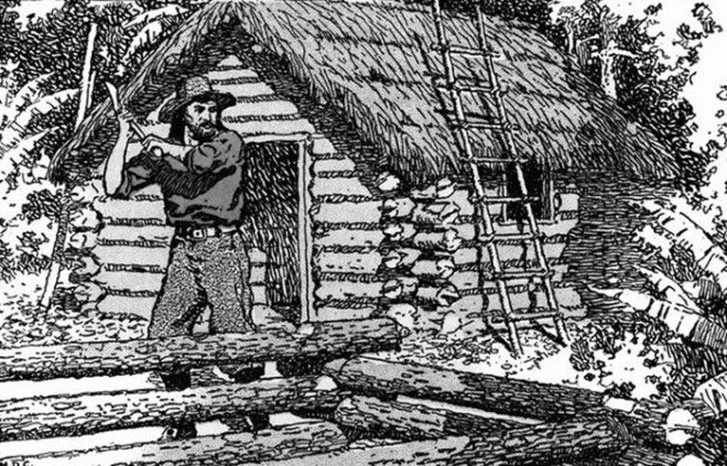
The English sailors themselves were victims of circumstance. Their ship was attacked by the Spanish, but they managed to escape in boats. After a few months, the sailors decided to abandon the island and sail for the mainland. Two remained with Ashton, determined not to risk their lives on the high seas. They made the right choice. After some time, a whole flotilla arrived at Roatan. They were English merchants sailing to trade in the West Indies.
The captain of one of the merchant ships turned out to be a fellow countryman of Philip Ashton. With him, the young man finally went home. He arrived in his hometown of Marblehead in June 1725, exactly three years after that ill-fated fishing expedition. Returning to his family, Philip immediately began writing a book. Unfortunately, it was not a success. 
Contemporaries dismissed his "Philip Ashton Memorial: A Tale of Strange Adventures and Miraculous Rescue" as a work of fiction, inspired by the best-selling novel "Robinson Crusoe." Only many years later did it become clear that Ashton's memoirs were based on true events and documented life on a desert island.
Ashton was lucky that his island was in the tropics. Robinson Crusoe Sergei Lisitsyn, who found himself alone on the shores of the harsh Sea of Okhotsk, faced far more difficult trials.