25 of the World's Strangest Diseases That Scientists Still Can't Explain (25 photos)
Science has made significant advances in medicine—it's now possible to overcome diseases our ancestors only dreamed of conquering. However, there are still illnesses that leave doctors baffled. The origins of some are unknown, or they affect the body in completely unbelievable ways. Perhaps one day these strange illnesses will be explained and treated, but for now they remain a mystery to humanity. 
From people who can dance themselves to death to water allergies, here are 25 incredibly strange, but real, illnesses that science can't explain! 
Acute flaccid myelitis
Myelitis is an inflammation of the spinal cord. Sometimes called poliomyelitis syndrome, it is a neurological disease that affects children and leads to weakness or paralysis. Young patients experience constant joint and muscle pain. Until the late 1950s, polio was a terrifying disease, with epidemics claiming thousands of lives in various countries. About 10% of those infected died, and another 40% became disabled.
After the invention of the vaccine, scientists claimed the disease had been eradicated. But despite the WHO's assurances, polio is not giving up – outbreaks continue to occur from time to time in various countries. Moreover, people who have already been vaccinated are becoming ill, as the virus, which originates from Asia, has acquired an unusual mutation. 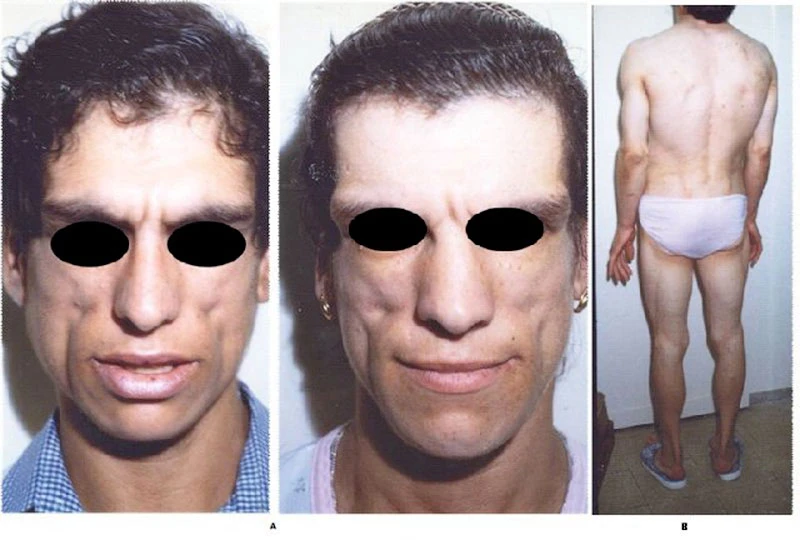
Berardinelli-Seip Congenital Lipodystrophy (BSCL)
This condition is characterized by a severe deficiency of fat tissue in the body and its deposition in unusual places, such as the liver. Because of these strange symptoms, patients with BSCL have a very distinctive appearance—they appear very muscular, almost superhero-like. They also typically have prominent facial bones and enlarged genitals.
In one of the two known types of SLBS, doctors have also discovered mild mental impairment, but this is not the most significant problem for patients. This unusual distribution of fat tissue leads to serious problems, specifically high blood fat levels and insulin resistance, while fat accumulation in the liver or heart can lead to severe organ damage and even sudden death. 
Lethargic encephalitis
This disease was terrifying when it first appeared in the early 20th century. Patients initially began hallucinating and then became paralyzed. They appeared to be asleep, but were actually conscious. Many died at this stage, and those who survived experienced devastating behavioral problems for the rest of their lives (Parkinsonism syndrome). The disease's epidemic never recurred, and doctors to this day don't know what caused it, although many theories have been put forward (a virus, an immune reaction damaging the brain). Adolf Hitler is believed to have suffered from encephalitis lethargica, and subsequent Parkinsonism may have influenced his rash decisions. 
Exploding Head Syndrome
Patients hear incredibly loud explosions in their heads and sometimes see flashes of light that don't exist, and doctors have no idea why. This is a poorly understood phenomenon classified as a sleep disorder. The causes of this syndrome, which is more common in women than in men, are still unknown. It typically occurs due to sleep deprivation. Recently, this syndrome has been affecting an increasing number of young people. 
Sudden Infant Death Syndrome
This phenomenon is the sudden death of an apparently healthy infant or child due to respiratory arrest, in which an autopsy cannot determine the cause of death. SIDS is sometimes called "crib death" because it may not be preceded by any signs, and the child often dies in his or her sleep. The causes of this syndrome are still unknown. 
Aquagenic urticaria
Also known as water allergy, patients experience a painful skin reaction upon contact with water. This is a real condition, albeit very rare. Only about 50 cases have been described in the medical literature. Water intolerance causes a severe allergic reaction, sometimes even to rain, snow, sweat, or tears. Symptoms are usually more severe in women, with the first symptoms appearing during puberty. The cause of water allergy is unclear, but its symptoms can be relieved with antihistamines. 
Brainerd Diarrhea
Named after the city where the first such case was reported (Brainerd, Minnesota, USA). Sufferers experience 10-20 bowel movements per day. Diarrhea is often accompanied by nausea, cramps, and constant fatigue.
In 1983, eight outbreaks of Brainerd's diarrhea were recorded, six of them in the United States. However, the first was the largest, with 122 people falling ill in a year. It is suspected that the illness occurs after drinking raw milk, but it remains unclear why it persists for so long. 
Severe visual hallucinations, or Charles Bonnet syndrome
A condition in which patients experience quite vivid and complex hallucinations despite suffering partial or complete vision loss due to old age or diseases such as diabetes and glaucoma.
While documented cases of this condition are few, it is believed to be common among older people who are blind. Between 10 and 40% of blind people suffer from Charles Bonnet syndrome. Fortunately, unlike the other conditions listed here, the symptoms of severe visual hallucinations resolve spontaneously after a year or two, as the brain begins to adjust to the loss of vision. 
Electromagnetic hypersensitivity
More of a mental disorder than a physical one, patients believe their various symptoms are caused by electromagnetic fields. However, doctors have discovered that people cannot distinguish between real and fake fields. Why do they still believe this? It's usually linked to conspiracy theories. 
Stiff Man Syndrome
As this syndrome progresses, the patient's muscles become increasingly stiff until they become completely paralyzed. Doctors aren't sure what exactly causes these symptoms; possible hypotheses include diabetes and gene mutations. 
Nodding Syndrome
Discovered in East Africa in 2010, it primarily affects children: patients nod their heads constantly, often leading to malnutrition and stunted growth. Doctors suspect the disease may be caused by parasites, but they're unsure. 
Allotriophagia
This disease is characterized by the consumption of non-food substances. People suffering from this disease experience a constant desire to consume various types of non-food substances instead of food, including dirt and glue. Basically, they crave anything that comes to hand during an attack. Doctors have yet to find either the true cause of the disease or a cure. 
The English Sweat
The English sweat, or English sweating sickness, was an infectious disease of unknown etiology with a very high mortality rate that affected Europe (primarily Tudor England) several times between 1485 and 1551. The illness began with chills, dizziness, and headache, as well as pain in the neck, shoulders, and limbs. This was followed by fever and intense sweating, thirst, increased pulse rate, delirium, and heart pain. There was no skin rash. A characteristic symptom of the disease was intense drowsiness, often preceding death after a debilitating sweat: it was believed that if a person were allowed to sleep, they would never wake up.
At the end of the 16th century, the "English sweating sickness" suddenly disappeared and has never reappeared anywhere since, so now we can only speculate about the nature of this highly unusual and mysterious illness. 
Peruvian Meteorite Disease
When a meteorite fell near the village of Carancas, Peru, local residents who came close to the crater fell ill with an unknown illness that caused severe nausea. Doctors believe the cause was arsenic poisoning from the meteorite. 
Blaschko lines
This disease is characterized by the appearance of unusual stripes all over the body. It was first discovered by a German dermatologist in 1901. The main symptom is the appearance of visible, asymmetrical stripes on the human body. Anatomy still cannot explain this phenomenon, known as Blaschko's lines. It is believed that these lines have been embedded in human DNA since time immemorial and are passed down through genetics. 
Kuru Disease, or Laughing Death
The Fore cannibal tribe, living in the mountains of New Guinea, was only discovered in 1932. Members of this tribe suffered from the deadly disease kuru, whose name in their language has two meanings: "trembling" and "corruption." The Fore believed the disease was the result of an evil eye cast by a foreign shaman. The main symptoms are severe tremors and jerky head movements, sometimes accompanied by a smile similar to that seen in people with tetanus. In the initial stages, the disease manifests itself as dizziness and fatigue. Headaches, convulsions, and, eventually, the typical tremors appear. Over the course of several months, brain tissue degrades, turning into a spongy mass, after which the patient dies.
The disease was spread through ritual cannibalism, specifically the consumption of the brain of a sufferer. With the eradication of cannibalism, kuru virtually disappeared. 
Cyclic vomiting syndrome
Usually develops in childhood. The symptoms are quite clear: repeated bouts of vomiting and nausea. Doctors don't know the exact cause of this disorder. What is clear is that people with this condition can suffer from nausea for days or weeks. In the case of one patient, the most severe attack involved her vomiting 100 times a day. Typically, this occurs 40 times a day, primarily due to stress or nervous excitement. The attacks are unpredictable. 
Blue Skin Syndrome, or Acanthosis Nerves
People with this diagnosis have blue or plum-colored skin. In the last century, an entire family of blue people lived in the American state of Kentucky. They were called the Blue Fugates. Incidentally, they had no other illnesses besides this hereditary disease, and most of this family lived to be over 80 years old. 
Morgellons Disease
Characterized by skin lesions, with sufferers complaining of insects or worms crawling and biting under their skin, and also claiming to find fibers under their skin. It is unknown whether this is a new disease or simply a combination of existing ones. For a long time, the medical community did not recognize this syndrome. It was believed that such lesions could be caused by the sufferers themselves, who suffered from "delusional parasitosis" or "delusional infection." In other words, it was suspected that such people had a mental illness. 
A Disease of the Twentieth Century
Also known as multiple chemical sensitivity, this disease is characterized by adverse reactions to various modern chemicals and products, including plastics and synthetic fibers. As with electromagnetic sensitivity, patients do not react unless they are aware they are interacting with chemicals. 
Chorea
The most famous incident of this disease occurred in 1518 in Strasbourg, France, when a woman named Frau Troffea began dancing without reason. Hundreds of people joined her over the next few weeks, and eventually many died of exhaustion. The probable causes were mass poisoning or mental illness. 
Progeria (Progeria), Hutchinson-Gilford syndrome
Children affected by this disease look like ninety-year-olds. Progeria is caused by a defect in the human genetic code. This disease has unpreventable and devastating consequences. Most people born with this disease die by age 13, as their bodies undergo accelerated aging. Progeria is extremely rare. Only 48 people worldwide have been diagnosed with the disease, five of whom are related, making it considered hereditary. 
Porphyria
Some scientists believe it was this disease that gave rise to the myths and legends of vampires and werewolves. Why? The skin of patients afflicted with this disease blister and "boil" when exposed to sunlight, and their gums "dry out," causing their teeth to resemble fangs. The strangest part? Their stool turns purple.
The causes of this disease are still poorly understood. It is known to be hereditary and is associated with the abnormal synthesis of red blood cells. Many scientists believe that in most cases it occurs as a result of incest. 
Gulf War Syndrome
A disease that affected Gulf War veterans. Symptoms range from insulin resistance to loss of muscle control. Doctors believe the disease was caused by the use of depleted uranium in weapons (including chemical weapons). 
Jumping Frenchman Syndrome of Maine
The main symptom of this disease is intense fright when something unexpected happens to the patient. The sufferer jumps, screams, waves their arms, stumbles, falls, rolls on the floor, and is unable to calm down for a long time. This disease was first recorded in the United States in 1878 in a Frenchman, hence its name. Described by George Miller Beard, this disease only affected French-Canadian lumberjacks in northern Maine. Doctors believe that this is a genetic disease.