10 incredible stories that are hard to believe at first (11 photos)
The world is full of amazing things we never even suspected existed. Imagine a jellyfish living deep in the ocean that, when attacked, triggers a "siren" to summon a larger predator for help. Or consider that in a Florence museum, you can see Galileo’s middle finger—detached from his hand nearly a century after his death. And in Japan, a woman became the only officially recognized yakuza member. 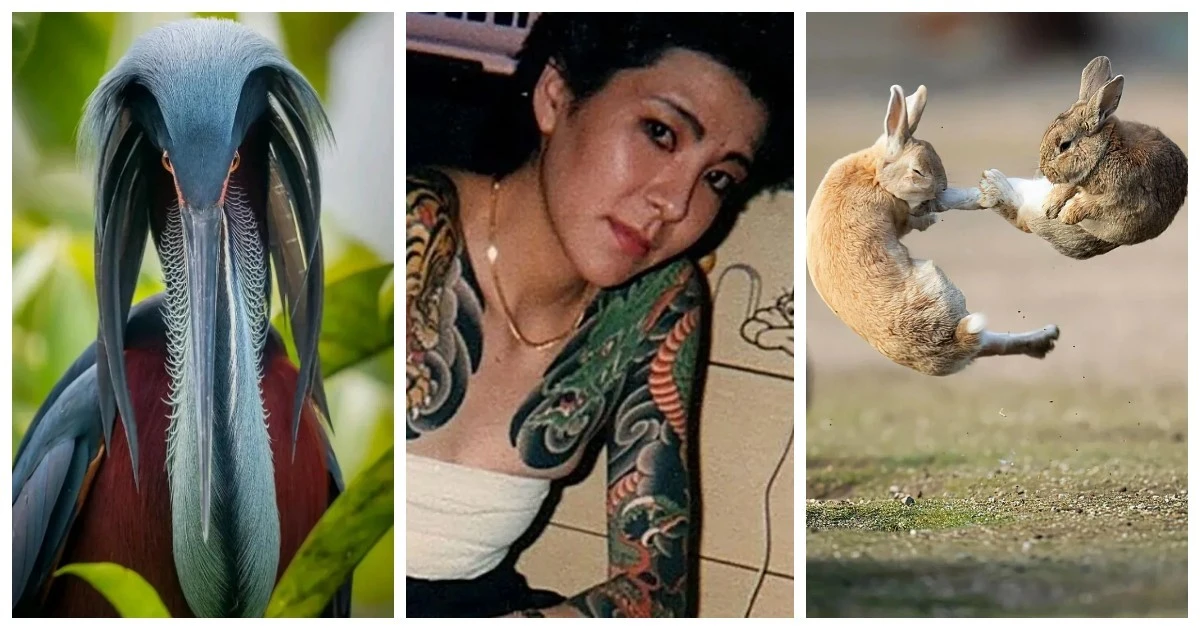
We’ve gathered 10 amazing facts from the worlds of nature, history, and culture. Each one sounds like fiction, but they are all the absolute truth.
1. One of the first underwater photographs ever taken 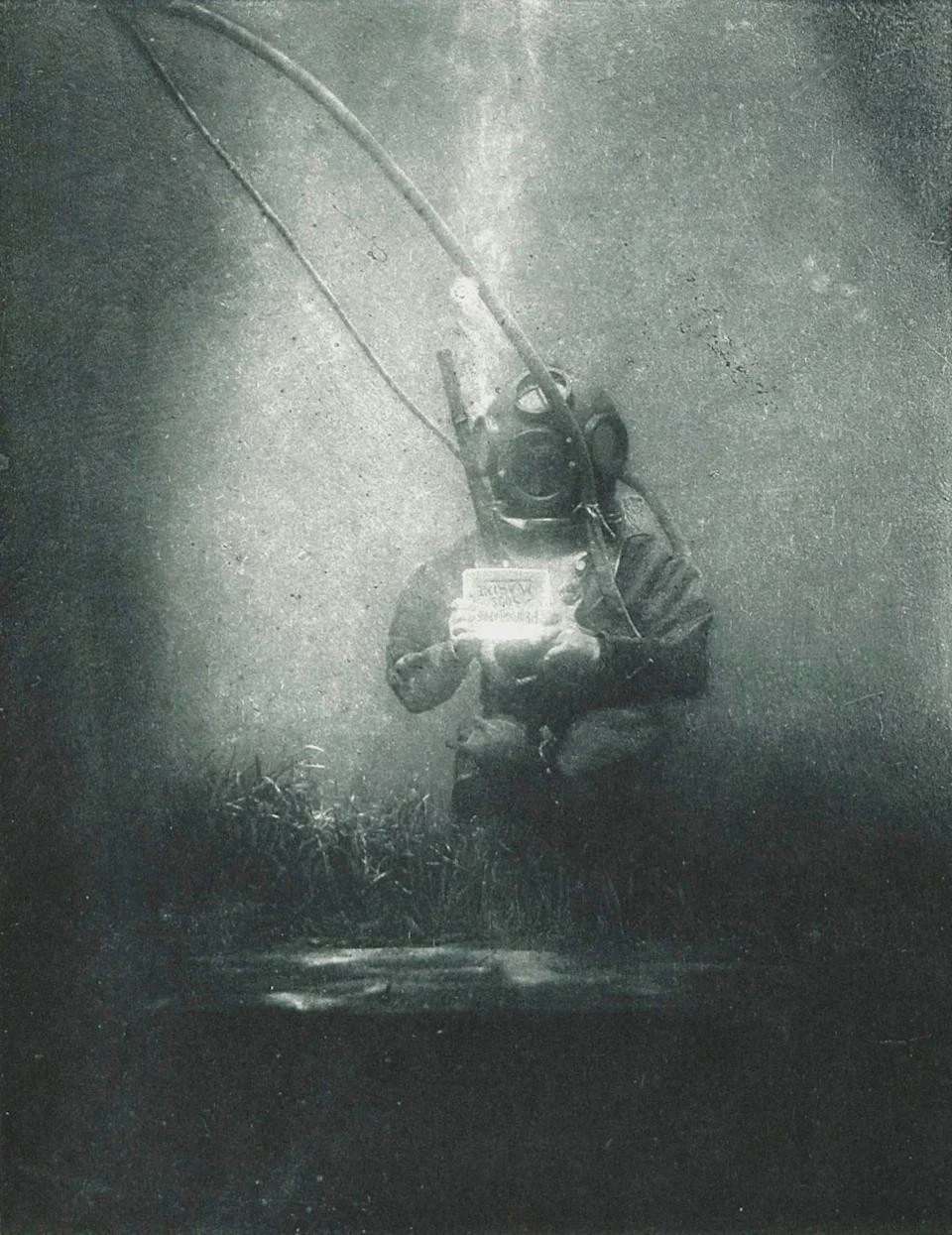
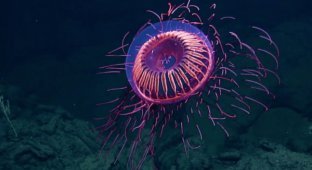
2. *Atolla* is a genus of deep-sea jellyfish—also known as "crown jellyfish"—named for the distinctive deep groove on their bell that makes it look like a transparent crown. 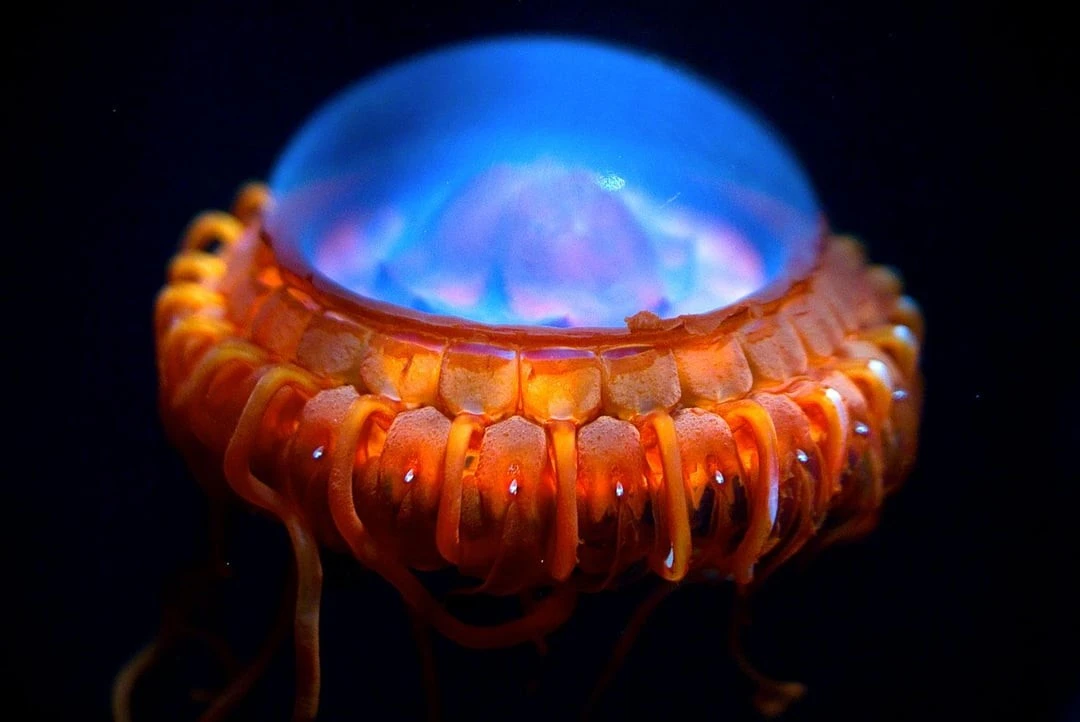
Their bodies are a deep red color. In total darkness (where red light does not penetrate), this coloration renders them virtually invisible to predators. When attacked, the creature triggers a cascade of bright blue light flashes that ripple across its bell in concentric waves. One theory suggests these flashes serve as an alarm signal: the jellyfish attempts to attract the attention of a larger predator that might take an interest in—and attack—its assailant.
3. The middle finger of Galileo Galilei’s right hand is housed at the Galileo Museum in Florence and forms part of its permanent exhibition. 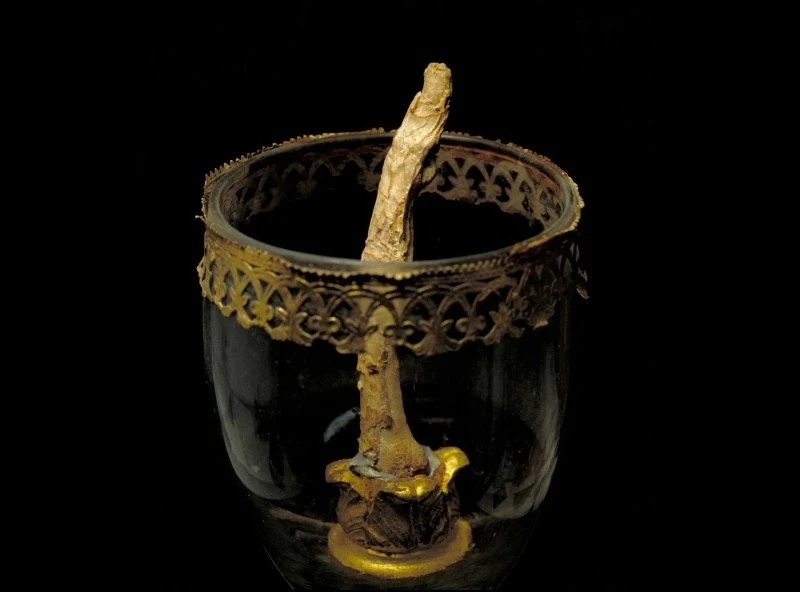
The story of how it arrived at the museum began 95 years after the scientist's death. In 1737, his remains were transferred from a modest burial site to a magnificent tomb in the Basilica of Santa Croce. During the ceremony, admirers of Galileo—antiquarian Anton Francesco Gori, anatomist Antonio Cocchi, and Marchese Vincenzio Capponi—removed three fingers (the middle, index, and thumb), a tooth, and a vertebra from his skeleton.
For a long time, the finger was kept at the Laurentian Library; in 1841, it was moved to the *Tribuna di Galileo* (Galileo’s Tribune) at the Museum of Physics and Natural History. In 1927, it finally came to the Institute and Museum of the History of Science.
The other fingers and the tooth were lost around 1905 and remained missing for over a century. However, in 2009, they were accidentally discovered at an auction and subsequently transferred to the museum. Thus, all of Galileo's lost body parts were reunited in the museum exhibit.
4. In 1859, a man named Thomas Austin released 24 rabbits into the Australian wild for sport hunting. Over the course of 70 years, the rabbit population grew to 10 billion. 
The rabbits multiplied at a catastrophic rate. By the 1920s, their population in Australia had reached an estimated 10 billion individuals. This represented the fastest growth and spread of any mammal in human history.
The rabbits destroyed vegetation, leading to massive soil erosion and the disappearance of many native plant and animal species. They caused population declines and the extinction of many marsupials.
They ruined farmers by competing with livestock for forage. The damage to agriculture was colossal.
Today, despite all efforts, rabbits remain a serious problem. Their numbers have risen again to approximately 200 million. New viruses (such as calicivirus) are being used, but the rabbits are developing immunity.
5. Melted wax figures following the 1925 fire at Madame Tussauds in London 
On March 18, 1925, a devastating fire broke out at the famous wax museum on Marylebone Road, putting it out of commission for years.
The fire started around 10:30 PM on March 18, 1925. Within an hour and a half, the blaze destroyed almost the entire building and its upper floors. The roof collapsed, leaving behind only the framework of the famous dome. Witnesses reported red and gold flames rising 15 meters high and described the sound of wax figures hissing as they perished in the fire.
The wax molds had been stored elsewhere, allowing the museum to reopen in 1928. The exact cause was never determined, though a short circuit is suspected.
6. Mako Nishimura — a former Yakuza member widely recognized as perhaps the only woman officially admitted into the traditionally male world of the Yakuza 
Mako Nishimura was born in 1966 and represents a unique case in the history of Japanese organized crime. She is the only woman officially recognized by the authorities as a full-fledged member of the Yakuza.
7. Albino turtle 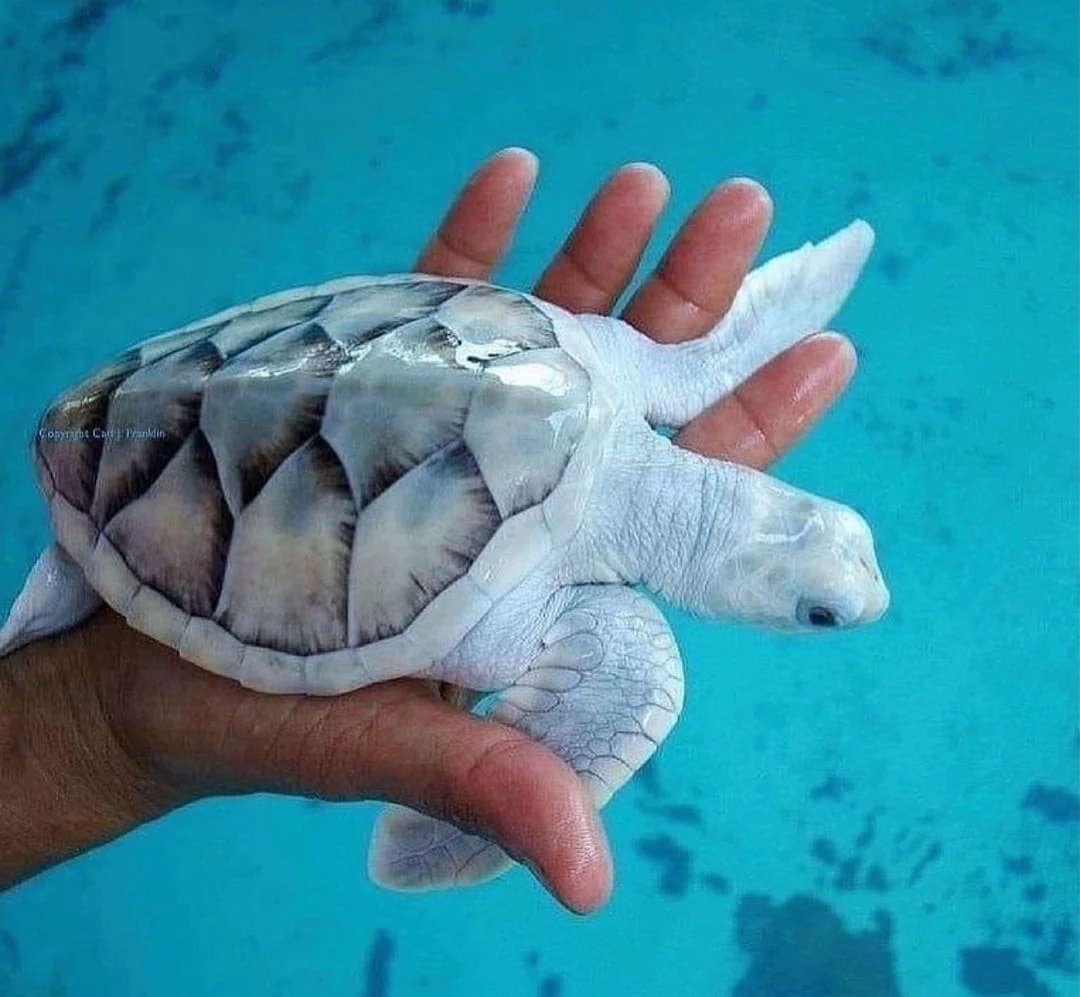
This is a turtle with a genetic mutation that completely or partially blocks the production of melanin—the pigment responsible for the coloration of the skin, eyes, and shell. As a result, they have pale, white, or yellow skin and shells (sometimes with a red, orange, or pink tint) and pink or red eyes, as the lack of pigment allows blood vessels to show through.
Albinos lack protective coloration, making them easy prey for predators. Additionally, they often suffer from poor eyesight and heightened sensitivity to sunlight. Consequently, albino turtles rarely survive to adulthood in the wild.
8. Chalk consists almost entirely of the fossilized shells of ancient single-celled marine plankton known as coccolithophores 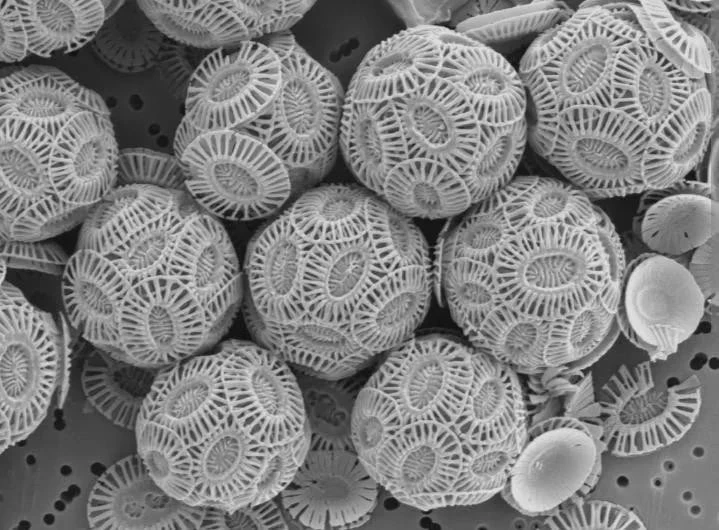
These are single-celled algae that cover themselves with tiny calcareous plates called coccoliths. Each plate measures between 0.5 and 4 micrometers in size. The alga itself, complete with all its plates, is called a coccosphere and typically does not exceed 50 micrometers in diameter.
When coccolithophores die, their calcareous shells sink to the ocean floor and accumulate in layers. Over millions of years, this process created a type of sedimentary rock: chalk.
9. The Agami heron—one of the most beautiful and elusive herons in the world 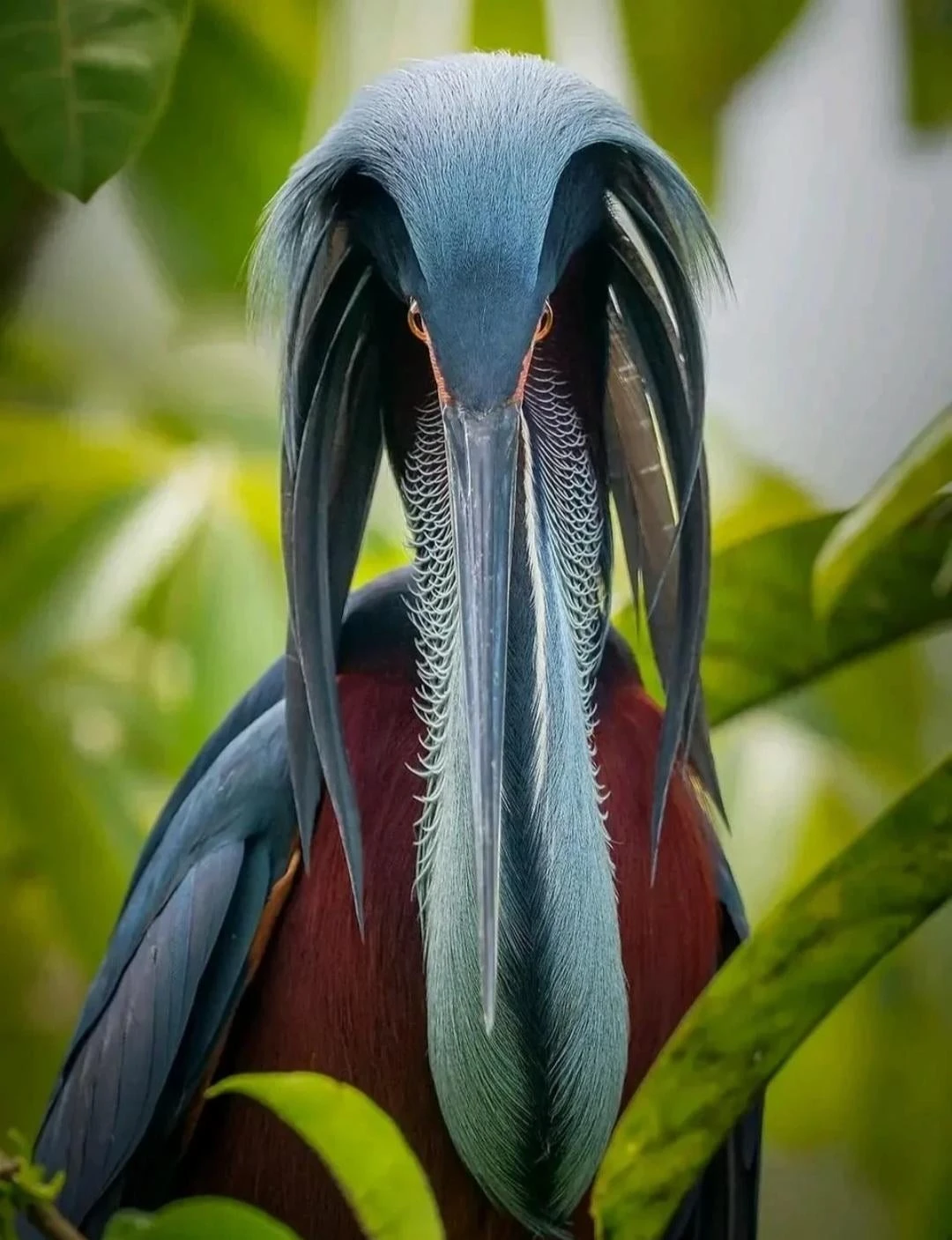
The Agami heron (*Agamia agami*) is a real species—sometimes known as the chestnut-bellied heron—and is the sole member of the genus *Agamia*. Its plumage is highly unusual for a heron. The neck and underparts are chestnut-brown, the wings are a metallic green, and the head and neck feature bluish ornamental plumes. Because of this beauty, it is known in Brazil as *Soco beija-flor*—the "hummingbird heron."
10. A photo of rabbits fighting in mid-air in Japan, taken by Mora Nakamura 
Mora Nakamura and a colleague captured this image on Okunoshima Island in 2024. The shot is so dramatic that it looks like a still from a martial arts movie, yet it is entirely real—capturing the moment of an actual, albeit amusing, scuffle between two rabbits.