Space should be teeming with life. So why is it silent? (14 photos)
The Milky Way is home to up to four hundred billion stars. Planets orbiting them are not a rarity but practically the norm; almost every star has its own retinue. Among them are worlds with water—which is not uncommon in space—stable orbits, and a head start of a couple of billion years over us. 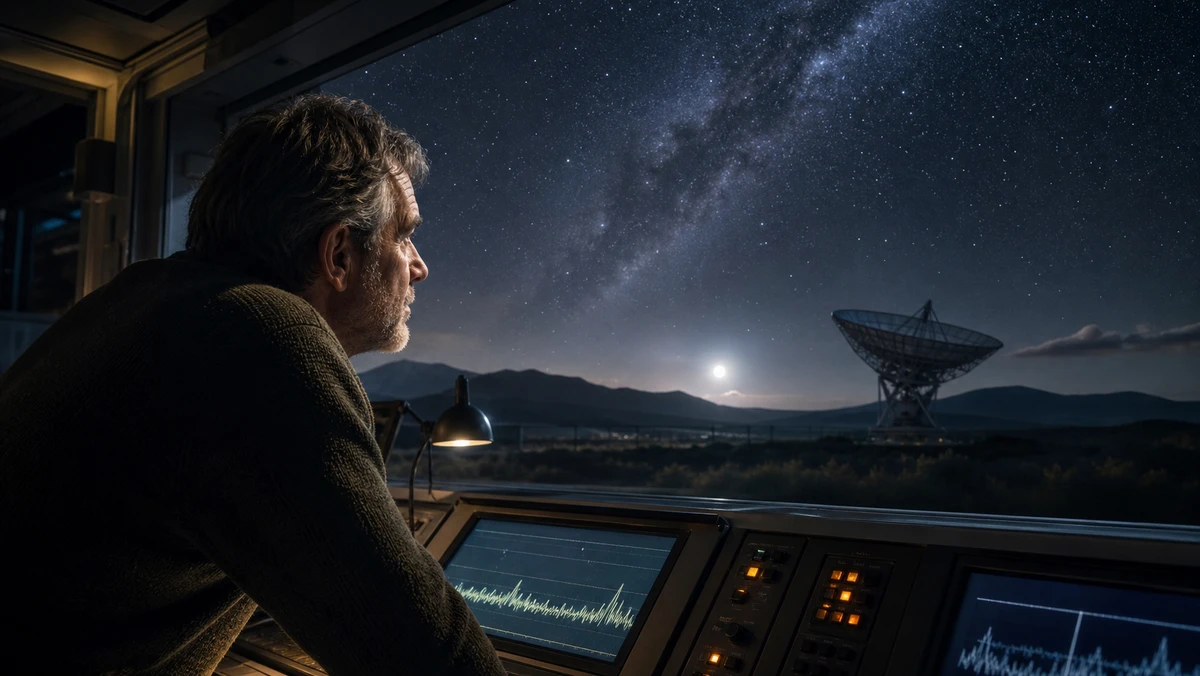
The arithmetic screams the answer: we shouldn't be alone. There simply *must* be civilizations out there that mastered space travel long ago!
Yet the sky remains silent. No radio beacons, no alien probes, no traces of massive engineering projects. And this silence is not merely an absence of sound—it is profound. What is going on here? Science has long sought to explain this paradox; let’s look at the leading hypotheses.
"So, where is everybody?" 
It was the summer of 1950 in Los Alamos, during a lunch break. Physicists were laughing at a new cartoon in a magazine: aliens were climbing out of a flying saucer, hauling away trash cans stolen from the streets of New York.
And right there, over lunch, Enrico Fermi—a Nobel laureate and the man who built the first nuclear reactor—suddenly dropped a remark:
"So, where is everybody?"
Fermi himself seems to have doubted not the existence of extraterrestrials, but the very feasibility of interstellar travel. 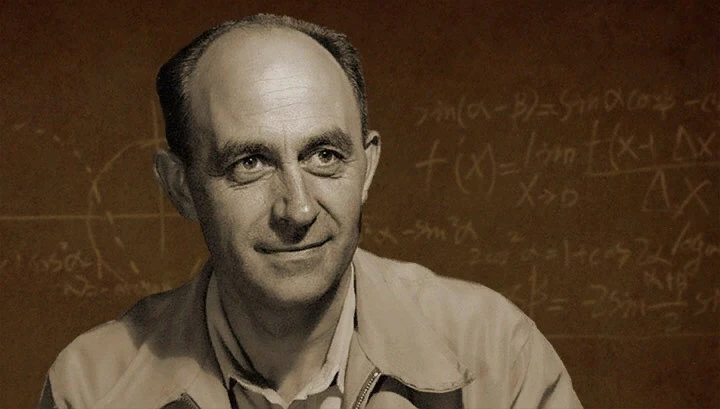
A quarter of a century later, astronomer Michael Hart formulated the "hard" version of the argument.
"If they existed, they would have colonized the Galaxy long ago; since they aren't here, they don't exist at all."
His reasoning gave rise to what we now call the Fermi Paradox.
The essence is simple: even a slow-moving civilization—without any sci-fi faster-than-light travel—could spread from star to star across the entire Milky Way in tens of millions of years. Yet the Galaxy is billions of years old. There was plenty of time.
Roughly speaking, the Galaxy is like a packed stadium where, for some reason, everyone is silent—as if waiting for their neighbor to speak first.
It comes down to cold arithmetic: too many stars, too much time, and suspiciously few answers.
Why an empty Mars is good news 
The most coherent explanation for this silence has been dubbed the "Great Filter." The idea is this: between inert chemistry and a civilization striding among the stars, there lies one—or perhaps several—monumentally difficult hurdles that almost no one clears.
The trillion-dollar question is: is this barrier behind us, or still ahead?
This is where philosopher Nick Bostrom offers a thought that forces us to confront an unsettling fact. When probes sift through Martian sand in search of even a fossilized bacterium, we are, in a sense, digging our own grave. Bostrom has even admitted—almost provocatively—that he hopes Mars turns out to be completely sterile. Why such pessimism? 
Nick Bostrom
The logic goes like this: if we were to find traces of life on Mars that originated there independently, it would strongly suggest that life arises easily and frequently. This implies that the difficult hurdle is not behind us. Instead, it lies ahead—at the stage where civilizations acquire nuclear weapons and cease all communication.
(A nuance: Martian life could well be our kin—microorganisms might have been carried there from Earth by meteorites, or vice versa. But if life arose there on its own—that is cause for alarm.) 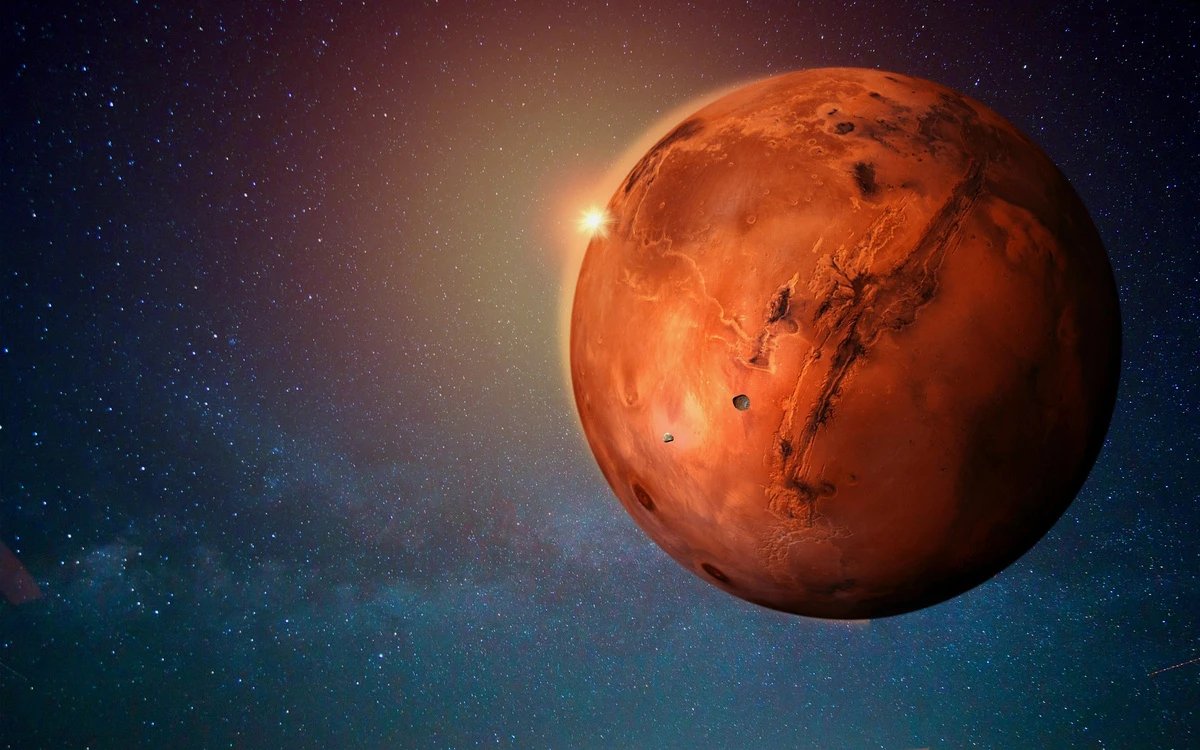
Our own history offers an indirect hint that this difficult hurdle is real. Sentient life appeared on Earth 4.5 billion years into our planet's existence—right in the middle of the Sun's lifespan. If brain evolution were a simple matter, it would have happened much sooner. Instead, we barely made it onto the last train. And it was a cramped carriage: according to one hypothesis, about 70,000 years ago, the entire human population shrank to just a couple of thousand individuals—the whole future "master of nature" could have fit into a single open-plan train car. Back then, our ancestors nearly perished due to the near-simultaneous eruption of several volcanoes and the resulting climate catastrophe.
Now, we are inventing ways to destroy ourselves.
If a "Great Filter" lies ahead, the silence of the cosmos already sounds like a warning.
Or perhaps we simply aren't listening closely enough.
It is possible that the Universe isn't silent at all—it’s just that our ears are tuned to the wrong frequency.
Let’s look at ourselves first. Earth has been broadcasting into the ether for only about 120 years—ever since the first radio transmissions. Our "radio bubble" is a sphere with a radius of roughly 120 light-years. 
That sounds modest, given that the Milky Way spans at least 100,000 light-years across. Our signal has reached only a few thousand nearby stars—a mere drop of ink in the ocean. And that drop is not a shout, but a faint whisper that all but dissolves into cosmic noise at such distances.
Put simply, it is highly likely that no one has actually been able to hear us yet.
By the same token, we might fail to hear distant civilizations. 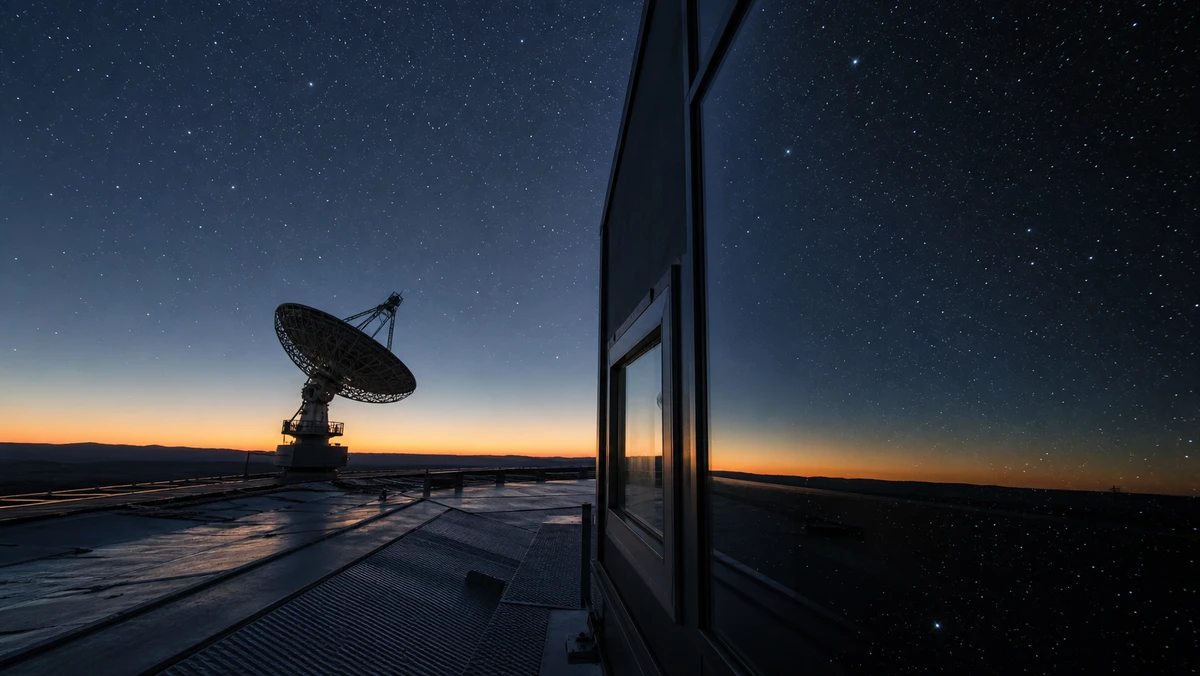
As it turns out, we aren't exactly experts at searching, either. For decades, SETI projects (scientific initiatives aimed at finding extraterrestrial civilizations) have hunted for narrow radio signals that appear artificial; however, a new article published in *The Astrophysical Journal* reveals that plasma storms around alien stars can smear such a signal before it even leaves its home system.
Consequently, a "sharp beep" turns into a faint, broad smudge, and legacy algorithms tuned to detect a precise "radio needle" might simply overlook it.
Therefore, it is more accurate to say this: we haven't truly "listened" to the cosmos; we have merely checked a tiny fraction of the possible frequencies, directions, power levels, and signal types. 
Fermi did not believe that interstellar travel would be possible in principle.
And one more important clarification: we aren't just looking for life in general. The Galaxy could be teeming with microbes, yet space might still remain silent. We are looking for civilizations that have both the ability and the desire to leave noticeable traces. In other words, not just life, but technological "talkativeness"—something that is, you must admit, far rarer.
What if they simply don't want to answer?
There is also a perfectly calm explanation. What if our advanced neighbors know about us but deliberately stay out of our affairs? 
In 1973, radio astronomer John Ball dubbed this the "Zoo Hypothesis": advanced civilizations might have agreed not to disturb "wild" worlds, leaving Earth as a sort of monitored nature reserve. Not out of squeamishness, but out of respect for another civilization's path. It is akin to the "Prime Directive" from *Star Trek*: observe, but do not interfere.
Interestingly, our own Konstantin Tsiolkovsky voiced a similar idea back in 1933. In his manuscript *Planets Inhabited by Living Beings*, he posed a sensible question: if neighbors exist, why are they silent? His answer was that perhaps the time simply hadn't come yet. Just as distant peoples remained unaware of foreign shores for centuries until ships finally reached them, Tsiolkovsky believed our instruments were still too weak to pick up signals from other civilizations.
They cannot escape their planet. Or perhaps they simply do not want to.
This brings me to my own personal hypothesis. It goes like this:
An intelligent species is under no obligation to conquer space. It might be prohibitively difficult for them—or simply uninteresting.
Let me offer three clear examples.
Consider civilizations on high-gravity planets. The cost of space travel there skyrockets; overcoming a home planet's gravity is far more difficult. Yet, judging by what we observe around other stars, massive planets larger than Earth are quite common. Moreover, large planets are the most likely places for life to emerge, as their powerful magnetic fields shield them from cosmic radiation—something smaller planets cannot do. 
Now, let’s add a second, decisive argument.
Cheap fuel is the exception, not the rule. Oil and coal are by no means typical substances; they are organic matter—specifically, organic matter formed through a unique combination of flora and fauna under specific geological conditions. While oil might—with great difficulty—replenish itself over hundreds of millions of years, coal cannot. It was formed during a period when trees existed, but bacteria and fungi had not yet evolved the ability to decompose them. Over tens of millions of years, a massive accumulation of wood built up, eventually transforming into coal. 
And it was precisely this fuel that propelled us forward so dramatically! It is extremely difficult to imagine humanity suddenly gaining access to nuclear energy without it, or reaching that stage via wind and hydroelectric power alone.
Oil, coal, and gas opened up fantastic opportunities for progress! There was no guarantee that these substances would exist on other planets. Yet, without cheap fuel, scientific and technological progress is hindered.
And why do we need to go into space? Many—even highly intelligent—life forms might simply have no desire to explore the cosmos. 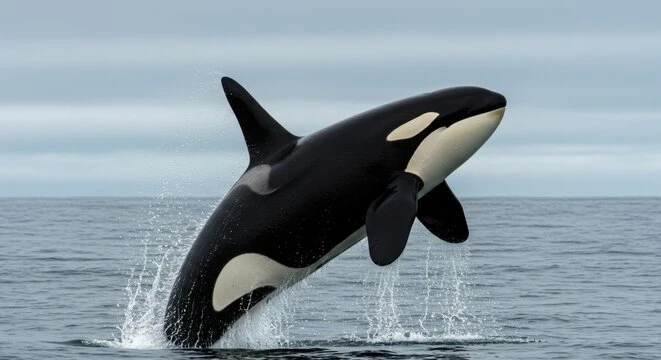
When things are going well, why change?
Look at orcas—they are highly intelligent, likely ranking just below higher primates in terms of intellect (and actually surpassing chimpanzees by certain criteria). Yet, they were already like this 13 million years ago—long before *Homo sapiens* appeared. Even back then, they were ahead of us.
The thing is, they simply don't evolve further; their development has stagnated. They have no reason to grow—there is food in the ocean, it is safe there; what else could they possibly need?
There could well be a great many ocean planets teeming with life out in the cosmos. Yet, the motivation to emerge from the water and explore outer space is minimal.
Consequently, we are currently unable to detect these civilizations—after all, they are confined to their own planets.
A Mirror in the Void
Any answer to the Fermi Paradox is not really a conversation about aliens. It is a conversation about us.
The silence tells us: "We haven't found anyone yet using the methods we've employed so far." Using a neural network, I’ve recreated a few hypothetical life forms (approved by astrobiologists!). 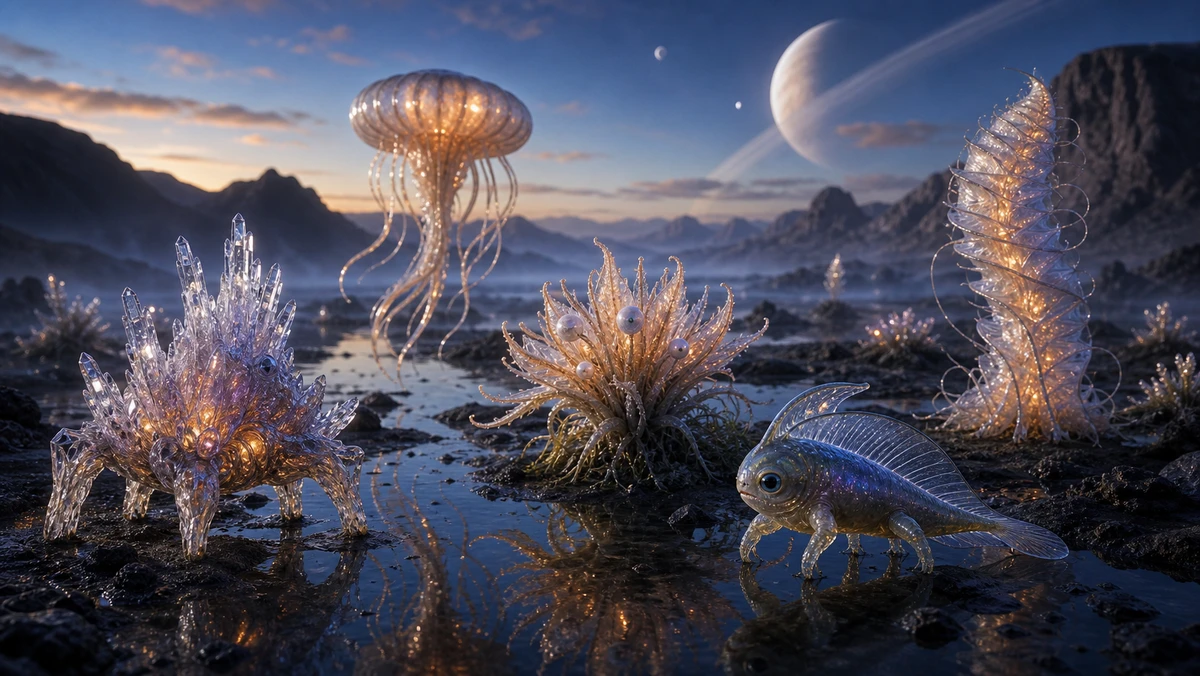
None of them are intelligent—at least not in the way we define intelligence—nor do any of them aspire to explore space. (Space exploration is difficult, but human nature drives us forward—fueled by curiosity, a thirst for the new, and a drive for expansion. And that is a wonderful thing! But that is a major topic in its own right, one that goes beyond the scope of this article.)
Even so, the range of possibilities is rather sobering. If life is rare, then we are a precious rarity. If intelligence is rare, then we are something of a miracle. But if civilizations flare up and die out before ever reaching the stars, then what we face is not a mystery, but a warning. And our own demise would mean the end of the only entity—across an entire island of stars—that ever thought to look at itself.
The Great Silence is a mirror reflecting not a distant alien world, but our own tomorrow.
For now, the cosmos remains silent. But perhaps it is simply waiting for us to mature enough to be worth talking to.
And which scenario do you find more terrifying: that we are alone in the entire Universe—or that civilizations constantly flare up, only to die out almost always before they can tell the world of their existence?