We all know coconuts are delicious, yield a healthy drink, and have become a trendy staple in celebrity diets. But there is far more to this "tree of life" than meets the eye. 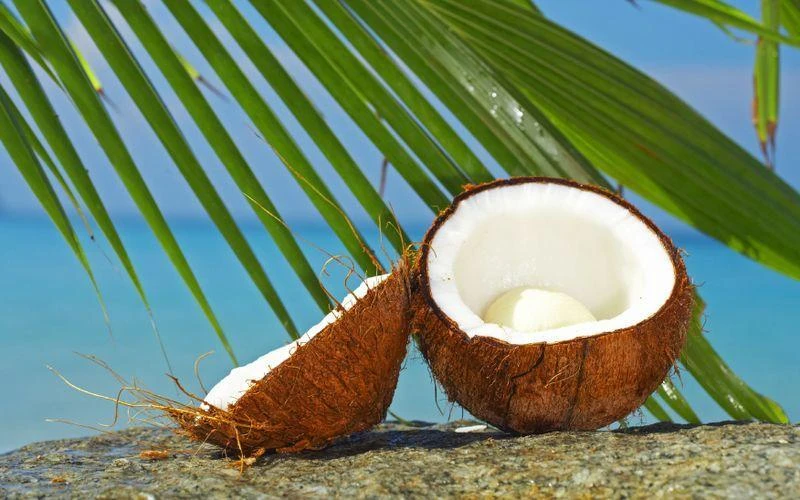

10. Life-Saving Health Benefits
Coconuts are packed with essential nutrients, but their benefits go beyond basic nutrition. Tests dating back to the 1950s revealed that coconut water can actually serve as a short-term substitute for human blood plasma in emergencies. In fact, doctors in the Solomon Islands recently used coconut water IVs to treat a critically ill patient when conventional fluids ran out. 
9. Gas Masks and Radiation Defense
World War I saw widespread chemical warfare, making effective gas masks essential for survival. Gas mask filters relied on activated charcoal to clean inhaled air, but not all carbon sources were created equal. In the U.S., researchers discovered that burning coconut shells produced a high-grade charcoal that proved significantly better at filtering toxic gases than other materials.
To this day, coconut-based carbon remains vital in radiation cleanup and was used extensively following the Fukushima nuclear disaster in Japan. 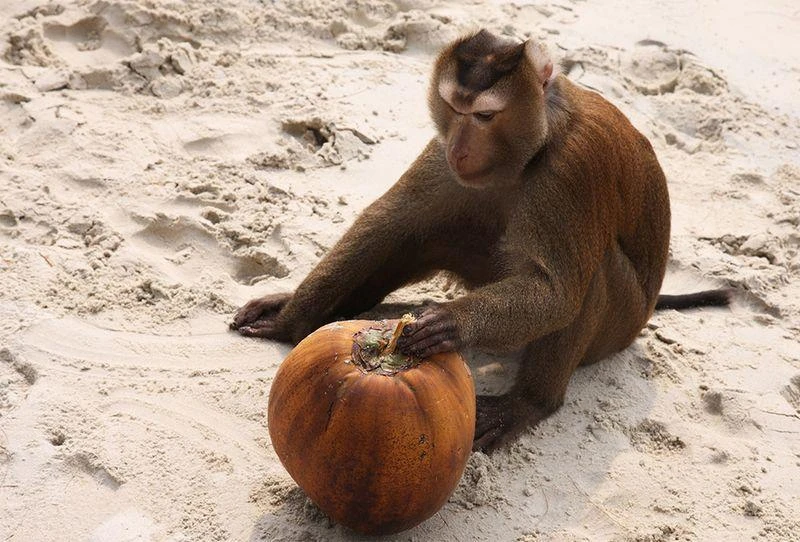
8. Monkey Harvesters
Harvesting coconuts is grueling and dangerous work for humans, which is why farmers have long turned to natural agile experts: monkeys.
In tropical regions like Sumatra, local farmers train macaques to harvest coconuts. While most handlers guide the animals with long leashes, highly trained monkeys respond to voice commands alone. These skilled primates are prized assets that can generate a substantial income for their owners. 
7. The Coconut Palace
Coconuts aren't just nutritious—they also make surprisingly versatile building materials. Former Philippine President Ferdinand Marcos proved this when he commissioned the Coconut Palace.
Hoping to impress Pope John Paul II during his visit to the Philippines, Marcos poured 37 million pesos (around $10 million) into constructing the opulent mansion. Roughly 70 percent of the two-story structure was crafted from coconut lumber, with various other parts of the palm and nut integrated into the architecture and decor.
Did the Coconut Palace impress the Pope? Yes, but not in the way the government intended. Pope John Paul II rejected the mansion, deeming it extravagantly ostentatious while so many Filipinos lived in poverty, and chose to stay elsewhere. 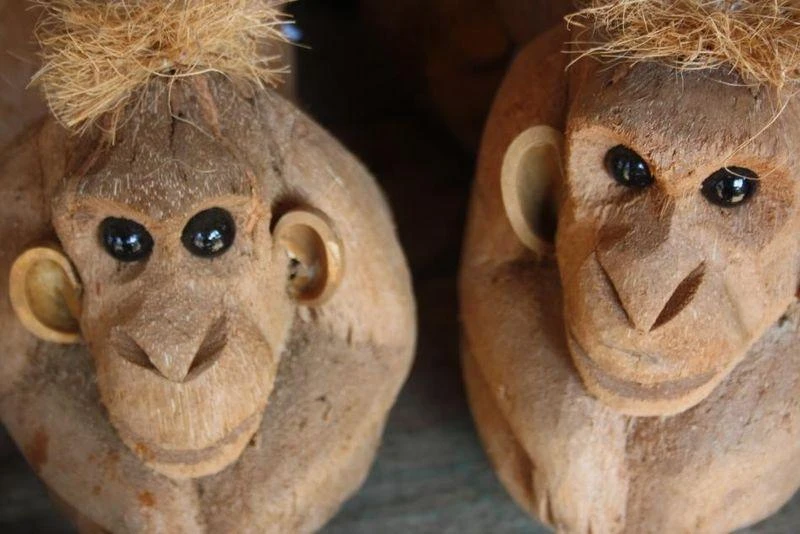
6. Coconuts in Art and Culture
Talented artists can turn almost anything into art, and coconuts are no exception. Artisans carve intricate sculptures directly from raw shells or use processed coconut components to create detailed artwork.
Coconuts also feature prominently in traditional folk dances and cultural ceremonies. For example, in the traditional Philippine dance maglalatik, male dancers strap coconut shell halves to various parts of their bodies and beat them rhythmically like improvised drums. 
5. Eco-Friendly Biofuel
Coconuts are great fuel for the human body, but did you know they can also power vehicles? Coconut oil can be converted into biodiesel, offering a greener alternative to traditional, polluting fossil fuels. Coconut-derived bio-combustibles can function as additives, blend stocks, or even direct replacements for standard diesel engine fuel.
4. Mapping Ancient History
Coconuts played a pivotal role in the expansion and survival of ancient civilizations. Modern scientists have found that these versatile fruits can actually help us map ancient trade routes and human migration patterns.
There are over 1,300 distinct varieties of coconut, which broadly divide into two main genetic lineages: Pacific ocean basin and Indian ocean basin origins. By analyzing coconut genetics, evolutionary biologist Kenneth Olsen and his team successfully traced early trade routes and settlement paths used by ancient humans. 
3. Coconut Spirits
A beach getaway hardly feels complete without a refreshing coconut cocktail to help you unwind.
In the Philippines, locals craft a potent spirit called Lambanog from the sap of unopened coconut flowers. Made entirely from organic ingredients without artificial additives, this traditional moonshine was historically distilled at home, but commercial craft production has taken off in recent years. 
2. Coconut Fiber Armor
Hearing the phrase "coconut armor" might conjure images of hollowed-out shells worn as makeshift helmets. However, artisans from the island nation of Kiribati took the concept to an entirely new level.
Their suit of protective armor was woven from dense coconut coir fiber, creating a thick, carpet-like material. The full suit featured a helmet, chest guard, backplate, trousers, and a high-collared jacket designed to protect warriors in battle. 
1. Pop Culture and Music
By now, it's clear that coconuts are remarkably versatile. They've even inspired iconic pop music. Harry Nilsson's quirky, catchy 1971 hit "Coconut" quickly climbed the charts and has since become a pop culture staple, featuring in dozens of movies, TV shows, and video games.
Add your comment
You might be interested in:















How to start a 102-liter engine

Protective film Removing it with a power screwdriver

When a child plays hide-and-seek at a professional level

Man sets up bedroom camera and discovers the reason for his

Super dads who swoop in to save the day

Precision carpentry

Looks like it's time to buy WinRAR

How to hang wallpaper neatly

How metal buckets are made in Pakistan
