Why Have the Japanese Been Throwing Coconuts into the Ocean for 40 Years (7 photos)
If you live in the southern islands of Japan and have a coconut, you must throw it into the sea. That's your imperative! It may never be found. But that's the special samurai charm. 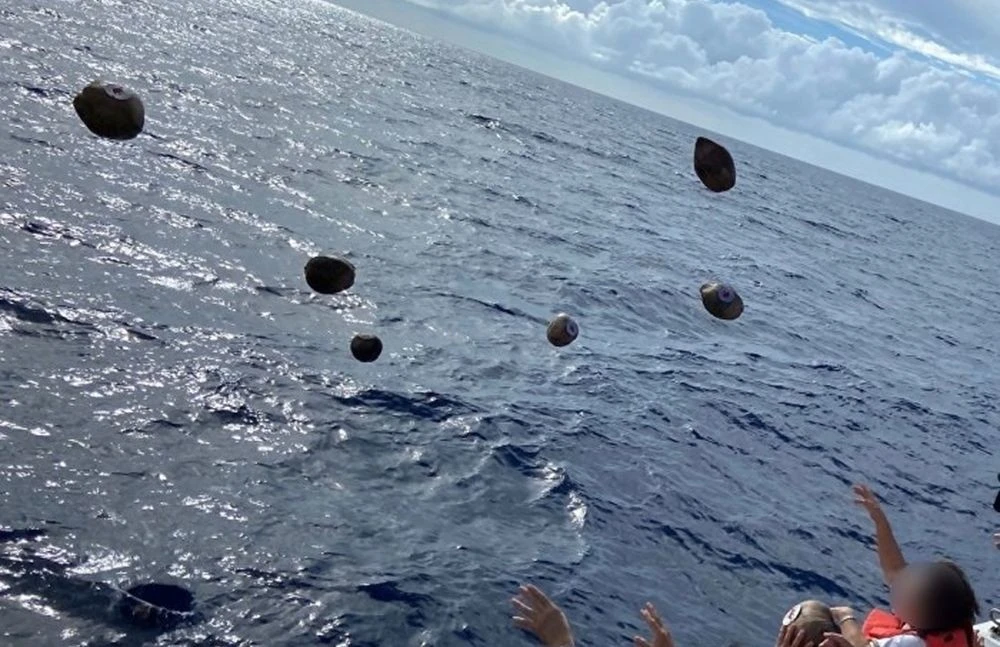
This is my coconut message to you. 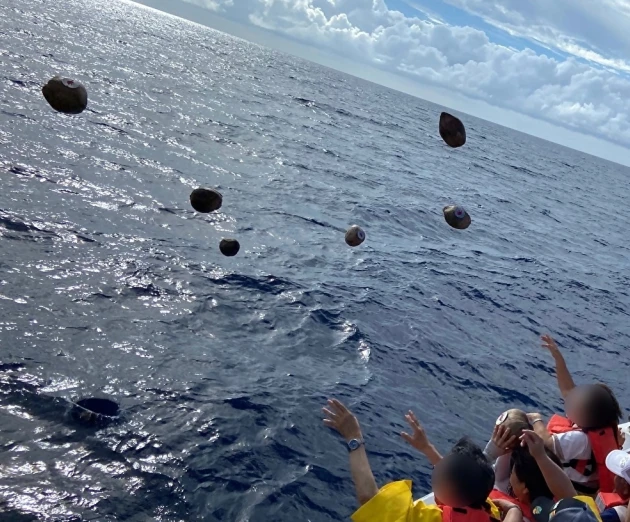
They're throwing something pretty hard.
The fact is that Japan's southernmost islands and the mainland are separated by vast ocean expanses and powerful currents. However, for four decades, these two distant places have been exchanging messages via coconuts. The "Coconut Message of Love" project is a unique tradition in which coconuts are thrown into the ocean off the coast of Ishigaki each year and allowed to drift north on the Kuroshio Current, a warm ocean current flowing from the tropics along Japan's Pacific coast. 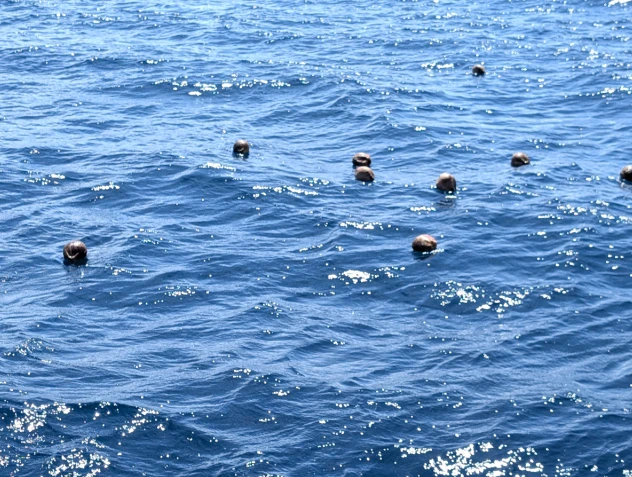
One Hundred Coconuts Set Sailing
The destination where people hope the coconuts will reach is approximately 1,600 kilometers away: the Atsumi Peninsula in Aichi Prefecture. The tradition has a charming beginning. The project was inspired by a 1936 Japanese song called "Yashi no Mi" ("Palm Fruit"). No, coconut is actually "kokonatsu" in Japanese, but all palm fruits are "yashi no mi." 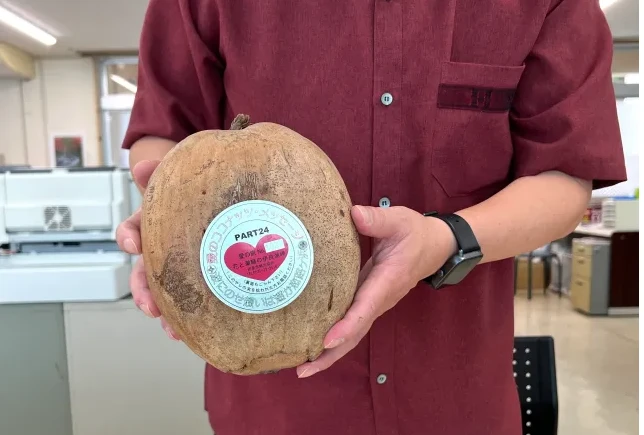
These permanent stickers with messages are used to attach
This song is taught in elementary school, so every Japanese person knows it. It tells the story of a lonely coconut washed ashore from a distant, nameless island. The song is based on real events. In 1898, folklorist Kunio Yanagita discovered a washed-up coconut at Cape Irago, on the western edge of the Atsumi Peninsula (that's where they're now sent!). At the time, coconut palms didn't grow on mainland Japan, leading Yanagita to speculate that they had drifted there from the southern seas along the Kuroshio Current.
The thought of a coconut surviving so many sea perils inspired the samurai spirit of this Japanese man. He wrote a song about this coconut. In 1988, the Atsumi Peninsula Tourism Bureau decided to recreate this poetic journey in reality. Every year, coconuts carrying small metal plaques engraved with a short message are released off the coast of Ishigaki. Participants in this project are called "coconut members." They purchase a coconut and choose what to write on it. 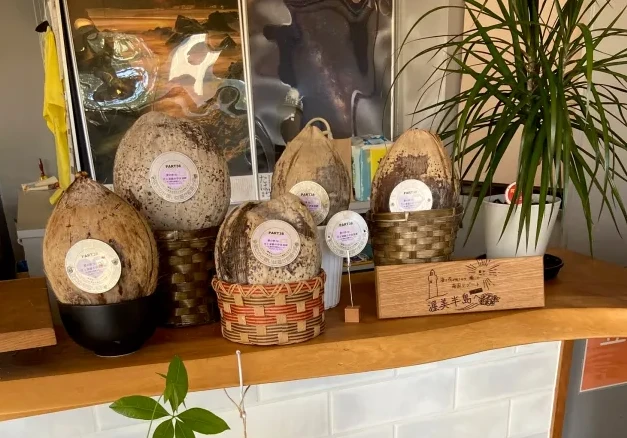
They are stored at the town hall and displayed on stands during festivals.
Those coconuts that are caught near the final shores are ceremoniously displayed at festivals. On average, about 100 coconuts are released during a single "Coconut Message" festival. Tourists can also participate; they just need to buy a coconut for 3,000 yen. If a coconut is found from summer to the end of October, the coconut thrower will be invited to Cape Irago to meet the lucky finder. And how many coconuts float?
Over the past 37 years of this event, more than 3,800 coconuts have been released. However, only 156 were found and registered on the other shore, and only a few of them reached the Atsumi Peninsula itself. All the locals know that if you find a coconut, you should contact the tourism bureau. But the point is that many people secretly snatch one as a souvenir. 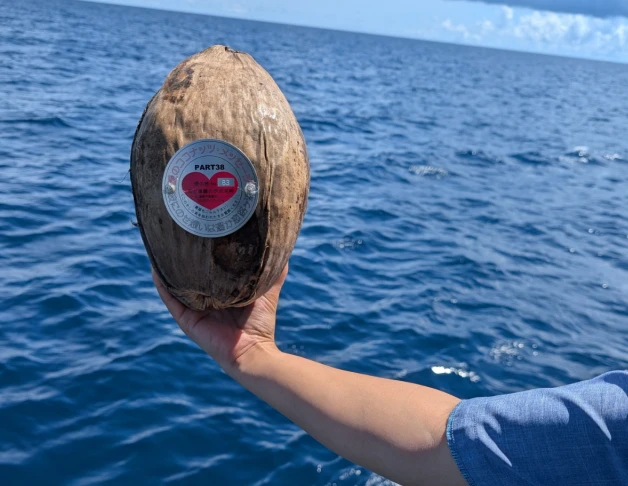
Would you spend 3,000 yen on samurai-style coconut throwing?
But even those 156 are actually a LOT, considering the distances and waters involved. And Japan's Pacific coastline is quite wide. For the Japanese, it's an act from which you don't expect any results. Pick a coconut and throw it into the sea, and if the gods will, it will float. The very act of throwing a coconut is beautiful.