Underwater architect: the octopus that digs its own burrows (6 photos + 1 video)
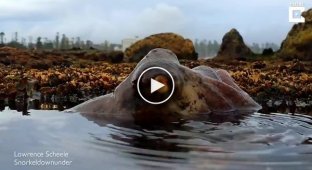
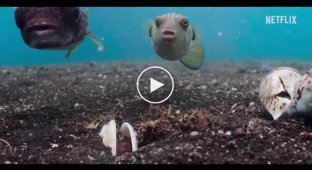
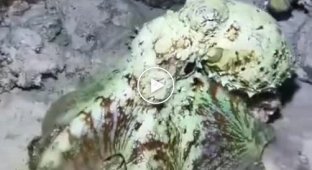
These shots look unusual, but for the long-armed octopus, it's just another day. He's returning to the burrow he dug in the sandy bottom. 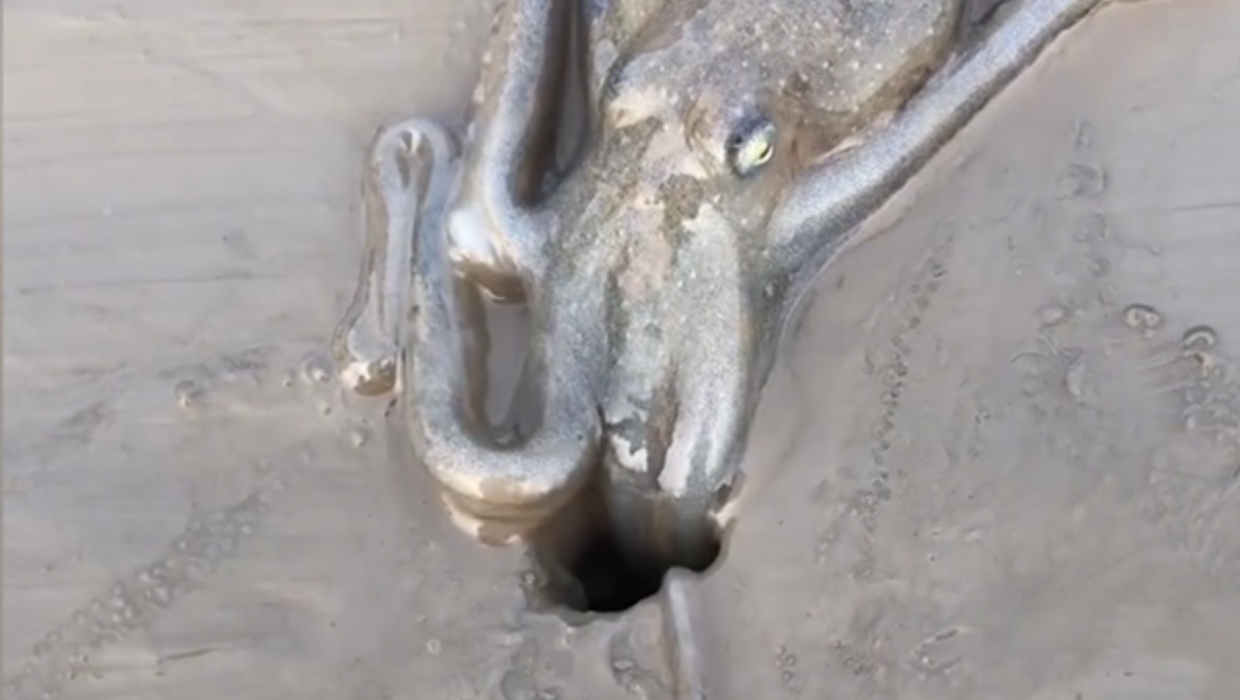
Actually, nothing unusual is happening here—at least from the octopus's perspective. The octopus is simply returning home for a sweet, sweet nap in complete safety. Look, even the man with the camera didn't faze him; he's so confident in the safety of his home. Like, go ahead and film, admire what a cool architect I am.
And it's true! The octopus in the video is an Octopus minor, also known as the long-arm octopus. This talented creature lives off the coasts of Japan, China, and the Korean Peninsula in shallow waters with high-quality sandy bottoms. This factor is extremely important when choosing a habitat, as the long-arm octopus is one of the few octopus species that can dig burrows. And these octopus burrows are not just depressions in the sand, but incredibly convenient structures where the animal can sleep without losing a supply of fresh ocean water.
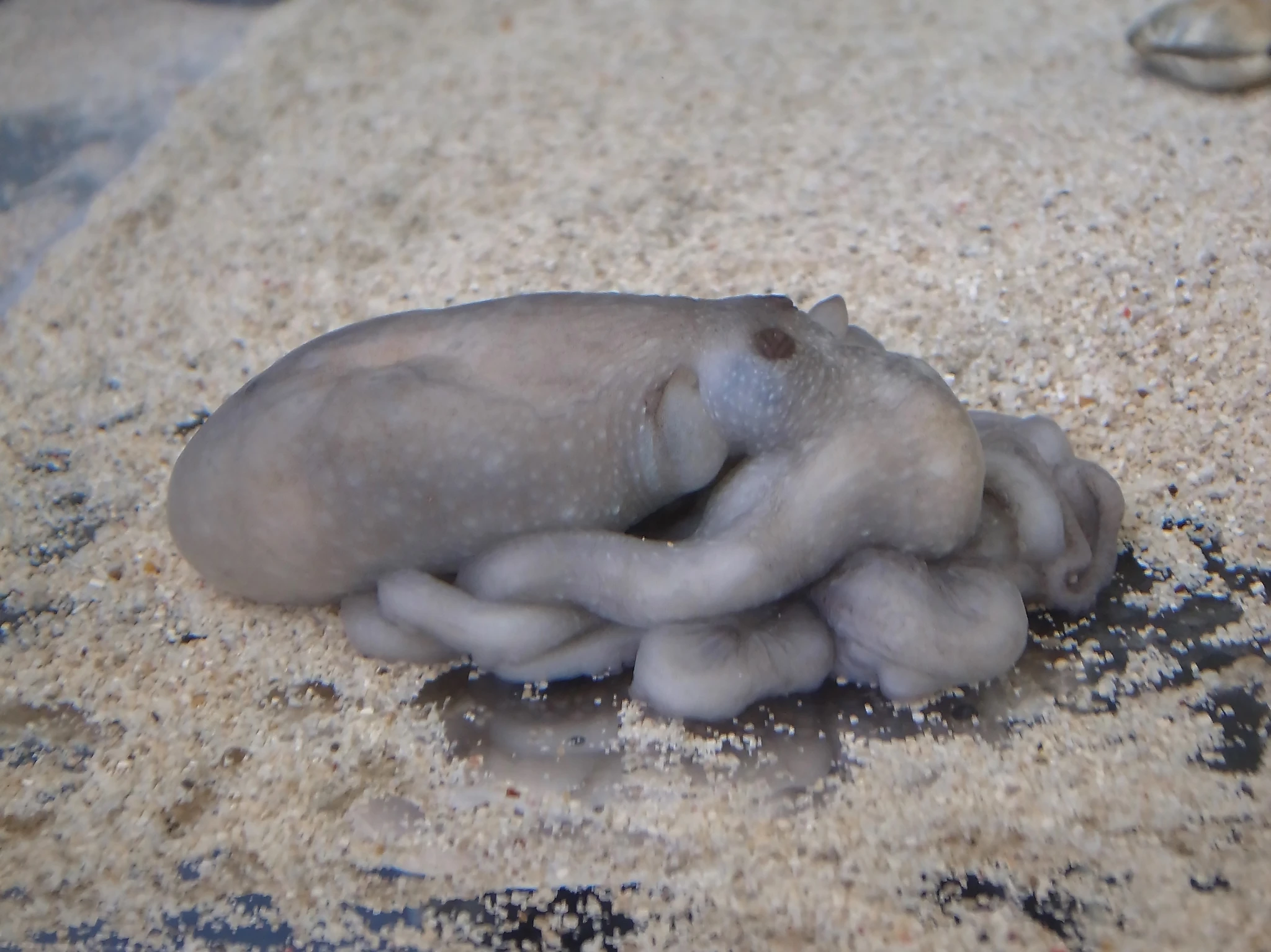
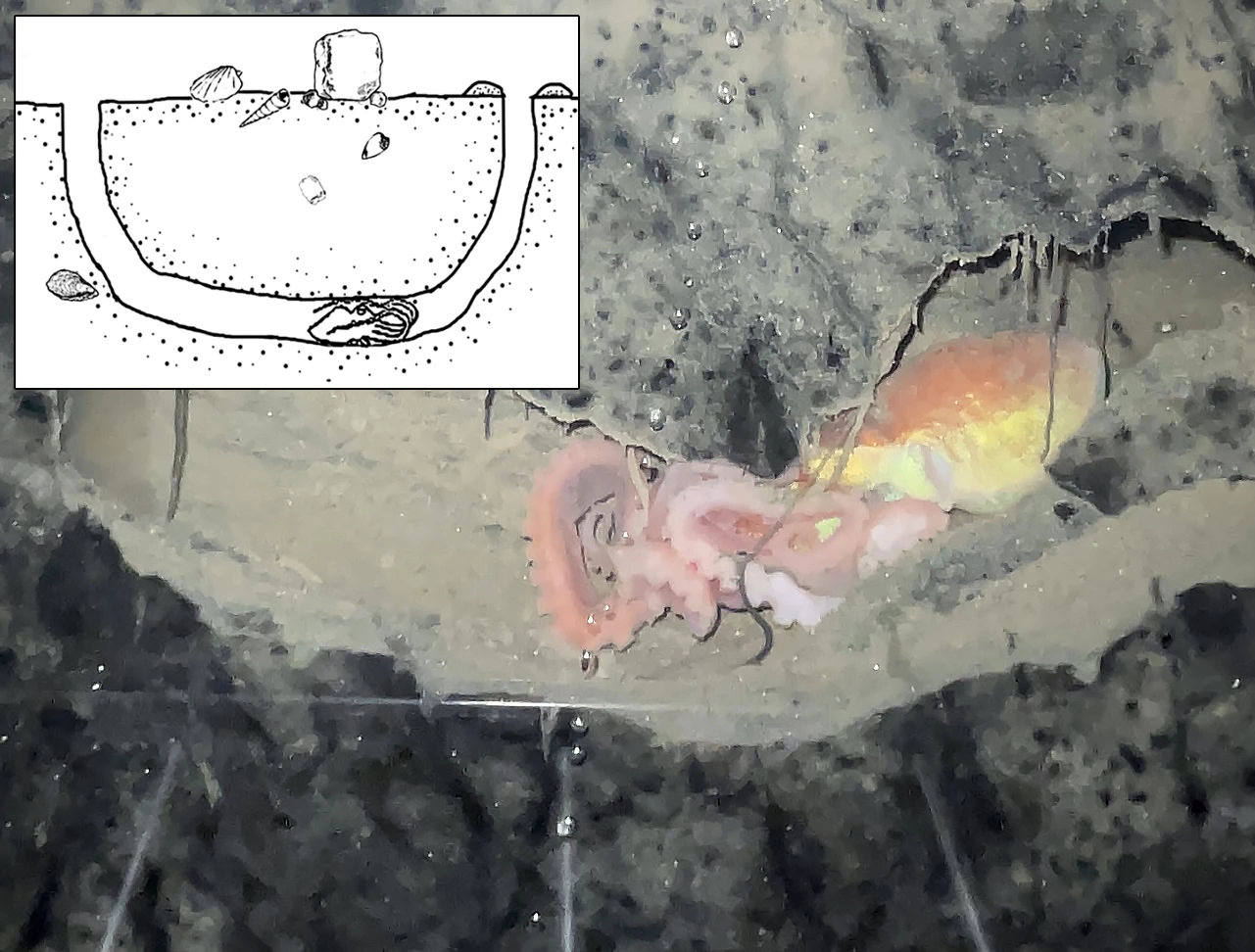
The burrowing process begins with the octopus injecting water into the substrate using a siphon, loosening it and creating a sort of quicksand. Then, using its tentacles, it burrows into this mass, initially creating a closed burrow that can accommodate its entire body when folded.
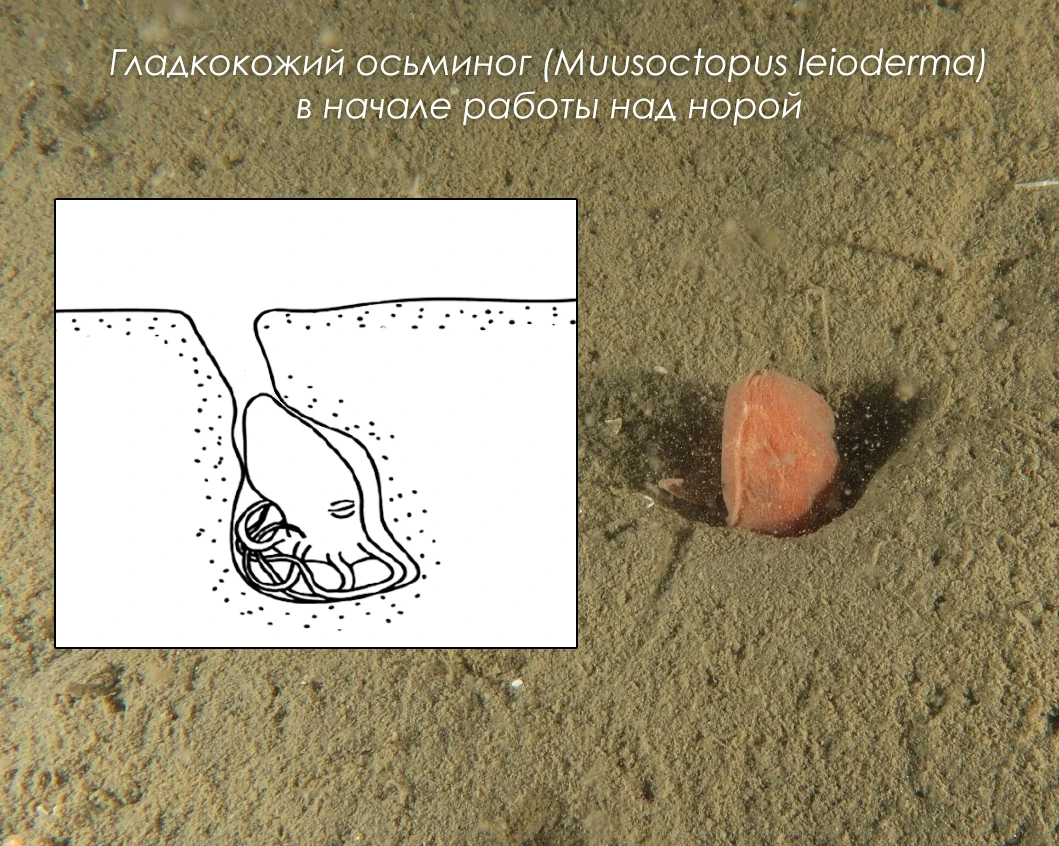
Some octopus species stop there, considering the shelter quite safe. This is often true, but such a closed shelter has one drawback: while the octopus is inside, the water is practically never renewed, meaning the oxygen will eventually run out and the shelter will have to be abandoned before it has had a chance to rest properly.
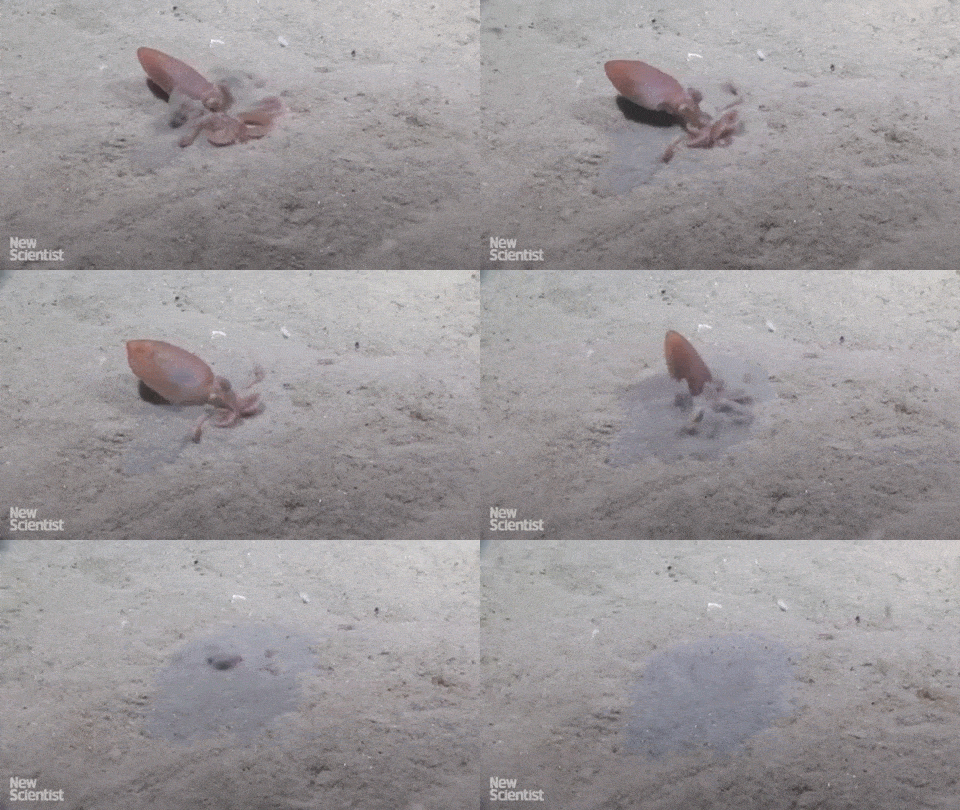
Therefore, the most advanced octopus architects dig burrows. By sucking sand mixed with water under their mantle, they transfer it from one end of the tunnel to the other, digging a horizontal section of sufficient length, and then digging upward again, creating another hole some distance from the first. The result is a U-shaped burrow with openings at both ends and a widened transverse passage. To prevent the structure from collapsing, the builder reinforces the walls with a homemade mucus.
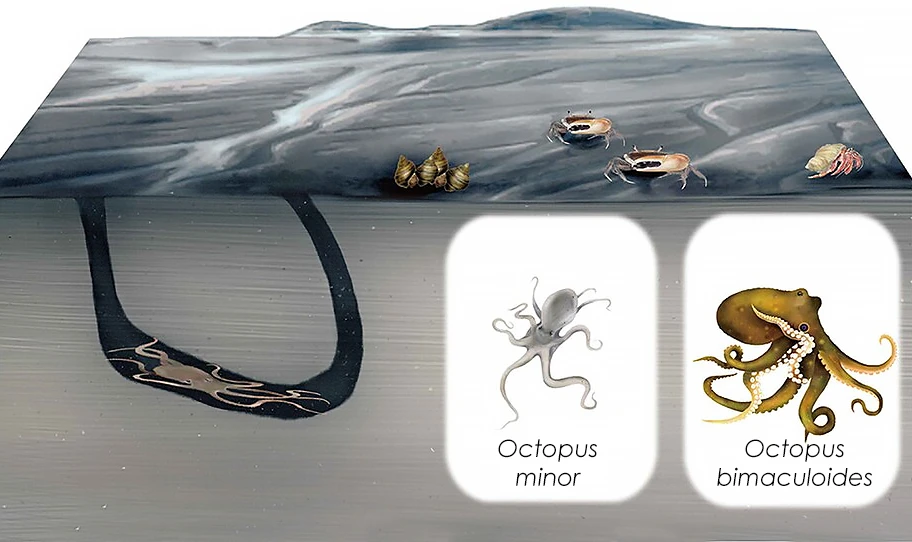
This design allows the octopus to spend a lot of time in its safe resting area without fear of suffocation, as fresh ocean water freely washes its soft, cunning body. And, as you've seen, this burrow can also be used at low tide to wash its gills and breathe while crawling along the shore and eating crabs that have emerged onto land. Yes, octopuses can do that too!