Skinner's Experiment: What Superstitious People and Pigeons Have in Common (3 photos)
We have all experienced moments where purely coincidental events seem directly connected to our actions. For instance, you rub the nose of a bronze dog statue on your way into campus and end up acing an exam. Unreasonable as it may be, resisting the urge to make that connection can be tough. Superstition has been an integral part of human nature since ancient times, but it was not until the 20th century that behaviorist B. F. Skinner provided a scientific explanation for the phenomenon. 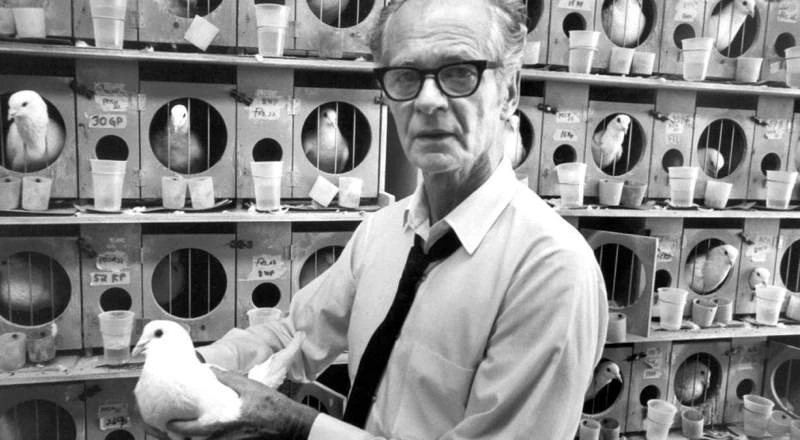
Skinner conducted a series of experiments on pigeons, placing them in transparent boxes where food was dispensed at set intervals. He noticed that the birds began repeating whatever specific movements they happened to be doing right before the food appeared—whether it was flapping their wings, pacing in circles, or pecking at a particular spot. 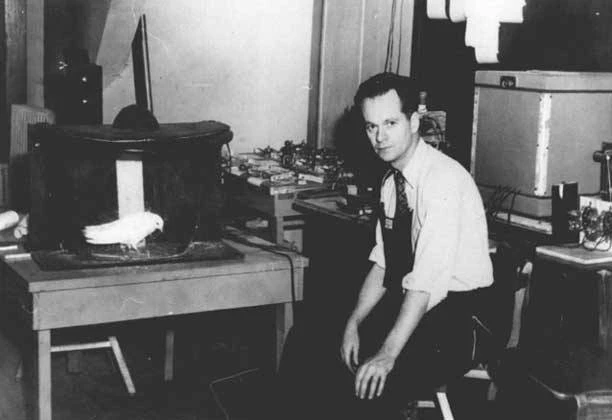
The pigeons clearly linked their actions to the reward, even though the feeding mechanism operated independently and was completely beyond their control. Skinner explained this through operant conditioning—the principle that the consequences of a behavior influence the behavior itself and dictate how frequently it will recur in the future.
Remarkably, the pigeons continued performing these rituals even when the regular feeding stopped altogether. Skinner hypothesized that humans operate in much the same way. In an effort to navigate uncertainty and bring order to the world around us, we frequently rely on superstitious behavior.
Superstitious Behavior: Helpful or Harmful?
Just like Skinner's pigeons, a student rubbing a bronze statue's nose might end up disappointed—solid preparation remains the only guaranteed key to passing an exam. On one hand, superstitious behavior is a drawback: it dulls critical thinking, clouds objective perception, and discourages people from searching for the real factors influencing their lives. 
On the other hand, superstitions can serve a motivational purpose. For example, making a wish on a coin toss might prime you to notice more positive moments throughout the day. However, it is essential to remember that "after" does not necessarily mean "because of."