It's hard to find someone who has never seen pigeons. Perhaps even harder is finding someone who has seen their chicks. Surprisingly, despite pigeons being all around us, we only see adults. Why is this, and what do the young of these birds actually look like? 
It's nature's plan
The answer to this question lies in the peculiarities of pigeon physiology. Many other bird species abandon their nests as fledglings—small, barely fledged chicks. They clumsily attempt to fly, flitting from place to place under the watchful eye of their elders. This is why we often see small sparrows, young magpies, and other urban birds.
With pigeons, things are different. Unlike many other birds, pigeon chicks develop more slowly and leave the nest only when they are capable of flight and look like adults. In cities and villages, rock pigeons live among people, nesting in attics and other secluded places. But in the wild, these birds build nests high on cliffs and in crevices. In such conditions, a chick that cannot fly well is almost certainly doomed to die. 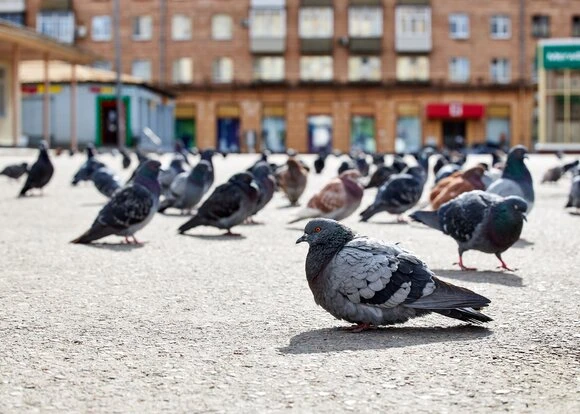
Pigeons have adapted well to urban life, and their behavior has evolved to minimize risks to their offspring. They nest in hard-to-reach places and keep their chicks in the nest for long periods of time, which helps them avoid contact with potential threats. These birds feed their chicks with so-called "bird's milk"—a special secretion produced in the parents' crop. This allows the parents to remain in the nest for long periods in search of food, which also helps the chicks remain hidden from prying eyes. 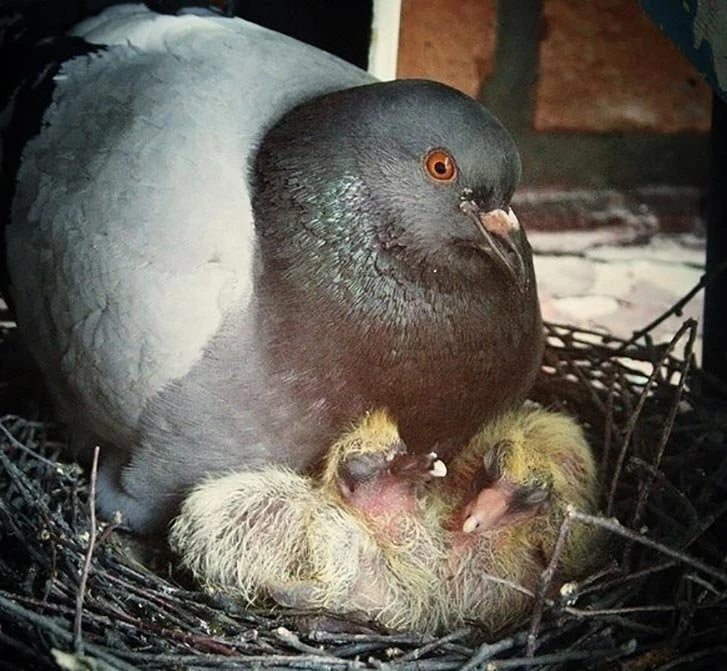
Due to their slower development, young pigeons do not leave their nests until they are fully ready to fly. At this age, they are almost indistinguishable from adults, and an untrained eye is unlikely to notice the difference. Only scientists and pigeon breeders can accurately tell which are the chicks and which are their parents.
What do pigeon chicks look like?
Although pigeons in cities cannot build nests on cliffs inaccessible to predators, instinct compels them to choose the most inaccessible places. These are most often tall buildings, attics, cornices, bridges, and other structures. Females of these birds lay one, rarely two, eggs and incubate them for 16-19 days. 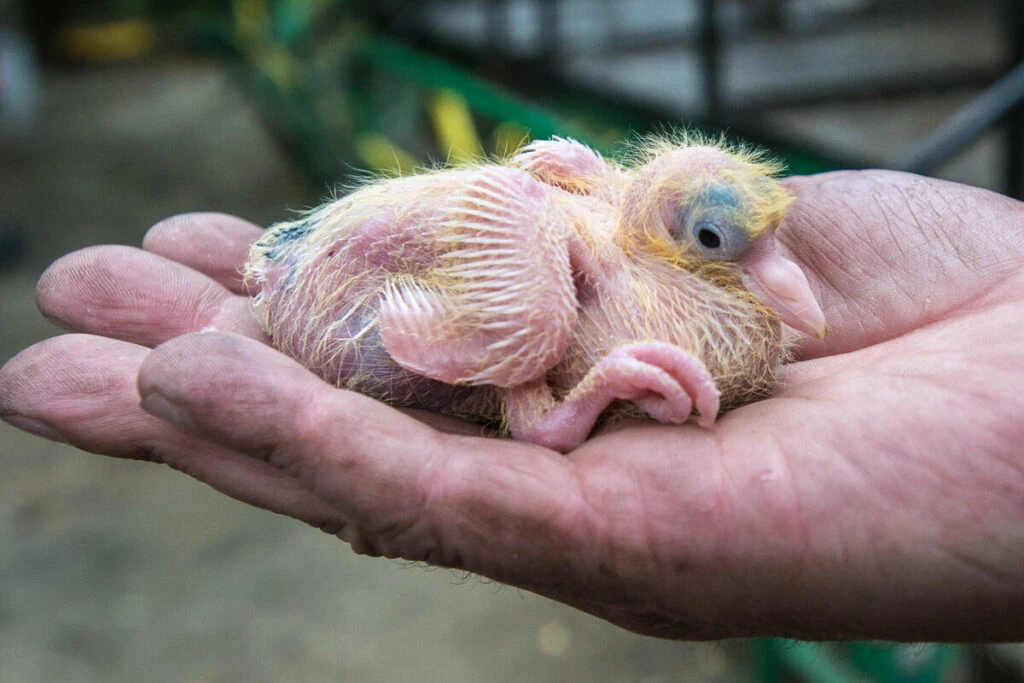
When the chicks hatch, they look typical of babies: small, blind, with sparse yellow feathers. However, the young grow rapidly, and after two or three weeks, they are hardly recognizable. At this age, they are not particularly endearing: bulging eyes, a large, knobby beak, sparse gray down, and a rather large size. Those fortunate enough to observe unfledged pigeons at this age claim that they are the ugliest of all chicks. 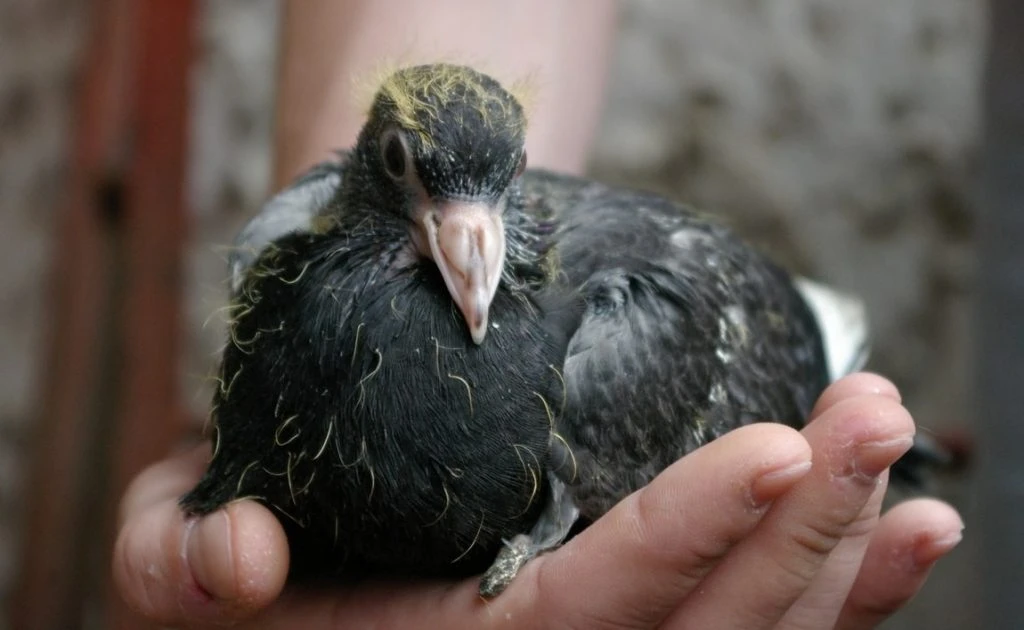
But this period doesn't last long. At about 30 days old, the chick is no longer distinguishable from an adult bird. On the 35th to 37th day of life, they learn to fly. Experts say that about half of the pigeons we see on the street are chicks, recently hatched.
If you'd like to learn more about how a pigeon grows day by day, we have a separate post about that.
Add your comment
You might be interested in:
















Persistence in achieving a goal

A biker prevented a hit-and-run driver from escaping

Not everyone is having fun on the amusement ride

The cutest lunch delivery ever

A book titled "A Guide to Rebuilding

Young women, Dancing and George Michael: nothing superfluous

An apology delivered with a running start

A steam locomotive for "big boys"

Bollywood never ceases to amaze
