The deadliest chemical and biological weapons of the ancient world (9 photos)
Humans have always spared neither money nor effort in creating means to kill their own kind. Many believe that in ancient times, people took each other's lives with clubs, swords, and arrows, but even thousands of years ago, biological, chemical, and thermal weapons were used in skirmishes and wars. Some of these were so successful that they could pose problems even for modern high-tech armies. 
Poisoned Arrows, Darts, and Swords
Humans learned to poison weapons long before they invented the wheel. The ancient Greeks and Romans knew dozens of poisonous compounds of plant, animal, and mineral origin, many of which were excellent for treating piercing and cutting weapons. Homer wrote in his Odyssey:
"And there also Odysseus went on his swift ship;
He sought a poison deadly to men, with which he could smear
His copper arrows." 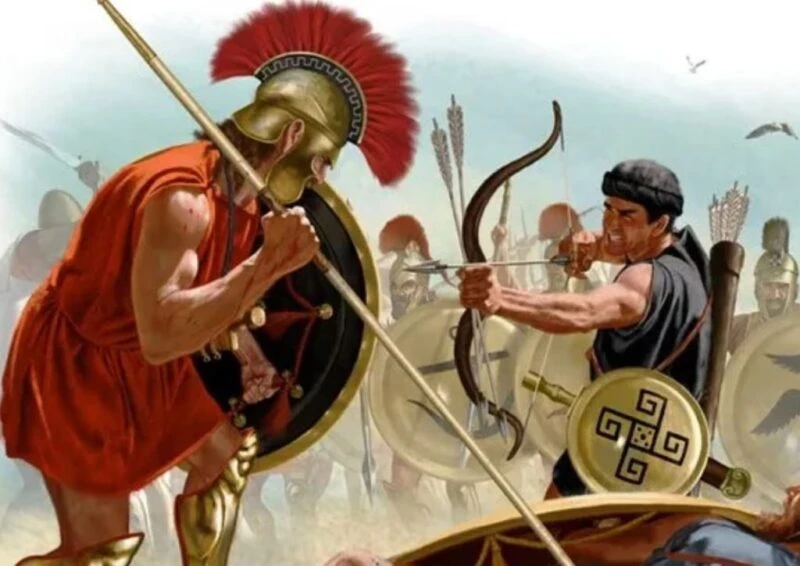
The simplest way to poison arrows or darts was to treat their tips with the juice of a plant called monkshood (Aconitus napellus). It's common throughout the world and appears harmless enough, but it contains juice containing the deadly alkaloid aconitine.
Melee weapons were poisoned much less frequently due to the risk of injuring oneself or one's comrades in battle. Swords poisoned with snake venom were used in battle against the army of Alexander the Great in 326 BC by the inhabitants of the city of Harmatelia, located in modern-day Pakistan.
The small and unskilled army of the townspeople inflicted serious losses on the Greek troops, as even a small scratch from a Harmatelia sword or knife killed the enemy or permanently incapacitated them.
Corpse Bombardment
Centuries ago, people didn't know how to isolate pathogenic bacteria and fill ammunition with them, but they knew well that a plague-infected corpse posed a mortal threat to thousands of people. In 1346, the Mongol-Tatar army besieged the Genoese fortress of Kafa (now Feodosia), but after months of standing at the fortress walls, they achieved little success. 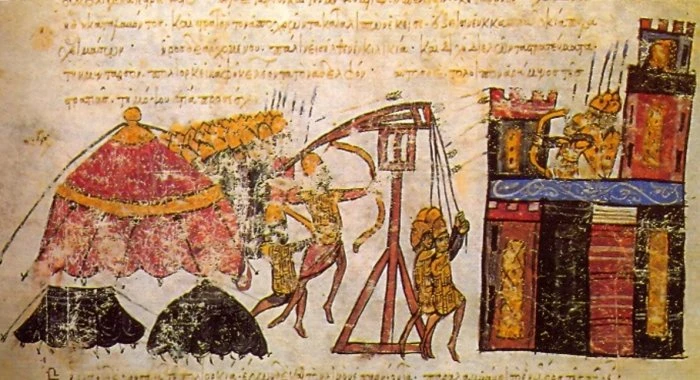
At the same time, an epidemic of bubonic plague broke out in the besiegers' camp, decimating hundreds of the khan's soldiers. Wanting to hasten the surrender of Kaffa, the Mongols catapulted several plague-infected corpses into the city, and soon people began dying there too.
Very soon, the Genoese sent envoys and offered to surrender the city if they were released alive. The invaders agreed, and a small fleet from Kaffa set sail for their native Italy, infecting the towns they stopped at along the way. Thus began the most famous epidemic in human history, the Black Death, which devastated Europe.
Burning Arrows
Historians can't say exactly when people first thought of setting fire to arrows to increase their damage, but it happened a long time ago. The first flaming arrows were wrapped in straw or tow, but this wasn't very effective because the fire often died out mid-flight. 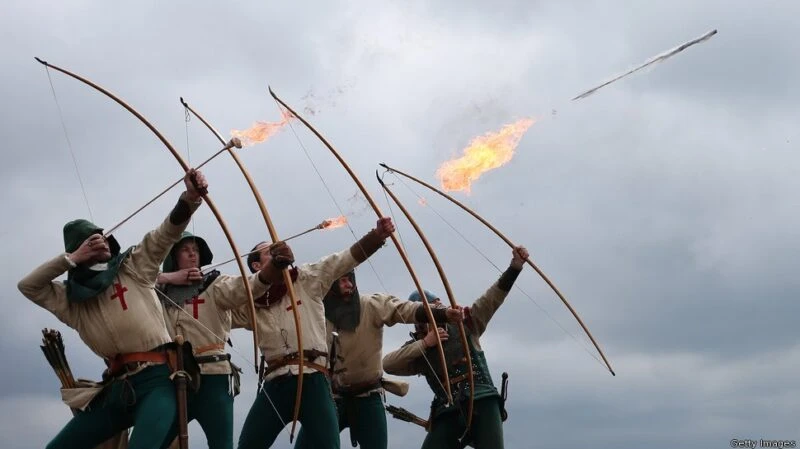
Surviving European manuscripts from the 9th century contain detailed instructions for making effective flaming arrows. A throwing weapon capable of projecting fire over a distance and setting fire to an enemy's building or clothing could be created by dipping it in tree resin or petroleum.
Greek Fire
Flaming arrows were dangerous, but they were nothing compared to so-called "Greek fire." This mineral composition, which remains a mystery to this day, was used to set warships and fortresses on fire even before the Common Era. 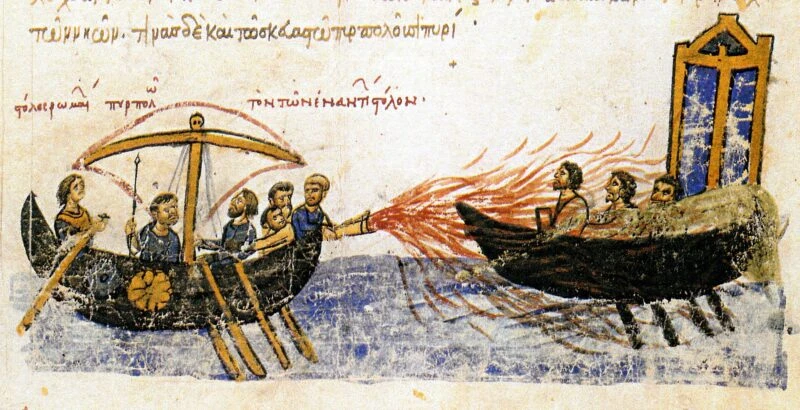
This substance was quite versatile – it could be placed in a pot and hurled by a catapult, placed in a clay or copper hand grenade, or poured into a reservoir connected to a copper pipe and used as a real flamethrower.
The Byzantines were particularly skilled in the use of "Greek fire." With its help, they easily defeated an Arab fleet attacking Constantinople in the 8th century, and in the 10th, they burned to the ground a Varangian flotilla led by Prince Igor Rurikovich himself. There was no escape from this terrible weapon of the ancients, as such fire could not be extinguished even with water.
Before the advent of gunpowder, the ability to prepare and use "Greek fire" was often decisive in battle. This remained the case until the 16th century, when the recipe for this terrifying thermal weapon was lost. 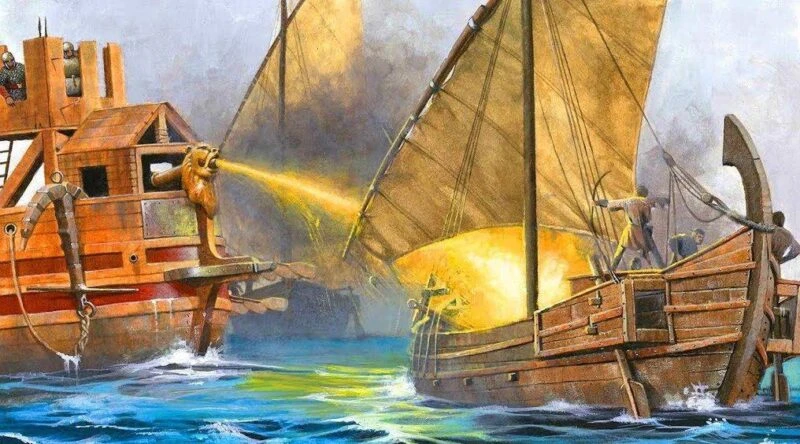
It is said that in 1758, the Frenchman Dupré managed to create something similar and, under King Louis XV, burned a target ship with fire from a distance. The French monarch was so impressed by the man-made fire that he bought all of the author's papers for a large sum and personally destroyed them.
Living Weapons
Some of the first projectiles filled with biological weapons were the nests of wild bees and hornets. By catapulting several of these "gifts" into a besieged city, attackers could sow panic among its defenders. 
In desert areas where bees and wasps were scarce, scorpions were often used. Chronicles say that this is how the inhabitants of Mesopotamia attacked the Romans who were attempting to seize their kingdom. In the city of Hatra, pots were filled with the poisonous arthropods and thrown over the wall into the enemy camp.
Roman sources wrote that scorpions were so numerous that they were literally under every stone. Many soldiers died from stings, and those who survived were unable to fight for at least three days, suffering from cramps, high fever, and swelling. The authors don't say where the residents of Hatra obtained so many venomous creatures from the besieged city.
Poisoned Water and Food
Poisoning wells, streams, and food is still used by terrorist organizations today to inflict damage and demoralize the enemy. In ancient times, it was one of the most popular methods of conducting covert warfare. 
Hellebore Flowers
The first documented case of drinking water poisoning in history was a sabotage by the Greeks during the siege of the city of Cyrrhus in 585 BC. The cunning Greeks placed crushed hellebore roots into the city's water supply. After this, the defenders of the citadel suffered from severe diarrhea and surrendered.
In the 5th century BC, the Greek army entered the territory of Colchis, located in modern-day Georgia. In one settlement, the residents were so kind that they generously treated the hoplites to select honey. Everyone who tasted the delicacy became seriously ill within a couple of hours—the bees were collecting nectar from the flowers of a poisonous rhododendron.
Red Pepper
Chemical and biological weapons were actively used not only in the Old World, but also in the New World. The Indians were great connoisseurs of plant and animal poisons, but they also employed non-lethal "weapons of mass destruction." 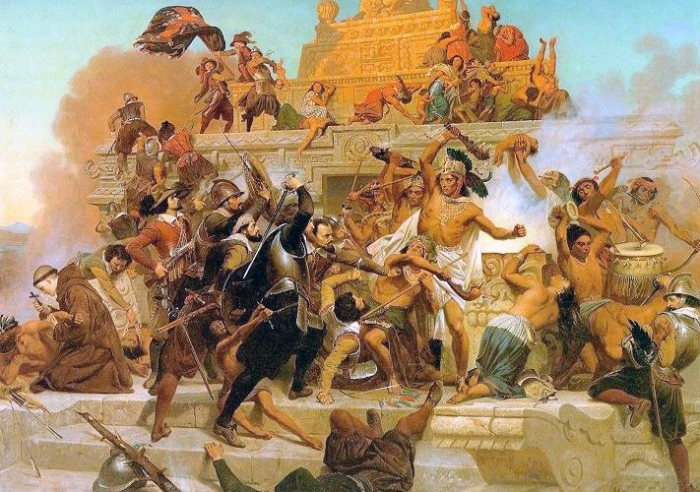
Spanish sources recount how, during one battle between the conquistadors and the Indians, the latter deployed warriors with large frying pans, not archers. They were covered in smoldering coals, generously sprinkled with some kind of powder. As soon as the wind blew toward the Spaniards, they found themselves enveloped in a cloud of acrid smoke that stung their eyes and lungs.
It turned out that the Indians had been throwing powdered capsicum pepper into the fire, creating a veritable tear gas. Needless to say, in that battle, the wily Indians triumphed over the invaders, who were completely unprepared for the chemical attack.