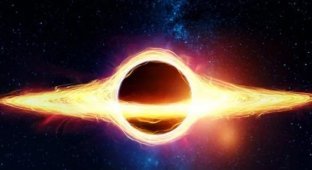
Cinema and science fiction love to depict black holes as "cosmic vacuum cleaners," mercilessly sucking in everything around them—from spaceships to planets and giant stars. 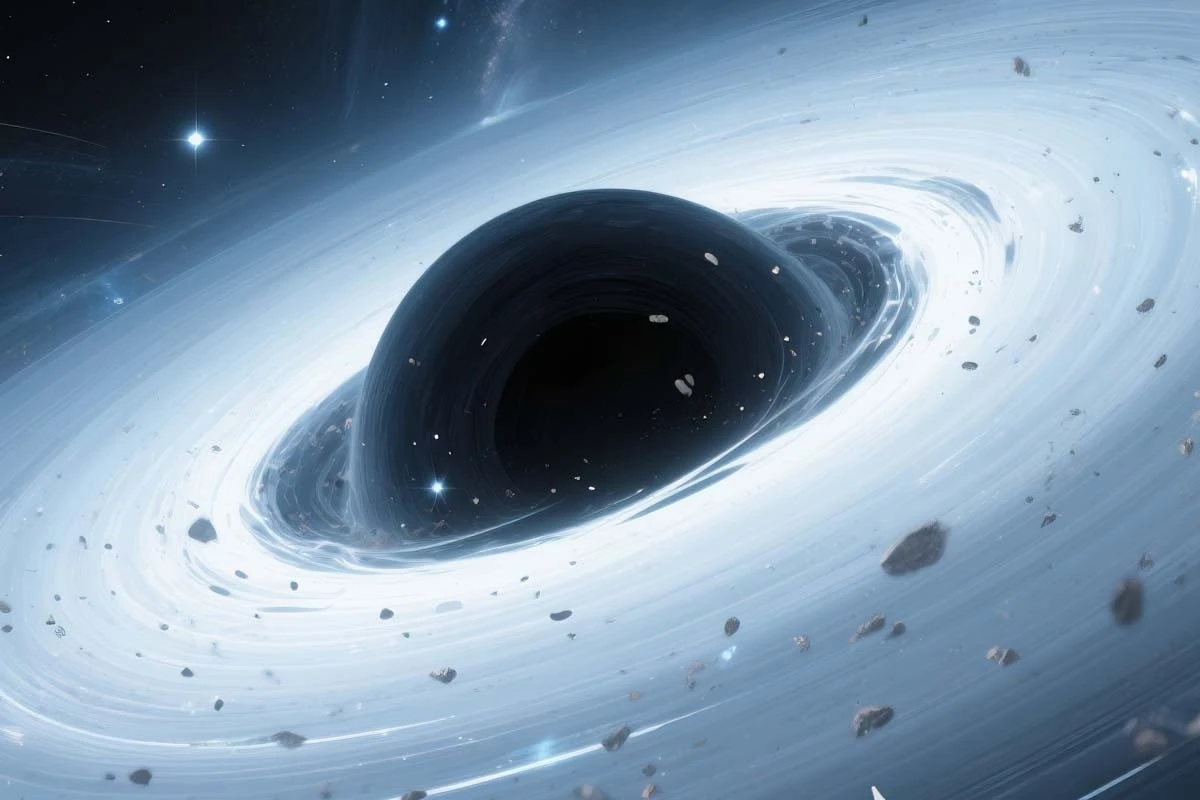
Such scenes look impressive and terrifying, but how realistic are they? Fortunately, the true physics of black holes is far less apocalyptic, yet far more interesting.
Gravitational Field
Black holes obey the same laws of gravity as any other object in our Universe. Their gravitational pull depends on their mass and distance—the farther you are, the weaker their influence. They have no magical, all-consuming force.
Let's say our Sun suddenly turned into a black hole, retaining its mass, how would the organization of the Solar System change? Absolutely nothing! All objects would continue to orbit in the same orbits, at the same distances. Yes, over time, Earth's climate would deteriorate, but the order of the Solar System would remain unchanged. A solar-mass black hole exerts exactly the same gravitational influence on the surrounding space as the Sun. No more, no less.
The Galaxy is Safe
At the center of our Milky Way galaxy lies the supermassive black hole Sagittarius A*, whose mass is almost 4.3 million times that of the Sun. Sound terrifying? But let's look at the numbers. 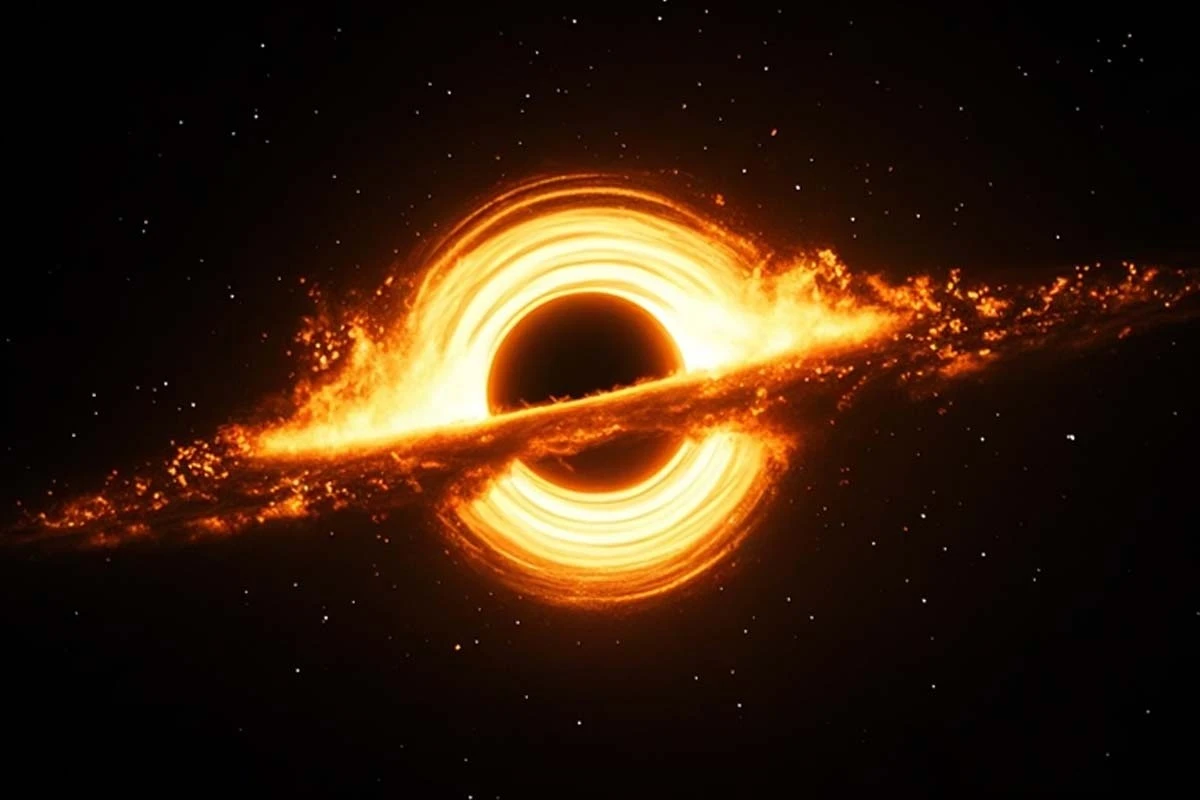
The Milky Way is about 100,000 light-years in diameter. The gravitational influence of the central black hole is only noticeable within a few light-years of its radius. It's like a grain of sand in the center of a football stadium—yes, it's there and interacting with nearby grains of sand, but no one in the stands would feel its influence.
Stars near the center of the Galaxy do indeed orbit the black hole at enormous speeds, experiencing its monstrous influence. For example, astronomers have long been observing the star S2, which at its closest approach to Sagittarius A* passes at a distance of approximately 120 AU from the supermassive black hole—and yet, it avoids being "sucked in"! The star continues its steady movement along an elliptical orbit, as it has for millions or even billions of years.
*AU — astronomical unit, the average distance from Earth to the Sun, approximately 150 million kilometers. 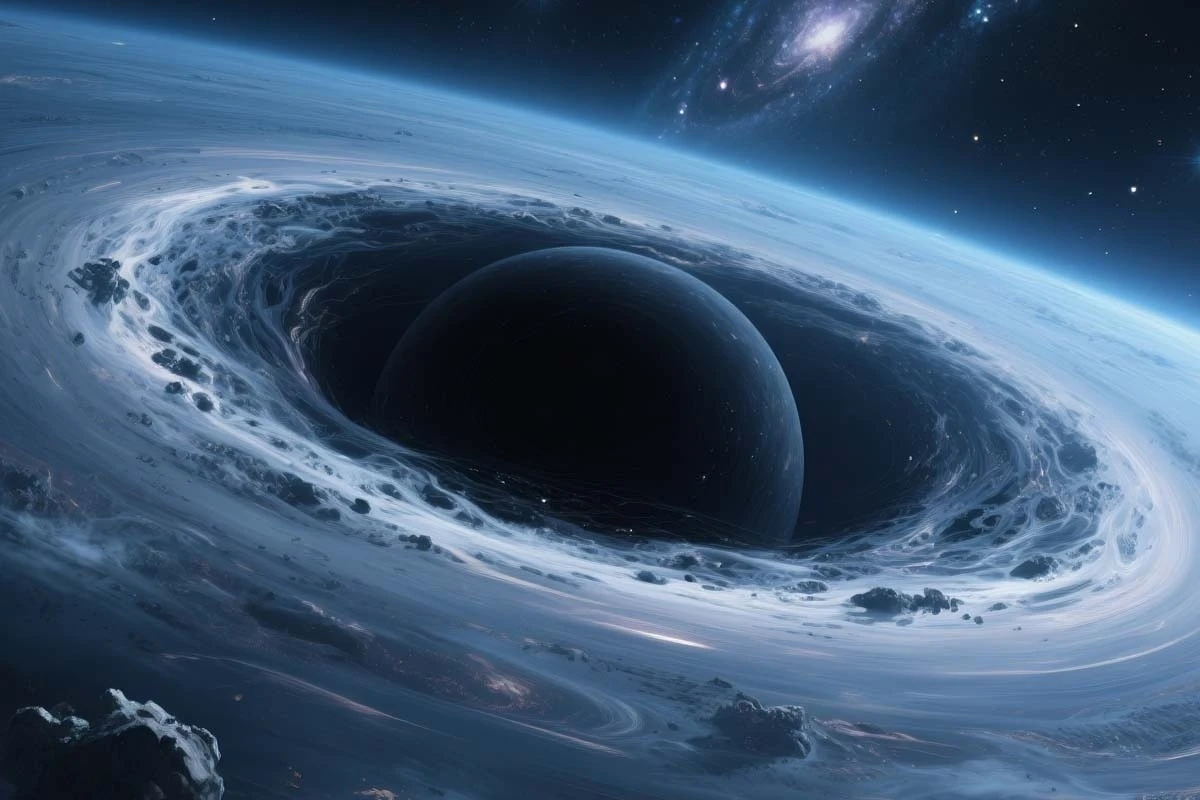
Furthermore, any galaxy is a very stable system, where all elements are held together by dark matter and the combined mass of all the stars, providing a strong gravitational bond. The black hole at the center of the Milky Way, no matter how formidable its mass compared to the Sun, accounts for less than 0.1% of the Galaxy's total mass. And the Milky Way is no exception in this regard—this is the average for galaxies in the observable Universe.
So rest easy—no black hole is capable of "swallowing" an entire galaxy. The laws of physics reliably protect us from the cosmic nightmares of science fiction. Black holes are dangerous only in their vicinity, but overall, they behave like ordinary massive objects—they attract only as much as their mass allows.
Add your comment
You might be interested in:













Persistence in achieving a goal

A biker prevented a hit-and-run driver from escaping

Not everyone is having fun on the amusement ride

17 Photos That Will Stop You in Your Tracks (18 Photos)

The cutest lunch delivery ever
Stunning Views of the Martian Horizon from 400 Kilometers

A book titled "A Guide to Rebuilding

Young women, Dancing and George Michael: nothing superfluous

An apology delivered with a running start
