A piece of ancient Earth on the Moon: what's hidden in the "Big Bertha" rock (3 photos)
On February 9, 1971, the Apollo 14 crew returned to Earth one of the most famous lunar samples—a rock nicknamed "Big Bertha," cataloged as 14321. It was discovered on February 6, 1971, during the second extravehicular activity (EVA) near Cone Crater. 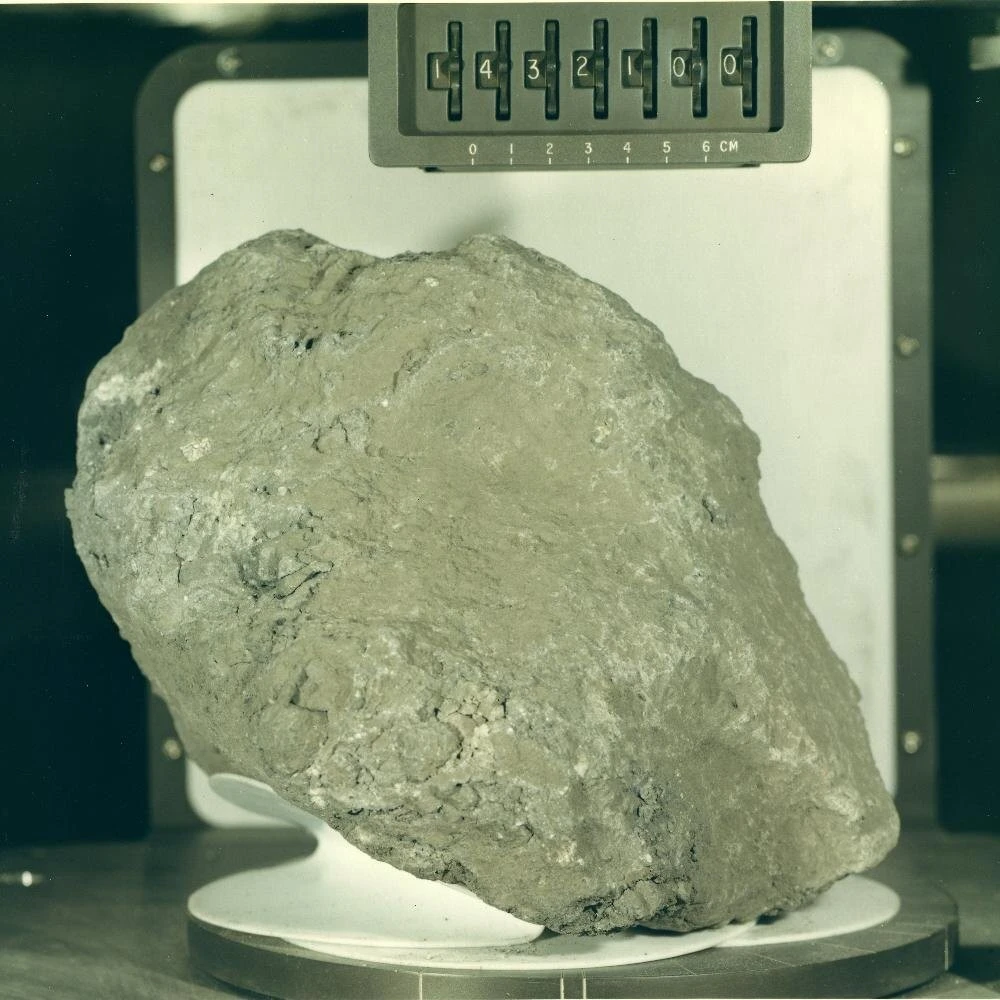
"Big Bertha" is a nearly 9-kilogram (20-pound) breccia: a rock composed of angular fragments cemented together. Such rocks can form as a result of sedimentary, volcanic, tectonic, or impact processes.
For a long time, Big Bertha was considered simply an interesting lunar sample, but, like many other Apollo discoveries, it was saved for better times—when more sophisticated analytical methods capable of extracting new data would become available.
However, in 2019, a team of scientists studied a light-colored, fine-grained fragment within Big Bertha and discovered zircon, quartz, and other signs of granite-like rock. The zircon was estimated to be approximately four billion years old, and its chemical composition was found to be much closer to rocks formed in the Earth's crust than to typical lunar samples. 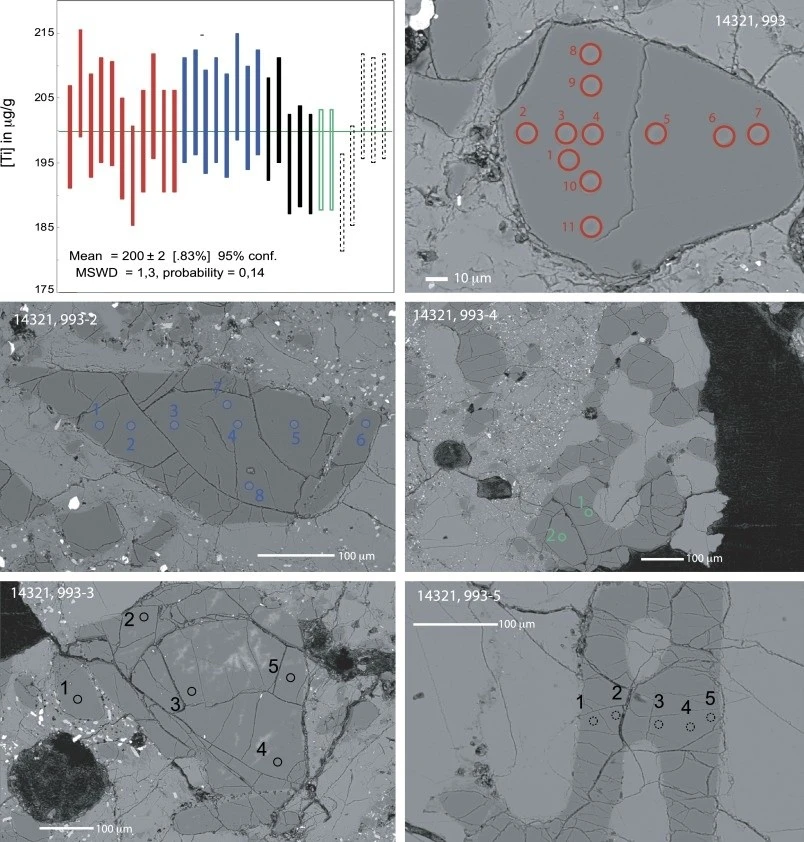
This suggests that "Big Bertha" may not be just a lunar rock, but a fragment of early Earth, ejected into space by a powerful asteroid impact. Once on the moon, it could have survived further impacts, become buried in lunar rock, and then resurfaced as a result of another impact event—where it was ultimately discovered by the Apollo 14 astronauts.
Destructive impact events were common in the early Solar System. Therefore, a huge number of Earth fragments could have ended up in interplanetary space, some of which eventually landed on the Moon. And since the Moon has no rain, rivers, oceans, plate tectonics, or active erosion, it is able to preserve ancient fragments of our planet better than Earth itself.
This raises an extremely interesting question: if Earth rocks did indeed fall to the Moon, could traces of ancient life have been carried there along with them?
Theoretically, yes. The impact could have knocked out not only minerals from Earth, but also organic molecules, microscopic inclusions, and, if life already existed at that time, perhaps even fragments of biological material. Therefore, the Moon could be something of a natural archive of early Earth. We certainly won't find ancient living organisms there, but theoretically we could detect chemical and mineral traces of an ancient biosphere. 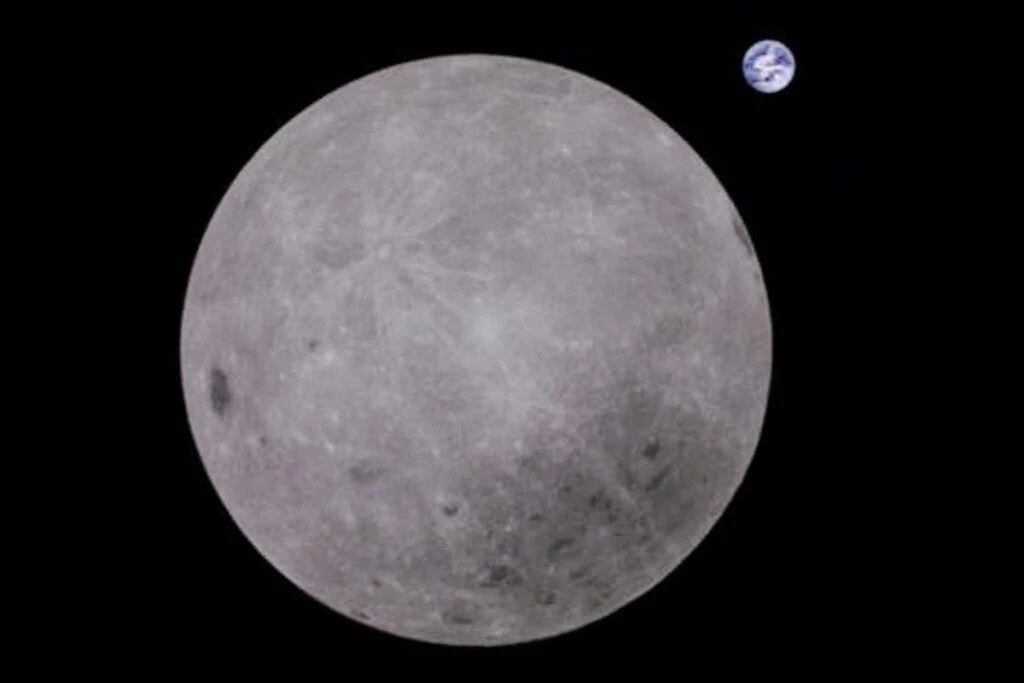
And here a second, no less interesting question arises: is it possible to find DNA from ancient life on the Moon and resurrect it?
This is unlikely. DNA is a very fragile molecule. In Earth's "hothouse" conditions, DNA disintegrates quite quickly—on a geological scale—and the oldest reliably read samples are measured in millions of years, but certainly not billions.
The lunar surface, which is still subject to constant impacts, also doesn't seem like an ideal repository for genetic code. There's a vacuum, harsh radiation, and sharp temperature fluctuations. Experiments show that some microorganisms and individual cells can survive the space environment for several years, especially if well protected by modern materials. But this is certainly not the timeframe we're talking about.
So the intrigue isn't that the preserved DNA of an ancient Earth inhabitant could be found on the Moon and resurrected, but that our natural satellite may contain numerous fragments of Earth of varying ages, from eras of which no trace remains on Earth itself. These fragments may contain minerals, isotopic traces, organic matter, and chemical signatures of the conditions in which life on Earth originated and evolved.
Read also:
What happened to the Apollo flags on the Moon?
The Curiosity rover has discovered molecules from the "origin of life."
Venus Life Finder: A mission to search for life in the clouds of Venus.