The Florentine legend of Bertha's head, cursed by the burned alchemist (7 photos)
An ancient legend says that this mysterious stone head belongs to a woman who was turned to stone by an alchemist. 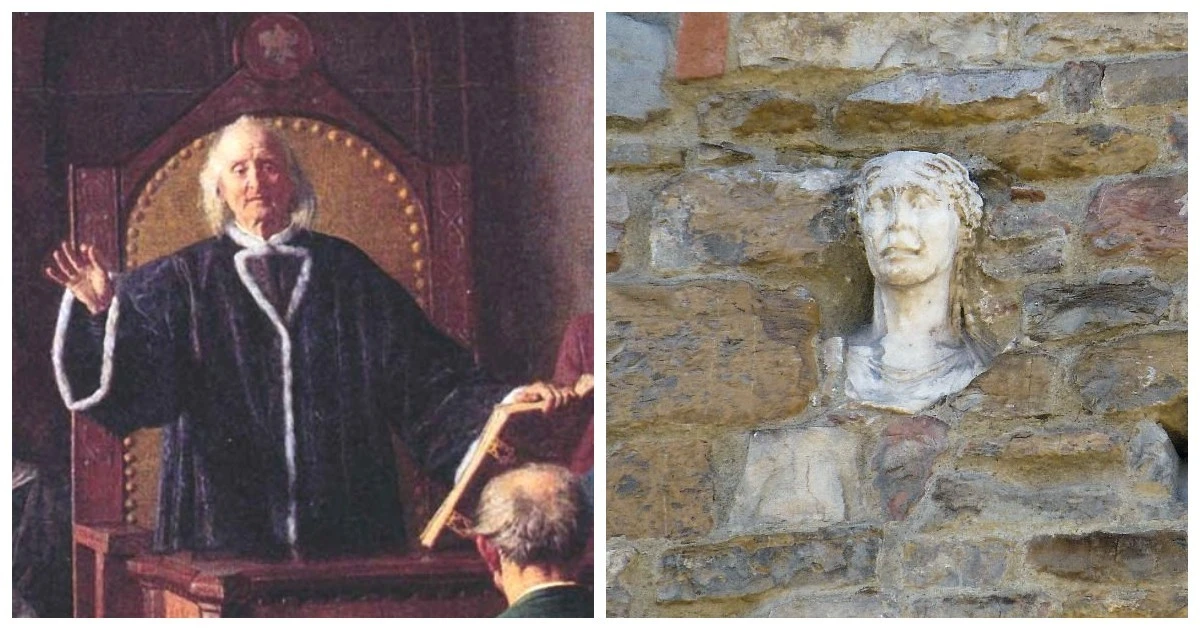
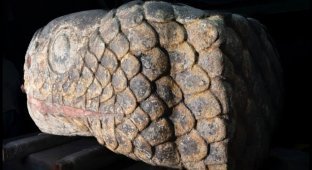
Medieval Florence is a city where every wall whispers of the past. And a head still protrudes from the wall of the Church of Santa Maria Maggiore. Locals nickname it "La Berta." Stone, detached, without a body, it has been stuck in the masonry since time immemorial. Historians shrug their shoulders and cannot clearly explain its origin. But the Florentines had several centuries to come up with interesting theories. 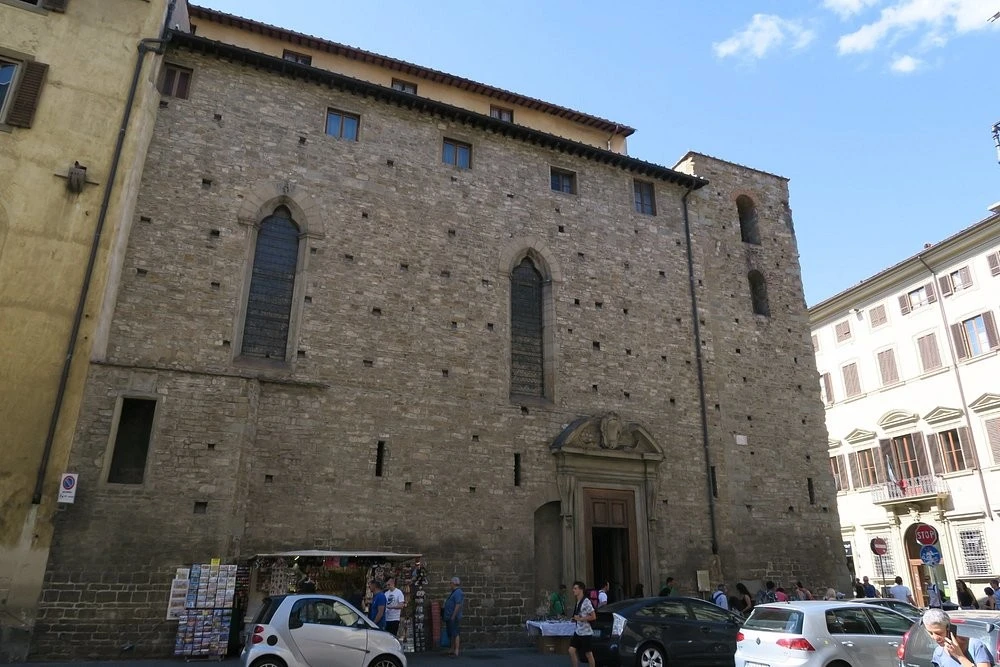
The darkest and most fascinating, naturally, is connected to a curse. On September 16, 1326, a certain Cecco d'Ascoli, an astrologer and sorcerer (according to the Inquisition), was riding in a cart to his own burning. Heresy, of course, is no joke. The procession was dragging along Via dei Cerretani when Cecco d'Ascoli asked for water. 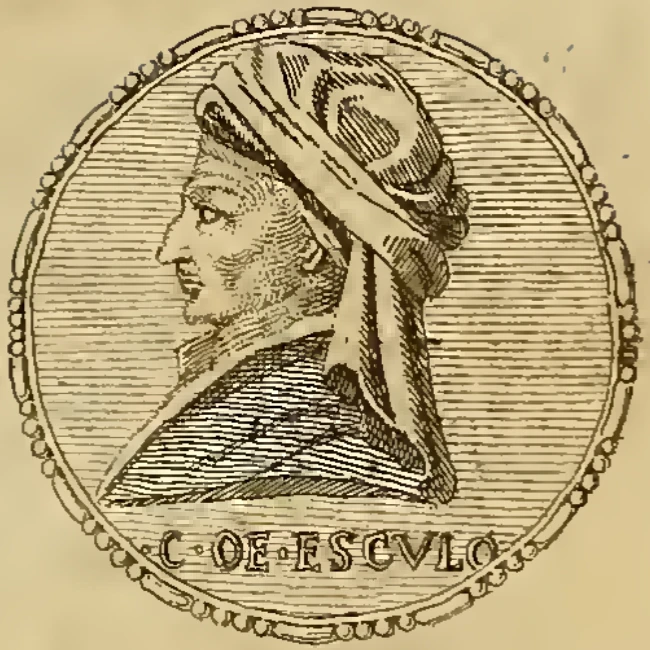
Cecco d'Ascoli (real name Francesco Stabili di Simeone) - Italian poet, physician, teacher, philosopher, and astronomer
Berta was just looking out the church window. She shouted to the crowd, "Don't give him a drink!" According to her, this alchemist could communicate with the devil through water. And Satan himself allegedly promised him immunity. 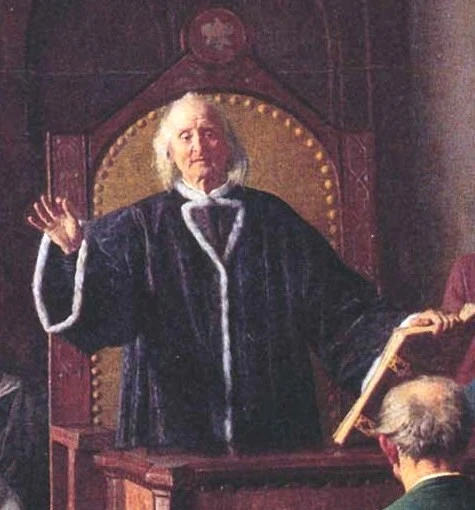
Cecco d'Ascoli by Giulio Cantalamessa (detail from an 1876 painting)
The astrologer was furious. And he cursed Bertha right there on the spot, from the cart, forever. She never moved again. Petrified. 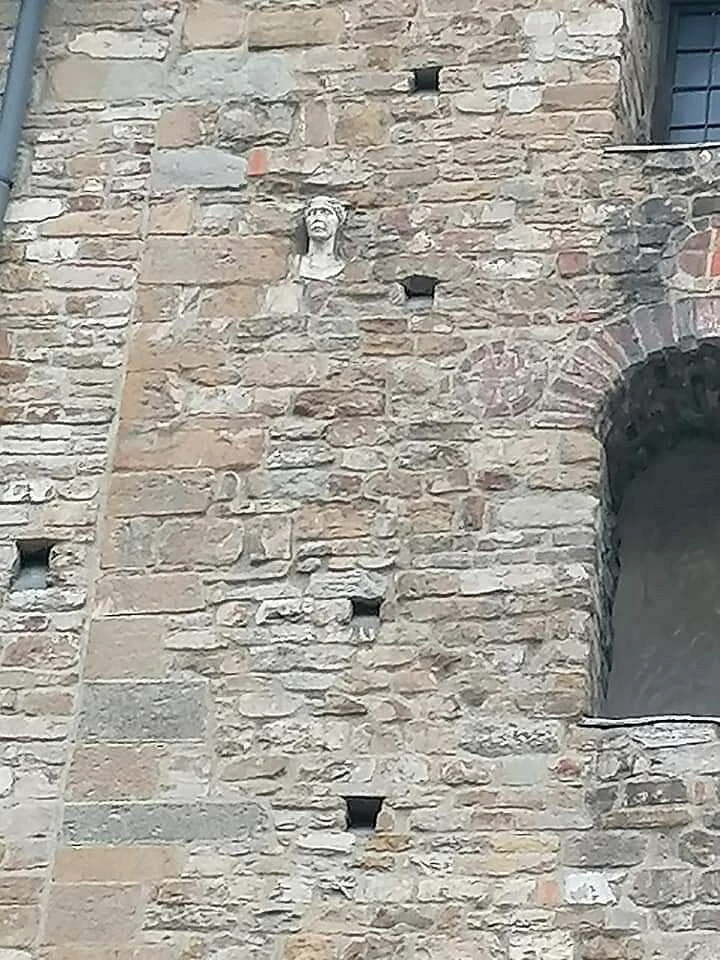
It's certainly a beautiful legend, one you might even want to believe. But there are also boring alternative versions that are more plausible. The first is quite practical. The head is a monument to... a greengrocer. Yes, the vegetable merchant who donated the church's bells. They rang every time the city gates opened or closed. That's why Bertha protrudes from the wall of the bell tower, not from a window, so everyone can see it clearly. 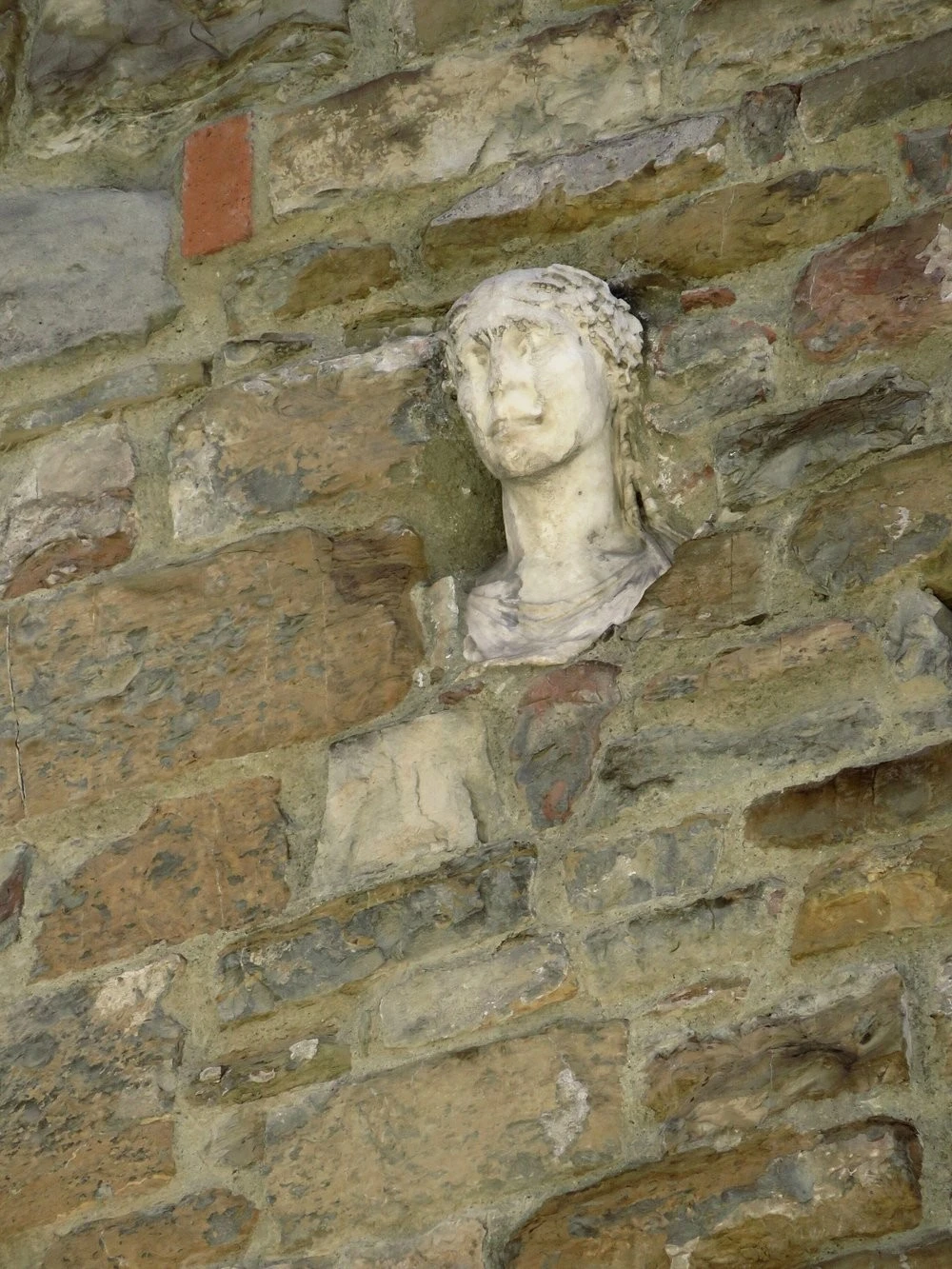
The second is archaeological. Historians believe that what we see here is simply a fragment of ancient Roman sculpture. In the Middle Ages, such remnants of antiquity were widely used as decoration. No magic involved, just recycled building materials. 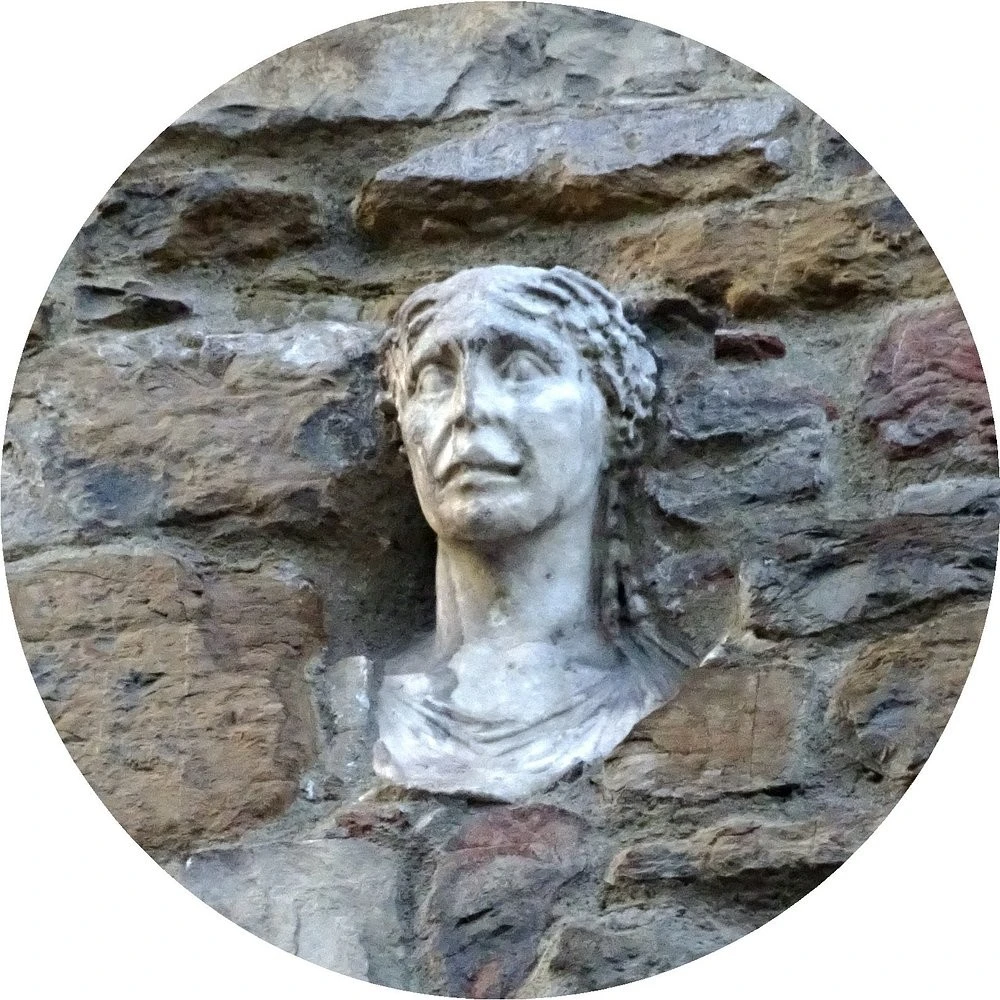
Of course, the most plausible version is the Roman one. But tourists and the rare passersby who even notice Bertha on the facade are far more interested in stories about black magic, curses, and an alchemist going to the stake.