Rainbow Trout: Conquering the World, Bringing a Sea of Money, Food, and Destruction (7 photos)
Rainbow trout, native to Canada, Alaska, and the Far East, are now found in over 100 countries and on every continent except Antarctica. They have become a real scourge for river and lake ecosystems and are listed among the 100 most dangerous invasive species on the planet. But even among them, this fish stands out: after all, humans themselves created it this way, fully aware of the consequences of its spread. 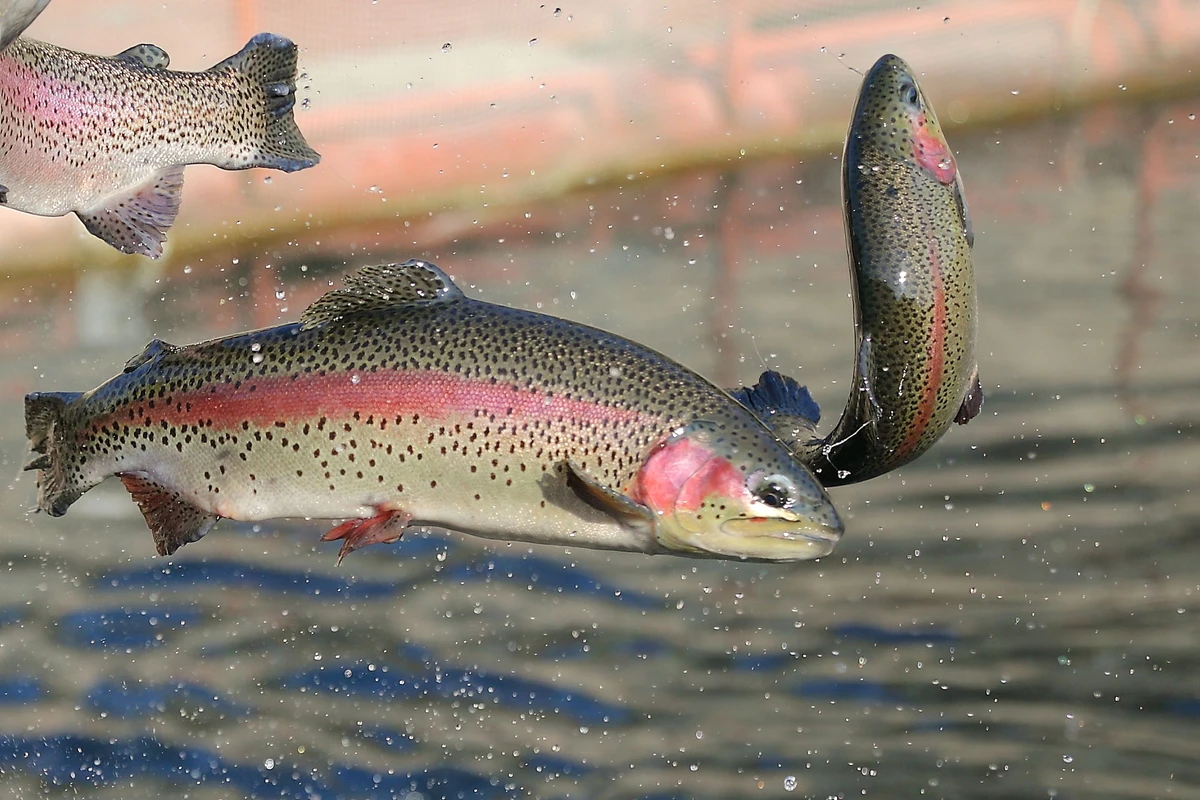
Forward, conquer new lands!
The colonists who arrived in America couldn't help but notice the rainbow trout. This powerful, fatty fish, weighing up to 9 kilograms, would swim up from the Pacific Ocean into the rivers every spring to lay tens of thousands of eggs and delight bears and other locals with its delicious meat. The hatched fry gradually descended into the ocean, where they fed on sea fish for several years before returning. 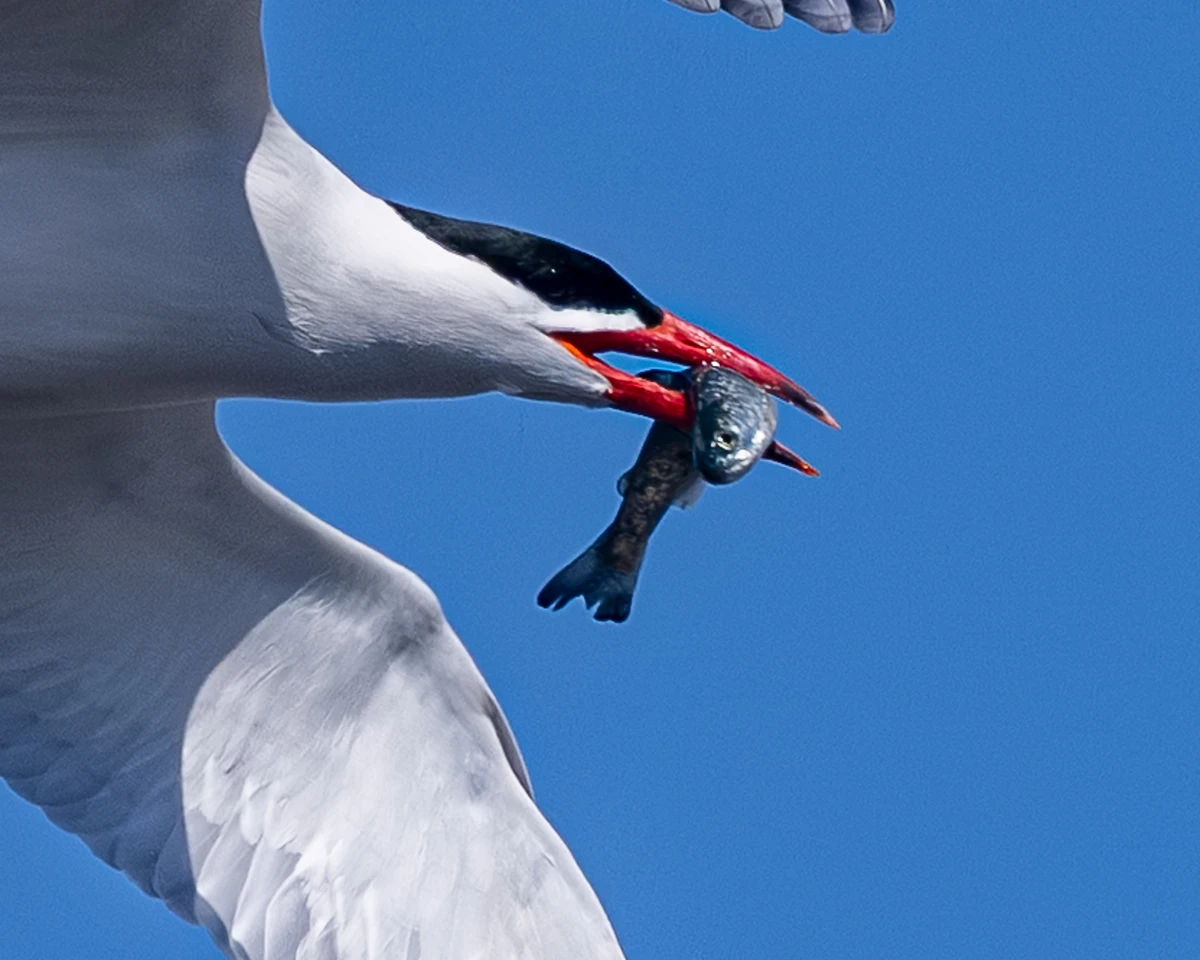
Trout is a favorite among many people, not just bears and humans.
And next to it, in lakes and streams, lived another form of this same trout. It's smaller—no more than 2.5 kilos—but it stays in one place year-round, without risky migrations and long journeys across the vast ocean. It can be caught year-round, so it quickly became popular among locals. 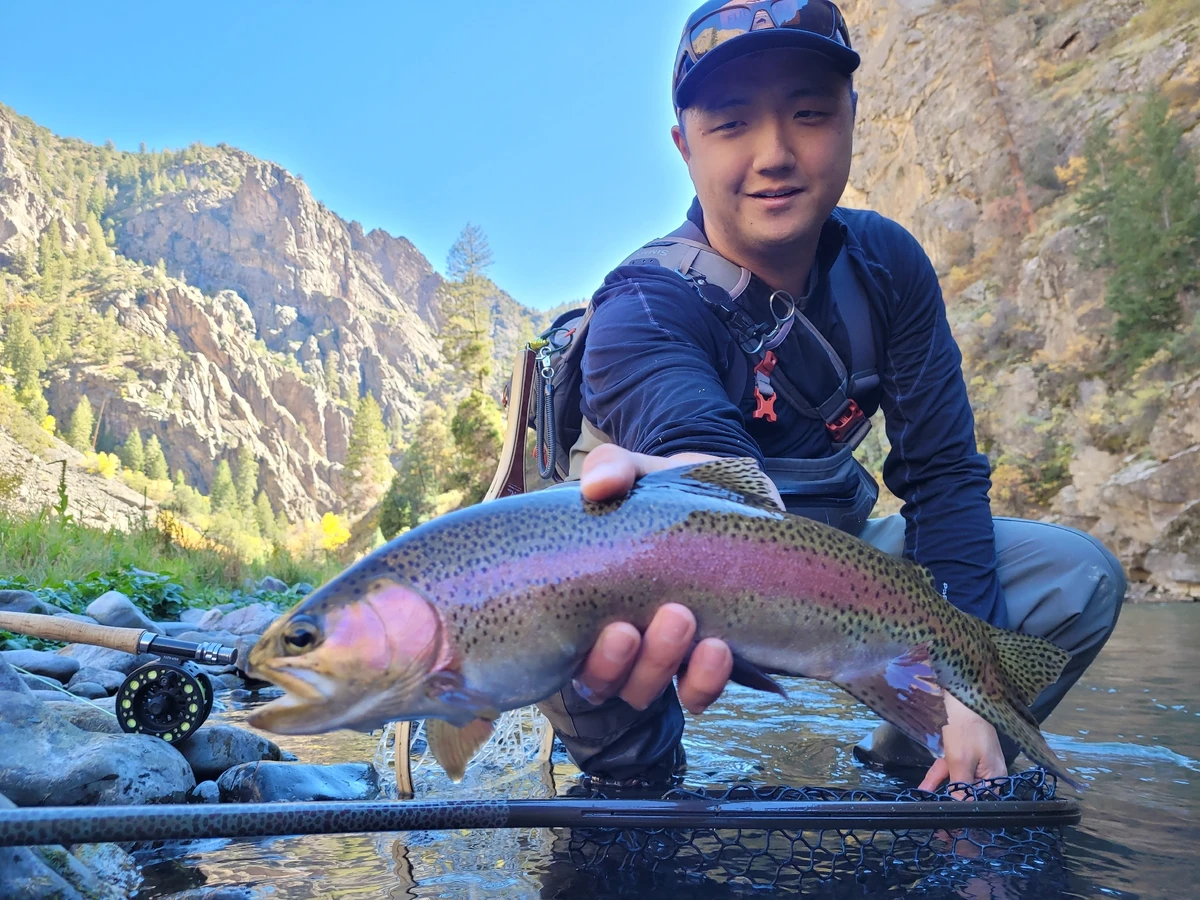
Do you have a trout? Here, take a trout.
The second reason people are interested in rainbow trout is that they are very beautiful. When mature and ready to spawn, the fish literally shimmers with a variety of colors: it has a silver belly, a green back, and a bright red stripe on its side. This is why it caught the eye of wealthy British gentry—sport fishing enthusiasts—back in the 19th century. Since the British Empire was vast at the time, they dispersed the fish throughout the world, so that every nobleman in every colony could enjoy fishing for this noble fish. 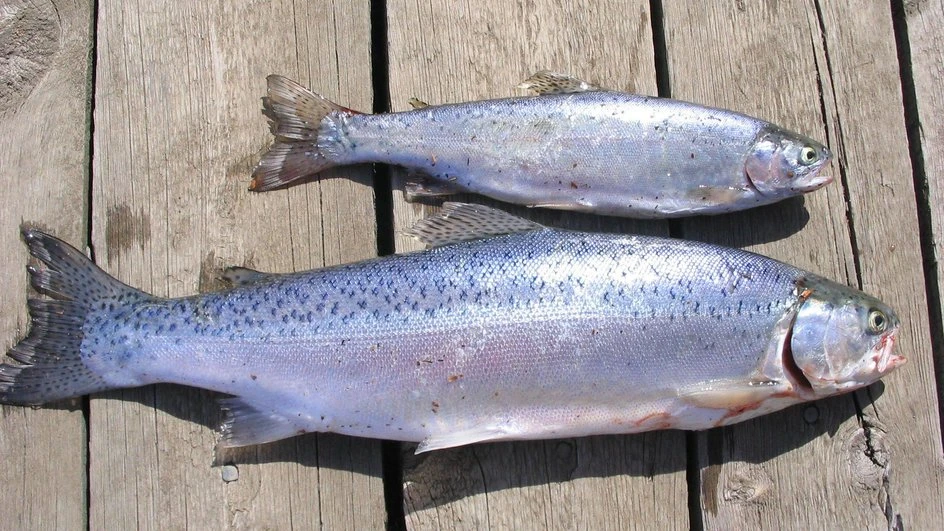
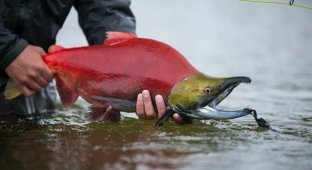
Rainbow trout caught in the ocean are called steelhead by the British and Americans.
Rainbow trout appreciated this gift of fate, quickly establishing stable populations in their designated lakes, and then expanding beyond them into the river systems of Australia, Africa, South America, and even Europe. And you know what? Everyone loved it! After all, when the trout invaded overfished waters, they were once again filled with fish, albeit completely different ones. It turned out that trout can grow with minimal resources. All they need is high oxygen levels in the water, sandy or gravel banks, and some organic matter—even insect larvae, frogs, and mollusks are enough. 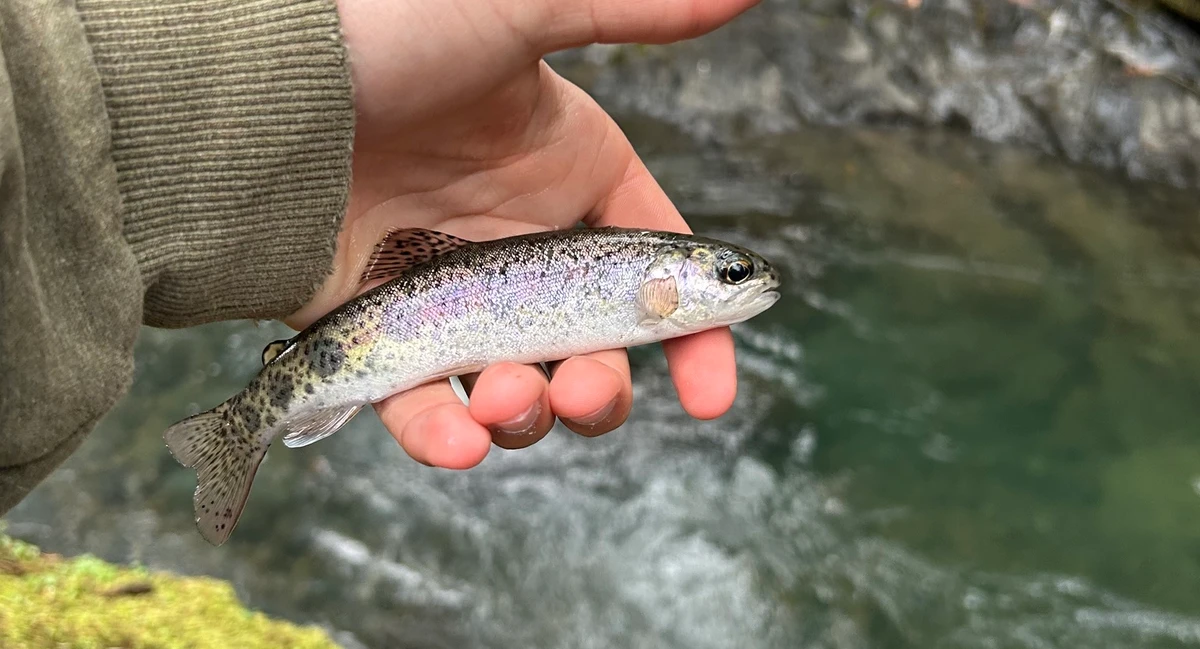
Well, how big they've grown... But even this little one can reproduce.
Around that time, its most important feature became clear: rainbow trout are the only Pacific salmon that do not die after laying eggs. After the female digs a hole in the river bottom and lays her eggs (2,000 to 3,000 per kilogram), she goes about her business without becoming food for zooplankton. Therefore, the species' population growth is simply incredible, even exceeding that of most native fish. 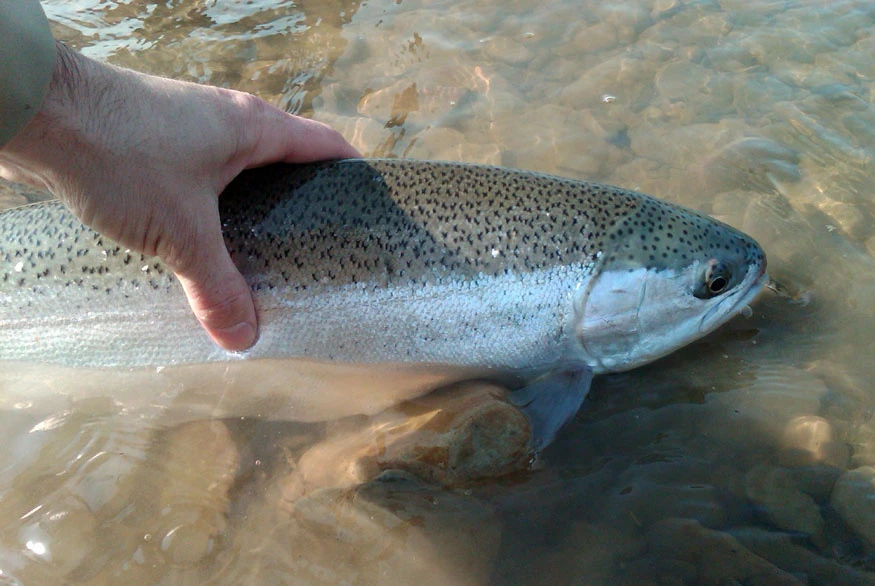
Walking my fish...
When people realized this, they weren't horrified by the damage done to nature, but introduced the fish into aquaculture and began raising them on an industrial scale. Thus, trout spread even further across the world, increasing their numbers many times over. Ironically, in the second half of the 20th century, they were also introduced into the USSR, where they were raised in cages as "rainbow trout." Neither the government nor scientists even suspected that the Kamchatka rainbow trout was the same as the rainbow trout. It wasn't until 1989 that ichthyologists were able to prove this. 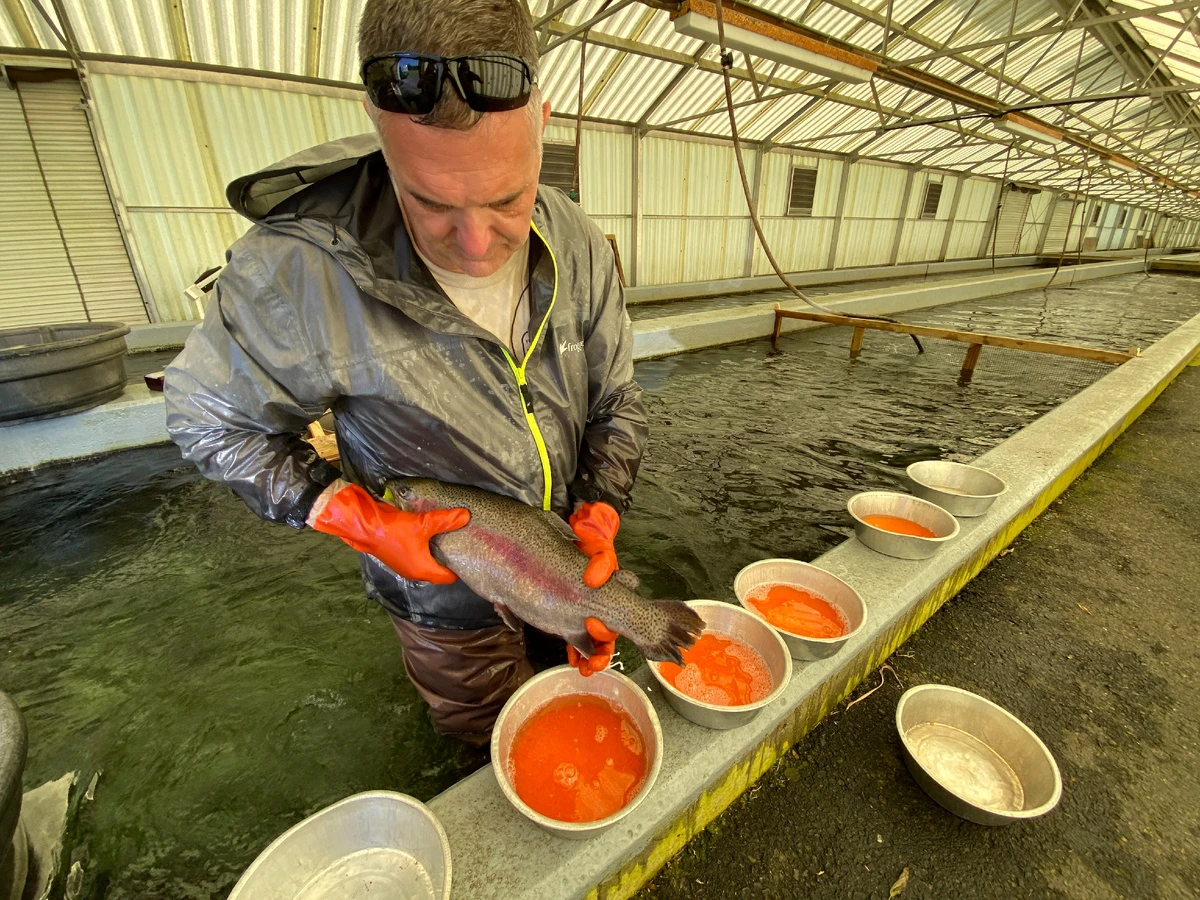
Milking the trout!
The rainbow trout's range continues to expand. Over the past decades, it has become established in Eastern Europe, and new farms continue to be built around the world, despite the serious environmental damage to the planet. Why is this? The answer is simple: the global rainbow trout market is estimated to be worth $5-7 billion annually and continues to grow at a rapid pace.