The janitor who built a throne for God (5 photos)
In a garage on 7th Street, a humble caretaker collected discarded coffee cans, lamps, and aluminum foil. He transformed trash into a shrine. After his death, his work was valued at $14 million. 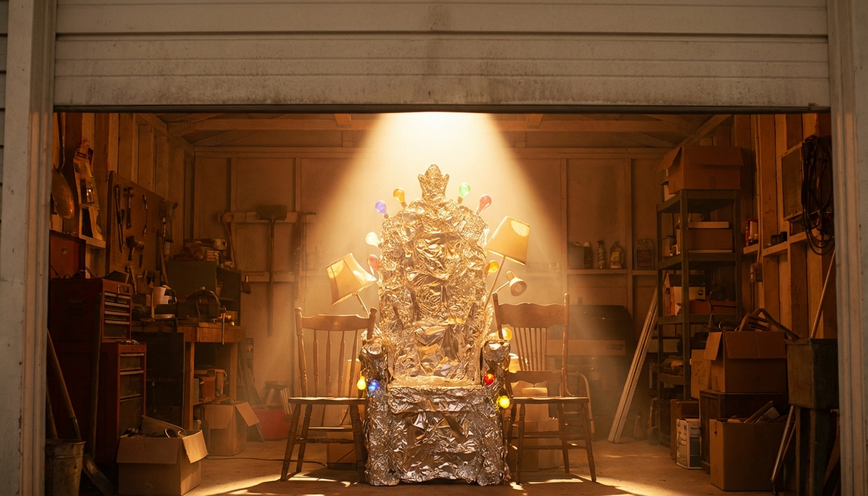
1964. Washington is in the throes of politics, and the world is gripped by Beatlemania. Meyer Wertherlieb, a property owner, arrives at his garage on 7th Street. For the past fourteen years, he had rented the space as a storage space to a quiet janitor named James Hampton. He always paid $50 a month, never attracted attention, and blended into the bustle of the noisy city. But when the rent stopped coming in, Vertrlieb decided to vacate the space. He expected to find a pile of old tools or broken brooms.
Instead, he stepped into the shimmering remains of a lonely vigil, built from urban trash and prophetic obsession. 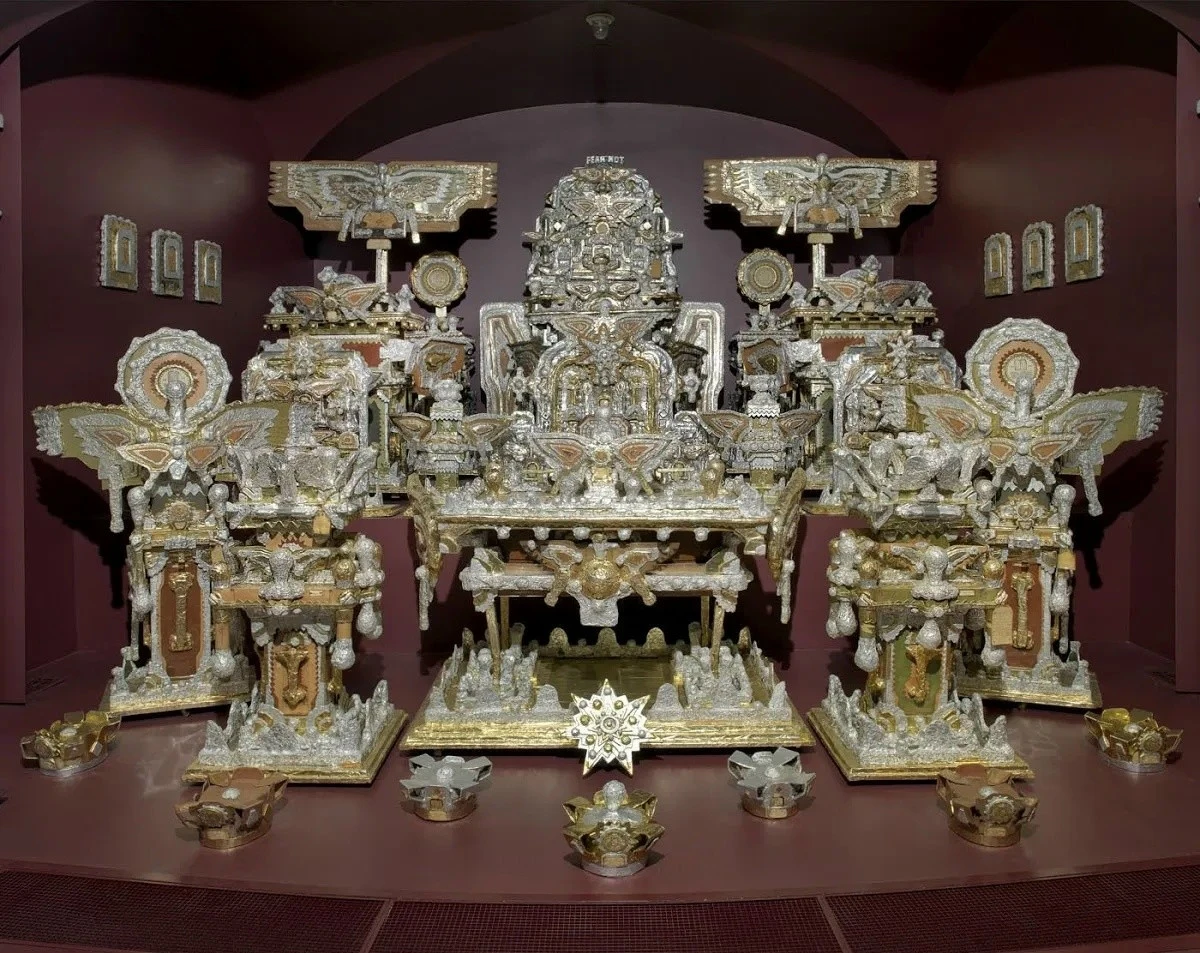
The Collector with a Cart
It turned out that all these years, Hampton had spent his nights pushing a cart through the streets of Washington, D.C., collecting what the rest of humanity discarded. A man who professionally cleaned up other people's trash did something completely different in a rented garage. He transformed it.
Hampton took what most would call ordinary trash: discarded office supplies, coffee cans, light bulbs, broken lamps. Then he covered it all in layers of silver and gold foil. Under a single light bulb hanging from the ceiling, the trash disappeared. It began to shine. 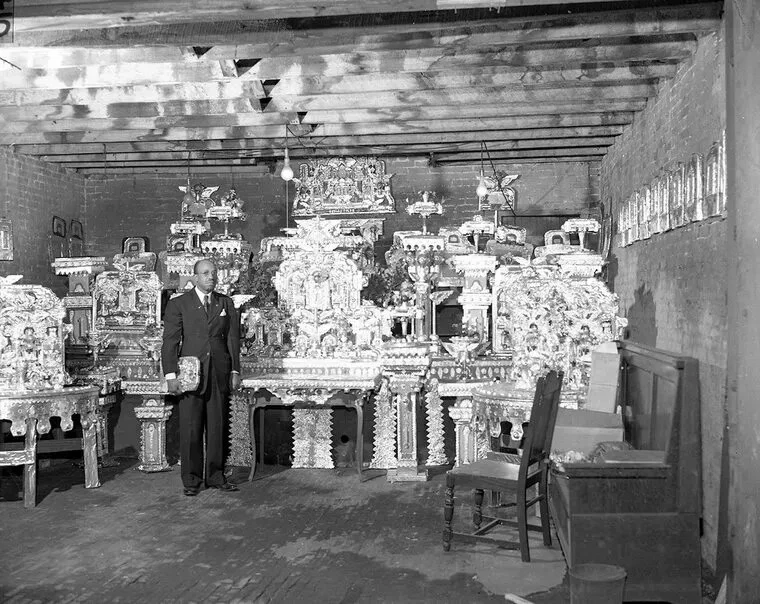
A Throne for the Second Coming
In a cramped space, Hampton created a throne over two meters tall. Surrounding him were a dozen angels, altars, and pulpits. It looked as if it belonged in a secret vault beneath the Vatican. He called his work "The Throne of the Third Heaven of the General Assembly of the Millennium of Nations."
Hampton claimed to have had prophetic dreams. In them, Adam, Moses, and the Virgin Mary visited him. They gave him precise instructions on how to build a "mercy seat" for the end of the world and the second coming of Christ. 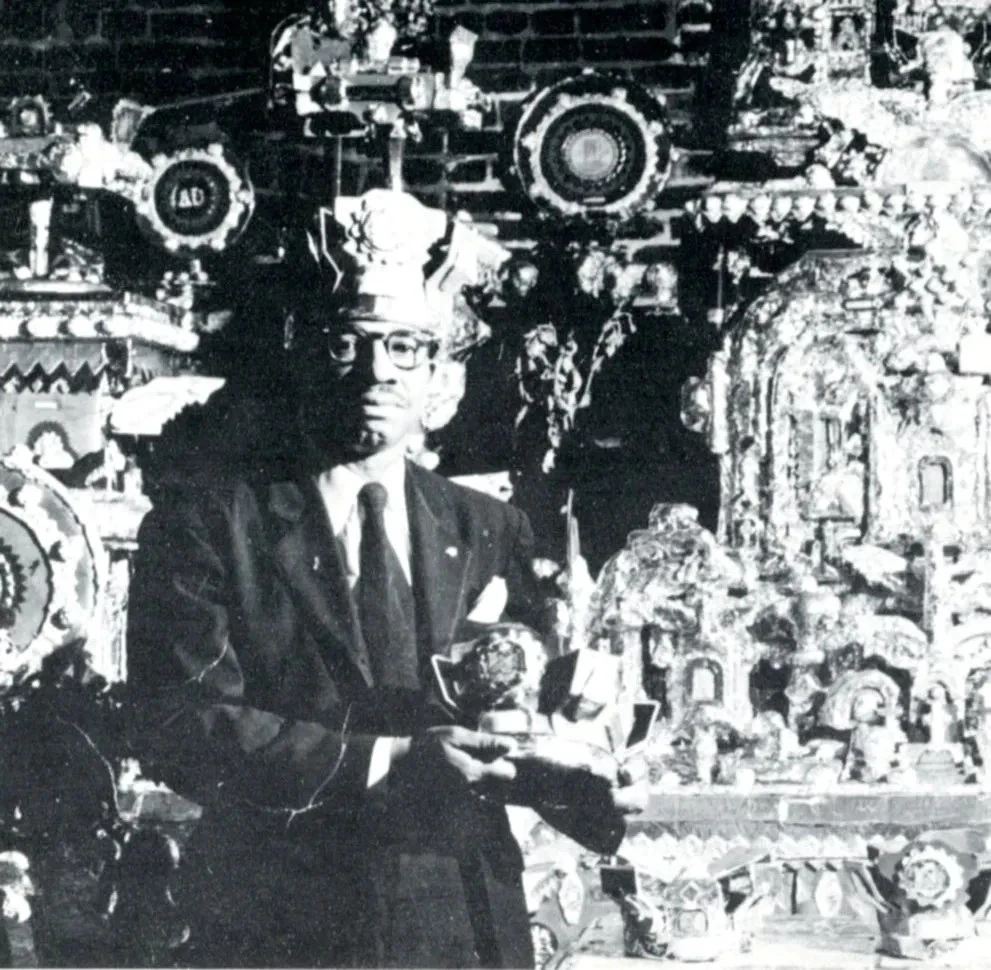
A Language That Couldn't Be Cracked
Hampton recorded his visions in a diary—on a letter that no one had ever seen. Taking the pseudonym Saint James, he filled 104 leather-bound pages with symbols now called "Hamptonian language."
Cryptographers tried to decipher this text for decades. Markov models. Frequency analysis. Nothing. No cipher, no code. In 2004, Stanford University professors Mark Stamp and Ethan Le concluded that Hamptonian language was not a simple replacement for English. They believed it was the written equivalent of "speaking in tongues"—a stream of consciousness not intended for translation.
In his notebook, Hampton referred to himself as "Director of Special Projects, Eternity State." He ended each page with the word "Revelation." 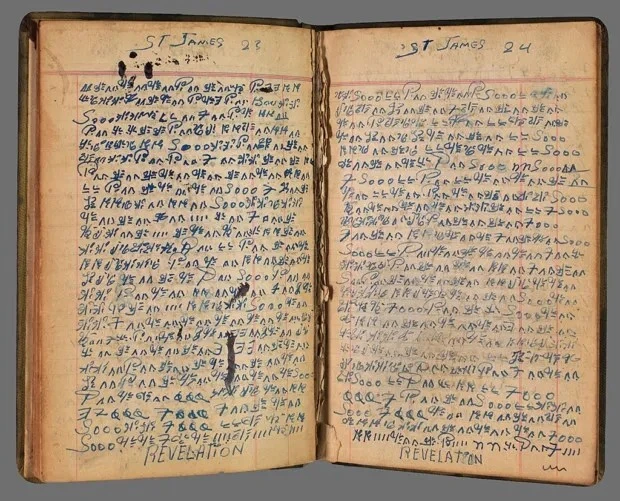
Life in the Shadows
Hampton approached several local churches to teach people based on his visions. They turned him down. He continued his work alone, toiling until his final days. He died of stomach cancer.
After Hampton's death, his family stated that they knew nothing of their relative's work and wanted nothing to do with the collection.
Vertrlieb couldn't throw away something he'd dedicated 14 years to. As he told a Washington Post reporter, "You can't just destroy something someone's dedicated 14 years to." He placed an ad in the local newspaper offering to sell the contents.
Local artist Harry Lowe saw the ad. He came, looked, and said, "It was like opening Tutankhamun's tomb. They didn't know what it was or what to call it, but they knew it was something special."
What Now
Today, "Throne of the Third Heaven" is in the Smithsonian Museum. One art critic said of the collection, "It's probably the finest work of religious art ever created by an American."
Curators constantly monitor the preservation of the exhibits. Every time a piece of foil tears or a wing falls off during movement, a new object is found underneath: a scrap of wrapping paper, an old furniture label, a torn magazine page.
Finale
James Hampton didn't consider himself an artist. He asked neither the public nor the museum. He worked alone for 14 years, creating what he believed was preparation for the end of the world.
The unanswered question isn't whether Hampton was mad or brilliant. He was both. The question is how many people like him create something significant in complete solitude, only to have their possessions tossed into the trash after their death. Hampton was lucky: his work was seen by a landlord, not a garbage collector. Others are less fortunate. Their languages will never be deciphered. Their thrones will be trashed along with the tinfoil.