Vela Incident: a mysterious 1979 flare over the southern Indian Ocean (4 photos)
On September 22, 1979, the American satellite Vela 6911, part of the Partial Test Ban Treaty monitoring program, detected an unusual flash in the southern Indian Ocean. 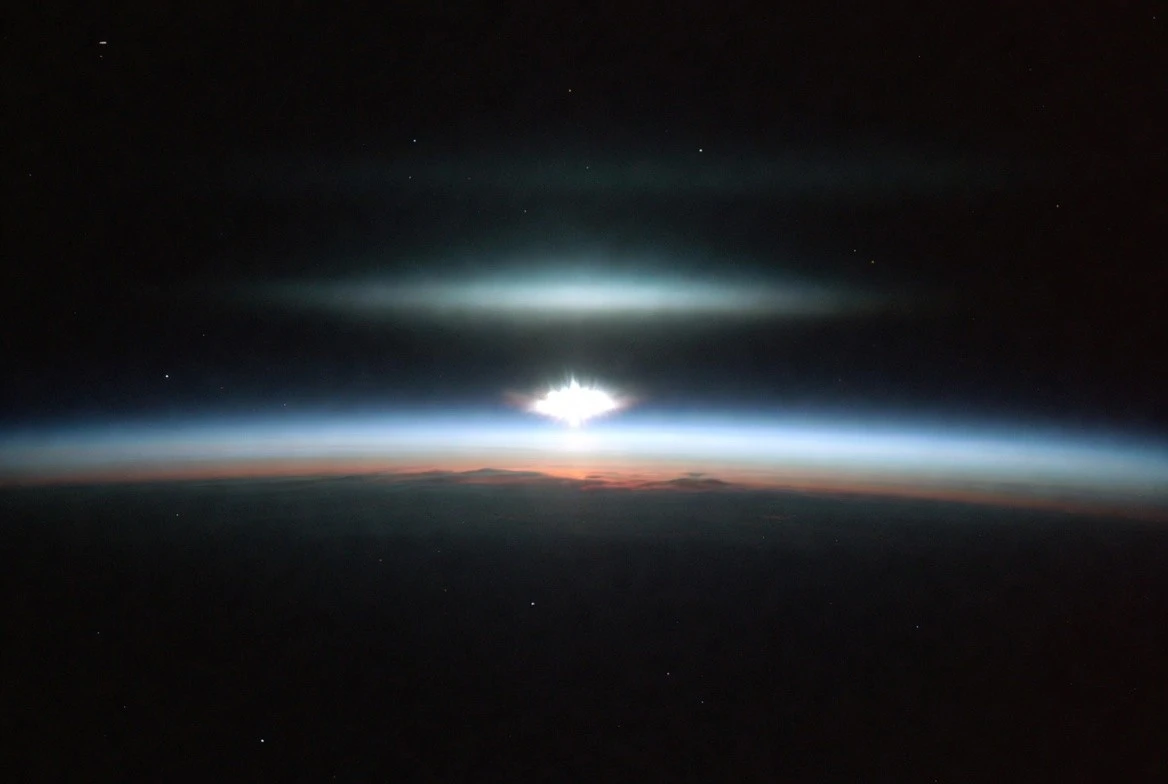
The signal was a classic "double pulse"—a characteristic sign of an atmospheric nuclear explosion. However, more than 46 years later, the question of what exactly happened that day remains open.
Satellites for Searching for Nuclear Explosions
In the 1960s, the American Vela program launched a series of satellites to monitor compliance with the 1963 international treaty banning nuclear tests in the atmosphere, space, and underwater. The satellites, orbiting the Earth, were intended to provide real-time information on possible flashes caused by nuclear explosions.
Explosions of this kind have a specific light signature: first, a very bright, short pulse, followed by a brief fading, and then a second, longer peak of light. It was this "double signal" that the Vela 6911 satellite detected on September 22, 1979. 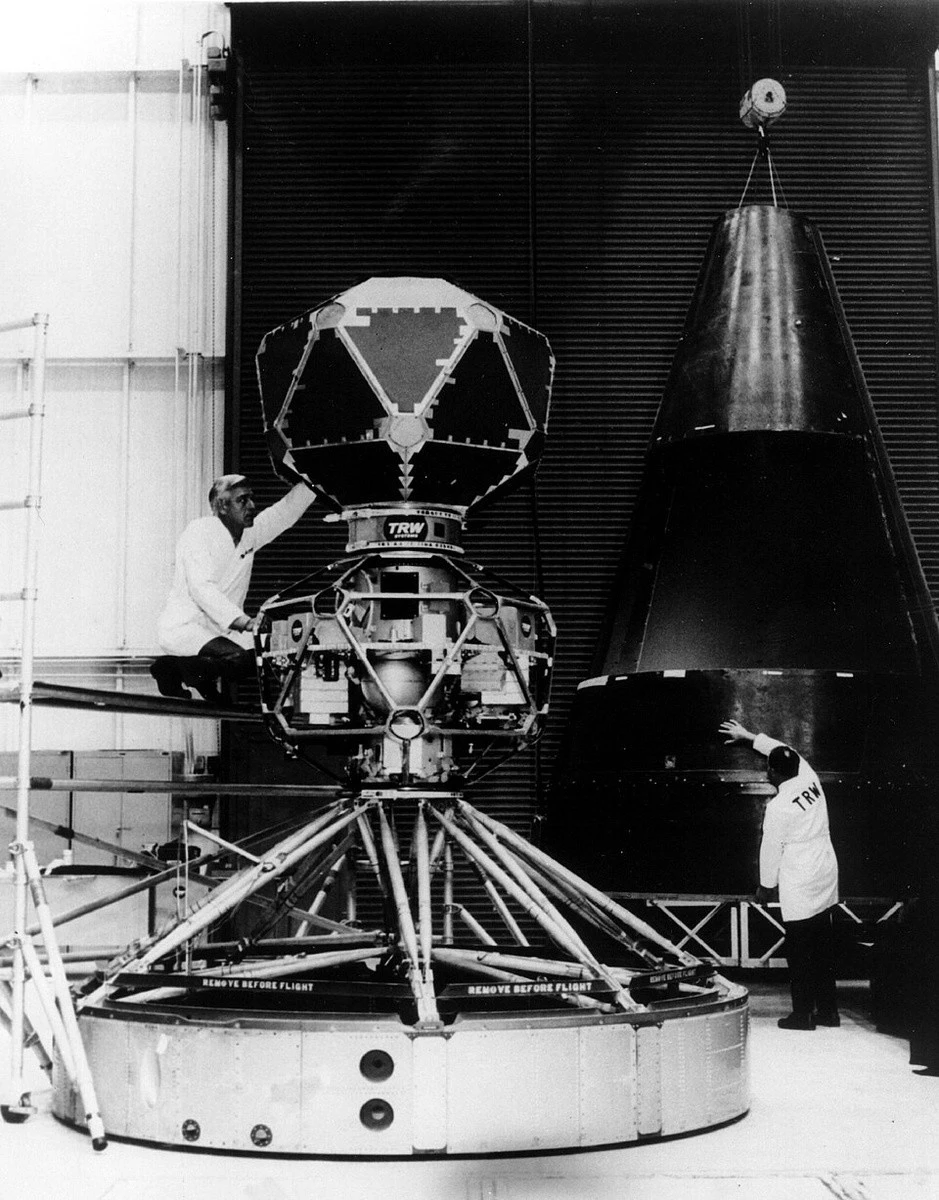
Two Vela satellites during assembly, separating after entering orbit.
The flare is believed to have occurred in the southern Indian Ocean, near two small volcanic islands of Prince Edward, South Africa.
Theory #1: A secret nuclear test
The most popular hypothesis is that Vela 6911 actually detected a secret nuclear test conducted by South Africa with Israeli support.
This is indicated by the fact that in the 1970s, South Africa was actively working on its own nuclear program, and Israel, according to many analysts, already possessed nuclear weapons. Despite various prohibitions against proliferation, this cooperation could have led to an unannounced test.
This theory is also supported by the fact that in the early 1990s, the South African government officially acknowledged the existence of its own nuclear program.
Theory #2: Satellite Error
Shortly after the flash was detected, the administration of US President Jimmy Carter convened an expert commission to investigate the incident. About a year later, the commission came to the cautious conclusion: the signal could have been the result of a technical malfunction on the satellite.
On paper, the explanation seemed straightforward: by 1979, Vela 6911 had significantly exceeded its designed service life, so the sensors could have generated a false signal.
However, many nuclear test experts directly involved in the tests questioned the commission's conclusion. They said the parameters of the recorded flash too closely matched the characteristic signature of a nuclear explosion.
Theory #3: A Natural Phenomenon
Over time, due to the lack of a generally accepted explanation, more exotic hypotheses began to emerge. For example, some researchers suggested that the satellite may have been struck by a micrometeorite, which caused fragments to break off from the hull, reflecting sunlight in an unusual way and generating a flash similar to a nuclear explosion. 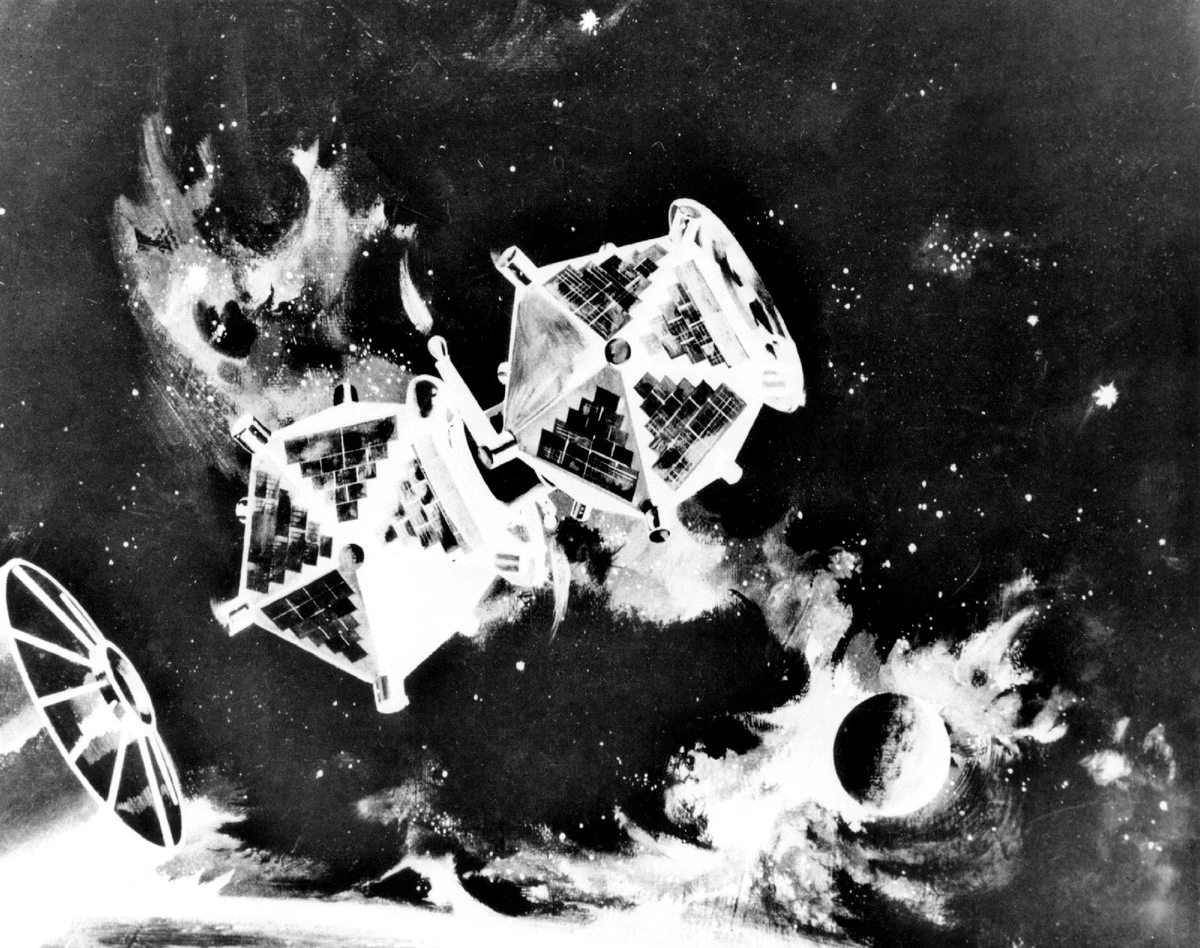
Artist's impression of the separation of the Vela satellites
Others have suggested that the satellite saw a flash from a bolide—a very bright meteor that exploded in the atmosphere. But this idea is undermined by the fact that meteors do not produce a characteristic double pulse of light.
There have been suggestions that the flash could have been caused by very powerful lightning or an electrical discharge in the atmosphere. Today, we know about phenomena like sprites, elves, and jets, but in 1979, they were virtually unknown. However, their light pattern does not match the signal recorded by the Vela 6911 satellite.
In summary, it is safe to say that no alternative theory can convincingly explain the nature of the double pulse, which is the hallmark of a nuclear explosion.
Indirect Signs
While experts were reading tea leaves, scientists attempted to find additional evidence of the event. To do this, they analyzed the concentration of radioactive isotopes in the atmosphere and ocean. 
The suspected test site is marked with a white dot.
Some independent teams found minor anomalies in the levels of iodine-131 and other isotopes, but these were not enough to definitively confirm a nuclear test.
A mystery that remains unsolved
Today, many researchers are inclined to believe that the Vela 6911 satellite did indeed detect a small nuclear explosion. However, direct evidence of this has never been forthcoming.
So, the Vela incident can rightfully be called one of the most mysterious episodes of the Cold War.