Comet with less than a month left: C/2026 A1 will be destroyed by the Sun on April 4 (3 photos)
On January 13, 2026, astronomers discovered a new comet in the Solar System—C/2026 A1. Calculations of its orbit and modeling predict an unusual outcome: on April 4, it will pass dangerously close to the Sun and will likely be destroyed. 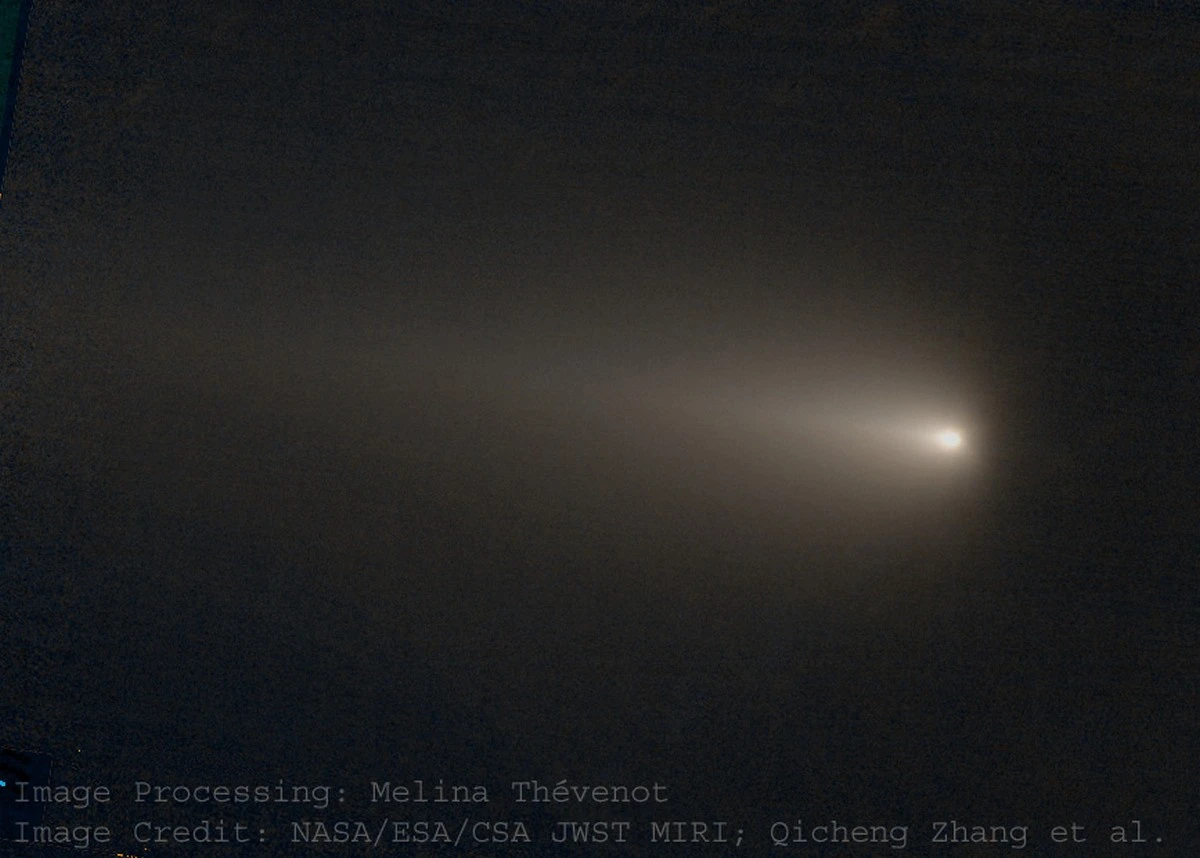
Comet C/2026 A1, captured by the James Webb Space Telescope on February 7, 2026
C/2026 A1 formed more than four billion years ago, at the dawn of the Solar System. Now its journey is coming to an end: in less than a month, the comet, which is older than Earth, will be destroyed.
The final weeks of its journey
The comet is currently approximately 200 million kilometers from Earth and approximately 300 million kilometers from the Sun, moving in a highly eccentric orbit and gradually approaching our star.
As it approaches the Sun, the comet will heat up increasingly. The ice within it will begin to actively sublimate (transition from a solid state directly to a gaseous state), ejecting gas and dust into the surrounding space. This will not only increase the brightness of its tail but also initiate the comet's destruction.
When it gets too close to the star, its nucleus will begin to rapidly disintegrate, and eventually, C/2026 A1 will evaporate into the solar corona.
Possible fragment of an ancient comet
Interestingly, C/2026 A1 may be a fragment of the Great Comet of 1106 (X/1106 C1), which was one of the brightest in recorded history. Early medieval chronicles described it as a "giant white star with a tail" that dominated the night sky. 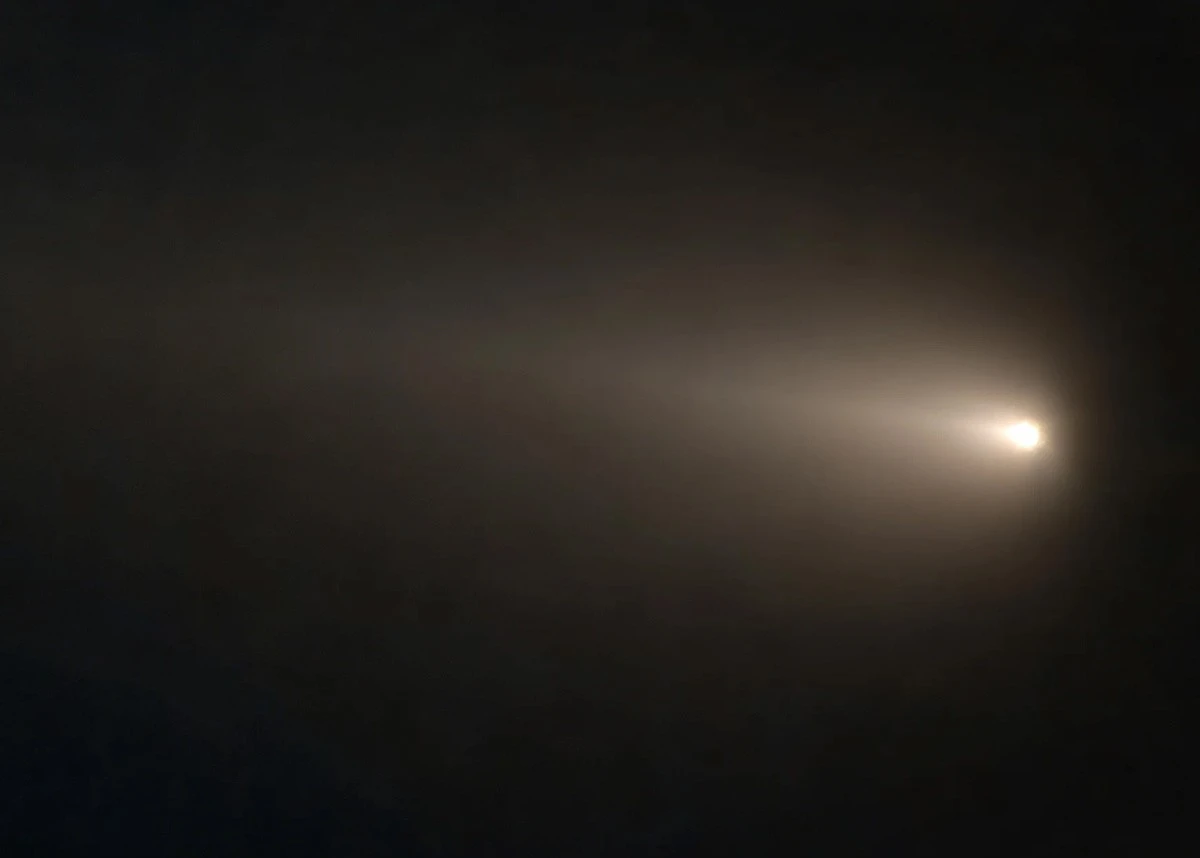
Enhanced image of Comet C/2026 A1
Perhaps the Great Comet did not survive its encounter with the Sun and broke into several pieces, some of which continued on similar orbits. Therefore, it's possible that C/2026 A1 is one of these ancient fragments that wandered the Solar System for nearly a thousand years.
Why do comets fall into the Sun?
Comet falls into the Sun are not uncommon.
Our planetary system contains entire families of so-called solar-orbiting comets, which approach the sun so close at perihelion that they often disintegrate and evaporate. Astronomy has even recorded cases of solar-orbiting comets passing within a few thousand kilometers of the Sun! 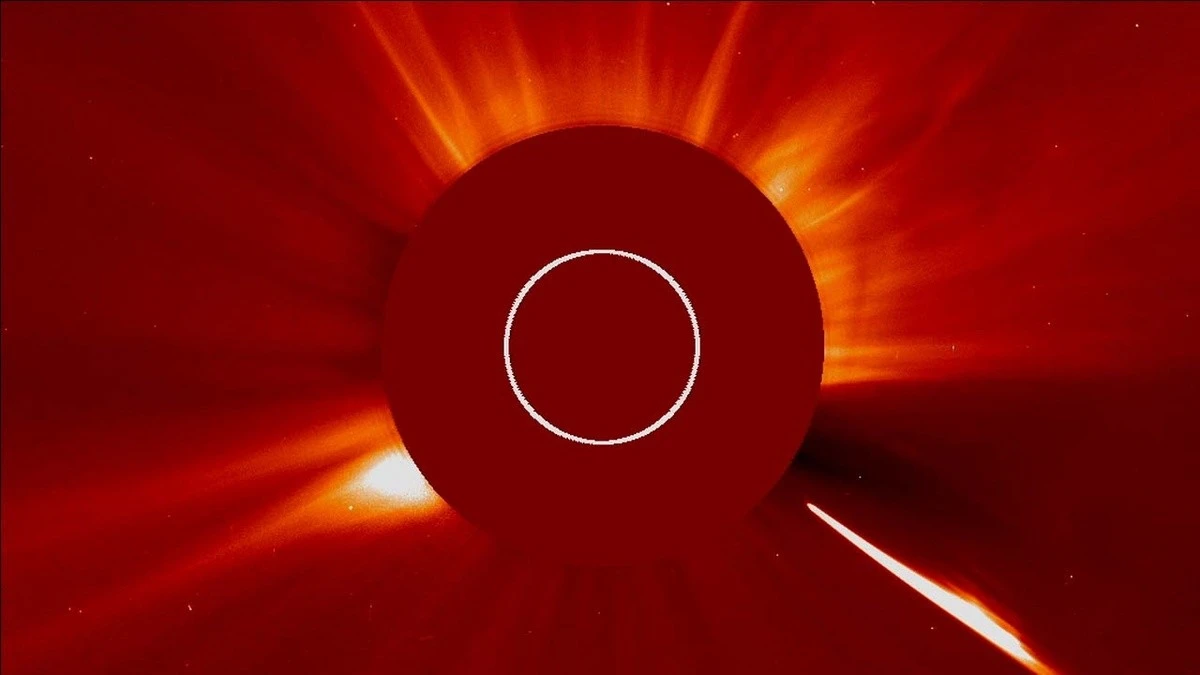
A comet falling toward the Sun (lower right corner of the frame). Image by the Solar Dynamics Observatory (SDO).
However, if a solar-orbiting comet is large enough, it can partially survive its approach, breaking up into fragments. It appears that the Great Comet of 1106 was just such a case: as it disintegrated, it left behind C/2026 A1, which now awaits its final disappearance.
Ground- and space-based observatories observing the Sun regularly record the impacts of near-solar comets, but most of these objects are too small to be noticed before they disintegrate.
The End of a Billion-Year Journey
Comets are fascinating scientific objects, often called "time capsules." This is because they preserve the pristine material from which the Solar System formed more than 4.6 billion years ago.
C/2026 A1, part of the Great Comet of 1106, witnessed the formation of all the planets and satellites, the origin of life, and the emergence of humanity. And now this comet is about to approach the Sun for the last time, taking with it countless secrets.