In South Korea, a trash can charges you for every bag (7 photos)
Seoul has been forced to install trash bins that weigh your trash before allowing you to throw it away. This is said to have reduced food waste by 50%. 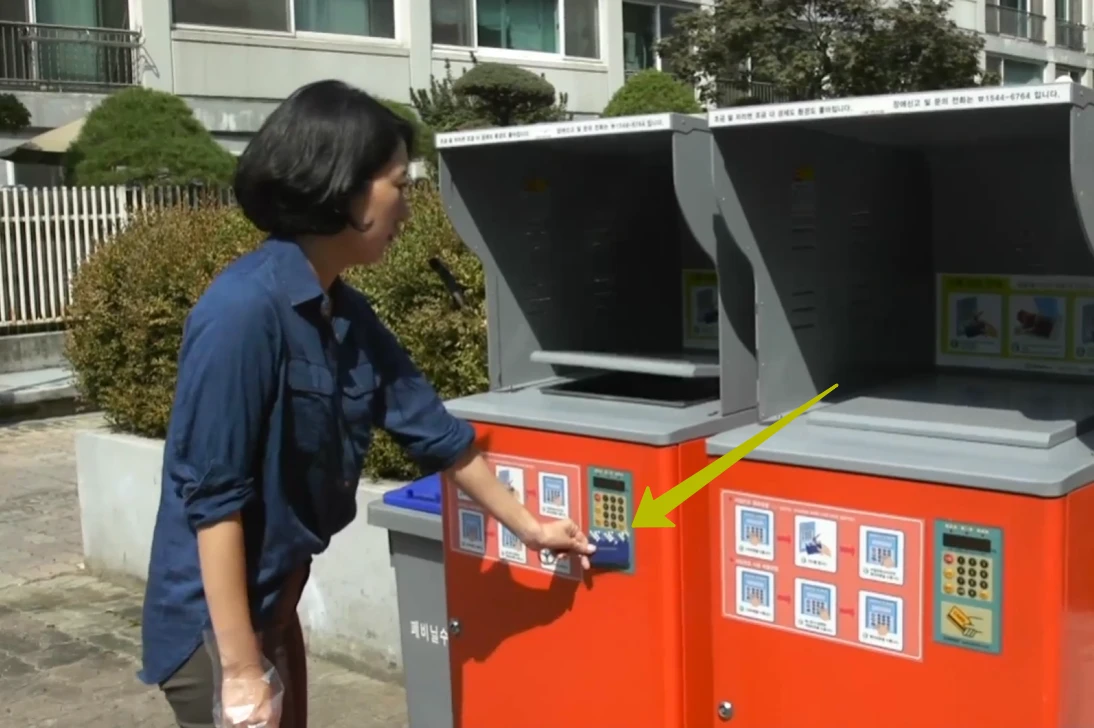
Accurate to the gram 
Kimchi is also often thrown out
In apartment complexes in Seoul, you can throw out trash using a resident card. You swipe the card, the bin opens, you empty the trash, and the bin calculates how much you've thrown out. And it immediately displays the weight so you know what your service bill will be based on automatically. It sounds scary, but for now the rate isn't scary – 130 won per kilogram. You can afford to throw everything away! This measure was introduced to reduce food waste in South Korea (China is also fighting this, but by banning oversized portions and gluttony on camera). 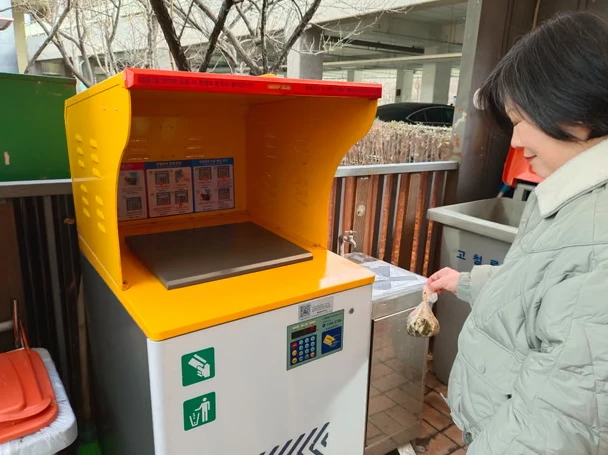
HERE IT IS! The sneaky billing bin.
In South Korea, food waste used to be buried in landfills, but the country has gradually begun to switch to recycling. In 2013, they came up with the idea of selling special yellow bags to residents for storing oil and leftovers. But in small apartments, these bags would fill up for weeks and stink terribly, and changing them every few days was expensive and unprofitable. So, people weren't particularly compliant. Koreans prefer bins with individual resident cards because they can throw them away whenever they want. But even here, everyone is passionately trying to save money. 
Squeeze out the trash, compress it! Buy a wringer.
For example, old lettuce leaves are DRIED (they're damp and heavy). They squeeze out all kinds of produce to remove excess heavy moisture. So, the smells have diminished, but people still dry and strain spoiled food in the kitchen out of petty economics. In Seoul, 27,289 such smart bins have been installed, covering 81.6% of apartment residents. Nationally, 150,738 devices serve 8.54 million households. 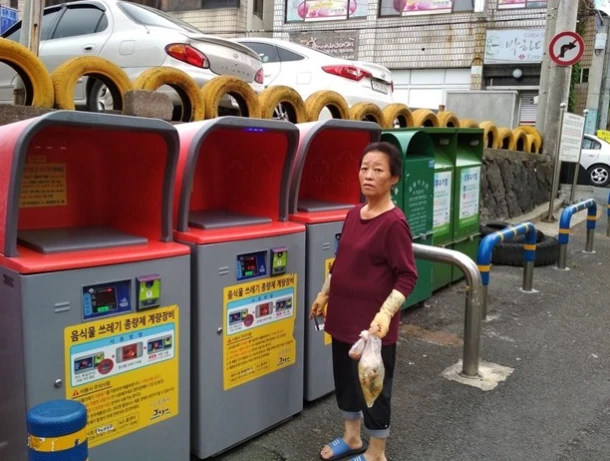
Woman takes out a bag of stinking trash
This has resulted in a national waste reduction of 23.9% over the past decade. Of course, this is thanks to these paid bins in Seoul. Residents of buildings with these electronic bins have reduced their waste by 51%! Koreans are happy, but it's hard to believe they can actually use half their trash. It seems like they're quietly hiding and throwing away the extra garbage. When asked how they achieved this, Seoul residents said they began closely monitoring their family's eating habits. If the family doesn't finish their portion this time, the mother prepares a fifth less food next time. This makes sense, because unlike in Japan, there's no such thing as the "mottainai" cult. Following rural customs, it's perfectly acceptable for Koreans to mix up a plate of different appetizers and then leave halfway through. 
Food waste recycling plant in Korea
I believe this habit can be corrected, but that it will reduce waste by 50%? I don't believe it. Incidentally, the sorted, squeezed, dried, and re-ground food waste is turned into chicken feed, which is sold throughout the country. From every 100 kilograms of food waste, about 10 kilograms of chicken feed are produced. If the quality is poor, the waste is composted. 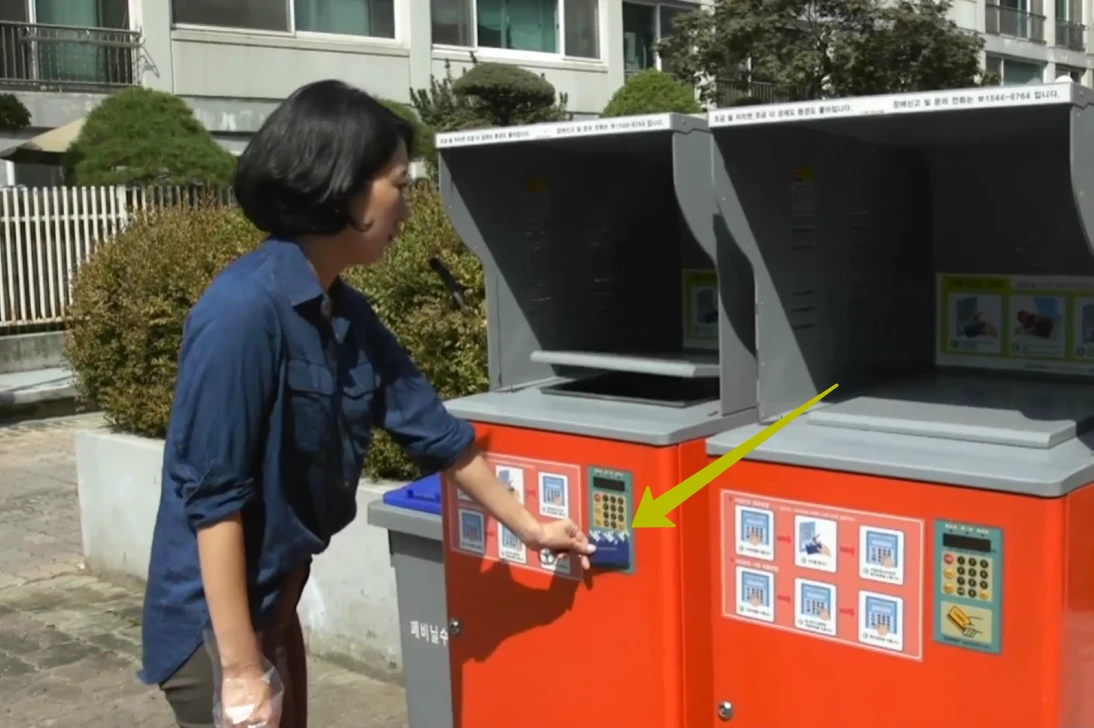
It's not clear from the map where the homeless throw their trash. On the street, probably.
Do you believe that Koreans really started throwing away 50% less trash right away? Or are they secretly shredding it and flushing it down the toilet?