Before Life Got Complicated: 42 Breathtaking Photos of Childhood (43 photos)
A ball in the yard, a bike on a hill, a stray cat in an alley—kids back then didn't need much to turn an ordinary day into an adventure. These 42 black-and-white photographs from around the world, spanning Paris in 1954 to Istanbul in 1989, are a poignant reminder of childhood before smartphones, photo filters, and packed schedules. Behind each frame are street cats, wooden swings, wet cobblestones, and an unmistakable, unscripted innocence. Let's take a look. 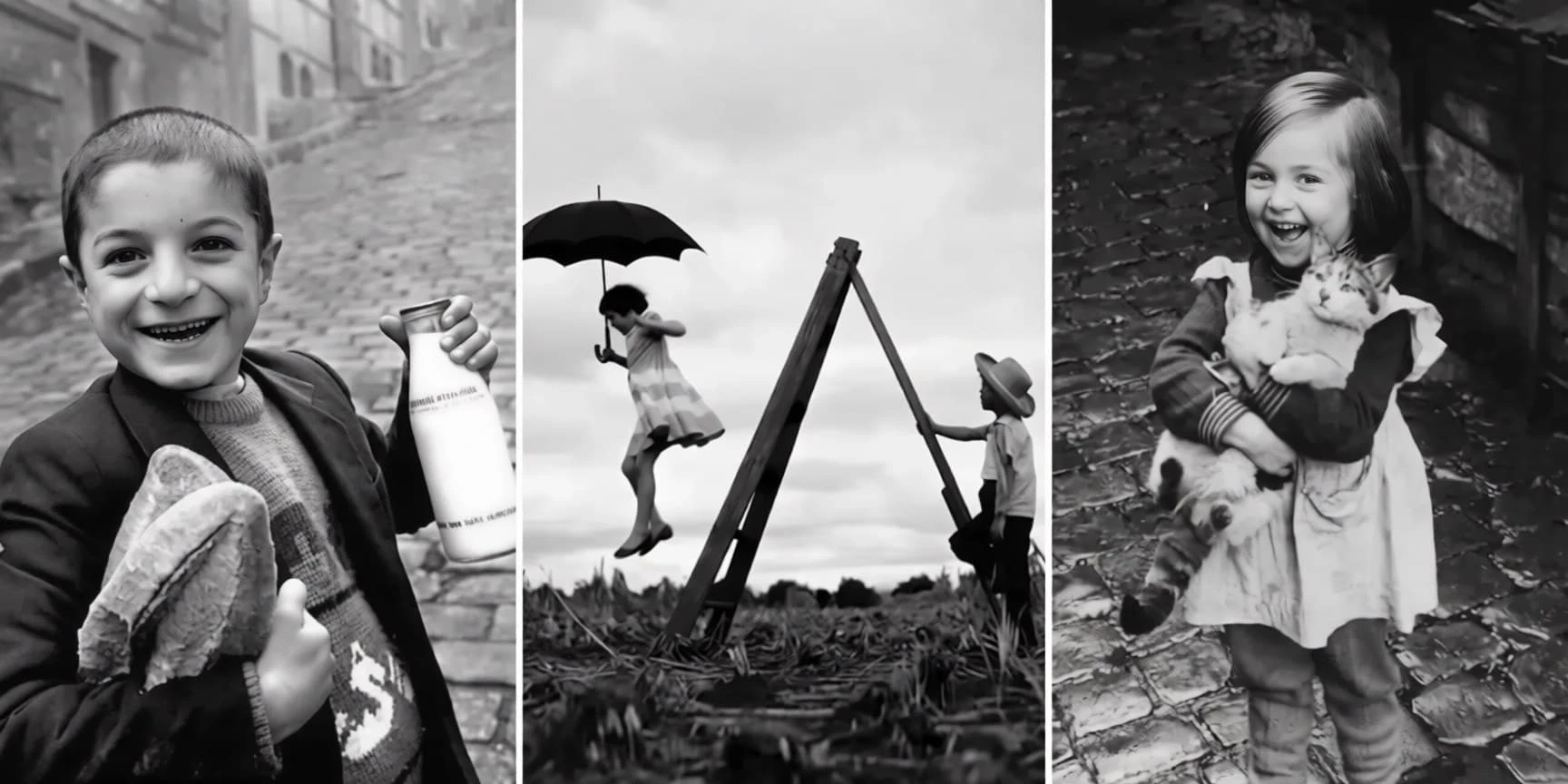
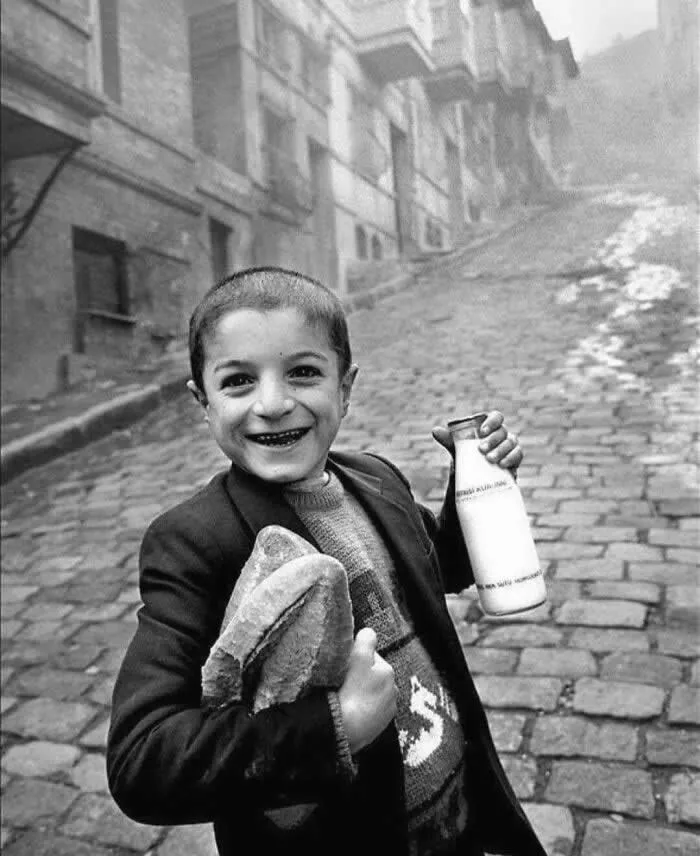
Balat, Istanbul, 1989. Photographer Erdal Yazıcı captured a fleeting moment. A young boy carrying home bread and milk gazes into the camera with effortless confidence.
Balat is one of Istanbul’s oldest neighborhoods. Narrow cobblestone streets, two- and three-story houses with wooden shutters, and stray cats around every corner. In 1989, tourists were virtually unheard of here—there were only locals, bustling markets, and the aroma of fresh bread. Erdal Yazıcı shot in a street documentary style: no staging, just catching real moments as they happened. This photograph went on to be featured in dozens of exhibitions and became one of the most iconic images of 20th-century Turkish childhood. 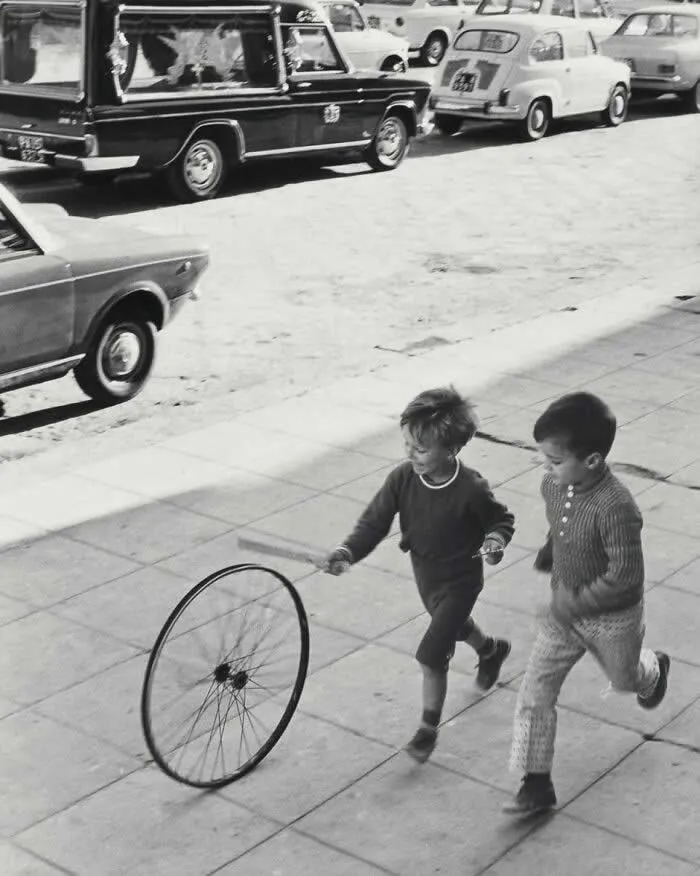
Palermo, 1971. Photo by Henri Cartier-Bresson: two children chase a rolling hoop—a game that requires nothing more than an open street.
Henri Cartier-Bresson (1908–2004) was a co-founder of Magnum Photos and the master behind the concept of the "decisive moment"—that split second when form and content align perfectly. Shooting with a Leica camera without a flash, he almost never cropped his images after the fact. In 1971, Cartier-Bresson was working in Sicily, producing one of his many photo essays that ultimately became priceless historic records. 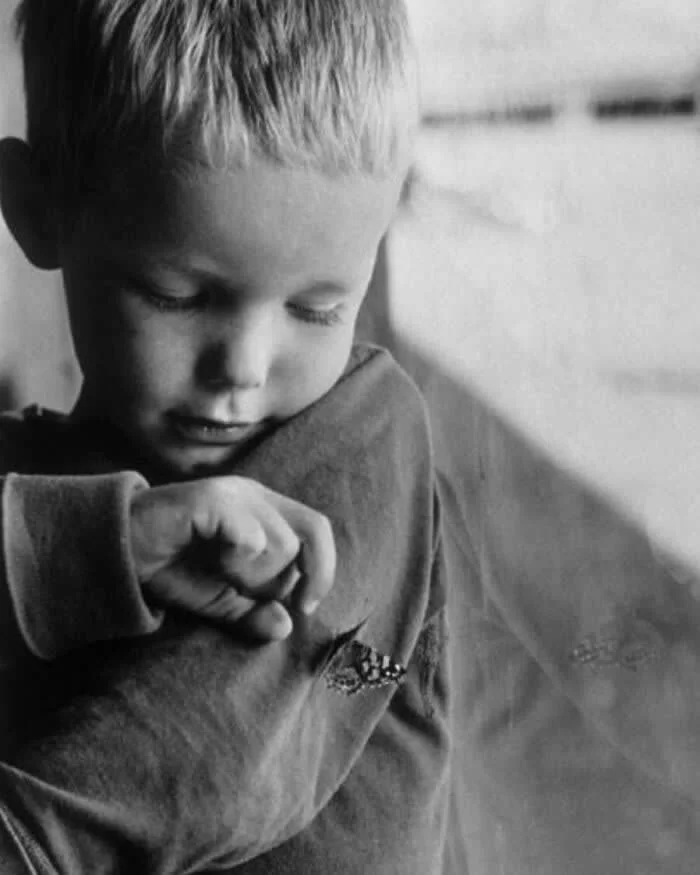
Photo by Wayne Miller, 1958. The child looks down rather than at the camera, giving the shot its unposed, candid feel.
Wayne Miller (1918–2013) was an American photojournalist who worked for Life magazine. He was involved in the landmark "The Family of Man" exhibition at the Museum of Modern Art in New York (1955). The exhibit brought together 503 photos from 68 countries to celebrate the shared human experience regardless of birthplace. 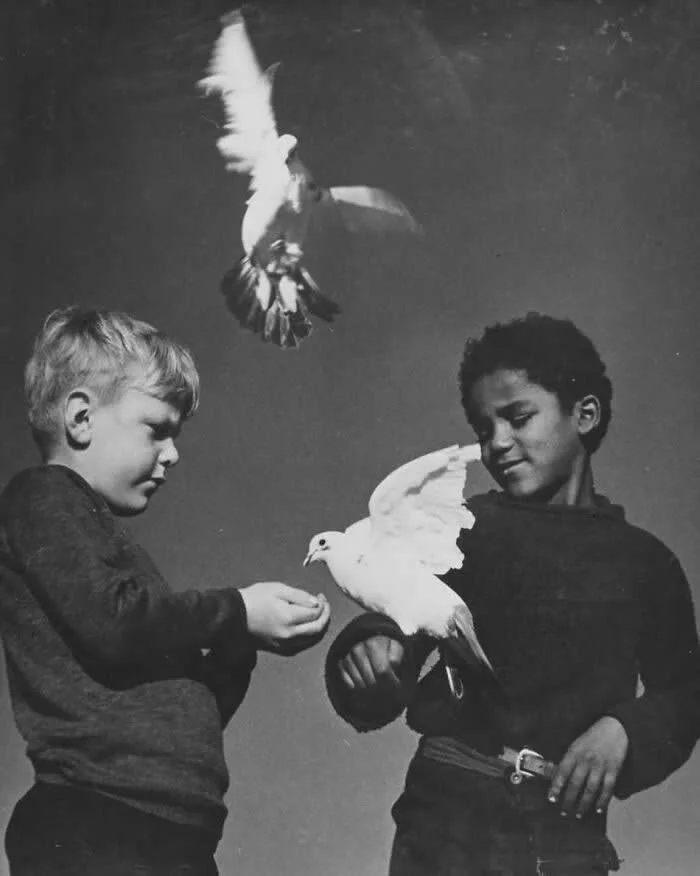
Photo by Pedro Luis Raota. One pigeon rests on a hand while another takes flight—and the children freeze so as not to scare them away.
Pedro Luis Raota (1934–1986) was an Argentine photographer often dubbed the "Cartier-Bresson of Latin America." He focused on everyday people—children, the elderly, street vendors—and had a knack for finding painterly beauty in ordinary moments. His work is held in major photographic archives worldwide. 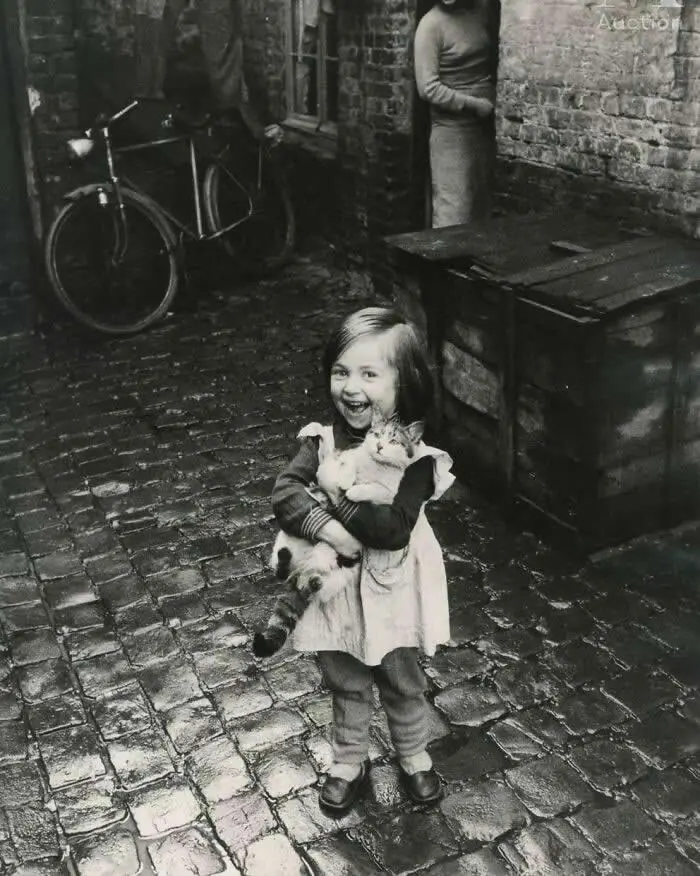
Photo by Jean-Philippe Charbonnier. Wet cobblestones, a bicycle leaning against a wall, a cat in hand—and a smile so contagious you can't help but smile back.
Jean-Philippe Charbonnier (1921–2004) worked as a photographer for Réalités magazine from 1946 to 1974. He traveled across France, Italy, and Spain, documenting daily life without any polished pretense. His archive—comprising tens of thousands of film negatives—is now preserved in French public collections. 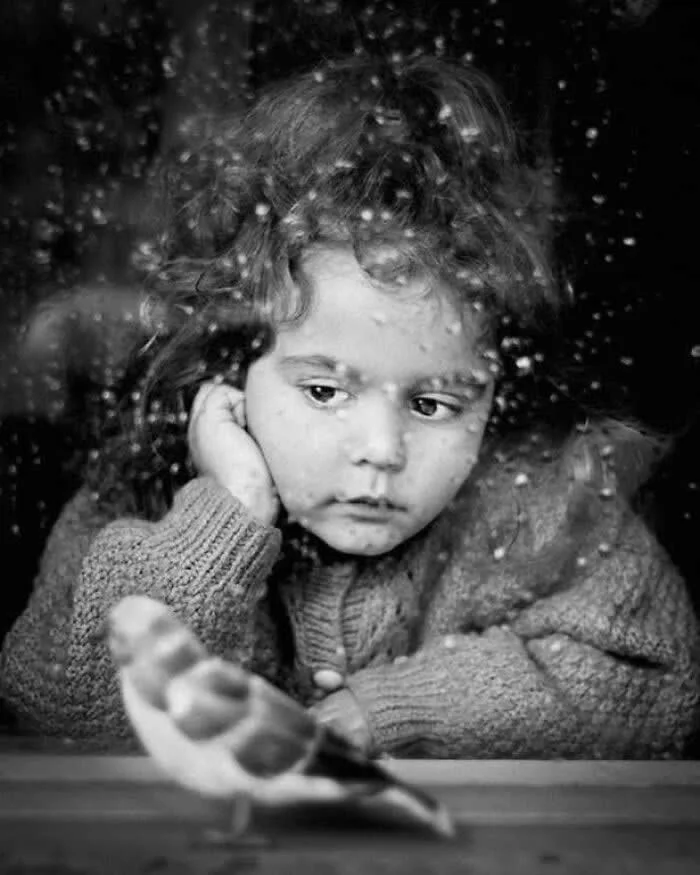
Photo by Bill Gekas. Rain outside, a bird on the windowsill, a child behind the glass—three layers, one captivating mood.
Bill Gekas is an Australian photographer renowned for staged portraits evocative of classic fine art. He photographs children in settings reminiscent of 17th to 19th-century Dutch and Italian paintings, utilizing soft side lighting, neutral backgrounds, and understated emotion. While fine art rather than documentary photography, his work carries a striking sense of authenticity. 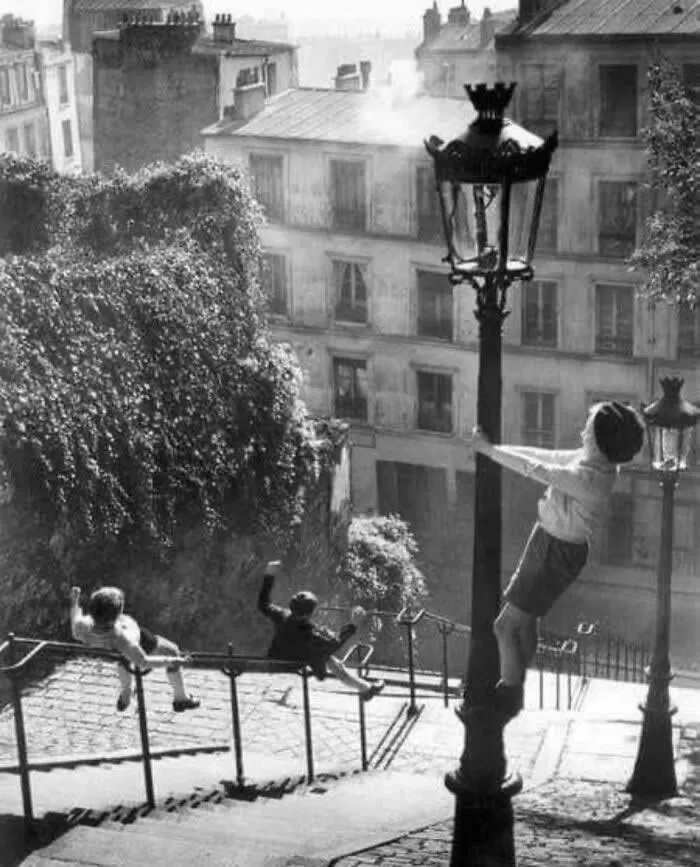
Montmartre, Paris, 1969. Photo by Horace Sutton. One boy swings from a streetlight while the others watch, eager to see who's next.
In the 1960s, Montmartre was not yet a tourist hub, but a vibrant neighborhood filled with artists, local shopkeepers, and large families. Children grew up playing on the staircases connecting the winding streets. These iconic steps remain part of Montmartre's architectural charm today, though now they are mostly climbed by tourists with cameras. 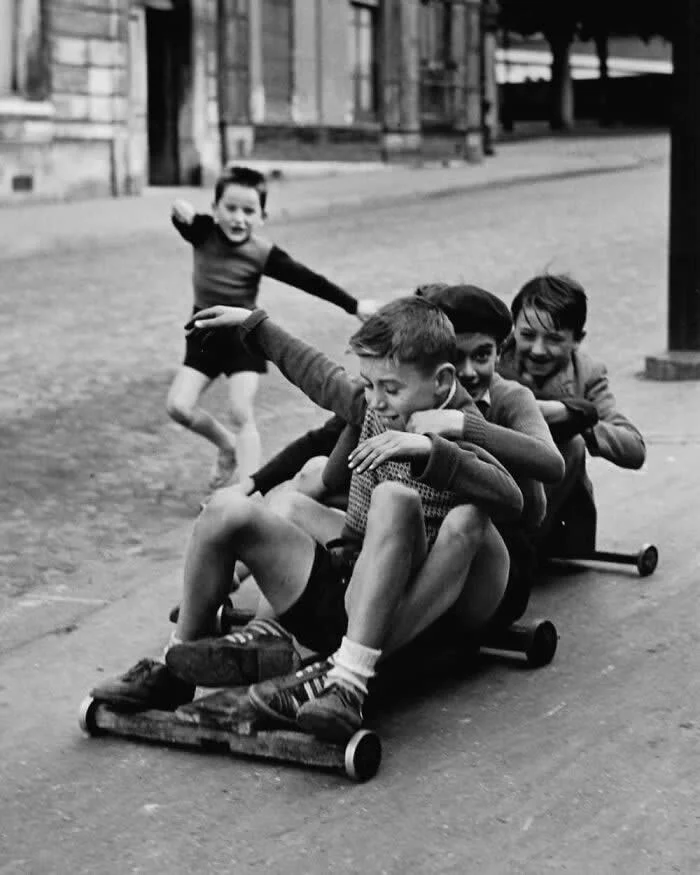
Photo by Sabine Weiss. Four kids piled into a cart, a fifth running behind—and all of them having the time of their lives.
Sabine Weiss (1924–2021) was a Swiss-French photographer and a master of post-war street photography. She began shooting in Geneva in the 1940s and enjoyed a career spanning over 70 years. Her photographs of children are among the warmest in European documentary photography: free of sentimentality, just honest storytelling. 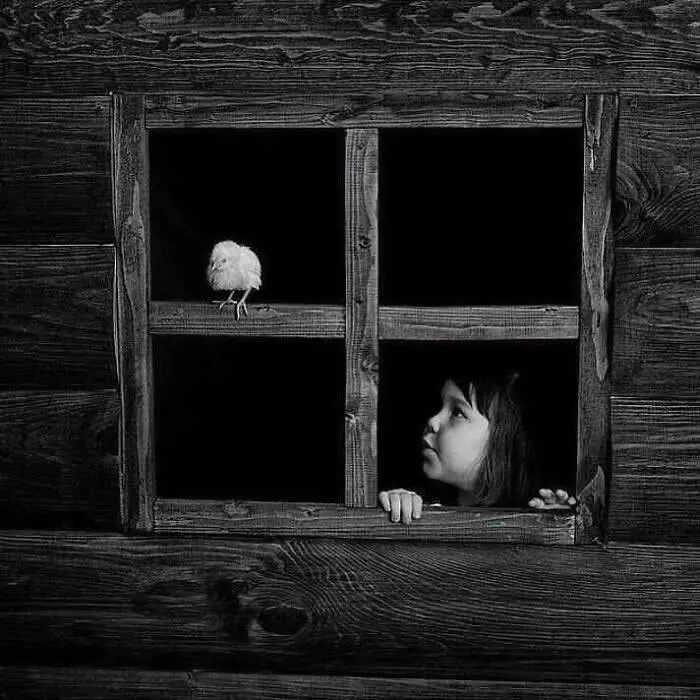
Photo by Svetlana Irevlina. A weathered frame, a tiny bird, a child's gaze—three simple elements that come together to tell a story.
Wooden window frames with wide sills are a classic feature of old rural homes across Eastern Europe. Many of Svetlana Irevlina’s photographs are set in these traditional environments, emphasizing rich textures, natural light, and unedited authenticity. 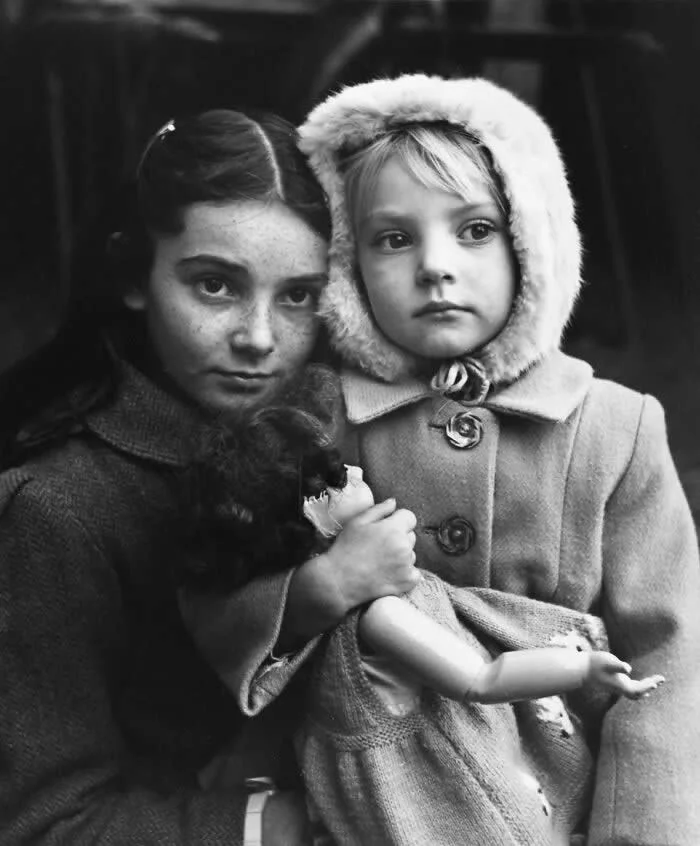
Dreux, France, 1949. Photo by Janine Niépce. One girl clutches a doll, the other looks off into the distance—both serious, both remarkably confident.
Janine Niépce (1921–2007) was one of France's pioneering female photojournalists. She frequently photographed children in the provinces. Her portraits are completely unpretentious, depicting people exactly as they were. Dreux is a small town in the Eure-et-Loir region, roughly 80 km west of Paris. 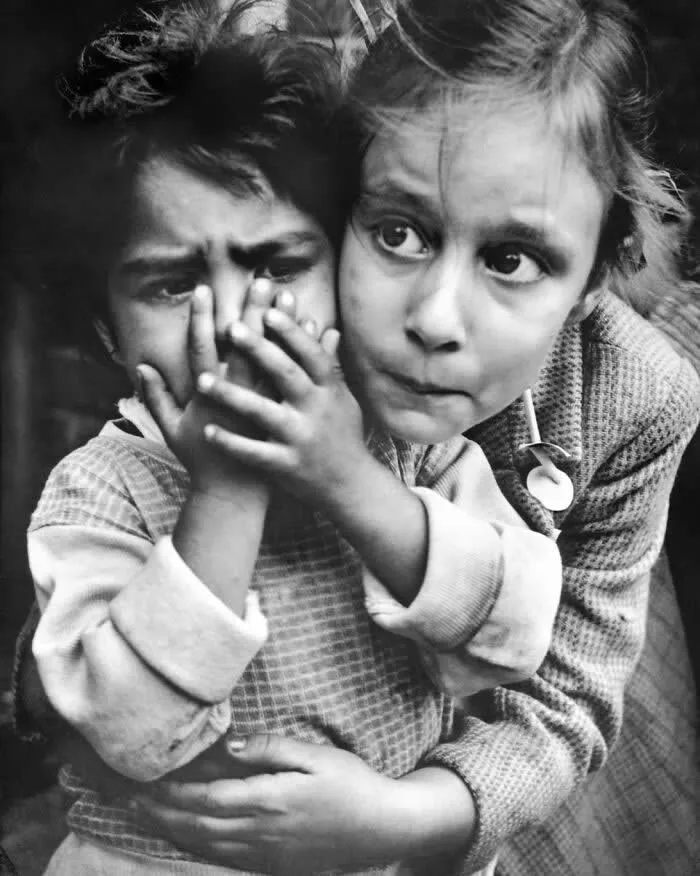
Photo by Harold Feinstein, 1957. An older sister playfully covers a younger one's mouth—part game, part protection. Titled "Big Sister Protector."
Harold Feinstein (1924–2015) was a New York photographer who captured life on Coney Island throughout the 1940s to 1960s. He shot beachgoers, children, and couples—people caught in moments of pure, unscripted life. For a long time, his work remained relatively under the radar, as Feinstein deliberately avoided commercial photography and glossy magazine spreads. 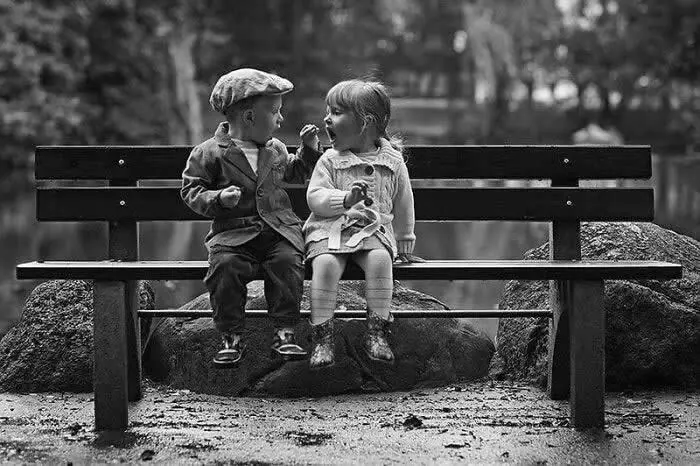
Photo by Adam Wawrzyniak. Two kids on a bench, facing each other—whatever they're discussing, it's clearly serious business.
Adam Wawrzyniak is a Polish photographer who focuses primarily on street portraiture. The Polish school of documentary photography has been recognized as one of Europe's strongest since the mid-20th century. 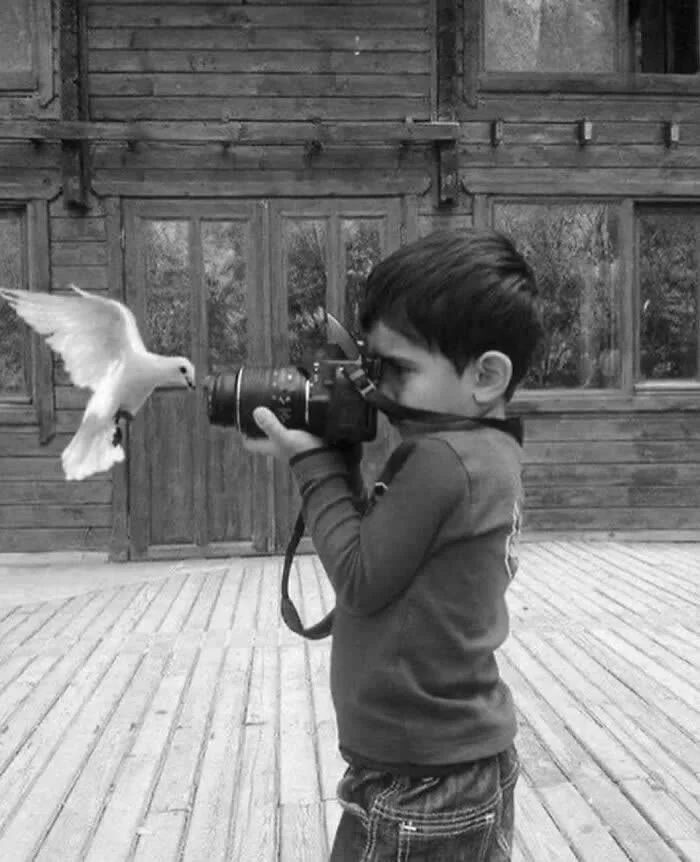
Photo by Dia Rin. A child with a camera takes a photo of a pigeon—making the viewer an observer of the observer.
A wooden porch, a pigeon mid-flight, a child holding a camera—this image is often highlighted as a testament to how our fascination with the world begins in childhood. 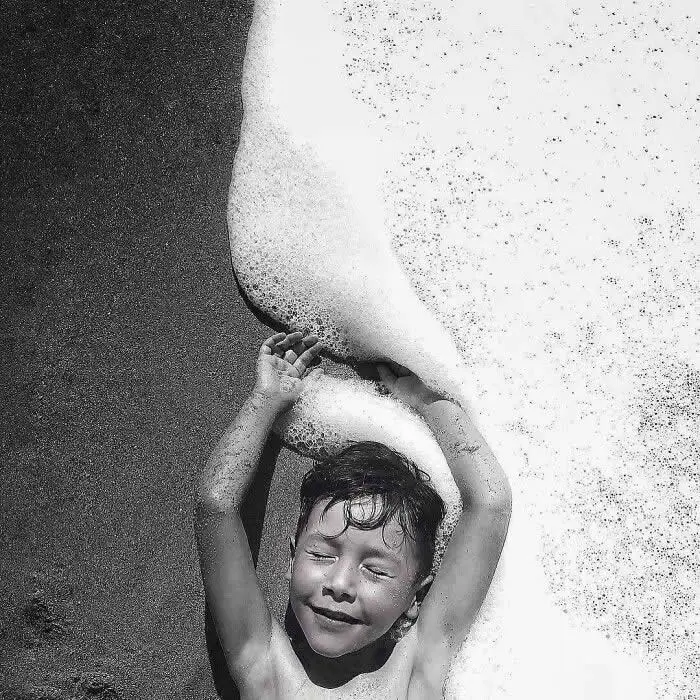
Photo by Marilyna Besteiro. Shot from above: a child submerged beneath a wave with arms outstretched—abstract graphic art meets pure joy.
When the perspective shifts overhead, the scene loses its familiar bounds: the water transforms into a pattern, and the body becomes a key compositional element. This artistic choice elevates Marilyna Besteiro’s shot far beyond a simple beach photo. 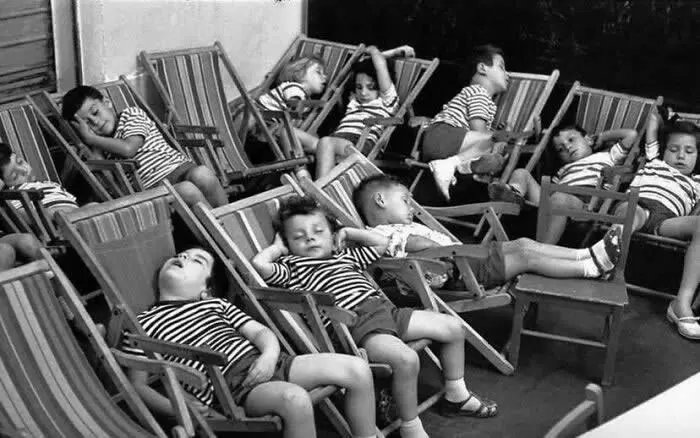
Italy, 1960. The second photo by Cartier-Bresson in this collection—and once again, the children aren't posing. Striped lounge chairs and the quiet exhaustion of a summer day. 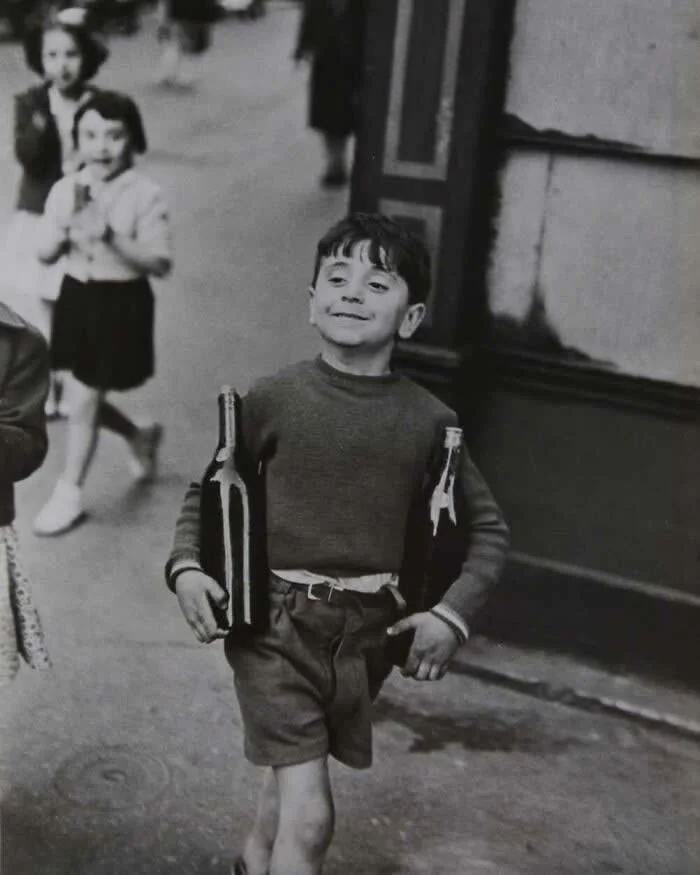
Rue Mouffetard, Paris, 1954. Photo by Henri Cartier-Bresson. A boy carries two large bottles of wine with a grin so bright he looks like he just won first prize.
Rue Mouffetard is home to one of Paris’s oldest street markets, dating back to the 12th century. In the 1950s, vendors sold wine, cheese, and fresh produce here. This image stands as one of the most iconic in the history of street photography, reproduced countless times on postcards, posters, and book covers celebrating Paris. 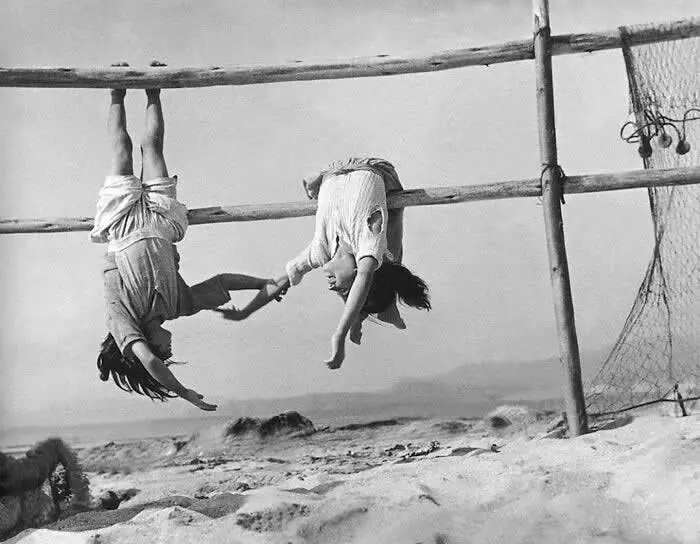
Photo by Sergio Larrain. Hanging upside down hand-in-hand—the sea behind them, the sky beneath their feet.
Sergio Larrain (1931–2012) was a Chilean photographer and the only Latin American member of Magnum Photos. He shot across Chile, Europe, and the Middle East, gaining particular acclaim for his series on Chilean street children. In the 1970s, Larrain walked away from photography to pursue spiritual endeavors and never published again. 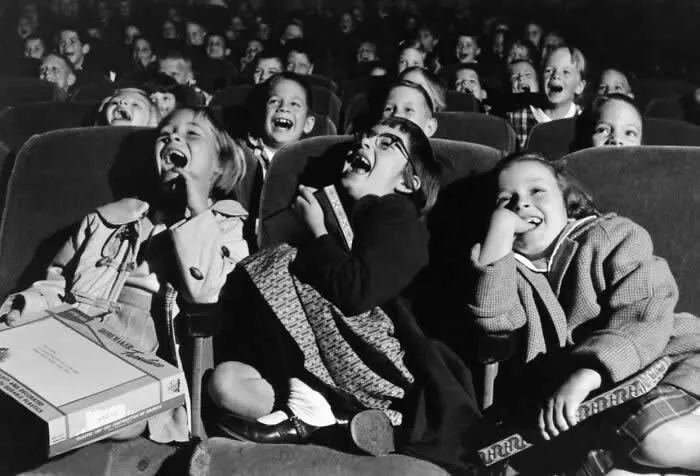
USA, 1958. Photo by Wayne Miller. A children's movie theater erupts in laughter—it doesn't matter what was playing, their expressions say it all. 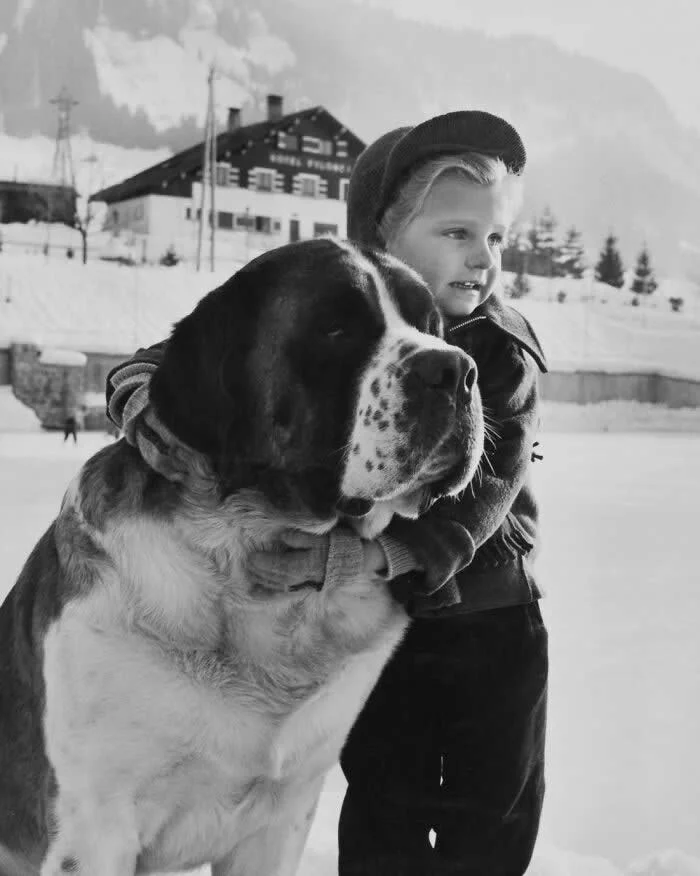
Megève, French Alps, 1954. Photo by Janine Niépce. A child and a St. Bernard in the snow—the sheer difference in scale makes this image unforgettable.
Megève is a ski resort in the Savoy Alps established in 1921. In the 1950s, it was a favorite destination for the French upper class. St. Bernards were originally bred by Swiss monks to rescue stranded travelers in the mountains; a full-grown male can weigh anywhere from 64 to 120 kg. 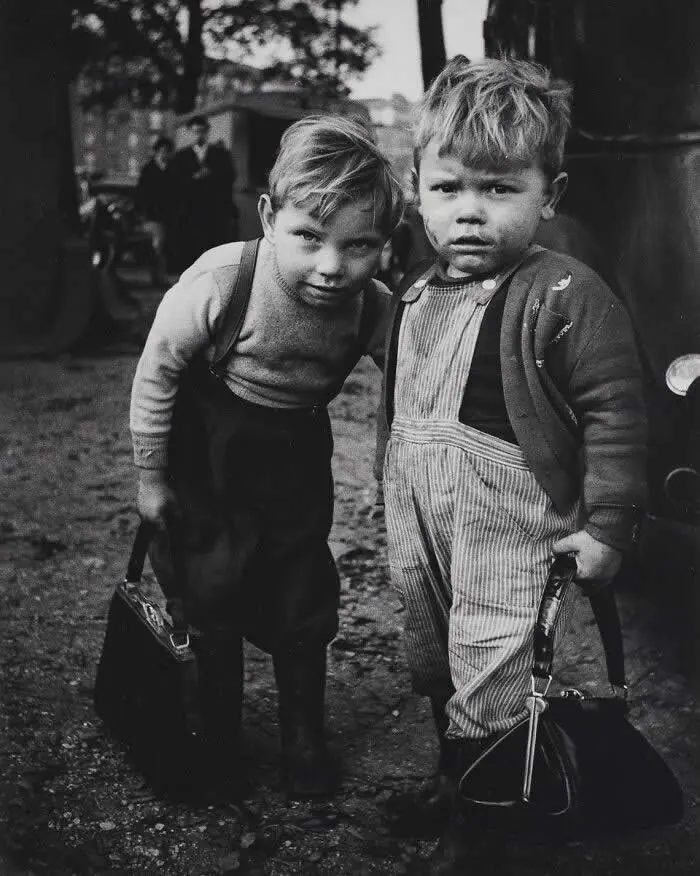
Photo by Christer Strömholm. Two boys covered in mud, satchels in hand, looking at the camera with a seriousness beyond their years.
Christer Strömholm (1918–2002) was a founding father of Swedish photography. He taught at the Stockholm Photography School from 1962 to 1974. His works are part of the permanent collection at the Moderna Museet in Stockholm. 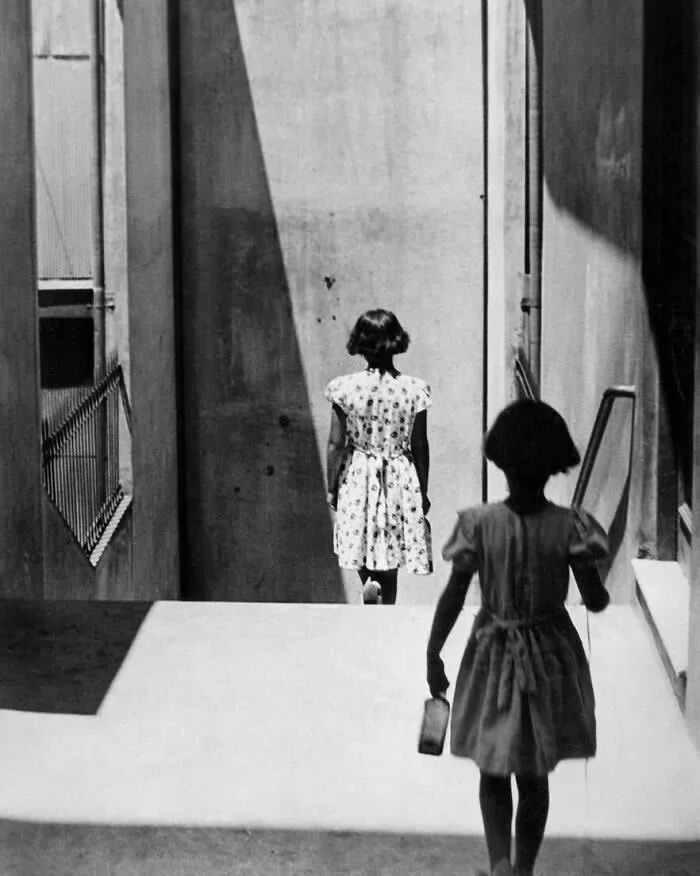
Photo by Sergio Larrain. Harsh sunlight, deep shadows, a narrow alley—and two children simply going about their day. 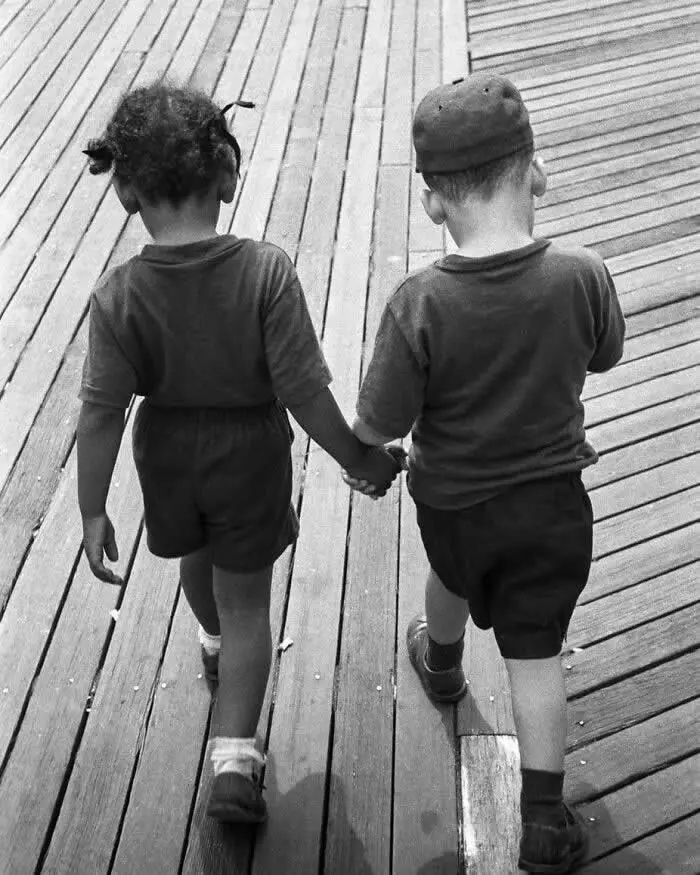
Coney Island, New York, 1955. Photo by Harold Feinstein. Two children walking hand-in-hand, their backs to the camera. Simple perfection. 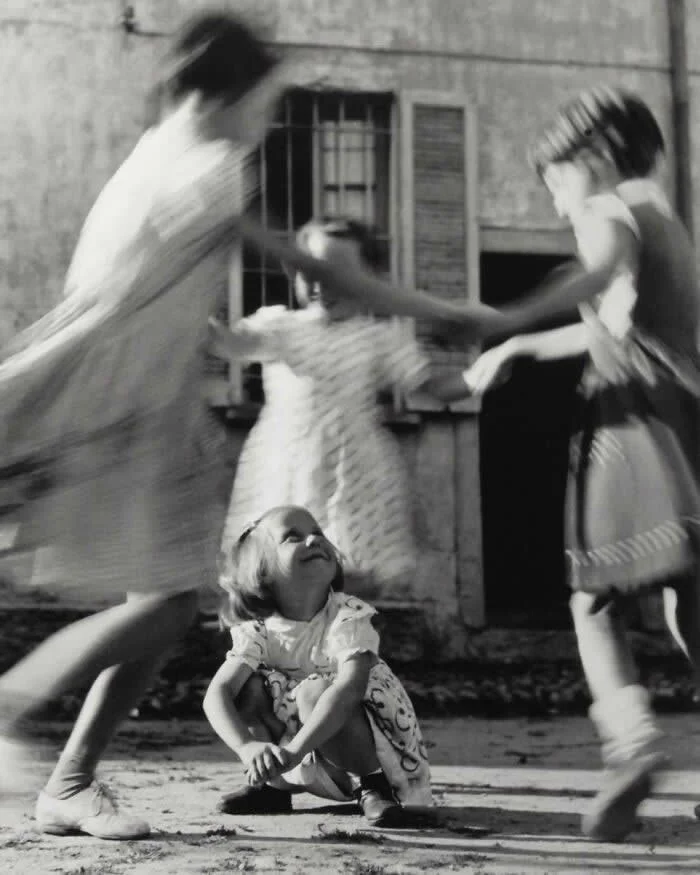
Photo by Vitaliano Bassetti. A long exposure blurs the motion: as the children spin, the frame spins right along with them. 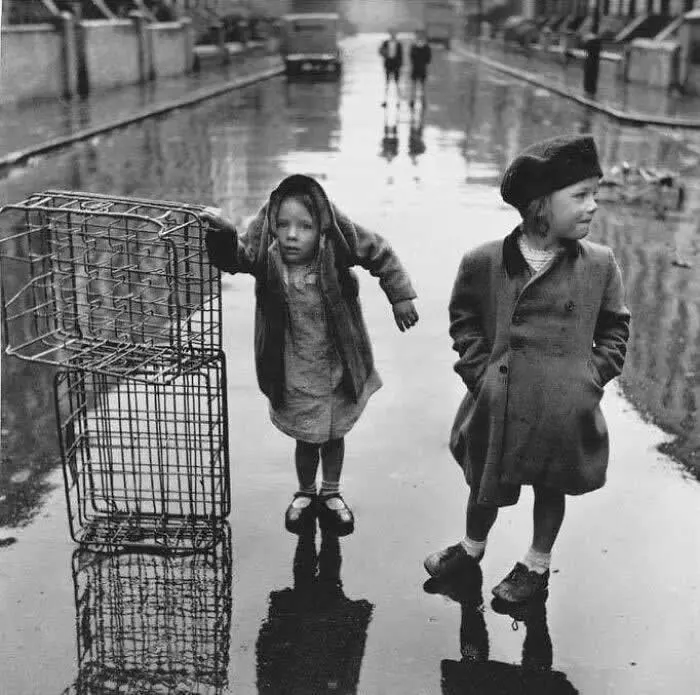
Photo by Ken Russell. Rain, empty crates, rain puddles reflecting the world—a wordless scene that holds your attention. 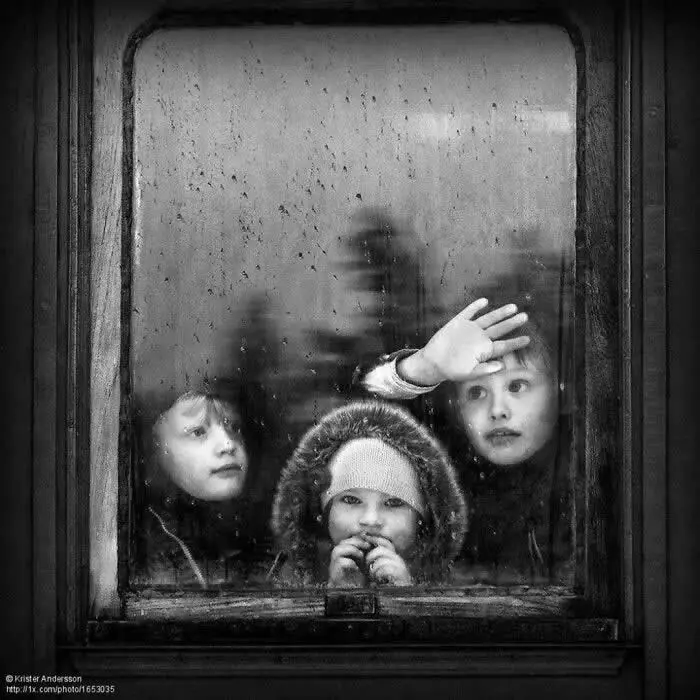
Photo by Christer Andersson. Fogged-up glass, three faces—and the distinct feeling that whatever is happening outside is far more exciting than inside. 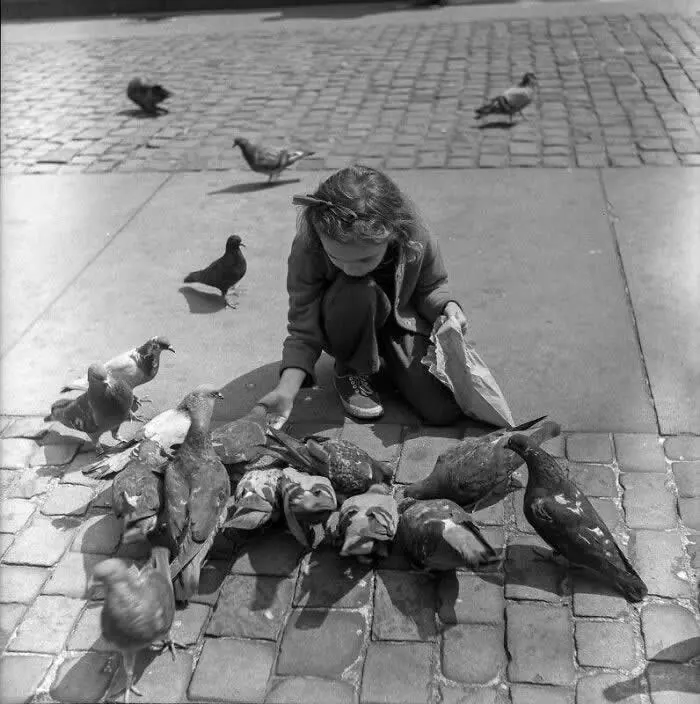
Photo by Harold Feinstein, 1946. Pigeons gather around her feet as she reaches out to them—it's hard to tell who is taming whom. 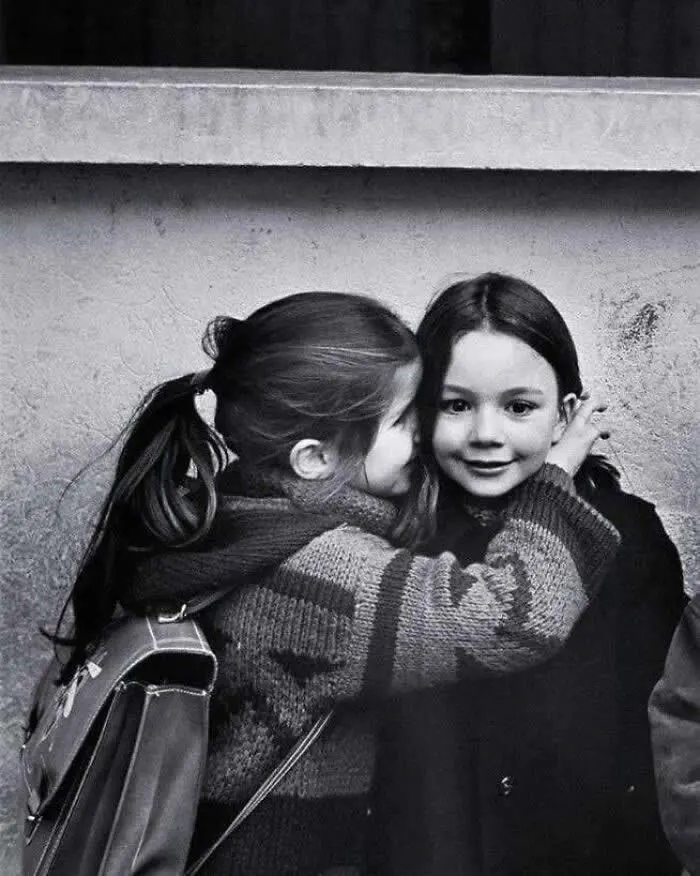
Paris, 1979. Photo by Jean-Philippe Charbonnier. One whispers, the other smiles—it must be a great secret. 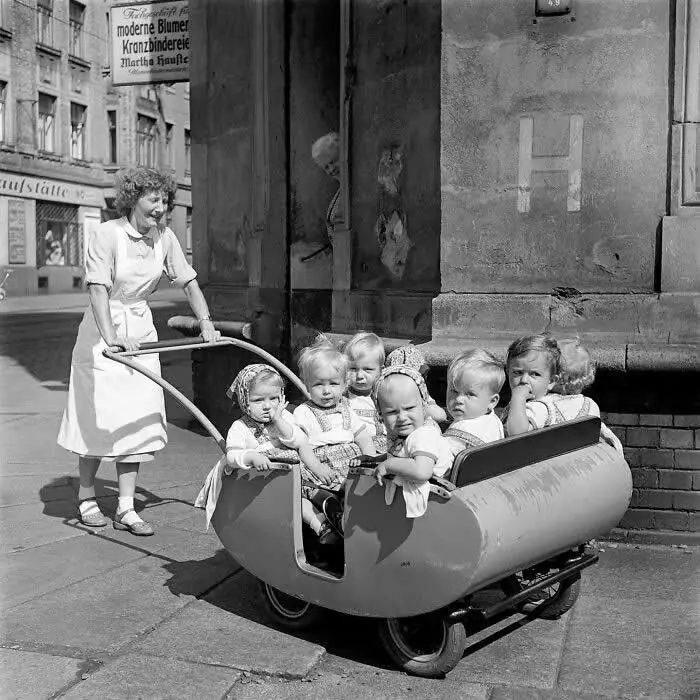
Berlin, Alexanderplatz, 1960s. Photo by Thomas Billhardt. Seven toddlers crammed into a single stroller, all eying the lens with equal suspicion.
Alexanderplatz was the central square of East Berlin and a major transit hub in the GDR. Thomas Billhardt (born 1937) is a German photojournalist who documented life in socialist nations, including East Germany, Vietnam, Cuba, and Mozambique. 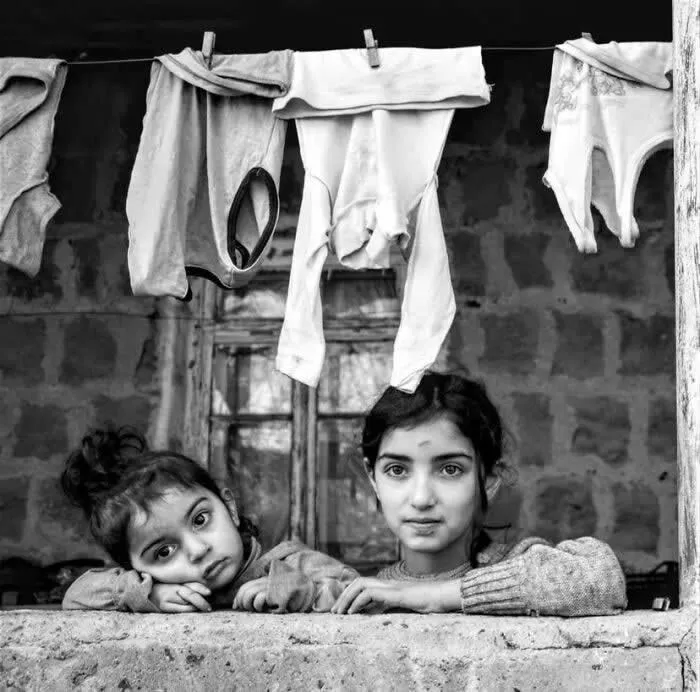
Photo by Samuel Voskanyan. A stone wall, laundry on the line, two girls at the window—a documentary portrait stripped of pretense. 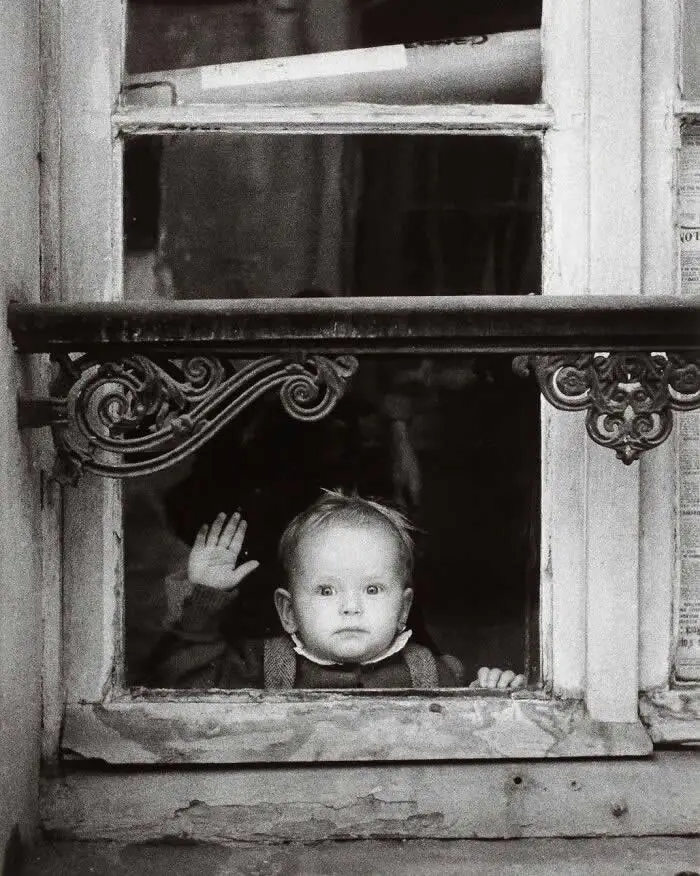
Paris, 1962. Photo by Christer Strömholm. A baby behind a wrought-iron window grate reaches an arm upward—a wave or a question? 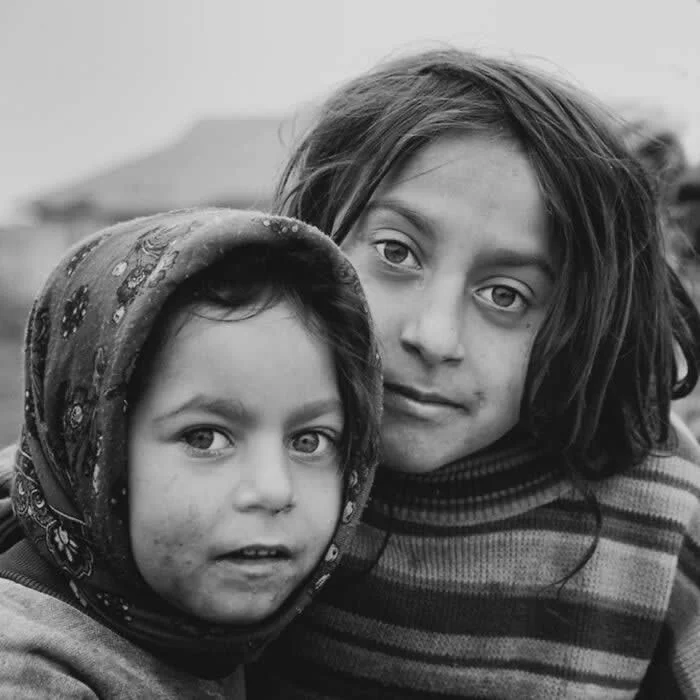
Photo by Gianni Borradori. A patterned scarf, a striped sweater, two curious gazes—an Italian portrait that speaks volumes without saying a word. 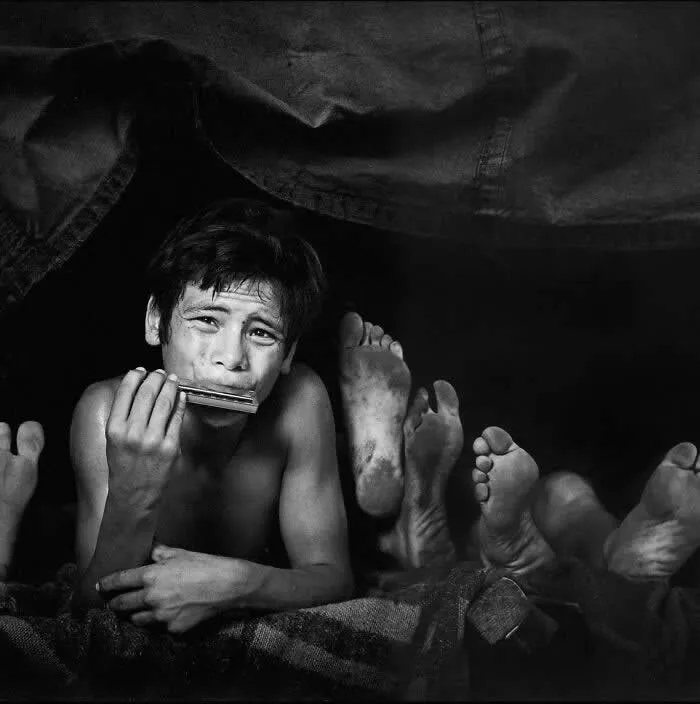
Photo by Pedro Luis Raota. A boy hides under a blanket playing the harmonica, surrounded by nothing but the feet of other children. 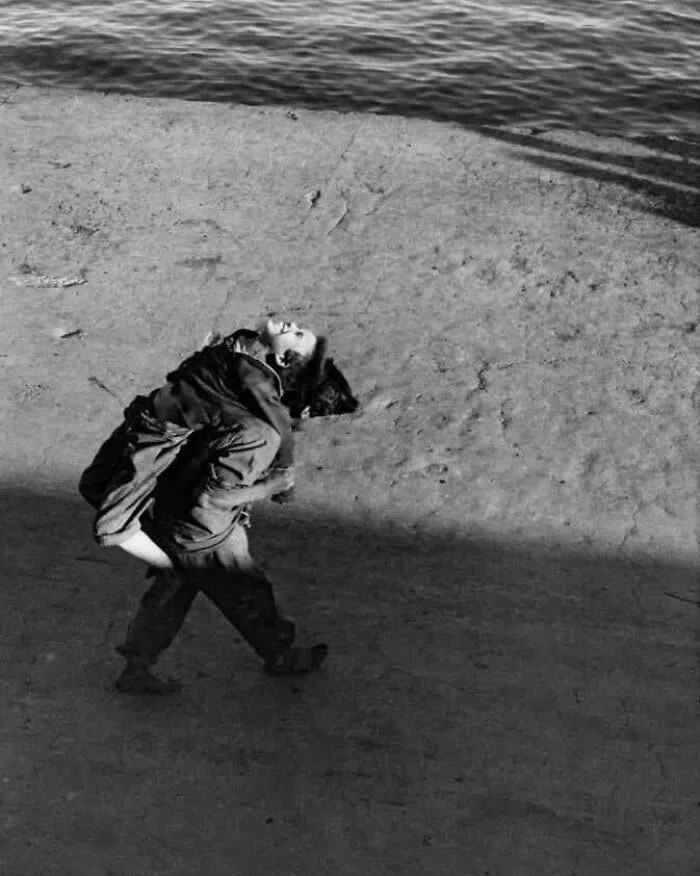
Photo by Sergio Larrain. Taken from above: one child carries another on their back along the water's edge. Long shadows, slow steps. 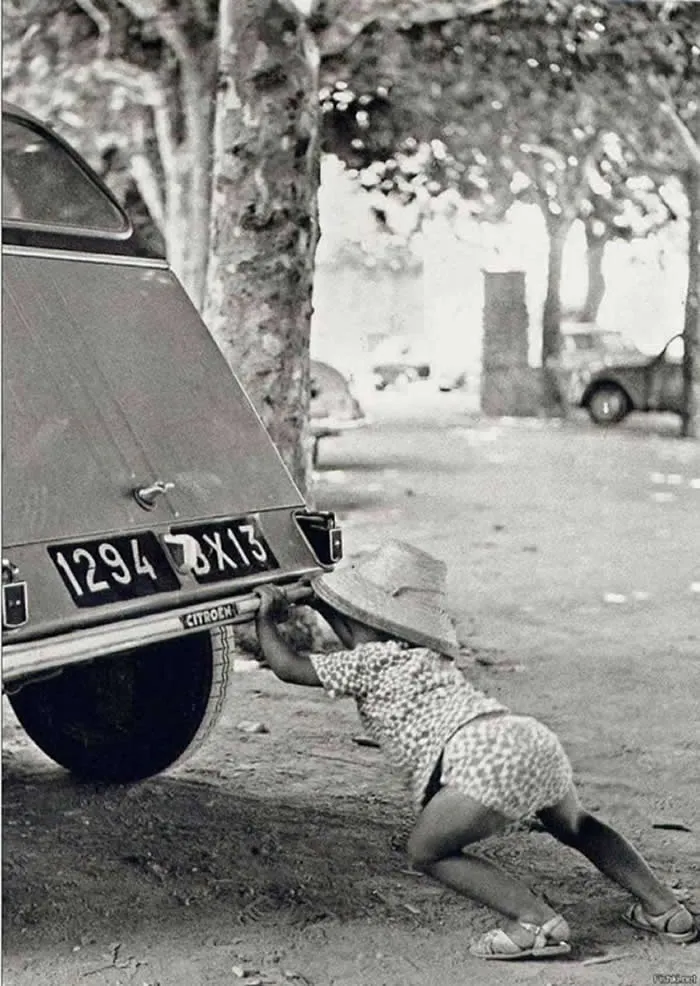
Photo by Keystone. A kid is wedged under the bumper of an old Citroën. What he's looking for is anyone's guess, but he's going for it with determination.
The Citroën 2CV is an iconic French automobile produced from 1948 to 1990. Nicknamed "gros scarabée" (the big beetle) for its distinctive silhouette, it was France's most popular car throughout the 1950s and 1960s. 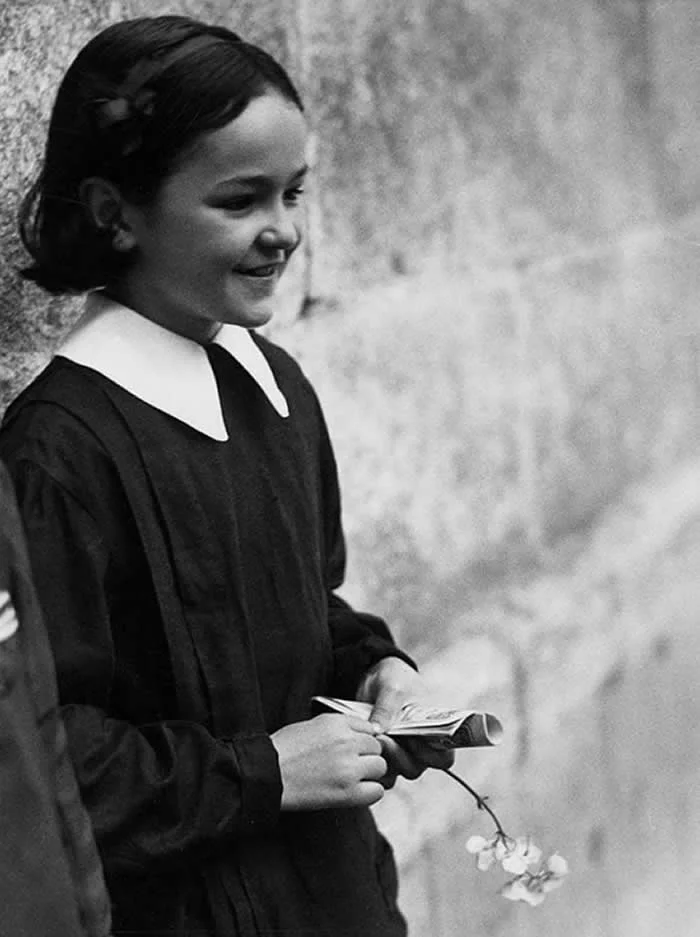
Photo by Marianne Breslauer. School uniform, a book, flowers—a quiet, formal portrait revealing a genuine soul behind it.
Marianne Breslauer (1909–2001) was a German photographer who worked during the 1930s in Berlin, Amsterdam, and London. Of Jewish descent, she emigrated from Germany in 1936 and stepped away from photography for several decades. Her work was only rediscovered in the 1980s. 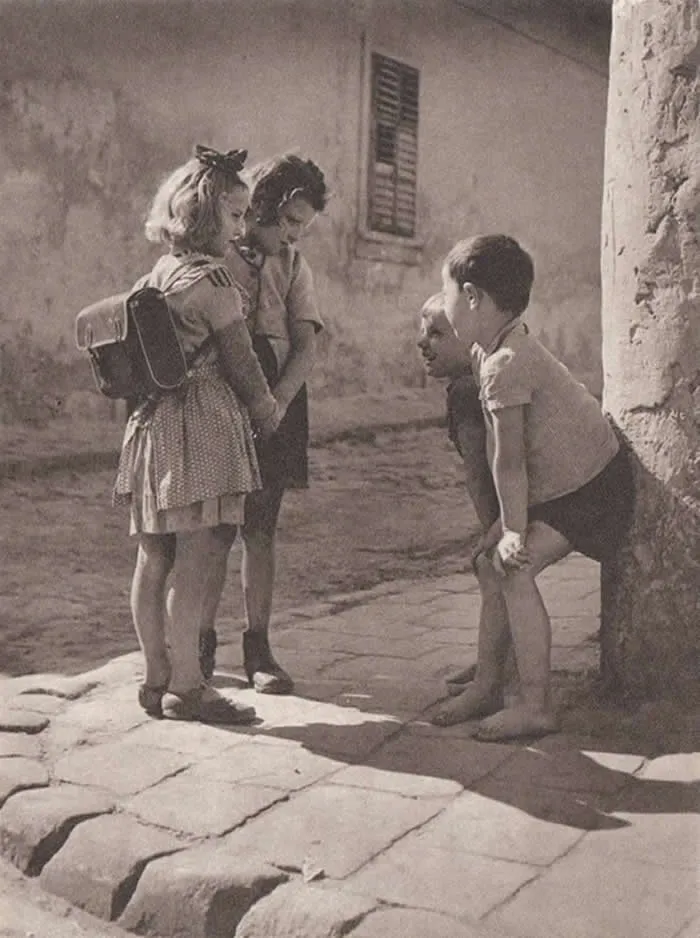
Photo by Thomas Veres. Four kids on a sunlit pavement—two carry satchels, and all four have their own strong opinions. 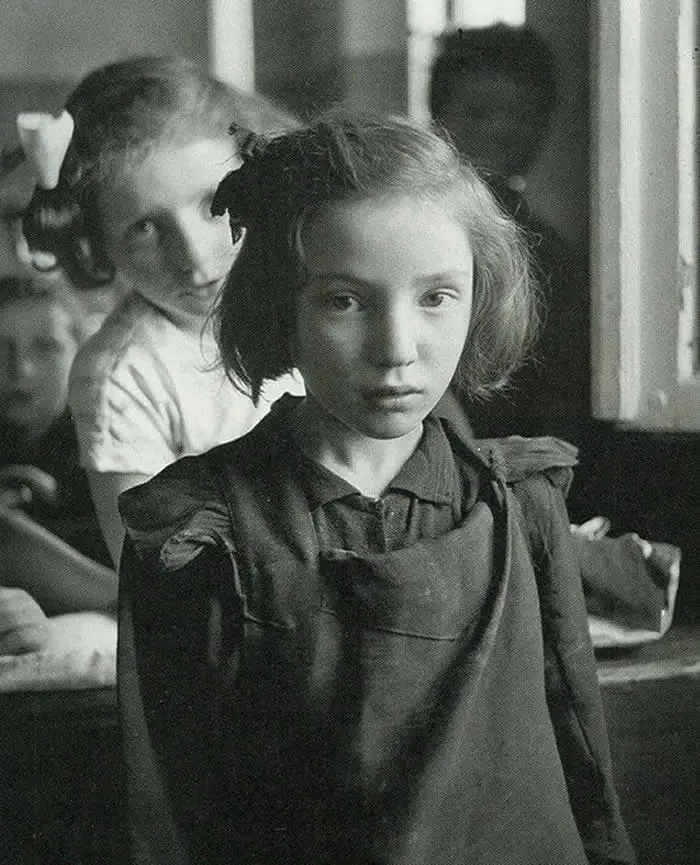
Photo by Roman Vishniac. A girl looks directly at the camera with two children behind her. Soft, painterly lighting.
Roman Vishniac (1897–1990) was a Russian-American photographer best known for documenting Eastern European Jewish communities between 1935 and 1939. Tragically, most of the people featured in his photographs perished during World War II, making his archive a priceless historical record. 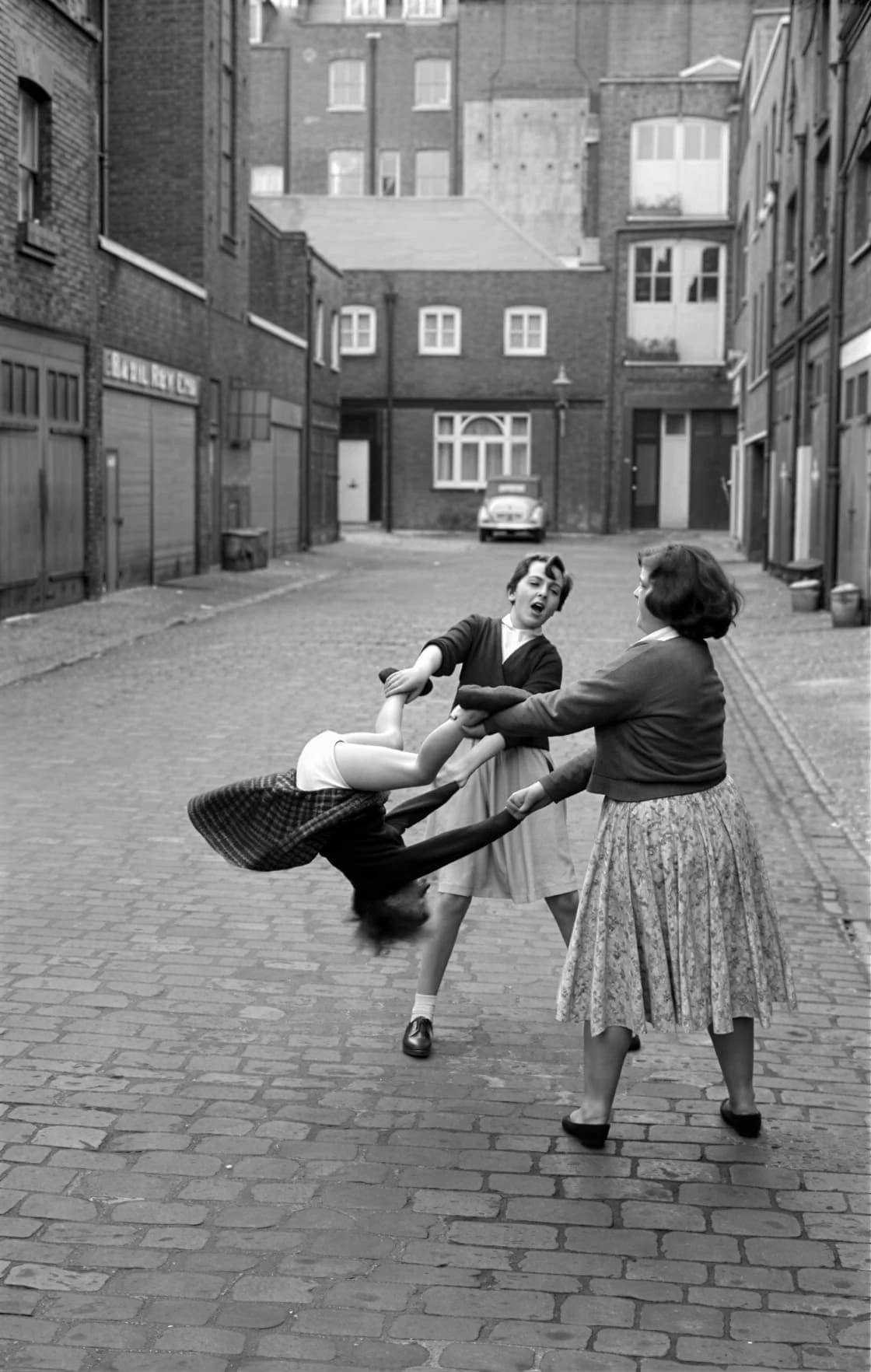
Photo by Oscar van Alphen. Two kids swing a third by holding hands—a classic neighborhood ride that doesn't cost a dime. 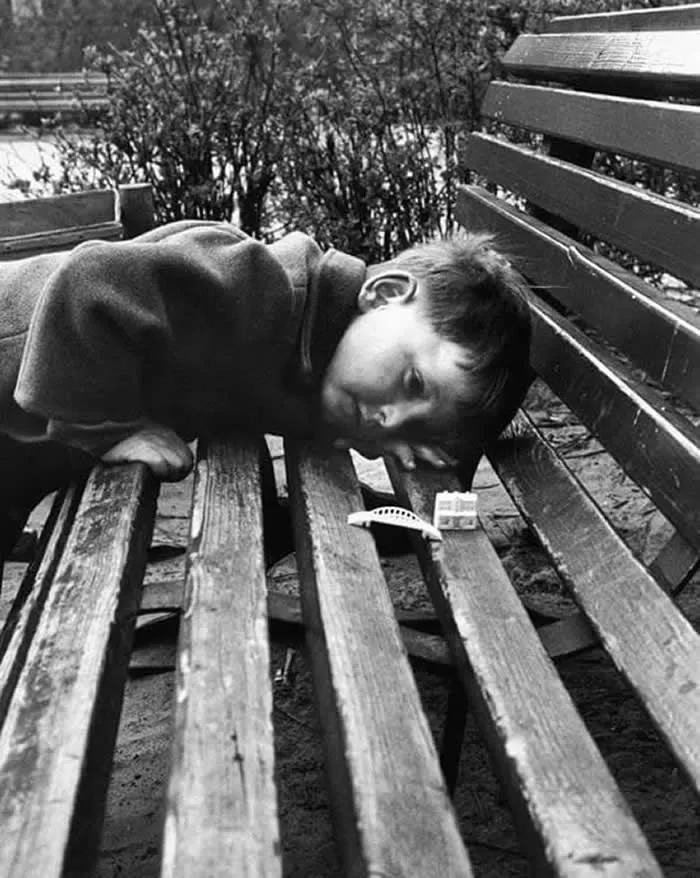
Photo by Oscar van Alphen. Lying on a bench, driving a toy car along the wooden slats—who needs pavement when you have an imagination? 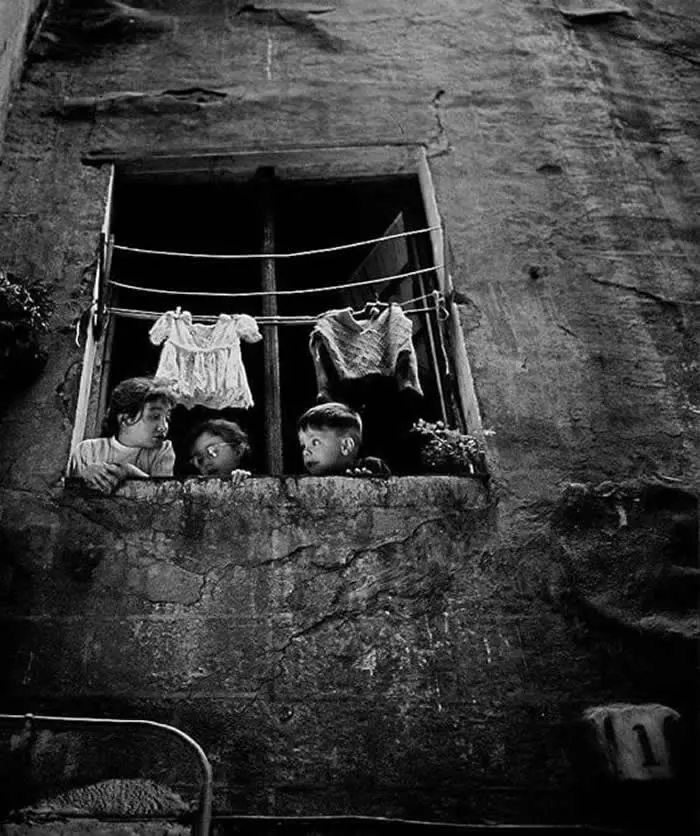
Photo by Eugenio Octavio. Three kids peek out of a window beneath hanging laundry—a slice of life from a crowded neighborhood. 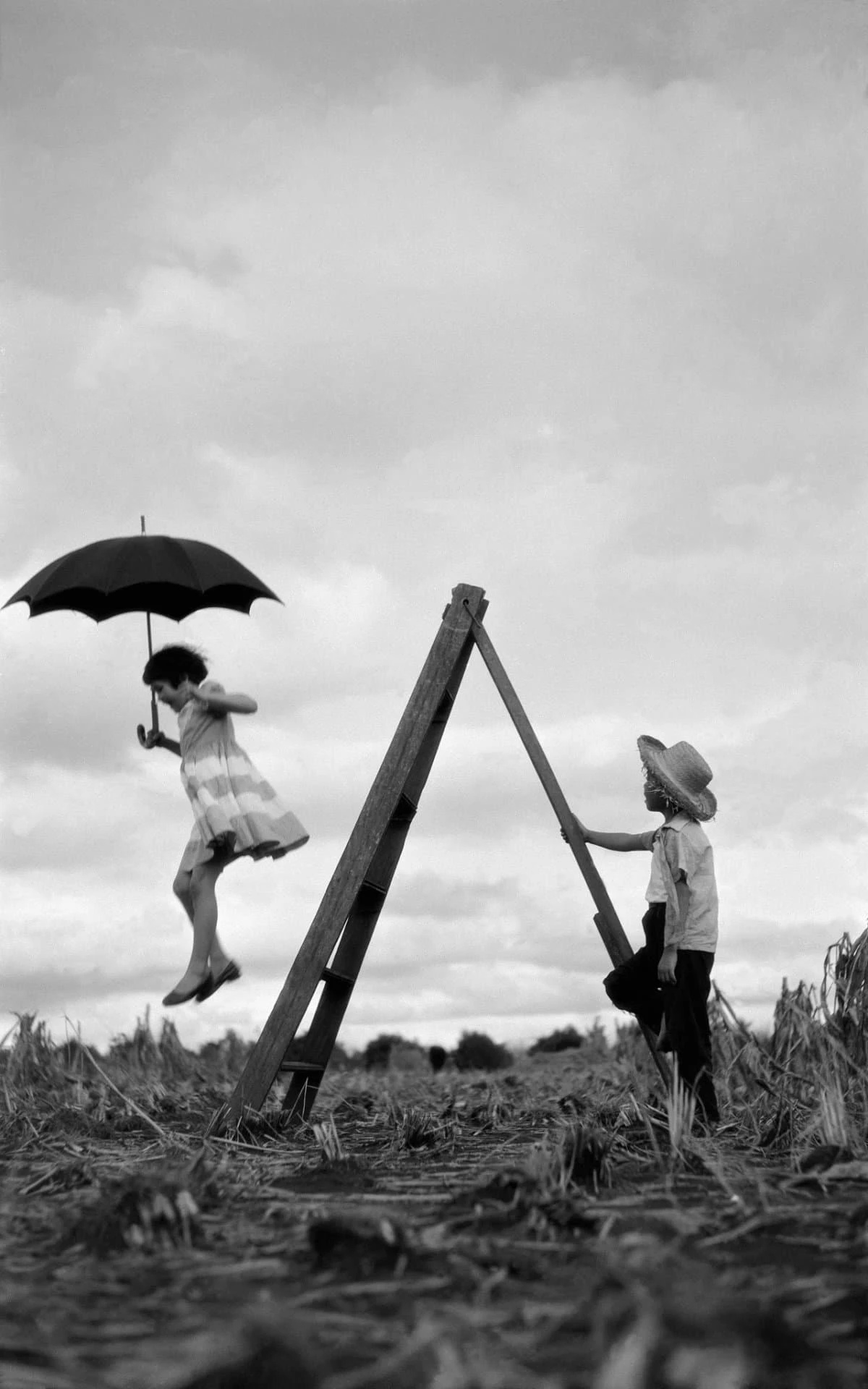
Photo by Haruo Ohara. An umbrella for a parachute, a ladder for a launchpad—the boy holds steady while the girl leaps.
Haruo Ohara (1909–1999) was a Japanese-Brazilian photographer who immigrated to Brazil in 1929. He created one of the largest photographic archives documenting the Japanese diaspora in the state of Paraná and the surrounding rainforests. The image featuring the makeshift leap was captured in Paraná, Brazil. 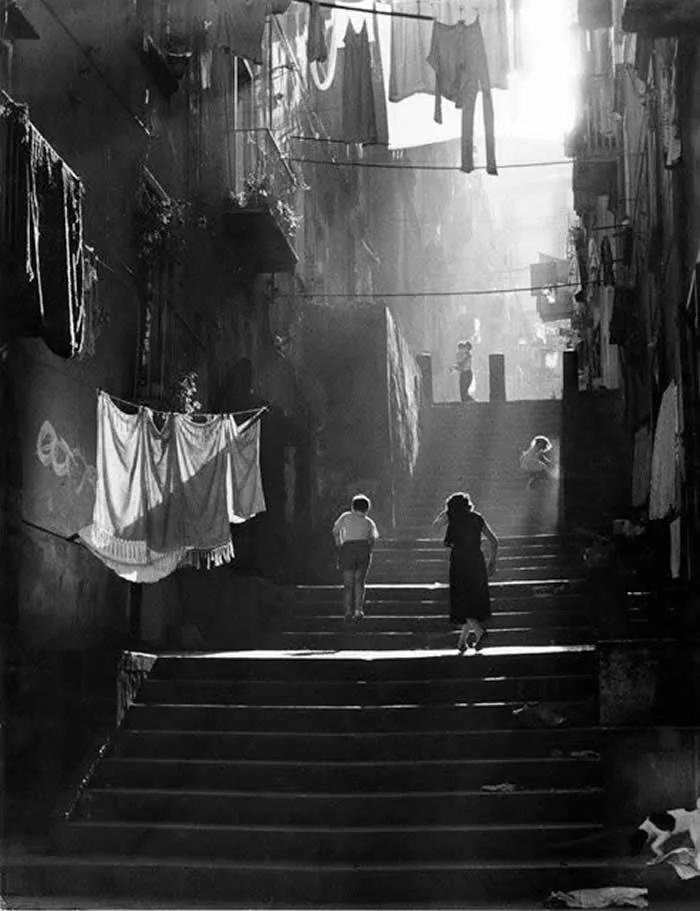
Photo by Piergiorgio Branzi. A narrow staircase, clotheslines overhead, a beam of sunlight from above—children climbing upward as if moving from one world to another.
Piergiorgio Branzi (born 1928) is an Italian photographer and architect, celebrated as a master of post-war Italian documentary photography. He captured street life across southern Italian cities like Naples, Palermo, and Catania, where daily living spilled effortlessly from windows and staircases out onto the streets.
What childhood game do you remember most fondly? Share your stories in the comments below.